Showing posts with label Vanessa Harbour. Show all posts

Sunday, 12 January 2020

Reading, reading, reading by Vanessa Harbour


This post was inspired by reading Anne Rooney’s recent blog about her journeys on the bus and how she is using the time to read all sorts of books that she WANTS to read. It made me think – a lot.

It is said you can’t be a writer unless you are a reader. This is something I tell my students frequently, particularly if they comment on how long the reading list might be. I have had some very serious discussions about whether they should be reading a hardcopy (you can make notes in the margin!), an ebook – again you can sort of make comments, or as so many of them do now, listen to the audiobook. I confess I am not convinced about this when trying to analyse a text and trying to explore it critically. But there again, maybe I am a dinosaur.

I spend a huge amount of my time reading and I am not necessarily talking books here. The very nature of the jobs outside my writing means that I need to read reams and reams of pages created by
A selection of work books
my students or the writers I work with. All of which require consideration and feedback, so they are not read to relax. Some can be thoroughly enjoyable, so it is not an issue to read them, others… well... It is not just manuscripts that I need to give feedback on that I read. I also read a lot of books that relate to my work. Not all of which I would choose to read given a choice.

I am also in the lucky position to be sent quite a few books by publishers to read just pre-publication. This is a wonderful opportunity and I love reading them. However, I am aware that I am reading them for a reason. I need to shout about them, to give the writer’s a well-earned nudge in the publicity stakes. We all know how hard it is to publicise your work when you’re an author.  All help is welcome.

What this does mean is that I rarely read just for me. Over Christmas I was thinking about this as I deliberately made the effort to read a couple of books that interested me: Damian Barr’s You Will Be Safe Here and Alice Hoffman’s The World That We Knew. Both books that I had heard a lot of good feedback on, plus I am a great fan of Damian’s Literary Salon podcast, so wanted to read some of his writings. These books relate to nothing I am working on currently. At first, it was hard because I felt guilty. Mad, I know. But I thought I ought to be reading things connected with work. I realised I needed to stop thinking like this, as Anne did for her bus journey, reading books I want to read plus maybe revisiting some old friends could be part of my own self-care.

Reading is so important. We know in children that reading can encourage empathy. Empathy is a key element of emotional intelligence, and part of helping children to appreciate others. I think this can apply to adults too. Reading a book is a chance to walk in someone else’s shoes. To view the world through their eyes. It makes you stop and think. As a writer, it is a wonderful habit to get into as it helps you realise what works for you and what doesn’t. You can then endeavour to apply that to your own writing. Books can be inspirational; they allow you to escape into another world while your brain continues with its latent processing. I often find that the solution to a plot problem will come to me while I am reading. I am sure it is because I am not thinking about it. I acknowledge that the same can happen when ironing or while in the shower or driving.

Revisiting some favourite
books
My plan this year, which was further inspired by Anne’s post, is to read more that is for me and not connected to work. I plan to try and read a couple of books a month that are my choice. Reading for pleasure. I need to remember this is allowed. These will be both adult and children’s books as I believe in the importance of reading broadly. It is vital not to read only one genre. Push the boundaries, read something outside your comfort zone, it can inform your writing. I will add a caveat, if a book does not hold my attention after a few chapters, I will not fight to the end.  Life is definitely too short to read books you don’t enjoy – I have to do enough of that already!

How about, like Anne, we all challenge ourselves to read more books for ourselves. Happy Reading!

Dr Vanessa Harbour
@VanessaHarbour

Thursday, 12 December 2019

The Importance of Food by Vanessa Harbour


I can remember hearing the wonderful Barry Cunningham talking about the importance of food at a Golden Egg Academy workshop many years ago and it is something that has stuck with me ever since. He spoke about how food and meals are something that a child can empathise with. Children understand food.

Food can be used as a powerful tool in writing. It can illustrate so much so easily, adding depth. Regardless of what sort of genre your story is that you are writing – realist, historical, fantasy, sci-fi etc – you need to consider your food or how people are going to be sustained. Use it effectively and it can have a real impact. Lifting your narrative. Food can be used to show social standing, poverty, wealth, celebrations, emotions etc.


I believe J.K. Rowling with her Harry Potter stories is the master. I get my students to read her work to see how cleverly she uses food and meals. Think of the meals at the Dursleys in comparison to meals at the Weasleys. One might not have as much money but the meals are full of love. Then, of course, there are the feasts at Hogwarts.
Image result for harry potter and the philosopher's stone book


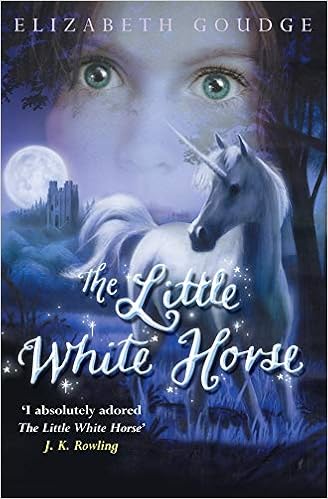
Elizabeth Goudge’s The Little White Horse is another author who was brilliant with food. I remember it from when I was a child and there was a tea scene that stuck with me. Her description was extraordinary and so evocative. I dreamt of having a tea like that. (It never happened)
Image result for the little white horse


I love the way Vashti Hardy describes food. She is another one who writes really evocatively: ‘Their parents made delicious pumpkin soup and pie, spiced with cinnamon; it tasted like autumn.’ (From Wildspark published by Scholastic, 2019)

Wildspark: A Ghost Machine Adventure
When I write I try to ensure that the reader can get truly involved in the experience and it is something they can relate to. It is part of the dramatization. With Flight, I did a lot of research into what they might be eating at the time. My current work in progress I have been writing some scenes where the characters have been involved in preparing food.


I am sure you all have your own favourite ‘food’ books perhaps in the comment section below tell me about them.

I was going to write a different post today as it is election day. I felt I ought to write something about hope but in all honesty, I am terrified. I am worried about today and what is going to happen. All I am going to say is that we have got to keep writing children’s books that show there is hope, there is a way out and that there is a way that they can take control. There are stories they can escape into.

 Keep writing and may today’s result be the one you want it to be.

Dr Vanessa Harbour
@VanessaHarbour

Tuesday, 12 November 2019

Finding your tribe by Vanessa Harbour


The pace of life can be so fast these days. Many writers have several jobs on top of writing. When we are writing we know that by its very nature is solitary. You can spend hours on your own:

Writing.

Deleting.

Staring at blank screens/pieces of paper.

Doing research – best procrastination ever – often even now that can be online so you might not see anyone.
Yes that it is my favourite Lamy pen
awaiting inspiration and given to me by a great friend/member of my tribe

Between these moments of being caught up amid the pressure of all the jobs and the writing on your own there is a risk that you might not keep in contact with your ‘tribe’. 

I use the term ‘tribe’ loosely but mean in the sense of community who share the same ‘language’, a close-knit group who get what you are trying to do and understand the problems you might be facing.  You are probably a member of several ‘tribes. They maybe are interlinked. Everyone’s tribe could and should be different. I know in my own family ‘tribe’ if I start talking about writing they get that glazed look of someone who is listening politely but really doesn’t care. They ask me polite questions but don’t get the process and wonder why things happen the way they do in publishing. It is difficult sometimes to explain. The tribe I am talking about here are fellow writers, editors, publishers and agents. People that you come across during your journey. 

Image result for social media logos
Image: https://www.trzcacak.rs/
Due to my disability and work commitments, it often means I can’t get to some of the amazing events and book launches that happen. I watch from a distance.  Relying on social media for an insight into what is going on there while offering support and congratulations. There are some people who are quick to knock social media and it does have its moments, but I have made some wonderful friends through there and keep contact with many. Social media moves fast and there are all sorts of political and ethical issues connected with some as well. I am not entering into those debates in this piece. For me, I use Twitter, Instagram, WhatsApp and Facebook, for the moment. When you have something to celebrate there is nothing like the social media hug you receive. People are so supportive.  I will add a caveat don’t be afraid to step back from social media at times. There are times it can be overwhelming. I regularly take a break.


Do also check out the hashtags on Twitter that @AnnalieseAvery sets up, she always has exciting things planned and is brilliant at bringing people into the tribe. I also love podcasts (@damian_barr is another one to follow - great podcasts and book info). They are wonderful things to talk about on Twitter if you are nervous about getting involved.

Image result for Literary Salon Damian Barr
In the last couple of weeks though I have been reminded of how important it is to actually physically see the people in your tribe. I know I said it is not always easy for me, which makes it really special when I do.

Inline imageThe Society of Children’s Book Writers and Illustrators (SCBWI) had their UK conference recently. If anything should be called a ‘big hug’ that should be. Such a supportive and enthusiastic environment. It is always full of joy. I was there to help out with my one of my close tribes: The Golden Egg Academy. Seeing them was always going to be a good start as a lot of our work is done via skype. I also got to catch up with agent friends, former students and Eggs. Writer friends were there in abundance. I saw Candy Gourlay, who I have known for a long time, mainly on social media and only occasionally IRL. Candy grabbed me and took me into the keynote in the afternoon. It was a wonderful talk by Mini Grey. Candy and I though took 15 brief minutes just to sit and catch up. It is amazing what you can cover in that time. Our children, the world and our writing. Talking to her took a great weight off my shoulders. It was a chance to be reminded of other people’s journeys. It is not always as simple as you remember.


Later in the week, I found myself in a beautiful, if wet, Sheffield, once again surrounded by awesome authors at the Sheffield Children’s Book Award. In particular, it was brilliant to meet the author Andy Sheperd IRL as we have so much in common. We spent the day catching up whenever we could. Touching base and understanding we come from the same place. We laughed so much.  

Inline image


I confess for a moment when I sat in the auditorium of The Crucible Theatre, surrounded by hundreds and hundreds of school children who have read your book I felt pretty emotional. It was another great reminder of what an awesome tribe your readers can be.  I also remembered exactly why I write. For everyone in that place. Readers, librarians and teachers are fabulous. They are a great tribe to be part of too, so enthusiastic.

Both occasions were a great reminder that sometimes you just need to stop and talk with your tribe. Importantly as previously mentioned I know it is not always about the good stuff. Don’t be afraid to reach out if you are having a tough time. Your tribe will have your back. It often helps just being able to talk about things.

If in doubt, find your tribes. I know I am lucky with all mine.


Dr Vanessa Harbour
@VanessaHarbour

Saturday, 12 October 2019

The Importance of Books by Vanessa Harbour


We all know how important books are. We know what a vital role they play. Sometimes though it really helps to be reminded why. Some of you may have seen a tweet I posted earlier this week about an experience I had when lecturing. In discussion with a group of students about character I asked them who their favourite characters were. The answers were diverse and eclectic but often what accompanied their answer was an explanation. This explanation nearly always included how the characters and/or the book had helped them and why. For some it had been through a darkest moment, for others, it had been to deal with difficult situations and overwhelmingly, it was how they had helped them get through adolescence. Sorry, I’m not listing the books here as I don’t want any student feeling they are being talked about.  Here I am talking in generalities. The majority of these books were young adult fiction. Another reminder of how important young adult fiction is and how vital it is that publishers continue to produce amazing YA by the incredible YA authors from the UK. I picked up one the other day at the mass book launch and publisher launch for Guppy Publishing. Gloves Off by Louisa Reid, is brilliant and so powerful. A must read.


But as I said, we know books do this. We know books can provide an escape and support when needed. Maybe that metaphoric hug just when craved. No character in a book will judge. Books are places where you can tell the characters your deepest darkest secret. A book can be whatever you need it to be. Between those pages is a safe place to be and that is what we, as writers, create.

Books do so much more. They can open a dialogue, providing a chance to discuss difficult and/or sensitive subjects. The reader can ask questions of the text, of themselves and, when they are ready, of others – whether that is parents, teachers, siblings or friends. Again, this is not news. Windows and mirrors, a chance to see someone experiencing the same issues as them or a chance to try and understand what it is like to experience those issues, walking in their shoes.

Back in 2011 in my PhD, the research I did highlighted how important it was that young adult fiction continued to cover challenging subjects. The thesis looked at the representation of sex, drugs and alcohol in young adult fiction, but I believe it is so much more, covering many more difficult and sensitive subjects, and not restricted to young adult fiction. Philip Pullman has previously stated that there are some themes too large for adult fiction and can only be dealt with adequately in children’s fiction while Melvin Burgess also suggests that children can cope with anything as long as it is in context. Both of these have helped me understand so much for many years now.
Melvin Burgess
Philip Pullman


The important phrase there is ‘in context’. I do have an issue when contentious subjects are used for shock value or the scene is just gratuitous. It needs to serve a purpose and be part of the narrative. I have been a little concerned in some areas of Twitter to see a call for some issues to be ‘white-washed out’ and never ever included.  This for me is a problem. The moment you exclude something and refuse to talk about it, there is a risk it will become mysterious and exciting. This creates the exact problem those who wish to 'white-wash' them out have been trying to avoid. The issue suddenly becomes something intriguing. If you include issues in a piece fiction, ensuring it is not sensationalised or glamorised, then it provides an opportunity for dialogue. A chance to discuss these issues in a meaningful way. I personally believe this is important.

More than anything I want to say to people and, in particular, young adult writers, keep writing. Your books make a real difference.

Dr Vanessa Harbour
@VanessaHarbour

Thursday, 12 September 2019

It is all about the detail by Vanessa Harbour


Firstly, I must apologise for a slightly shorter post, but it is the chaos just before the start of the semester and our MA students are about to hand in their dissertations. I am even giving feedback in my sleep at the moment!

I have recently been lucky enough to read an uncorrected proof copy of Sally Gardner’s Invisible in a Bright Light. A book I loved and one you should definitely get when it is published. I loved it because the language and imagery were so rich. Sally Gardner, as always, was very adept at painting a picture with her words. Sometimes it can be a single word or a short sentence that paints a thousand words in the mind of the reader – I think that is possibly something we are all aiming for.


This is a topic I discuss a lot with both my students and the writers I work with at the Golden Egg Academy. It is the importance of details. It can make such a difference and convey so much information. For example, a reader is going to create a different impression of someone who drives a battered old red mini to someone who might be driving a bright red Ferrari. Clichéd, but you get the general idea.

It is a mistake I often see in early drafts and from ‘new’ writers. The information given is very basic. Giving nothing for the reader to work with. There is a caveat here, however. I am not suggesting great long descriptions should be included in the form of 'info dumps'. Another common mistake made. There is nothing worse and it takes the reader away from the narrative. It is all about dropping hints in that the reader can work with.

When I am writing I try to be more specific about colours. Instead of just saying green go for emerald green, instead of blue go for maybe a cobalt blue. Building on the colours so the reader has a better sense of what particular shade of colour you are suggesting. Using different names to make the reader think and experience within the narrative. There are two fabulous books that I use as a resource. They are glorious to just explore and can be a great source of inspiration if you are feeling blocked with your writing too.


The books are called:

Werner's Nomenclature of Colours by Patrick Syme published by The Natural History Museum (2018)

and

The Secret Lives of Colour  by Kassia St Clair published by John Murray (2018)

These are not the only resources on colour but the two I love the most. 


Recently, I was very flattered when I heard that my novel, Flight (Firefly) was being used as a research source because it was felt the way I wrote about horses was authentic This was hugely satisfying because I had done a great deal of research into horses, watching them, reading about them, learning as much as I could etc. Trying to get those tiny details right.

I must be honest when writing I do think it is important to try to get the detail correct as much as possible. I will spend a long-time researching information. Personally, I enjoy that side of writing, in the same way, I enjoy reading books that are rich with language and imagery. As a lecturer and mentor, one of the most satisfying feelings is when you see someone you are working with having a lightbulb moment as they realise the difference a detail can make to their writing. Seeing how it brings the text to life on the page.

I hope you all enjoy painting pictures with your words and once again apologies for this brief post. Will do better next month.

Dr Vanessa Harbour
@VanessaHarbour

Monday, 12 August 2019

The importance of being flexible by Vanessa Harbour

Meera Syal

Do you ever sometimes listen to a podcast and the pieces of the jigsaw drop into place? It felt a bit like that when I was listening to a great podcast this week with the multi-talented Meera Syal. She talked about being open to opportunities that come along and the importance of rolling with them. Also, she spoke about how putting in hard work can create these opportunities. It made me think and I related it to how important being flexible particular as a writer can be. Forgive me but in this post, I am going to show you how being flexible can make a difference by telling you a bit about my story. 

For me personally, flexibility has played a huge part in my own life – literally as well as metaphorically – I was a gymnast when I was young. The idea of being flexible has come in two levels in my life, mainly because it has never run to plan. I have always ended up doing things by accident or by a serendipitous event. When I became divorced with three very small children, I set up a business from home and every time somebody asked me if I could do something I would say ‘yes, of course.’ I would then go away and read up madly on how to do it if I didn’t know. From taking these opportunities on it meant I got to work with companies like Sony and Nuffield Hospital and as well as charities. I seemed to have literally taken Meera Syal at her word, using every opportunity and rolling with it.

Me being very competitive!
I am old enough to know better
And yes I did do myself some damage!
Once I became disabled, things changed. I no longer had a business. I had to be open to different opportunities and be brave in an alternative way. What I did was when a leaflet came through for an open day at the University of Winchester, I popped along and so started a new chapter in my life. When I started studying English, there were some Creative Writing modules. I thought I knew what sort of writer I was. It wasn't a children’s writer. That hadn’t even occurred to me. In one module we had the opportunity to write for children. I gave it a go…the rest is history.


The next serendipitous moment came three degrees later when I was lecturing at the university. Someone came to talk to my students – the brilliant Imogen Cooper. We started chatting. It was like we’d been friends for years and we have been friends ever since. Out of that meeting came so many other opportunities that I rolled with including the chance to work with the Golden Egg Academy. That was definitely a great day. 

These are life decisions where I have run with the opportunities, some have been forced on me and it’s been a case of making the most out of a really difficult knockback. More often than not I have seen it as a positive in the end as I have taken a chance to do something I wanted to. Its all about being brave, being open to opportunities, as Meera Syal said, and being flexible.  I am sure I am not the only person to have had this sort of journey. I am positive many authors can tell you of their unplanned journey where they were open to opportunities that enabled them to write.


Editing
I have spoken about flexibility with regard to the big stuff, but it is also just as important when writing. You need to be flexible in your approach. The number of times I have heard horror stories about fledgeling writers who would not budge when agents or publishers have asked them to make amendments to their stories. They felt their narratives were perfect and they knew better.  The wonderful, and deeply missed, Carole Blake and I used to often compare notes on this. It is so important to be open to criticism during the editorial process. Of course, we all know how hard it is initially when you hear criticism but let’s be honest more often than not most of what they bring up will be stuff that in our gut we already knew, just had pretended to ignore – am I wrong? We need to take a step back and think about the editorial comments in the cold light of day and often we start to see how they will make our story better. Be flexible and roll with them otherwise you risk losing that opportunity of a lifetime and a contract.

Sometimes this flexibility means being brave enough to walk away from a story that you’ve been working on, maybe for months or even several years, because you realise that it is just not working. This is one of the hardest moments of flexibility. I did precisely that with a novel that I had been working on for four years, and it was the best decision I ever made because the next novel I wrote was Flight. Imogen Cooper gave me the confidence to do it.

The wonderful Imogen Cooper
 Flexibility can also mean shifting genre. You don’t have to stay in one genre. Flight is historical fiction and I am currently writing contemporary realism. I have previously written realism and fantasy.  However, it can be quite a challenge to chop and change. It is never an easy option. But it also can be good fun. 


As an author, and as I mentioned in my previous blog post, we must be flexible in everything we do. We find ourselves not just writing and creating narratives, but acting as our own social media manager, event manager, marketing manager, performer, administrator and accountant even. Jack of all trades, it might be said.

Acting as a judge in a competition
What I am trying to say in this post is to reiterate Meera Syal’s point about being open to all opportunities, giving them a chance and rolling with them as you never know where they might lead you. Certainly, if I hadn’t, I wouldn’t be here now doing what I am doing. There is some argument over who said this, but the sentiment is the harder you work the luckier you get (The golfer Gary Player is said to have said it in connection with practising golf). For me, there seems some logic in that and will keep trying to be as open as possible to all opportunities.

Dr Vanessa Harbour
@VanessaHarbour

Friday, 12 July 2019

Time to Write by Vanessa Harbour

L to R Gordon Smith, Antoinette Moses,
Melvin Burgess and me
Photo courtesy of Gordon Smith

Recently I had the pleasure of appearing at the Fly Festival of Literature for Young People. Before our event, Antoinette Moses, the brilliant organiser, author and lecturer, Gordon Smith, author and patron of the festival, and I were sat together having a wonderful natter about writerly things, as you do. The subject of finding time to write came up and it made think… a lot. Antoinette was very strict; she always writes a thousand words every day. Gordon admitted he used to write for many hours every day, but since having children it wasn’t quite so easy. This I could empathise with. I have periods of time when I can, like Gordon, write for hours on end, but then there are other times when I find it almost impossible to squeeze in even ten minutes, let alone finding time to write Antoinette’s thousand words.


Driving back to Winchester from Norwich I contemplated the idea of time even more. Time is so precious and time to write even more so. There is so much pressure on us that eats away at this precious writing time. It is almost impossible to be ‘just a writer’ these days. In 2018 ALCS produced a report which highlighted how an author’s income solely from actual writing had dropped to £10,437. With the best will in the world, this is not a salary anyone can realistically live on. (The government’s national living wage equates to £15,269) Consequently, the majority of authors are having to supplement their income through having another job, doing events, if children’s writers they might be doing school visits – though we all know due to funding cuts those are getting few and far between too, writing articles, anything that might bring in additional funds. These all require time and effort that take writers away from writing.

Personally, I have two jobs as well as being an author. I am a senior lecturer in creative writing at the University of Winchester and Head of Academic and Business
Preparing to do a Skype
event
Relations/Mentor and Workshop Leader at the Golden Egg Academy. I love these jobs as it means I get to work with people who love to write. However, it also means my head is often full of other people's works. During a recent marking period, I looked at nearly 300k words worth of work belonging to others, including my external examining work. That is not including my Golden Egg work. It is in these moments that it can be particularly hard to find the time to write. I have had to develop strategies in order to deal with all the words belonging to others floating around my head. I have written about it here. Basically, it is all about emptying those words out of my through freewriting before writing, literally vomiting on the page. Or refocusing by reading a different format, for example reading poetry before I write prose.  

Add into this mix the fact that being an author itself is time hungry. Gone are the days of writing your novel, handing it over and disappearing back into your ivory tower to write your next one. Now there is all the social media activity, maintaining your website as well as the events. Don’t get me wrong I do enjoy these, but they take time, a time when you could potentially be writing. I do have to be strict with myself over Twitter, for example, or I would be on there forever as there are some wonderful people on there. Fabulous teachers and librarians, other authors and aspiring writers, who are all fascinating to talk to. But conversing with them doesn’t give you time to write.  It is about prioritising. I allocate certain times of day for social media and use scheduling tools such as Tweetdeck to help me manage my time better and so that it doesn’t become overwhelming. However, I still feel I am not doing enough and not making enough connections. It is such a difficult thing to balance.

Also, when considering actual writing time, it is not just about time for putting words on a page. It is allowing time for pre-writing, latent processing where you are mulling ideas and plot issues over, doing research, world building and creating three-dimensional characters. There is so much more to writing than putting words on a page.
Time for latent processing

Going back to the wonderful Antoinette and her determined thousand words a day. This is something I am going to give a go at. I am very conscious that when I don’t write my mental health suffers, so I think I might also be helping myself by trying it. I have always been a bit wary of being determined to write every day because of that sense of failure if you don’t achieve it. However, listening to Antoinette talk about it, I realised that it didn’t matter what words were written, it was the fact you were writing that was the most important thing. This really inspired me as it felt less pressurised. It would mean that it didn’t matter how tired I was, or how full of other people’s words, something would come out of it. I already carry a notebook always to jot down moments of inspiration as they come, and I am going to make more use of that. I am going to take snatched moments to write as well that can feed into the focused thousand words. As Antoinette said, ‘It’s all about habit.’ I am going to create this habit as I think this will help me timewise in the long run. I’ll keep you posted, and we’ll see how I get on. I am looking forward to it. I also hope you all find time to write, feel inspired and a little less pressurised. 

Vanessa Harbour
Author/Lecturer/Mentor
Flight - Firefly 2018