Showing posts with label Golden Egg Academy. Show all posts

Thursday, 12 December 2019

The Importance of Food by Vanessa Harbour


I can remember hearing the wonderful Barry Cunningham talking about the importance of food at a Golden Egg Academy workshop many years ago and it is something that has stuck with me ever since. He spoke about how food and meals are something that a child can empathise with. Children understand food.

Food can be used as a powerful tool in writing. It can illustrate so much so easily, adding depth. Regardless of what sort of genre your story is that you are writing – realist, historical, fantasy, sci-fi etc – you need to consider your food or how people are going to be sustained. Use it effectively and it can have a real impact. Lifting your narrative. Food can be used to show social standing, poverty, wealth, celebrations, emotions etc.


I believe J.K. Rowling with her Harry Potter stories is the master. I get my students to read her work to see how cleverly she uses food and meals. Think of the meals at the Dursleys in comparison to meals at the Weasleys. One might not have as much money but the meals are full of love. Then, of course, there are the feasts at Hogwarts.
Image result for harry potter and the philosopher's stone book


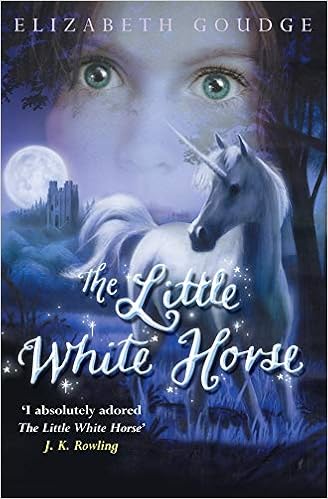
Elizabeth Goudge’s The Little White Horse is another author who was brilliant with food. I remember it from when I was a child and there was a tea scene that stuck with me. Her description was extraordinary and so evocative. I dreamt of having a tea like that. (It never happened)
Image result for the little white horse


I love the way Vashti Hardy describes food. She is another one who writes really evocatively: ‘Their parents made delicious pumpkin soup and pie, spiced with cinnamon; it tasted like autumn.’ (From Wildspark published by Scholastic, 2019)

Wildspark: A Ghost Machine Adventure
When I write I try to ensure that the reader can get truly involved in the experience and it is something they can relate to. It is part of the dramatization. With Flight, I did a lot of research into what they might be eating at the time. My current work in progress I have been writing some scenes where the characters have been involved in preparing food.


I am sure you all have your own favourite ‘food’ books perhaps in the comment section below tell me about them.

I was going to write a different post today as it is election day. I felt I ought to write something about hope but in all honesty, I am terrified. I am worried about today and what is going to happen. All I am going to say is that we have got to keep writing children’s books that show there is hope, there is a way out and that there is a way that they can take control. There are stories they can escape into.

 Keep writing and may today’s result be the one you want it to be.

Dr Vanessa Harbour
@VanessaHarbour

Thursday, 12 September 2019

It is all about the detail by Vanessa Harbour


Firstly, I must apologise for a slightly shorter post, but it is the chaos just before the start of the semester and our MA students are about to hand in their dissertations. I am even giving feedback in my sleep at the moment!

I have recently been lucky enough to read an uncorrected proof copy of Sally Gardner’s Invisible in a Bright Light. A book I loved and one you should definitely get when it is published. I loved it because the language and imagery were so rich. Sally Gardner, as always, was very adept at painting a picture with her words. Sometimes it can be a single word or a short sentence that paints a thousand words in the mind of the reader – I think that is possibly something we are all aiming for.


This is a topic I discuss a lot with both my students and the writers I work with at the Golden Egg Academy. It is the importance of details. It can make such a difference and convey so much information. For example, a reader is going to create a different impression of someone who drives a battered old red mini to someone who might be driving a bright red Ferrari. Clichéd, but you get the general idea.

It is a mistake I often see in early drafts and from ‘new’ writers. The information given is very basic. Giving nothing for the reader to work with. There is a caveat here, however. I am not suggesting great long descriptions should be included in the form of 'info dumps'. Another common mistake made. There is nothing worse and it takes the reader away from the narrative. It is all about dropping hints in that the reader can work with.

When I am writing I try to be more specific about colours. Instead of just saying green go for emerald green, instead of blue go for maybe a cobalt blue. Building on the colours so the reader has a better sense of what particular shade of colour you are suggesting. Using different names to make the reader think and experience within the narrative. There are two fabulous books that I use as a resource. They are glorious to just explore and can be a great source of inspiration if you are feeling blocked with your writing too.


The books are called:

Werner's Nomenclature of Colours by Patrick Syme published by The Natural History Museum (2018)

and

The Secret Lives of Colour  by Kassia St Clair published by John Murray (2018)

These are not the only resources on colour but the two I love the most. 


Recently, I was very flattered when I heard that my novel, Flight (Firefly) was being used as a research source because it was felt the way I wrote about horses was authentic This was hugely satisfying because I had done a great deal of research into horses, watching them, reading about them, learning as much as I could etc. Trying to get those tiny details right.

I must be honest when writing I do think it is important to try to get the detail correct as much as possible. I will spend a long-time researching information. Personally, I enjoy that side of writing, in the same way, I enjoy reading books that are rich with language and imagery. As a lecturer and mentor, one of the most satisfying feelings is when you see someone you are working with having a lightbulb moment as they realise the difference a detail can make to their writing. Seeing how it brings the text to life on the page.

I hope you all enjoy painting pictures with your words and once again apologies for this brief post. Will do better next month.

Dr Vanessa Harbour
@VanessaHarbour

Friday, 12 July 2019

Time to Write by Vanessa Harbour

L to R Gordon Smith, Antoinette Moses,
Melvin Burgess and me
Photo courtesy of Gordon Smith

Recently I had the pleasure of appearing at the Fly Festival of Literature for Young People. Before our event, Antoinette Moses, the brilliant organiser, author and lecturer, Gordon Smith, author and patron of the festival, and I were sat together having a wonderful natter about writerly things, as you do. The subject of finding time to write came up and it made think… a lot. Antoinette was very strict; she always writes a thousand words every day. Gordon admitted he used to write for many hours every day, but since having children it wasn’t quite so easy. This I could empathise with. I have periods of time when I can, like Gordon, write for hours on end, but then there are other times when I find it almost impossible to squeeze in even ten minutes, let alone finding time to write Antoinette’s thousand words.


Driving back to Winchester from Norwich I contemplated the idea of time even more. Time is so precious and time to write even more so. There is so much pressure on us that eats away at this precious writing time. It is almost impossible to be ‘just a writer’ these days. In 2018 ALCS produced a report which highlighted how an author’s income solely from actual writing had dropped to £10,437. With the best will in the world, this is not a salary anyone can realistically live on. (The government’s national living wage equates to £15,269) Consequently, the majority of authors are having to supplement their income through having another job, doing events, if children’s writers they might be doing school visits – though we all know due to funding cuts those are getting few and far between too, writing articles, anything that might bring in additional funds. These all require time and effort that take writers away from writing.

Personally, I have two jobs as well as being an author. I am a senior lecturer in creative writing at the University of Winchester and Head of Academic and Business
Preparing to do a Skype
event
Relations/Mentor and Workshop Leader at the Golden Egg Academy. I love these jobs as it means I get to work with people who love to write. However, it also means my head is often full of other people's works. During a recent marking period, I looked at nearly 300k words worth of work belonging to others, including my external examining work. That is not including my Golden Egg work. It is in these moments that it can be particularly hard to find the time to write. I have had to develop strategies in order to deal with all the words belonging to others floating around my head. I have written about it here. Basically, it is all about emptying those words out of my through freewriting before writing, literally vomiting on the page. Or refocusing by reading a different format, for example reading poetry before I write prose.  

Add into this mix the fact that being an author itself is time hungry. Gone are the days of writing your novel, handing it over and disappearing back into your ivory tower to write your next one. Now there is all the social media activity, maintaining your website as well as the events. Don’t get me wrong I do enjoy these, but they take time, a time when you could potentially be writing. I do have to be strict with myself over Twitter, for example, or I would be on there forever as there are some wonderful people on there. Fabulous teachers and librarians, other authors and aspiring writers, who are all fascinating to talk to. But conversing with them doesn’t give you time to write.  It is about prioritising. I allocate certain times of day for social media and use scheduling tools such as Tweetdeck to help me manage my time better and so that it doesn’t become overwhelming. However, I still feel I am not doing enough and not making enough connections. It is such a difficult thing to balance.

Also, when considering actual writing time, it is not just about time for putting words on a page. It is allowing time for pre-writing, latent processing where you are mulling ideas and plot issues over, doing research, world building and creating three-dimensional characters. There is so much more to writing than putting words on a page.
Time for latent processing

Going back to the wonderful Antoinette and her determined thousand words a day. This is something I am going to give a go at. I am very conscious that when I don’t write my mental health suffers, so I think I might also be helping myself by trying it. I have always been a bit wary of being determined to write every day because of that sense of failure if you don’t achieve it. However, listening to Antoinette talk about it, I realised that it didn’t matter what words were written, it was the fact you were writing that was the most important thing. This really inspired me as it felt less pressurised. It would mean that it didn’t matter how tired I was, or how full of other people’s words, something would come out of it. I already carry a notebook always to jot down moments of inspiration as they come, and I am going to make more use of that. I am going to take snatched moments to write as well that can feed into the focused thousand words. As Antoinette said, ‘It’s all about habit.’ I am going to create this habit as I think this will help me timewise in the long run. I’ll keep you posted, and we’ll see how I get on. I am looking forward to it. I also hope you all find time to write, feel inspired and a little less pressurised. 

Vanessa Harbour
Author/Lecturer/Mentor
Flight - Firefly 2018


Saturday, 15 December 2018

Acknowledgements (at last) in this season for gratitude - by Rowena House


Do you love the final approach to midwinter, with its long evenings & slow dawns? I do. I love the low shafts of light at sunset, and the small, magical rituals of the Solstice.

At this time of year our garden is endlessly busy with birds coming to the feeders, although, sadly, night-time in the valley where I live is mostly silent as the Tawney owls seem to have deserted us. Maybe they’ll return in January, when the vixens bark and dog foxes trot over the crown of the hill.

Meanwhile, the decorations are up, the fairy lights welcoming, and the complicated, long-distance arrangements for collecting and visiting relatives more or less in place.  In quiet moments, the melancholia of another year passing nudges at my elbow, but not for long.

This year, especially, I’m looking back with gratitude to work of the NHS, and the amazing care given to two of the people I love most in the world. I owe King’s College Hospital, London, the Royal Surrey, Guilford, and Derriford in Plymouth more than I can say.

Thanks, too, are long overdue to everyone who has been part of my journey to publication this year, but whom I didn’t acknowledge in the pages of The Goose Road, my debut novel.

This omission was partly because the Author’s Note was already extensive as I wanted to explain the origins of the story, particularly scientific discoveries about the causes of the 1918-1919 Spanish Influenza pandemics, which became secondary to the plot over time, but which, nevertheless, remained extremely important to me.

The other reason I didn’t include my Acknowledgements is because the list of people I have to thank is very long indeed.

High-time, then, to make good on that lapse.

Where to begin? Family is traditional, so...
 
Thank you to my husband and son, and also my father, who were always there, cheering me on, or, just as essential, not there, giving me space to write. (Heroically, they ate a great deal pub food over the years so I didn’t have to cook. Or shop. Or care very much about anything beyond the story.) Ta, guys, you’re the best.

Thank you very much, too, to talented writer besties, Eden & Lucy. Your advice, your intelligence, your creativity, your emotional support - not least in allowing me to let off steam - have been absolutely invaluable, as are your continued friendship and help. (Thank goodness for all-inclusive phone packages, otherwise we’d need best-sellers just to cover the costs of our calls.)
 
The friendship and support of our cohort on the Bath Spa MA in writing for young people has also been sustained, sustaining and fabulous. Thank you Jak, Sarah, Chris, Irulan & Philippa, and our tutors: Marie-Louise, Prof David, Dr Julia, Steve and Janine. Also the wider Bath Spa ‘mafia’ whose words of inspiration, examples of tenacity, and shared knowledge about this roller-coaster ride have kept so many of us keeping on for years.

Then there’s SCBWI-BI. What an organisation! I can’t name every Scooby to whom I owe a debt of gratitude (basically, you’re all brilliant) but I have to say a special thank you to Jan, Candy, Lesley, Yona, Elaine, Jenny and Amelia. There are so many more Scoobies I should include. Thank you all.

And there’s more! Like the lovely people at the Golden Egg Academy, Imogen and Ness, Maurice and Beverley, especially, and fellow eggitors and writers. I wish you all the best luck in the world.

And Team BookBound UK. One weekend together forged years of friendship and mutual practical and emotional support. Hugs to everyone.

A special shout out, too, to Liz, who joined fellow BBer & Scoobie, Tracey, & me in planning a debuts’ book tour, and made our Interesting Times in Scotland a fantastic first occasion. I loved our talks and hope to share more adventures around the UK next year.

There are so many other people I want to thank, like everyone who came to my launch party, and Sarah Mussi, Charlie Shepard, the entire Winchester Writers’ Festival crowd from way back, the York conference, too, Emma Darwin, Histeria (Mwa! Sue and Ally) and, and, and...

Before I stop, a final huge thank you to my superb Walker editors, Mara and Frances, and my fantastic agent, Jane Willis of United Agents. You have been stars in this extraordinary year. I am deeply grateful that, through you, Angelique’s story has travelled the world, and (fingers crossed) will continue to find new readers for a long time to come.

At the moment I’ve stepped back from writing Book 2 for reasons to do with the day job, but on my commute (which, to be honest, is to die for, along winding country roads, close to the sea) I think about my characters a lot: their families, their hopes and fears, and how it’s all going to meld together in a meaningful way in the end.

Sometimes I’m sad that I can’t afford to write their stories full-time any more, but there we are. Needs must. Anyway, in my heart I remain a full-time member of our writing community. A paid-up, card-carrying citizen of the Republic of Letters.

So Happy Christmas, everyone, and very best wishes for the New Year.

Wherever you are on your writer’s journey, I hope Santa brings you an agent, a contract, a lovely editor, great reviews, solid sales, and the time and mental space to continue to do what you love.

PS I had a lovely seasonal cat picture as a sign-off but my broadband link couldn't cope. Soz :-(