Showing posts with label Tamsyn Murray. Show all posts

Friday, 5 October 2018

This is Me Not Shouting - Savita Kalhan


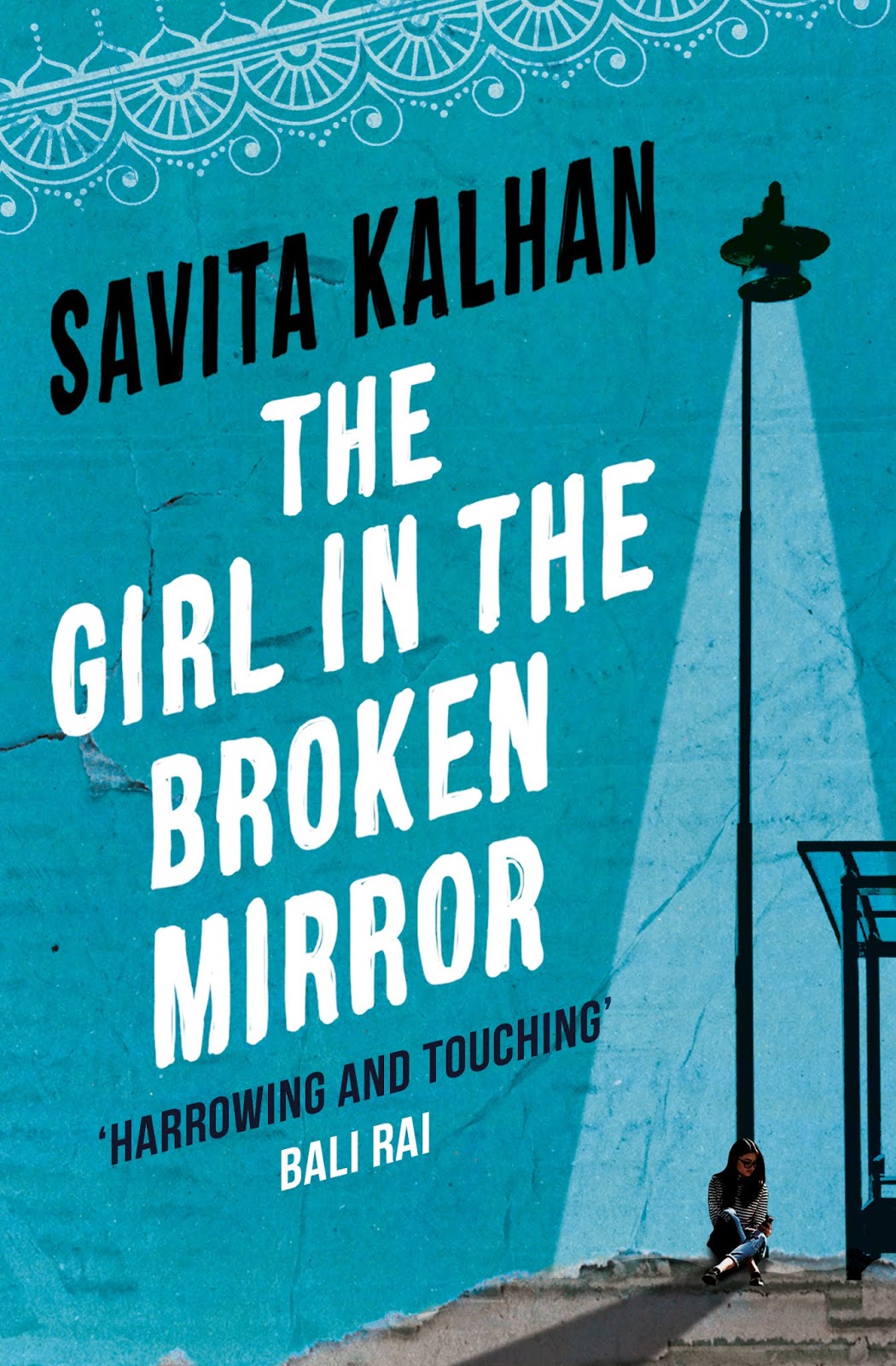
When my book, The Girl in the Broken Mirror, was published this year I had no idea that I would be
spending so much time and energy on all things not Work-in-Progress.

Publicising your book while not shouting about it is an art, I’ve realised. Clearly many authors with bigger publishing houses benefit from publicity departments setting up events, festivals, school visits, blogger events, blog tours etc. But those of us with smaller publishing houses are largely on our own, unless we can afford to hire a publicity person. 

When you see your peers invited to speak at various events, appearing at literary festivals, and so on, you do feel a certain amount of pressure. Shouldn’t you be doing those things too? Networking, blogging, tweeting, instagramming etc. How else will readers be aware of your book? Will your book ‘disappear’, unnoticed, unread, if you don’t step up?

Hiring someone to do the PR isn't an option for most writers, for obvious financial reasons. But the amount of work involved in being your own PR person can be immense, particularly if you are editing another book and trying to work on a WIP, and trying to have a life too...

Some of those non-WIP-writing things involve sending out hundreds of emails to bloggers to create interest in your book, and then organising your own blog tour, then follow up emails, arranging the dates, the guest posts etc. Writing guest posts for blog tours can take up a lot of time, depending on how long the blog tour is.


For me, the blog tours are well worth it. There are some amazing book bloggers out there and I was very lucky to have come across some champions of my book. I have an an international blog tour starting on November 1st with another group of YA bloggers.


So how much of all the non-WIP-writing and PR work is actually worth the time? Personally, I would say that most of it has been worth the extra effort. Maybe it will become easier if I’m lucky enough to have another book published. I just have to be a little bit more organised and also not bite off more than I can chew. It’s about working out how much I want to do and how much I can physically and mentally achieve without over-stretching myself.


September was great for non-WIP-writing events. I was in the Waterstones tent at Berkofest on Saturday 8th September, with Tamsyn Murray. I got to meet lots of adult authors too and hear Erin Kelly talking about her next psychological thriller.

I loved the YA Lit Cardiff event on 29th September! I was on a panel discussing identity in our books with Tracy Darnton and Katherine Webber (more on these events in my next blog in November). It's a new event organised by Karen Bultiauw and Claire Fayers, and it's set to be a great addition to the YA scene.


I was also invited to a school in Paris for an Erasmus Plus event, which included talks and workshops on my book with students from several countries across Europe,

I'm juggling hats - every writer has to do this - because book sales are important. I'm still trying to keep it fun.  

But, above all, there are stories I want to tell, and this is what I'm trying to remember - to make time to write.


The Girl in the Broken Mirror by Savita Kalhan, pub by Troika Books, 2018


Monday, 25 April 2016

Writer Friend Benefits by Tamsyn Murray

**Before I write this blog post, I need to disclose that I've just come back from a visit to Chipping Norton Literary Festival, which was so wonderful and so stuffed full of lovely writing friends that I fear I may not be entirely impartial...**

Anyway, I wanted to write a post in celebration of writer buddies. When I first started writing properly in 2008, I had no idea how close and generous the UK writing community was. I don't suppose I really thought about it much - I was too busy trying to write something worth reading. But somehow I stumbled across other writers. Some were published, others (like me) were just starting out but they all had something in common: they were warm and kind.

Fast forward eight years (EIGHT!?!) and I am constantly being amazed by the loveliness of other writers. I met Katie Dale for the first time this month, after a couple of years of knowing each other online, and not only did she collect me from the station before my event in Cambridge but stayed with me for the duration of the signing to keep me company. We talked about how much nicer it was to have a friend there and wondered whether it was an idea for other writers to 'buddy up' for events - after all, who hasn't felt the soul-destroying loneliness of a big pile of books and no one to sign them for?

Bali Rai, Adam Guillain, Charlotte Guillain, Candy Gourlay, John Dougherty, Phoebe the blogger, SF Said
Jo Cotterill, me, Cas Lester and Milly Weaver at ChipLit Fest last Thursday. So many LOVELY writers and friends!

I also recently announced a new middle grade series with Usborne, to be published this July, and I was delighted by the number of retweets and kind mentions on Twitter. It's worth pointing out that a large number of these came from other writers. And at the end of a day, when you want to vent a little about a paragraph that won't go right, or a character who stubbornly refuses to do what you want, who better to listen to you than another writer? They get exactly what you mean.

An editor once said to me that they didn't want to ask another writer for a cover quote because they felt there was an element of competition between the titles - I was amazed at this, because it's usually been my experience that writers are keen to give a leg up to another writer. And I do wonder whether the rest of the publishing industry understands this special relationship writers have with each other: this recognition of a kindred spirit even if you've never met before. It isn't true of every single writer, of course, but it's been the case for me so far.

So before I get even more mushy, why not show a little recognition for your writer friends today? Give them a compliment, or a retweet, or even a hug? Pay it forward and support an event they're doing. With a bit of luck, they'll return the favour and we all win.

I blummin' love you lot. Yes, even you...

Monday, 25 January 2016

Unsuitable for Boys - Tamsyn Murray

I read a book about football last year. It was called Whatever Happened to Billy Parks by Gareth Roberts and I enjoyed it immensely. The main character was male. There were a lot of other male characters. There was a lot of football detail but that was OK, because I like football. The story was engaging, the writing rich and gorgeous and evocative. I closed the book at the end with a happy sigh and immediately passed it on to a friend. And then another. I recommended it to a few people too. You get the idea: I loved the book.

Now imagine someone had told me that book wasn't meant for me. "That's a book for men," they might have said. "You won't like it."

I like to think I would have told them to stick their gender preconceptions somewhere uncomfortable and read the book regardless. But what if I'd been less confident in my tastes and more swayed by the opinions of others? What if the person who said it to me was someone I should respect and listen to? What then? I might have put the book down and read something else...something safe and expected. And I would have missed out on the fabulous story and great writing. I would have missed that experience.

Now onto a less hypothetical situation. I had an enquiry about a school visit recently. It didn't come directly from a school but via a third party (who shall remain anonymous) and they wanted to know if I was free to visit a school. 'Sure,' I said, and gave some possible dates. A few days passed and I heard back from the very embarrassed third party: the school didn't want me. They wanted an author who was more suitable for boys.

I don't consider either myself or my writing to be unsuitable for boys. The Stunt Bunny series (featuring a female rabbit and her female owner) are popular with boys and girls. My events are (all modesty aside) a smash hit with boys and girls - they love hearing about my (girl) rabbits and the inspiration behind the Completely Cassidy books (my Powerpoint involves photos of my female dog and my daughter). My events are interactive - the kids get up and help me to tell the stories behind my books: they hula-hoop and plate spin and pretend to be rabbits and spiders and out-of-breath authors. And let me tell you, the boys are just as keen as the girls. Blimey, are they keen.

Occasionally, I get asked (usually by a boy) whether I will write a book with a male main character so that they can read it. I always feel sorry for the asker of this question, mostly because they are about to get something they probably didn't expect: a fiery lecture about how books are simply BOOKS, not gender-specific. I try to rein it in a bit - it's not the asker's fault, after all. Kids have always been taught that there are books for girls and books for boys. Thankfully, this is changing but it's definitely still a thing. I know girls will read books with boy MCs more readily than boys will read about girls but I think it's more because people tell boys they won't like books that feature girls. Several authors have told me stories about experiences similar to mine with the school booking (and there were worse stories too) so I know it's not an isolated experience. And I'm not bleating about a lost booking or missed income - I'm sad for the kids at that school. I'm worried that they are missing out on lots of fabulous books because some of the adults around them still think there are books for boys and books for girls. If books allow us to slip into someone else's shoes for a short time, what kind of message does that send - that it's OK for girls to pretend to be boys but heaven forfend boys should pretend to be girls?

When the fabulous Mary Hoffman heard what had happened to me, she said in my situation she would get a t-shirt made up that read 'Unsuitable for Boys'. So I've done exactly that and look forward to wearing it at every available opportunity. And then people will ask me about it. I can't wait to tell them what it means.


Saturday, 25 April 2015

Which Superhero Would YOU Be? by Tamsyn Murray

I don't know about you but I've never really thought of myself as a superhero. I'm more of 'quietly gets on with things' kind of operator rather than the type who single-handedly fights her nemesis and saves the world while looking awesome in skimpy tight clothes and snogging the love interest. And then I organised an inspirational LOVE Writing day at a fancy hotel in Hertfordshire and invited Miranda Dickinson and Julie Cohen along as guest speakers, and they taught me that there's a superhero inside me, inside all of us, struggling to get out.

The idea is simple and comes from this TED talk by Social Psychologist Amy Cuddy, who suggests that 'power posing' for a short amount of time before an important or stressful event can give us the right body language and self-assurance to do better. It can confer self-confidence and an aura of awesomeness. Miranda suggested we find a pose that worked for us - our Superhero Pose - so that we could invoke the power it gives in our everyday lives. And to help us on our way, Miranda made us practise our pose in front of each other.


As you can see, we looked pretty amazing. And the best part was that it actually worked - after thirty seconds of holding the pose of a strong, confident person, I actually felt stronger. So the next time I have something terrifying to say or do, I'm going remember how it felt to channel my inner Supergirl and tell myself I can conquer the fear to stand tall. Or was it Wonder woman? Or maybe just Superwoman? Whatever helps me to stand tall.

Who would you choose to copy in your Superhero pose and why? And don't forget to strike the pose as often as you need to. It's your key to feeling better about yourself and the thing you're about to do. Now...which superhero shall I be today..?

Wednesday, 25 February 2015

Authors Who Launch - Tamsyn Murray


You know how it is when you’re months away from publication – a launch party seems like a must-have accessory for your forthcoming book. Good friends and acquaintances, glasses pleasingly filled with Prosecco, gathered around welcoming your book to the world. Depending on the kind of author you are, there could be laughter or there could be a lot of intense discussion around the existential themes of your work. I suppose there could be both. Your editor talks at length about your brilliance without so much as a hint of irony or gritted teeth. In an ideal world, a semi-clothed Ryan Gosling would burst from a cake and serenade you (but that might just be me). And everyone will buy a book, which you’ll sign with a carefree flourish and not a trace of cramp.

Time passes and suddenly it’s the week before your book comes out. You’re in a tailspin trying to get everything done and belatedly, it occurs to you that you need to book a party venue and possibly order some drinks. An avalanche of anxiety tumbles down from Mount Paranoia – how much wine do you need? Is twelve bottles enough? What if no-one comes? And does it matter if they do? What do launch parties actually do? WHY ARE YOU EVEN BOTHERING?

Tomorrow is the day of my launch party for Completely Cassidy: Accidental Genius. It’s a book that has taken a long time to arrive, for one reason or another, so I wanted to celebrate the fact that it had made it into being – an actual book that I can hold in my hands and stroke. Hence the party. To be honest, I don’t think there was any chance that I wouldn’t have a party. I don’t expect it to sell oodles of books (although a few would be nice). I don’t expect it to make the society pages (or any pages, really, unless someone kindly blogs about it). What I do expect is to laugh and catch up with people I don’t see very often and wear an Elvis wig while drinking a sherbert cocktail. I want to take a few hours to contemplate the fact that my publisher and my agent and I did a good thing – we made a book that readers will enjoy.

There are arguments for and against launch parties but I think if you decide to have one, then do it for the right reasons – to celebrate getting your book out there. Then if anything else comes out of it, it'll be the icing on the Ryan Gosling cake.

NB To anyone coming to my launch party, I have booked a venue and there will be drink. Honestly.

Tuesday, 25 November 2014

Introverts R Us - Tamsyn Murray

My name is Tamsyn and I am an introvert.

It took me a long time to realise this, mostly because I am also (for want of a better phrase) a bit of a show-off. I used to put my hand up when I knew the answer at school. I do am-dram, which involves singing and dancing and acting, sometimes in lead roles, in front of hundreds of people. Since I became a writer, the performer in me has been even busier, because what are school visits if not extended performances? I can do interviews for TV, and smile and chat to people I've only just met in social situations, make small talk without any apparent paroxysms of terror. How can I do all of that and not be an extrovert?

It took one of those lists you see popping up on Facebook every now and then to teach me the truth about my nature. Things You Should Know About Introverts*, it said. And I thought that as a writer, I knew plenty of introverted people so maybe it was worth a read.

Point 1 made me pause: We need to recharge alone. I do, I thought. In fact, there's nothing I cherish more than a bit of alone time (although alone time = working time for me because alone time is a rare commodity) and I constantly feel I don't have enough of it. And certainly after an event of some kind, what I yearn for most is to be on my own. Hmmm.

Point 2: We don’t hate being around people, but we probably hate crowds. I thought about this for a while because I wouldn't say I hate crowds but I don't love them either. Unless it's a festival crowd, in which case I love them all. But I do quite often feel overwhelmed by crowds - the urge to go and find a quiet place to sit is strong (or sometimes even to go home) and I get around this by starting random conversations with people. This is a trick I have learned and I almost always enjoy the conversation.

Number 3: We don’t mind silence.This one depends on the silence. I had a boss once who used to come and sit in my office and say nothing. Those were not good silences and I would say anything to fill them (which resulted in more silences because I had said something stupid.) But there's nothing wrong with a companionable silence.

And point 4: Just because we are introverted doesn’t mean we are shy. Very few people would describe me as shy. But by the time I read this one I was starting to realise that there was a good possibility I was an introvert.

Number 5: We can turn on an extroverted personality when necessary, but it is especially draining. This was a clincher for me - I know I do this. When I'm in a crowd and I want to talk to people because I feel uncomfortable (point 2) I switch on. Or for a performance. Actually, being extroverted is a lot like acting, except that I'm just being a much brighter version of myself instead of playing another character. And afterwards I am invariably exhausted.

Point 6 was: We aren’t judging you. And again, this depends on the situation. If you are supporting UKIP then I am judging you pretty hard.


7 made me cringe in shame because I know I do this: We secretly love it when you cancel plans. It doesn't mean I don't like you, it just means I don't have to be switched on.

Number 8: We can get very wrapped up in our own thoughts. AKA Daydreaming. Thinking time. Plotting. So I'm not ignoring you, honestly. I might just have forgotten you are there.

At number 9 we had: We can be pretty bad at connecting. And I wondered about this because I think I am good at connecting. Then I realised it's because I am good at listening - I like hearing other people's stories. And as luck would have it, listening means I have to talk less.

In at number 10 was: We don’t like to hang around. I decided this one depended on the situation. If I'm comfortable somewhere then it can be hard to get rid of me. But in a crowd situation when I've been switched on for a while, an unguarded exit can be too difficult to resist.

The last point was: We have strong opinions. And I decided this wasn't an introvert or an extrovert thing, because almost everyone I know has strong opinions about some things. Writers in particular have strong opinions - why else would we write?

So on balance, I decided that I'm an introvert. And it's nice to know finally that it's OK to want to be alone, to enjoy being on my own. Many of my writer friends are great to be around because they know how that feels, because they are introverts too. But ultimately, I'm not sure it really matters what you are, except that it feels good to know even when I'm alone, I'm not really.


*Things You Should Know About Introverts taken from http://playfullytacky.com/

Monday, 25 August 2014

Why Readers and Writers are the Best People by Tamsyn Murray

Last week, I had a very sad experience. We found a stray cat in the woods and brought it home, hoping to find its owner. The cat was horribly thin but very friendly and I was certain he belonged to someone, although he had clearly been lost for some time. So we did what we could - fed him, stroked him, nicknamed him Huck and the next day, took him to the vet to see if he had a microchip.

The vet had bad news: Huck wasn't chipped. Even worse, he needed a raft of expensive tests and treatment, which I couldn't afford on my own. So I put a shout out on Twitter and Facebook, asking people to donate if they could to Help Huck to recover from his ordeal and get back to his family. Many, many people donated and we smashed the £500 target in less than twenty-four hours. It didn't take long before I noticed something: almost all of the people who gave money were writers. Now you might think that there's nothing so very unexpected about that - I know a lot of writers, after all. But I think there's more to it than that. I have a few thousand followers on Twitter, several hundred Facebook friends. The proportion of people donating from that pool was very small, especially when you factor in retweets and shares. And they were mostly writers. Lovely, lovely writers.

I think it's because as writers, we empathise. In Huck's case, we empathised with the owners, searching in vain for their lost cat. We imagined he was our cat, lost and scared, and hoped that someone kind might find him and do what they could to help him. Some of us put ourselves in Huck's place, lonely and hungry. And because we could imagine ourselves in some or all of those situations, we were moved to do something to help. And we wanted a happy ending, the one where Huck got better and was reunited with his family. We wanted that so much.

Ultimately, the kindest thing for Huck was to let him go to sleep one last time, without fear and hunger. I am still desperately sad about that. But one of the things that helped me do this very difficult thing was the messages I received from the people who'd donated. Eloquent, heartfelt messages of support, reassuring me that I had done the right thing, thanking me for caring and pledging support to my idea of using any left over donations to create a small bursary for any owner who was struggling to pay for their pet's care. Some people donated even after I'd told them Huck had gone, wanting to help another animal in Huck's name. These people were writers too.

It's proof (if proof were needed) that writers are the best people. Writers empathise to make their characters and stories work. Of those people donors who were not writers, I am willing to take a gamble that they are readers, because readers make the best people too. And it's why I will argue and argue that children need to have access to books, need to be readers for pleasure. Reading teaches empathy and empathy makes the world a better, kinder place. In fact, we all need to be readers.

Friday, 25 July 2014

Turning to Crime - Tamsyn Murray

Psst...PSSSSST!

You...yes, you...come here, I've got a confession to make. I've been a naughty girl, see. I've been thinking bad thoughts. I have been working out the best ways to break the law. And last weekend, I met up with a bunch of people who were doing exactly the same thing. I went to the Theakston's Old Peculier Crime Writing Festival in Harrogate.

First of all, can I say that there can be no finer place for contemplating murder than Harrogate. It's genteel and gorgeous and manicured to within an inch of its life. If you were to bump someone off, I feel the chief concern would be not getting blood on the geraniums. But we weren't there to admire the blooms or take in a cream tea in Bettys Tea Rooms (although naturally, I did) - we were there to consider dark deeds and twisted motives. We were there to bring on a crime-wave.

TOP Crime Festival is a great mixture of readers and writers. Because I don't write crime, I was technically there as a reader and I certainly picked up a lot of new books but I actually went as a writer, to see how other authors put their stories together. I'm a great believer in being inspired by fellow writers and I knew from the very first talk I attended that I'd made a good choice in coming to Harrogate. Not only did I flesh out my crime novel idea (well you knew that was coming, didn't you?) but I learned a lot too. Denise Mina taught me about Narrative Inevitability (the way the story arcs towards an inescapable conclusion), Natalie Haynes explained that Oedipus Rex was the first whodunnit? SJ Watson revealed the meaning of the Rubber Ducky moment, where an antagonist confesses that the reason he is a cold-blooded serial killer is because his mother took his rubber ducky away when he was six. And I know way more than I need to about the effects of rats on corpses and the inner workings of saunas.

One of my biggest light-bulb moments came during JK Rowling's interview as Robert Galbraith. In her discussion with Val McDermid, they touched upon why whichever book you are writing feels like your worst story ever, and why the book you want to write next is so enticing. And I was amazed to discover that JK Rowling herself suffers from the same insecurities and fears we do. I frequently tell my writing students that every writer I know fears they might never write another book again. At TOP Crime Festival, I discovered that it really is true: even the most successful among us struggle with self-doubt and the conviction that our WIP is a steaming pile of poo.

Now I'm back home and I'm still thinking about breaking the law. The difference is that I know exactly how I'm going to do it now. Be afraid. Be very afraid.

Wednesday, 25 June 2014

Why Writers are Magpies - Tamsyn Murray

It struck me recently that writers are a bit like magpies. We look out for snippets of pretty shiny things to appropriate for our stories - a line of dialogue here, a character description there - and secrete them away until we need them. Then, when we're ready, we gather all our scraps up and weave them together to make something out of them. And I decided that this process reminded me a little of nest building.

Think about it: we build the structure first - these are the hard twigs, the acts and the scenes. Sometimes the twigs need to be broken a bit to make them fit but that's OK. Once our twigs are all knitted together, we add feathers and bits of moss - the characters, settings, description and dialogue. We make the story a good place to be. It can take several attempts to get the feathers in exactly the right place so that we achieve the effect of making the nest user so comfortable that they forget they are in a nest at all. And lastly, we add our shiny borrowed snippets - the decoration that sparkles and twists in the wind and makes our nest stand out from all the other nests.

I freely admit to being a magpie. In fact, I have a whole notebook of stolen snippets. Last night, on the train, I borrowed an old soldier who was on his way home. I stole sneaky little glances and captured every detail about him, from his spit and polish shiny boots to the brass buttons on his cuffs and the regiment badge on his jacket.

So come on, writers, admit your true nature and tell me what you've taken recently for your nests. Magpies love company.

Friday, 25 April 2014

Never Put Your Giraffe in a Scarf - A Cautionary Tale by Tamsyn Murray

 
First, a confession: I broke my own rule. As you can clearly see, my giraffes are wearing scarves. But I can justify my mistake - where I live, 99% of the giraffes could wear scarves without a single problem. It's only when you go towards the Midlands and the North that giraffes might get a bit of stick for their accessories. Why? Because in a southern accent, giraffe and scarf can be made to rhyme. In a northern accent (see also American), they can't. And before you know it, you have hoards of disgruntled parents (OK, two so far) complaining that your rhyming picture book DOESN'T ACTUALLY RHYME.

What I should have done, of course, is put my giraffes in the bath. That rhyme works no matter what accent you use (although I'm struggling somewhat with South African). And I suppose that's the point of this cautionary tale - if you're grabbed by the unshakeable urge to rhyme, make sure it works universally (don't worry about Mars - they don't understand the concept of rhyming there). In fact, I try to deter my students from writing rhyming picture books - they're a hard sell because obviously publishers need to ensure a text translates to as many territories as possible and rhymes rarely translate well into other languages. In the case of Snug As A Bug, they don't translate at all - the only co-editions of this little picture book are US and Australia. Even then, I get tentative enquiries from parents in California asking if I can suggest a way to make geeraff rhyme with scarff. I mumbled a bit about British charm and hid for three days.

So learn from my mistake, all you picture book writers: if you must make your picture rhyme, never put your giraffe in a scarf.

You're welcome.

Tuesday, 25 March 2014

In Which I Am Lost For Words - Tamsyn Murray

I'm not often lost for words (obviously a jolly good thing in a writer) but tonight I was asked a question about writing I didn't know how to answer. As you might already know, I teach Writing For Children at City University and we're approaching the end of the course, where the students are preparing to submit a piece of writing to me for feedback. And this evening, one of my students told me he had been reading a how to write book and one of the things it had apparently advised was to avoid 'friendly uncle' type characters in your stories as these could be perceived as immunising children against the risks of potential child abuse. Should he cut the mad professor character he had in his story, my student wanted to know, in case it was taken the wrong way and it went against him when being read by agents and editors?

My first reaction (after a startled, 'What?') was disbelief that any writing book would advise this. Then I started to think about it and I could kind of see what the book was getting at but still found it mind-boggling that anyone would come away from any of the children's book I've read with that thought uppermost in their mind. There are hundreds (thousands) of innocent characters in books whose actions could be misconstrued if you chose to see them in that light - does that mean that they shouldn't exist? Or is it offensive to friendly uncles and men in books everywhere to tar them with this horrible brush?

I failed to come up with a satisfactory answer to the question, partly because I was struggling to get my head around the idea. I advised the student not to get too bogged down in that kind of advice - to write the story and the characters the way he sees them in his head and not allow them to be subject to the projected interpretations of adults. I also said it might be a nice idea to make his nutty professor a woman, since it's a reasonable subversion of a well-used trope and side-steps the whole issue. But I walked away uneasy. Obviously, we have a responsibility to our young audience when we write. How far should we take that responsibility?

Monday, 25 November 2013

Vine? What's Vine? by Tamsyn Murray


Remember when YouTube was born? Anyone? Anyone?

OK, let me refresh your memory; back in 2006, it was pretty much wall-to-wall grainy home videos and bad Gnarls Barkley covers. Thankfully, we’ve come a long way since then; with over a billion unique users, YouTube has evolved into a monster, with something for pretty much everyone. It’s also home to an awful lot of book trailers –  publishers often have their own channels and post everything from reviews to author interviews. Some of us have put up clips of themselves reading extracts from their latest book. But if YouTube is the daddy of all content vehicles, then Vine (Twitter’s mobile video-sharing app) is its illegitimate baby. And it’s growing up fast.

At first glance, Vine looks a lot like YouTube only shorter; it’s a six second video clip in a never-ending loop designed to melt your brain. But get past those twerking tutorials (note for those unfamiliar with this term: imagine a jerky Haka being done by people in teeny-tiny hotpants to Crazy in Love by Beyoncé and you’ve got the picture) and there’s some inspired creative content. Vine has over thirteen million users and they’re a hungry bunch – like tech-savvy locusts, they consume fast and move onto the next thing. If you’re creative and clever, that next thing could be you.

Alright, so one six-second video isn’t going to make your book a bestseller, but it does offer you something new and different to offer your readers, especially when you take into account that a whopping 55% of today’s web traffic is video. At the very least it might generate some elusive word-of-mouth buzz. Although it helps if you are a fabulous illustrator – see this lovely vine by Benji Davies for his picture book, The Storm Whale – all you actually need is a camera phone, the Vine app and a bit of imagination. I plan to create a series of Vines to promote my Cassidy Bond series next year and I’m using what’s already out there as inspiration. Check out Meaghan Cignoli, a NYC photographer who is now a full-time professional Vine-ographer, for ideas.

Thankfully, it appears the twerking is entirely optional.

Friday, 25 October 2013

Meeting Your Heroes: Part Deux - Tamsyn Murray

So. Last night, I went to Waterstones Piccadilly to hear Susan Cooper in conversation with the most excellent Marcus Sedgwick. It was an event I mentioned this time last month, when I burbled on about wanting to marry the hero of The Dark Is Rising, Will Stanton. And I might also have blethered on about what a privilege it was to be meeting an author I admired so much. The event itself turned out to be everything I expected and more.

Marcus and Susan in conversation

Marcus began by asking Susan about her favourite childhood authors - she mentioned E Nesbit and Arthur Ransome. They moved on to discuss Susan's academic life at Oxford University and she immediately blew most of the audience away by revealing her lecturers had included one J R R Tolkien and a certain C S Lewis. Tolkien, she said, opened his lectures by quoting Beowulf in the original Anglo-Saxon and then went on the mumble a lot for every lecture after. Lewis, on the other hand, was amazing. As if this wasn't awe-inspiring enough, Susan then mentioned she'd later compared notes on these envy-inducing lecturers with Alan Garner (at which point I began gibbering into my Pinot Grigio), who was studying Classics at Oxford at the same time. She went on to say that she married an American and moved to the United States in 1963, where she's lived ever since.

Marcus wondered what her observations were when she arrived in America as a young British woman. Susan replied that the first thing she noticed on getting off the plane was that the police carried guns. She found the US quite liberating compared to UK, but very right wing. These days Susan still considers herself British, although she holds dual nationality and might possibly be 'rootless'.

When asked about the strong sense of place that permeates all her books, Susan told us that most of it arose from homesickness for Britain, at least in her earlier works. Her latest novel, Ghosthawk, is different; she became fascinated with the land around her home in Massachusetts, land which had become home to English settlers some 400 years earlier but that had supported Native Americans for much longer. She researched the novel's background using primary source documents and some contemporary works. Ghosthawk tells two stories; firstly of Little Hawk, an eleven year old Native American boy, and then of John Wakeley, the son of English settlers. As the novel progresses, these stories become inextricably intertwined. Initially, Susan considered making the white protagonist a girl but realised early on it was unrealistic for the era. And for those who want to know whether Susan is a plotter or a pantser, she had this to say, "I know the beginning and the end and not much in the middle."

Bowing to the inevitable, Marcus moved on to discuss The Dark Is Rising sequence (cue much audience satisfaction and over-excited squeaks from me). Susan explained that she drew directly on places she had known when she lived in Britain when choosing locations for the books - North Wales (where her mother grew up), Buckinghamshire (where Susan grew up) and Cornwall (where her family holidayed). When asked whether it was true that she had written the last half page of the final book, Silver On The Tree, before she had finished the first, Susan told us it hadn’t quite happened that way. The first book in the series was written as a standalone story which she left open-ended because she liked the characters so much. A skiing trip gave Susan the idea for The Dark Is Rising novel but it wasn't until she realised it should be a sequel to Over Sea, Under Stone that it began to really work. She went on to create four more titles and plan the series. "It was like a symphony," she said, "I needed to know where it was going."

Marcus handed over to the audience for questions and Jo Cotterill was by far the quickest on the draw. She asked whether it was true that Susan had round windows in her house with the symbols from The Dark Is Rising books incorporated (it is - there are two windows, each with one symbol). When asked whether the Cold War between the US and the USSR had influenced her writing, Susan replied that it was actually World War II which fostered a belief in them and us, goodies and baddies, the light and the dark. When faced with a question about what she might have done if she hadn't been a writer, she told us she might have been a gardener. "I like gardening, perhaps I'd have done a degree in horticulture."

Jo also asked what Susan was working on now. She replied that she was touring now but she had a small idea which she hoped would grow into a bigger one.

I'm pretty sure that's what every single person in the audience hopes too, Susan. Now, where do I sign up to meet Tolkien?

Susan's remaining tour dates are here.

Me, with Marcus and Susan, hoping their brilliance is catching (also wondering why I didn't wear a nicer jumper)