Showing posts with label teen/YA lit. Show all posts

Friday, 5 October 2018

This is Me Not Shouting - Savita Kalhan


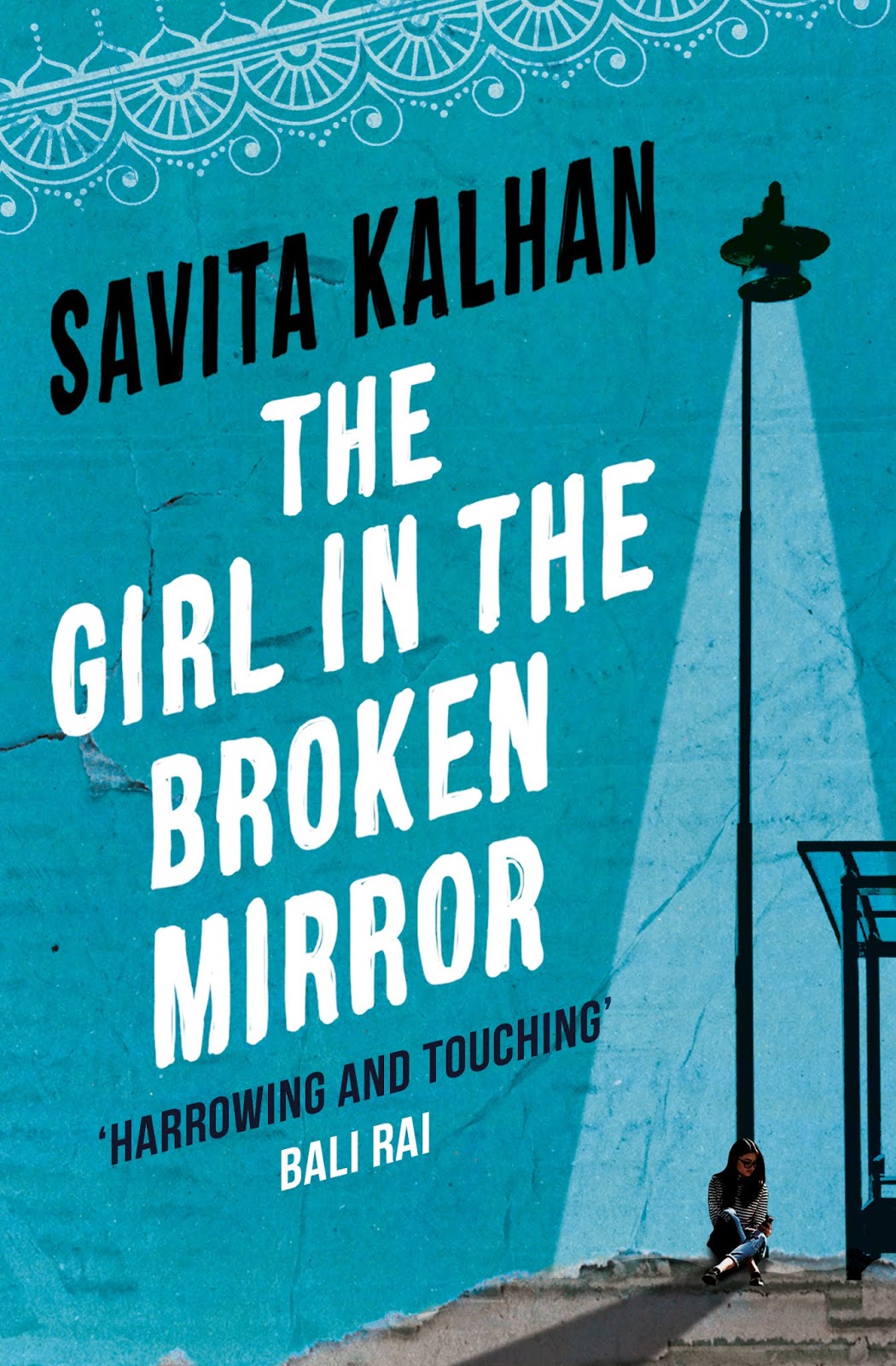
When my book, The Girl in the Broken Mirror, was published this year I had no idea that I would be
spending so much time and energy on all things not Work-in-Progress.

Publicising your book while not shouting about it is an art, I’ve realised. Clearly many authors with bigger publishing houses benefit from publicity departments setting up events, festivals, school visits, blogger events, blog tours etc. But those of us with smaller publishing houses are largely on our own, unless we can afford to hire a publicity person. 

When you see your peers invited to speak at various events, appearing at literary festivals, and so on, you do feel a certain amount of pressure. Shouldn’t you be doing those things too? Networking, blogging, tweeting, instagramming etc. How else will readers be aware of your book? Will your book ‘disappear’, unnoticed, unread, if you don’t step up?

Hiring someone to do the PR isn't an option for most writers, for obvious financial reasons. But the amount of work involved in being your own PR person can be immense, particularly if you are editing another book and trying to work on a WIP, and trying to have a life too...

Some of those non-WIP-writing things involve sending out hundreds of emails to bloggers to create interest in your book, and then organising your own blog tour, then follow up emails, arranging the dates, the guest posts etc. Writing guest posts for blog tours can take up a lot of time, depending on how long the blog tour is.


For me, the blog tours are well worth it. There are some amazing book bloggers out there and I was very lucky to have come across some champions of my book. I have an an international blog tour starting on November 1st with another group of YA bloggers.


So how much of all the non-WIP-writing and PR work is actually worth the time? Personally, I would say that most of it has been worth the extra effort. Maybe it will become easier if I’m lucky enough to have another book published. I just have to be a little bit more organised and also not bite off more than I can chew. It’s about working out how much I want to do and how much I can physically and mentally achieve without over-stretching myself.


September was great for non-WIP-writing events. I was in the Waterstones tent at Berkofest on Saturday 8th September, with Tamsyn Murray. I got to meet lots of adult authors too and hear Erin Kelly talking about her next psychological thriller.

I loved the YA Lit Cardiff event on 29th September! I was on a panel discussing identity in our books with Tracy Darnton and Katherine Webber (more on these events in my next blog in November). It's a new event organised by Karen Bultiauw and Claire Fayers, and it's set to be a great addition to the YA scene.


I was also invited to a school in Paris for an Erasmus Plus event, which included talks and workshops on my book with students from several countries across Europe,

I'm juggling hats - every writer has to do this - because book sales are important. I'm still trying to keep it fun.  

But, above all, there are stories I want to tell, and this is what I'm trying to remember - to make time to write.


The Girl in the Broken Mirror by Savita Kalhan, pub by Troika Books, 2018


Thursday, 5 February 2015

Choice and Libraries: If You Can't Buy it, Borrow It! by Savita Kalhan

In my blog for An Awfully Big Blog Adventure back in December, I shared a list of some of my favourite teen and young adults books that I'd read in 2014. You can read that blog here - Favourite Teen/YA reads of 2014. Commenting on the blog, David Thorpe asked me an interesting question – why were those books in particular on my favourite reads of the year? His question made me wonder if there was something that linked the books, a shared theme, a particular voice, or a genre. I looked at the list and at first thought: no, the books are all very different. Some of them were written in the first person present, others in the third person past; some had a male POV, others a female. Many of them were set in different parts of the world, or in an alternative world, or in a different time.

All the books in my list are richly diverse in terms of when and where they are set. Most of them are set in different countries, from Denmark to Ireland, Germany to the USA, and  I think that’s part of their lure for me. Many of the books are set in a different time or era: from the 19th Century to a version of the future, or even a parallel time.

Some of the books are fairy tale like. The Hob and the Deerman reads like a wonderful fairy tale and reminds me of all the fairy stories I read as a child. I would happily invite a Hob to come and share my home. Jonathan Stroud’s Lockwood and Co, is set in London – but although the places in the book may be familiar to a Londoner, it’s not quite like the London we know. It’s beset by ghosts and ghouls that only children have the ability to see and deal with. So, when darkness falls, the adults lock their doors, leaving the child agents to do their work.

It was just as I finished reading Out of the Easy by Ruta Sepetys at Christmas, that I realised there was a common thread between all the books in my list. Out of the Easy is the story of Josie, the daughter of a prostitute in New Orleans in the 1950’s. It’s a book that I would definitely include in my list of favourite teen/YA reads of 2014.

It is the fact that they are set in a different time and place and sometimes in a different world which sets these books apart, and I think that’s what I love about them. All the writers beautifully evoke their setting, so that by the time you’ve finished their book you come away feeling as though you really know that place.

It’s not only the variety of world settings or time they’re set in that set these books apart for me, but also the variety in the lives of the characters. In both of Tanya Landman’s books, Buffalo Soldier and Apache, the main characters are girls: one is a black slave and the other is an orphaned Apache. If I had a teenage daughter, I would be recommending them to her. (Luckily I have nieces to whom I can recommend books!) But my teen son has no problem with books where the main character is a girl, and is interested in reading both.

The choice available in many bookshops these days does not fully reflect the diversity and richness of teen and young adult fiction. Although bookshops have more space devoted to teen/YA fiction, a lot of that space is still devoted to genre fiction, or to the bigger well-known authors. It would be great to see much more diversity on their shelves too. Most main libraries stock far more richly diverse fiction, although, sadly, smaller local libraries are seeing their stocks dwindle, in some cases (as here in Barnet) being purposely run down by councils prior to being closed or scaled down. Yes, you can still request a book from another library, and in some libraries they will order it for you if it’s not in any of the borough’s libraries. But most of these libraries are now run by volunteers or library assistants, and this is true of virtually all of Barnet’s libraries, and whilst they are good, a qualified librarian’s skills and guidance are not available to kids looking for help. As a child and a teenager, Wycombe Library had a brilliantly stocked library, fantastic librarians, and the choice of children’s books was astounding – I should know as I read practically every book in there!
Here’s an unashamed plug for libraries - it’s National Libraries Day on February 7th. Events are happening in libraries across the country from Friday 6th into the following week. If you have a minute, check out the link here to see what’s going on in your local library.


Here’s the hashtag for National Libraries Day on Twitter #NLD15
Or share a library #shelfie
Follow @NatLibrariesDay on Twitter and you’ll know what’s going on.


So the books are there – if you can find them or have been made aware of them. I’m hoping 2015 will be even more richly diverse in teen and young adult literature. I’m sure I’ve missed a few great reads in 2014, so please feel free to leave your recommendations in the comments. And I’d love to hear what makes a book stand out for you.

My website
 
Twitter


Friday, 5 December 2014

Favourite Teen/YA Reads of 2014 by Savita Kalhan


In January this year I decided to challenge myself to reading 55 books. I did it through Goodreads to track what I’ve read and when I’ve read it. Some of the books I’ve read have been for ‘work’, some for research and others for sheer pleasure.

My to-be-read pile is always huge and there never seems to be enough time for reading, so doing it this way keeps me on track – the message: you’re x number of books behind is enough to spur me on to make more reading time. Apparently, I’m ‘on track’, with a few weeks to go before December 31st by which time I’ll hopefully have made it to the magic 55 books read mark. Looking back over my list of books read, I thought I’d share some of my favourite teen/YA reads of the year.
 

Buffalo Soldier by Tanya Landman


The Hob and the Deerman by Pat Walsh


The Case of the Screaming Staircase by Jonathan Stroud

Wish Me Dead by Helen Grant

Between Two Seas by Marie-Louise Jensen
The Unicorn Hunter by Che Golden

 
Apache by Tanya Landman


Eleanor and Park by Rainbow Rowell
 
The Ocean at the End of the Lane by Neil Gaiman


I’ll stop there or else it’ll end up being a very long list! It also makes me wish I had read more of my to-be-read pile.

I hope you’ll share some of your favourite teen/YA reads of the year in the comments – the more book recommendations I get the bigger my smile! Merry Christmas!
 
Facebook

Twitter


Monday, 5 May 2014

Freedom to Read by Savita Kalhan


Last week I read about a girl, a teenager from Idaho, who, after her school banned Sherman Alexie’s The Absolutely True Diary of a Part-Time Indian, decided to start up a petition to campaign for the book to be unbanned. The book was on the curriculum for many schools in Idaho, but following a campaign by some parents it was removed on the grounds that it contained profanity and sexual and anti-Christian content.

 
The teenager, Brady Kissel, decided to mount a petition and got 350 signatures from fellow pupils asking the school to re-instate the book, but to no avail. The issue was picked up by Rediscovered Books, a local book store, who ran a crowd funding exercise to raise money to buy each of the 350 signatories a copy of the book. They raised $3,400, which was more than enough. Brady and the bookshop gave away copies of the book outside her school on World Book Day, but the story escalated further when some parents called the police to stop her, stating that Brady was giving children books without their parents’ consent.

The police, however, saw nothing wrong in what she was doing and let her carry on.

The national press then picked up the story and, eventually, the publishers of the book became involved and decided to provide a free copy of the book for anyone who wanted it. The American Library Association cites the book as the third most challenged/banned book in the States. Strangely enough, the Captain Underpants series tops the list, with Hunger Games coming in at number five. Most of the books that are challenged by parents fall into books aimed at the 14-18 age group. The expanding Teen/YA market probably has something to do with that.

You might say, well that’s the USA for you. But I’ve heard stories from authors in the UK whose books are sometimes excluded from a school because of their content. A “book ban” in the UK would happen, if at all, at school level, usually following a head teacher’s decision, not a formalised complaint or challenge to a school board or the American Library Association as in the States.

The States has a constitution which protects freedom of speech. Brady Kissel argued that, as teens, they too have the same rights as adults and banning a book contravened that. What actually happened every time a book was banned was that teenagers went out and got hold of a copy in another way.

I know some writers in the SAS have had their books banned in the States. But has anyone had their books banned by a school here?

I hope not...

Twitter @savitakalhan
My website
 

Sunday, 30 March 2014

SHHHH! I’m writing - Lari Don

“Miss Molly had a dolly who was sick sick sick…”

Many writers create playlists of the music which inspires them to write (my publishers revealed the playlist for my own recent teen novel earlier this month) but I doubt that the nursery rhyme Miss Molly Had A Dolly is on many novel playlists.

However, a couple of weeks ago, I was in an Edinburgh library, grabbing half an hour to write while one of my children was at a music lesson, when I realised I was in the library for exactly the same half hour as the local Book Bugs rhyme time session.

So I wrote most of a scene about treachery and betrayal in a library filled with the noise of nursery rhymes and bouncing songs.

And it didn’t distract me at all. It was very noisy, but it was pleasant noise, noise which made me smile whenever I surfaced briefly from my fictional world to listen to boats being rowed or bus wheels going round, and it didn’t prevent me writing.

Which made me consider what does and doesn’t distract me.

I spend a lot of time visiting schools and book festivals etc, so I do a lot of writing in trains, staffrooms, libraries and cafes. And I get a lot of serious focussed work done in those places. I can ignore teachers talking about unruly pupils and difficult families (they must assume that anyone typing on a keyboard can’t hear them…), I can ignore waiters dropping glasses and drunken hen parties at the other end of the carriage.

I can write efficiently in the midst of any amount of noise. Provided it’s nothing to do with me.

Because the one place I absolutely must have peace and quiet for writing is my own house. At home, the slightest creak of a child getting up unexpectedly early in the morning can knock me right out of my imagination (who is that? is she ok? do I have to make breakfast already? oops, I’ve forgotten what I was about to type…) Whereas in a library, a dozen adults singing Miss Molly Had A Dolly to a dozen children who are not my children, is just background noise.

At home any loud noises or even quiet sounds (is anything more distracting than someone making an effort to tiptoe past your study door?) feel like they are my responsibility, so they pull me out of my imagination. But outside the house, the toddlers treating dollies or the waiters clattering or the teachers gossiping are nothing to do with me, so I can stay happily in my own wee writing world.

In order to write at home, I prefer everyone else to be away at work or school, or soundly asleep. Anywhere else, I can write with any level of volume at all, so long as the noise is not my responsibility. And usually, however cheerful the singing or fascinating the gossip, the real world isn’t nearly as compelling as the story I’m creating…

Indeed I often find the outside world inspiring. Unlike some writers, I don’t tend to get ideas from other people’s conversations (so those teachers can keep gossiping…) but I do watch people: how they dress, how they walk, how they act with each other.

I watch the landscape too, from moving trains. And I change what I’m writing if I see something more interesting through the train window.

A couple of years ago I was writing a scene set in a playpark, when the train taking me up the east coast of Scotland passed the bright flags of a golf course. Suddenly a golf course seemed like a much more interesting place to set the hunt, chase and fight. So now Mind Blind, my new teen thriller, has a couple of chapters set on a golf course (though no-one plays a round of golf, it’s all sprinting and martial arts) and those chapters would have been very different if I’d written them sitting at home.

I’m now wondering whether I should write all my books out of the house, where I’m less easy to distract and more easily inspired. That strategy would cost a lot in train tickets and herbal teas though! So probably I should just keep getting up early and staying up late, to write in my nice quiet study…

I’m also wondering if I could test this 'nothing distracts me' theory, and try to write in the middle of a rock concert, a soft play area, or a thunderstorm. Does anyone want to challenge me to write in loud and potentially distracting locations?


Lari Don is the award-winning author of 21 books for all ages, including a teen thriller, fantasy novels for 8 – 12s, picture books, retellings of traditional tales and novellas for reluctant readers.
Lari’s website 
Lari’s own blog 
Lari on Twitter
Lari on Facebook
Lari on Tumblr

Thursday, 5 December 2013

Do Teens Read? Savita Kalhan

In April 2013, Nielsen conducted a survey in the US of the reading habits of teens aged between 12 and 17. Nielsen conducted another similar survey in September 2013 of teens in the UK, which also looked at their involvement in other activities. The results of both surveys are very interesting if somewhat worrying. Both studies came to the conclusion that teens are reading less compared to previous years, but also that they are doing far less of all the other activities they used to do too. What’s taken their place? Social networking sites, texting, You Tube and gaming apps – all of which they have easy access to as more and more teenagers own a mobile phone, a tablet or a laptop.

The answer to the question - How often do you read for fun? – was an eye-opener.

The percentage of US teens who read occasionally was 32 %. The percentage who read very often was 29%, with 39% who either do not read or seldom read. In the UK the figure for teens who read occasionally readers fell from 45% to 38% over the last year. Those who read often fell from 23% to 17%. Teens who seldom or never read comprised 27%, a rise of 13% relative to the previous year.

It’s a worrying development, particularly as it’s not just reading that is suffering. Teenagers have dropped or downscaled their involvement in many other activities, including hobbies, art, sports, and outdoor pursuits. What’s taken their place? Well, according to the study, teenagers are spending more time on social media, texting, You Tube and playing on game apps.

In the US  68% of teens read print books, but only 10% read ebooks. By April 2013, Print book readers had gone down to 45%, while the percentage reading ebooks had risen to 25%.

In the UK in 2012, 21% of teens said they read books digitally, which went up this year to 33%.

The US study clearly demonstrates that many teens still borrow their books from the library. They also still take guidance from parents and teachers and librarians, as 56% will read a book suggested by a parent, and 52% from a librarian or teacher. I don’t have the relevant figures for UK teens, but it would have been interesting to compare them.

It might also be interesting to see a graph comparing the reading habits of teens in the UK and the US. On the other hand, do the figures really need to be compared? It’s quite clear that reading amongst teens is declining.

Is the recent decline in reading a development or a trend? I’m not sure. I haven’t seen the figures from say five or even ten years ago. It’s very concerning if it constitutes a long term trend, particularly if the time that teenagers spend on the internet is at the expense of all other activities.

But what the UK study did show was that teenagers’ interest in books had not significantly declined. The time they might have spent reading a book was gradually being replaced by ‘activities’ that were internet based. How would we have coped with that much free entertainment at our finger tips, I wonder?

In the UK there are lots of initiatives to encourage teens to read more, and some of them are very encouraging. At the Kid Lit Quiz, which I attended last week, there was a hall full of engaged enthusiastic pre-teens, mainly aged between 11 and 12, who clearly read an enormous amount. It was inspiring to see. I think we might need a lot more of these initiatives over the years to come. And failing that, might US-style “interventions” be in order...?


www.savitakalhan.com

Friday, 5 July 2013

Writing to Prescription by Savita Kalhan

I know many writers who write to prescription. By that I mean they have three or four synopses for different story ideas, which have been written out in some detail, the complete story arc and characters fleshed out within them, often with the first few chapters written out too. This is what their publishers want.


Recently on Twitter there’s been some discussion over the #MSWL hashtag. The #MSWL hashtag stands for “manuscript wish list”, and it is what literary agents are currently on the lookout for. Of course that in turn is based on what publishers are looking for . It’s mainly “high concept, high brand”, and publishers are very particular about the type of story required. Everything you write must fit into that tight little niche, that brand. They believe it’s the best way to market the story and the writer. That’s all well and good if everything you write fits into the same narrow band, but not if it doesn’t.

Once, I did plan a story in quite a bit of detail, but my synopsis stopped just over halfway through the book, so I still had the freedom to allow the story to go in a number of different directions. When I wrote The Long Weekend, I had no plan, no synopsis, just the opening line. I wrote the first chapter and thought, “Where’s this going? How far is it going to go?” Beyond the two boys getting into the car, the rest of the story wasn’t even in my head. It all happened on a day by day basis, which made it really exciting to write. I didn’t have a clue about the ending until I wrote it.

A writer friend was telling me how hard it was to write to prescription, how influenced the manuscript was by the editor and how changes were forced and had to be accepted because someone in the editorial or marketing team wanted those changes. The writer had to pretty much accept all the changes demanded, even if it meant the story was no longer how it had been envisaged by her. She was no longer in control of her own story. From what I’ve heard, this is not an unusual situation for writers to find themselves in. Writers have always worked with editors to a greater or lesser degree. It’s the prescriptive aspect to it that seems to have changed.

I understand that publishing is a tough business, but to take so much creative freedom away from the writer in order to follow market trends surely must limit the scope and diversity within teen/YA fiction. Going into the teen/YA section of a high street bookshop confirms that. There is little in the way of diversity; shelves are overflowing with the hot series of the moment. Stand alone fiction finds itself squeezed into the interstices. Talking to teen/YA bloggers, they pretty much unanimously said that they’d had enough of series fiction, particularly of the paranormal and dystopian flavor. They want to see more stand-alone fiction, more humour, more crime, more drama, more historical, more everything. More diversity.

Nick Hornby said: “I see now that dismissing YA books because you’re not a young adult is a little bit like refusing to watch thrillers on the grounds that you’re not a policeman or a dangerous criminal, and as a consequence, I’ve discovered a previously ignored room at the back of the bookstore that’s filled with masterpieces I’ve never heard of.”

There are still masterpieces and some wonderful teen/YA fiction in the bookshops, but it’s fighting for space, and some of it is being stifled before it’s even written.


www.savitakalhan.com
twitter: @savitakalhan


Friday, 5 April 2013

Ten Things I Wish I Had Known Before Writing a Book

When I wrote my teen/YA thriller, The Long Weekend, I was very much a novice in terms of my knowledge of the publishing industry, and in terms of book marketing and publicity, and also the internet. All have undergone considerable changes over the last few years, and a writer now must be far more savvy about the workings of the publishing industry than ever before.

This is a list of the ten things I wish I had known before writing a book. There are many other things I could have added to this list, but I had to stop somewhere...

1. Join a writers group. Most full-time writers write in long periods of isolation, so it’s good to know other people in the same situation. It’s a great support network!

2. Research your publishers, so that you know exactly who they are, their reputation and what they will do for you.

3. Find out where and when your book will be placed in different markets – and make sure your publishers adhere to the plan.

4. This one links to the above two – maintain a good relationship with your publishers and as far as possible, work together on a publicity plan for when the book is published.

5. Get a good agent – an agent is invaluable in fighting your corner. They’ve got contacts with publishing houses, they’ll promote your book, and they’ll decipher your contract if you’re lucky to get offered one.

6. Get on the internet and research all the book magazines and papers that review books and make sure review copies have been sent out. This is usually handled by the publisher, but it’s always worth checking up on.

7. Stay on the internet and research all the book blogging sites – this may take some time as there are so many and they are spread right across the world! Most publishers are now sending review copies to book bloggers on your behalf – if they are not then you may have to do this yourself, but it’s money well spent. Ask the bloggers to review your book – that’s what I did! They are wonderful, committed readers who love books and love reading, and if they like a book, they do a lot of shouting out about it for you. A public profile is very important, especially for publishers.

8. Before your book launch make sure you have told the world about your book and when it will be published. Surround the event with as much buzz as you can – raise your profile on social networking sites like Facebook, Twitter.

9. Arrange to have your book launch in a book shop – if you’re very lucky your publisher will pay something towards such an event. Make sure the event is well-publicised. Invite everyone you know, and people you don’t know too! Invite your local librarians, school librarians, any teachers you know, any book reviewers or book bloggers, local press. Publicity is the key factor to success, and the more you can generate for your book the better.

10. Don’t give up the day-job, but don’t stop reading, and never stop writing! And did I mention about not giving up the day job...?


For experienced ABBA authors, much of the above will be old hat. But as a new author, it is all too easy to be overwhelmed and make mistakes, just as I did. So if you are a new or aspiring new writer and you’ve found this website, then in all likelihood you’re already a step ahead of where I was when I was first published!

Anything you wished you’d known before writing a book?