Showing posts with label picture books. Show all posts

Monday, 1 December 2025

OH DEAR, LOOK WHAT I GOT! and a 36-year-old BEAR HUNT. Picture book thoughts by Penny Dolan

Greetings for December 2025!
Doing Library Storytimes over the year has led to a fascination with words & illustrations and more in picture books for young children and how they work, both the new and the old favourites. This month I intended to write about ‘OH DEAR, LOOK WHAT I GOT!’, Michael Rosen and Helen Oxenbury’s 2025 collaboration, but somehow their 1989 picture book hit, ‘WE’RE GOING ON A BEAR HUNT!’ padded in on its big paws too.


BEAR HUNT is Rosen’s retelling of a popular summer campfire group chant, sometimes called ‘Lion Hunt’. The structure is simple: one main voice leads with the story line, then all the listeners join in, chanting that ‘I’m not scared’ refrain, then copying the sound effects and actions at each stage of the troublesome journey. Within this story framework, the group leader could improvise new locations and actions and build up the tension towards the sudden, Big Scary moment, which suddenly turned the tale into the race of the return journey, complete with a ‘reverse memory test’ of all the places, actions and sound effects.

BEAR HUNT was a kind of game, a playing-about with a fictional quest - ‘We’re going to catch a big one’ – where the listeners faced the sensation of imminent peril, even as the incantation reassured young campers that they would not be facing danger alone. No wonder BEAR HUNT was a popular a metaphor with summer camp leaders!


However, when WE’RE GOING ON A BEAR HUNT! became a book, that once-improvised journey was fixed down across the spreads. It gained the status of print, along with most adults & children’s preference for stories ‘read in the right way’. So what, apart from the strong format, gave that picture book its presence and power? With their new collaboration ‘OH DEAR, LOOK WHAT I GOT!’ half in mind, I opened my copy of the once-familiar picture book and examined what was going on ‘in the pictures’. 

What had Helen Oxenbury’s illustrations brought to Rosen’s BEAR HUNT retelling?

WHERE was the story? First of all, Oxenbury’s loose, sketchy style of illustration and use of double-page spreads adds a sense of lightness and airiness to the setting, giving the reader an idyllic version of an English rural landscape. Clearly, bears would be extremely unlikely in such a familiar place: a first clue that this will be an imaginary tale. Yet, as the family set off on their quest, she shows roof-tops down in the valley behind them; they are, in the story, leaving home behind.

WHO was in the story? This telling also has the sense of a group. Oxenbury draws a realistic, ordinary family of four children, their father and a dog. (I also welcome the fact that she drew a human family, rather than a set of anthropomorphic characters but some aspects of publishing were much simpler then.) Now, while the father is clearly there to look after the children, Oxenbury does not show him as the one in command: the siblings often help him, each other and even the dog, who is not the bravest of creatures.
 
Meanwhile, the huge surprised bear, in his monotone brown fur in his monotone brown cave, seems lured, by the curiosity that Oxenbury shows in his eyes, out into the brightness of the real world. Alas, after padding after his visitors, the poor bear finds himself shut out – and plods back to his refuge. (A follow-up title did take on the bear’s story, but I am not sure how warmly it was loved. Do you?)


HOW was the imaginary part of the story managed? As each ‘problem’ presented itself - ‘Oh no! We’ve got to go through it!’ – Oxenbury used ordinary, everyday black-and-white but then, as if the moment is brightened by the imagination, she switches to beautiful full-colour spreads while they solve each problem, Even so, she maintains the sense of realism, of being in this world: for example, as the family cross the river, they hold their shoes in hands, the older girl bunches up her skirt, and the boy grasps the collar of the swimming dog, all while the particular sound effect - ‘Splash splosh!’ - presents itself three times in a simple ‘capitalised box’, as happens almost all the way through.


THE PACE of the story? When at last we get to the big brown cave, where the huge bear appears – One shiny wet nose! Two big furry ears! Two big googly eyes! – he seems rather cross about unwelcome visitors ands. Oxenbury now has to cope with a big problem. So far all has been slow, steady adventure, using a complete spread per scene. When you are using your voice to tell a story, speeding up is easy and quick. How, though to manage it visually, so the story won’t drag and, furthermore, will fit within the page count? Delightfully, Oxenbury uses six quickly-glanced, quickly-read sequential panels placed horizontally across one spread, the narrow images speeding us towards home – but then? Will all be safe? Is this the end?


No! Oxenbury’s next page switches to four brown-toned panels, echoing the colour of the cave and hinting at vertical bars. The family all look outwards from within the house. Look what trouble the outside and the brightness of the imagination got us into! 
The bear is following, is approaching. Oh no! We forgot to shut the door! Back downstairs. And then, with the danger locked firmly outside, the family rush up to the bedroom. They dive under the safety of the vast, feminine pale-pink bedcover, eyes still wide with fear but safe, safe, safe. Although, with a lovely twist, despite all his adventures, Oxenbury's little baby lies there, only half-under that cover, smiling and playing with his own rather recognisable toy bear. What was all the fuss about? Finally, on the last earth-brown spread, she shows us the bear plodding alone, across the lonely, empty shore, to his cold cave. Poor bear! Be careful about what you wake, both beings and feelings! Oxenbury, that brilliant artist, without any of the modern showiness, glitter, sparkle or visual fuss, made that WE'RE GOING ON A BEAR HUNT! story into a treasure of a book

Unfortunately, though I hate to say it, even with all those clever speeding spreads, Bear Hunt can sometimes be a little too long for reading out to a group of the youngest children. Storytime is not a one or two on the lap situation! 

So when - HOORAY! - in late October, I spotted Rosen and Oxenbury's new collaboration in hardback in a bookshop - and at a reasonable £12.99 - I bought myself a copy. I’ve used it for a couple of ‘Under-Fives Storytime’ at my local library and will again.

What did I find? ‘OH DEAR, LOOK WHAT I GOT!’ is a much quieter, smaller storyline than Bear Hunt. The book itself is far simpler but, in its way, just as useful for story sessions. For a start, only one voice ‘speaks’, not a family group, which makes the plot simpler and the story thread easier for younger listeners. However, although Oxenbury‘s characters are realistically drawn, they all have a slight story-book quality to them, and she allows each person to stand out against the calming white space on the pages. The clarity of this book’s design and layout feels very pleasing for younger and older eyes.


The child – the main narrator/character - is not swiftly relatable or cute. Oxenbury has added a touch of the fairytale, a hint of the not-quite-now, to his androgynous appearance. He has a slightly timeless look to his face, wears an fitted red jacket, dark leggings, and a black peaked hat. Moreover, his slight frame, his manner and his curiosity suggest a child who is a thinker, a logician, a quiet solver of problems.

What story does Rosen bring to us? Told very simply, the  child goes to the shops to get one particular item though, helpfully for the tale, no money or card-use is involved. Unfortunately, though each shop is clearly the correct destination – a greengrocer has a shelf of vegetables, a baker stands behind shelves of cakes, and so on - each shopkeeper completely misunderstands. Instead, the child is given a badly-concealed object, partly wrapped up in brown wrapping paper.

When the child gets home – shown as an implied space on an otherwise empty page - they discover their badly-wrapped parcel is a rhyming alternative for what they wanted. We, reading this book, are suddenly in a ‘silly rhymes’ word game. ‘I went to the shops to get me a carrot. Oh dear, they gave me a parrot!’ the narrator declares. “Do I want that? No I do not!” Did I catch a hint of Dr Seuss’s phraseology there? Checking Helen Oxenbury’s website after writing, the answer was yes!


On the story progresses, through about four more ‘beats’, until the wriggly pup, that final mistake, sets off an uproar. This, if you study the images closely, follows the traditional format of ‘So A did this, which made B do this, which made C do this, etc.’ I wonder if you recall that ‘old woman needing to get her pig over the stile’ folk tale? But fortunately, there is a loud knock at the door. The shopkeepers have arrived, all is righted - seen through the pictures not in the words -and a happy party ensues. The end.

OH DEAR, LOOK WHAT I GOT! needed a read or three to find the rhythm of the text, to consider the limited vocabulary, and watch for where the word-count offered extra opportunities for repeating phrases or joining in with animal noises, which always goes down well. 

Besides, Oxenbury’s characters all have a charming slightly old-fashioned look about them, too, and an attractive, amusing manner which fits well with the ridiculous errors, leaving the re-jacketed narrator as the only one with any sense. I enjoyed, too, the way her endpapers visually extended the gentle plot, and noticed that the ‘brown paper’ that wrapped the parcels cleverly reappears on the hardback covers.


Do I want that? No, I do not!’ the adults and children started to echo as I read out the pages, However, as far as OH DEAR, LOOK WHAT I GOT! goes, I decided I did want that! 

In it goes, into my own secret book stock at home, even though my usual choices are titles from the library book boxes. Though Rosen and Oxenbury’s new title is far simpler than WE’RE GOING ON A BEAR HUNT it is, in its own way, very useful and enjoyable. Reading the book aloud to the (big and) little ones on the library carpet felt very much like fun.

Speaking of which, I hope all your winter festivities will be fun, too. Have a fine December!


Penny Dolan


.


Thursday, 1 May 2025

May Day and Many Machines by Penny Dolan

Maytime, and a new picture book has arrived from Little Tiger's publication list for young and very young children. Then, yesterday, I came home from the library with another picture book title. Both might be for my next Under-Five Storytimes.

 What links the titles? They both involve some sort of transport, and I am taking them in case one of the regular audience comes along. He may or he may not - patterns of home life change over the holidays, but if he does appear, I'll be ready. 

Like many boys - and probably many girls - he really enjoys books about all sorts of machines. There are lots of children who are fans of cars, trains, diggers, lorries, planes, cranes, boats  and every sort of mechanical thing. 

The Little Tiger title was a very short and simple feely book, useful for a quick start to a session:

Books | Hardie Grant Gift 


The other, the library title, involves helping/working with trains, engines and even cranes. The story is longer - too long? if so, I can speed it up - and with far subtler illustrations:

Hamish Takes the Train: Hirst, Daisy, Hirst, Daisy: 9781536216592 ...

I have begun looking around for transport titles and books about machines. There are favourites, of course, like this one old and two not quite so old classics.

The Little Red Engine Goes to Town by Diana Ross: Good Hardcover (1952 ...

 Mrs Armitage on Wheels: Blake, Quentin: 9780394894980: Amazon.com: Books


 Mr Gumpy's Motor Car Book and CD by John Burningham | Buy Books at ...

 Here's one that is a huge favourite for idling over, side by side, but sadly not at Storytime:

 Cars, Trucks and Things That Go: Amazon.co.uk: Scarry, Richard, Scarry ...

 There are even books that echo well-known rhymes:

Car, Car, Truck, Jeep: 1 (New Nursery Rhymes) : Charman, Katrina ...

 Or ones with familiar tv families and characters:

George's Digger (Peppa Pig 8x8 Storybook #40) (Peppa Pig, 40 ... 

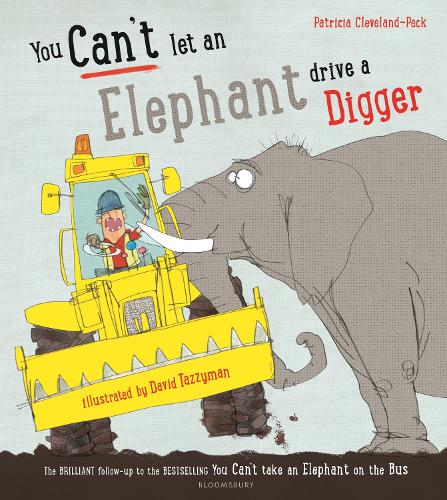
 Avoiding dinosaur/digging machine titles,  here's a new one that looks a lot of fun.

You Can't Let an Elephant Drive a Digger - You Can’t Let an Elephant... (Paperback)

 Or for older enthusiasts, though not for my Storytime, this interesting idea:

 How Airports Work by Lonely Planet Kids (English) Hardcover Book Free ... 

And I'm sure that many homes have modern versions of this well-worn tale:

Thomas the Tank Engine | Thomas the Tank Engine Wikia | FANDOM powered ...

There are quite a lot of transport titles but maybe not as many as I'd hoped for. 

Which leads me to my question. With all the cute 'n cosy, emotion-centred picture books, do we need a few more mechanical titles? Do you have any recommendations? 

And how do such books fit into a Future Greener Age?

Mrs Armitage on Wheels: Blake, Quentin: 9780394894980: Amazon.com: Books

Happy May Day!

Penny Dolan

Saturday, 1 February 2025

A STORYTIME SELECTION, OR NOT? by Penny Dolan

Here, for February, are a selection of the picture books that I might use for my next Under Five’s Library Storytimes. I am not ‘reviewing’ these five titles here: I’m thinking through why I chose the books from the Book Boxes, why I might use the stories, why I might not and what I need to remember as I use them, both my first and second reading thoughts.  I'll ignore for the moment, and out of kindness to you, any accompanying 'musical' input.

Are you sitting comfortably? If so, here we go . . .

FREDDIE AND THE FAIRY by Julia Donaldson and Karen George.

IBBY Review: Freddie and the Fairy by Julia Donaldson and Karen George 

Thoughts: The illustrations, with their slightly wobbly lines, are gentle, and the muted colours are softly attractive. Julia’s titles can be easy to read aloud because they are grounded in her experience as a performer., which adds when you are reading it aloud for real. Sometimes, though, despite the simplicity of the rhyming verses, she throws a complication or development into the plot which needs a bit of extra voice energy, and maybe a moment’s pause and audience interaction.

Plot: Freddie rescues a Fairy, but unfortunately Bessie-Belle keeps misunderstanding his mumbled wishes. A frog arrives, not a dog, and a bat instead of a cat. Grumbles and tears! The Fairy Queen, appearing, reminds Freddie that Bessie Bell cannot hear very well. She gives Freddie three rules: don’t mumble, turn away or cover up your mouth. Freddie tries out the advice, learns, gets his wishes and all ends amusingly.

Second thoughts: Depending on the age of the children in the audience, this may be too complex an idea to use. Will it work if I introduce it by chatting about ‘hearing’ before I read the story? Demonstrate the Rules? Nevertheless, living with someone hard of hearing, I know that the message in this book is important. I’ll read it through a few more times, and decide on the day.

THE BUTTON BOOK by Sally Nicholls and Bethan Woollvin. 

Bookbug Session Plans: The Button Book - Scottish Book Trust

Thoughts: Though the illustrations, with line drawings and a basic colour palette, look a little odd to my old eyes and the drawn characters are not immediately sweet or ‘feely’, that does not mean that children would see them the same. (Don’t pre-judge, Penny!) And very much for the younger children, to my mind.

Plot: The ‘story’ is simple: in fact, the reading is almost playing. Each spread has a ‘button’; not the usual plastic button that soon stops working, but a drawn button so the book can be re-used as much as you want. The reader – adult, child or children – are the ones that have fun by supplying the sound. The round red button ‘beeps’, the orange triangle button is a ‘clapping ‘button, another is a rude noise – of course – and it ends with a song and turning out of the light.

Second thoughts: All that’s needed is a sense of fun and imagination and – for children - an adult to show how the book works the first time round. Until I try this out, I don’t know how it will go. Also, I suspect that, at the end of a busy day, the adult involvement needed might stop this being a first choice for a goodnight story. (nb. I found this, with two damaged spreads, on the Book Sale table. Mended, the book will go into my reserve collection at home.)

LITTLE CLOUD by Anne Booth and Sarah Massini.

 Little cloud by Booth, Anne (9781405290821) | BrownsBfS

Thoughts: A very happy book. The art work is gently beautiful; the colours create a sense of open air and a world where the people are gazing up at the sky. As a fictional place, these first pages feel very much where I’d like to be. The story has an interesting character angle pov too: a cloud rather than person and the page layouts might not make this a straightforward read. Will it work? Certainly, the words on the first pages read lightly and just poetically enough to be charmed. ‘Once there was a dream of a cloud. Waiting, hiding, in a blue sky, which became a whisper of white . . .’

Plot. The main character, a little white cloud, floats around in the sky, observed and admired by everyone on the ground. Among the watchers are three anonymous children - a girl, a boy, a younger child in a dinosaur hoodie - and a friendly dog. However when the little cloud changes from one shape to another, people don’t want to see it anymore. Only a pretty flower, a farmer watering his thirsty plants, fish in the streams and river, and the three children and dog, splashing about in the puddles, are still happy to see the cloud now. Needless to say, there is a rainbow at the storm’s end.

Second thoughts: This story is lovely but it could definitely one where, reading to a largish group, I need to expand and demonstrate the story with gestures, and comments on what’s happening. Also, what weather songs and rhymes do I have that might fit with this – or any of these other titles? (Little Cloud is another repaired book for my collection too.)


THE BIG ANGRY ROAR by Jonny Lambert 

The Big Angry Roar - Little Tiger

Thoughts. Aha, a book about feelings, which is almost a picture book genre in itself. However, the fact that this book is about a tiger cub and the real world animal world, unlike my other book suggestions, gives ANGRY ROAR a nice straightforward energy. Maybe because the author is both the illustrator and writer? Though anger is the theme, the book has plenty of calming white pace on the page, the grey/green/sand range of colours feel satisfying and Lambert uses an interesting perspective in the spreads. As always, I wish I had a larger version of this book to show everyone. I could walk around with the book, but the young audience often feels like a bundle of puppies around my feet.

Plot: A lion cub, still angry about the way his little sister behaves, stomps off from the pride, so full of anger he could pop. Other animals show him how they let out their anger. The zebras tramp and stamp, which hurts his soft paws., the hippo and rhino crash and splash which makes him smelly, and so on, until at last with a young elephant, they cause trouble. Fortunately, Baboon is a wise old thing and shows the two how to let the anger out safely – and there’s a kind moment to end with too.

Second thoughts. I like this ‘telling’, because of the message that comes through behind the story. I am also curious about how I could play with and expand this story through action and sounds. However, I’ve noted that the book drops straight into the African context, so the title will definitely need some moments of introduction to make the most of it.

Last of all, we have
SMELLY PEGGY by Helen Stephens. 

Smelly Peggy by Helen Stephens: 9781536235722 | PenguinRandomHouse.com ...

 Thoughts. I like this book, which is another single writer & illustrator title, specifically because the story is about the reality of rescue dog ownership rather than a fantasy relationship.

Plot: A young girl, Pie, narrates the story. She talks about how Peggy, though cute, is also cheeky. She jumps on beds and people, steals clothes, and rolls in all sorts of smelly stuff when they take her out for walks, and then spread the stink around at home. Then, when Peggy’s been showered clean, she shakes her wet coat out over everybody. And when Pie and her family are all cuddled up on the sofa, Peggy can still surprise them – stinkily!

Second thoughts. This strength of this book, as well as being about the practical problems of dog ownership, is that the story also suggest that animals – and people – can be loved despite their faults. I am not yet sure how or if it will work as a Storytime read, nor whether the story would be more for the parents and carers than the younger listeners.

                                               Free Storytime Cliparts, Download Free Storytime Cliparts png images ...
Finally, I’m hoping my first and second thoughts on these books make some sort of sense to you. As always, I often wish I had larger versions of whichever book I’m reading so everyone could enjoy the art work during  the session. 

In practice, though I could walk around with each picture book, showing all the spreads and page turns, young audiences can sometimes feel like a bundle of puppies around one’s feet. There are times when everyone, big and small, needs to be kept safe! 

                    Cute Dogs And Puppies Wallpapers - Wallpaper Cave   

Have a great February.
Penny Dolan


Tuesday, 30 April 2024

CHOOSING AND USING PICTURE BOOKS by Penny Dolan

Today is the first of May, a date with a sense of fun and jollity about it, but I am not dancing about in green ribbons or hurrying my dew-washed face home. I am busy thinking about the particular joy that comes from choosing picture books, particularly for a specific purpose: my next Under Five’s Story-time in my local library. I brought a few titles home with me, but which will be the best to use?

                                  The Bear Who Did by Louise Greig, Laura Hughes | Waterstones

Books for this audience have to be ‘strong’ enough to take their turn among the attractions – if not for you – of nursery songs, noisy instruments, ‘sleepy bunnies’ and a bubble machine. So I will go through my selected titles well before the session, trying each one out for its ‘read-aloud’ qualities, and these are what I will try to remember:

THE WORDS:

The text has to work ‘in the mouth’ and the phrasing flow as well as when I first glanced through it after taking it from the library book box.

I like to be aware of the ‘voice’ of the book itself: how it sounds, what it is about and how it resolves so that I am comfortable and confident reading it aloud. I listen out for the rhythms within the narrative: the writer’s repeated words, phrasing and any assonance or rhyming pattern they might use. Like stones smoothed by the waves, the words within the best picture books were rolled around by repeated readings and drafts before they arrived on the page. Although rhyming texts are said to be less favoured by publishers because of translation difficulties, I enjoy reading out stories where there is a strong sense of word-play, musicality and enjoyable literary babbling.

                                Sugarlump and the Unicorn by Julia Donaldson - 9781509862665 - Pan ...

THE SUBJECT:

Does the idea of a book inspire interest, even at this very young level? Are the set of books varied enough? Personally I would prefer my next read-aloud to not to be another book about not knowing which animal family you belong to or which home you have, or about angry red feelings, or yet another book about poo, even though these titles might be just right for some people and places.

My current selection includes the following: a girl-mouse training her new kitten, a mole in a hole challenged by a goat; a pet-less flat where a child’s printed-packet pets cause havoc; a bear who didn’t eat the honey wanting to know who did; a rocking horse granted wishes by a sparkly unicorn, and a digger that digs itself in too deep.

And before I begin, I have to decide if the book needs to be given a context, or start with a short bit of personal storytelling - ‘I like this book because it’s about . . . and I remember . . .’ and so on, to make the book more understandable.

                                    Dig Dig Digger by Morag Hood | Goodreads

The front cover of The Bear Who Did by Louise Greig and Laura HughesThe front cover of The Bear Who Did by Louise Greig and Laura HughesThe front cover of The Bear Who Did by Louise Greig and Laura HughesTHE ‘JOURNEY’:

My reading underlines and emphasise the narrative journey of the picture book, showing the way that the words and illustrations work together or alongside each other. I do this for the children, for myself and also, I hope, for any adults who might not feel comfortable when reading picture books to children yet.

I need to be aware of the best speed for the page-turns. Is this spread a simple repetition of an idea, or a busy expansion, offering many mini-stages of the story in one go? Is this a slow-going page or a steady building-up page? And where and what and when is the turning point, the big ‘jump” spread that will need extra dramatic emphasis? Often, with a limited word-count, I will have to use my voice to add emotional tone to the reading, or indicate that ‘this’ page is a significant page or moment of resolution within the tale. Small post-it notes make good page markers for when one is also consciousness of coping with fifty or more listeners.

During the test-reads, I’ll put aside any books where the twist shows the title is intended for an older child. While publishers like witty ideas, some jokes don’t fit easily or translate well for the under-fives audience. They require a wider knowledge or experience to work. On the other hand, there are what I think of as ‘family books’: those iconic titles that are so popular with the grown-ups that young listeners seem to absorb the greater atmosphere, and media companies welcome. Hello, Mog!

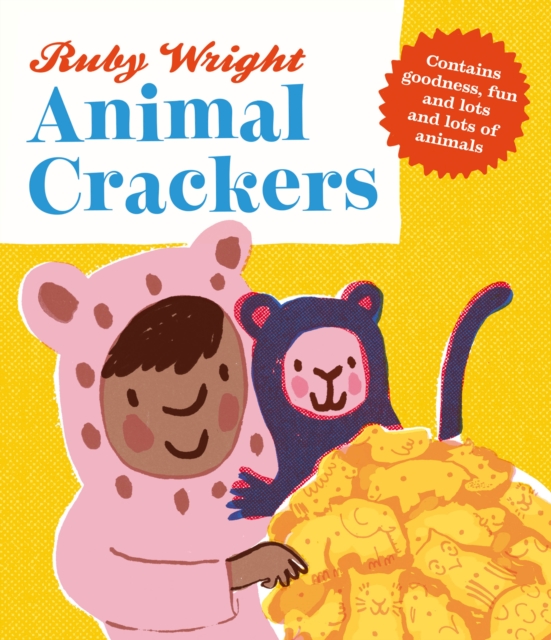
                                                                                                            Animal Crackers, Hardback Book

THE ART WORK AND TYPOGRAPHY:

A book is more than some printing and some pictures on some pages. Though the illustrations are what attract the eye, the whole layout of a book matters to me, too, and for practical reasons. I'd add that a hardback cover makes the pages much easier to display in such a group setting and the paper quality usually makes the pages easier for turning without fumbling for the essential next page.

I will be holding the chosen book in an outward-facing direction to make the pages clear and visible to the audience, although the font and size also need to be clear and readable to me as I view the pages at a slight slant from above.

This certainly doesn’t mean a single standard layout or a Ladybird books typeface. A playful use of capitals, punctuation, exclamation points, ‘noise’ words and ‘jokes’ on the pages will be fine, as long as the words are large enough to be easy to read. I’d like the print to and stand out clearly from any background colours too: no light-grey lettering on mouse-brown backgrounds, as an example? Not everyone, even young children, has perfect eyesight.

                                                 Holey Moley - Bethan Clarke - Heath Books

Besides, how does the chosen book look from a distance? Although there’s the special rug on the library floor and beanbags, many small children are wary about stepping too far from ‘their’ own lap, and many grown-ups do prefer chairs. All of which means that most of my audience, small and larger, will be a metre and more away, so the easier the page is to see the better.

In any case, the best illustrations, as well as having a certain simplicity, make good use of colour and space on the page, making them easy to describe and talk about. ‘I really like the way this illustrator has used these paint marks to show . . .’

I also need to know how the artist’s illustrations work. Are the pictures direct interpretations of the narrative text, or do they show a contrasting dynamic? Is the artist painting real life or indicating a slip between a real world and an imaginary scenario that I should draw attention to? Does the visual viewpoint change dramatically – from as high as a drone image to low down or underneath – taking the attention to a scene that needs some light explaining? Or does something happen in an illustration that isn’t even mentioned in the words, though it does fit with the story? For example, should I point out that, on the last page, Maisy's newly trained and obedient kitten has crept up and is sleeping on her bed? The answer is a loud Of course!’ which I know, because I learned how this book works first.

                      Maisy Gets a Pet by Lucy Cousins

AND FINALLY

As I write this post, I’m aware that my account might sound a little extreme and time-wearying, so I have to add that I’ve been reading to young children for decades. By now, the whole process flickers swiftly past for each book and, besides, I enjoy both the activity and the end result. I wonder which titles I'll finally choose?

Besides, I have to add that writing this ABBA post has reminded me to appreciate just how much work and time and skill goes into creating a really good picture book!

Wishing you all a very happy May Day.

Penny Dolan

Wednesday, 30 May 2018

Why picture books are all about the pictures – Lari Don

I’m not an artist. I’m a writer, and my passion is for words. But when I write a picture book, I know that my words can never be as important as the pictures, for creating the overall feel of the book, or even for telling the story. It is after all, a picture book, not a word book!

Which means that the role of an author writing a story for a picture book is very different from the role of an author writing a novel.

When I’m drafting a novel, my aim is to put pictures - of the characters, the chases, the magic, the monsters - into my readers’ heads. But when I’m drafting a picture book text, I know that the story will be brought to life by the skill of an illustrator, so my words have a different function.

One of my responsibilities as a writer of picture books is to create opportunities for wonderful illustrations. When I write a picture book, I weigh up the plot not just from the point of view of the characters and the readers, but also with the aim of offering the illustrator plenty of chances to create original, magical and dramatic pictures.

For example, when I started writing The Treasure Of The Loch Ness Monster, I wanted to give the artist scope to create as full a world for Nessie as possible. That meant not only pictures of the shores and surface of Loch Ness, but also at least one underwater scene. So I searched for plot ideas that took the characters and therefore the readers down into the depths of Loch Ness. I didn’t know what the illustrator Natasa Ilincic would draw for that scene, but I did know that I had to write a plot which gave her the chance to explore it.

One of the strengths of a picture book is that it’s not just the writers’ story. A picture book (unless it is created by one of those amazingly talented people who can write AND draw) is created by two people’s imaginations. The world of a picture book is not just the writer’s world, it is the illustrator’s world too: a shared world that has been enhanced and deepened by both our imaginations. When the illustrator is someone as talented and wise and deeply immersed in folklore and history as Natasa, then the illustrations bring a huge amount to the story’s world.

I love being surprised by someone else’s vision of the story. In this book, the treasure chamber that Natasa imagined under Castle Urquhart took my breath away. I’d imagined a small dark room containing not much more than the treasure necessary for the plot, but Natasa drew a huge arched chamber filled with fascinating objects from legend and history. I see something new everything I look at it! And that’s the joy of writing picture books. I knew what I needed the room to contain for the characters and the narrative, and Natasa drew that perfectly, but then she added her own magic, her own vision, and she made the story so much stronger.

And that’s why the pictures are the heart of a picture book!


Lari Don’s most recent book is The Treasure of the Loch Ness Monster, published by Floris Books. Lari has written more than 30 books for all ages, including fantasy novels for 8 – 12s, picture books, retellings of traditional tales, a teen thriller and novellas for reluctant readers.
Lari’s website 
Lari’s own blog 
Lari on Twitter 
Lari on Facebook 
Lari is on Instagram as LariDonWriter

Friday, 30 March 2018

Picture books are teamwork, all the way to the launch - Lari Don


I usually launch books on my own. (Well, with the help of all the lovely people at my publishers and a cheerful audience of family and friends. But it’s usually me standing up at the front on my own…)

However, last night I launched a book as part of a team.

I stood up beside illustrator Natasa Ilincic, and while I read the story of The Treasure of the Loch Ness Monster, she did live-drawing of Nessie.


And it was great fun!

I only had to do half the work of keeping the (very wide age range) audience entertained, and I found out a lot more about how an illustrator does their job!

As Nata and I chatted about how I wrote the story and how she drew the pictures, I discovered how many sketches she draws for one spread, how she makes a illustration look action-packed and dramatic, how she makes sure her characters’ faces and characteristics stay consistent through the whole book, and how she showed emotion on a monster's face.

I found it fascinating, and the reaction of the kids in the audience suggested they found it fascinating too!


I’ve always thought of writing a picture book as teamwork – the author, the editor, the art designer and the illustrator – but it turns out that the best picture book launches are team efforts too!

I hope to do lots more events with the wonderfully talented Nata and her beautiful Nessie!  


Thanks to Waterstones in Princes St in Edinburgh for hosting the launch, to all the wonderful staff at Floris Books for organising it, and to whoever baked the little Nessie cakes…


Lari Don is the award-winning author of more than 20 books for all ages, including fantasy novels for 8 – 12s, picture books, retellings of traditional tales, a teen thriller and novellas for reluctant readers. 
Lari is on Instagram as LariDonWriter