Showing posts with label early readers. Show all posts

Tuesday, 30 April 2024

CHOOSING AND USING PICTURE BOOKS by Penny Dolan

Today is the first of May, a date with a sense of fun and jollity about it, but I am not dancing about in green ribbons or hurrying my dew-washed face home. I am busy thinking about the particular joy that comes from choosing picture books, particularly for a specific purpose: my next Under Five’s Story-time in my local library. I brought a few titles home with me, but which will be the best to use?

                                  The Bear Who Did by Louise Greig, Laura Hughes | Waterstones

Books for this audience have to be ‘strong’ enough to take their turn among the attractions – if not for you – of nursery songs, noisy instruments, ‘sleepy bunnies’ and a bubble machine. So I will go through my selected titles well before the session, trying each one out for its ‘read-aloud’ qualities, and these are what I will try to remember:

THE WORDS:

The text has to work ‘in the mouth’ and the phrasing flow as well as when I first glanced through it after taking it from the library book box.

I like to be aware of the ‘voice’ of the book itself: how it sounds, what it is about and how it resolves so that I am comfortable and confident reading it aloud. I listen out for the rhythms within the narrative: the writer’s repeated words, phrasing and any assonance or rhyming pattern they might use. Like stones smoothed by the waves, the words within the best picture books were rolled around by repeated readings and drafts before they arrived on the page. Although rhyming texts are said to be less favoured by publishers because of translation difficulties, I enjoy reading out stories where there is a strong sense of word-play, musicality and enjoyable literary babbling.

                                Sugarlump and the Unicorn by Julia Donaldson - 9781509862665 - Pan ...

THE SUBJECT:

Does the idea of a book inspire interest, even at this very young level? Are the set of books varied enough? Personally I would prefer my next read-aloud to not to be another book about not knowing which animal family you belong to or which home you have, or about angry red feelings, or yet another book about poo, even though these titles might be just right for some people and places.

My current selection includes the following: a girl-mouse training her new kitten, a mole in a hole challenged by a goat; a pet-less flat where a child’s printed-packet pets cause havoc; a bear who didn’t eat the honey wanting to know who did; a rocking horse granted wishes by a sparkly unicorn, and a digger that digs itself in too deep.

And before I begin, I have to decide if the book needs to be given a context, or start with a short bit of personal storytelling - ‘I like this book because it’s about . . . and I remember . . .’ and so on, to make the book more understandable.

                                    Dig Dig Digger by Morag Hood | Goodreads

The front cover of The Bear Who Did by Louise Greig and Laura HughesThe front cover of The Bear Who Did by Louise Greig and Laura HughesThe front cover of The Bear Who Did by Louise Greig and Laura HughesTHE ‘JOURNEY’:

My reading underlines and emphasise the narrative journey of the picture book, showing the way that the words and illustrations work together or alongside each other. I do this for the children, for myself and also, I hope, for any adults who might not feel comfortable when reading picture books to children yet.

I need to be aware of the best speed for the page-turns. Is this spread a simple repetition of an idea, or a busy expansion, offering many mini-stages of the story in one go? Is this a slow-going page or a steady building-up page? And where and what and when is the turning point, the big ‘jump” spread that will need extra dramatic emphasis? Often, with a limited word-count, I will have to use my voice to add emotional tone to the reading, or indicate that ‘this’ page is a significant page or moment of resolution within the tale. Small post-it notes make good page markers for when one is also consciousness of coping with fifty or more listeners.

During the test-reads, I’ll put aside any books where the twist shows the title is intended for an older child. While publishers like witty ideas, some jokes don’t fit easily or translate well for the under-fives audience. They require a wider knowledge or experience to work. On the other hand, there are what I think of as ‘family books’: those iconic titles that are so popular with the grown-ups that young listeners seem to absorb the greater atmosphere, and media companies welcome. Hello, Mog!
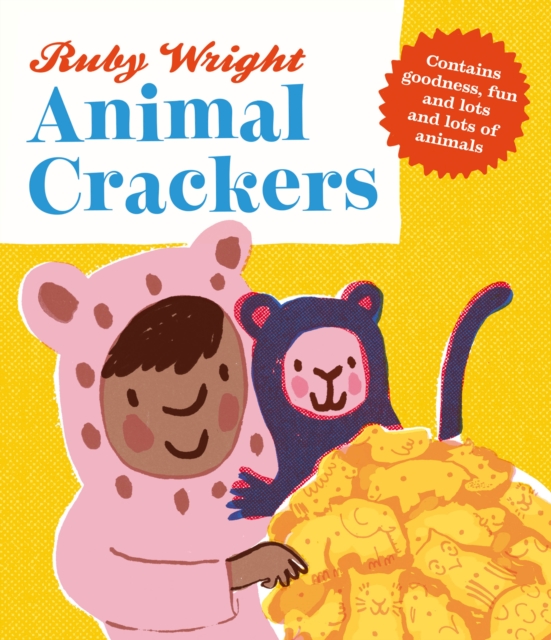
                                                                                                            Animal Crackers, Hardback Book

THE ART WORK AND TYPOGRAPHY:

A book is more than some printing and some pictures on some pages. Though the illustrations are what attract the eye, the whole layout of a book matters to me, too, and for practical reasons. I'd add that a hardback cover makes the pages much easier to display in such a group setting and the paper quality usually makes the pages easier for turning without fumbling for the essential next page.

I will be holding the chosen book in an outward-facing direction to make the pages clear and visible to the audience, although the font and size also need to be clear and readable to me as I view the pages at a slight slant from above.

This certainly doesn’t mean a single standard layout or a Ladybird books typeface. A playful use of capitals, punctuation, exclamation points, ‘noise’ words and ‘jokes’ on the pages will be fine, as long as the words are large enough to be easy to read. I’d like the print to and stand out clearly from any background colours too: no light-grey lettering on mouse-brown backgrounds, as an example? Not everyone, even young children, has perfect eyesight.

                                                 Holey Moley - Bethan Clarke - Heath Books

Besides, how does the chosen book look from a distance? Although there’s the special rug on the library floor and beanbags, many small children are wary about stepping too far from ‘their’ own lap, and many grown-ups do prefer chairs. All of which means that most of my audience, small and larger, will be a metre and more away, so the easier the page is to see the better.

In any case, the best illustrations, as well as having a certain simplicity, make good use of colour and space on the page, making them easy to describe and talk about. ‘I really like the way this illustrator has used these paint marks to show . . .’

I also need to know how the artist’s illustrations work. Are the pictures direct interpretations of the narrative text, or do they show a contrasting dynamic? Is the artist painting real life or indicating a slip between a real world and an imaginary scenario that I should draw attention to? Does the visual viewpoint change dramatically – from as high as a drone image to low down or underneath – taking the attention to a scene that needs some light explaining? Or does something happen in an illustration that isn’t even mentioned in the words, though it does fit with the story? For example, should I point out that, on the last page, Maisy's newly trained and obedient kitten has crept up and is sleeping on her bed? The answer is a loud Of course!’ which I know, because I learned how this book works first.

                      Maisy Gets a Pet by Lucy Cousins

AND FINALLY

As I write this post, I’m aware that my account might sound a little extreme and time-wearying, so I have to add that I’ve been reading to young children for decades. By now, the whole process flickers swiftly past for each book and, besides, I enjoy both the activity and the end result. I wonder which titles I'll finally choose?

Besides, I have to add that writing this ABBA post has reminded me to appreciate just how much work and time and skill goes into creating a really good picture book!

Wishing you all a very happy May Day.

Penny Dolan

Friday, 1 May 2020

WRITING "LITTLE BOOKS" by Penny Dolan

HAPPY MAY THE FIRST!

Last week, something very cheering dropped through my letterbox: my author copies of two early reader titles! I was particularly pleased and surprised because I feared these titles might have lost their place in the publishing process by now.

Though they might not be world class literature, they are bright and colourful and satisfying to see, mostly because of the work of the editors, illustrators and designers.


Consequently, today on ABBA, I’m posting a few random tips about writing “little books” like these.

1
Spend years hearing young children read. Sorry, that’s my joke. Seriously, do listen to children as they read and as they interact with books. Get used to the rhythms of their language, what they can and can’t understand. Be aware of the words they use and the kinds of words that interest them.

2.
This is a big one. Write from what young children know, not from what you as an adult find amusing. I think of it as “looking upwards from below”, not looking down from your knowledge head.

3.
No ideas? Walking and thinking about children’s interests is a good way of letting ideas rise to the surface, Watching and listening to children when possible. What matters to them? When you can – ha ha hollow laugh right now – look at any reading book collections in local children’s library. Note the changes in sentence length and layout.

4.
Got your idea? Jot 13 numbers down along a page. These are your spreads. Scribble two or three words beside each number noting what the progression of the idea might be. Get the span of your story spread across the pages.

5.
Then write your story according to that pattern. Read your work aloud, then improve it. Leave it alone. Go away. Come back later. Repeat process over a few days. Your eyes and ears will get dulled to the process if you sit too long so do something different.

6.
Don’t be afraid to speak – there may be a fact that you know but that the editor or illustrator does not. However, don’t be too precious over your work. The editors and the consultants know the series house style and fomat better than you do.

7.
Structure your story so that something slightly different visually can happen on each page spread – obviously within the context of the story. Also , save any criticism of the illustration for those things that matter. (And, by the time you see the pages, it may be too late. You may not win.)

8.
Is your proposed story actually interesting? Look at the range of titles within any particular levels in a library or online. Remember, a publisher is unlikely to want another story on the same subject. Yes, one can have too many puppies!

9.
Think of each page turn as a chapter, or a new scene in a drama. How does “this spread” progress the plot? How can I build in some tension or surprise, a big reveal?

10
Finally, don’t expect riches. This work is not well paid and often only for a fee, but can be fun to do while struggling over something “bigger”. And never forget to register for PLR! Come February, my “little books” bring me quite a lot of joy! 

nb. These images are earlier titles.  I think my new books are too new to exist! 


Wishing you good health and happy words
Penny Dolan
 

Thursday, 17 May 2018

What are the ingredients of a universally appealing early fiction series? By Chitra Soundar


Before I start, I wish to make a full disclaimer that I wrote this, in 2015, as part of my MA in Writing for Young People at Bath Spa University. So it doesn't cite newer series. And that's why it has some clever quotes from academic references. This is not normal for me.

Early series fiction is the staple diet of a newly independent reader. Graduating from being read to with picture books to early readers, children aged 6-8 years old devour stories about everything – from animals to adventures, school life to sports.

At this age, these newly independent readers are not only reading for pleasure, but they are also understanding the new world of primary school, figuring out social life and coping with every-day challenges.

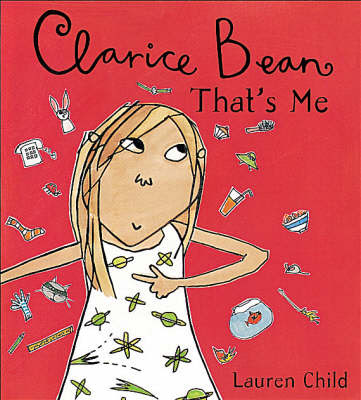
Transitioning from nursery and reception to the big school in Year 1 & 2, these children are discovering and making sense of the world around them. Series fiction in this new world is like a BFF – best friend forever with characters to get to know, make friends with and to return to again and again. And it is more joyful when they can share these characters with their real-life best friends too – as Lauren Child shows us in her Utterly Me – Clarice Bean.


As Denson puts it, ‘a “system of repetition and variation” is the basic stuff of seriality itself.’ (2011:5)


Characters in such series get into all sorts of interesting escapades not unlike the reader’s own life or at least what they hope they’d be able to do. Series fiction gives the reader the safety of the familiar to explore the unfamiliar.

This could be anything from having a pet (in the Lulu series by Hilary McKay) to finding out you have a new cousin who is very different (in the Ruby Lu series by Lenore Look).

As Makowski (1998:2) notes in ‘Serious about Series: Evaluations and Annotations of Teen Fiction in Paperback Series’, ‘single texts of fiction are like “one-night stand[s]”, while series aims to provide the reader with “that same grand experience night after night, week after week, year after year, ad infinitum.”’


I wanted to examine the ingredients that make an early fiction series appealing.

As a child, I too devoured every series I could lay my hands on – which in my childhood in India was predominantly R K Narayan’s Malgudi Days, combined with Enid Blyton’s Secret Seven, Famous Five, Malory Towers and the American Nancy Drew and Hardy Boys collections.

Even though most of these books were set in a different country and in some cases in a different decade, and even though the lives of the characters appeared so different from my own – there was something comforting to return to find out what the characters in these books were up to. This can be compared to children and adults returning again and again to popular sitcoms that revolve around a group of friends or lead characters.

The most conventional narrative series, serials, and sequels for young people are characterized by a constant narrative presence, a common set of characters, the same or similar settings, recurring plot structures, and familiar themes. (Reimer, Ali, England, and Unrau, 2014: 10)

And that is the security blanket that young people want after they have left behind their favourite teddy to go to the big school. Early fiction with familiar characters of family, school and neighbourhood reinforces a child’s understanding of the world. Very often the writer brings the reader into a conspiratorial whisper, perhaps making fun of their family/school situations or the grownups in their lives, just like a best friend does.

It is important that they recognize familiar settings in the stories – so they can learn to read by context more easily. They are newly independent readers and reading and recognizing words through context boosts their confidence immensely.

Philosopher Rolli  (2012:96) observes, “many of our everyday experiences are embedded in a structure of repetition; we believe in the world, we believe that the world will continue to exist even when we close our eyes.”

So what goes into a successful young fiction series?

Almost every series written for this age group is funny. That does not mean they don’t have some serious stuff in them – they do. But the approach to voice, plot and cast are aimed to keep the tone light, the humour irreverent and the plot slap-stick. This is true whether it is Steve Voake’s Hooey Higgins or Francesca Simon’s Horrid Henry or Joanna Nadin’s Penny Dreadful or The World of Norm series by Jonathan Meres.

 Almost all of these books use the white space on the page creatively. The illustrator plays a key role in bringing these characters to life. Whether it involves B&W drawings, lists, doodles or use of font face and sizes, these books are not densely written novels – but more often journals filled with doodles. Whether it is a catchphrase, or disasters caused by character flaws of the lead character or one of the ensemble, the humour and tone of the stories showcase the joy of the writer.


 An ensemble cast

A regular ensemble cast supports the main character – either to help or hinder, sometimes both. This includes the friends, family, bully, teachers, friendly and unfriendly neighbours. Some of the cast might come and go. But a few would stay in the core team and in many cases a lead character has a partner in crime.

Cohesive and consistent portrayal of plot and characters

Once the rules of the world are laid out, the characters obey these rules, across different stories in the same series. The characters might discover new strengths and weaknesses as they go along, but they do not contradict themselves across the series.

In the humorous Agatha Parrot series by Kjartan Poskitt and David Tazzyman, there is a cast of characters with specific likes, dislikes and ambitions. Their behaviour in the entire series is driven out of these characteristics and personality traits.

While there is a familiarity and comfort across the series, each book in the series stands on its own. Each story has a beginning, middle and end, with all major plot points tied up. For this age group rarely are crumbs of clues left in to be picked up in a future story. In an early fiction series, when a reader discovers a book out of sequence, he/she finds sufficient introduction of the cast and the premise to follow the story. Of course if they like the book, they go on to read every single book in the set.


A distinct main character with a unique-selling-point
Like all good stories, series fiction is primarily led by character. While the main character has to be distinct and likeable, they must have something special that differentiates them from so many other series. For example, series with girl characters as leads, there are many successful series in print and each main character has to hold her place on the bookshelf.

Anna Hibiscus by Atinuke, Penny Dreadful by Joanna Nadin, Agatha Parrot by Kjartan Poskitti, Iggy and Me by Jenny Valentine, Ottoline by Chris Riddell are just some of the funny ones with girls as leads. Each lead character is different, special and distinctively funny.

Universal themes

The underlying theme of each story should be universal. Whether set in Africa in the family of Anna Hibiscus by Atinuke or the Precious series by Alexander McCall Smith or set in contemporary England in Joanna Nadin’s Penny Dreadful’s life or Horrid Henry in Francesca Simon’s popular series – the themes revolve around the key concerns of this age-group: friendships, new school, losing someone, getting into trouble, dealing with conflict and loss of control.

These books deal with emotions that children of this age group are coming to grips with – from anger and jealousy to empathy, hope and joy; but with a twinkle in the eye, a wink here and a smile there.
 
Going from here, I also examined what goes into making a successful series with a BAME character as the lead. But as this is my last post for 2018 on ABBA (sorry everyone, life is getting in the way)… I’ve put the part two of my post on my blog. Click here to read, What additional ingredients are required to create a series that is led by a character from Black, Asian or Minority Ethnic heritages?


Chitra Soundar writes picture books and series fiction. Her second book in the Prince Veera series, A Jar of Pickles and a Pinch of Justice (Walker Books, illustrated by Uma Krishnaswamy) has been shortlisted for the Surrey Children’s Book Award. Her latest book out is You’re Safe With Me (illustrated by Poonam Mistry and published by Lantana Publishing). Follow her on Twitter @csoundar.

Tuesday, 3 February 2015

The Right Book at the Right Age - Heather Dyer

One reason that new writers have their books rejected is because their writing style doesn't match the content: either the language is too sophisticated for such a simple storyline - or the story is too long or complicated for the target readership. 

Admittedly, it's difficult to categorize books into specific age categories. Children are individuals, after all. Some advanced readers might not be very worldly-wise, and won't yet be ready for 'grittier' stories. Meanwhile, some of their peers may be ready for 'older' content but can't handle more sophisticated language.

But to give your story the best chance of publication, the content needs to match the writing style for that particular age category.

The publishing and bookselling industry tries to help buyers by dividing books into four main groups: picture books, young or early readers, middle grade readers (an American term) and young adult novels. As part of a new course I'm teaching in Writing for Children, I’ve started trying to identify qualities common to books in each age category. Boundaries will be blurred - but I'd love to know what you think of this chart. Am I right? What haven't I considered?
Picture books
Age 0-5
Early readers
5-7
Middle grade
7-11
YA fiction
12+
     0 - 200 words
24,32 or 40 pages.
500-1,500
10-20,000
          50,000+
Full colour illustrations
Black and white line drawings every other page
Black and white line drawings every few pages.
No illustrations
Domestic or fantasy settings
Usually domestic settings.
Domestic magic and high fantasy. Realistic settings with parental supervision unless there’s a good reason (fantasy)
The wider world. High fantasy.
Larger font size, restricted vocabulary. Dialogue.
Large proportion of dialogue, more complex.
Shorter sentences
More sophisticated sentences.
Lots of interior monologue, reflection, longer speeches.
Text works with illustrations.
Very short paragraphs.
Paragraphs a bit longer.
Nearly no description
Minimal description, but a few sparkling details true to a young reader’s perception of the world.  
Detailed setting and character description.
Usually in third person
Usually in third person. Some character development possible.
Usually in third person.
Rounded characters. Character development more obvious.
Often in first person, and present tense. It’s all about me.
Anthropomorphism, inanimate objects made animate. Familiar roles, settings, objects.
A talking animal almost always points to an early reader. Children in comic or adventure situations, usually having a good time, nothing too awful happens.
Children in danger, frightening situations, facing fears and fighting good and evil. But the real world isn’t too real.
Can be very dark and realistic. Dystopian futures, tragedy, abuse, drugs, etc. Also comedy sex/romance.
No sex or romance.
Romance is light and about friendships. Or subliminal.
Anything goes.
For the youngest bracket, not necessarily stories with problems solved, but simply an exploration of the world.
Often deal with smaller problems resolved in a shorter time frame. Stakes are lower.
Children with flaws, interactions with peers. Children save the day or resolve things themselves. Growing understanding of the world and their place in it.
Young adults dealing with finding their own way in the world, changing the world or making a name for themselves; asserting themselves; finding own values.
Can be present tense.
Past tense, no leaping around in time or flashbacks.
Still rarely using flashbacks unless short recollections by a character.
Can play with chronology; transitions, flashbacks etc.
Happy endings or comforting closure.

Happy endings.
 Happy or at least hopeful endings.
Usually at least hopeful, but recently have been a few with bleak endings.


Heather Dyer - children's author and Royal Literary Fund Consultant Fellow
  • Want feedback on your writing? For information about Heather Dyer's editorial services and creative writing workshops, go to www.heatherdyer.co.uk