Showing posts with label writers retreats. Show all posts

Thursday, 22 October 2020

How Do You Nourish Your Soul? - Heather Dyer

Something to ponder as the nights draw in: how do you nourish your soul? 

I’ve been thinking ahead to possible lockdowns this winter, and wondering what I can do to keep my spirits up and stay inspired. I might re-read my favourite childhood books, take virtual gallery tours, buy a fire pit and start taking a flask on my walks. I’ve also just discovered Storygraph, which finds books for you, based on your preferences. 

Creatives talk about ‘filling the well’. Julia Cameron (in her book The Artists’ Way) tells us to take ourselves on an ‘Artist Date’ once a week. Some of these options aren't going to be available now, though: 

The Artist Date, an hour or longer weekly block of time spent on yourself and with yourself, doing something ‘festive’, is intended to engender release. Release, in turn, engenders inspiration. 

In Manhattan, a particularly magical Artists’ Date for me was a visit to the Compleat Traveler, a small, treasure-laden store on the corner of Thirty-fifth Street and Madison Avenue. Filled with everything from maps of Ireland, Polynesia, and the Isle of Wight to vintage books on Marco Polo and the Himalayas, it is a world where time and distance conspire and conjoin. 

Aquarium stores, museums, cathedrals, flea markets, or five-and-dimes… vintage films, lectures on the odd, the improbable, or merely interesting … musical performances by traveling Tibetan monks, a trip to a quiet, riverside spot – any of these can function as an Artist Date. 

An Artist date is about following your bliss – allowing yourself to be drawn to activities or places simply because you have an inner pull towards these things. You don’t need to think about the reason why you love looking at old maps, or knitting, or taking photos of industrial estates. You’re following your hunches and allowing your curiosity to lead you. 

However, I suspect there are certain things about a hobby or an interest that ‘answer’ a need in our unconscious. Nourishing our souls by ‘filling the well’ can inspire and inform our exploration in other, unrelated areas. 


This winter, we might have to do more solitary, indoor things to nourish our souls. I asked a group of students this question last week and their answers were: jigsaws, long walks, cold water swimming, films, tarot cards, scrabble, working with clay, painting, drawing… 

My neighbours have bought a hot tub! 

I also hope to get some work done. What about you? 

And on the topic of winter and creativity, here's an article I love by Jeanette Winterson, who explains why she ‘adores the night'.

Tuesday, 22 September 2020

Mind Map Your Story (or anything else) - Heather Dyer

Allowing your ideas to branch organically promotes divergent thinking; the mind thinks ‘wider’ that it might do if you were making a list or writing in a linear way. This can give rise to new and unexpected connections. 


There are all sorts of ways to use mind maps:
  • Taking notes in a lecture or from a weblog or podcast, or book
  • Exploring an event, process or a concept – for example, ‘moving house’, ‘sand dune erosion’, or ‘haiku’.
  • Structuring a piece of writing or coming up with ideas to write about. 
  • Performance. For example, if assessing a teacher, you could write down the areas for assessment beforehand – or the performance categories red, green and amber (for improvement) – before branching off each one according to your observations. 
  • Designing a presentation. You could even show the mind map as a PowerPoint slide, to introduce the presentation or sum up at the end.
  • Explore a character, chapter or storyline. 

How to do it?
  1. Write one central word (or better still, draw a single image representing it) in the middle of the page. Then branch out, writing one associated word along each branch.
  2. Draw a thick line for the first words that come off the central image, and thinner lines for more remote tributaries.
  3. Branch again and again; the only limit is the number of associations you can make.
  4. Tony Buzan recommends using colour, but I’ve never bothered.
  5. Importantly, allocate only one word to each branch – even if you want to write a phrase.
    For example, I recently drew a mind map to explore potential income streams. One of my branches was ‘school visits’. But breaking this into two words on two branches, allowed more connections to arise. As I drew a separate line for ‘school’, universities and home-schooling groups suddenly occurred to me. Then, as I drew the line for ‘visit’ I realized I could offer virtual visits as well as real visits.

Other ideas:
  • If your mind map is getting too crowded, one of the branches could start a separate mind map of its own, thereby drilling deeper and expanding further.
  • Mind mapping can be done as a way to collaborate. It can be useful to do individual mind maps first, collaborate to create a combined map, then separate again and reflect further.
  • Try prioritizing quantity over quality. Choose your central word or image, then write at least five words branching from it. Write another five from each of these five. Try another five, if you can. How far can you go?
  • When you’ve finished your mind map, try connecting random pairs of words and seeing if any new connections arise.


Heather Dyer teaches Writing for Children for the Open College of the Arts, and provides writing and publishing advice through The Literary Consultancy, The Writers' Advice Centre for Children's Books, and privately. If you’re ready for feedback on your work-in-progress contact Heather at heatherdyerbooks@gmail.com. 

For further information, see Heather's blog at Writing for Children: Creative Inspiration for Children's Authors.

Saturday, 22 August 2020

How to Recession-Proof Your Creative Practice - Heather Dyer


This is an older post from The Creative Independent blog, and I hope they don't mind me posting an excerpt here. It seems relevant for those who might be using this time to think up new income streams – or rethink your entire creative practice.

From the longer article, ‘How to Recession-Proof Your Creative Practice’  is the following section on ‘serious play’. Creativity is about combining previously unconnected elements. If we combine our own previously unconnected interests/activities/habits, maybe we can come up with some new avenues for our creative practice?

White Jigsaw Puzzle Illustration

Serious Play

"Recessions begin with widespread pessimism and survival, and end with optimism and opportunity. As the recession ends, those who survive make plans to grow again. Apple is famous for developing new products during a recession and launching them just as it ends. The first iPod was launched in October 2001, just as an eight-month recession was coming to an end. To get to your own iPod idea, try this creative practice—Serious Play.

Learning by playing has its roots in the kindergarten, Montessori, and Waldorf children’s school movements of 19th-century Europe. But it was “Homo Ludens,” “Humans the Players,” by Johan Huizinga in 1938 that showed how important play is to generating culture. In play, you can change the rules of the game or even create a whole new game. Plus, you can change the playground, the space where you play.

Play is actually one of the most productive things you can do in a recession. My favorite game is called “match up.” Much, maybe most, innovation involves just two steps: Take an old product or business, and match it to a new technology. Amazon began when Bezos took book selling in stores and stuck it on the internet. Zuckerberg took physical photo sharing and poured it through the internet. Listening to music? Hook it up to the net. Transportation? Zip Car, Uber. Renting? Airbnb.

Of course, you don’t need technology to play. Eddie Huang took the traditional Taiwanese meat-filled gua boa, started filling it with Niman Ranch pork belly and Cherry Coca Cola, and named his restaurant Baohaus. I just had my first iced cardamom coffee float at Hampton Chutney in Amagansett. How did these ideas come about? Play.

Serious play is a method of designing the future. And that is how you should spend your time in recession: designing your future."

3x3 Rubik's Cube
Try writing 20 different habits/interests/practices dotted across a large piece of paper. For example: Blogs, writing, children, teaching, libraries, families, storytelling, reading, NHS ... etc. Then randomly connect these words in pairs, and try freewriting for five minutes on the relationship between them. Perhaps it will trigger a new approach, like 'reading stories online' or 'blogs for children' or 'writing about the NHS'.


Heather Dyer teaches Writing for Children for the Open College of the Arts, and provides writing and publishing advice through The Literary Consultancy, The Writers' Advice Centre for Children's Books, and privately. If you’re ready for feedback on your work-in-progress contact Heather at heatherdyerbooks@gmail.com. 

For further information, see Heather's blog at Writing for Children: Creative Inspiration for Children's Authors.

Wednesday, 22 July 2020

New Normal, New Writing Habits? - Heather Dyer

green leafed plant near table
 Photo by Toa Heftiba on Unsplash

Those of us who teach might be hoping to find more time to write now that school's out for summer. However, the ‘old normal’ seems to have gone for good, so the habits we established before the pandemic might not be working so well for us now. (I know I miss writing and reading in cafés, and I'm sick of my own four walls.) So, if you're looking to establish some new habits, here’s some sage advice from the writing coaches at Prolifiko:

Finding Time
Are you a Daily Doer, a Time Boxer or a Deep Worker? Daily Doers have a regular habit, writing in the same time and place.

If this is no longer working for you, try changing the time, or the place – or perhaps you need to become a Time Boxer, instead. Time Boxers schedule a block of time a week or so ahead, and ‘avoid feelings of overwhelm by following a ready-made schedule’.

Or maybe you’re a Deep Worker, who binge writes for a sustained amount of time every month or so. If you’re this sort of writer maybe you need to go on retreat.                       

Spontaneous Writers, on the other hand, grab the odd moment anytime and anywhere. But, ‘rather than being impulsive or inspiration-driven, successful spontaneous writers are incredibly prepared. They have writing to hand, find their focus fast, and don’t get distracted’.

Procrastination and Motivation
The thing here is to ask yourself whether you’re really not ready to write because you need to do more research, or because you’re forcing things down the wrong path. If you’re just putting it off out of a resistance borne of fear, try setting small goals, freewriting, writing ‘outside’ of the main document so you feel you have room to breathe, or setting timers and rewards. Arranging to write at the same time as a writing buddy – face to face or online – can help some writers. Make it more ‘fun’ by going somewhere new, treating yourself to a nice coffee, or planning a reward for afterwards.


Give Yourself a Break
But the most motivating advice of all (I thought) comes from Oliver Burkeman in his Guardian column – who recommends being kinder to ourselves, and says that habits stick when we stop trying so hard:


The only way positive habits and routines really do come about, in my experience, is like this: you try every trick in the book, attempting to force change, before giving up in frustration. Then, once there’s no longer a drill sergeant barking commands inside your mind, you hear the quieter voice suggesting that it might feel good, just for today, to do the right thing. And not to do it “every day at 8am”, or “every day for the rest of your life”, but just today. Then, if you’re lucky, you do it the next day, too. And if you’re really lucky, you suddenly realise, three weeks later, that you’ve been doing it pretty much every day. The habit has stuck. But not through “habit change”. All you did – to borrow a piece of advice with roots in Alcoholics Anonymous, which might benefit us all – was to “do the next right thing.”

The Buddhist teacher Susan Piver explores the art of ‘getting stuff done by not being mean to yourself’ at her website openheartproject.com.


Heather Dyer teaches Writing for Children for the Open College of the Arts, and provides writing and publishing advice through The Literary Consultancy, The Writers' Advice Centre for Children's Books, and privately. If you’re ready for feedback on your work-in-progress contact Heather at heatherdyerbooks@gmail.com. 

For further information, see Heather's blog at Writing for Children: Creative Inspiration for Children's Authors.

Monday, 22 June 2020

Sugar Calling - Heather Dyer

The author Alice Walker in 2015.
The author Alice Walker in 2015. Peter Earl McCollough for The New York Times

If you're anything like me, what's unfolding in the world right now feels terrifying yet hopeful and full of potential. There's a lot to process.

So, you might want to take a break, sit back, and listen to Sugar Calling, in which Cheryl Strayed calls up authors Alice Walker, Billy Collins, Judy Blume, Margaret Atwood, George Saunders, Pico Iyer and others, to chat about their writing and the world.


Cheryl Strayed is warm, wise and funny, and is the author of Wild, and Tiny Beautiful Things - a compilation of the sanest, most heart-wrenching agony aunt advice ever, sourced from her Dear Sugar column.


Heather Dyer teaches Writing for Children for the Open College of the Arts, and provides writing and publishing advice through The Literary Consultancy, The Writers' Advice Centre for Children's Books, and privately. If you’re ready for feedback on your work-in-progress contact Heather at heatherdyerbooks@gmail.com. 

For further information, see Heather's blog at Writing for Children: Creative Inspiration for Children's Authors.

Friday, 22 May 2020

Recalibrate - Heather Dyer

It’s just after dawn and I’m sitting in my easy chair in front of the patio doors. My dog is on my lap, and I’m cradling a cup of coffee. Outside, the sparrows are going about their business.  At this time of day, living out here, it's easy to believe that nothing has changed.
But of course, everything has changed. Offices are empty. Hospitals are chaotic. Flights have been grounded, and the pandas in Hong Kong are mating. And the projects I was so invested in two weeks ago feel irrelevant. But I still feel an urgency to write, to produce, to make something out of all of this….
Then, scrolling through my emails, I discover an article called, ‘Why You Should Ignore All That Coronavirus-Inspired Productivity Pressure’.
Professor Aisha Ahmad has lived through several crises, and her reflections are wise, calm and kind. First, she says, establish your physical security and get your team in place. Then, she says, we must, ‘abandon the performative and embrace the authentic.’ She says we must focus on real internal change.
Yes! This is the creative process. We mustn’t try to keep treading along the previous tracks. We must stop and recognize new directions, new patterns. The world has shifted, so our thinking needs to shift.
On the other side of this shift, says Ahmad, ‘your wonderful, creative, resilient brain will be waiting for you. […] New ideas will emerge that would not have come to mind had you stayed in denial. Continue to embrace your mental shift. Have faith in the process. Support your team.’
Aisha Ahmad has written another article on Productivity and Happiness Under Sustained Disaster Conditionswhich follows on from the first.

Heather also blogs at https://thecreativestateofmind.wordpress.com/blog/  


Heather Dyer is a consultant in writing for children. She provides writing and publishing advice through The Literary ConsultancyThe Writers' Advice Centre for Children's Books, and privately. If you’re ready for feedback on your work-in-progress contact Heather at heatherdyerbooks@gmail.com

Heather’s children’s novel The Girl with the Broken Wing was one of Richard and Judy’s book club picks, and The Boy in the Biscuit Tin was nominated for a Galaxy Best British Children’s Book award. Heather also teaches creative writing for the University of the Creative Arts, and facilitates workshops in creative thinking techniques for creatives and academics.

Wednesday, 22 April 2020

Zoom Chat for Writers on Saturday April 25th - Heather Dyer


If you're anything like me, in a few short weeks your writing and publishing plans have shifted focus.

What about you? Do the things you're working on two weeks ago no longer feel relevant? Have you suddenly started something new? Or is it difficult to concentrate at all? 

If you write for children, I'd like to invite you to a short Zoom chat at noon on Saturday 25th April. The (loose) focus of the chat will be: Taking Stock: writing in uncertain times. 

CONFESSION: I have an ulterior motive - as well as connecting with other writers, this is an opportunity for me to practice using Zoom. I'm doing my first Zoom writing workshop next month!

But this will be an informal, private chat - just an opportunity for a group of writers to share our thoughts and take stock. It's also an opportunity to meet new people, see how Zoom can be used to chat and teach online, and try a couple of very short divergent thinking exercises designed to generate new insights on your current work-in-progress (no sharing required). 


Close-up of Coffee Cup on Table

So, if you have time to join me, drop me a line by email. I'll then send you a link to download Zoom (it only takes a minute) and give you the password to join the meeting. Bring a cuppa, pen and paper, and an open mind. I'll accept the first eight people who contact me, and if more are interested I'll arrange a second meeting. I look forward to hearing from you - and thanks for helping me out! 

Heather (heatherdyerbooks@gmail.com)


Heather Dyer is a consultant in writing for children. She provides writing and publishing advice through The Literary Consultancy, The Writers' Advice Centre for Children's Books, and privately. If you’re ready for feedback on your work-in-progress contact Heather at heatherdyerbooks@gmail.com. 

Heather’s children’s novel The Girl with the Broken Wing was one of Richard and Judy’s book club picks, and The Boy in the Biscuit Tin was nominated for a Galaxy Best British Children’s Book award. Heather also teaches creative writing for the University of the Creative Arts, and facilitates workshops in creative thinking techniques for creatives and academics.

Sunday, 22 March 2020

Where and When Do You Get Your Ideas? - Heather Dyer

At the moment, my favourite time of day is in the morning, before I’ve started work. I take the dog out briefly, then make a coffee and sit in my armchair watching the morning arrive. That's my dog, there on my lap. It's the only time he sits with me!

I keep my notebook beside me, and think loosely about what I must do that day. And curiously, this is when I seem to get most of my ideas. I feel as though I’m taking a break – but actually I’m quite productive.

There’s a reason for this. Ideas tend to come when our minds are relaxed, open and wandering. This state of mind allows new connections to be made from the ‘data’ in our unconscious. In Mary Roberts Rinehart’s story "Miss Pinkerton", her character says, "And it was while I was folding up that copy of the Eagle and, putting it away for later reading that something came into my mind. I have had this happen before; I can puzzle over a thing until I am in a state of utter confusion, giving it up, and then suddenly have the answer leap into my mind without an apparent reason.”

Isn’t it typical that we come up with a solution, or remember someone’s name, or get a new idea for a story when we stop thinking about it and are doing something else? 

No wonder, “How do you get your ideas?” is a difficult question to answer. How ideas happen is a bit of a mystery. It might be more helpful to reflect on when you get your ideas, or what you were you doing at the time. A recent study found that conference delegates got most of their ideas during the coffee breaks.

I asked some PhD students where and when they tend to get insights at a workshop recently. They gave the following answers:

•            Taking a shower.
•            Making a cup of tea.
•            Going to the toilet.
•            Walking.
•            Waking up in the middle of the night.
•            Doing yoga.
•            Jogging.

I suppose the takeaway message is that it’s counterproductive to work all the time, or think too hard. We do need to think, but then we need to stop thinking. It’s in the gaps that ideas arise – so we mustn’t feel guilty about taking breaks.


Heather Dyer is a consultant in writing for children. She provides writing and publishing advice through The Literary Consultancy, The Writers' Advice Centre for Children's Books, and privately. If you’re ready for feedback on your work-in-progress contact Heather at heatherdyerbooks@gmail.com. 

Heather’s children’s novel The Girl with the Broken Wing was one of Richard and Judy’s book club picks, and The Boy in the Biscuit Tin was nominated for a Galaxy Best British Children’s Book award. Heather also teaches creative writing for the University of the Creative Arts, and facilitates workshops in creative thinking techniques for creatives and academics.


Saturday, 22 February 2020

What's Interesting About Your Work? - Heather Dyer


One of the best things about writing is that it’s a process of discovery. Even when you start off thinking that you know what you’re going to say, things tend to bubble up in the process that are unexpected. I suspect this is because our unconscious (the ‘great home of form’, as Dorothea Brande calls it) knows a lot more than we do – and this can surface during the writing process.


The following writing exercise is inspired by Edward do Bono’s ‘Positive, Negative and Interesting’ (PMI) exercise, from his book Thinking Course: Powerful Tools to Transform Your Thinking.


By asking yourself what you find ‘interesting’ about your story or subject, you push beyond what you already know, and dig deeper. What’s ‘interesting’ touches on the questions your book is raising. It takes you to your leading edge, your point of growth.

What's Interesting About Your Work?

Step 1
List at least ten things you think are good about your work-in-progress.

Step 2
List at least five things you’re worried about.

Note: These steps need to come first – it’s a way of putting aside what you already know about your WIP and priming the mind for unchartered territory. And you’ve got to put pen to paper; it’s in the process of writing that stuff arises.

Step 3
Step three requires a different sort of thinking: receptivity instead of critical analysis.

Sit back in your chair and ask yourself what you find interesting about this project – not what others might find interesting but what interests you, personally. Don’t be in a hurry to write anything down.

Hold the whole thing in your mind. Allow your mind to play across the scenes or sections and explore the periphery. See where your attention goes. Where does it rest? Wait, stay open, look deeper.

Gently probe any areas that present themselves. Consider what it is that interests you about this situation, character place, idea? What draws you in? What don’t you know? What might be beneath it all?

If something occurs to you, don’t write it down immediately. Stay open to other things – related or unrelated.

Step 4
Finally, freewrite for several minutes on one thing that arose.

By allowing your mind to hover over ‘interesting’ areas, you’re staying open to the grey zones, the unexplored regions. This is the growth zone, where new connections can be made.

I haven’t done this exercise with students yet, but when I tried it on my own work-in-progress I realized that the thing I’d assumed most interesting actually wasn’t – something else was. Developing this aspect further might also solve some of the things on my ‘worries’ list.

Another way of doing this exercise is to ask yourself, ‘What is it about this project that has really got me thinking?’  If you try this exercise yourself, I’d love to know how you found it.


Heather Dyer is a consultant in writing for children. She provides writing and publishing advice through The Literary ConsultancyThe Writers' Advice Centre for Children's Books, and privately. If you’re ready for feedback on your work-in-progress contact Heather at heatherdyerbooks@gmail.com

Heather’s children’s novel The Girl with the Broken Wing was one of Richard and Judy’s book club picks, and The Boy in the Biscuit Tin was nominated for a Galaxy Best British Children’s Book award. Heather also teaches creative writing for the University of the Creative Arts, and facilitates workshops in creative thinking techniques for creatives and academics.


Wednesday, 22 January 2020

What's Your Story? - Heather Dyer

We’re hardwired to see stories in everything: a mishap, a relationship, a life. Even a recipe has a narrative arc that shows how one thing leads to another. The desired outcome of a story is always discovery and growth – if we understand how and why things happen, we can shape outcomes in the future.


In writing workshops, I use the archetypal story structure ‘The Hero’s Journey’ to help participants reflect on – and reshape – their essays and creative writing.

The Hero’s Journey is a universal story model outlined by comparative mythologist Joseph Campbell in his book The Hero with a Thousand Faces. Campbell collected myths from all over the world, identified common elements or stages, and then put them together in a ‘monomyth’. Typically, the hero receives a call to adventure, ventures forth to face challenges and temptations, and ultimately sacrifices something in order to receive the gift of insight, which they bring home to benefit the world.


The hero can of-course be male or female, and the model is flexible rather than prescriptive – but the beauty of the monomyth is that it provides a pattern for the process of growth and change.

The call to adventure:
What motivates your protagonist. What do they want? More importantly, WHY do they want it? What need are they seeking to meet; what problem are they trying to overcome?
Note: Often, a character has a mistaken belief: what they want isn’t what they need. Sometimes, they don’t get what they want and get what they need, instead.

The hero meets helpers and tricksters on the path:
How did your protagonist get here? Who or what has shaped them this far, or influenced their journey? Who or what will trip them up or influence them in future?

The hero faces the monster in the cave
What’s your protagonist’s greatest fear? What’s their weakness? What situation would force your character to face this fear head-on? What if their worst fear was realized – what then?
If their fear isn’t obvious, ask yourself what your character would love to see happen – then imagine the opposite.

Death and rebirth:
Your character needs to change and grow. This often means they need to let go of a limiting belief or relinquish something they’ve been pinning their hopes on. Do they have a mistaken belief or are they clinging onto something they need to let go of in order to proceed down a new route?

The Return. The hero brings new knowledge back to the world:
What’s the impact of your protagonist’s discovery or lesson? How will it change things? What will they do differently now? What will be the result?

Here's another suggestion... Apply these questions to yourself, as the protagonist of your own life. Do they reveal anything about your wants and needs, your false beliefs, or what you must let go of in order to grow?


Heather Dyer is a consultant in writing for children. She provides writing and publishing advice through The Literary Consultancy, The Writers' Advice Centre for Children's Books, and privately. If you’re ready for feedback on your work-in-progress contact Heather at heatherdyerbooks@gmail.com. 

Heather’s children’s novel The Girl with the Broken Wing was one of Richard and Judy’s book club picks, and The Boy in the Biscuit Tin was nominated for a Galaxy Best British Children’s Book award. Heather also teaches creative writing for the University of the Creative Arts, and facilitates workshops in creative thinking techniques for creatives and academics.


Sunday, 22 December 2019

Everything's Connected - Heather Dyer


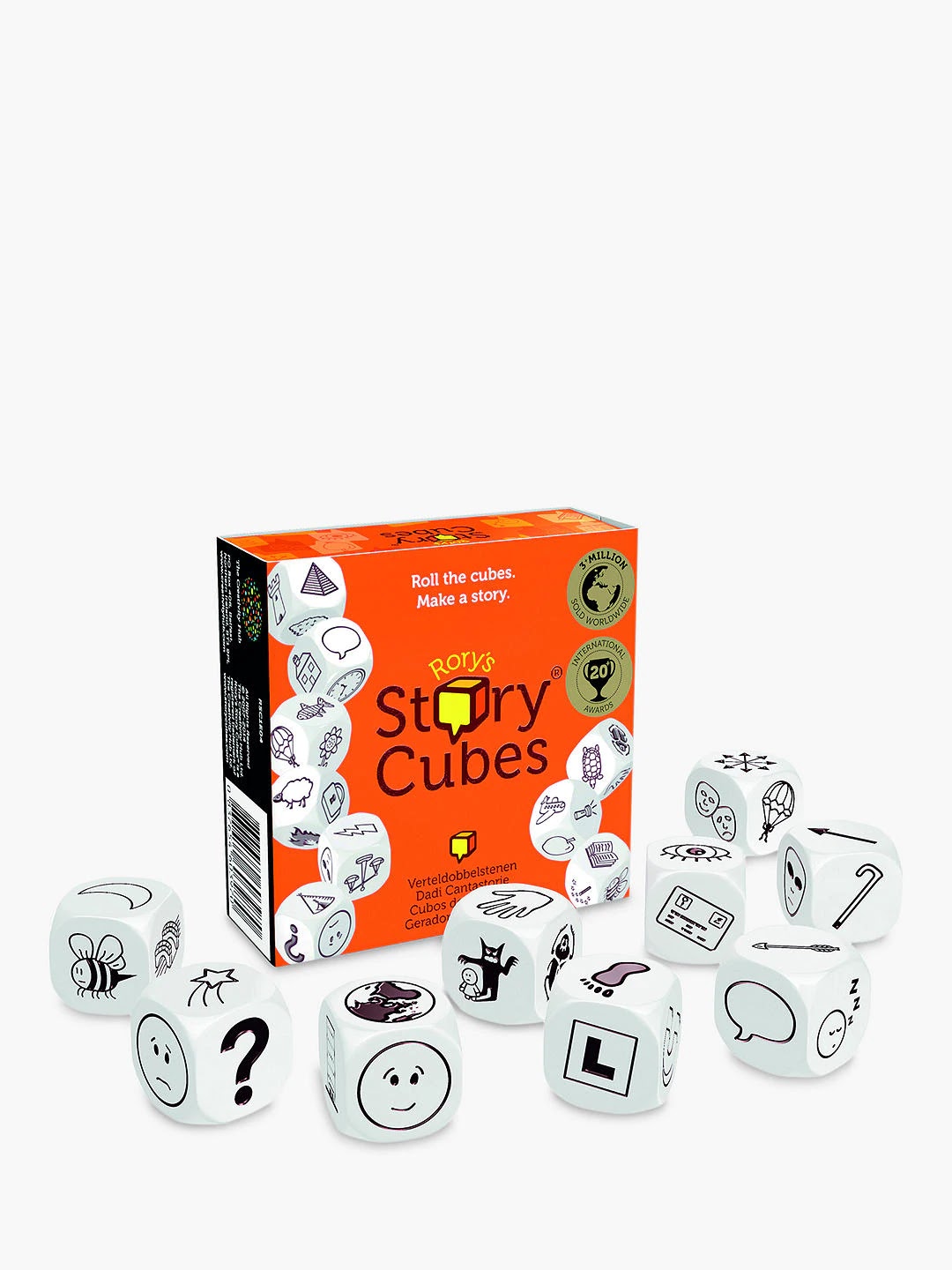
This plotting exercise was inspired by Rory’s Story Cubes, a children’s story-generating game. No cubes necessary here, however. 

I've tried this on my own children's-book-in-progress, and also with PhD students working on their theses. There's no reason why you couldn't use it on any sort of project. 
  1. Quite quickly, write down 20 words associated with your project. Write them down in two adjacent columns of 10.
  2.  Now draw random lines linking pairs of words in each column.
  3. Freewrite (or make notes or just reflect) on the connections between the words.
Creativity is about making new connections between previously unconnected ideas. When I used this exercise in a workshop for PhD students, a dance student connected the words ‘dance’ and ‘movement’. She said that freewriting on the relationship between these words had, for the first time, made her really reflect on how they differed. ‘Dance’ is defined and shaped by convention, whereas ‘movement’ is more fluid.

You can modify this exercise by listing characters in a story in order to explore the relationships between them. You might be surprised by the connections that can arise between characters you previously didn't think had much to do with one another. 


Heather Dyer is a consultant in writing for children. She provides writing and publishing advice through The Literary ConsultancyThe Writers' Advice Centre for Children's Books, and privately. If you’re ready for feedback on your work-in-progress contact Heather at heatherdyerbooks@gmail.com

Heather’s children’s novel The Girl with the Broken Wing was one of Richard and Judy’s book club picks, and The Boy in the Biscuit Tin was nominated for a Galaxy Best British Children’s Book award. Heather also teaches creative writing for the University of the Creative Arts, and facilitates workshops in creative thinking techniques for creatives and academics.

1.      

Friday, 22 November 2019

Sustaining a Lifelong Creative Practice - Heather Dyer


Following a creative pursuit can sometimes be lonely and frustrating. Here are five books I’ve found particularly inspiring because they contain practical advice from other writers and artists who’ve ‘been there’:


David Whyte is a poet. Only indirectly about creativity, this book is about integrating our work, our relationships and inner selves in order to live a fulfilled and productive life. Writers often talk about finding 'balance' between day jobs, family and creativity - but Whyte's advice seems to be to knit them all together rather than think of them as separate. He includes nice examples pulled from authors’ lives.


Booth explores that small ‘pull’ that makes us want to make art in the first place, and shows us how to fan those flames. This book, ‘illuminates the artistry we all practice, and it enables us to reclaim the fun and satisfaction that is already happening unnoticed right under our noses’.


Creative Quest by Questlove

This book might best be described as a riff on retaining your creativity throughout your career. Questlove is a musician. One of the things he says is that, as emerging creatives, we are hungry to be influenced by others, but as we solidify our practice we become more concerned with influencing others. Stay open to being influenced, is his advice. I also like his description of what collaboration should look like: “Collaboration isn’t about what’s there so much as what’s not there. It’s the jigsaw puzzle with a few pieces missing and a pile of bright pieces nearby.”


This is an accessible how-to-sustain-your-practice guide for emerging creatives. The book is described as helping the reader ‘search memory for inspiration, understand his or her individual artistic profile, explore possible futures, design a daily process and build a structure of support.’ In the past I’ve drawn from this book for exercises for an 8-week ‘Developing Your Creativity’ course.   


Chase Jarvis is a photographer who now runs a successful online learning portal. The book includes a lot of advice about how to find your 'tribe', network virtually and in person, and market your work. 

What all these books endorse is listening to that early intuitive pull, exploring by doing, drawing inspiration from living, creating a regular practice (however short) and staying open to flow by letting go of expectations and setting out anew, each day, into uncharted territory. If you have your own recommendations, I'd love to hear them.


Heather Dyer is a consultant in writing for children. She provides writing and publishing advice through The Literary ConsultancyThe Writers' Advice Centre for Children's Books, and privately. If you’re ready for feedback on your work-in-progress contact Heather at heatherdyerbooks@gmail.com

Heather’s children’s novel The Girl with the Broken Wing was one of Richard and Judy’s book club picks, and The Boy in the Biscuit Tin was nominated for a Galaxy Best British Children’s Book award. Heather also teaches creative writing for the University of the Creative Arts, and facilitates workshops in creative thinking techniques for creatives and academics.


Tuesday, 22 October 2019

Bird by Bird - Heather Dyer


In my last post, I enthused about how much easier it is to write at a writer’s retreat. And I stand by this. But now I’m going to argue that, sometimes, it’s more productive to write in short time slots, fitting your writing in around more pressing tasks.

There are good reasons for this:

1. We may not have the luxury of being able to write all day, every day
Unless we are supported by someone else, or independently wealthy, there will be the day job or other freelance work to do. And unless we have staff, there may be children to care for, dogs to walk, meals to cook and homes to clean. If we don’t grab the hour after the children have gone to bed, or half an hour in the morning before everyone else wakes up – or our lunch break, or the commute – we could end up waiting for ever to ‘find time’ to achieve our creative goals.


2. Little and often can feel more manageable
In Bird by Bird, Anne Lamott talks about a school project (on birds) that her brother had delayed doing until the weekend before it was due. Their father sat the boy down and said, ‘Bird by bird, son. Bird by bird.’ And, bird by bird, he managed to get it done.

A long project like a book can feel overwhelming. But by focusing on the next small chunk of work, it’s surprising how much can be achieved before you know it.


3. You can gestate ideas between bouts of writing
Often, I suddenly realize what could happen next in a scene when I’ve just shut my laptop and am doing the dishes. Likewise, I frequently think of something I ought to have said the moment I’ve pressed ‘send’ on an email. There’s something about letting go that allows the mind to wander and allows new insights to arise. Working in short stretches can allow this to happen.

One way to take advantage of this is to note down which scene or section you want to work on the following day, to prime unconscious to work on it in the meantime. Hemingway famously stopped in the middle of a scene (or even a sentence). Apparently, when he knew what was coming next, it made it easier to return to work the following day. But I suspect it also allowed his unconscious to ‘work’ on the scene in the meantime.


4. Life inspires art
Writers need to live as well as write, because inspiration comes from living. It's surprising how life and creative output cross-pollinate each other.  When we have a project on the go, things we see, hear, read, experience - it's all grist for the mill, and can trigger ideas or solutions.

5. Creativity is like a muscle - use it or lose it
I've heard it said that writing is like going to the gym. Little and often is the best way to keep the creative muscle active. And our ability to be creative isn't just restricted to our 'creative' projects, either. The intuitive, exploratory, open mindset that creativity requires is indispensable in life, as well.

6. Writing for long periods, just because we can, can be counterproductive
Particularly in the early stages of a project, pushing ahead can force its growth unnaturally. Sometimes, working in short stretches over a longer duration allows a storyline to develop more slowly and organically - and reach its full potential.

Maybe it depends on the writer, or maybe on the stage of a particular project. Sometimes, having the opportunity to dive in and push full steam ahead without distractions can be wonderful. At other times, adding to your work in short stints can be even more effective.


Heather Dyer is a consultant in writing for children. She provides writing and publishing advice through The Literary Consultancy, The Writers' Advice Centre for Children's Books, and privately. If you’re ready for feedback on your work-in-progress contact Heather at heatherdyerbooks@gmail.com. 

Heather’s children’s novel The Girl with the Broken Wing was one of Richard and Judy’s book club picks, and The Boy in the Biscuit Tin was nominated for a Galaxy Best British Children’s Book award. Heather also teaches creative writing for the University of the Creative Arts, and facilitates workshops in creative thinking techniques for creatives and academics.


Sunday, 22 September 2019

Writing Retreats - Heather Dyer

Hawthornden Castle

I’ve applied for a grant to buy time to write. This might sound odd, since I’m a freelancer and already spend most of my time writing. But writing at home isn’t the same as writing at a dedicated writing retreat.

A writing retreat is the most effective way I can think of for converting money into creative output. I once spent five days at retreat at Ty Newydd, and wrote 10,000 words. At another retreat I conceived a whole new structure and voice for a long-term project.

Ty Newydd

Still, spending six days at somewhere like Retreats for You would normally be beyond my reach. I suppose I could try and manufacture a retreat at home. I could turn off my phone and router, send the dog to kennels, tell everyone I’ve gone on holiday, take down my calendar and hide all reminders of my freelance work, prepare all my meals in advance. But it wouldn’t be the same. I’d still be thinking about the cleaning or the laundry or getting up to sign for a delivery.
Retreats for You

So, I Google writing retreats like others might Google luxury holidays or houses. I lust after their empty rooms, furnished with just a single bed, chair, desk and view. I love reading about the healthy local food they serve, the picnic baskets they leave outside your door at lunchtime. I imagine myself walking in the grounds lost in thought, or sitting on veranda with my notebook on my lap. It feels like a luxury to be able to do nothing but think and work as hard as I can.

But it’s not just the extra time a retreat gives you – it’s the extra headspace. In filling out the application, I reflected on why exactly retreats are so productive. Here are the reasons I gave:
  1. Not having to prepare food or do any other routine tasks allows me to function on autopilot. Because I don’t have to drag myself back to the real world to think about what I’m going to make for dinner, or do the dishes, or walk the dog, I can remain preoccupied by my work 24/7. It’s the first thing I think of when I wake up and the last thing I do before going to bed. I can wander about lost in thought, and make notes at the dinner table.
  2. This uninterrupted focus deepens my immersion in the material, which allows unconscious connections to rise to the surface and results in new insights.
  3. Shutting down all other mental ‘bandwidths’ relieves stress, and this also helps create an expansive, creative mindset. Until I’m on retreat, I don't realize how much ‘noise’ is going on inside my head, keeping me distracted.
  4. I set out-of-office/voicemail messages as though I’m on vacation, which helps me feel detached, and sustain an inward focus. Immediately, it’s as though the real world and my real life have been whisked away, and all I’m left with is the material I brought to work on.
  5. Knowing that time on retreat is limited makes me feel justified – and obliged – to give my creative work priority. Usually, the opposite is true. Even though writing is always my priority, there are a million smaller, less important things that are more urgent. So they take precedence. Working on ‘my own stuff’ begins to feel like a guilty pleasure. Every moment on retreat is precious, because here you are a writer above all else.
  6. Being around other writers is motivating and inspiring – both chatting with them and just knowing they’re behind the walls, also working. There’s a lovely kind of understanding that happens, where you can go about lost in thought, and everyone understands. Or, there are people to talk to about writing who really understand.
  7. The progress made during a retreat generates momentum that continues for months afterwards, so it’s easier to continue building on this progress in smaller chunks of time.
But you don't have to be a writer to have a working retreat. You could have a workation, at a centre dedicated to working stays, set up with superfast wifi, social areas and restaurants. With the rise in people working remotely, more and more people are working on the move. I’ve heard of other people attending spiritual or religious retreats to work, too, in the peace and quiet.

Have you been to any retreats you’d recommend? Has anyone made retreating-at-home work for them?


Heather Dyer is a consultant in writing for children. She provides editorial and publishing advice through The Literary Consultancy, The Writers' Advice Centre for Children's Books, and privately. For feedback on your work-in-progress contact Heather at heatherdyerbooks@gmail.com

Heather’s children’s novel The Girl with the Broken Wing was one of Richard and Judy’s book club picks, and The Boy in the Biscuit Tin was nominated for a Galaxy Best British Children’s Book award. Heather also teaches creative writing for the University of the Creative Arts, and facilitates workshops in creative thinking techniques for creatives and academics.