Showing posts with label primary schools. Show all posts

Saturday, 17 March 2018

The Question of Money by Chitra Soundar


 I’m still wrapping up the last of the World Book Day events across the whole month. I visit primary schools and spend time with children across Reception to Y5.

This year when I was visiting a school, I had two Q&A sessions with two Y4 classes that had read my books as part of their lessons. The usual questions came up:

a)    How old are you?
b)    Did you come from India to our school today?
c)     Where do you get your ideas from?

Then came the question that I get once every 5-6 schools, “Do you make a lot of money?”


This boy was immediately cut short by another one who said, “That’s not a proper question to ask.”
 Normally I would smile, and say not a lot and tell them I do my own dishes, took the tube to their school etc.

But I wanted to answer this time (and I’ve been since that day, answering this question seriously).
Doing what I love - 2016

A job to support myself while writing - 2004
I explained how sometimes you might have to do your art alongside other things. I explained how difficult it can be sometimes and how many writers do have another job. I iterated to them a few times that do not give up on writing or any other artistic pursuit because you can’t make a lot of money. There will always be a way to find an opportunity or avenue if you work hard at it. I told them it was hard work but it was also worth it because I enjoy what I do.

The vigorous nod of heads and big smiles told me they would want to become writers and of course they’d have to become engineers, doctors, teachers, firemen, accountants as well. That is fine, I am one of those people who never gave up writing through my life as a teacher and then as a bookworm stuck in corporate plumbing.

Since then whenever the question of money comes up in Junior School I’ve not been evasive or even embarrassed about how little we make. The school is not the place to discuss what Nicola Solomon has written about in last week’s The Bookseller.

But then I do get a series of questions, which after discussions with fellow authors, I’ve concluded has come from celebrity publishing thrust under their noses.
a)    Do you get fans coming up to you in supermarkets?
b)    Do you have a limo?
c)     Are you a celebrity?
d)    Are you famous?
e)    Do you live in a castle?

f)      Do you have a Ferrari?

And that I worry about. When the majority of books they see in a WBD line-up or in bookshops are from celebrities on TV, then it does create an expectation that only celebrities write books or if you write books, you must be a celebrity.

I’m wondering if a part of my presentation now should include photos of me cleaning the house, taking the rubbish out and being squished in a bus with my WBD gig bag to bring the glamour of being a writer down.

I do take my notebooks into schools and then I show them the ones that I’ve been writing for years without any success. When they see my Work in Progress scrap-books and research notes, my multiple drafts of the same story, they hopefully will realise hard work will get the books on the shelves. 


If I also get a TV show before or after, fantastic! I’d love to buy that Ferrari.  


While writing this blog, I wanted to provide some resources for those young people who are interested in arts. Here are a few. If you are sharing this with young people in your life, please do research them thoroughly before taking it further.

YPIA - Young People in Arts - https://www.ypia.co.uk/about-us
The Roundhouse Trust - http://www.roundhouse.org.uk/about-us/our-work-with-young-people/

Impact Arts - Cashback to the Future - https://www.impactarts.co.uk/content/our-work-young-holiday/

And finally a teenager's view on how to engage young people in the arts - https://www.artsprofessional.co.uk/magazine/article/how-get-young-people-interested-arts


Chitra Soundar never knew arts was an option as a teenager. She graduated from university with a degree in commerce and accountancy and a diploma in computer science. As an adult, while working 12-hour shifts, she pursued her writing and she's hoping the day will come when she didn't have to work in a corporate firm for sustaining her arts. Follow her on Twitter @csoundar and on Instagram @chitrasoundar

Tuesday, 17 May 2016

SPAG, SATs and other Horrible Things - by Emma Barnes

This post is an expanded version of one that I wrote a few days ago for GirlsHeartBooks.  In particular there is new section on "Where is the evidence?" for the current approach.


IMG_20160512_142851 


If I'm looking a bit pained, not to mention puzzled, it's because I'm staring into my computer trying to do some of the questions that 10 and 11 year olds were doing for their SATS test papers this year. 

If you didn't do SATS yourself, you might want to take a look .  See how you do. 

 I'm a writer, so you'd think I would find these questions about the English language pretty easy.  Not so.  Sad to say I have never heard of a "subordinating conjunction", to take but one example.  And do you know what?  It hasn't exactly held me back so far. 

Ah, but that's because I write creative, airy-fairy stuff, I can hear you say.  Children's fiction.  I can even get away with starting this paragraph with "Ah". 

Think again.  I was once a civil servant.  I wrote briefings, letters, minutes and even politicians' speeches.  (I hope my writing was better than some of the stuff that comes out of government departments.)  I also went to graduate school, and not to study creative writing either, but political science. 

Actually, I'm not even against teaching grammar.  I didn't learn much of it in school (it wasn't fashionable then) and it would have been helpful when learning a foreign language later.  Also, some children enjoy a more formal approach to English. 

But like a lot of writers (and teachers and parents and - I'm guessing, because nobody seems to ask them - children) I think all this testing has gone too far.  The worst thing is, I can't see the link between the kind of tasks that children are being asked to do and actually improving their literacy in any meaningful way.  Meanwhile, a lot of truly valuable things - such as actual reading and writing - are being squeezed out. 

 And what's taking their place? SPAG! Now how bad can that be? Sounds like it's short for spaghetti, right, and everyone loves spaghetti.

Tomato souse pasta


But no, SPAG is actually short for Spelling, Punctuation and Grammar, and in its current form many children probably feel it was dreamt up purely as an instrument of torture!

 On visits to schools, I meet too many stressed teachers and children, who are being forced to concentrate on SPAG and other SATS prep when they could be doing something more interesting - like actual reading and writing - instead.  When I do workshops, children write down their versions of the stories that we have invented.  In the process, they are practising description, narrative, dialogue, setting, sentence construction and many other important things.  They are also having fun.  What saddens me is that they often have little chance to do this kind of writing at school.  Something is going very wrong.

 I'm not the only writer who thinks this.  In fact, children's writers as a whole have said that they think SATS are actually damaging children's writing.  For example:
As I've said, I'd actually like to know more grammar.  Sometimes I'm not certain which version of a sentence is correct.  But do you know what?  It's not that hard - I just look it up.
IMG_20160512_142219
My Trusty Grammar Guide
What you can't just look up is language itself.  To be a fluent reader and writer, there is no substitute for practice.  You can give children endless rules to learn.  But they won't be able to read and write well unless they read and write regularly.  If they do, then most likely their grammar will be correct most of the time anyway.

 This requires time, and access to books.  So why not concentrate on those things rather than dreaming up ever more bizarre and convoluted tests?

Where's the evidence?

What I increasingly wonder about it where is the evidence for the current approach to teaching English?

If you go to a doctor, and are prescribed treatment, you tend to hope that there is some kind of evidence - based on research - that lies behind the choice of that treatment.  In fact in the UK there is an entire agency, NICE, which exists to look at particular medical treatments, review the evidence supporting them, and advise doctors on the best ways of treating various conditions.

You would think that educational policy - prescribing the way children are taught in school - would also be based on some kind of evidence.  Especially as it is constantly changing - placing additional burdens on the teachers and children who have to adjust.

Is there evidence that the approach taken at the moment is actually effective?  Does it produce more literate children - able to read and write more fluently, to cope better with the demands of their high school eduction?  Are they more likely to possess the literacy skills they need in adult life?

If there is such evidence, I'd love to see it.

By contrast, there is a huge amount of evidence that reading for pleasure is hugely beneficial to children's educational attainment - not only their literacy, but across the board.  This research regularly appears, and is international in scope.  Here's a link to just one such study - there are many more.

But what are the government doing to respond to this evidence?

I'm sure they would respond that they are not trying to deter reading for pleasure.  But they don't exactly seem to be going out of their way to encourage it, either.  Regional School Library Services - whose role it is to support schools - are closing.   The Society of Authors has campaigned for every school to have a library (every prison must have a library by law, but schools don't have to) - but so far without success.  With so many public libraries closing too (a truly national scandal) many primary children do not have access to the range of books they need to turn them into readers.

Furthermore, there is only so much time available.  The increasing focus on tests and SPAG inevitably squeezes out library time, quiet reading, the shared "read aloud" class novel.  Money spent on SATS revision guides cannot be spent on books for the school library.

Yes, I wish I'd learnt more grammar - but not the way it's being taught now.  Not at the expense of so much else.  In the end I did pretty well in that test.  That's because I've always been a reader and a writer. That's what I'd like to see children doing - learning to become lifelong readers.

There is a lot more to writing and reading than knowing a "subordinating conjunction" when you see it. As a first step - go and pick up a good book instead. 

-----------------------------------------------------------------------
  • Emma Barnes writes funny, contemporary fiction for children - for more information see her web-page.
  • Her latest book, Wild Thing Goes Camping, is the third in her series about the naughtiest little sister ever.
 

Monday, 9 May 2016

Oh no! Exclamation marks! Call the grammar-police!

I don't usually mention my books on here, but this latest one is in trouble. Look at that. It has an exclamation mark, shamelessly flaunting itself in an inappropriate way, right there on the cover. Can't see that book selling. Or the others in the hugely successful series. It's obviously been put together by a bunch of incompetents who don't know how to write...If you agree, you are probably the Secretary of State for Education.

There is a lot of kerfuffle about the teaching and testing of grammar and creative writing in primary schools at the moment. I posted in March about 'wow' words. Wow-words are just one of many problems. There is also the little issue of the exclamation mark. This innocent line-and-dot combo is going to have to watch its step. It might as well be a teenager in a hoodie hanging around a bus stop after dark, or an Arabic-speaker boarding a plane - it's just asking for trouble if it goes somewhere those in authority consider the 'wrong place'.

According to the curriculum authority, a young writer should gain no credit for exclamations such as these:

"He has to open it!" (Louis Sachar, Holes)

"Look! There's a kingfisher." (C.S.Lewis, The Lion, the Witch and the Wardrobe)

"It's stress!" said Ron. "He'd be fine if that stupid great furball left him alone!" (J.K.Rowling, Harry Potter and the Philosopher's Stone) [actually, that one might actually be about the ! itself: it would be fine if the stupid great furball left it alone]

"There! It's easy - a bit rocky near the middle." (Alan Garner, The Weirdstone of Brisingamen)

"My mummy is very big. Like this!" (Chris Haughton, A Little Bit Lost)

"Let the wild rumpus begin!" (Maurice Sendak, Where the Wild Things Are)

'I carried naught but a spear. A spear!' (Tanya Landeman, Apache)

An exclamation mark, apparently, should only be used with a sentence that starts with 'What' or 'How'. After all, what do writers know? Who would you trust to use words effectively - a Carnegie-winner or the Education Secretary?

Children learn by example. We want them to read, and they learn to write through reading. If they read good books, they will come across exclamation marks used properly. Won't they then wonder why the rules for using them don't match use-in-practice? Of course they will. It's not as though exclamation marks are only safe in the hands of grown-ups. It isn't like not letting them drive or drink alcohol or join the army - all things they can do when they are older but are against the rules in primary school. No one is going to be hurt by a sharp exclamation mark.

I'm getting a bit sick of being polite about this. WTF does the government think it's doing? There is no sense to this rule, just as there is no sense to making up grammatical terms, like 'fronted adverb,' insisting children learn them and then testing them on those made-up terms. Grammar is useful, and teaching it appropriately is a good thing. But the key word there is 'appropriately'. (It's an adverb. It goes with the verb 'teaching'. 'Grammar' is a noun, as is 'thing'. And 'good' is an adjective. That's all you need to know to start with. More can follow later if necessary, but if we stuck to teaching just those, at a suitable point (not age 6) that would be enough for most purposes.)

But back to the exclamation marks. This is a made-up rule. The only rule about exclamation marks is pretty simple - use them to show an exclamation.

Help. Is that a noun? Is it a verb? If so, in what form?
Help! Verb, imperative, conveying urgency.

Punctuation adds or clarifies meaning. That's what it's for. It's not there to make dumb rules about.

Today, the Society of Authors publishes a statement from the Children's Writers and Illustrators Group and the Educational Writers Group calling on the government to alter the way children are taught to write. I am chair of EWG and another ABBA blogger, Nicola Morgan, is chair of CWIG. The members of both committees feel strongly about this issue. You can read the statement on the Society's website. Nicola's post about the ridiculous pseudo-names for grammatical parts and constructions is also published today. Please help to spread the word and free children to enjoy writing for pleasure.

Later addition: the statement is reported in today's Guardian (Wednesday).

Anne Rooney
New blog: The Shipwrecked Rhino


Friday, 1 May 2015

TESTING TIMES by Penny Dolan


Beware! This is a post written in haste and anger. Long ago, my best beloveds, there was an exam called the Eleven-Plus. This was administered in the last year of primary school and determined whether a child’s secondary education would be in a Grammar or Secondary Modern School. There were (I believe) four papers: English, Maths, Mental Maths and General Intelligence.

Back then, the oldest classes practiced past papers throughout the year, ready for the Big Exam. In many homes, past papers became additional homework. Pupils Passed or Failed the exam  but as the number of grammar school places available varied and as the Eleven Plus passes were weighted in favour of boys, the exam was a kind of game.  Despite that, the exam overshadowed a whole twelve months of a child’s life and more. That was history.
 
This is now. In the second week of May, all over England, children in Year Six will be completing their SATs papers: their Standard Attainment Targets. The schools, once again, have to play the game but this time it is so a) the school isn’t given a poor rating by Ofsted and b) is therefore not forced into the academy system.

Many Year Six classes have been doing mock Sat’s for quite a while. This is seen as far better that than leaving pupils unprepared for an exam situation, especially when your school prestige depends upon it, and Ofsted will be watching. Then, during SAT’s week itself, the whole school quietens in reverence. I know because I’ve visited schools where SAT’s have been going on and where even the year Five children were sitting mock SAT’s.  My bookings were always with Key Stage One classes and the classrooms were usually in an annexe.

My heart sinks right now, really it does. Do we need to subject young children to all this pressure? Especially as tests seem to be added so often: add a test on entering Early Years; ass a proposed test once children are in Secondary School, in case something was not quite right with the Key Stage Two results. . . So easily it all becomes teaching to the next test.

I visit schools as a writer and have been a teacher in the past but so often, now, I meet children able to quote linguistic terms but unable to tell me when they last wrote a story or what was the last writing they enjoyed doing. I think children write about three stories in the whole of their primary years, although they do write in many other forms too: diaries, accounts, recounts, letters, reports and more.

Part of the reason is that creative writing doesn’t fit easily with tick-boxes. The SPAG tests – Spelling, Punctuation and Grammar - are structured for easy marking, which will mean marking by computer soon, if not now. (Somebody must be making a profit somewhere, I suspect. Probably in America.) Interestingly, the English writing test is still assessed by the teachers. Thank heavens for that.

Yet – and my greatest gripe - is that even that mercy doesn’t stop children who  used to love English no longer caring about a once-favourite subject.  

What a triumph for those politicians who so smugly set up and encourage the current SATS regime!

All of which is a long way round to say that, before the 11th May, I’ll be sending off a Good Luck card to an eleven year-old - partly in sympathy, partly as encouragement and partly as kind of protest.

Just how did we end up here?

Penny Dolan.


Friday, 31 January 2014

RANTING ON PAPER by Penny Dolan


I loved Anna Wilson’s recent post about the six year old boy bored by writing at his school. One he and his brother were, at home, given their own special notebooks for stories, they filled the paper.


I repeat, paper.

Often I come across paperless schools, places where a visiting writer’s request for a flip chart seems as incomprehensible as a request for a chisel and a tablet of rock.

If you want me to work on writing with children, I’m likely to need a flip-chart. I need it to collect ideas, to help to model the writing of a story together, to show the children how I - and they - can work.

Admittedly, writing in primary schools right now worries me. There's excellent stuff in all the technology, but occasional glimpses into KS2 literacy books still reminds me of the worksheets of olden times. What was useful about worksheets? They presented a specific, restricted learning task. They came in a set format. They were easy to mark – marking and measuring is SO important now! - and they took away the need for too much of that handwriting. 

However, back then, schoolchildren did have other opportunities to write, to explore, to try things out. Even the chance to draw and paint on paper. Do they have such paper space now?

I must say that, to this particular observer, the children’s experience of writing seems heavily structured and slightly joyless. The writing curriculum includes diaries, letters, reports, accounts, chronological and non-chronological writing and more. Fictitious letters to local mayors or suggestions to head teachers seem to frequent favourites. (One local school did address a real issue by writing to ask for Richard III’s body to be re-buried in York, but I’m not convinced it was that strong an issue for the children in question.)

Young children do  – oh, delight! –  encounter story writing, or genre specific writing, to be exact. During one half-term a year – yes, year – they are taught how to write a Myth or Legend, or a Quest story or an Adventure. Wow! An allowance of ONE WHOLE STORY a year, broken up into weekly tasks! Expression aplenty for the modern child, especially between the ages of seven and eleven, surely! Or possibly not?


I often wonder if the need for handwriting – and the need to write? – has been damaged by the wretched interactive whiteboard. 

The screen can be excellent – when it works - for downloading ready-prepared presentations and documents, for showing diagrams and text that can be circled or crossed out, for drawing lines from Thing A to Thing B, as well as for showing extracts of books and accompanying video clips, of course.  

(A reading of a whole book in class? Heaven forfend!)    

True, the set of the four inspiring “pens” - black, blue, red and green – lets you make marks but what you can’t do easily on such whiteboards is to  model writing properly. For a start, you can’t rest the side of your hand on the surface as you write. One touch messes up the system. Even the most fluent writers need to rest their hand at times, especially while thinking. These devices aren’t made for the loose collecting of ideas, or drafting a story together, or even writing on at any speed. (Write too much and the writing pages will probably need to be reset.)

Apologies if I seem to be ranting. I feel like ranting!  Having just done a month of “morning pages” as a way of kick-starting my own writing, I’m very sensitive about the need for pen and paper – or, at the very least, the option of paper and pen - to start the writer's voice speaking. 


Others may feel about these amazing screens differently - and if so, do let me know - but for now, you paperless places, I’m not sure whiteboards do good service to writing. 

And yes, I do work on a computer and use the internet and so on, but I'd never, ever want to be without the space of paper to write on.

Penny Dolan 

Finally, another person's thoughts about handwriting. Thank you, Michael Sull.


Tuesday, 20 August 2013

'"Big" is a Banned Word in Our Classroom...' Musings on Creative Writing and SATs - Cecilia Busby


I'm butting in here, slightly, as someone who's not normally a regular contributor to ABBA. But there are some things that have been brewing in my head for a while to do with writing in schools. The recent controversies over Michael Gove's new reforms, pushing yet more formal grammar down the throats of the nations primary school children, has caused them to boil over into a blog post. Luckily ABBA was at hand to give me an outlet!

When I was at primary school (a long time ago it seems now!) teachers regularly read stories to their class - lots and lots of stories - picture books, short stories, fairy tales, longer books over a week or more. Children learned the many ways of creative story-telling by listening to and living in these stories. And then they were encouraged to write their own, whatever and however they wanted – just stories. Glorious, creative, fun, mad, rambling stories, meant to be simply enjoyed.

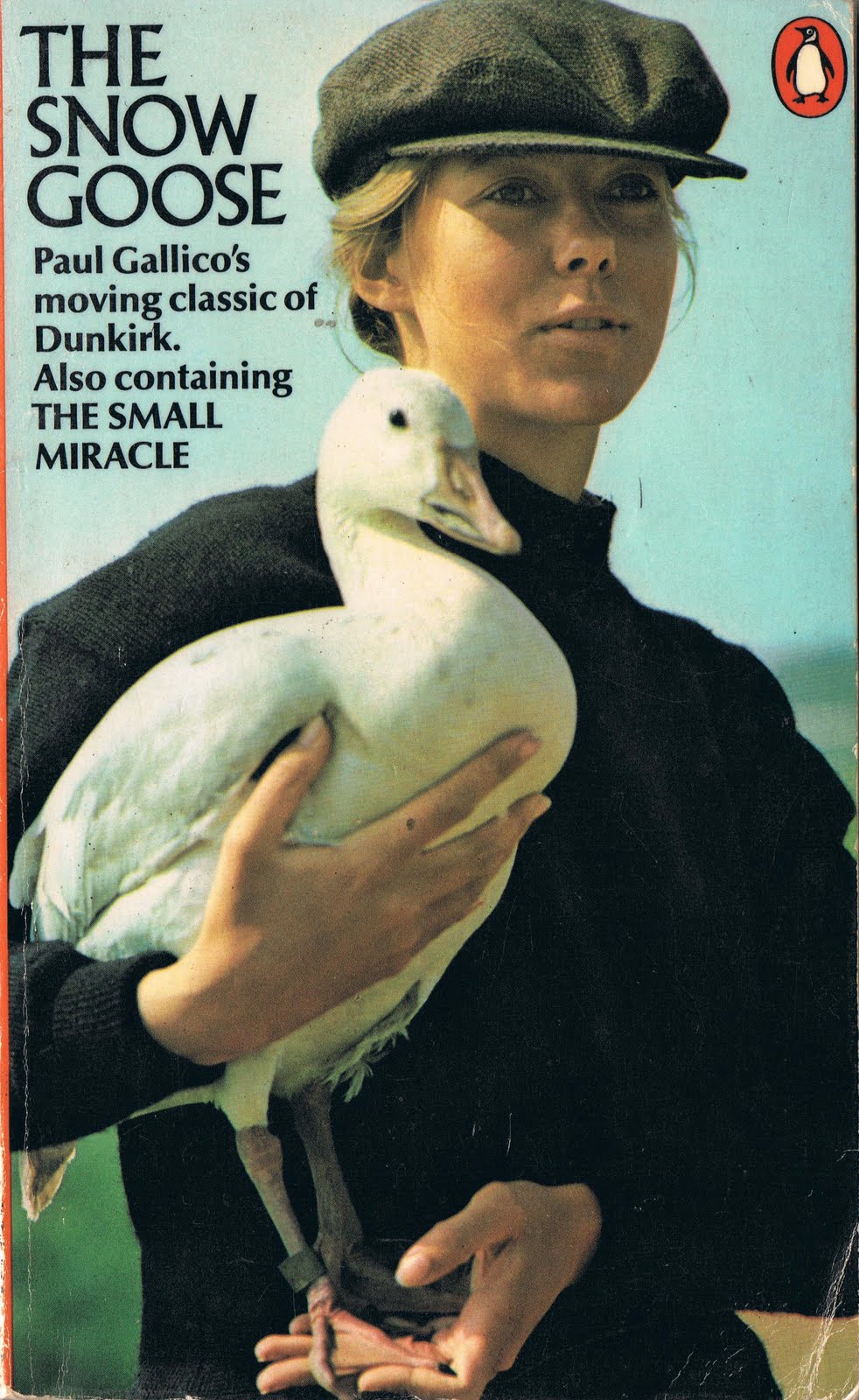
One amazing afternoon, when I was eleven, the teacher from the other, companion class to ours read us the whole of Paul Gallico’s Snow Goose, start to finish. He had a soft Scottish accent and a wonderful reading voice, and the whole class spent that afternoon in a completely magical other place, of snow and bleak landscapes and tears. Every single girl in the class instantly fell in love with him, and I bet no one there has ever forgotten it.

We were not expected to critique these stories – we were never asked to identify the genre, or discuss the foibles of the main character, or identify the metaphors being used in the passage we’d just been read. That particular ruination of stories lay in the future, at secondary school. We were just allowed to enjoy them, absorb them, be inspired by them – and slowly learn how stories worked and what they did by listening and reading.

Gradually, children, as they read more, as teachers gently pointed out the need for full stops and capital letters, and encouraged correct spelling, produced more coherent, grammatical sentences, more sophisticated descriptions, richer vocabulary. But they did this at their own pace, in relation to the kinds of books they were reading, and as their own story dictated. My best friend and I went through an intensely poetical phase in the third year of junior school in which our writing was essentially nothing but strings of adjectives, each of us out-doing the other in flights of fancy (‘the white, pale, glittering diamond snow drifts gently, mounds of sparkling coldness heaped in silvery piles’…) 

My teacher was always nice about them. She was still nice when I became obsessed with Biggles, and everyone in my stories started ‘observing wryly’ or ‘laughing carelessly’ instead of ‘saying’ anything. She let me develop a writing style at my own pace, and in relation to what I wanted to say, and just enjoyed the roller-coaster ride – and as a result what I never, ever felt was judged against any kind of externally imposed standard. We were praised for the creativity we showed, for making the teacher laugh, for the ideas in our stories. We weren't told that our story had achieved a level 4A or 3B, and what we needed to do to get the next highest level was use more 'interesting words' and include several similes. At eleven I wouldn't have recognised a simile if it had come up and hit me on the head (and that's a personification of a simile, by the way, and so a kind of metaphor, as most eleven-year-olds would now be expected to tell you...) But I'm sure I used them, all the time - not consciously, to impress examiners, but joyously, because they enabled me to describe what I had in my head in exactly the right way.

What has happened in the intervening years is a kind of madness sparked off by an increasing tendency for the bureaucratic state to value surveillance over trust. Instead of assuming that professionals could be trusted,  the state started to ask for evidence that its practitioners were providing 'value for money' and the only evidence that seemed to 'count' was numbers. In education, this meant the National Curriculum, imposed standards, testing, and league tables. I have watched my children go through the primary system, one after the other, and for a while I trained to become a primary teacher myself. I now go into schools as an author. All those experiences have left me increasingly sad and angry at the effect that these changes have had on children's relationship to literature and writing.

To take writing. In the attempt to codify and externalise the standards that children could be judged by, academics and policy-makers took the processes that happen as children develop their writing skills (development of wider vocabulary, greater use of figurative language, more accurate grammar, better spelling) and made them explicit teaching goals which were then  tested. Inevitably, with schools and children then judged by these tests/standards, teachers were forced to make explicit to their pupils the grounds on which they had succeeded or 'failed' to reach certain levels; to drill them in the 'right' techniques to do well in the tests. This is even considered by Ofsted to be good teaching practice - woe betide a teacher who doesn't put the 'learning goal' clearly on the board for each lesson, or whose pupils don't know exactly what level they are working at and how to get to the next rung of the ladder.

The example that really brought this process home to me happened when I was visiting a year 6 class in a small village primary in Devon a few months ago. Talking about the characters in my book, Frogspell, I read out a description of Sir Bertram Pendragon, 'a gruff, burly knight with a deep voice and a large moustache' who also happens to enjoy whacking his enemies with his 'big sword'. 'Can I just stop you there?' said the teacher. 'The word "big" is one of the banned words in our classroom. What do you think of that?'

I was temporarily speechless. I recovered enough to make it quite clear that I didn't think any word should be banned, and that sometimes 'big' was exactly the right word for the job you wanted it to do, but it made me think anew about the results of a testing regime that gives higher marks to the use of more complex vocabulary. The inevitable end point is that children are told not to use the word 'big' if they can possibly shoehorn in 'enormous', 'gigantic', extraordinarily excessive' or 'mountainous'.

The result is that writing, for children in primary schools - especially at the upper levels - is now a very much more conscious activity. Their heads are full of instructions: use 'interesting' words; use similes and metaphors and personification; use commas and semi-colons if you can; never, ever use the word 'big'. That they manage to find any joy at all in writing in the face of these multiple goals to aspire to and pitfalls to be avoided is a tribute to their irrepressible creativity and passion.

I recently read a lovely piece about writing by a fellow social anthropologist, Tim Ingold.
The full text is here: http://www.dur.ac.uk/writingacrossboundaries/writingonwriting/timingold/
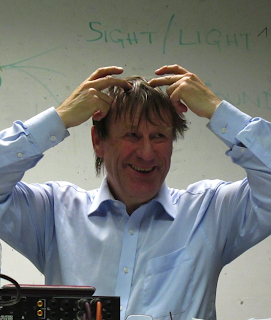
Ingold bemoans the universal use of the computer for university students' essays, and writes about how he encourages his students to put pen to paper, and feel the flow of writing as a flow, from brain to hand. Writing is not a technical fitting together of ready made bits and pieces in a way that will gain approval from an examiner/teacher, it is a craft. It's more akin to carving a knotted piece of wood than putting together an IKEA flatpack. Ingold likens it to hunting - you don't go from A to B in a straight line: 'To hunt you have to be alert for clues and ready to follow trails wherever they may lead. Thoughtful writers need to be good hunters.'

Introduce the computer, and its associated cut-and-paste techniques, Ingold argues, and immediately 'students are introduced to the idea that academic writing is a game whose primary object is to generate novelty through the juxtaposition and recombination of materials from prescribed sources'. This is word-processing rather than writing, and, as he says, it 'is a travesty of the writer's craft.'

The National Curriculum, and SAT tests, seem to me to have done the same thing to primary children's writing. They are being taught that writing is a process of exemplifying one's mastery of certain 'techniques', juggling and fitting together approved words and phrases like a puzzle (like a pre-designed Lego set). That we are teaching youngsters at this boundlessly creative age that writing is a kind of engineering makes me want to weep.

Of course, there are still many, many great teachers out there, who inspire and encourage their pupils, and read to them, just as I was encouraged, inspired and read to. But they do it not against a background where their judgement is key, but against one where they themselves are judged and tested, and often found wanting. Gove's 'reforms' look set to exacerbate this problem, and increase the number of demoralised teachers found wanting because they haven't drilled their pupils sufficiently in the recognition of gerunds and participles, or made it sufficiently clear that 'big' is a banned word.

I'd like to end with a suggestion. There' a great scheme out there, called Patrons of Reading. The website is here:
http://www.patronofreading.co.uk/
The idea is that a local author links with a primary school and makes a relationship with them over a year, encouraging reading, encouraging writing, and generally being a kind of 'reading mascot'. I think it's a brilliant way to bring the experience of real writers into schools in a more long-term way than  just a single 'author visit'. I'm currently touting my services to my local primaries. And maybe if it takes off, there'll be a few more people out there giving children permission to use the word 'big', if the word big fits the bill.


Cecilia Busby was trained as a social anthropologist; she now writes for children as C.J. Busby.

http://www.frogspell.co.uk/ ("Great fun!" - Diana Wynne Jones; "packed with humour" - The Bookseller)

Twitter: https://twitter.com/ceciliabusby

Facebook: https://www.facebook.com/pages/CJBusby/509258069106074?ref=hl

Thanks to Joan Lennon for letting me take her ABBA slot for my musings!