Showing posts with label getting ideas. Show all posts

Tuesday, 5 March 2019

Getting inspired... by myself aged six - Alex English

At a recent writing for children workshop, we were invited to think about ourselves aged six. What did we like? Who were we friends with? What did we read? What happened in the world that year (I had to look this up on wikipedia)? Which of these events had an impact on us?

It was a very enlightening exercise, but for some of the questions I found it difficult to remember. I was a huge bookworm as a child, but I had phases of reading Blyton adventures, horse stories, school stories (The Chalet School and Trebizon series were huge favourites at various points in time), sci-fi, and all sorts of others. Trying to remember which books came when was tricky.

Fortunately, my mum had kept all my writing books from school. They made enlightening reading and it was inspiring to get back into my own head circa 1980-something.


You could perhaps have predicted that I was going to make a picture book author by reading my first piece of published writing, aged five, complete with Pop! Bang! Whizz! 

I love the fact that the school magazine was typed on an actual typewriter and photocopied. The line-breaks also make this little tale strangely poetic. 


I read the whole magazine from cover to cover and found lots of little gems like this one above. It was a great way to get back to thinking like a child. A boot getting sucked off in the mud! What a story.


I'd forgotten those hairbands with windmills that go round. Love the last line. I'm never one for a completely happy ending.


Getting older now, I think I was six or seven when I came up with this cracker of an inciting incident. Suddenly a flying saucer landed in the garden! Wicked aunties featured in my stories heavily circa 1986. As did Sarah W, best friend of the moment.


My favourite foods haven't changed much since age six. Fish and chips is a solid choice, plus who doesn't love ice cream with sliced strawberries?


Once upon a time there was (sic) four children and their names were Edmund, Lucy, Peter and Susan.... 

Hmm, this story sounds somewhat familiar. I can vividly remember picking The Lion, The Witch and The Wardrobe from the school library at the end of term, and from this excerpt it seems that I got hooked on C.S.Lewis around age six. Interesting to note that I thought the Pevensies went to stay with the professor during their summer holidays, rather than being Blitz evacuees.


"A punk has colourful hair. She goes to the disco every day." 


I have no memory whatsoever of Prince Andrew and Sarah Ferguson's wedding. However it obviously had enough impact on me aged six to inspire the names for two gerbils in this story!

Do you ever re-read your childhood writing? Maybe you should give it a try, I really found it helped me tap into young me and gave me lots of ideas in the process.

Alex English is a graduate of Bath Spa University's MA Writing for Young People. Her picture books Yuck said the Yak, Pirates Don't Drive Diggers and Mine Mine Mine said the Porcupine are published by Maverick Arts Publishing and she has more forthcoming from Bloomsbury and Faber & Faber.
www.alexenglish.co.uk


Sunday, 28 January 2018

But a dream - Clémentine Beauvais

Once again I found myself the other day in that situation where someone tells me they're writing a novel for which the idea came to them in a dream. Every single time, I have to stop myself from rolling my eyes so hard that I get little tingles in my optic nerve or something. A dream! What are you, the oracle of Delphi ? Who on Earth has ever published an interesting book from an idea that came to them in a dream?

(Apparently Stephenie Meyer did, for Twilight. Hmm.)

Maybe I get a bit annoyed out of petty jealousy, because, well, I hate to brag, but I've always considered myself to be a pretty good dreamer. I mean, everyone dreams, sure, but some of us are simply better at it than others. Yes, there are some elite dreamers out there, who rise above the mediocre norm, though our secret is generally hidden and, to be honest, worth relatively little as social capital or any other kind.

Many of us better dreamers are so partly because, of course, of strenuous practice. Not just of dreaming (the conditions of which I do enjoy very much and strive to adopt as often and for as long as possible) - but also of writing the dreams down, pinning them into place firmly for the purpose of meticulous study.

Thus when I was a teenager I dutifully noted down my dreams, and I even still do sometimes today, in my diary, when I find them intriguing.

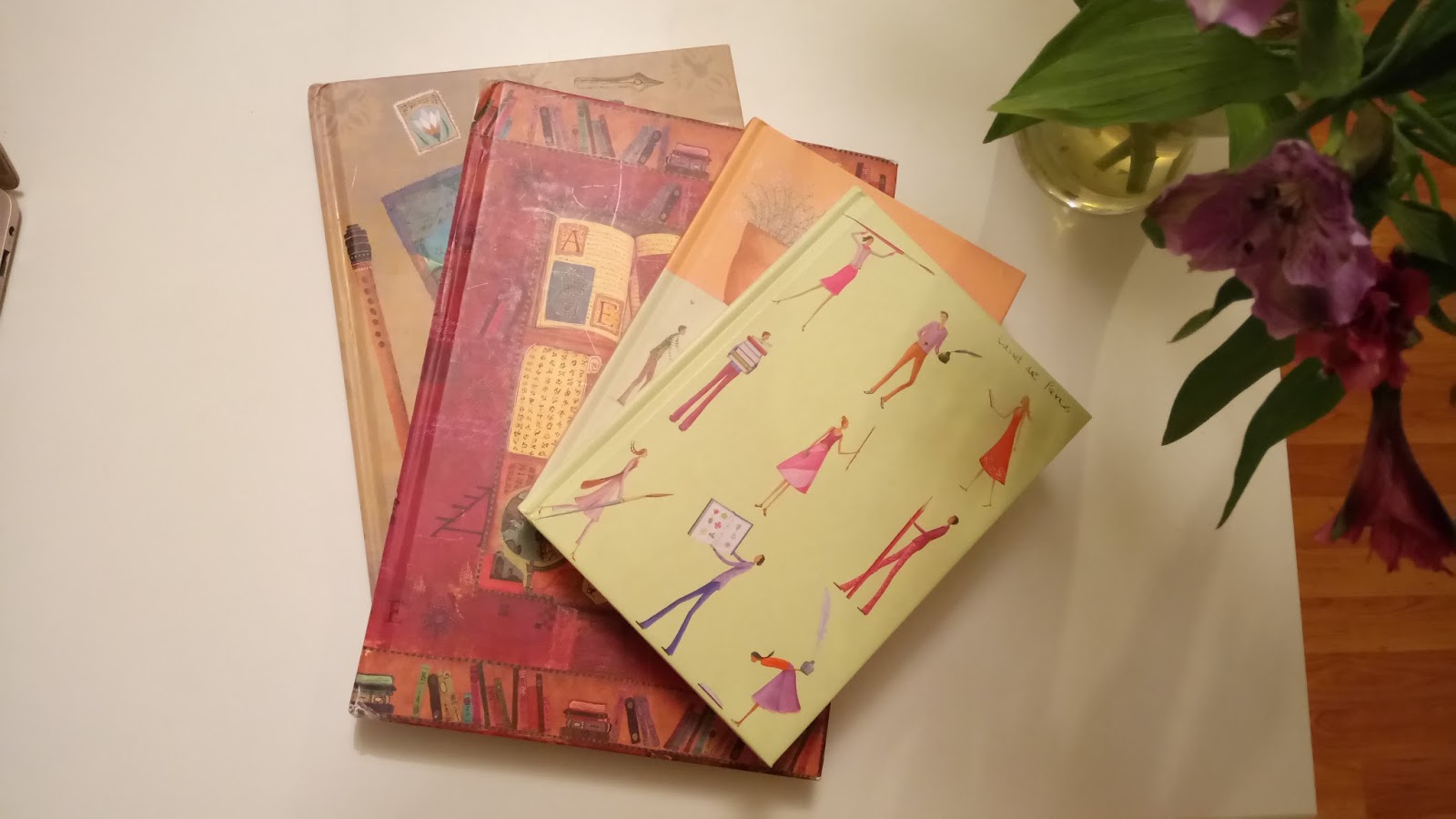
some of those teenage notebooks
At the time I was an intensive, competitive dreamer - much more than today, for I had hormones and strong frustration against parental authority on my side, as well as a healthier diet of fantasy and science fiction.

I even kept close accounts of how many dreams I had per month, and looking back I can now tell you that no year rivalled the great annus mirabilis of 2006 (I was 17 years old):


Yeah, yeah, look at you with your novel you got the idea for in a dream! Did you have 59 dreams - fifty-nine dreams! - solely during the course of April 2006? Did you? Did you?

Clearly my philosophy was that if you're going to do something as important as this, you might as well do it seriously. The activity of noting down dreams was so time- and brainspace-consuming, and it was so important not to miss a dream (59 dreams, as the best calculators among you will have noticed, is almost 2 each night) that I got into the habit, whenever I woke up even slightly in the middle of the night, of scribbling down notes from the dream I'd just been having, so as to remember it in the morning.

The last page of each notebook was used for that purpose: the notebook would be left open all night, a pen at the ready, and in the morning I'd squint my eyes to decipher my night-time squiggles:


Yes, this page includes things such as 'Halle Berry', 'Queen of Wales', 'house with people who kill each other little by little', 'glue for organs', 'redhead', 'Pig and Pag', 'scout leader dead plane' and 'Nutella crêpe'.

So, with the help of those notes, I wrote down the dreams every morning, extensively, between 6.30 and 7, and also added elaborate drawings and maps in order to remember exactly what everything had looked like:


'View from the cliff', as the caption says, and I believe the girl on the left is me, alongside another 2 girls, waving goodbye to Father Christmas and his reindeer. In the background, horses are throwing themselves down another cliff.

Now that's vaguely interesting, because in one of my novels (Piglettes), there are indeed horses who jump off a cliff. Unfortunately, I don't think it's extremely meaningful, because I had literally hundreds of dreams so one such coincidence isn't statistically significant.

All that to say: why did you get the idea for your novel in a dream, when I, doubtlessly by far a superior dreamer - I'm sorry, you protest? May I see your dreambooks? where are your 4pm notes on your nightmare involving Halle Berry and Nutella crêpes? - when I, then, have never had a shred of a worthwhile idea for a short story, let alone a novel, in a dream?

OK; show me that idea. What? Really? A coherent one like that? With armies of well-behaved characters, dramatic irony very much in place and a narrative arc of Joseph-Campbellesque perfection? How is that possible, pray?

I'm not sure I understand. If I were to write a novel from a dream I'd had it would be probably quite inappropriate, and also boring, and probably bits of it would be considered slander, or at least an elaborate lie involving famous people, and if it was funny it would only be so to me and maybe six other people, and many parts would be sexually frustrating but not in a titillating way, more in an annoying way, and there would be very, very many toilets that don't work properly and trains that lead nowhere. Also many forgotten babies, whom I attempt in haste to gather into my arms as I flee from some danger.


There would be no plot. Sometimes I would try to kill people with a gun I'd found somehow lying around for instance on the office photocopier - but bullets, made of a kind of chewing-gum-like substance, would repeatedly pepper their cheeks and foreheads without even blistering the squishy surface.


The setting would be, at best, unpredictable. There would be very limited characterisation. Friends I know quite well, as well as vague acquaintances and random people I sometimes see at the bus stop, and also legions of made-up people, would try to kiss me, which would be most of the time perplexing and scary but sometimes also furiously enjoyable.


It wouldn't be a novel for children. 

Really? It came to you in a dream? Just how tidy is your dreamscape? How much do you comb your brains into perfect little plaits before going to bed?

The other day, then, I asked, as always, 'What, like - like that? In a dream - the full idea? Or just seeds of...?'

'No, pretty much everything.'

'But did you, like, rework it or something?'

The other person: 'No, it was pretty much all there.'

Who are they, those über-competent dreamers whose unconsciouses are impeccably aligned with the demands of the fiction industry? What kind of daemon team of Hollywood scriptwriters do they host in their temporal lobe?

Are you one of them? Have you ever had an idea for a novel that came to you in a dream? Tell us in the comments. And about your whole childhood, so I can see where mine (or yours) went wrong.

I promise to get only moderately irate. You might reappear in a dream of mine at some point, but don't worry too much. As mentioned earlier, my dream rifles are inefficient.

--------------------------------
Clémentine Beauvais is a children's and young adult author in French and English, as well as a literary translator. Her latest YA novel, Piglettes, is out with Pushkin Press. 

Saturday, 16 December 2017

Consulting Oracles - Heather Dyer


Oblique Strategies™ are the famous set of cards produced by Brian Eno and Peter Schmidt in 1975. These cards were designed to be used as thought-provoking prompts that could suggest a course of action or assist in creative situations. They can be used to solve plot problems with novels, solve personal problems, or just inject some creativity into tasks or decision-making. If this feels a bit like consulting an oracle, it is. But the oracle here lies not outside us, but within. The oblique prompts are a means of consulting it.

'The Crystal Ball' by John William Waterhouse

Each card contains a prompt which can be used to achieve a new insight. Examples include:

Use an old idea.
State the problem in words as clearly as possible.
Only one element of each kind.
What would your closest friend do?
What to increase? What to reduce?
Are there sections? Consider transitions.
Try faking it!
Honor thy error as a hidden intention.
Ask your body.
Work at a different speed.
Use unqualified people.
Not building a wall but making a brick.
If given a choice, do both.

The term ‘oblique’ refers to the way we approach our problems from behind – or from the side. We are sneaking up on them, catching them unawares so that any inklings we might have as to their solutions don’t fade away under the neon intensity of our direct attention.

The intelligence of our unconscious communicates in scenes and symbols. Approached directly, these scenes and symbols will only dissolve, or vanish like one of those Magic Eye stereograms hidden in abstract designs.


But by introducing our problem to our unconscious obliquely, we allow the two to meet - but not head-on. They say that when you want to introduce a second dog to your household, you should bring the two dogs together for the first time on neutral territory, as though meeting by chance while out for a wander one day. This is how a problem and your unconscious intelligence should meet - as though by happenstance they have intercepted on a street corner and from that point on, are inseparable.

Freewriting is another way to approach an idea in oblique ways. Freewriting is simply writing before we have time to think about what we’re going to say. It allows the images in the unconscious to rise to our pens before our bossy monologue of our conscious intentions. So, freewriting is a way to discover what we don’t yet know about a subject. By that, I don’t mean that we write to find out how little we know; we write to allow what we didn’t know we knew, to rise up into our consciousness through our pens.

With this in mind, take a problematic scene or situation in your story – or your life - and approach the problem obliquely by freewriting for three or four minutes on the following prompts:

  • What do you see that's new in the situation? What do you see now that you’ve never noticed before? Keep searching for novelty. 
  • If this situation/problem was a dessert (or a building, or a story, etc.) what would it be? Write a paragraph explaining why. Is there anything it needs?
  • What if the elements in this situation were characters in a play? What would they say? Write a few lines of dialogue.
  • Freewrite on what the solution is not. 
  • Do you have a favourite hobby or interest? What principles does it adhere to? How might these principles be applied to the current situation or problem? 
  • Is this the wrong question? Sit with your eyes closed for several minutes, paying attention to your breathing. At intervals, ask gently: “What do I want to know?” See what arises. 
  • Freewrite on what you want the solution to be. Might your underlying desires be limiting in any way? 
  • What if you changed one aspect of this situation/problem? What if you changed the colour? The material? The method? The place? What can be made larger? Smaller? Divided? Rearranged? 
  • Draw the problem. What does the drawing say about the situation? What does it say about you? 
  • Draw a circle around this situation. What’s outside the circle? 
  • Write a paragraph describing the situation from a different perspective. How does it look from outside? From above? From the point of view of an object, or a forgotten voice?
  • What do you remain curious about? Write a paragraph exploring it.
  • What if you fail? What then? Where would you go next? How might what comes next relate to the initial situation? 

I suspect that, for a lot of people, the value of the ‘divination’ properties of oblique strategy cards, newspaper horoscopes, tarot cards or even the I Ching, lies in the way that when we ‘read’ these oracles we are approaching whatever question or problem we have on our minds (or in our unconscious) obliquely. I met a writer last week who has even published a book of short stories called Sixty-Four Chance Pieces, each inspired by one of the 64 hexegrams of the I Ching.


The way we interpret these 'omens' might say more about the hidden cravings and aversions in our  psyches than it does the stars. But the insights revealed may have arisen from an equally wise and all-knowing source. The more spiritual among us might even say, ‘the same source’.

If anyone tries any of the above prompts I'd love to hear about it. Did it reveal an answer that your unconscious already knew? Did it make you see your question in a new light?


Heather Dyer, Royal Literary Fund Consultant Fellow