Showing posts with label Dreams. Show all posts

Friday, 28 June 2019

A Biography of Dreams - Clémentine Beauvais

I dream of a dream autobiography. One that would let us see nothing of a person’s waking life, but everything of their night-time wanderings, and the evolution throughout a lifetime of that dreamscape.

Infant visions, of god knows what - some light blue and very soft, others the worst shadows? Childhood nightmares of monsters, of hunger, of parents transformed into uncanny-valley creatures. Ecstatic dreams of flying, eating and peeing in awkward places, the young camouflage of eros. Adolescent dreams of shame, of triumph, of sex - some seemingly scarily misguided, others terrifyingly bang-on.

Within all that, other circumstantial variances : pregnancy dreams around one’s period, the thirst dreams of hot summer nights, the smothering nightmares of thick duvets. Those strange phases, days, weeks, when dreams seem to vanish, where have they gone, because of what? Stress, business, other things on one’s mind, too much joy. Other phases, the opposite: hyperactive psychedelic nightmares, Technicolor musical dreams.

The old clichés: naked-in-public dreams, lost teeth? I never had those, but apparently it’s common. A hefty dose of those are needed in the dream biography, to give it the appropriate effet de réel.

Adulthood and its lamentable wastes of good dreaming time: sleep squandered in work dreams, admin dreams, train dreams and more toilet dreams. The atrocious dreams at the confines of horror and dark desire: seeing one’s children dead, one’s parents dead, one’s partner dead. Dreams of piles of washing. More erotic dreams (more guilt).

Once in a blue moon, dreams of, well, blue moons, and other fantasy lands. As an adult, dreaming of actual monsters can be considered a privilege. Flying is a rare occurrence.

Old age. I don’t know. What do you dream of in old age? Tell me.

When I was a child, and a huge Harry Potter fan (which I still am), I would dream very often of flying around on brooms and doing magic with wands, but also just with my hands, or any object. My nightmares were terrifying and absolutely uncontrollable, but my dreams were pliable and kind. I wandered around Hogwarts at least a couple of times a week with Harry, Ron and Hermione.

But I remember well the time, around 14 years old, when wizard dreams started to malfunction. I used to be able to murmur ‘Lumos!’ and there would be light. Gradually, there wasn’t. I had weird frustrating dreams where I had a wand, but it didn’t work very well.

In one of them, I said ‘Lumos, Lumos,’ and the light went on, but that was because I’d tapped the light switch with the tip of my wand. I was aware it was cheating, but didn’t want to acknowledge it.

I remember I told my mother this dream and she burst out loud laughing, and said something like, ‘it’s the end of childhood, my darling’. It made me enormously sad at the time, because you can always count on children to romanticise their own childhood and mourn its loss even more than adults do.

Soon, I could no longer fly in dreams, but merely jump very high.

These days I never dream of making magic Evil magical things being done to me, yes. And I hardly ever dream of flying. Falling, yes. 

I don’t think it’s because I’m unhappy, or unimaginative. Maybe my superego’s become too strong for my id. It’s most definitely a Mr Banks kind of superego, not a Mary Poppins.

Graham Greene wrote a wonderful book of his dreams. Many encounters with famous people, politicians, writers. Normally, there’s nothing more boring than someone’s dream narratives. But those ones he manages to make fascinatingly universal. Just like the best (auto)biographies.
Who is the most famous person you’ve ever met in a dream? I nearly only meet minor starlets, for mostly incomprehensible reasons. JK Rowling I met often as a child and a teenager, but I never do now. She must be too busy being on Twitter to drop by.

The dream biography would see dead people and exes and long-forgotten friends come back and drift away again according to mysterious rules and cycles. My cat Opaline died seven years ago but she is with me at least once a month, generally very ill, and I have to protect her. Same with my sister, today a fiercely independent, strong and brave 24-year-old, but who appears in my dreams almost always as a tiny baby under my sole responsibility. My dead grandfather is often there. I always know he’s dead, and feel pleasantly surprised that, in spite of that, he’s bothered to turn up at whichever dream event I meet him.

A biography of dreams worthy of the name would require a strategic approach to data, of course; based on dream diaries, but also day diaries, for information to be triangulated as seriously as the exercise requires. But the day life must only be mentioned extremely allusively, and in small touches, and only insofar as it illuminates the central narrative. As in any writing project, it’s important to have a clear focus.

When the dream autobiography becomes a successful publishing trend, you can trust quantitative researchers will turn to the data for content analysis. We’ll start distinguishing patterns and predicting trends. It’s that time of life again when you’re going to sleep with all of your exes, sorry! Then, in a few months’ time, it will only be dreams of missing buses and your debit card not working. You’ll be utterly incapable of sending any text or email in any dream. It will only be random letters and hieroglyph-like symbols. Oh, and you’ll accidentally send your boss dick picks you didn’t even know you had in your phone. After that, for weeks you’ll eat a lot of cake and be stalked by monsters. At some point, apocalypse nightmare! The land will fold under your feet and volcano eruptions will be spectacular. You’ll hate it while it happens, but then you’ll have something to talk about when you wake up.

I have a friend with whom I discuss dreams almost every morning, like we’d comment on the latest news. It is a kind of intimacy I’d wish on anyone.

Psychoanalysts would hate this dream biography, because writing down a dream is forbidden in that science. You have to speak it, because there’s no such thing as a dream narrative, they say, only what you do with those pictures when you tell them to someone, free-associate, and hesitate and ramble. I agree fundamentally, I think, but still: I want to read that literary effort, that attempt to make sense of it, to chronologise it all. I want it to be aesthetic.

Who will write that autobiography for us? Someone hopefully very normal, with dreams like ours. But someone diligent and with a sense of humour. They’d need to write down their dreams from the earliest ages. Illustrate them, that’d be nice too. Then select (necessary stage) with a razor-sharp sensitivity for pertinence. And then tell us that story.

I don’t read much in the manner of biographies and only slightly more when it comes to autobiographies. But that one I’d read from cover to cover. An existence’s flipside.

-------------------------------
Clémentine Beauvais is a writer and literary translator. Her YA novels in English are Piglettes (Pushkin, 2017) and In Paris with You (trans. Sam Taylor, Faber, 2018).

Tuesday, 28 May 2019

What is it with Dreams and Mirrors? – Clémentine Beauvais


It is a Tr. Un. Ackn., in in-the-know editorial and writerly circles, that One Does Not Start a Novel with A Character Awaking from a Dream, Or, with A Character Looking at Themselves in a Mirror.

No.

No.
Especially not YA fiction, perhaps the category whose agents, editors and writers I’ve heard most vocal about those two incipits. Of course, there are Justifiable Exceptions (e.g., your whole book is a mirror-maker re-living the same two hours in the morning, eternally), and of course, there are  precedents. But it’s among the most commonly given pieces of advice I’ve heard about Beginnings. No mirrors, no dreams. 

What’s striking is that, de facto, those two things are indeed exceedingly common beginnings picked by amateur writers. I’ve worked for three different publishers on the slushpile, and Dreams and Mirrors were truly a very disproportionately used incipit. This week again, I was asked to review two writing proposals for YA fiction that both start with a teenager looking at themselves (and describing themselves) in a mirror. 

Ironically, this girl isn't looking at herself in the mirror, but at you. HA!
More striking still, children, teenagers and adults that I meet on creative writing workshops also spontaneously produce texts that begin with Mirrors or Dreams – so we’re not just talking about would-be writers. It seems that this is some kind of storytelling reflex. My own stories from childhood and teenage years are full of such beginnings. I would even go as far as to say that the Dream/ waking up one was my default incipit.

But why? Few popular stories actually begin with either of those tropes. No fairy or folk tale that I know of does, unless you consider Snow White – which doesn’t technically begin with the Mirror mirror on the wall episode. No legend, no myth, apart from, arguably, Narcissus (Justifiable Exception, I’d call it). Classical novels? Anyone? in MG and YA, the trope is present, sure, but not omnipresent - nothing like what feels like the very large amount of unpublished texts that use those kinds of incipit.

Would qualify as Justifiable Exception.
For Dreams, films may be a culprit; I’m not talking about ones like Inception – again, Justifiable Exception – but about the myriad films that use dreams in the incipit to tell a bit about the backstory. Mirrors, for obvious reasons, are not as useful in a visual medium like film.

Saying that it's just a lazy habit picked up from other media is not, I think, the whole story. To me, behind those clichéd YA incipits lie much more interesting (I think) narrative reasons, which I believe are linked to at least three things. First, ironically, to the ‘show, don’t tell’ main approach in contemporary creative writing theory and practice. Second, to the dominance of the first-person or exclusive internal third-person narrative perspective, especially in YA fiction. Third, to a number of generic conventions of youth literature, especially the Bildungsroman-type ‘narrative of initiation’, which remain strong in that kind of fiction. 

I'll have a look at those in turn.

‘Show, don’t tell’

A person looking at themselves in a mirror, and a person awakening from a dream, from a narrative perspective, are actually fairly excellent ways of showing-not-telling in an incipit. They are both examples of indirect characterisation and of setting the stage, which is exactly what an incipit should do. 

Through the Mirror scene, you can present your character indirectly, and their challenges for the plot (‘John looked at himself in the big mirror. Same spotty, gangly teenager he’d seen the day before. And that wasn’t going to change anytime soon, at least not before pretty Eleanor had found herself a new boyfriend…’). With a Dream scene, you can easily give elements of backstory while leaving interpretive space for the reader (‘Footsteps in the mud… the monster was getting closer. John shivered. Again! This time, don’t take her, he implored. Please don’tRING! 7 o’clock. John awoke with a start. A new day in boring old Yatown, Connecticut.’) 

'To be fair, if your incipits are as sh*t as that, you've got other things to worry about'
  
yeah yeah just an example
 I think people who have some literary sensibility are drawn to indirect characterisation and understand perfectly well what an incipit has to do. They could launch into direct characterisation and plot-setting (‘John was a man whose life was very boring…’) but they don’t – because they recognise that this is a terrible type of beginning. The reason why so many budding writers – why we all – hit upon those two solutions is that they are, well, fairly good solutions to show-not-tell at the early stages of a story. The issue, of course, is that they are overused, and have become a mark of cliché, amateurish writing – by no fault of the devices themselves, nor of the writers.

Puzzles of narrative perspective

The second aspect is the narrative perspective of much youth literature, which is, in contemporary times, quite often exclusively focused on one viewpoint. We have an I or a strong 3rd-person internal narrator, and while that allows for plenty of sophisticated exploration of mental states and lots of interesting play with narrative (e.g. unreliable narration), it leaves very little breathing space for precisely the show-don’t-tell imperative detailed above. 

When you write from that viewpoint, you're drawn to all the strategies that allow for some distance to the focal character. Mirrors are such a strategy from a visual perspective, allowing for reflection – literally and figuratively. Dreams are another, because they happen both to and in the character. (Other devices include the character eavesdropping on a conversation about them, etc.; but those are more rarely incipits). 

which is why the Invisibility Cloak is a brilliant narrative device
So again, they are perfectly logical choices for a category of fiction with such narrative constraints. Their omnipresence in incipits says something about the narrative pact of the novels, too – that they will be mostly about the self, but with some interstices for the reader to make their own interpretations.

Bildungsroman: the static and the latent

Finally, we are writing in a category of literature that is still very faithful to its Bildungsroman roots, namely to the narrative of initiation (Roberta Trites would argue that YA fiction is indebted to the Entwicklungsroman, the tale of maturation, but we can leave that aside here). The Bildungsroman assumes at least one important aspect: change. We need to become aware, throughout the story, that the main character is evolving, most probably from a kind of innocence to a kind of experience, or from normality to exceptionality, or from ignorance to knowledge. 

This means that the incipit has the particularly arduous task of making us aware of a starting state which is both about stasis and about latent development. Namely, we must encounter a character who both has stable properties, and a potential for change. 

potential realised
Both Mirror and Dream beginnings are ideally suited to do that. Mirrors show us a character as they are (stasis), but the explanation is generally about how unsatisfactory it is (potential change); or, less ordinarily, the character might marvel at their beauty and amazingness, but we are quick to catch that this is probably some kind of tragic irony (potential change). Dreams show us a character first as they might change – the dream generally implies a state of instability, of anguish or of lost happiness, etc.; this, we are led to think, will be important for the main object of the quest. Yet, when the character wakes up, they are (generally) shown in the stability of their everyday life, and thus the static qualities are made evident.

Again, a perfectly understandable choice of incipit for a type of text intensely concerned with a journey of development.

HURRAH! LET'S ALL INCIPITS BE ABOUT MIRRORS AND DREAMS THEN!

No, of course I don’t mean at all to say, with all the above, that it’s a great idea to use Dreams and Mirrors just because they are narratively justified. These are good narrative reasons in the absolute sense, but literature is a mobile thing, which is also about context, contingency and convention. Those incipits have become clichés, and that’s an excellent literary reason not to use them unless you play with the convention. But it’s interesting to think about why they have become clichés. They actually get things done quite efficiently that do need to get done.


Plus, there are no rules. My new novel starts, It was a dark and stormy night, and John, awaking from a strange dream, looked at himself in the mirror...

-------------------------------
Clémentine Beauvais is a writer and literary translator. Her YA novels in English are Piglettes (Pushkin, 2017) and In Paris with You (trans. Sam Taylor, Faber, 2018).

Sunday, 28 January 2018

But a dream - Clémentine Beauvais

Once again I found myself the other day in that situation where someone tells me they're writing a novel for which the idea came to them in a dream. Every single time, I have to stop myself from rolling my eyes so hard that I get little tingles in my optic nerve or something. A dream! What are you, the oracle of Delphi ? Who on Earth has ever published an interesting book from an idea that came to them in a dream?

(Apparently Stephenie Meyer did, for Twilight. Hmm.)

Maybe I get a bit annoyed out of petty jealousy, because, well, I hate to brag, but I've always considered myself to be a pretty good dreamer. I mean, everyone dreams, sure, but some of us are simply better at it than others. Yes, there are some elite dreamers out there, who rise above the mediocre norm, though our secret is generally hidden and, to be honest, worth relatively little as social capital or any other kind.

Many of us better dreamers are so partly because, of course, of strenuous practice. Not just of dreaming (the conditions of which I do enjoy very much and strive to adopt as often and for as long as possible) - but also of writing the dreams down, pinning them into place firmly for the purpose of meticulous study.

Thus when I was a teenager I dutifully noted down my dreams, and I even still do sometimes today, in my diary, when I find them intriguing.

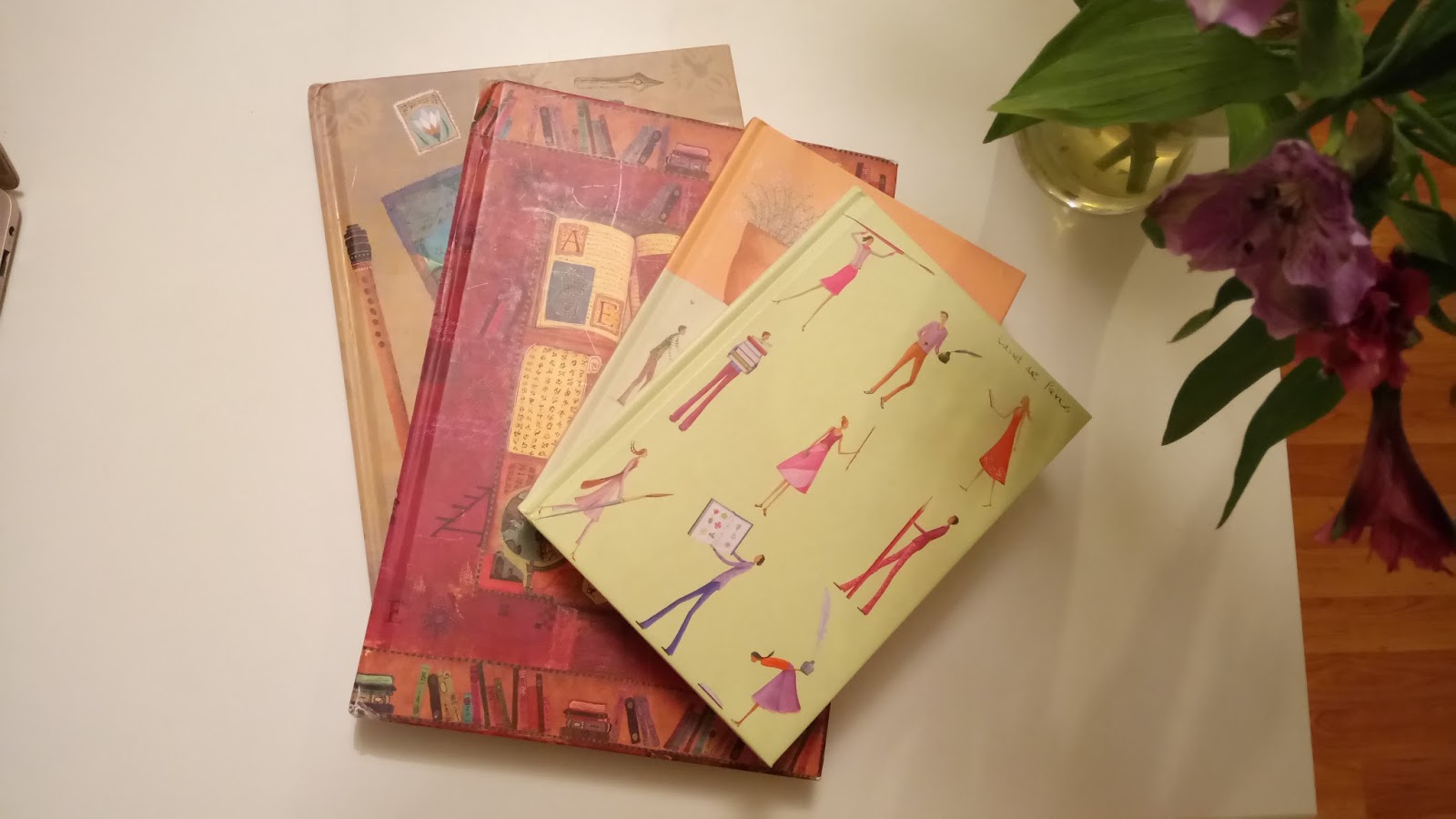
some of those teenage notebooks
At the time I was an intensive, competitive dreamer - much more than today, for I had hormones and strong frustration against parental authority on my side, as well as a healthier diet of fantasy and science fiction.

I even kept close accounts of how many dreams I had per month, and looking back I can now tell you that no year rivalled the great annus mirabilis of 2006 (I was 17 years old):


Yeah, yeah, look at you with your novel you got the idea for in a dream! Did you have 59 dreams - fifty-nine dreams! - solely during the course of April 2006? Did you? Did you?

Clearly my philosophy was that if you're going to do something as important as this, you might as well do it seriously. The activity of noting down dreams was so time- and brainspace-consuming, and it was so important not to miss a dream (59 dreams, as the best calculators among you will have noticed, is almost 2 each night) that I got into the habit, whenever I woke up even slightly in the middle of the night, of scribbling down notes from the dream I'd just been having, so as to remember it in the morning.

The last page of each notebook was used for that purpose: the notebook would be left open all night, a pen at the ready, and in the morning I'd squint my eyes to decipher my night-time squiggles:


Yes, this page includes things such as 'Halle Berry', 'Queen of Wales', 'house with people who kill each other little by little', 'glue for organs', 'redhead', 'Pig and Pag', 'scout leader dead plane' and 'Nutella crêpe'.

So, with the help of those notes, I wrote down the dreams every morning, extensively, between 6.30 and 7, and also added elaborate drawings and maps in order to remember exactly what everything had looked like:


'View from the cliff', as the caption says, and I believe the girl on the left is me, alongside another 2 girls, waving goodbye to Father Christmas and his reindeer. In the background, horses are throwing themselves down another cliff.

Now that's vaguely interesting, because in one of my novels (Piglettes), there are indeed horses who jump off a cliff. Unfortunately, I don't think it's extremely meaningful, because I had literally hundreds of dreams so one such coincidence isn't statistically significant.

All that to say: why did you get the idea for your novel in a dream, when I, doubtlessly by far a superior dreamer - I'm sorry, you protest? May I see your dreambooks? where are your 4pm notes on your nightmare involving Halle Berry and Nutella crêpes? - when I, then, have never had a shred of a worthwhile idea for a short story, let alone a novel, in a dream?

OK; show me that idea. What? Really? A coherent one like that? With armies of well-behaved characters, dramatic irony very much in place and a narrative arc of Joseph-Campbellesque perfection? How is that possible, pray?

I'm not sure I understand. If I were to write a novel from a dream I'd had it would be probably quite inappropriate, and also boring, and probably bits of it would be considered slander, or at least an elaborate lie involving famous people, and if it was funny it would only be so to me and maybe six other people, and many parts would be sexually frustrating but not in a titillating way, more in an annoying way, and there would be very, very many toilets that don't work properly and trains that lead nowhere. Also many forgotten babies, whom I attempt in haste to gather into my arms as I flee from some danger.


There would be no plot. Sometimes I would try to kill people with a gun I'd found somehow lying around for instance on the office photocopier - but bullets, made of a kind of chewing-gum-like substance, would repeatedly pepper their cheeks and foreheads without even blistering the squishy surface.


The setting would be, at best, unpredictable. There would be very limited characterisation. Friends I know quite well, as well as vague acquaintances and random people I sometimes see at the bus stop, and also legions of made-up people, would try to kiss me, which would be most of the time perplexing and scary but sometimes also furiously enjoyable.


It wouldn't be a novel for children. 

Really? It came to you in a dream? Just how tidy is your dreamscape? How much do you comb your brains into perfect little plaits before going to bed?

The other day, then, I asked, as always, 'What, like - like that? In a dream - the full idea? Or just seeds of...?'

'No, pretty much everything.'

'But did you, like, rework it or something?'

The other person: 'No, it was pretty much all there.'

Who are they, those über-competent dreamers whose unconsciouses are impeccably aligned with the demands of the fiction industry? What kind of daemon team of Hollywood scriptwriters do they host in their temporal lobe?

Are you one of them? Have you ever had an idea for a novel that came to you in a dream? Tell us in the comments. And about your whole childhood, so I can see where mine (or yours) went wrong.

I promise to get only moderately irate. You might reappear in a dream of mine at some point, but don't worry too much. As mentioned earlier, my dream rifles are inefficient.

--------------------------------
Clémentine Beauvais is a children's and young adult author in French and English, as well as a literary translator. Her latest YA novel, Piglettes, is out with Pushkin Press. 

Wednesday, 3 July 2013

The Devil is in the Detail - Heather Dyer

‘The trivial is sacred’ - OSHO

I think it was the poet Blake Morrison who said, ‘Try and write about The Meaning of Life, and you will end up staring at a brick wall. Describe a brick wall accurately and you may incidentally say something about the meaning of life’. Note his careful use of the word ‘accurately’, here. If you can get close enough and be truthful enough about your subject, you might find big ideas in something very small.

 
If you are looking for a place to begin writing, try starting with small, specific images and objects that interest you. There’s a reason why you’re drawn to these things: perhaps they are symbols that reflect things buried in your unconscious. If you could interpret these images the way that dreams are interpreted, you might reveal what your unconscious wants you to know. You don’t need to interpret the images though, just as you don’t need to dissect a seed to find out what it will become. Just plant it, and see what grows.

For example, you might have the urge to describe the box of buttons that you used to play with for hours as a child, while your mother was working late. You don’t have to know that the piece you are going to write is about loneliness. You just have to describe the box of buttons – get right inside it and see where your thoughts wander. Perhaps it will be in writing this story that you will first realize that you’ve always felt lonely. Maybe only now will you realize that this feeling has affected all the decisions you have ever made. And when you look back at your initial image – that box of odd buttons; each one lost, alone, waiting for a garment to belong to – you might marvel at the wisdom of your unconscious in choosing the perfect symbol to portray your loneliness. But you don’t have to know this in advance. To begin with, all you need to concern yourself with is describing the box of buttons.

This technique can also be applied when you’re stuck in the middle of your story. Instead of trying to look further ahead and predict the ending, try going deeper into the story. It’s like drilling down to tap into an underground river; direction and flow can be found if you drill deep enough in the right place. So, hover above your story. Look down upon your settings, see the characters walking through various scenes, and hear snatches of their conversations. What draws your attention? By digressing in order to describe the details more accurately, more authentically, you might find that you unearth a truth about a character, a setting, or a situation that leads you in the right direction.