Showing posts with label Alex Cotter. Show all posts

Friday, 26 May 2023

Burnham Book Festival: Sue Purkiss

 Last weekend, I was invited to be part of a book festival at Burnham on Sea, which is in Somerset, just down the coast from Weston Super Mare. I was part of a panel of children's writers, with Alex Cotter and Lu Hersey (both, coincidentally, contributors to this magnificent blog). The session was moderated by Jonathan Pinnock, who writes seriously clever and very funny mathematical mysteries. (If you're like me, you'll be bewildered by them half the time, but you'll also be thoroughly entertained.)

Lu, myself, and Alex.

It was a truly delightful experience. This was only the second year of the festival, but I'm sure it's going to grow. It had a very distinct feel to it: friendly, welcoming, relaxed, inclusive - and very well-organised. Local writers had been invited in to talk about, and hopefully sell their books, as well as the writers doing actual events. Alex led a workshop in the morning for local schoolchildren, who then crossed the road to be shown round the local library. When they came back, and bumped into Alex, they greeted her like an old friend. (The subject all of them were most interested in was how much chocolate she actually needs to fuel her writing.) Going by the programme, there were lots of writing workshops people could sign up for - so altogether, a really good variety of types of event.

We didn't have a huge audience for our particular session, but the people who were there were interesting and interested and had lots of good questions. The title was something about where the magic comes from - but it was generally about children's writing, with reference to our own work. Big shout-out to Nataliya, who took the photograph!

Definitely one to look out for

Thursday, 12 January 2023

Removing the scaffolding

There’s a lot of clanging and smashing and banging going on in my laptop right now. Metaphorically speaking. I’m in the throes of removing my scaffolding. Peeling away the bridges and links and downright waffle I layer in to help me grow my story.

I can’t remember which well-known author coined the idea of the scaffolding phase of editing, but it’s stuck with me. The process of revising a first draft – for me – is just that, akin to taking the scaffolding down after a big build job, ready to unveil the result.

And it’s got me thinking, what constitutes scaffolding and why is it useful? 

What is it? Well, for me it might often include…

  • the tell not show; the intent of a character or dramatic action to get you to the next point of the story
  • the overtelling – more information about motivation or emotion than the reader needs to know, but you need to remember
  • ‘the other’ – the other path or reaction your character could have taken, but didn’t
  • a character who is no longer necessary – a conduit for the narrative whose purpose is now defunct (sorry, Conor)
  • too many words – a focus on driving through with story rather than being mindful of language

And why is it useful? Why not trim as I go, take each page and paint and polish it before moving on? For me, I find creation is a process I have to lean into or else it might not happen. It never appears from the first page, but slowly emerges. So while it might be a strategy to work more precisely and carefully and edit as I go (a simple ladder rather than full on poles and planks), I do fear the idea might not then fully form. My focus might get distracted by presentation and prose and curtail the process of story making. 

So I heave up the scaffolding from the first chapter, obscuring the true look and feel of the story beneath its clumsy façade. But heck, it makes me love the moment when it comes off – when I can start to see the final work, the big reveal when the props are taken away.

As to the scaffolding, I keep every bit. My mantra in life, it might come back in fashion, is also applied to my writing; I dread throwing anything away. So I keep a 'scaffolding' document that often, quite alarmingly, ends up being as long as the manuscript itself. Small parts of it can come in useful, once in a blue moon (similarly, the fashion comeback; ahem, flares are back).

The scary thing, of course, is you often have no idea what the end result will look like until all the scaffolding is off. Until you can stand back and read the story in full again. It is a risk. Especially if your deadline is in three weeks’ time. But fingers crossed for something like... (😉)


Alex Cotter’s middle-grade novels THE HOUSE ON THE EDGE and THE MERMAID CALL are published with Nosy Crow. She has also previously published YA novels as Alex Campbell. Find her at www.alexcotter.co.uk or on Twitter: @AlexFCotter


Sunday, 16 October 2022

Trust in the process

I hit a writing wall a few weeks ago. A tall, solid, Gandalf-You-shall-not-pass, wall. It's due to the writing of my current MG novel, with a deadline that seemed far away a month ago - and lately has begun to loom like a gigantic shadow monster. I thought I knew where I was going with the story after some careful plotting over summer, and then: Gandalf. 


A timely night out with a good friend, where I was desperately bemoaning my brick-wall predicament, and she reminded me of some wise words - which have since seen me through: "Just trust in the process".

Oh, how I needed this reminder. I find I can all too quickly feel "A failure!" and "Doomed to mediocrity!" when I become suddenly stuck in my narrative; if I can't unlock the what-needs-to-happen-next to achieve the story that's clear in my head yet refuses to be put down on paper. "That's it" I will dramatically wail, "I'm not good enough to write it!" 

Unlocking the next

To remember there is a process - and one that sometimes can't be hurried yet is often integral to storytelling - was just what I needed to hear ... to become unstuck.

To trust in the process - and gradually over time and with work, hopefully doors will become unlocked and walls will come down and the narrative will flow again. 

To enable the process - and it will almost certainly and naturally evolve the story in your head onto the what's next. 

On reflection, my trusting in the process has included:

  • Plotting
Return to the beginning and brainstorm the structural ideas again. Even if you're going over old ground, get it down on paper again; draw diagrams, pictures, maps. Relook at your blueprint for your novel and if there are other, stronger ideas that need to be generated, they might begin to emerge through this process.
  • Writing
Plotting is all well and good, but often the real magic starts when you write, when you're inhabiting the minds and lives of your characters. Facing the story as they face it will gradually enable a process of ideas and pathways that are still yet to show themselves.

  • Editing
Like weeding an overgrown garden, as you go through the book turfing out ideas that clutter and clog the story arc, you can see more clearly the ideas that do work and give them space to shine.

  • Time out

Taking time to step away from the story can be part of the process too. Reading other books - all kinds of books - for inspiration; walking, talking, dancing - life outside of the laptop. I often find I become unstuck if I just have a swim, or a cheeky night out...

I suppose, as life in itself is a process, our brains need this time to consider and evaluate, the space to assemble and revise choices, an evolution to recognise the raw truth of the story. And by trusting in the natural creative process - rather than headless chicken panicking - last week I finally managed to bypass Gandalf and his staff for sunnier open meadows and - for now - I think I know where my narrative is going. Still doesn't stop that deadline looming though...!

Alex Cotter’s middle-grade novels THE HOUSE ON THE EDGE and THE MERMAID CALL are published with Nosy Crow. She has also previously published YA novels as Alex Campbell. Find her at www.alexcotter.co.uk or on Twitter: @AlexFCotter

Friday, 16 September 2022

To plop or to plot ...

To plop or to plot … that is the question. Well, mine anyway. I’m currently writing my next book and I’m excited and filled with hope about a new idea. My natural instinct is to launch right in, to plop myself down in the middle of a comfy chair and race into the start of the story (and eat the last of the biscuits). Such is my keenness to inhabit any new idea, to look and see what I might discover there - rather like a visit to a continental supermarket - that impatience can get the better of me.

Similarly, I’m a technical-manual-refuser. A gung ho gah-I’ll-learn-as-I-go gal. Give me a manual and my eyes will soon glaze and blur in much the same way they did at school in subjects that weren’t History or English (sincere apologies, Notre Dame Comprehensive, Sheffield). It's why I still can’t operate anything that hosts buttons and flashing lights in my house. 

Losing the story plot
Which is fine, I can live with the inability to change channels remotely. But with writing - more often than not - I find that if I do just plop into a new story without some serious plotting first, I risk officially losing the plot.

And so, for my past two novels, I’ve been purposefully increasing my pre-plotting time. I’ve found – for me anyway – it not only helps develop my story structure, but it can really boost better idea generation. More ideas help to form a tighter structure; a tighter structure often enables more ideas. 

Therefore, fresh from a summer of plotting and filling up more notebooks than Nancy Drew, here are some of the crafting exercises and activities I have employed to help me avoid too much plopping …

Plotting exercises

📗Charts: I do lots of these as I begin forming a story. They can include charting key Strands, Character Arcs, pivotal Crisis ChoicesCause & Effect.

📘Craft books: re-reading screenwriting books such as ‘Story’ and ‘Into the Woods’ – I find guides that set out the science of our craft can really help develop structure and brainstorm ideas.

📙The 3Cs: Conflict, Choices & Change. A bit of a cross-check for acts and chapters against these critical 3Cs.

📕Story analysis: In my plotting period, I tend to analyse and critique more books and films. Assessing their midpoints, climaxes, motifs, character arcs ... and reflecting on my own.

📗The Circle: I get a bit addicted to drawing circles, lots of them. I quarter them into four acts and review how my story comes full circle, how scenes might mirror one another, how characters develop over time.

📘Map of Connections: I map settings, external and internal, present, past or imagination and I chart connections between these settings and the characters’ journey arcs.

📙Layer Trifle: I layer up revelations like a trifle, with key twists until the final reveal.

📕Stage set: I often draw key scenes as if they were stage sets, examining where characters are in relation to each other and to the audience (the reader).

📗Remember the Reader: possibly the most important part of plotting. I ask myself how the reader might engage with my story. What do they expect? How can I subvert expectations? What questions do I want them to ask? How will this make them feel? 


As Kevin Costner said, almost, Plot and the ideas will come. So, these days, I’m a reformed plopper; a born-again plotter through and through. However, technical manuals? I believe I’ll continue to press my remote control like it’s run out of batteries and wait for one of my teenagers to come home.


      Alex Cotter’s middle-grade novel THE MERMAID CALL was published on 7 July 2022 with Nosy Crow. She has also written THE HOUSE ON THE EDGE. Find her at www.alexcotter.co.uk or on Twitter: @AlexFCotter

Thursday, 16 June 2022

The Ideas Factory

As I approach the publication of my second children’s book (cue humble plug: The Mermaid Call), I’m being asked to go back to the beginning and pin down my inspiration for the novel. So long in the writing and editing, I sometimes find I have to stop to think about a book’s origin, to recall what exactly formed the idea for a story.

The Mermaid Call cover and themes

It’s probably one of the most common questions a writer can get asked: Where do you get your ideas from? (Alongside, how many have you sold? Best to ignore that one.)

So, where indeed? 

Gah, story ideas, they can be slippery creatures, full of fool’s gold and emperor’s new clothes. In the same way The Supremes found you can’t hurry love, I’ve discovered you can’t rush an idea. Like love, ideas tease, play hard to get, disappoint you. And when you finally find ‘the one’ idea you love, beware: writing the story can ruin the relationship.

In the past, I would relish some time in my ideas factory. I’d book time off work; fresh pad, fresh coffee; fresh-faced. I’m ready, brain, show me your best. And nothing. Nada. Not a nugget. I soon came to realise that - like my cat - story ideas won’t come when they’re called.

Why? (the story idea not the cat)

My theory is this. The core threads of any story idea already exist in your mind, lurking there like spectres, unseen but shadowy. To knit these threads together into a potential story idea is a process that often requires a random spark. An external source, from the banal to the unusual, that sets alight the fuse, gathers those elusive spectres together and presents you with: THE PERFECT STORY IDEA. Or something nearly like that (N.B. see above, writing can ruin the relationship).

Back to The Mermaid Call (2nd humble plug) and its origin – I can clearly recall said spark. It was a visit to a shell grotto at a charity open garden; this magical outside space that was plastered floor to ceiling with all kinds of shells. 

Shells in a shell grotto

I stood there in wonder and - without warning - the fuse lit in my cerebral cave, spotlighting disparate threads around my brain. Threads that had previously been swimming solo; threads that had no idea they could synchronise to form a story idea. They included:

  • My love of a good legend, mermaids particularly, and the stores of tales I’ve collected
  • Growing up with the pressures to be pretty and being different
  • The Lake District and Matlock Spa, close to my heart, and settings that both combine stunning scenery with the fun of seaside attractions, but inland!
  • The Suffragettes and their campaigns 
  • A childhood fascination with the mystery of Loch Ness monster – real or not?
  • My teenage hatred for my very curly hair and how it seemed to set me apart
  • Gender stereotypes I’ve watched my children and others continue to endure
  • The tragedy of Andersen’s Little Mermaid 

Threads that, for whatever reason, wouldn't present themselves together in the Ideas Factory. I needed that spark to unite them. A spark that went from the wonder of a shell grotto...

... to a mystical queen conch shell

... to village tourism 

... to a lake mermaid myth 

... to hair that doesn't fit 

... to young entrepreneurial Suffragettes

... to a secret diary and a missing girl

... to real-life monsters

... to personal truths.

-        Course, I still continue to make regular trips to my Ideas Factory on my days off; why not: fresh pad, fresh coffee (less fresh-faced these days), there’s a lot to love about a creative brainstorm. But I also try (I say, try) and practice patience, to wait for the spark that might light up those lurking spectral threads. In the meantime, I'll remind myself to keep filling the well, with interesting people and places and objects - because who knows what, where or when that spark will set the threads a-spinning?

      Alex Cotter’s middle-grade novel THE MERMAID CALL will be published with Nosy Crow on 7 July 2022. Her previous novel, THE HOUSE ON THE EDGE, came out in July 2021. Find her at www.alexcotter.co.uk or on Twitter: @AlexFCotter

Wednesday, 16 February 2022

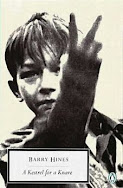
'A Kestrel for a Knave' by Alex Cotter

Cor, I wasn’t half chuffed to be included in this year’s recent Read for Empathy Collection 2022 from Empathy Lab. It’s an organisation that does incredible work developing empathy skills with children and young people through the power of reading.

And – empathy and power – it got me thinking about stories that have ignited deeper feelings and connections within me as a young person. Amongst the many, there’s one my mind spot-lit in a heartbeat. A Kestrel for a Knave by Barry Hines.

It was a class book we read together in Year 8 (or 2nd year to me). A story about a boy who 'hates and is hated', yet finds hope and trust in his relationship with a kestrel; ultimately doomed. It was something completely different from the books I was feverishly borrowing from the library at this time (every Judy Blume, a little Agatha Christie, and, ahem, possibly a few too many Sweet Dreams). Up to this point, stories had mostly been a route to escape, tonic for a bad mood, fodder for my imagination, and, more latterly, a welcome reflection of my own experiences and feelings.

And then came . . .  A Kestrel for a Knave. (Accompanied soon after by Ken Loach's film Kes.)

A Kestrel for a Knave

Only connect . . . 

It wasn’t a story I’d have chosen for myself – and what a loss that would have been. It did something to me so visceral, so powerful, that I can still feel its effects in the pit of my stomach today. Beyond escapism and storytelling; more than a reflection of my own emotions; I walked in the shoes of Billy Casper, a boy whose harrowing experiences were alien to me – and I made a connection. A connection that definitely helped shape and deepen my understanding for the other young people around me.

We were a Catholic comprehensive in Sheffield; its inner-city location meant the intake came from all parts of town – from leafy suburbs to tower blocks to our Traveller community. The setting of A Kestrel for a Knave, in Barnsley, was physically close to us, as were many of its issues. Ours was Sheffield in the mid-80s: a diminishing steel industry, rising unemployment and miners’ strikes. Arthur Scargill was our local hero (along with Human League, ABC and Heaven 17).

Times were especially hard for some students in my class, not least, with an increasing number of parents on the dole. But we were close-knit, we looked out for one another and began confiding in each other more too; and some confessions were tough ones. I can still remember not knowing quite how to process these, especially distressing topics like domestic violence. I recall feeling real sympathy, yet, at the same time, also feeling confused – of not being able to make sense of such unfamiliar, upsetting experiences.

The power of books

Reading Kestrel – it really helped. By getting inside the bleak and bullied life of lonely Billy Casper – with his violent brother and his detached mother and his troubled school life – I started to walk in his well-worn shoes, to live and learn from his gritty experiences. And then, by sharing his love for the hawk he rears, trains and cares for, I found myself making an unlikely connection with Billy. And an enlightening discovery, through the inevitable tragedy he faced, that in our differences, we weren’t that dissimilar.

Kestrel

Cue the big TV on legs being wheeled into the hall once we’d finished the book. And our Year 8 class watched the film adaptation, Kes, together, in total silence; for once, I don’t remember anyone messing about. But I remember our discussions afterwards.

Walking in the shoes of a troubled boy who no one seemed to care about, I suppose it showed me – my class too – that the first step with empathy can simply be to care . . .  to really, really care.

If you’ve not read it, I can’t recommend it enough . . . A Kestrel for a Knave by Barry Hines


Click here to find out more about EmpathyLab, its Read for Empathy Collections, and Empathy Day 2022.

Alex Cotter’s middle-grade novel THE HOUSE ON THE EDGE came out in July 2021 with Nosy Crow. Find her at www.alexcotter.co.uk or on Twitter: @AlexFCotter


Sunday, 16 January 2022

Be bold, Erik by Alex Cotter

“Be bold, Erik” are words from my next book, spoken by a boy – that’ll be Erik – in order to prompt himself to act out of character. A small, seemingly insignificant quote, and yet lately these words have become something of a mantra to me while I write. My Erik’s fictional fight for self-belief is gently goading me into taking more risks in the playground of story-making.

Weird is wonderful

Despite banging on at my own children to question everything and embrace their weird as wonderful (cue eye-roll sigh and “Yes, we know, be yourself” before I even open my mouth), I’m aware that in the past I’ve often trundled down the well-trodden path when it comes to self-expression. I had a cautious childhood, peppered with parental worrying and warnings and worst-case scenarios. I tried too hard to mask my stranger-things, to please and pretend so that I could get by at school, at work, without too much trouble; in effect, without being found out as odd. 

Thing is, masking means developing some robust filters to disguise said strangeness. To create a landing platform in my brain where I pause to check the social rulebook so as to metaphorically not leave the house in my slippers. And it’s these filters that have been worrying me lately as I write – that I believe require an injection of young Erik’s uncharacteristic boldness.

The risk-averse brain

Brain
So, our brains are built to keep us from danger, and because we ‘survive’ by being part of a social group, our minds keenly develop these filters so we don’t expose, endanger, or God forbid, embarrass ourselves, and be cast out from society. But what else might these filters prevent? Dancing like no one’s looking when they are? Tone-deaf singing at the top deck of the No. 22? . . . Writing fearlessly?

While I no longer need or desire a strong filter in my social life (I'm available for all your No. 22 top deck entertainment), I’ve been wondering lately if these decades-old filters are subconsciously infiltrating and influencing my writing. Holding me back. 

Originally created to keep me safe from bullies, alienation and ostracism, are they now trying to sneakily urge me down more predictable story paths, prompt me to tread tired tropes, make me consider overused clichés?

How best to be bold, Erik?

To develop as writers, we should take risks. The two main characters in my next book make a difficult journey to embrace personal change and find power in what makes them different. So – “Be bold, Erik” – I’m determined to strive to do the same. To break down any remaining boundaries my brain has built to keep me socially safe; to push and prod myself to write more bravely.

If you too fancy being a bit more Erik, here are a few tips I’ve found can help shake things up in my brain:

  1. Question your choices. Did I select that development, scene, action because I’ve been influenced by others – or because it’s right for my story?
  2. Play with extreme versions of the story arc or character development to see if it sparks anything new or alternative 
  3. Edit with a special highlighter for lazy platitudes and clichés across story, scene and sentence
  4. Brainstorm with a big piece of paper – the bigger the better – to try and think with vast ideas not constrained ones
  5. Read extensively - all kinds of genres, recent and old - exploring different stories
  6. Go for a walk with your characters and talk to them, questioning them on their choices (cue odd looks from passers-by; yup, I’m being bold, Erik)
  7. Examine your text to check your own experiences and needs aren’t unduly influencing your characters
  8. Ask others to read your drafts and hold up another mirror to examine your story choices
  9. Finally, each chapter, I've started to utter, “Be bold, Erik” – just as a wee reminder

Be bold, Erik

Writing often requires a dash of weirdness, a helping of frankly-odd, a soupçon of strange; so, I say: be gone filters for social acceptance and agreeability. I believe this year I’ll be touring the path less travelled (or at least trying to). “Be bold, Erik” - that's my motto for 2022. What’s yours? 


Alex Cotter’s middle-grade novel THE HOUSE ON THE EDGE came out in July 2021 with Nosy Crow. Find her at www.alexcotter.co.uk or on Twitter: @AlexFCotter

Tuesday, 16 November 2021

My setting and me

Ah, Setting – so often the poor cousin at the party next to Plot and Characterisation: a mere frame for prose; the humble stage for exciting drama. Yet, I find it’s regularly my starting point, even before my story has begun. 

For my first MG novel, The House on the Edge, I’d carried its setting – a house on a crumbling cliffside – in my head since visiting the clifftops of Whitby (many times) as a child. The story only began to grow later as an adult, when I embarked on a lone coastline walking trip (think mini Salt Path but with B&Bs). There, I became inspired by the many Dorset ghost stories, invented by smugglers to keep prying eyes away from their crimes; by Hallsands in Devon: an entire village that fell into the sea after its shingle was taken

In fact, the experience of such a solitary coastal walk became a metaphor for the whole novel. I was able to draw from it a sense of isolation that became the thematic backbone to the story and integral to my protagonist, Faith. I soon realised the setting connected with me as a writer, as much as my characters. Those original Whitby clifftops? Most likely they reflected my own anxiety as a child, constantly moving schools and leaving friends and homes.

Much more than a frame or a stage, then – my setting became integral to the whole experience of my story.

I recently made a trip to the setting of my second MG novel – the Lake District. Though this time, I had company: my daughter, Mae.

It's a story set within a fictional lakeside village that survives on tourism from its mythical (maybe sinister) freshwater mermaid. While it's an area I know well  – with half my family hailing from Lancashire – due to Covid, I'd not been able to visit while writing the first draft. And, oh, there’s nothing like experiencing first-hand the setting of your story. 

It means I can take silly photos searching for a Lake Mermaid (and embarrass my young companion) like this . . .

Lake Mermaid spotting

. . . and, more seriously, mull over some setting Qs:

  • What are my senses experiencing, all five of them: sight, sound, smell, taste, touch?
  • How might the setting have an effect on my character – internally as well as externally?
  • How might the setting reflect what they are experiencing and feeling?
  • What small details about the setting might cause conflict or collusion in their character arc?
  • How can the setting relate to the story’s theme? Will it change and develop with the plot?

I find it helps to draw a map also, and to list particular observations; lots of photos, of course. I also like to explore its history, geography and local stories (local museums are always great for this). Even if I don’t use the information directly, it lends a backdrop of experience, like here: my (recently embarrassed) daughter at Beatrix Potter’s house.

Beatrix Potter's house

Finally, there’s a rainbow that plays a part in my story and, as Mae and I were walking, we saw this:

Rainbows over Derwentwater

Not one but two, and so close it felt we could almost touch them. I had already written the rainbow into my book – but seeing it, made it all the more possible, and just a bit magical too. 

Poor cousin? Pah. Rich aunty more like.


Alex Cotter’s middle-grade novel THE HOUSE ON THE EDGE came out in July 2021 with Nosy Crow. Find her at www.alexcotter.co.uk or on Twitter: @AlexFCotter

Tuesday, 19 October 2021

THE STORYTELLER'S BRAIN - Alex Cotter

Alongside writing, one of my Other Jobs is working for a neuroscience charity. Useful, because I’ve long had a fascination with how our brains construct our sense of self and its (not always helpful) effect on storytelling. So, I thought I might just share some of the things I’ve learnt along the way. . .


Models and pathways


While the act of imagining might feel creative, it’s actually a science. 

Our brains engage with the world via the information it receives by our senses (think ‘Inside Out’). Through this sensory information, it creates a model of how we need to operate and survive. For example: You touch a boiling pan. Ow, pain sends a signal to the brain. Brain’s model: Never touch a boiling pan.

When we craft and write a story, we actually navigate those tried and tested pathways that are set for survival (don’t touch the boiling pan). Our creativity comes from how our brain makes sense of life. Visual perception, neural connections, neuro pathways: they’re all actively involved in our storytelling. 


The plastic brain


Yet – hurrah (for me anyway!) – as writers, we don’t need to be held hostage by any fixed model from our individual experiences. Thankfully, neuroplasticity  the brain’s ability to keep changing – means we can keep creating new pathways, making new connections and remapping our models of behaviour. We can change.

By becoming more aware of our individual brain ‘model’, we can also develop our storytelling skills. This is an area that Will Storr explores in much more depth in his book, ‘The Science of Storytelling’. Storr examines how understanding our own brain’s construction of a story can lead to a far deeper engagement with our audience.


How to write what you don’t know


Disclaimer: I’m no neuroscientist, but I’ve drawn on my other side hustle, as a relationship counsellor, to come up with some self-analysis l regularly employ to ensure I stay mindful of my brain’s current working model. These include:


🧠 Challenge your choices. Are my characters’ choices influenced by my own experiences?

🧠 Write what scares you. Am I avoiding certain themes or life experiences in my writing?

🧠 Recognise your barriers. Do I return to similar themes or repeat the same ideas?

🧠 Keep your baggage in your toolbox. Am I using my experiences to enhance my writing or are my life experiences taking over?


Sail that ship


While, yep, working in the world of neuroscience has made me realise just how much I'm at the mercy of that complicated jelly organ inside my skull, it can also be liberating. I like to remind myself I’m at the helm: we are the designated captain of our storytelling brain-ship – and, heck, we can always change course.


Alex Cotter’s middle-grade novel THE HOUSE ON THE EDGE came out in July 2021 with Nosy Crow. Find her at www.alexcotter.co.uk or on Twitter: @AlexFCotter