Showing posts with label teachers. Show all posts

Monday, 13 June 2022

My first literary grant by Sheena Wilkinson


Last month I was delighted to receive a grant from the Authors' Foundation to help me 'buy time' to work on my memoir. These awards, apart from their value, offer us important validation -- someone, not our mum, believes in the value of our work and is prepared to help us. Not because they will make money from it, but because they consider it to be of value. 


I was writing a letter to my old teachers (they won't read it; I am so old that they are mostly dead) for an RLF podcast series, when I remembered an episode from primary school days. The school was in a poor area; I was one of the few children with books in my house and aspiration in my heart. One June afternoon, as the end of the year beckoned, my teacher -- sadly I don't remember which -- took the time to tear out all the unused paper in the class’s exercise books for me to take home – piles and piles of wonderful fresh paper for me to write my own stories. 'You'll put this to good use, Sheena,' she said.

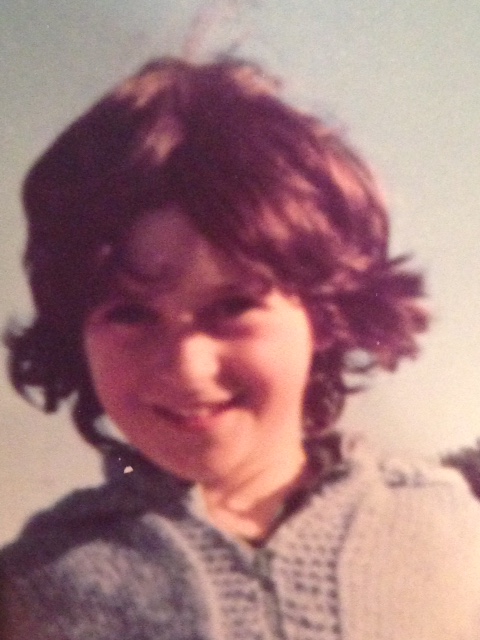
portrait of the artist as a young girl 


Free paper! All for me. And it was that lovely posh creamy paper with proper blue margins, a far cry from the flimsy notebooks I bought in Wyse Byse. As I staggered home under the physical weight of the paper and the weight of expectation -- I mustn't waste this! -- I felt, not like a charity case, but like an artist claiming the tools of her trade. 

It was, I realise now, my first writer’s grant.

And I did put it to good use.


Researching for this podcast made me remember my first literary 'grant'


Tuesday, 15 January 2019

To begin at the beginning, wherever that is - by Rowena House


Where to start teaching creative writing in schools and colleges? It’s a question I know many writers in the ABBA community have answered in their own professional lives, and I’d love to hear your advice.

Me, I waver between starting with character or conflict + change, although recently I’ve plumped for all three at once. Is place next or endings? Rising tension? Voice or structure? Great openings from published books?

Years ago, a trainer on an author schools’ visit programme urged us to model ‘excellence’ first, and then to work backwards from there, which was all very well except that the model he used to illustrate his point was far from excellent, according to professional writing standards.

Ever since then I’ve worried that I might do more harm than good by enthusing about turning points and climactic choices between ‘irreconcilable goods’ etc. if that’s not what schools, colleges and exam boards want students to learn.


Overcoming these doubts just became rather urgent since (I’m delighted to say) Authors Abroad have now added me to their stable of writers who offer talks and workshops to schools. Hurrah!

Fortunately, this year I’m also training to lecture on fiction prose writing at FE level, so I have the luxury of an academic framework within which to research the issues and practice teaching under expert guidance.

As a learner, I know I have a top-down bias, preferring to see the big picture first and details later. This, broadly, should fit with the ‘model first, work backwards’ approach, which, I now discover, has deep theoretical roots.

Bath Spa’s amazing MA in writing for young people also taught me the immeasurable value of mind maps as a way to avoid linear thinking at too early a stage in a story’s development, so I’m hoping to adapt and adopt non-linear teaching techniques also.


First, though, I’m honing a ‘commercial’ fiction scene in order to model structure. It’s got a lead character with a defined goal, an antagonist with a diametrically opposed goal, conflict between the two, a turning point and a resolution. All in 275 words!

It favours implicit clues rather than explicit descriptions to draw the reader through the plot, relying on our innate human desire to read between the lines and solve a puzzle.

[In the past, I’ve been impressed how quickly students of any age zoom in on the turning point of a scene, and work out which character ‘won’ and which ‘lost’ from the slenderest of clues - a skill my favourite screenplay-writing gurus would attribute to our collective understanding of story, born originally of universal oral storytelling traditions and reinforced time and again in books, TV and film.]

How far this approach is adaptable to the exigencies of an examined curriculum I don’t yet know, but I’m keen to explore opportunities to guide students through the basics of structure, rather than trying to teach them something that many will already know, albeit subconsciously.

Another thing I’d like to borrow straight out of the commercial publishing world is this definition of story, first introduced to me by author, editor and mentor extraordinaire, Beverley Birch:

            Story = a character changing through conflict.

Some writers I know bridle at the apparent over-simplification of this definition, including people who love classical literature. But for me, as a working writer, it helps scale storytelling down to size.

“Changing a character through conflict” is do-able. It’s a solid platform from which to launch a story idea, and one which I think might give confidence to student writers who are just starting out.

Embracing this definition also paved the way for my greatest writing eureka moment to date when I read that plot and character are two sides of the same coin: after the inciting incident, plot is simply what happens as a result of the decisions, actions and reactions of the protagonist.

Before that epiphany I had plotted.

And plotted.

I’d twisted and turned my poor protagonist into ever more hazardous predicaments. But always I put her there. She didn’t have agency.

Understanding that she absolutely had to have agency at every major point in the story led, logically, to telling her story from inside her head, a fresh starting point which, ultimately, got me published.

I suppose what I’m saying, or at least seem to be saying as I write this post, is that there is no single ideal starting point. It all dovetails. Somehow. Hopefully. Perhaps all I can hope to do is present the practical benefits of different approaches to writing fiction with passion and honesty.

Am I in danger of extrapolating too much from personal experience? Possibly. Is it unrealistic to expect similar epiphanies to give joy to students of whatever age? Probably. I do know that I have a great deal to learn about learning, and have increasing respect for full-time teachers. How on earth do they do it?

As a writer, I hope - and deep down believe - that the tradecraft of writing fiction for mainstream publication will prove helpful in deciding what to teach in schools and colleges - if not how to do it!

What do you reckon, people? All and any tips gratefully received.

Twitter @houserowena


Friday, 18 May 2018

The Value of a Good Teacher - by Lu Hersey


Last week was National Teacher Appreciation Week (I only find out these things thanks to twitter) – and any writer who visits schools regularly knows what a difference the class teacher makes. Your workshop will go a lot better and you’ll feel a lot less stressed if you get help and back up from a good teacher.


 I only remember three good teachers from when I was at school. I also remember some REALLY bad ones, including two very vindictive nuns, but this is about good teachers, not the ones that should never have been allowed near children.

The first teacher to make a massive impact on my life was called Miss Morley. I was seven. Miss Morley was not only amazing, she was beautiful, and everyone was in love with her (except my mother, who swore that if she had to hear the words ‘Miss Morley says’ one more time, she was personally going to throttle the bloody woman).

Miss Morley taught us about everything from the mating rituals of animals, to the complexities of long division. And the greatest joy I can remember – she read aloud to the class, EVERY SINGLE DAY. A whole chapter of Five on a Treasure Island. It changed my life. To my mother’s horror (she was easily horrified) I read every book Enid Blyton ever wrote, by myself, after that term – and it was all thanks to Miss Morley. (Or that bloody Miss Morley’s fault, depending on your point of view)


My other two inspirational teachers were at secondary school and helped give me a lifelong interest in history and literature. Looking back, what made these teachers stand out was their obvious enthusiasm for sharing knowledge and wanting you to enjoy the subjects with them. There were lots of other teachers at my secondary school, mediocre, tired, not interested in anything much (especially children) – and some who really shouldn’t have been allowed to teach. But the ones who were brilliant really made a real difference, and are the ones I remember most.

Over the last year I’ve been teaching creative writing in various schools around Bristol, most recently for the wonderful Bristol based educational charity, Ablaze. And I’ve come to realise that teachers are incredible. How do they do this every day, week in, week out? Even the ones that don’t engage with my workshops are doing an amazing job just being there – and I realise they’ve got a lot else on their plates.


 Then sometimes you meet a truly exceptional teacher, and it’s a real joy. I’m currently holding a series of creative writing workshops for Year 5s in a school in a deprived area on the outskirts of Bristol. It’s the kind of school that gets terrible Ofsted reports, and the sort of high crime area people want to move out of as soon as they can.

But the class teacher is one of those rare, inspirational teachers, who holds the attention of the whole class and gets them to work hard because they like him and want his approval – and he cares about them. He helps to encourage the children taking part and praises all their work. Between workshops, he gets them to work on their stories and go over the ground I’ve covered – and even to prepare for the next class. (In some schools, teachers regard having you there as a great opportunity for them to do something else – which makes it so much harder.)

He could probably get a job in any school and inspire the kids, but it’s fantastic that he’s working in a school like this. I asked the kids what they want to do when they leave school, and they all want to be teachers, pilots, astronauts, writers or accountants. In the last school (in a similar area) I asked the same question and the kids wanted to work at a checkout in Tesco or behind the counter in Domino’s Pizza. (Fair enough, but the kids in both schools were equally bright and came from very similar backgrounds).


 And that’s the difference a good teacher makes. They help kids believe in themselves and their abilities. I don’t think kids forget a teacher like that. Hopefully they help make a better future.

Lu Hersey

website: luhersey.com
twitter: @LuWrites


Saturday, 29 April 2017

Encouraging reading - Hilary Hawkes

“Apparently our kids aren’t reading the ‘right kind of books,’” huffed my friend at our last catch-up.  Then she let out a knowing chuckle – the sort of knowing chuckle you could only make about kids not reading the right kind of books if you taught English to Year nines and were a parent to teenagers. She’s both.

Being a writer, bookaholica and lover of all things books I was keen to know more. An article my friend had read had bewailed the fact that, in its author's opinion, so many children’s books these days just 'aren’t challenging enough'. 

Too many teenagers stick to books aimed at younger readers and so don’t (according to this article) progress to the kinds of books that would develop their reading and literary tastes. They must be encouraged to put back the Harry Potter and select Anna Karenina instead.

This all slightly reminded me of a teacher I disliked at my primary school many years (ok, decades) ago who made scathing remarks about Enid Blyton. Enid Blyton was, at that time, one of my favourite authors. Then there was the book brigade at a primary school my children attended at one time who had a list of “banned books” – J.K Rowling and Roald Dahl were on it. But not in our house they weren’t.

When it comes to teenagers, many would say the fact that they are reading at all, especially older ones,  is wonderful and something to be celebrated. It's certainly true that not all children grow up in book filled homes or see their parents absorbed in the classics. Some homes have no bookshelves let alone rows of classics or Booker Prize winning titles.

The feat for many parents and teachers is to first of all get their children reading for pleasure at all and then, the real challenge, to keep them reading through adolescence. I don’t personally think that future book lovers and book buyers will evolve from a generation forced to read books they didn't want to read and didn't enjoy.

My own three children loved books. Two of them, as young people in their twenties now, still devour novels. Thinking back I can see that their enjoyment of books came about as the result of being allowed to choose what they wanted to read: on our library visits, from the classroom bookshelves, or in bookshops as they spent birthday or Christmas gift vouchers. Never was their like for reading due to being force fed a list of books they didn’t, well,  like. There were lists at secondary school, of course – texts that needed to be studied for exams. On the whole, though, they were ready for them and even enjoyed most of them. This is most definitely not the case for all teenagers though, and for all sorts of reasons.

Experts do love to tell us what we ought to be doing and, when it comes to books, what children ought to be reading. I really dislike this kind of over the top "book policing". Maybe the real experts are the parents and teachers who already know the obstacles to helping kids develop a reading habit that might turn into a lifelong love for books. Like my Year Nine teacher friend, I’m all for suggesting other books that youngsters might not come across. The kind of guidance good parents, teachers or librarians can give, based on young people's interests, needs and reading abilities is helpful. But making them feel the books and authors they enjoy are somehow “not good enough” is very different and unwise. This is especially true for children who, for all sorts of reasons, genuinely find reading a struggle.

Our family run children’s project recently sent lots of lovely new books to children on the other side of the world. A boxful went via Book Aid International This isn’t because children there aren't reading the right kinds of books – it’s because they don’t have books at all. The schools, libraries and education systems in those places, in their baby stages, are desperate for them. And publishers, authors and projects are sending them.  I mention this because I think Book Aid International and their beneficiaries have good priorities and aims for books which the "book police" have lost sight of.

I think we can help young readers everywhere by encouraging them to select the books they want to read and enjoy reading.  Because books are supposed to be fun and mind expanding. Not tolerated. And once the habit and joy in reading is established all sorts of possibilities open up. As Book Aid International would say, books can change lives.


Anyway, what do you think? If we want to encourage young people's reading should we force them on to a list of "right" books? Do you as an author, parent or teacher have any experience of the effects of such lists?


Hilary Hawkes

Friday, 28 April 2017

What degrees do you need to have to be a writer? - Clémentine Beauvais

That's one question I often get asked by French teenagers. It's not entirely surprising: the French education system, French society in general, and the French middle-class in particular, is absolutely obsessed with diplomas, qualifications, school rankings and fine distinctions between different types of degrees that determine your worth in the eye of the rest of your social sphere.

the complete mindf*** of the French higher education system (source) - graph already far outdated as it changes roughly every Tuesday
I generally reply that you don't need any degrees at all, that many authors don't have a baccalauréat (A-Level equivalent), that many haven't been to university, that plenty have seemingly entirely unconnected degrees - business, physics, geography, sports science - and that the Most Important Thing is that you enjoy writing and probably that you encounter stories in many different media, including through books.

Except, of course, high school students are not stupid, and they can see very well that the vast majority of children's authors they encounter have another, 'main' job which is very likely to just so happen to be one of the following:

- teacher
- librarian
- school librarian
- university lecturer
- book seller
- kindergarten teacher
- some other teaching thing
- more library-related stuff
- special needs educator
- some education-related stuff to do with books
- some book-related thing that has something to do with education

etc. Some, to be fair, are editors, freelance editors, publicists, or journalists...

I'm exaggerating, of course, but the situation is indeed comical: at book fairs, 'we' writers mostly talk about our books and our... students. Put two writers together and they'll doubtlessly talk about their teaching. 

So I like to rephrase that question. You don't need any degrees to be a writer, but most writers you meet are very likely to have very similar degrees and indeed quite similar professions. 

And then we think about it together. Why might it be that writers are so attracted to teaching? Or is it that teachers become attracted to writing? Or are both correlated with something else? What might that be? Does doing literary studies help you become a better writer? Or do you do literary studies because you're already interested in all things literary? Are all teachers frustrated writers? Are all librarians frustrated writers? Are all writers frustrated librarians?

Is your teacher secretly a writer?

(All gazes turn to the teacher, who generally vehemently rejects the accusation.)

Turns out diplomas don't matter, but you can still sneak in a lot of interesting sociological reflection. Including, if you want to push it as far as that with a dynamic group, why those 'other jobs' that writers do are so often, well, extremely middle-class (it's particularly striking in the French children's literature landscape, I think, though the term 'middle-class' has no easy equivalent in French). Cue reflection on what the writer-teacher-librarian association might, well, teach us about the social and cultural politics of writing and publishing today.

Then the question is answered by more questions being raised.

So I feel like I've done my teaching duty, and put my degrees to good use.

Monday, 30 January 2017

The power of shared stories - Lari Don

I received an email from a teacher at the end of last week which took my breath away. The email itself was a fairly mundane reply to queries about the school timetable and class sizes - we’re organising an author visit – but the PS was astounding. Here it is:

 PS - We've just had a very interesting class discussion on the morality of Yann's possession spell in First Aid for Fairies. One of the children made a connection with Trump's new torture agenda (our news article of the week) - who knew a book written almost a decade ago could be so topical?

To clarify, this is a class of primary age children, reading one of my adventure novels (First Aid For Fairies And Other Fabled Beasts, published in 2008), then the pupils, and their clearly superb teacher, bounced off it to discuss morality, ethics and world affairs.

I didn’t write that scene with any huge political goal in mind. Actually, this was my first novel, so I wrote it with no idea of whether anyone would ever read it, let alone discuss it. Honestly, I wrote it to discover how dark I could go with a children’s story, how flawed I could make a character and still care about him, how far I could stretch the magic that I was just learning to play with.

I didn’t write it to prompt discussions about right wing conservatism, abuse of power and the ethics of information gathering.

I am astounded, amazed, impressed and humbled that these primary age children were prompted by my words to think, to discuss, to make connections, and to discover their own opinions…

But perhaps I shouldn’t be surprised. This is after all what books and stories are for. This is what shared reading, and discussing stories together, should be for. Not specifically for dissecting the flaws of Donald Trump’s presidency (though, please go ahead and do that…) but for giving us shared vocabulary, and shared experiences within the safe environment of a story, so we can explore other issues together.

Stories help us think. Shared stories help us think together.

At this point I should probably explain: Yann is a centaur. In the relevant scene, this half-horse half-human from Greek myth (who is also a fairly grumpy Scottish pre-teen) uses dark magic to compel a weasel to spy for him, causing the weasel obvious pain and distress. The scene is set in tunnels under Edinburgh, which are being used by a minotaur as his temporary Scottish labyrinth, and the centaur’s use of dark magic is witnessed by his own friends – a selkie, a fairy, a phoenix and a token human girl - causing them to question his use and abuse of power.

As you can probably tell, First Aid For Fairies is a fantasy. It’s not set in contemporary real-life America, or the Middle East, or Guantanamo Bay. It’s a fantasy. And the fact that this wonderful teacher used this scene to encourage her pupils to talk about ethics and link them to current global concerns, proves something that I’ve always believed. Fantasy and fairy tales – stories set in magical worlds safely distant from our day-to-day lives – are very strong tools to allow us to examine our real world.

So, the power of class novels to prompt discussion, the power of fantasy to give us a new way to look at reality - this PS gave me pause to think about both of those issues. But the main reason this PS took my breath away was because it reminded me of the awesome responsibility of writing for children.

I don’t write stories with messages, I write stories with ambushes, chases and magic spells. But I also choose to write about characters and situations that allow me to explore questions which fascinate and concern me. I write because I want readers to enjoy the stories I imagine, I don’t write with the intention of teaching moral lessons (never, ever!) But I am incredibly moved and impressed if my books prompt young readers to explore their own questions.

It’s a privilege, an honour and a huge responsibility writing for kids, and it’s important to be reminded of that regularly. It’s also a very heavy weight to carry. But I suspect if we didn’t recognise the size of the responsibility, and occasionally stagger under its weight, we shouldn’t be doing it…

So, having almost recovered from this email, I’m now very much looking forward to meeting this thoughtful and wonderful class, and their amazing teacher, in a few weeks’ time.

But first, I’m off to explore questions of identity and choice, lightly disguised as a trilogy about shapeshifters… 


Lari Don is the award-winning author of more than 20 books for all ages, including fantasy novels for 8 – 12s, picture books, retellings of traditional tales, a teen thriller and novellas for reluctant readers.