Showing posts with label scattered authors society. Show all posts

Saturday, 29 March 2025

Awfully Big Adventures in Self-Publishing by Sheena Wilkinson

 It feels very odd to be posting on the 29th day of the month. Ever since I first blogged for ABBA – March 2014 if anyone’s interested, it’s been the 13th. Easy to remember (and as far as I know I’ve only forgotten twice in eleven years). Sometimes I got to blog on Friday 13th, and once a year it fell on St Lucy’s Day, which was always an invitation to write about light at a dark time of year. 

But here I am on the 29th! Out of my comfort zone. Because of the reshuffle of ABBA dates, I haven’t blogged for ages, there having been no 29th February this year. (Oooh, this means that three out of four years I’ll get a month off, and every fourth year I’ll get to blog about Leap Day. Yay!) And it doesn’t matter when I blog: the fact is, Awfully Big Blog Adventure gives me a real sense of community in an often fractured world. There are writers I’ve never met, who feel like friends because we read each other’s posts, writers whose books I will seek out because they are Scattered Authors. 

I am very much a creature of routine and habit, and though I love change and adventure to some extent, I do fear the unknown. I am especially pusillanimous about techy things: that’s probably why it took me until 2023 to get a website.


Another thing I’ve been scared of is self-publishing. No matter how many talks I have been to from really successful and savvy indie authors; no matter how many times other writers have waxed lyrical about having complete control over every aspect of the process; no matter how many self-published books I see with much better sales than I have had for ten traditionally published books, it’s always felt scary, and I’ve always thought I wouldn’t do it. Even when one of my good writing friends, Rachel Ward, self- published the excellent, beautifully produced Write Your Cozy Mystery: a practical, how-to guide, I still couldn’t imagine myself managing to actually make a book happen – writing, after all, is the easy bit!

one traditionally published, one self-published

But later this year I am going to self-publish a novel – a much scarier leap for me than changing my blogging day. And it’s mainly thanks to ABBA – or at least to the Scattered Authors. 

Here’s how.

As we all know, Scattered Authors get about a bit. One place where many of have scattered to over the years has been Charney, the annual, much-missed retreat in Oxfordshire. It was at Charney where I met Linda Newbery, Celia Rees and Adele Geras, who run the excellent, eclectic review blog Writers Review, which I’ve occasionally reviewed for, and was interviewed by in 2023: http://reviewsbywriters.blogspot.com/2023/04/special-feature-q-with-guest-sheena.html

A month or so ago I read in The Bookseller that Writers Review was branching out into publishing, bringing out three books this April: The One True Thing, a new adult novel from award-winning Linda Newbery, and reissues of two highly-acclaimed novels – The Poet’s Wife by Judith Allnatt, and David: The Unauthorised Autobiography by Mary Hoffmann. https://www.thebookseller.com/author-interviews/author-interviews/testing-the-waters-linda-newbery-makes-her-first-foray-into-self-publishing


All three authors are widely published, hugely experienced and highly respected. Reading about their decision to self-publish these novels as a Writers Review initiative made me think about a book of mine, finished this time last year but languishing on my hard drive ever since. If they could do it, maybe I could too? 

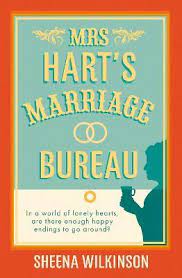
My first adult novel, Mrs Hart’s Marriage Bureau, a 1930s feminist feelgood story, was published in 2023 by HarperCollins Ireland and in UK paperback in 2024 – a year and a day ago, in fact. Readers loved it; reviewers called it ‘a gem’ (Irish Independent) and ‘briskly witty, reminiscent of the best inter-war fiction’ (Irish Times) and the majority of the two hundred Amazon reviews (mostly five star) hoped for a sequel. In fact, the acquiring editor, at our one and only meeting, waxed very enthusiastically about a sequel or even a series. 

But it was a one-book deal and that passionate editor moved on, as is the way in publishing, and though Mrs Hart had clearly struck a chord with readers, there simply weren't enough of them to justify HarperCollins offering for the sequel. So they didn’t. 

And yes, it might have been more sensible to wait for a contract before I wrote it, but the fact is, like readers, I wanted to know what happened next! And as I wrote Miss McVey Takes Charge, set in 1936, I was feeling optimistic and determined. This book would see the light of day. To anyone who enquired, I said blithely that if HarperCollins didn’t take it I would jolly well publish it myself. (I said it very fast, because to be honest I was terrified of the prospect.)

There seemed no point in sending the book elsewhere: publishers are unlikely to want the sequel to a book published by another company. I did look at reworking it to make it less like a sequel, but that was like trying to turn my dog into a cat. 

I hoped that, if I did nothing for a year, something amazing might happen to make HarperCollins change their minds – Mrs Hart might be optioned for TV or go viral for some reason. This didn’t happen, but when I read about the Writers’ Review initiative, it spurred me on to start thinking seriously about taking that kind of action myself. 

And then something lovely happened! Having engaged in a little chat on social media about the trend for respected, successful writers to self-publish, I admitted that I too was considering self-publishing and explained about Miss McVey takes Charge. The next day I had a message from Linda Newbery, inviting me to bring the book to Writers Review! I will still be self-publishing, but with the support and cooperation of writers I really like and trust. And I know that the Writers Review endorsement will give the book a stamp of approval and respectability, and that they will support my book, as I will support theirs. 

three splendid, and beautifully-produced novels from Writers' Review 

Miss McVey Takes Charge will publish late in 2025. I need to leave some breathing space around my forthcoming school story sequel, which publishes in September, and it gives me time to build up (I hope!) some interest in the book. I’ve invested in engaging a really first-class editor and cover illustrator, both of whom have worked on my traditionally published books. I don’t expect to sell thousands of copies or to make any money; it’s not about that. It’s about giving the readers who bought, loved and reviewed the first book the sequel they – and I – want. It’s about taking control in a world where writers’ words are blatantly stolen to train robots, as Claire Fayers blogged about on here only yesterday. https://awfullybigblogadventure.blogspot.com/

And – because without the invitation from Writers’ Review I might still be dithering about this – it’s about community and solidarity, and writers helping each other out. Because that’s what matters. 


Friday, 12 July 2024

SO, WHO AND WHAT IS BEHIND THIS BLOG?

Hello! 

If you're a writer for children or young adults, here's a quick reminder about the people behind An Awfully Big Blog Adventure:

                       May be an image of text that says "Are you a traditionally published children's or YA author? Would you like to join a friendly UK network? Find out more at scatteredauthors.org New members pay a one-off membership fee of £15 Lively Facebook group, blogs online get-togethers Scatteredi Authors society Retreats & regional meet-ups meet ups" 


 Do take a look!


Saturday, 1 April 2023

ALL FOOLS DAY - and HOW THE SCATTERED AUTHORS' SOCIETY CAME TO BE by Penny Dolan

Today, My Best Beloveds, (she quoted), I will tell you the story of How The Scattered Authors Society Came to Be. Please, grab a tea or coffee and settle yourself down for a long, restful moment.

Three weeks ago, among some old papers, I found a set of newsletters. These real, printed sheets were once folded by a real person, slid into real envelopes, dropped into a real-life, bright-red post-box, collected in a sack- and a day or two later delivered to my house by a real-life postman.

The first letter has the same date as today - April the First, and which is why I'm publishing this post today - but the year, way back when, was 1998. 

This All Fool’s Day letter is almost the start of what is now known as the Scattered Authors Society. Where did these Newsletters come from, and why? What’s the story behind what’s jokingly known as the “Other” SAS?

Back in 1998, three rather solitary Scholastic authors: Peter Beere, Anne Cassidy and Malcolm Rose, were put in touch with each other by a friendly editor, Anne Finnis. They met up at the Ibis hotel in Birmingham, eager to chat about their writing lives.  joys and woes, even during the Chinese meal that followed.

They were, I’ve been told, “together in the bar and couldn't stop talking. So much in common, so much to share about writing, publishing, the whole thing, and they could talk endlessly without anyone keeling over with boredom, as can happen with friends and family. They spoke about how rare it was for authors to meet like this because we are all 'Scattered'.

Peter recently stressed that Anne and Malcolm were “largely responsible for the success of the early years. Anne, of course, being a teacher, was used to organising things. My approach was more slapdash. I just hoped that people would turn up and we’d find something to talk about! (Which we always did.)’  

Taking that ‘scattered’ idea, Peter ran with it. He sent a letter to The Author ( The Society of Authors’ quarterly journal) inviting anyone interested in meeting up informally for friendship and the sharing of information, to get in touch. ‘I saw the letter . . . and it was like a life line,’ Celia Rees says. ‘Suddenly, I was not alone. I wrote back to Peter straight away.’ 

When the replies arrived, they were all from writers for children and teenagers, shaping the future membership of the group. Back then was well before the current academic ‘writing for children” courses, the reach of SCBWI UK, or other familiar networks. These writers definitely felt a need to get together

So what came after the letter in ‘The Author’? And how did the newsletter shape the SAS? And its aometimes awkward mood, perhaps?

Now, Peter Beere was an original thinker with a rather battered energy and a dark but hopeful sense of humour. After writing several books for teenagers, he felt messed about by cuts and changes in the publishing world and wanted to hear how other writers faced hard moments of the mostly solitary writing life.

When Peter’s first letter arrived through the letter-box, his distinctive tongue-in-the-cheek style immediately gave the group an interesting, informal and self-reliant tone. The SAS felt like a group of people you both wanted and needed to get to know, a group that knew writing was not all sunlight and joy.

In that April the First Letter, Peter wrote:

I’m sure you’ll be delighted to hear that membership of the SAS grows apace and has now risen to the dizzy heights of “a few”. The principal aim is ‘to provide a network of friendship, support and professional “gossip”.’ After spreading the word about various job-changes within publishing companies, Peter then goes into a riff about sitting around “wondering why I never became an architect. Actually I know the answer. Because it is boring. At least as a writer you get bored on your own.’ So true.

Soon afterwards, on 25th April 1998, Peter sent out his second letter, saying:

Right, this is it – the news that you have all been waiting for. I shall try to break it gently so that those of you of a nervous disposition won’t suffer palpitations, hot flushes or whatever. The SAS lunch has been arranged.’ The date would be Saturday 6th June at The Waterside Cafe at the Barbican Arts Centre in London. Celia Rees, and no doubt some others, remember ‘being gutted because I couldn't go to the Barbican lunch.’

Peter explains ‘It is my desire to keep the SAS very informal so there is no set agenda for the get-together. It’s an opportunity to meet and relax in the company of friends and discuss all those things it’s so hard to talk about with non-authors.’ He attached a list of 21 names as well so that people could contact others in their own area: I hesitate to call us members – I’m not sure what we are.’

An aside: the newsletters bear a simple N-S-E-W compass design, representing the scattered-ness of the authors. Peter recently said, knowing that the badge of the real SAS was a winged dagger and the words ‘Who Dares Wins’, he had imagined the ‘Other SAS’ logo as a winged pen and the words ‘Who Writes Wins.

In July 1998, Peter sends out a third letter, typed in a very, very tiny font. He has moved from Liverpool to Devon and reports ownership of a new computer. He remembers that, at that inaugural Barbican meeting, “it was generally agreed we should continue as we began, i.e. stumbling along in a genial fashion” and that “the plan was probably to meet twice a year at hopefully interesting venues.”

And from then on Peter’s letters become true newsletters, although in his slightly anarchic style, he gives each edition a totally different title, as you’ll see below:

Beginning with “BLUNT DAGGER” (August 1998)

Peter has set this out in a newsletter column format: “Isn’t this amazing? Pictures and everything?” He adds, referring to a complaint, “the last one was at least cheap – it fitted on one page. What’s a little eye strain compared with hard cash?” and points out that “the only requirements for membership are that you are to some degree professional and have a particular interest in teenage fiction.” This was soon expanded to include anyone who had written traditionally published children’s fiction.

There will be no yearly fees or ID cards but “a few envelopes and stamps would not go amiss.’ He gives out information about a proposed Stratford-on-Avon lunch on 10th October ‘98, more news of editorial job changes followed by a long ‘whinge’ about the severe cutting in back-list titles by certain publishers. ‘Styles and tastes can’t change that fast can they?’

Another writer offers to give advice about school visits, and the date of the first SAS weekend get-together in Milton Keynes is announced. I noticed this was planned for the 1999 Valentine’s Day weekend.

And on to: “PAPER HAMSTER” (November 1998)

Peter’s big announcement, in this on-paper letter, is that he has – wow! - an email address now, adding ‘but don’t be surprised if nothing happens. I can also send faxes – but only in the middle of the night. (Would such new technologies catch on? Or really make a difference to writer’s lives? Or the then-new Other SAS?)

The Stratford on Avon lunch had been a success. Ten people attended ‘and a good time was had by all. Admittedly things did get a little out of hand, particularly during the fan dancing, but that’s always likely to happen when there aren’t enough fans to go round and some people who shall be nameless, refuse to share theirs.’ The event was, Celia Rees later said, ‘like meeting an oasis of people in a desert of editors, agents and publicity girls’.

Peter reports that some people thought that SAS discussions needed to be more organised at future meetings, especially as attendance was growing. Also, that Milton Keynes weekend will now take place the weekend after Valentines Day.

David Belbin “has kindly offered to give us a run-down on E-mail, the Internet and related matters.” Even though writers were using word-processors, the online world was a barely known thing.

The newsletters remind me how people rushed to have a chance to talk about their personal and shared experiences, away from the ears of agents and publishers or from general writing groups where children’s writing was usually thought a lesser form of authorship. Worth noticing was the fact that anything said within the meetings was - and still is - bound by confidentiality, giving the members an unusual sense of freedom, ownership and group power.

In Peter’s ‘Hamster’ newsletter, he reports that people are suddenly talking about variations in fees for author visits to schools and libraries and comparing practices. There had also been a long and very warm discussion about the practices of various publishers, leading to the general agreement that Publisher Z was wonderful and Publisher Y was dire.

Celia recalled someone at Milton Keynes explaining ‘there was a new website, called AMAZON’ but the general view was that it wouldn’t last. Hmm.

In what Peter has now named The Whinge Column, someone wonders why authors are the last ones to receive any money from a book. He suggests that a fairer system would be for authors themselves to be paid the entire sum of money first, with the agents invoicing the writer for their commission afterwards.“We shouldn’t have to wait any length of time for our money. It’s atrocious and wouldn’t happen in any other business We’re such vulnerable people aren’t we? Frightened to offend anyone – anxious to please. We’re the good guys and we get taken advantage of.”

Malcolm Rose, who lives nearby, has agreed to run the Milton Keynes weekend again. Meanwhile, in December, Peter is moving house again.

Trotting on to: “WALTZING DONKEYS” (June 1999)

Peter’s next newsletter is a short one, mostly with news of a proposed Nottingham lunch on Saturday 10th July and a reminder that ‘they are pretty informal affairs . . . with the emphasis on the social side of things rather than hard-bitten. We usually finish by setting fire to an effigy of a commissioning editor.’ Moods may not have softened. Autumn will bring a second lunch in Sevenoaks; a Regional Directory has been compiled and sent out, and people who have taken on onerous SAS duties might be given titles.

Peter also includes an account of Linda Newbery’s book-launch in a Plymouth bookshop that morphs into a fantasy description of him attending, wrapped in a hooded cloak and supposedly incognito, muttering dark omens against gifted and successful authors. (Peter recently recalled drinks in a pub afterwards with Linda, where she sat serenely while a bottle fight broke out around her among a few louder locals. Peter himself felt less calm.) The newsletter ends rather abruptly, thanking all those who had sent in their £10.00 subs.

On to: “OVALTINE MONTHLY” (August 1999)

Yeah, summer hey? Bit up and down. Bit like my writing career.’ Peter writes. There’s news of a very successful lunch in Nottingham, another mention of October’s forthcoming lunch in Sevenoaks, and a reminded about confirming attendance etc. ‘As ever, a certain responsibility and measure of worry falls on the shoulders of those responsible for the organisation. It’s therefore essential that we help them as much as possible.’ Activities within the Other SAS have always been based on the initiative of individual members or small groups of friends.

Meanwhile, over this summer,”The Prisoner of Azkaban” was published, bringing press articles about long queues outside bookshops on the eve of publication. Peter, along with quite a few others, are unimpressed by the huge promotion of this one series and the apparent neglect of every other other book or author. Surely such extreme publicity practices will fade away in the future? Surely no other authors will become celebrities? Or even celebrities become . . .?

Jokingly, in 1999, Peter suggests that ‘Harry Potter is storing up a great deal of vitriol. I was slightly concerned that some of you may have been tempted to display a little “generosity of spirit” . . .We can’t afford to show mercy. There will be an enormous backlash against him, mark my words. And when there is, we’ll step in and fill the void. Assuming we haven’t all starved to death first.’

The newsletter ends with an author offering to give interested people the name of a man who has just designed a website page for him. Why, as a writer, would you ever want or need one of those things? All that extra bother . . .

On we go to: BURPING BABIES (October 1999)

So, how are you all keeping? Did we have a good summer?’ Peter asks, replying ‘Of course not, we’re authors, we don’t have time to be happy. If we were happy, we’d be shop assistants.’

This edition has the details of an SAS lunch, organised for Saturday 30th October at Cafe Uno in Sevenoaks, Kent. The Member Advice section has a still recognisable question for members about pre-Powerpoint school visits: What’s the best way to show things like notebooks, proofs, manuscripts to a class of 30+? “ along with the pained and pointed observation “that everyone gets so much more out of the visit when the teacher and at least some of the children have read the book you’re talking about.” An old issue that certainly causes no problems at all now, I’m sure?

Anne Cassidy says that, with a new novel coming out, she started “making A5 flyers herself and the publisher’s publicity people being so impressed they asked if they could have samples to copy and hand out. This kind of thing feels like it’s the wrong way round.” A great suggestion and a rather wise thought.

And finally, here comes Peter’s last newsletter:

UP YOUR JUMPER (November 1999)

Well, blimey, doesn’t the year go fast? Seems like only yesterday I was prancing around welcoming in the spring with one of my original and grotesque ritual dances, And now I’m all wrapped up against the weather . . . and I’ve just had a cold . . . Enough of that. What can we talk about this time?” Peter gives a brief write-up of the Sevenoaks lunch. “Anyway, it was as friendly as ever, but did I detect an underlying glumness or confusion? Does anyone know what’s going on in the world of children’s publishing at the moment?” And by way of reply, he encourages everyone to come to the next SAS event which will be the weekend conference at Milton Keynes.

This will take place the following year, in February 2000 and the new Millennium. Peter says that the conference is being organised by Anne Cassidy and Malcolm Rose and reminds everyone to come as it will be useful and that ‘It is also a “treat”, a rare thing in the world of writing. And I promise you, you will enjoy it.’

He ends his last letter to the SAS: ‘As ever - write hard and have fun – and keep in touch. See you whenever and best wishes.’ After struggling along, trying to make a living, Peter fades away. He, writing and publishing have had enough of each other for quite a while.

Last among the papers are two final documents: the first is a letter from Malcolm Rose, giving details of the Millennium Conference.I didn’t realise that the town of concrete cows was such a magnet” he adds. It was a very good and well attended weekend,

The second document mixes two technologies: it is a printed paper copy of an email sent out by author Adele Geras. She has booked the Golden Rice restaurant in Manchester for a lunch in June. 

Yes, the SAS has reached “the North” at last!  

The year was 2000 and the Scattered Authors Society had definitely Become

 And now I can put the papers back in their box.


Afterthoughts

Oh yes, this was a long time ago. Some ‘SAS’ members would not have been in primary school for these dates. Some might not even be “here”. 

Nevertheless, as I read through these newsletters, it seemed to me that the SAS came about because no established UK organisations seemed to care about ordinary children’s writers. They cared about books and literature and libraries and so on but they did not care so much about all the writers who did the work. But the writers could care about each other.

Since those years, the SAS has grown as a group. Currently around four hundred published writers are signed up as members. Over the years, many volunteers have run more SAS weekend conferences, set up summer and winter writer’s retreats, created other blogs (inspired by this original one: ‘ABBA’) along with things like SAS zoom meetings, a Facebook page and the SAS website. Seems that website idea was useful after all . . .

However - and often frustratingly now - the early SAS had no wish for a formalised structure, hierarchy of officers, fixed committee meetings and so on. I suspect this was because many of these writers still had to fight for their own writing time and space among other commitments. They knew from work and from other organisations about the time lost to endless meetings. They were unwilling to lose theirs – and If the SAS could work without such structures, why not go for it? 

So, even now, the SAS remains a group of individuals acting as a useful network, organising ways of sharing knowledge, friendship and support, both locally, regionally or more widely, and somehow surviving, despite grumbles and because of people's generosity.

Even today, the 1st of April 2023 - another All Fools Day - I note that the worries in these old newsletters still exist in one form or another, still cause heartache. Writing can be a lonely task if you have no tribe to talk to, especially away from the buzz of literary cities. Not everyone can afford publishers workshops, masterclasses or the networks within longer courses - nor the travel involved. Probably, The Scattered Author’s Society, for all its informality, is still a needed thing.

Celia Rees recently summed it up for me: ‘Don't think any of us thought it would last this long but there was such a common and deeply felt need that I knew it wouldn't just fizzle out. I'm so grateful to Peter, especially for that original letter in 'The Author' and his Newsletters and to Malcolm & Anne for organising the Milton Keynes weekends where, I think, the SAS really gelled. Friends I made then are friends now. In fact, all my best friends in writing I made through the SAS and they are some of the best friends I have.’

If you are still here, thank you for reading through today’s post - and now, I’ll close as Peter Beere did in those old SAS newsletters: ‘Write hard, have fun, and keep in touch.’

Wishing you all, foolish or wise or often between, a most happy April!

Penny Dolan

@pennydolan1

PETER BEERE’SDARKLAND’, his third adult dystopian thriller, takes Beekay Howard and his crew of misfits voyaging to a place where everything might go right – or go wrong.
ANNE CASSIDY’S contemporary novels - ‘NO VIRGIN’ and ‘NO SHAME’ - deals with prejudice and strong social issues.

MALCOLM ROSE’s latest book is ‘CHASING THE RAPTURE’, a YA thriller about about a future Olympian runner who secretly does a lot mare tan running,

CELIA REES has writtenMISS GRAHAM’S COLD WAR COOKBOOK’, a historical spy novel about an Englishwoman assisting German resettlement after WW2.

LINDA NEWBERY’s newest book is ‘THIS BOOK IS CRUELTY FREE; Animals and Us,’ a non-fiction title about animal welfare.

ADELE GERAS latest 18Cl novel, writing as HOPE ADAMS, is DANGEROUS WOMEN, involves murder among women prisoners transported to Tasmania.

Thanks to all who helped sort out details for this post, and thanks to everyone involved in setting up the SAS way back then and to all those busy looking after the ‘Other SAS’ right now.

Tuesday, 17 January 2023

What do authors do on a retreat? Folly Farm 2023 by Tracy Darnton

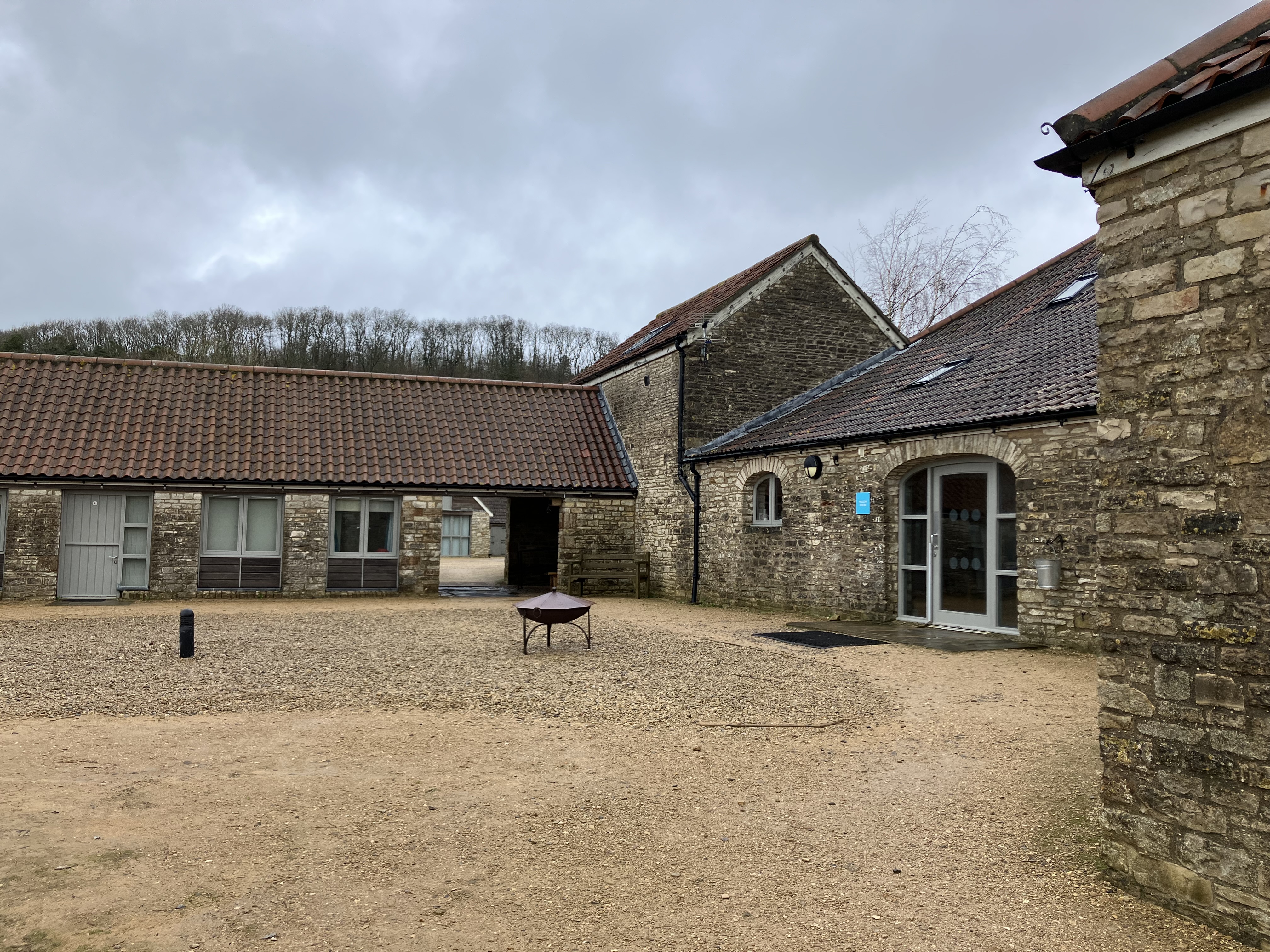
 A hardy bunch of Scattered Authors met for a windswept, rainy weekend at Folly Farm in the countryside near Bristol. Our first full retreat after last year’s slimmed down, Covid-conscious one, it was fabulous to spend time together away from all the distractions of home – and to have someone else doing all the cooking.


So what do we actually do on retreat?

Muddy walks

Chat

Morning stretches

Clay creatures


Improv drama games

Kids lit quiz

Eat cake

Play Codewords

Workshop our writing

Offload

Tell ghost stories round the fire


Eat flapjacks

Swap knowhow

Play the kazoo

Admire each other's stationery


Chat

Life coaching for authors

Share successes and failures

Reflect on the childhood books that shaped us

Writing exercises

Stay in bed

Exchange school visit good practice

Chat

Eat cake

Read

Brainstorm plot problems and titles

Share our work over wine

Enjoy the view 


Talk about using myths and legends in our work

Cement old friendships and forge new ones

Eat shortbread

Chat

Laugh


What else? Three delicious breakfasts, lunches and suppers.

Some of us even wrote a line or two.


If you’re a Scattered Author who'd like to come along and stay for the three-night residential 12th-15th January 2024 or to pop along as a day visitor, keep an eye out for details later in the year.

Find out more about joining the Society of Scattered Authors at the website


Tracy Darnton is a writer for children and young people. Her latest YA thriller is Ready or Not. She's already looking forward to next year's Folly Farm retreat. 

Friday, 14 October 2022

Getting Together - by - Lynne Benton

 Most writers spend a great deal of time on their own, in front of their computers/laptops/notebooks.  Even if surrounded by loving partners and/or boisterous children/demanding teenagers, they still need to spend a lot of time alone in their heads in order to write their books.

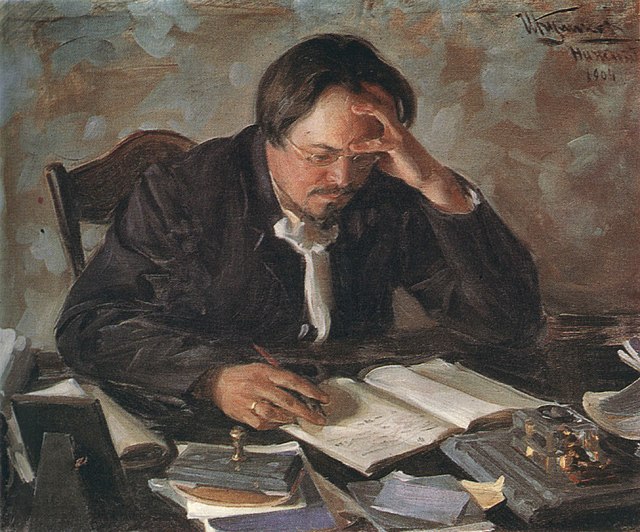
Kulikov, writer

And it’s for this very reason that it is so important for writers to be able to get together with other writers sometimes, others who are doing the same things, who understand the ups and downs of being a published author.  Some may be lucky enough to have a group of fellow-writers living close enough to meet regularly, while others may feel very isolated, with no other writers living in the same area.  Most of us are, truly, scattered authors.

On its website the Scattered Authors Society describes itself as “A network of children’s writers who share the highs and lows of publishing, along with quite a lot of cake”.  Membership is open to all traditionally published writers for young people.  It was started by fellow-author Anne Cassidy in the 1990s, though I didn't join till later when I was inspired by someone I met at a big writers’ conference.  At the time of the conference I’d had only three books published, and felt very much a newbie among all those confident and talented people, but my inspiring fellow-attendee, who has since become a real friend, persuaded me to join the Scattered Authors – and I have never regretted it!  At the time, she said, there were two opportunities for members to get together every year: one weekend conference (in Coventry at the time, later Peterborough, though that has now been dropped), and one four-day retreat at Charney Basset in Oxfordshire.  I tried the weekend one first, which I thoroughly enjoyed, and then the same friend said I would love the Charney retreat, so the following year I went to that one too.


Relaxing at Charney

She was right – it was an amazing, fulfilling time, meeting fellow-writers from all over the country, including Northern Ireland and Scotland, people I would never have had a chance to meet any other way.  Several of them have since also become good friends, with whom I can exchange emails and phone calls.  There is something about the combined creativity of a whole group of writers in a relaxed atmosphere that is second to none, and many fellow-attendees have gone on to write books that began, or were inspired, during one retreat and subsequently went on to be published.  Whenever I go to Charney, I come back fizzing with new ideas and inspiration – “filling the well”, if you like.  The retreat at Charney became so popular and oversubscribed that when the Coventry/Peterborough weekend stopped, another annual weekend “retreat” began in Folly Farm, in Somerset.  Charney is in the summer, while Folly Farm is in the winter, so Scattered Authors wishing to attend can choose which one suits them best.  In fact the word “retreat” is perhaps a misnomer, conjuring up (as it does) a group of people silently and solemnly communing with themselves and ignoring the world around them and everyone else.  The reality is very different.  There is plenty of chat and much laughter, as well as sessions (which can be useful, inspiring and/or hilarious) led by the members themselves which everyone can attend if they like, or maybe only the sessions that particularly appeal.  Alternatively some prefer to spend their time in their room working on their latest book and only joining everyone else for meals.  Either way, it’s a unique experience.

Somehow both these retreats managed to keep going all through Covid (with restrictions), missing only one year in 2020.  Now, however, with lockdowns over, leading to everyone catching up on all the trips they were unable to do for two years, and with the current financial problems facing us all, it appears that their days might be numbered if not enough people want to attend.  I feel it would be a terrible shame and a grave mistake if they were allowed to wither away and die.  Both Charney and Folly Farm are worth fighting for. 

Re the expense: it is interesting to note that other, big, writing retreats/conferences charge a great deal more than these Scattered Authors breaks, but as far as I can gather they are still going ahead as before, some even putting their prices up but still getting customers.  The Scattered Authors, of course, don’t have (and don’t want) that corporate structure, whereby there is always enough in the management pot to cover unexpected absences – we all pay for ourselves.

But it is so well worth it!  As I said at the start of this blog, writers need to get together occasionally – and long may they continue to do so!

Scattered Authors website: https://scatteredauthors.org/

My website: lynnebenton.com

Latest book (inspired by a session at Charney!)


Sunday, 13 December 2020

Thank you, Scattered Authors! by Sheena Wilkinson

I'm a weirdo; all writers are to some extent. I can't expect non-writer friends to understand the weirdness -- I've given up trying. 


So thank God for the Scattered Authors! This is more than just a blog. It's a community. Every month when I log on to make my contribution, and glance over the recent or scheduled posts, the authors' names jump out with the familiarity of the roll call of my class at school forty years ago.  Some I know fairly well in real life, mostly from the annual retreat at Charney Manor, which I've been lucky enough to attend for the last seven years. Some I know from posting in the Scattered Authors group on Facebook. Some I have met at author events over the years. Many I know only from their insightful, warm, funny or learned posts on here. But none feel like strangers, even if we haven't met.


I don't know, dear reader, if you are a Scattered Author or just a fan of the blog. But I do know this: that at the end of a year when we have been more scattered than usual, when this author, for the first time ever, has not crossed the Irish Sea, I have been more than ever thankful for this writing community. An appreciative comment on a post; the sharing of a writerly joke on a tough day; the offer to critique a manuscript (and then showing me EXACTLY what was wrong with it); the little gift to thank me for an introduction to an editor; the phone call that made me feel like I wasn't the strangest person in the world...


Sometimes I don't know what to write on the 13th of every month. But on this last month of an extraordinary year, it was easy. Thank you, Scattered Authors. Let's hope we are together again soon, but in the meantime...


Tuesday, 11 July 2017

Charney 2017 - Sue Purkiss

Those of you who've been following this blog for a while will know that, round about three times a year, the Scattered Authors Society stops being quite so scattered, as some of its members meet up for - well, what, exactly? Let's have a look at last week's gathering at Charney, and see if we can figure it out.

Charney. The weather was so good this year that we had a lot of the sessions outside.

Well, Charney is a beautiful old manor house, built of mellow golden stone. It's set in a large garden, featuring sweeping lawns, shady, mature trees, gorgeous hollyhocks and lots of pleasant places to sit. It's on the edge of an Oxfordshire village looking out across meadows (with, it has to be said, an over abundance of pollen-bearing grasses for my liking this year), and it's owned by the Quakers.

Picture by Jo Cotterill
Each July, about twenty children's writers meet up here for a few days. There are workshops and discussions, which you can attend or not as you please - some people have deadlines, and value the chance to get on with their work in peace, with someone else doing the cooking (and the food is delicious) and people around to chat to when they need a break. Some of the sessions aren't directly related to writing; in the past we've had yoga, drama workshops and guided meditation - even the occasional shamanic journey; this year it was neck massage. (I didn't go to that one, so can't tell you any more about it.)

And the chat is immensely important. Of course, there's a lot of talk about writing - but also, by their very nature, writers are curious; they're interested in all sorts of things, so there are lots of interesting conversations to be had.

So actually, it's pretty obvious why we enjoy these get-togethers so much, and why we come back refreshed and raring to go. Here are a few pictures, to make it even more obvious.


The Charney cat. He apparently took to dropping in on people on the ground floor as their windows were open. I couldn't quite work out whether they were pleased about this or not.

The Charney rabbit. It was enormous - not surprisingly, as it lives conveniently close to the vegetable garden.


Tuesday, 12 November 2013

A Society for Woman (and men too) by Ann Evans


I'm sure that quite a few Sassies are also members of the Society of Women Writers and Journalists (SWWJ). It's the UK's longest-established Society for professional woman writers and has members based all around the globe.

It was founded in 1894 so next year sees it's 120th anniversary. Oddly enough it wasn't founded by a woman. It was newspaper proprietor and entrepreneur Joseph Snell Wood who recognised the need for women journalists back in those Victorian times to have their own organisation that supported them and which could establish and safeguard their rights.

And so he established the Society of Woman Journalists. In 1951 it changed its name to the present title, adding in the words 'Women Writers' to meet the changing needs of its membership. Then in 2004 the Society made the decision to invite men who are published writers to join as Associate Members.


The origins of the Society can be found in Sylvia Kent's book The Woman Writer published in 2010, but as a snapshot into the Society's history I found it interesting to note that in its early days a reception was arranged for its members to meet Sarah Bernhardt, one of the most famous actresses of all time. Within two months more than 200 women had applied to join.


Over the years it has attracted countless famous literary and society names. To mention just a few, members and Presidents have included Ursula Bloom, a prolific writer with some 500 books published, many under pseudonyms; crime writer Margery Allingham, Catherine Cookson, who has sold 100 million copies of her books; Richmal Crompton, famous for her Just William books;

Lady Longford was their Honorary Life President for 25 years. Joyce Grenfell was the Society's President for 22 years, followed by novelist Nina Bawden who was President from 1980 until her death in August 2012. 


It's an awe inspiring and possibly daunting line up, nevertheless the SWWJ – just like our SAS is friendly and welcoming.

I joined back in 1994. It actually comes as a bit of a shock to think I've been a member for so long. But it must be because I remember going to one of their Centenary celebration events as a new member.

The aims of the SWWJ include the encouragement of literary achievement (which I'm still striving towards!) the upholding of professional standards, and social contact with fellow writers and others in the writing business, such as editors, agents, publishers and broadcasters.

The social contact with fellow writers is something we all appreciate, although I must admit I haven't been to that many SWWJ events. However 18 months ago I went to a writers' retreat in Gozo near Malta which had been organised by a SWWJ member. That was fun with writing workshops every morning leaving the afternoons and evenings free to explore, get inspired – and of course lots of sand, sun, sea, cocktails and good food, to get those creative juices flowing.

A band of SWWJ folk in Gozo
There's lots of benefits from being a member. There are regular events such as workshops and visits to places of literary interest. There are seasonal get togethers which often feature big-name guest speakers. There are informal regional meetings. Just a few weeks ago, the Society held it's first Midlands regional meeting, and for me it was nice to put faces to names - and to meet up with a fellow Gozo writer again, Jean Morris.

Other benefits of being a member are that you receive the magazine The Woman Writer five times a year which is packed full of news, articles, competitions, markets and more. You receive a Press Card, which will get you into places and behind the scenes at countless events and venues - that alone is worth the very reasonable annual membership fee. Plus there are different levels of entry - but you can check out all the details of membership on their website.

There's a lot of benefits of belonging to the SWWJ. It might be right for you. Why not visit them at: www.swwj.co.uk And you can find them on Facebook.

Or visit my website: www.annevansbooks.co.uk