Showing posts with label Mrs Hart's Marriage Bureau. Show all posts

Saturday, 29 March 2025

Awfully Big Adventures in Self-Publishing by Sheena Wilkinson

 It feels very odd to be posting on the 29th day of the month. Ever since I first blogged for ABBA – March 2014 if anyone’s interested, it’s been the 13th. Easy to remember (and as far as I know I’ve only forgotten twice in eleven years). Sometimes I got to blog on Friday 13th, and once a year it fell on St Lucy’s Day, which was always an invitation to write about light at a dark time of year. 

But here I am on the 29th! Out of my comfort zone. Because of the reshuffle of ABBA dates, I haven’t blogged for ages, there having been no 29th February this year. (Oooh, this means that three out of four years I’ll get a month off, and every fourth year I’ll get to blog about Leap Day. Yay!) And it doesn’t matter when I blog: the fact is, Awfully Big Blog Adventure gives me a real sense of community in an often fractured world. There are writers I’ve never met, who feel like friends because we read each other’s posts, writers whose books I will seek out because they are Scattered Authors. 

I am very much a creature of routine and habit, and though I love change and adventure to some extent, I do fear the unknown. I am especially pusillanimous about techy things: that’s probably why it took me until 2023 to get a website.


Another thing I’ve been scared of is self-publishing. No matter how many talks I have been to from really successful and savvy indie authors; no matter how many times other writers have waxed lyrical about having complete control over every aspect of the process; no matter how many self-published books I see with much better sales than I have had for ten traditionally published books, it’s always felt scary, and I’ve always thought I wouldn’t do it. Even when one of my good writing friends, Rachel Ward, self- published the excellent, beautifully produced Write Your Cozy Mystery: a practical, how-to guide, I still couldn’t imagine myself managing to actually make a book happen – writing, after all, is the easy bit!

one traditionally published, one self-published

But later this year I am going to self-publish a novel – a much scarier leap for me than changing my blogging day. And it’s mainly thanks to ABBA – or at least to the Scattered Authors. 

Here’s how.

As we all know, Scattered Authors get about a bit. One place where many of have scattered to over the years has been Charney, the annual, much-missed retreat in Oxfordshire. It was at Charney where I met Linda Newbery, Celia Rees and Adele Geras, who run the excellent, eclectic review blog Writers Review, which I’ve occasionally reviewed for, and was interviewed by in 2023: http://reviewsbywriters.blogspot.com/2023/04/special-feature-q-with-guest-sheena.html

A month or so ago I read in The Bookseller that Writers Review was branching out into publishing, bringing out three books this April: The One True Thing, a new adult novel from award-winning Linda Newbery, and reissues of two highly-acclaimed novels – The Poet’s Wife by Judith Allnatt, and David: The Unauthorised Autobiography by Mary Hoffmann. https://www.thebookseller.com/author-interviews/author-interviews/testing-the-waters-linda-newbery-makes-her-first-foray-into-self-publishing


All three authors are widely published, hugely experienced and highly respected. Reading about their decision to self-publish these novels as a Writers Review initiative made me think about a book of mine, finished this time last year but languishing on my hard drive ever since. If they could do it, maybe I could too? 

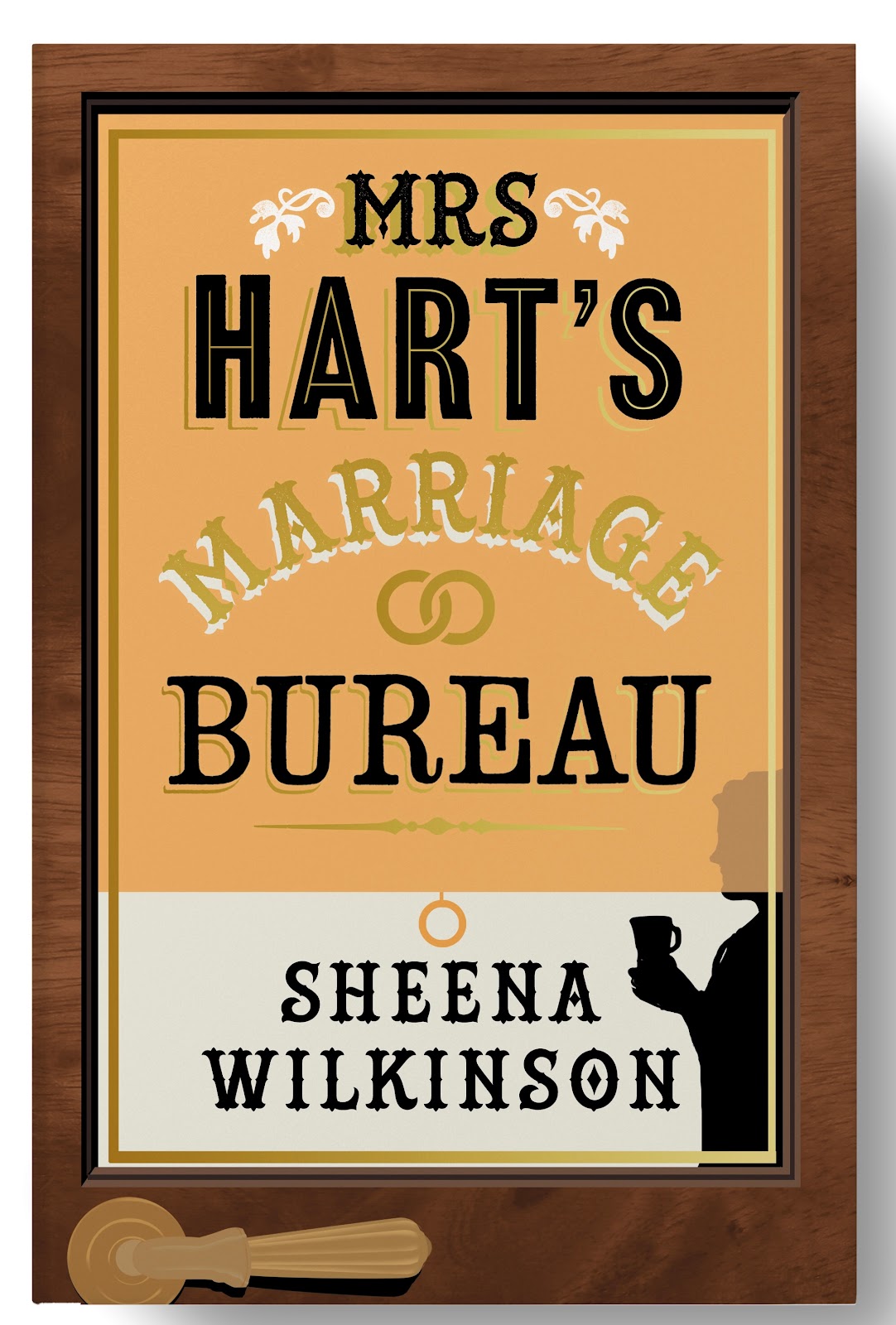
My first adult novel, Mrs Hart’s Marriage Bureau, a 1930s feminist feelgood story, was published in 2023 by HarperCollins Ireland and in UK paperback in 2024 – a year and a day ago, in fact. Readers loved it; reviewers called it ‘a gem’ (Irish Independent) and ‘briskly witty, reminiscent of the best inter-war fiction’ (Irish Times) and the majority of the two hundred Amazon reviews (mostly five star) hoped for a sequel. In fact, the acquiring editor, at our one and only meeting, waxed very enthusiastically about a sequel or even a series. 
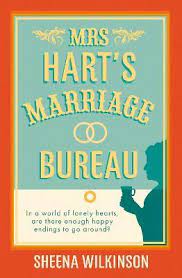
But it was a one-book deal and that passionate editor moved on, as is the way in publishing, and though Mrs Hart had clearly struck a chord with readers, there simply weren't enough of them to justify HarperCollins offering for the sequel. So they didn’t. 

And yes, it might have been more sensible to wait for a contract before I wrote it, but the fact is, like readers, I wanted to know what happened next! And as I wrote Miss McVey Takes Charge, set in 1936, I was feeling optimistic and determined. This book would see the light of day. To anyone who enquired, I said blithely that if HarperCollins didn’t take it I would jolly well publish it myself. (I said it very fast, because to be honest I was terrified of the prospect.)

There seemed no point in sending the book elsewhere: publishers are unlikely to want the sequel to a book published by another company. I did look at reworking it to make it less like a sequel, but that was like trying to turn my dog into a cat. 

I hoped that, if I did nothing for a year, something amazing might happen to make HarperCollins change their minds – Mrs Hart might be optioned for TV or go viral for some reason. This didn’t happen, but when I read about the Writers’ Review initiative, it spurred me on to start thinking seriously about taking that kind of action myself. 

And then something lovely happened! Having engaged in a little chat on social media about the trend for respected, successful writers to self-publish, I admitted that I too was considering self-publishing and explained about Miss McVey takes Charge. The next day I had a message from Linda Newbery, inviting me to bring the book to Writers Review! I will still be self-publishing, but with the support and cooperation of writers I really like and trust. And I know that the Writers Review endorsement will give the book a stamp of approval and respectability, and that they will support my book, as I will support theirs. 

three splendid, and beautifully-produced novels from Writers' Review 

Miss McVey Takes Charge will publish late in 2025. I need to leave some breathing space around my forthcoming school story sequel, which publishes in September, and it gives me time to build up (I hope!) some interest in the book. I’ve invested in engaging a really first-class editor and cover illustrator, both of whom have worked on my traditionally published books. I don’t expect to sell thousands of copies or to make any money; it’s not about that. It’s about giving the readers who bought, loved and reviewed the first book the sequel they – and I – want. It’s about taking control in a world where writers’ words are blatantly stolen to train robots, as Claire Fayers blogged about on here only yesterday. https://awfullybigblogadventure.blogspot.com/

And – because without the invitation from Writers’ Review I might still be dithering about this – it’s about community and solidarity, and writers helping each other out. Because that’s what matters. 


Wednesday, 21 June 2023

Only Connect Part Two - Miracles and Music with Sheena Wilkinson

 Earlier this month Sheena Wilkinson wrote a lovely post about working with other writers, and mentioned that we were going to do an event together at the Belfast Book Festival. 


I am so grateful to Sheena for generously  suggesting that we do this event together , and for pitching it to The Belfast Book Festival, who were SO lovely to work with. Other Festivals should take note!  They paid for my travel, put me up in a hotel, AND paid us for doing the event, which, I am relieved to say, went well, and was actually fun to do. The writer and journalist Sue Leonard, who is very well known in the Irish press for her literary interviews,  was wonderful - she was very encouraging and calming and had really done her preparation - she really knew our books and asked really thoughtful and good questions about our stories and our writing practice, and the audience were great - very smiley and engaged, and also willing to ask questions at the end.


It really struck me how much we, as writers for children, loved each other's first book for adults, and how we had similar 'voices' - we both wrote our books to give comfort and create a safe space for the reader, and whilst both of us were keen to be true to difficult aspects of our stories, and not be twee, as writers for children, we also knew the importance of giving the reader hope.  Here is a picture of us on stage, having  a lovely time answering Sue's brilliant questions. I hope it wasn't too hard for Sue to get a word in edgeways - luckily she is a very experienced interviewer!


Our festival event was to be on a Saturday, and paid for a double room in a hotel, so I was able to invite my husband to join me, and we paid his travel and breakfast etc. After Sheena and I had zoomed and chatted together, Sheena invited me and my husband to come and stay with her and her husband the night before. This was very brave and generous of her, as we had never met in real life, and also very kind, as she herself was only returning from England the same day herself. We couldn't get on the same flight as her, so on the Friday we caught an earlier one, the Festival paid for a taxi to pick us up and take us straight to the Crescent Arts Centre, where we left our luggage, and we had a lovely pub lunch and then went to two fascinating Festival events about translating poetry and then about translating two novels, and a launch of an exhibition, then we caught the bus, and after half an hour arrived at the park and ride where Sheena was there to welcome us and drive us to her home. We arrived to a delicious home made meal by her very kind husband, and started to chat, and discovered that we were all very keen on folk music.


Now this is where the miracle happens. I always have loved folk music, and used to sing lots, to the extent that I have sung at friends' weddings and at church. But sometime during the emotionally stressful period where I was looking after my elderly Irish parents, and for the years after their deaths in 2014 and 2017, up to now, I became unable to sing. It physically hurt my throat to try, and if I managed  a verse I would peter out very soon, and I had to stay silent, and I felt very very sad but resigned. In the past month I had felt a change - I had been at a Catholic Mass and an Anglican Eucharist and had managed to sing part of a hymn at each service, but my voice had quickly tired. So I told Sheena and her husband about this, and said that I would love it if we had a music session, my husband and Sheena's husband  could play guitars and Sheena could sing, but I would only listen.


Only a miracle happened. Something about Sheena and her husband's Irish kindness and welcome  relaxed something deep in me. Sheena herself has a beautiful voice, and it was so gorgeous hearing her sing, and both the men sang and played the guitar so well. Very tentatively, I started to join in the odd word or phrase, and Sheena smiled at me and encouraged me. I had started to find my voice coming back before, but it always faded away,  but this was deeper,   before I knew what was happening, I was properly singing again, first quietly and then more confidently, and we found that Sheena's and my voices went really well together. The next thing was they were encouraging me to sing on my own, and I did. After that we stayed up late and took turns to sing, and it was wonderful. Our husbands really got on, and it was just such a great evening.


It is hard for me to put into words how much it means to me that Sheena, in appreciating my voice in 'Small Miracles', and inviting me to do an event with her about her wonderful book, also somehow enabled me to be able to sing, and love singing again. This is not a small miracle, it is a big one. Thank you so much, Sheena!  I am so glad, as you put it, that our books became friends first, and I really want to continue to read your books and sing with you! Thank you to the Scattered Authors Society for enabling such life-giving connections to take place - and here's to many more creative collaborations for us all!


Thursday, 13 April 2023

Writing for Different Audiences by Sheena Wilkinson

Six weeks ago today my adult debut novel, Mrs Hart’s Marriage Bureau, a feminist romantic comedy set in 1934, was published by HarperCollins Ireland. In the handful of interviews I did to help promote the book, one of the most common questions I was asked was how different I had found it to write for adults after eight novels for children and teens. 


It’s an obvious question, and one I’ve spent time thinking about. I suspect that many people imagine it must be more difficult to write for adults – more complex, more emotionally demanding, somehow more literary.  There was even, I think, an assumption that, after eight teen novels I might somehow not be able for a real book – even though I’m 54 and have actually been an adult for a debatable but not inconsequential number of years. 


I suppose if I had written fart joke books for 5-7s, and had then attempted a zeitgeisty Great Irish Novel, this might have been a stretch. But I went from writing well-researched, politically-engaged historical novels with literary pretensions and a deep concern for language, imagery and emotional truth to writing … exactly the same thing. 


Does that mean there was no difference at all? No, of course not. Mrs Hart’s main characters are in their 30s and 40s, rather than their teens, and a much bigger word count – about twice the length – gave me more space to explore their lives.  I could delve into areas that younger readers mightn’t be so interested in, and take more for granted in the experience and confidence of my readers. 


This was brought home to me at the first event I did for Mrs Hart. I walked into a bookshop (the wonderful Secret Bookshelf in Carrickfergus, for readers in Northern Ireland), and it was full of – well, people very like me: middle aged women. And unlike my usual school audiences, they had actually chosen to be there, and would probably buy and read the book. There aren’t any gatekeepers. I feel I can talk more directly to my readers. 


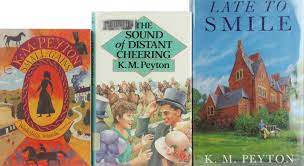
Of course there’s nothing new in writing for different audiences, nor in the lines being blurred by publishers and readers. Growing up, one of my favourite authors was K.M. Peyton. As I graduated into adult books in my late teens, it was such a joy to discover that she had a handful of adult novels to her name as well, and funnily enough, they share exactly the characteristics that made her books for younger readers so good. 


Jane Gardam, too, wrote for different ages; in her case, even as far back as the 1980s, novels like A Long Way from Verona and Bilgewater were published in both children’s and adult’s editions. Penelope Lively, Nina Bawden and Jill Paton Walsh were also writers whose adult books I was more likely to pick up because I had enjoyed their children’s books. More recently, other favourite writers such as Linda Newbery, Adele Geras, Celia Rees, Emma Pass, Sophia Bennett, Anne Booth, Eve Ainsworth, Rachel Ward, Nicole Burstein and many others have followed successful children’s or YA books with adult titles. What wonderful company to be in! 


For me, it’s mostly about character: if you are looking out at the world honestly through your characters’ eyes – and this can be just an intimate in third person as in first – then the appropriate linguistic register, emotional depth and worldview should follow naturally.  If you don’t write well for children, or don’t take them seriously as characters and readers, then you probably lack the empathy to write well for adults.  


Not everyone wants to write for different audiences, but for those, like me and all those wonderful authors above, who do, I hope this post encourages you to go ahead! 


Monday, 13 March 2023

What April Read -- Writing about reading by Sheena Wilkinson

I often have a sense of whether or not I'll get on with someone, based on their reading tastes. And that extends to fictional characters. 

As a child, I loved reading about what my favourite characters read, but often they were too busy being heroines to have time for reading. Pony book characters ploughed into technical tomes like The Horse: Its Treatment in Health and Disease while shunning the school stories I loved -- which made me feel unworthy as a pony book reader. Chalet School characters were often a little earnest in their reading, which made me feel inadequate, or naively read silly school stories which gave them The Wrong Idea about the Chalet. But from Antonia Forest I learned about Lord Peter Wimsey and Brat Farrar,, described by Ginty Marlow as ‘an easy re-read’.

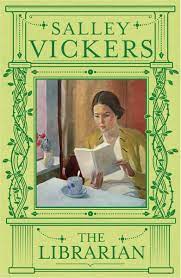
I loved Salley Vicker's novel The Librarian, for the setting and the story, but also for its celebration of children's books.


In 
Mrs Hart’s Marriage Bureau, my first adult novel, I was able to give my characters time to read without its feeling indulgent. Of course my heroines April and Martha are kept busy with the marriage bureau of the title, but both are, to some extent, lonely, and books are companions on long solitary Sundays. Just for fun, I thought I’d share some of their reading with you. The book is set in 1934, which dictated my choices, but like me they read a mixture of up-to-date and classic – though their up-to-date is my classic, and like me they aren’t above the comfort of a childhood favourite when times are tough.


We realise early on that April is a reader. One of the first things she says to Martha is:


And it was worth it to watch all the people. I hardly got ten pages of my book read. It’s the new E.M. Delafield. Do you know her? She’s awful funny. Very English – mind you, everything here seems very English to me.’ 


Martha also likes to read. In the first version of the book, set in 1933, Martha bought Murder Must Advertise, but when I changed the action to 1934, in order to allow April to watch Little Women, which wasn't released until late 1933, this detail had to be updated too. 

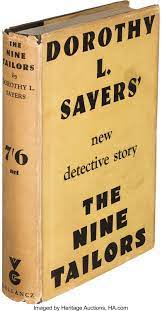
She left him outside the bookshop ... with strict orders to speak to nobody, while she dashed inside to pick up The Nine Tailors, the new Dorothy L. Sayers. 


In the next scene, April has suffered a Very Unpleasant Encounter, and is looking for a comfort read on her landlady's bookshelves. Don't we all recognise that sense that we don't know what we want to read until we see it? 

She would know what she wanted when she saw it: nothing too demanding. Maybe a reread of an old friend? ...  There was all of Jane Austen, but she wasn’t in the mood for Jane Austen. Too much about marriage. (What aspect of marriage bureau have you failed to grasp? It still stung.) 


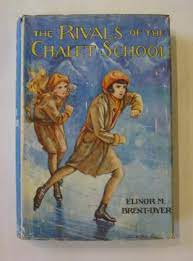
She finally settles on a children's book, as many an Awfully Big Blogger has done too. I'm not sure if Rivals of the Chalet School ever was reviewed in The Times, but what a lovely thought:

Aha – the children’s books: Rivals of the Chalet School – now that couldn’t wring the withers. What a strange book for Felicity, though. She opened it and a little slip of paper fell out. With compliments. The Times. It must be a review copy. Fancy living with someone who reviewed books for The Times


There are magazines on the shelves too, and rather to April's surprise these are of rather a low type: 

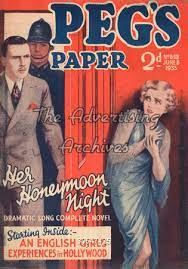
But actually most of the magazines were of the Peg’s Paper type: the sort of thing the girls in the factory used to read. She looked at the titles of the stories: ‘The Sheikh’s Revenge’; ‘She Was Only a Scullerymaid’; ‘Virtue Forsaken!’ She flicked through the last one and read of Molly the mill girl who had been kidnapped outside the mill by a brigand (what was a brigand, exactly?) He was a very handsome brigand, with dark curls and a cruel lip but things did not augur well for poor Molly’s virtue. 


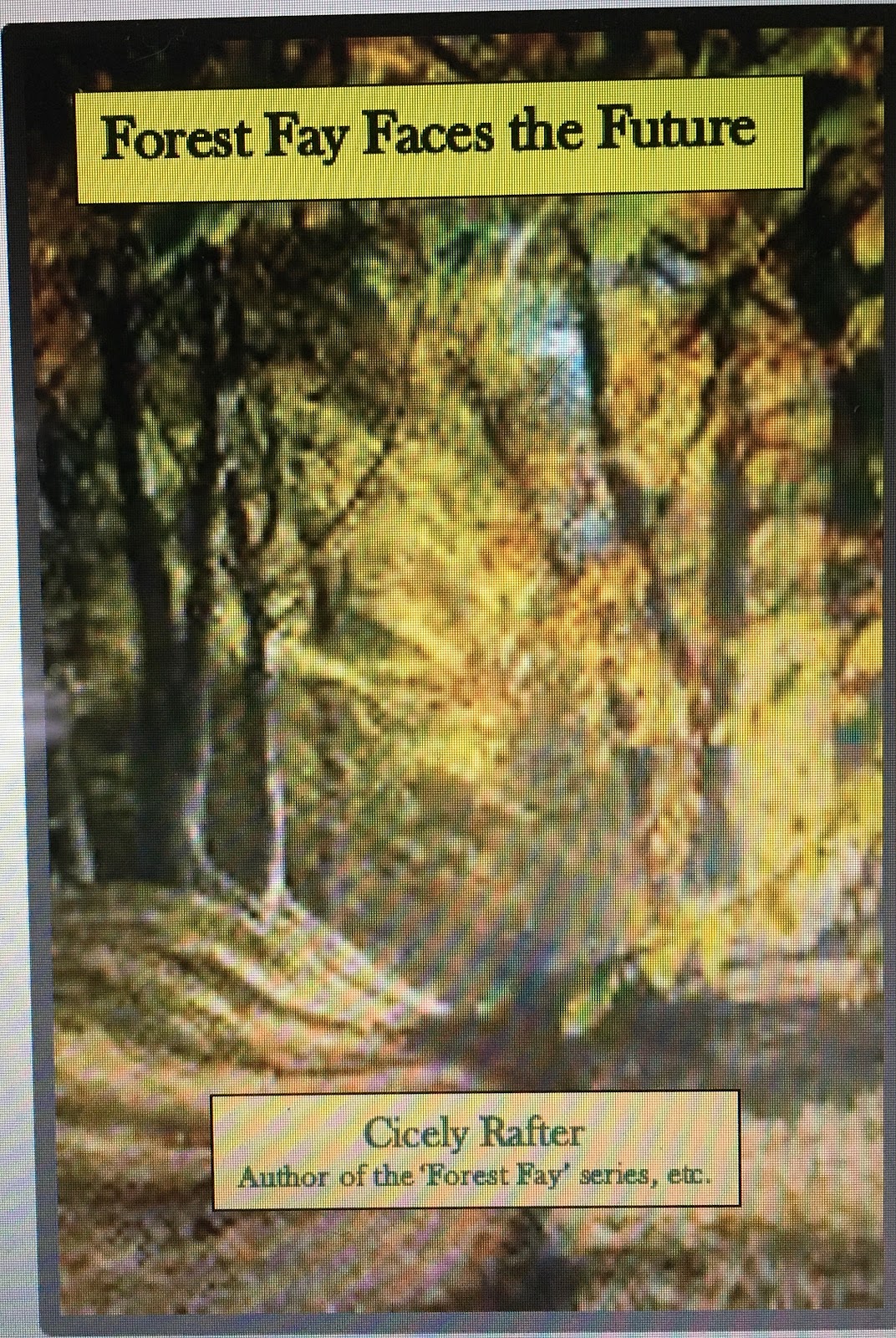
And finally, does anyone remember the Forest Fay books by Cicely Rafter? April does. 

She recognised some of her own old favourites, Jane Austen and the Brontës as well as a whole shelf of modern novels and some of children’s books: Swallows and Amazons, and a whole set of the Forest Fay books. 


All right, I made the Forest Fay books up -- which was much harder, and much less fun, than giving my heroines my own favourites to read. 

Do any readers have favourite bookish bits of novels? Or, for those of you are writers, have you ever given your characters a favourite book to read?