Showing posts with label Kindle. Show all posts

Thursday, 14 September 2023

Books you'd forgotten about by Lynne Benton

 Last month, when the weather in England was fairly cool and damp (remember that?) I set a quiz of children’s book titles.  And I promised you the answers in this month’s blog.  So, for anyone who is still stuck on one or two, here are the answers:

1 A T the L G  by L C    (Alice) Through the Looking Glass  by Lewis Carroll  (Sorry, I forgot "Alice" wasn't part of the title till I checked the book cover!)

2 T T of J P  by B P  The Tale of Jemima Puddle-duck  by Beatrix Potter

3 F G to K I  by E B   Five Go to Kirrin Island  by Enid Blyton

4 T S G  by F H B  The Secret Garden  by Frances Hodgson Burnett

5 H  by J S   Heidi  by Johanna Spyri

6 F C and I by E N   Five Children and It  by E Nesbit

7  T W in T W by K G  The Wind in the Willows  by Kenneth Grahame

8  B S by N S  Ballet Shoes  by Noel Streatfeild

9  H by L S   Holes  by Louis Sachar

10 J E by  C B  Jane Eyre  by Charlotte Brontë

11 T H at P C  by A A M  The House at Pooh Corner  by A A Milne

12 T T W C to T by J K  The Tiger Who Came to Tea  by Judith Kerr

13  A of G G by L M M  Anne of Green Gables  by L M Montgomery

14  M  by F C B  Millions  by Frank Cottrell Boyce

15  J W by R C  Just William  by Richman Crompton

16  C of T N F by C M  Children of the New Forest  by Captain Marryat

17  L W by L M A  Little Women  by Louisa May Alcott

18  W K D  by S C  What Katy Did  by Susan Coolidge

19  H P and T P S  by J K R  Harry Potter and the Philosopher’s Stone  by J K Rowling

20  T U D  by H C A  The Ugly Duckling  by Hans Christian Andersen

21   T M G  by P P  Tom’s Midnight Garden  by Philippa Pearce

22 T L T T and T W  by C S L   The Lion, The Witch and the Wardrobe  by C S Lewis

23 G M T  by M M  Goodnight Mr Tom  by Michelle Magorian

24  T V H C  by E C  The Very Hungry Caterpillar  by Eric Carle

25  J S S  by R K  Just So Stories  by Rudyard Kipling


So how did you all do?  Did you remember some books you’d long since forgotten about?  Did you dive back to your bookshelves and find an old copy of a childhood favourite?  Did you immediately sit down and start reading it all over again?

I’ve also been discovering books I’d forgotten about – only not on my bookshelf, but on my Kindle!  When I first had my Kindle I carefully noted down in a notebook every ebook I downloaded – because, as everyone who has one knows, all your downloaded books appear as a list in “Your Library”, but the more you add, the longer your list becomes.  And after a while you have to really search for an ebook you know you’ve got somewhere…  except that only works when you know exactly what you're looking for!  

Which of course is where my notebook comes in.  But because I’ve become rather remiss of late in writing down every single book as I added it, and because I've now got a lot of books on my Kindle, I couldn’t remember what I’d already got.  So eventually last weekend I started on the mammoth task of making a new list of every book in my “Library” – this time in a new notebook with margins, in which to put a tick when I’ve read and deleted them. 

Readers, it took a very long time, and used up two new gel pens, but at last I finished it.  And surprise – I discovered several books and favourite authors that had completely slipped my mind of late, and am now really looking forward to reading! 

And I realised how well this discovery fitted in with the answers to last month’s quiz: notably, how good it is to be reminded of books you’d forgotten about!


website: lynnebenton.com

Sunday, 16 August 2020

The Good and Bad of my Lock-down Adventures by Steve Gladwin


Since March I've been aware that nearly every blogger here has referred in some way to what's been going on worldwide, and I haven't. There's been no particular reason for this, save for the fact that I've been conducting interviews since the beginning of the year, and all but one blog has concerned them.

We live in Mid-Wales and we're very lucky that our way of life has hardly been affected, save for there being a counter in front of the local shop and taking less trips into town. People have worn masks in our village, and not worn them. People of all ages have been out more and have been far more friendly and open, and, yes - relaxed. Our local Morrison's in Welshpool, has delivered a wonderful service every time we have been there - part efficiency and part empathy. The staff, so often stuck on their checkouts and behind counters, seem to have come into their own, sharing with all of us in this big, strange adventure, while knowing, as we do, that we are among the fortunate ones, because Mid Wales has been one of the least affected places so far - touch wood.


But, as for most people, the experience of being in the midst of Covid 19 has left some psychological damage, as well as providing the odd unexpected treat or bonus. So here are a few of the good and the bad of what I have learned since Mid-March.

Not everyone can use Zoom

Whereas my monthly carer's group have been holding Zoom sessions for three months now, its easy, because the group is led by two trained professionals. On the other hand, our Welshpool group.'Bereaved Friends', of which I am one of the only two founder members remaining, has no easy resource like Zoom to bring us together. Most of our members - most of them elderly - will probably never be able to meet up again, unless we do something through telephones.

Easy Rider

The local bus is well organised with clear mask instructions and places marked where we cannot sit. However, there are still several familiar faces missing, either elderly, or disabled in some way. The rest of the elderly passengers have now returned, but are mostly using the short distance bus from Guilsfield. I know my friends are OK, but I miss our chats and check-ins. And knowing that makes me feel worse about my bereaved friends - knowing as I do from my own experiences of bereavement, that its those check-ins in particular that you miss the most.

Let it Go

The biggest thing which both Rosie and I have had to come to terms with, is that the project on change and loss, which I have been skirting around the edges of for the last twelve years, is not going to happen. I have invested an awful lot of time in this - not least in stress, but Covid makes even an adapted version of the idea, next to impossible any time. That, naturally, has left a big gap in its place, especially where we were working so hard on our new website. All that, however, can be adapted, and won't got to waste.

No sense!

My life-time struggles with dyspraxia have become worse since we started all this and I began taking Statins. I am also suffering from severe lethargy made worse by the heat and making its next to impossible to do anything apart from read, before the sun has the chance to kick in with its disabling and draining rays. Even writing this is a bit of a struggle as well, since you ask.

Right, that's me well and truly depressed. Now, let's cheer me up.

Here are a few things which have kept me sane.

Reading on Kindle

I buy far too many 99 pence bargains on kindle and never seem to get to read most before finding the next day's bargain. I am also prone to huge enthusiasms, getting all excited and then more or less abandoning an idea. Reading one book on Greek myth from the goddess Circe's woman's point of view, led me to eight more. But then I did enjoy every one, and have at least started the poem I had in mind in the first place.

Reading with Pages

Of course, I also read actual books - with covers and paper pages and everything. Its taken me a while to get round to books I've been meaning to etc, but generally I find that the books you leave for ages - and the same goes for films- soften end up being much more than just worth the wait. Certainly in the last two instances of Prof Bob Curran's book on 'Dark Faeries', and John and Caitlin Matthews long-awaited tome on The Elucidation- the mysterious prologue to the grail story and its continuations- have both had me wishing I had had even half of that information, before working on other books.


Small publishing

I can't pretend to have done a lot of writing during this enforced exile, but doing so when I do, still makes my heart sing. Having not had anything published since our book 'The Raven's Call' in 2016, I was delighted to have my first short story published in an anthology in May, only for the small enterprise then to go belly-up almost the day after. All of this confusion didn't change my being published and paid for my story one iota. Instead it led to some interesting speculative conversation with my friend and fellow writer, who had put me on to this in the first place. More importantly, I still have a published jazz-themed fantasy story about jazz called 'Plays Like The Greats', which was inspired by and composed to the strains of the great Ben Webster.

The Giant that became a Dwarf

Apart from the possible opera book/blog which I mentioned last month and has now reached 18,000 words, I did finish a book, but it wasn't the one I'd expected. Instead, I somehow managed to reduce a big idea and a big book of 160,000 words to a simple novella with one idea of 20,000. This was as much of a surprise to me as anyone, especially as the short version was more of an experiment than anything. But, as my trial readers seem to like it, who know what will become now of the other 140,000 words! Answers, on a small postcard, please.

And, when I'm not writing, or watching operas - forty six and counting?

A Mass of Voices

Ah, the wonder of the human voice. Rather like my kindle habit, the audio one became severe, yet somehow I became somewhat becalmed in some oasis of inactivity, leaving Stephen Fry's 'Sherlock Holmes' at 'The Greek Interpreter', and Michael Kitchen not even halfway through Michael Dibdin's Aurelio Zen novel, 'Rat King'. For some quite unaccountable reason I had only stumbled past the first chapter of David Mitchell's second volume of Observer ranting. And, having so much enjoyed Martin Jarvis' reading of the first William book, why on earth am I taking so long to begin the first Audible mega collection. I am, converrsely, having no difficulty - even with this pesky dyspraxia - keeping up with the first Dad's Army and 'I'm Sorry, I Haven't A Clue' collections. Although the latter is nowhere near as good as the original, because - hard as they try - you have to see Arthur Lowe prat falling to remember how good he was. (He was also one of the best and most convincing comedy drunks ever!) 


Good as all these are, they all pale in comparison to hearing Anton Lesser read Philip Pullman's Sally Lockhart books. Yes, after I'd seen off Michael Kitchen and Zen- with the former's legendary disdain for full-stops and paragraphs, in favour of running the whole thing together, but, somehow, none the worse for it, I decided it was time for a real treat, and because we'd already heard Bernard Cribbins reading both Pooh books, (Uniquely his Eeyore appears to be Alan Bennett long before the latter's famous recording of Pooh) it had to be Anton!

It appears, from what little I've heard, that there are three ways of doing an audio. The first of these is essentially to vary your own voice and use your considerable skills as an actor/storyteller, to make the narrative drive enough. Then there are the Antons and Stephens and Sams and Miriams and Martins and Bernards who have a field day coming up with a voice for every character. Anton is especially good at cold-hearted villains of both sexes, and I would give money not to bump into his Mrs Holland in A Ruby in the Smoke. Stephen Fry - obliged to give us a permanent and somewhat bluff Doctor Watson, as he, gentle reader, is our narrator, can do convincing women fairly well too, but then he can surely do anything, beginning with an astonishing and totally convincing Scouse murderer, whose confession takes up an entire chapter in one of the Holmes stories. Sam West is Sam West, whose voice and delivery, not only at times recall the measured delivery of his father Tim, but immediately transport you to the realm of some of the great narrators of documentary, such as Hugh Falkus, Andrew Sachs or Nigel Anthony. His is a voice which seems to speak out the planets. He also has lots of fun reading Philip Pullman's Grimm Tales, and is also brilliant at nasty characters.

I would happily listen to Juliet Stevenson read the phone book, but must confess to investing in her reading of The Mermaid and Mrs Hancock. just so I could hear her saying all those dirty things. Then of course, there's the irrepressible and bounlessly egoed Miriam Margolyes, who would have had a whale of a time with poor Mr Hancock, but decides instead to give the listener a unique insight into how she sets about characterising and recording Bleak House. But then she's clearly an expert from all her stage work on Dickens' women. Anton Lesser himself has recorded all of the Dickens books for Naxos and also does Matthew Shardlake. And everyone knows how good Martin Jarvis is at William.
 
TV, or not TV.

Well not, as it turns out, as most of what we watch on the big screen is either in the form of film or DVD box sets, or a great deal of what's on i-player. This includes the cricket highlights, (when its not been rained off, or stopped for bad light) and the fascinating documentary 'The Edge', about how the 2009 test team under Andrew Strauss and coach Andy Flower, set out to become the best in the world - and the legacy of retirements and breakdowns that followed five years later. We also watch a lot of comedy, especially stand-up and now and then catch other things. I absolutely loved The Marvelous Mrs Maisel, with its terrific scripts, shamelessly filthy stand-up sequences and a quite wonderful ensemble cast. Watching this and other dramas, including Shakespeare has made me realise that what really makes a drama is its dualogues. Mrs Maisel is chock full of great dualogues, and, as in Shakespeare, has not just one, but two pairs of gloriously mismatched protagonists. When I think back to my short journey in screenwriting, it was writing the two actor stuff I got the most out of.


At last it's time for -- RESEARCH

I've got shelves full of stuff I've always said I would read, not so much novels, but stuff I've always meant to read about and study, piles of books of traditional tales which I always meant to make part of my repertoire, stuff on myth and faerie and different versions of the Mabinogion and all the rest of it.

Something odd happened the other day, because for some reason I started reading some of it, before adding to it via the cursedly cheap and easily available kindle. It began with the women of Troy and Madeleine Miller's quite wonderful Circe and then, via the damsels of the wells of the Grail myth 'Elucidation', slipped right into faerie where I am at the moment. This is complete contrast to my other reads of Hilary Mantel's 'The Mirror and the Light' and Billy Connoly's 'Tall Tales and Wee Stories.' Thomas Cromwell certainly has his moments of wry amusement and ribald wit, but I rely on the Big Yin for actual jokes.

There's also plenty on Audible which is free, and having saved lots of stuff yonks ago, I've discovered a real gem - this being a very good thirty part pod cast series about Alfred Hitchcock, which I am trying to visit daily.


Oh, and we go for walks of course, even if they're more familiar, than strike-out -adventurous. We have familiar routes, but the glorious times when we could go and sit on a bench on the A495 and enjoy the small and quiet amount of traffic, are long gone. So, its back to feeling like your legs are going to get cut off if you stretch them too far out.

So, all in all, lock-down has been relatively kind to us, taking away a few possibly outdated, or ill-thought-out things, but providing a whole host of diversions and a couple of fresh original things to keep me going.

I should also not forget the practice of sophrology, which - one way or another - has been adding to my life and spirit since last September, even considering a temporary three-week sulk and stopped doing it around June. Its like mindfulness, but easier and the exercises are both shorter and more active. It's certainly a both positive and easy thing to add to an artist's repertoire of therapeutic lock-down strategies. Oh, and its not just for lock-down either. It's there whenever you want it and the Swiss, French and Belgians have been keeping it a secret now for long enough. Here's the best link in town if you want to find out more.


Coming Soon!


For the next two months I will be back to the interviews with a two-part interview with Hugh Lupton, Master Storyteller, Writer and a whole lot more. Among the subjects we'll be covering are his years as a solo storyteller and with The Company of Storytellers, The Storytelling revival of the 1970's, the many years of Storytelling in the Landscape courses he's run with Eric Maddern at the Ty Newydd writers centre, and his two recent books, 'The Assembly of the Severed Head', his reconstruction of not just the Mabinogion tales, but the way they were written, and 'The Ballad of John Clare.'

PS Because I know people care about such things, here are the other books I read about women in Greek Myth.

Circe by Madeleine Miller, Black Sails before Troy by Rosemary Sutcliff, The Silence of the Girls by Pat Barker, Ten Thousand Ships by Natalie Haynes, Helen's Daughter by Frances Thomas, The Penelopiad by Margaret Attwood and most recently The Children of Jocasta by Natalie Haynes. Next - The King Must Die by Mary Renault. Further suggestions welcome. 

Thursday, 22 June 2017

New Voices, by Dan Metcalf

I've been thinking a lot about audiobooks nowadays since talking to a friend of mine who is a postman. He listens to a lot, walking 4 hours a day which is the perfect way to consume talking books. But he did something I wasn't really aware of: he gets books via Google Books and sets their speakbot up to tell the story to him. I know Kindle did this waaaay back when they first launched, and my friend tells me that is how he started doing it, but lawyers got involved and argued that it contravines the talking book right in the contracts, when kindle had only paid for ebook rights. Or something. I'm vague on the details. 

So I tried it. https://www.naturalreaders.com/ is a site with great voices which sound, well, natural. Ish. Just cut and paste text and it will read it to you, in a variety of male, female, British, American, French, German voices and more (all hilariously nicknamed things like 'Bruce', 'Graham' and 'Audrey'). It works. Mostly. I also got the app for my phone (which comes with free auto-installed versions of Alice in Wonderland and Sherlock Holmes Stories) and the extension for my web browser which can read my emails to me.

But of course I am behind the times in all this. The Amazon Echo will already speak to you like your best (if slightly robotic) mate, and Google are hot on their heels with what is now called a 'Digital Assistant'. So what next? Well, the sky is the limit. How about an interactive story for the Echo, one that you can choose where the story goes? Or you can place yourself in the story and ask the characters questions? You can be the detective in the murder mystery. With artificial intelligence and natural sounding voices on the up, this should be possible very soon. It just needs the right combination of writers and programmers – thinking about it, it is essentially a text adventure like those of the 1980s but read out loud by the computer.
By Peter Langston [Public domain], via Wikimedia Commons
But just as iPhones surprised everyone with their ubiquitousness, and pushed the tablet revolution onwards, maybe the next big thing is not voice activated? Could it be Virtual Reality, gesture activated or linking directly to your neurons? Will it take place not via a speaker or a screen, or even a book, but centred in your own mind? The future is limitless.

++

Dan Metcalf is a writer in SW England. His new book, Codebusters, is out in July 2017.

Sunday, 5 March 2017

What are Kids Reading? Is it for Pleasure? by Savita Kalhan


World Book Day celebrates its twentieth year this year, so what are kids reading for pleasure, how is it monitored, and how much choice do they have?

 A new study has shown that when children are in primary education, they read more challenging books than when they are in secondary school. In secondary school their reading regresses as they choose far less complex and challenging books.

The study was conducted by Professor Keith Topping on behalf of Renaissance, the company which
provided all the data for the study from the schools who are signed up to their AR (Accelerated Reader) program across the UK. The report analysed the reading habits of 848,219 young people across almost 4,000 schools in the programme.


Renaissance UK managing director Dirk Foch said: "Most primary schools place a large emphasis on developing literacy skills. However, this is rarely transferred onto secondary school and, as a result, literacy standards at secondary level are a persistent challenge."

Clearly, all schools will place a huge emphasis on developing literacy skills - even secondary schools. This data is derived only from the schools participating in Renaissances' AR programme. There are over eight and a half million kids in primary and secondary school schools in the UK, and over twenty thousand state schools.

I know Cecilia Busby blogged about the pros and cons of the AR programme a couple of years ago, (which you can read HERE). It's a huge subject on its own, and not the focus of my blog today.

According to feedback from schools in the AR programme, the data shows that novels written by the blogger Zoella have become more popular than JRR Tolkien. When Charlie Higson was asked what he thought of this on The World at One, he said that we should be glad that children are engaging with books rather than looking at a screen. You can read the full Renaissance report HERE.

But I have noticed something very worrying, and I hope it is not a trend that is being repeated in other schools.

The use of eReaders, in some schools, has taken the place of paperback books almost completely. I know of one very large secondary school where every Year 7 and 8 pupil is given a kindle preloaded with books. Older years are given a nook. They are used for lessons as well as for reading for pleasure, apparently.

This is an example of a selection of books loaded on in September for Year 8s:

The Noughts and Crosses series, The Weight of Water, The Boy in the Striped Pyjamas, One, More Than this, The Fault in Our Stars, Into the Forest, Hold Your Breath, The Wall, Shadow, War Girls, Singing for Mrs Pettigrew, Maze Runner, The Company of Ghosts, The Child's Elephant. 

Classics are pre-loaded too -: Pride and Prejudice, Animal Farm, Around the World in 80 Days, Great Expectations, Wuthering Heights, Aesop's Fables...

The kids are NOT allowed to read anything else other than one of the books on the school kindles. If they are caught reading a paperback book, they are given a detention! It doesn't appear to matter whether they are reading a paperback book because they have already read most of the pre-loaded books a couple of times, or because they've read all the books they were interested in reading on their school kindle. Whatever the justification, threatening a child with detention for reading something they want to read is a harsh and unwarranted punishment.

There appears to be little choice, and no free will on the part of the children in having the ability to browse and choose a book to read (part of the pleasure of reading, surely). They are NOT allowed to read a paperback book - even during their reading session in the library! If they're lucky, they will derive some pleasure from some of the books on the kindle, and there are some good ones. One of the kids I spoke to had read all the books he had wanted to read on the school kindle - some of them twice, so he was now going to risk getting detention by bringing in a library book.

I've asked many school kids whether they prefer reading a paperback book to a kindle, and the majority prefer paperback books. Scholastic did a survey in the States and found that over 65% of school children preferred reading a paperback book than on an eReader.

Clearly the school wants to monitor the kids' reading habits, and justify the expense of buying the kindles for those two year groups, and nooks for the older year groups. Unlike in the States where Amazon has a block deal for schools, I believe that in the UK there is no such deal. So it cannot be cheap to load up so many eReaders with textbooks and reading books. I wonder how many other secondary schools have opted for what seems to be quite an expensive choice over a well-stocked school library.

There are, of course, pros and cons regarding the use of eReaders in schools. They can and do have a place in schools, but I don't think they should replace books. Chris Leslie blogs about eReaders in 5 Burning Questions about eReaders in schools for the Scottish Book Trust.

Reading should be for pleasure. But is a lot of the pleasure being knocked out of it in favour of over-monitoring in the interest of collating stats and ticking boxes? I think this is an important issue and one that needs looking at far more closely.


Twitter @savitakalhan


Saturday, 5 March 2016

Kindles, Nooks and eReaders - or Paper Books? Savita Kalhan

Recently I heard of a very large school, with eight or nine classes per year group, which has invested in kindles and nooks for all pupils in Years Seven, Eight and Nine. Most classes have over thirty children, so that's a heck of a lot eReaders. The school has preloaded each eReader with a total of eighteen books for the school year. It also preloads subject specific word banks, revision tools, and other tasks to support work in lessons and out of school.

Interesting, although the school allows its pupils to read paper books, all their form reading time and reading in English lessons must be on the eReader. Even more interestingly, pupils require a permission note from the parent to bring a paper book to school!

Apparently, "a student's academic success can be greatly increased through active reading and the process of actively engaging with texts, and tools such as 'look up' on the eReaders are excellent in supporting this."

I know a couple of kids who go to this school and they don't much like reading on the eReader - they far prefer paper books. The trouble is they're no longer encouraged to read paper books in preference to the school's preferred preloaded digital books.

Is this happening in other schools? I wonder if this is something that's being rolled out in schools right across the UK. I don't know the answer.

Do I like that this might be happening? No, I don't, because I think it discourages kids from making their own choices in reading. It also discourages an enquiring mind - one that picks up a book at random, looks at the cover, reads the blurb, the opening page, and then decides whether or not to read that book over another one that on the bookshelf, or to continue browsing. Browsing a bookshelf is not the same as wading through a prescribed list of books on an eReader.

I think there's a danger that enforcing eReader use in schools may end up being counter-productive. If the preloaded books do not appeal to the kids then they are essentially stuck. Reading should be a pleasure. Yes, we all had to read certain texts for schools that we may not have cared for ‑ but not up to eighteen of them, and not to the apparent exclusion of anything else.

I have yet to see the list of books preloaded onto the school's eReaders. Some will be set texts, but I don't know the criteria for how the other books are chosen. It would be interesting to know what these criteria are.

I'm not against e Readers - I have an eReader, which I love. It's great for holidays, and for reading samples of books. For all sorts of people who live in countries where it's hard to get books for whatever reason, social, political etc, I'm sure an eReader is absolutely indispensable.

I also have a lot of paper books - I buy lots of books, I borrow lots of books from the library, I love books. My eReader has its place, but it does not take the place of a proper paper book.


Schools may well find eReaders to be a valuable tool, and used in conjunction with other resources, I'm sure they perform a valuable function. But I don't think they should ever wholly replace a paper book - and, more importantly, kids don't seem to think so either. 


Thursday, 15 October 2015

How do you read books?


Reading has been one of the most important activities I have engaged in since before I could decipher words. As a writer my reading has underpinned my entire career and knowledge of how books can be created. But this week I had quite a wake up call.


I was sitting one evening last week reading a book. A physical book. A paperback. With paper pages.
Right - good we've established that.
When I got to the end of the page ( somewhere in the middle of the book) I - well - I swiped across the physical paper. I did - I actually swiped!
Astonished I looked up at and caught the eye of the better half. "You won't believe what I just did," I said and told him.
He shrugged and with a slight grin said,,"What? For the first time?"


So its finally happened. The total transfer of my decades old brain from the physical to the virtual. After reading books - physical with paper  pages - since before I could actually decipher words - my brain has been taken over by widgets/pixels/elves/ Martians/whatever and it now expects me to swipe instead of thoughtfully or swiftly, wearily or feverishly, take that holy paper between my fingers and turn the page.

I'm not quite sure how I feel about this but it made me stop and think, How do I read my books in 2015. How do any of us?


The grandbaby is nearly one now and is learning books - the reading direction, the expectation of the page turn, how to flip a flap, the gentle lilt of story as it is read, exclaimed over, pictures pointed to, buttons pressed to make the truck or the fire engine sound. This is how I started - the physical book, the picture, the paper page. I have no idea what I would do if I couldn't read my books.
But the truth in 2015 is that no matter how much I revere the physical book, this is no longer the sole way in which I enjoy books. And for the grandbaby it certainly won't be.


I have a kindle.
I have a Kindle app on my smartphone and my tablet. I am constantly downloading and swiping screens. I read books on my phone on the tube. I never need be without my copy of War and Peace again in my entire lifetime because it is neatly settled on the app on my phone - which goes everywhere with me naturally - and it takes up no space at all - literally and virtually - in my handbag.

So this is how I read books :-

  • I cruise through bookshops, picking up, flicking through, staring, daydreaming and considering books.
  • I wander libraries looking through the biography and history sections in particular.
  • I fill my house with books and have them in favoured piles which I can dip in and out of.
  • I read entire physical books. I usually have an upstairs book and a downstairs book. But I might also be reading a book on my Kindle.
  • I find it hard to pass a charity shop with their variously stocked shelves
  • I download books onto my kindle/smartphone/tablet and read a flat screen and lose myself but it is different. There is not the physical engagement with the artefact.
  • I read with the grandbaby.
  • I read aloud to myself/the better half/ audiences.
  • I listen to books being read on the radio.
  • I listen/watch any programmes about books which cross my path.
  • I have developed a new passion for hardbacks. It's been life long of course but its just on an upsurge at the moment. I sit there stroking the book as I read it, its beautiful cover, wonderful end pages, neatly ironed ribbon bookmark, often in red, and the wonderful quality of the paper. You can't do that with your Kindle.
Picked this little bird book up in a second hand bookshop. Irresistible. Has commentaries by Enid Blyton!
I hope I don't continue to swipe the pages of my physical books. I felt such a numpty.
I plan to go on reading and engaging with books for the rest of my life.
I hope my plan works out.

And then there is the writing of books - but you've probably had enough by now.

How do your read books?

www.miriamhalahmy.com


Wednesday, 14 October 2015

Marketing and other non-writing stuff - by Karen King


Marketing is increasing in importance to most authors now so when I heard The Belmont Belles of the RNA (Romantic Novelists’s Association) were running a workshop on 2nd October about ‘Readers How to Find Them and Keep Them’ which included lots of marketing tips I signed up.

It was a really interesting day. The team, Sue Moorcroft, Kim Nash, Katherine Gerbera, Lizzy Lamb, Lucy Felthouse and Sarah Houldcroft led us through starting a Street Team, reaching readers with newsletters, using Carva and Photofunia for graphics, scheduling tweets and Facebook posts using Buffer, using hashtags – especially useful with Instagram- and making use of the Facebook ‘Call to Action’ button on your Author Page to direct people to your latest book or newsletter. All very useful stuff and I came away with lots of notes.


Here I am with Sue Moorcroft, who gave a workshop on Street Teams

Some of the authors had put together a set of Regency romances into an Amazon Kindle Box Set and were getting pretty good sales for it. I thought this was a really good idea. Like many of you, I already use Amazon Kindle to self-publish out of print books and back copies (actually only one at the moment but I intend to do it with a few more when I can find time). But I'd never thought of compiling some of my books into an e-box set. Have you?  


If you’ve written several spooky stories, for example, you could republish them as a Halloween box set. Or you could get together with another author and publish a collection of YA Reads, or School Stories. That way you can share the expense of covers and any marketing and enjoy more exposure. Yes, of course you’ll have to share the profits but that wouldn’t be too complicated.


I’m looking through my back list right now to see what titles I can make into a Kindle box set. 


Karen King writes all sorts of books. Check out her website at www.karenking.net


(With thanks to Pixabay for the book picture)

Thursday, 15 May 2014

Re-jigging my Editing Process by Miriam Halahmy

I am currently writing my seventh novel. I have published one novel for adults and three Y.A. and I have one book not yet taken and one which is just about to be submitted. But as Sue Gee, award winning author and Faber Academy tutor once said, "All writers are apprentices all their lives." So this blogpost is about my editing process with my Kindle as a relatively new and developing tool to help me.

Recently someone recommended Rachel Aaron's short ( and cheap £0.77) e-book and I decided to download it and see what there was on offer. I wasn't particularly interested in writing 10,000 words a day but I am always open to new ideas for the editing process.
The one idea I took away from this book was Aaron's recommendation to download your finished manuscript onto your Kindle and read it.
Why?
Because when you read a manu on a Kindle you read it like a reader.


I loved it! I was working on my new book, Behind Closed Doors, (BCD), about two teenage girls who are at risk of becoming homeless, for very different reasons. I downloaded the book, took my Kindle into the living room and sat down on the sofa which is where I read at least half of my books. I was in complete reader mode. This is such a different experience to either reading on the screen - my least favourite way to edit an entire book - or to printing a hard copy of the entire manu. With the hard copy I am much less relaxed. I sit there, pen in hand, scribbling all over the place and I am definitely not reading like a reader.

But sitting on the sofa with a cup of tea and a biscuit, nice and relaxed, each page appearing like a page in a printed book in that pleasing rectangular screen my brain was completely in reader mode. I read the book over a couple of days and then I put it to one side, went out for a long walk came back and wrote a couple of pages of notes by hand and with a nice clear head.

Ok - SNAP! You already do all this, I can hear you say and yes, I would think nowadays, a lot of writers do the same thing.

But then I had a new revelation. I went back to the computer, continued working on my book and finally sent the finished manu to my agent. All done and dusted, feeling pleased, etc.
Couple of weeks later I decide to download and read the manu again.
Groan! Suddenly I see loads of copy edits ( houses instead of house) - not earth shattering, I know, but I am beginning to realise that my Kindle edits could have been so much more.

However, after some feedback from an interested editor, it was decided to alter the last few chapters before widespread submission. This is my chance I think.
I rewrite the chapters - very satisfying job. Then I download onto my Kindle.
But this time I sit at my computer with the manu up on the screen.
I start at the beginning, chapter by chapter and every time I spot the error on my Kindle ( errors I have failed to see on the screen because I'm not reading like a reader and I seem to be much sharper in that role) I scroll down and correct it on the screen.
I catch all those pesky errors ( houses instead of house), feel I have a much cleaner text and press SEND in a much happier mood than before.


When I considered trying out this method I thought it would feel laborious and annoying.
In fact, I found it to be smooth and extremely satisfying.

From now on, I will be downloading in 10 chapter chunks ( I've just done that for the new WIP), reading on my sofa, making notes when I've finished and then working the Kindle and the screen version at the same time to build up to the much more perfected finished product.

Do you have an editing tip you'd like to share?

www.miriamhalahmy.com


Friday, 14 December 2012

A Christmas Give-away: Lynne Garner


I wanted to celebrate the release of two new picture eBooks: The Perfect Christmas Tree (UK download, US download) and Where It's Always Winter (UK download, US download) earlier this month. So on the 2nd I decided to give some of my other picture eBooks away for free. 

Sadly you've missed the first two but you can download Clever Rabbit (part of the Burdock the Rabbit series) which will be FREE from tomorrow (15th December) to the 19th December. To enjoy this book download from the UK Amazon site HERE or the US Amazon site HERE.


Finally the third in the Burdock the Rabbit series The Abacus will be available for FREE between the 20th December and the 24th December. UK readers can download by clicking HERE or US readers can download by clicking HERE.


And remember you don't have to have a Kindle to enjoy these books. Just follow this link to download a FREE Kindle App so you can read on other devices. 

I hope you enjoy sharing my books and I wish you the very best for this festive season.

Lynne Garner

P.S. If you do enjoy my books would you be kind enough to place a positive review on Amazon. Such reviews help boost sales. This enables me to write and publish more books, which means I can then release more free downloads as a thank you for supporting my work.   

Tuesday, 26 June 2012

This Is More Than A Page - Penny Dolan


Last weekend I was having an idle time, away for a joint family birthday. 

I took a moment to look around the room.

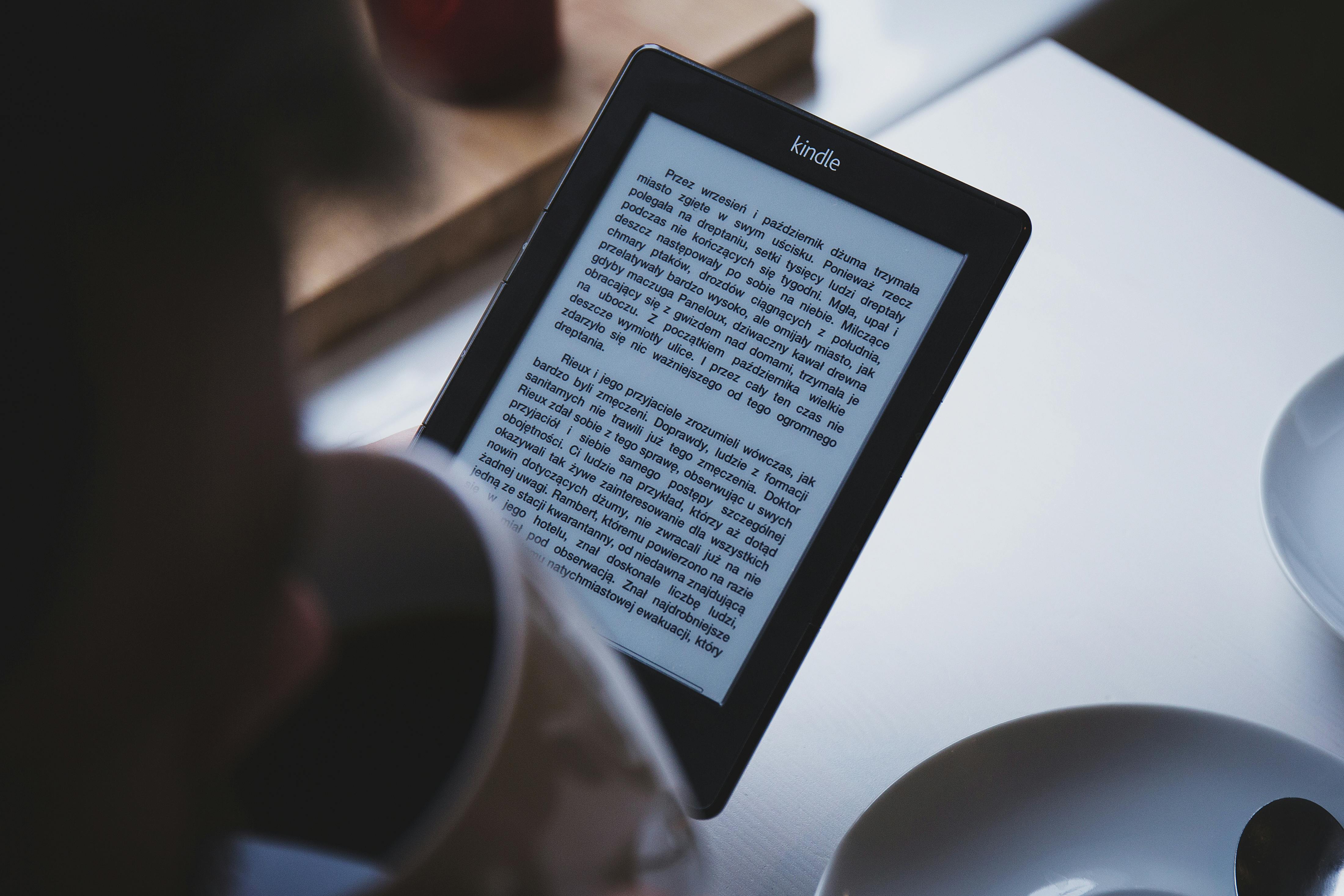
 In my bag was very new kindle with its covetable green leather cover.  

Nice, eh?

  Meanwhile, on my lap, was a just-opened present: a 3D real-world copy of “Just My Type” by Simon Garfield, a book about the design history of fonts. I have always loved the subject and heard the book being read on BBCR4 back in December.

 The two things seemed almost opposites, in their way.

One artefact – the kindle -  uses a fits-all-genres font, apart from variations in size. The standard page layout makes no attempt at beauty, beyond the words in the reader’s mind - and sometimes that can be or should be enough. The kindle doesn’t attract or distract me with presentation skills What it offers is portability and choice, no matter how far away I am from the book hills of home.

Meanwhile, the "Just My Type" book explains how fonts and layouts can be purposeful, sympathetic, arresting, calming, historic, modern, dominating, overwhelming and more. 

Fonts even give away too much about personal choice, or so he suggests, according to the blurb. 

The pages inside this partiular book offer b&w photographs and old engraved images and font samples and there are wide satisfying borders and headings and some stylish page numbering. 

This book's design has added pleasure to the content. The layout adds much to the words, makingthe whole the book more than just the text. And it's barely even trying!


Oh, they are such hidden heroes, all these clever book designers! I love and admire them for their many skills but also because as a writer, they can be my best friend. I want my words to look as good as possible on the page because it matters. The layout, size and choice of font, size and shape of pages, even the quality of paper all work together to enhance the words and help the reader.

Such things matter, especially to the young reader as well as to the writer. There is something soul-destroying about a story appearing on thin, poor-quality paper in a font so small and dense that it  repels any but the most keen and competent readers. 

Text needs a sense of space.  Although this classic picture book had Helen Oxenbury's wonderful illustrations and Michaele Rosen's rhythmic retelling, I am convinced that the generous, airy layout of "We're Going on A Bear Hunt" was also a reason for its success with grown-ups and children alike. 


I've got, somewhere, the earlier, traditional "Lion Hunt" version in a cheap and nasty anthology. Only the thought of the fun you could have reciting and acting the words with groups of kids made those pages useable.

Nearly forgot. Back to my weekend.   Close by, on the cupboard was a copy of "The Marlowe Papers", a historic novel by Ros Barber, written in poem form. It was graced by a beautiful hardback cover whose colour, texture and old-fashioned titling suggested both “this is an important work” and “timeless quality.” In more than a hint.

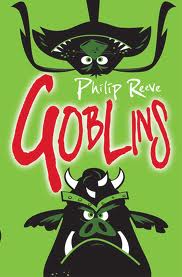
Beside that lay a copy of Philip Reeve’s highly noticeable “Goblins”. 

The publisher’s choice of bright emerald page-edging, completing the bright green covers, transformed the book into a block of noticeably brilliant green. “Pick me up. I’m an exciting container and I’ll fit right in your hand,” it screamed.

Both items demonstrated the entire “bookishness” of the object. “This is not an e-book,” they were clearly stating. “This is more than an e-book. Hold me. Read me.”


Meanwhile, there’s another present: Leonard Cohen’s “book of longing”. 

Those pages are full of poems and motifs and drawings in various media along with handwritten lettering. It is a paperback for slow and occasional reading, an object that a man could stuff into his pocket and take to a bar.  

(Grrr! I won’t go into the uselessness of women’s clothing here.) 


But I can only skim through Leonard’s poems quickly. Nearby is a much younger person who wants to start reading a new book. I don’t recognise the new cover. 

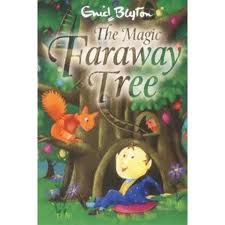
Then I do. It is “The Magic Faraway Tree”.  Here we go.  
Hello, Enid.


The world of books feels like an ever-expanding galaxy just now, don't you think?


But now, decision time. 
Where's that Comic Sans???


www.pennydolan.com