Showing posts with label Daniel Hahn. Show all posts

Wednesday, 9 August 2023

All writers are translators - Anne Rooney


Daniel Hahn's book with
random dinosaur

I've just finished reading Daniel Hahn's Catching Fire: A Translation Diary, and I think you should, too. It's a blow by blow account of his work as a literary translator, translating the slippery and enigmatic Never Did the Fire by Chilean writer Diamela Eltit. It unpicks the work of a translator with forensic detail in writing the same book as the original, but using entirely different words. If you are writer, particularly, but also if you are a reader, you will find this dissection of the craft fascinating and perhaps familiar.

All writers, whatever they write, set out with an idea of the perfect book they want to write. You can think of this as the Platonic "form" of the book. (If you've not come across Platonic forms and Plato's allegory of the cave, there's a quick explanation at the bottom of the post.) It is never possible to create that perfect book. Any actual book you write will be flawed. You won't find the perfect structure, the perfect words. Some of your ideas will be lost in transmission. Your hopes will be disappointed. But you will keep rewriting bits of your book in the attempt to edge closer to its elusive perfect form until either the delivery deadline is upon you or you get bored and give up. (No one ever tells aspiring writers this, by the way. They think they have to keep revising until the book is as they imgained it would be. The key to a successful writing career — as opposed to successful writing — is knowing when to give up.)

In this sense, then, all writers are translators. We are trying to translate that nebulous idea of the book, which is always perfect, into actual words. The words have to capture the essence of the book, not just details like story, character, setting, and so on. We don't choose one metaphor or analogy over another just because it's more precise but also because of the extra bits and pieces it carries with it. If I say something is "as black as nothing" you have a different impression from if I say something is "coal-black" — and not only because the second is a tired cliché. If I were Danny Hahn, I'd pause here to say that "coal-black" has a different meaning for me, a child who played in the coal bunker and carried in the coal we used to heat the house, from that is has for my children, who've possibly never even seen an actual piece of coal used in anger. You will have a vision of "black of nothing", or perhaps an apprehension. If you pause to think about it, you might say "nothing isn't black", which is both true and not true, or you will unpick the simile to find it says "nothing is black" which is comically ambiguous. It reminds me of the Big Knights episode which has the princess worried that the Big Knights "are afraid of nothing" means they are afraid of everything. And because I write a lot about space, "as black as nothing" reminds me of black holes, which are entirely the opposite of nothing, being crammed full of stuff, but which people think of as nothing. So you see every word and phrase we pick in writing our books helps to create their essence. Every word brings connotations, the conjunction of words brings new meaning, and even the gaps are fruitful ("that's how the light gets in", as Leonard Cohen says). 

The translator has a harder task because the Platonic form of the book exists already in another language. This means other people can see the ideal version, they can compare his book with that. For the rest of us, we are the only ones who can see how far short of the ideal our book falls. The trick is not to let on. 

Diacodexis, looking mournful,
neither running nor jumping


A fiction writer who creates something from scratch is less likely to think of themselves as a translator, but I routinely translate between adult/academic writing and language accessible to children. I take something like, "Diacodexis may have employed a combination of both cursorial and saltatorial habits" and translate to "Diacodexis could run, and if it wanted to, it could jump." Yes, I've dopped the "may have" — but it's rather taken for granted that most of what we say about long-extinct animals should come with that qualification.

In summary, I think all writers should read Danny's book as you will find a lot in it to identify with and a lot of insight into how those of us with the easier task of writing in just one language also work with words. Non-writers should read it, too, to appreciate what goes into this craft of ours. 

Tuesday, 12 May 2015

The picture books that made me

I've been overcome by waves of nostalgia.

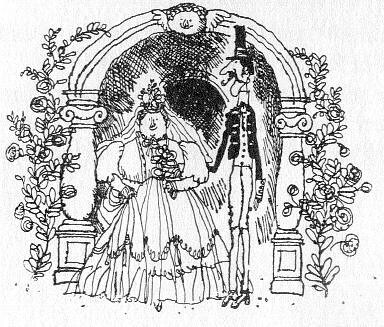
The first whiff was sent floating under my nose by Daniel Hahn (editor of the Oxford Companion to Children's Literature) - whose recent top 10 of forgotten children's classics included the delightful Fattypuffs and Thinnifers by Andre Maurois with charming Fritz Wenger illustrations. This was a top favourite of mine as a child - I think I liked the pictures and the entirely logical but surreal scenario.

https://c1.staticflickr.com/7/6166/6166877587_5ed0144bcb.jpg
Fattypuffs and Thinifers marry (Fritz Wenger)

Then last weekend, the Guardian invited a selection of contemporary authors to list the children's books which made them, and I was nearly overcome by the rosy fumes (not in an unpleasurable way). It's always interesting to read these, because as we know, the books we read as children exercise some of the most formative influences on our imagination - if by no means conclusive ones. Golden classics from the canon dominated, from Andrew Laing's Fairy Tales (the late Ruth Rendell) to Arthur Ransom's Peter Duck (Tom Stoppard.) Of course, that almost renders the exercise irrelevant. If you're trying to divine the secret reading which has created a fine modern literary mind and only discover that they liked Alice in Wonderland, it's hardly a startling, distinctive or unique piece of bibliography.

http://upload.wikimedia.org/wikipedia/en/7/78/PDuck.jpg
The edition of Peter Duck I read


This is my problem with nostalgia. Often we rewrite things to suit modern tastes or what we think other readers will want to read, or identify with. I'm just as bad. In schools, when children ask, "What was your favourite book as a child?", I too often give them the answers they have probably heard before, were maybe even hoping for. The Narnia books, Stig of the Dump, The Hobbit, The Silver Sword - all great books, but chances are they are all titles so well known that they are bound to have crossed the paths of most keen young readers in the last fifty years.

https://blogger.googleusercontent.com/img/b/R29vZ2xl/AVvXsEgw8QKreWe-V9rZE8gGBFoH_1tuGVu0kp04rUiwjaS9EyE0glniLt5K95Pxr9JsyO8aRSNoQcEHfAjfzZy6xJoSMavn5sGXtULsYMm3_n4_0GlcJ7PxK9k3dmCBL38b68FePL7iJZbMoAU/s1600/stigofthedump3.png
Stig of the Dump (illustrated Edward Ardizzone)


I'm delighted to keep on reinforcing their appeal, they're great books.

But of course, there were so many other influences on my imagination. Namely, some books which all too rarely get chosen as favourites by Serious Living Writers, and that's picture books.  Yes, I loved the characters and adventures and drama and humour of those more canonical titles, but the books that blew my child mind and implanted haunting images there forever? The books that gave me a sense of the limitless, dream manufacturing capability of the subconscious?

Books like the German Ra Ta Ta Tam - The strange story of a little engine, by Peter Nickl, illustrated by Binette Schroder, the tale of a lonely train traversing Dali-esque landscapes filled with obscure symbolism and mystery.
http://www.fineza-col.com/data/fineza/product/RaTaTaTam-3.jpg


Ra Ta Ta Tam


Or King Tree by Fiona French, a dark and unusual piece about the Sun King's courtiers dressed as trees, competing for favour. I had no idea what it meant or was about. The people looked weird, the costumes were freakish - but sumptuously and intensely illustrated by French:

http://www.stillmanbooks.com/french.jpg
The Orange Tree from King Tree


 Even It's A Dog's Life by Mark Stern, which uses simpler and more conventional cartoon style illustrations, still gripped me as a child with its big empty frames, more picture and space than dialogue and words - which left so much room for the imagination to invent and fill in the gaps.

http://www.stellabooks.com/images/stock/821/821945.JPG


In the end, these are just three of the many picture books that I happened to read and re-read and re-read when I was a boy. I mention them now because they are the ones that have survived various culls over the years. They don't have the canonical appeal of great stories such as The Lion, the Witch and the Wardrobe. They aren't as genre breaking as Alice in Wonderland once was. Their qualities are not charm and a classic English feel.

They are books which all freaked me out a little when I was younger. The intensity of the artwork, the inherent sadness behind so much of the images, the disquieting stillness and otherness. Like comics, they teach the basis of all storytelling - piquing the curiosity. But they also did something more for me. Words and longer books may have taught me so much about everything from empathy to how to build a treehouse, but picture books give most children their first glimpse of beauty. They may not inculcate  a writing style, but there is no better introduction to the developing mind of the power of art to astonish and disturb.

Piers Torday
@PiersTorday
www.pierstorday.co.uk

Thursday, 21 June 2012

Y.A. at Hay - Celia Rees

I was recently at the Hay Festival, in conversation with Melvin Burgess and Daniel Hahn, talking about Young Adult fiction and our novels, This is Not Forgiveness and Kill All Enemies.

Daniel Hahn, Melvin Burgess, Celia Rees 
The discussion was interesting (I hope for the audience, too) and wide ranging. At one point, Daniel asked us if there was anything that we thought we could not write about, any taboo subjects, any darkness too impenetrable? I found myself giving the stock Y.A. writer's answer about leaving the reader with hope, etc., etc.. Melvin disagreed. This livened the discussion considerably, and his response gave me cause to pause and food for thought. He outlined a thesis which took me right back to where I began as a YA writer and also made me think about how far we have travelled since then but how little ground we had gained. 


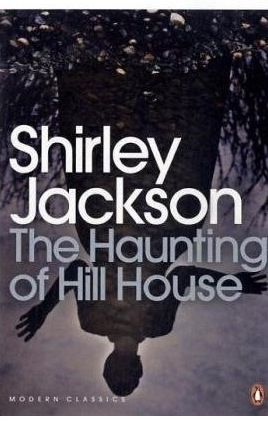
It is an accepted shibboleth ( like the one about 'hope') that ‘at one time’ there ‘wasn’t much written for teenagers’, ‘nothing available for them’.Of course, this is not true. Teenagers have always found things to read, books and authors they felt comfortable with, even if those books were not written specifically with them in mind. Books like George Orwell’s 1984 and Animal Farm, William Golding’s The Lord of the Flies, Harper Lee’s To Kill a Mocking Bird, J.D. Salinger’s The Catcher in the Rye, Shirley Jackson’s The Haunting of Hill House and The Lottery. And then there are the sic-fi/dystopian fiction writers: Ray Bradbury’s Fahrenheit 451, Philip K. Dick’s Do Androids Dream of Electric Sheep, John Wyndam’s The Day of the Triffids and The Chrysalids, J.G. Ballard’s The Drowned World and Empire of the Sun, John Christopher’s The Trouble with Grass.


Quite a considerable canon. I read a lot of these books when I was a teenager, back in a time when novels for teens were not supposed to exist. I don’t remember feeling deprived, or thinking I’d have to stop reading because there was ‘nothing for me’. I thoroughly enjoyed the books I discovered on the adult shelves of the library, finding them myself, or being directed to them by friends who liked the same books I did. Reading these books was a rite of passage. I found my mind stretched, my understanding deepened, my assumptions questioned and challenged, my imagination
 fired. They weren’t writing for me particularly, but that didn’t matter, they were connecting with me on all sorts of different levels.


Melvin’s argument was that because these writers recognised no limits, there are no limits. I found myself agreeing with him and thinking that these books and these writers should be our benchmark. Perhaps we have compromised too far. In creating a specific Teen/Y.A. Lit. (although I still think that is important) we’ve wandered away from these writers who had the power to appeal to adults and teenagers alike. We have compromised, we’ve bowdlerised. We’ve listened to outside voices: gatekeepers telling us what is acceptable and unacceptable; Focus Groups and Target Readers; Publishers who tell us what the market wants, what it will tolerate.


Compare some of the books and authors I’ve cited, especially in Gothic, Dystopian and Science Fiction, with what is on offer at the moment in these genre, and you will see exactly what I mean. Where is the depth and breadth of the vision, the resonance and relevance, the imaginative reach, the complexity of the realised worlds, the quality and power of the writing? It is a salutary lesson. Of course, teen readers can go and read these books, and they should, but that is not the point. It is not good enough to mine them, to take from them, we should be producing books that bear comparison.

Creativity is a strange thing. Those books that I read when I was a teenager challenged me to think, fired my imagination, introduced me to ideas, and opened me up to possibilities. Maybe that experience is what led me to want to write for teenagers. True, or not, I’m thinking about going back. At least I’ll be guaranteed a damn good read!

I’m taking a break from blogging for ABBA but I’ve been proud to be part of the blog and to have seen it go from strength to strength. I’ll certainly be visiting regularly in the future to read and to comment.


follow me on twitter @CeliaRees