Showing posts with label lewis carroll. Show all posts

Sunday, 14 April 2024

Where do I come from? (Part 1) by Lynne Benton

This month's blog was originally published in 2021, but there could be some out there who never saw it then who might enjoy reading it now.  And even if you did read it first time round, you might enjoy reading it again.  I hope so, anyway.

While wondering what to write about, I came across a thin book, almost hidden among fatter volumes on my bookshelf, called The Observer Book of Books.  Published in 2008, some of the gems inside are somewhat out of date – but others are still fascinating and totally relevant today.  Although some articles are more concerned with books for adults, this particular item is specifically about children’s books – which inspired this blog.

Where do I come from? concerns the origins of children’s fiction, and tells of the background to several famous books.  Since there are ten in all, I’ve decided to write about five this month and leave the remaining five for next month’s blog.  They are listed in chronological order – at least, in order of the year of their publication.

The first book is one everyone will have heard of and most will have read, possibly many times, Alice’s Adventures in Wonderland, by Lewis Carroll, first published in 1865. 


As most people know, Charles Dodgson (Lewis Carroll) was an Oxford minister who told his original story to, and based its heroine on, his young friend Alice Liddell.  However, what is not quite so well-known is that several real people appear in the story as nonsensical characters, such as Dodgson himself as the Dodo, Disraeli as Bill the Lizard, inventor Theophilus Carter as the Mad Hatter, and artist John Ruskin as the Drawing Master.

The second book is The Wonderful Wizard of Oz, by Frank L Baum, published in 1900.


This was possibly intended to be more political fable than fantasy, since Baum was sympathetic to the Populists, a socialist alliance of farmers (Scarecrow) and industrial workers (Tin Man).  Both were sent down the Yellow Brick Road (the gold standard) along with the Lion (the natural world), braving the Wicked Witch of the East (Wall Street) to see the Wizard (the president), who was an ordinary man of illusory power.  Baum’s books give over the rule of Oz to the commoners, while Dorothy (folk wisdom) returns to Kansas.  Now, having read all that, I’d rather like to see the film/read the book all over again!

Next comes Peter Pan by J. M. Barrie, published in 1902.


Peter sprang from several sources: JM Barrie’s brother, who died at the age of 13 and would therefore never grow up (or “remain a boy forever”), the five Llewelyn Davies boys whom Barrie befriended, and perhaps Barrie himself, who was only 5 feet tall.  Another young pal, six-year-old Margaret Henley, called Barrie “my fwendy”, and became Wendy.  The Roman god Pan gave Peter his surname and mischievous persona.

Following that comes number four: The Wind in the Willows, by Kenneth Grahame, published in 1908.


Grahame invented this tale for his son Alastair.  Blind in one eye and an only child, Alastair was prone to rages (he committed suicide at 21).  Mr Toad’s preposterous behaviour matched Alastair’s, providing a welcome but controllable disruption into the Riverbank’s orderly Edwardians.

And the fifth and final book in this selection is Winnie-the-Pooh, by A A Milne, published in 1924.


The book was modelled on Milne’s son, Christopher Robin, and his toys.  The bear was called Winnie after London Zoo’s Canadian black bear, and Pooh was the name of a swan.  Christopher Milne, who struggled with his legacy (as anyone who saw the film “Goodbye Christopher Robin” will appreciate) later recalled his mother Daphne as the one who invented stories about toy animals.

I found all this information quite fascinating, and I hope you do too.  Five more next month! 

Website: lynnebenton.com


Thursday, 14 March 2024

Hope in a Garden by Lynne Benton

 In the spring we start to look for signs of new growth, better weather, new hope.  And where better to look than in a garden?  At the moment in England it’s a treat to see snowdrops, crocuses and daffodils pushing their way into the light, giving us hope that somehow things in this increasingly difficult world might improve.


And in each of the three books I want to mention today it is a garden which signifies hope for the child who finds it.

In the first book, Alice’s Adventures in Wonderland, written in 1865 By Lewis Carroll, Alice has fallen down a rabbit-hole into a strange and rather scary world.  It’s only when she opens a tiny door and sees through it a wonderful garden that she wants more than anything to go through into it.  Unfortunately at that moment she is way too big to go through the door, but she spends the rest of the book trying to make herself the right size to get into the garden.  In her mind it signifies somewhere safe that she can understand.


In the next book, The Secret Garden, written in 1911 by Frances Hodgson Burnett, newly-orphaned Mary Lennox is sent away from her home in the sunshine of India to stay in a big house in Yorkshire with a strange uncle and his formidable housekeeper.  She resents this and is angry and rude, until she discovers a peaceful hidden garden.  It's only then that she begins to realise there could be some hope of a better life here after all.  And when she meets Dickon and her bedridden cousin Colin things definitely start to improve for her, all thanks to the secret garden.


The third book, Tom’s Midnight Garden, written in 1958 by Philippa Pearce, is another story of a child sent away from all that is familiar to a strange place.  Tom resents being sent to stay with an aunt and uncle while his brother has measles, especially when he discovers that his aunt and uncle live in a small flat with no garden, but a tiny back yard where there is nothing to play with and nothing to do.  Then one night, when he hears the grandfather clock in the hall strike thirteen, Tom opens the back door and discovers that the ugly yard has turned into a wonderful garden, and better still there is a girl there to play with.  Her name, she says, is Hatty.  Next morning the garden has disappeared, but the following night when the clock strikes thirteen again, the lovely garden is back, and Hatty is there again, only a little older this time.  And so his stay continues, giving Tom hope that all will be well, for Hatty as well as for himself.


Although there is nearly a hundred years between the first and last of these three books, they all show the lasting fascination a garden can hold for a child, especially one in need of a little hope.

Website: lynnebenton.com


Tuesday, 14 November 2023

Writing is good for the brain! by Lynne Benton


 New writers are often advised to “write what you know”.  This is all very well, as far as it goes, but when you start thinking about it you realise that if writers ONLY wrote about what they knew, books would rapidly become rather dull and samey, and some would never be written at all.  For example, there would be few, if any, crime novels, (especially those written from the point of view of the murderer!) historical novels, fantasy novels, time-slip novels, etc. etc. etc. 

Did Lewis Carroll ever fall down a rabbit hole into Wonderland?


Did JK Rowling ever go to a school for Wizards?


Did Mary Shelley ever regenerate a monster?


I think not.  Okay, so some writers have a very knowledgeable background in, say, potholing, ballroom dancing, horse-riding, amateur dramatics, police work and so on.  And of course we have all experienced being a child, and some of being a brother or sister and/or a parent.  Some writers have lived in other parts of the world and can call on their experience to set their books there.  Any or all of these valid experiences give their books the flavour of authenticity.

However, not all writers come from exciting backgrounds, and many spend much of their time shut in their studies, writing books using principally their imagination – most notably in the fields of fantasy, historical fiction, crime etc.  But whichever genre you write in, you will sometimes find you need to know stuff that you hadn’t been aware you were going to need.  And that’s where research comes in.

Many writers find research the most interesting part of their job.  Some, apparently, get so wrapped up in it that they put off writing the book for which they are doing the research.  I can’t say the same, though I do enjoy the research.  There’s nothing like the feeling you get when you discover something that links perfectly with something else in your book.  It’s like solving a crossword puzzle!  In most of books I’ve written, I’ve had to find out something I didn’t know.  Over the past few years I’ve had to research such diverse subjects as How to Fly a Hot Air Balloon,


The Price of a Train ticket in 1940


How Roman baths were drained


How Roman women transported their babies from place to place before prams were invented, 

How much a television cost in 1953, 

How guide dogs are trained, and so on.  

The information I gleaned was important to the plot of whichever book I was working on at the time, and even though the books are now finished and published, the information is still there, somewhere, in the back of my mind, just in case it’s ever needed again. 

Brain experts are always telling us that we need to keep making new neural pathways in our brains, and doing research for your books certainly does that.

So, as I said at the start, writing is good for the brain!

 website: lynnebenton.com

Latest book:


Friday, 20 September 2019

National Gibberish Day (Revisited) - Joan Lennon

There was a suggestion a while ago that it was all right, from time to time, to re-post favourites from ABBA's long and full-of-favourites past, and I would like to do just that - here is my post for 20 Sept. 2017 on the delights of gibberish, on this annual celebration of gobbledy-gook.  I wish you a

HAPPY NATIONAL GIBBERISH DAY!

Yes, you heard me correctly.  20 September is National Gibberish* Day.  Why?  Who decides these things?  He gnews?  Jet Pum!**  And to celebrate I give you ...

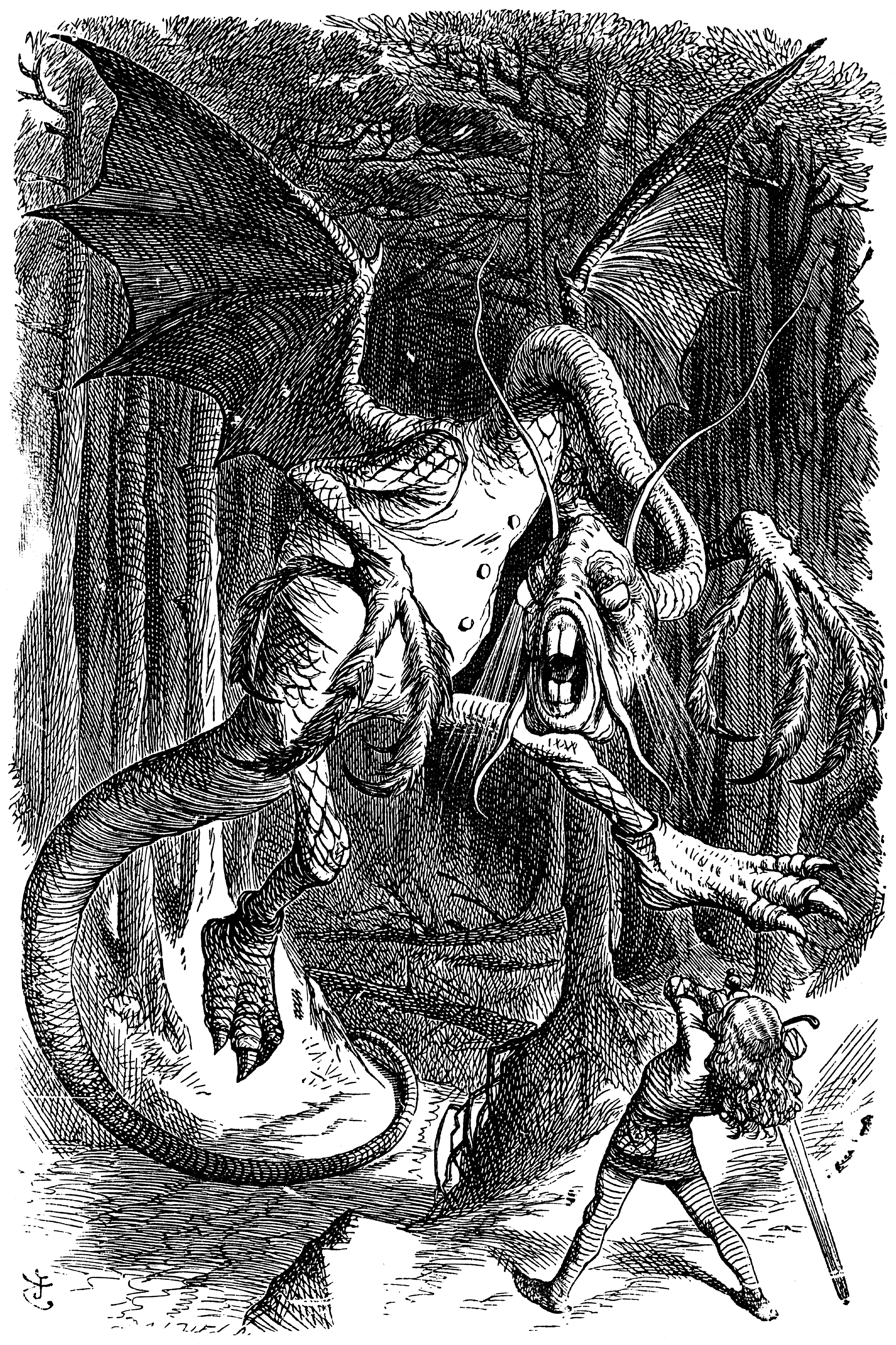
Jabberwocky!

Not just the words, but two performances that make me chortle in joy:


and


So, readers and writers and ABBAers of every description, here's to gibberish - and, if you possibly can, shove some into a conversation today.  Fo jensonsicaxar!  Vaxako Rowis Caxallerr pleud!!*** 


* aka Jibber-Jabber

** Who knows?  Not I!  (translations courtesy of My Big Monkey Gibberish Translator - hours of entertainment!)

*** Be nonsensical!  Make Lewis Carroll proud!


P.S.  I love the way the Muppets drew on John Tenniel's original 1871 illustrations for Jabberwocky - so bizarre - so clever!


Joan Lennon's website.
Joan Lennon's blog.
Walking Mountain.


Wednesday, 20 September 2017

National Gibberish Day - Joan Lennon

Yes, you heard me correctly.  20 September is National Gibberish* Day.  Why?  Who decides these things?  He gnews?  Jet Pum!**  And to celebrate I give you ...

Jabberwocky!

Not just the words, but two performances that make me chortle in joy:


and


So, readers and writers and ABBAers of every description, here's to gibberish - and, if you possibly can, shove some into a conversation today.  Fo jensonsicaxar!  Vaxako Rowis Caxallerr pleud!!*** 


* aka Jibber-Jabber

** Who knows?  Not I!  (translations courtesy of My Big Monkey Gibberish Translator - hours of entertainment!)

*** Be nonsensical!  Make Lewis Carroll proud!


P.S.  I love the way the Muppets drew on John Tenniel's original 1871 illustrations for Jabberwocky - so bizarre - so clever!


Joan Lennon's website.
Joan Lennon's blog.
Walking Mountain.

Wednesday, 11 January 2017

Finding Wonderland - Catherine Butler


Alice, manga-style (Seven Seas, 2014)

I stumbled across D. C. Angus's Japan: the Eastern Wonderland (1882) online a couple of months ago, while looking for something else entirely, but as soon as I read about it I knew I had to have a copy. Luckily copies aren't hard to come by, and I soon took possession of mine, complete with the prize plate from Wirksworth Grammar School, Midsummer 1904.

The book is full of interesting photographs of daily life in Japan in the last decades of the nineteenth century, but what struck me more than anything was the device of making Japan equivalent to Lewis Carroll's Wonderland in its power to amaze Westerners, not least with the looking-glass sense that everything there is "the other way round".

The comparison is explicit in the book's introduction, written in the person of a Japanese Christian convert who proposes to tell an English child his life story.

When I was in London some years ago, studying English Law at University College, a kind professor and his wife took me in, and made me so literally “one of the family” that their children too adopted me and gave me all the privileges of an elder brother. The children were much given to talking about “Alice in Wonderland,” and one day I rashly said, “I don’t believe your Alice saw things a bit more wonderful than you would see if I could take you to my country. That is a wonderland if you like!” Then, of course, they began to ask how and why, and to set some startling incident of Alice’s life before me, and ask if I could match that! And then I used to bring out the oddest things I knew (odd, I mean, to English people), and sometimes succeeded in beating Alice…

So I said aloud, “Well, you may expect a book of pictures, with as many particulars as I can crowd into a little space, about—

            “THE EASTERN WONDERLAND.”

Then they said, “But there must be a little girl in it; there always is a little girl in ‘Wonderlands’.” But I didn’t see how that could be done, unless I borrowed Alice from Mr. Carroll, who is not likely to wish to part with her.

This device allowed the actual author, D. C. Angus, the opportunity to describe the many changes that had taken place in Japan since the Meiji restoration using the device of an eye-witness account. Sadly, of course, this adds appropriation to the charge of orientalism. Not only is Japan’s differentness being presented as the most interesting thing about it, but the British author is (with no obvious indication) assuming the voice of a Japanese man, and describing his own (fictional) life in Japan – including conversion to Christianity – as if it were a reality.

But cultural appropriation is a topic for another day. For the moment, I’m interested in wonderlands. Less than twenty years after the publication of Alice in Wonderland, it seems, Lewis Carroll’s book was already an instantly recognisable touchstone in fictional English households. More, wonderlands came with recognised rules – they must always feature a little girl. This got me googling: had the years between 1865 and 1882 featured a flurry of wonderland books, with Alice knock-offs exploring fantastical realms under the tutelage of now-forgotten mid-Victorian authors? With the examples of Harry Potter and Twilight in mind, it seemed likely enough that enterprising publishers would have jumped on the Alice bandwagon.

But back up a minute! Might it be that Carroll himself was buying into a well-established wonderland genre when he wrote his book? In fact, the OED only gives one pre-Alice instance of the word, from a poem of 1790:

Where other trav’llers, fraught with terror, roam,
Lo! Bruce in Wonder-Land is quite at home.

Somehow, “Bruce in Wonderland” never really caught on, so any credit for the popularity of wonderlands post 1865 probably lies with Carroll. However, it seems (to judge from the British Library catalogue) that the word itself was really taken up only by books about geography: American Wonderland (1871), Wonderland of the Antipodes (1873), Rambles in Wonderland: or, Up the Yellowstone, and among the geysers and other curiosities of the National Park (1878), The natural wonders of New Zealand (the wonderland of the Pacific); its boiling lakes, steam holes, mud volcanoes, sulphur baths, medicinal springs, and burning mountains (1881), and the like.

That’s not to say that Alice spawned no imitators. There’s Elsie’s Expedition (1874), by F. E. Weatherley, for example, which shows a sleepy Elsie travelling into the pages of a book to have encounters with Little Boy Blue and the Knave of Hearts, among others. In a postmodern move that anticipates the Ahlbergs, Lauren Child, Wiliam Steig and Jon Scieszka by more than a century, we find (as I learn from Ronald Reichertz’s The Making of the Alice Books) that “Little Jack Horner is now Mr John Horner, a figure grown old and a bit irascible from performing the same plum-pulling act for ever” – a nightmare vision indeed. I’ve not yet been able to discover much about the contents of Edward Holland’s Mabel in Rhymeland (1885), but its subtitle tells us all we need to know, perhaps: “or, Little Mabel's journey to Norwich : and her wonderful adventures with the man in the moon and other heroes and heroines of nursery rhyme”.

It was in any case a bit late for our fictional Japanese author – but clearly, the bestseller bandwagon was already rolling well before the end of the nineteenth century, and it's rolling still...