Showing posts with label horses. Show all posts

Friday, 28 October 2022


Hi everyone!

I was so excited recently to receive the latest copies of Pony Camp Diaries from Sweden and Norway! And as you can see, Sparks loves them too LOL!


Like me, he loves to eat while reading – although I prefer chocolate… :) 

Here he is hanging out with his buddy Apollo. Apollo is the herd leader of our tribe of six, which also include cheeky Mickey, soulful Rowan, and the two mares, mysterious Rainbow and kind Breeze.


https://vimeo.com/764073584

And here we are out on a ride! We do natural horsemanship, so that’s what the rope headcollars and reins are about. When you first start, you have to ride with one rein, and throw it over the horse’s head when you want to change direction – which involves being quick sometimes, if a tree is coming, LOL! It teaches you not to hang onto the reins, or rely on pulling to get your horse to do what you want, or hang on them to balance yourself – all kinds of reasons! I absolutely love riding out with Sparks – it’s absolute magic to be together out in nature, and with amazing friends.


https://vimeo.com/764074040

The string rein extender is my own invention LOL! Excellent for the foraging we do during our ride. Tracy (who is doing the camera work – wobbly because she is riding Apollo!) is a herbalist and she finds it really interesting to see what the horses are drawn to eating. She’s even planted herbs at our field so that the horses can self-select what they need to keep them healthy – it’s like having their very own herbal medicine cabinet! Sparks loves the hazel, and sometimes a bit of overhanging willow!

Happy horsing around everyone! As for me, I feel so inspired by my gorgeous Sparks, maybe it’s time for me to write a new pony series…


Sunday, 25 October 2020

Samhain and the Space between the Worlds - Holly Race

When I was ten (a very, very long time ago), my parents took me for a ride on Midsummer's Eve. My pony, an ageing but sprightly, speckled creature called Cobweb, was my best friend and one of my favourite pastimes was making up adventures for us to go on.

On this Midsummer's Eve, my parents told me that the fairies had heard of how wonderful Cobweb was, and left a present for us. I just had to canter up this hill and keep a close eye on the ground. Far from the main road, canopied by oaks and birches, Barrington Hill was a magical place for me anyway, but never more so than at that moment. That evening, as Cobweb and I cantered up the path, I dutifully kept my eyes peeled for signs of fairies.

Was that gold dust on the ground, or just the sunlight playing through the leaves?

What's that up ahead, on the side of the path? A tree trunk... but what's on it?

I slowed Cobweb to a halt and stared at the trunk. On it, amidst flurries of gold dust, was a tiny, golden horseshoe. A fairy horseshoe.

I can see now that it's plastic, but at the time it felt like fairy gold!

The horseshoe lives in a book of memories about Cobweb, but the item itself isn't what's important. I still vividly remember the heat of the evening sun on my back, and the way it sent its shimmer through the trees so that I felt as though I was riding through haze. It was a Midsummer feeling - that feeling that true magic is not far away, if only we could lift the veil between the worlds.

In a few days time, Samhain will be upon us. Pronounced Sauw-en, it's an old Pagan festival marking the start of Winter, and traditionally it is one of the times when the barriers between our world and the 'otherworld' are at their thinnest. Over the centuries Samhain has been amalgamated into All Hallow's Eve, and then into Halloween. Our calendars are peppered with the ancient ruins of pagan festivities. Some, like Samhain, have been commercialised. Some have been picked apart and used to create new celebrations, like Ostara - now Easter. Some remain only as a feeling - a change of mood as the nights close in or grow longer - like Beltane, which marks the beginning of Summer.

In my book, Midnight's Twins, the knights' calendars are still governed by these old dates. Samhain has particular meaning for me now because it is the day when new knights - and my main characters - are called to the otherworld, Annwn. Samhain is the start of my story, and Beltane marks the end of the book.

But really, we all tell stories at these times of year, don't we, in our different ways? Maybe we go out looking for pumpkins, or read ghost stories under the covers. In Iceland, 'jolabokaflod' is the simply excellent tradition of gifting books on Christmas Eve, then reading them through the night. One of Shakespeare's most loved plays is set at Midsummer, when the fairies come to the woods outside Athens to wreak havoc with mortals.

Maybe we're still trying to make sense of the changing of the seasons, in the same way that the Greeks told the myth of Demeter, Persephone and Hades to explain the oncoming of Winter and the dying of the crops. We may on an intellectual level understand that the rotation of the earth relative to the sun is what causes the seasons. On a primal level, though, we still fall back on old stories and superstitions as the smell in the air changes and our moods shift.

Cobweb inspired so many of my stories, both as a child and an adult.

Or perhaps we truly are sensing the fragility of the fabric between the worlds, and the stories at these times of year are summoning ghosts from beyond the veil. For me, I'll keep chasing those fairy horses.

Wednesday, 12 July 2017

Smells out of Memory, Sounds out of Time - by Ruth Hatfield


I was asked to think again recently about the topic of inspiration, or ‘where do you get your ideas from?’. It’s a faintly terrifying question for me, and I suspect for a lot of other writers, mainly because it’s so hard to summarise. A lot of us can’t be very specific about where, exactly, we get our ideas from, possibly because a) we don’t always notice and b) it’s not really that important to us – it’s what we do with them that counts. 

When I’m asked the question about ideas, I always get the feeling that I’m being asked for the secret of the magic trick, which none of my answers can really adequately explain – there’s no real equivalent to mirrors and fake legs in a writer’s world. As far as magic tricks go, the truth is that neither the trick nor the magic really tend to come from the original ideas themselves. The brilliance of books lies mostly, in my opinion, in their execution – in the skill and craft of the crafter, not in their stunning originality. But I digress.

Where do I get my ideas from? The best way to answer is with specific examples. This week I’ve been thinking about two particular ideas:

Why does the little bathroom at the back of my kitchen smell exactly like my grandparents’ garage? To the extent that every time I go in there it is as if I have plummeted down the black hole back into childhood, at the end of those long journeys up north, when we would get out of the car late at night, smell the clear, cool Northumberland air and walk through that dark garage into their well-lit kitchen. This is a memory of an event that happened many times, but hasn’t happened for many years, and yet that single smell conjures up the door to a brightly-lit, vanished world that I can just step into, any time I like.

And also: I live in a normal city street – the houses at my end are semi-detached 1930s council houses. I always sense that quite a few groups of households know each other, but I’m sure most of us wouldn’t be able to name more than 5 of our neighbours. Last Friday as I was at the park with my daughter, I heard the sound of horses’ hoofbeats. I can’t tell you how strange it was: here, on my narrow, car-lined city street in 2017, it is an impossible sound. It just doesn’t happen.

I grabbed my daughter and raced out of the park to look. A white carriage pulled by two grey horses complete with nodding white ostrich plumes plodded up the street. The driver, top-hatted, in black tailcoat, pulled up outside a house. There was some faffing around. Within five minutes people were pouring out of their houses, running up the street to knock on neighbours’ doors, gathering in crowds to take selfies and chat to the driver and groom, or just standing back admiringly. And talking to each other.

Generally, here, the only people you see spending any length of time on the street are either having late-night domestics or parking wars, and I suddenly saw it as it might have been, fifty years ago, when there weren’t such good home entertainments and more people must have spent more time hanging around outside their houses, talking to each other. And all it took was the impossible sound of horses’ hooves on a sunny evening to make something now almost completely lost flare up again, just for a moment.

copyright: acorncarriagehire.com

Two ideas. They feel like big ones to me. The question is – what do I do with them?

Time for the magic tricks…

Friday, 30 September 2016

Setting the bird free - Lari Don

I wear various hats as a writer. I write for a variety of ages, and the difference in writing for toddlers and for teens might seem like the biggest difference I face. But actually, the difference between the fiction I write (for all ages) and the retellings of traditional tales I write (for picture books and 8-12 years) is the real divide. That’s what requires the real shift in focus and process and skills.

With fiction, I make it up. (Obviously!)

With retellings, I use what I've learnt about words, imagery, rhythm and narrative, to retell a story that already exists. I’m not making up a story, I’m crafting a new way to tell an old story.

But of course, sometimes I do make bits up. Sometimes I have to fill gaps. Sometimes I want to expand on the exciting bits, and cut out the family trees. And sometimes I make changes because I just can’t leave the story at the ending the traditional tale offers.

I don’t believe in the inevitability of happy endings. I don’t think children do either. If a reader was sure that every story would end in the best possible way with every character smiling and content, where would the tension be, what would draw the reader on to see what happens next? So, I don’t believe in happy endings every single time, not in my fiction, nor in my retellings of old stories.

But sometimes there are endings that just don’t satisfy me.

I can do two things about that. I can decide to not tell the story, if I feel that to change the ending would be to rip the heart from the story, or make the story something so completely different that it’s not a retelling, it’s a story inspired by, or reacting to, the original trad tale.

That’s why you will rarely find a story in one of my collections where the marriage of a pretty girl to a brave boy is considered a satisfactory resolution. And you'll NEVER find a story where a girl is given away as a prize.

But sometimes the ending just needs a tweak. Sometimes my disquiet about the ending isn’t about a main character, it’s about a minor character who just hasn’t been given a resolution to their story. And then, I don’t think it unbalances the story to change it or add to it.

For example, in my recent collection of horse stories, Horse of Fire, a boy is helped by a talking horse to capture a free wild golden bird for a demanding king. And at the end of the tale, the horse is respected, the boy is the new king, and the bird is in a cage. Happy, apparently, because it has an apple to eat. But I couldn’t tell the story like that. When I told it to kids, I couldn’t leave that free-flying bird in a tiny cage, even if it was a golden cage, even if there was a fancy apple. So I had the boy, as part of his growth as a hero, risk his own future to set the bird free.

And I realised that is one of the powers and joys of retelling a story: you can, in your vision and your world, set the story bird free.

I realise this is me imposing my modern sensibility on an ancient story. The original tellers cared about the relationship between the boy and the horse, and the relationship between the boy and the king, and the magic of the bird. I care about the bird itself as well. So I set the bird free.

Yes, the more I think about it, it probably is the animal-loving vegetarian in me. Just like the feminist in my can’t see a girl given away as a prize, the animal lover in me can’t leave a wild animal in a cage.

Because the other major change I’ve made to a story recently was in a collection of Viking saga tales called The Dragon’s Hoard. I chose to retell a story about a young man who transported a polar bear from Greenland to Denmark. The original Viking saga was all about the cleverness and luck of the trader getting the bear so far south, and it didn’t tell you what happened to the bear once he had made his owner rich and respected. So I just kept the story going a little bit longer to find out what happened to the bear too. Partly for my own satisfaction, and partly because I was fairly sure that my young readers would be more interested in the bear than in the merchant!

Setting the bird free and sending the polar bear home are not the biggest changes I’ve made when retelling stories (I always feel that so long as I respect the heart of the story I can do what I like with the rest of it) but they might be the most satisfying!

So, I wonder what bird I will set free next?


Lari Don is the award-winning author of more than 20 books for all ages, including fantasy novels for 8 – 12s, picture books, retellings of traditional tales, a teen thriller and novellas for reluctant readers. 


Thursday, 12 May 2016

Tacking up the Metaphorical Horses – Ruth Hatfield


Last month I wrote about my galloping story, and the delight of chasing after its flicked-up hooves. I didn’t have the time, then, to think about why it was going so well, but I think I’ve now realised part of the reason:

I turned off the ‘edit’ switch.

This does mean that my story starts as one thing and goes on to be many others – horses change colour, people disappear into the wings one moment then turn out to be long-lost in the next, a sedate journey turns into an abrupt van chase, some incredibly dull things are pondered at great length and one of the main characters begins the story crying over a broken clock but within three pages turns out to be a brittle, single-minded person who sheds tragedy with the nonchalance of a spring moult. Or maybe that’s a terrible way to describe it. Who cares? I’ll deal with it later. Later, when I’m editing.

I think I had begun to edit as I was writing first drafts, in pursuit of better structure and clarity, and it was a terrible habit to slide into. I know that editing as you go along (or even before you put words on the page) does work for some people, but it really didn’t for me. I became conscious all the time that I was Writing a Book, instead of just indulging myself in a wild, amusing speculation. The result was joyless.

I went to a school recently to do some workshops, and one of the lovely and enthusiastic teachers said that she hoped I would impress upon the kids the importance of editing, because they were always so reluctant to do it. Inside, I felt metaphorical heels digging themselves in. Of course revising and reworking is vital, and it’s important to learn that the more effortless and light a piece seems, the harder a writer has probably worked to make it so. But for some of us, editing is painful, turgid and difficult, and we need enough faith and joy in our original work to make it worth all the effort.

I didn’t want to tell those kids to bear in mind the importance of editing. I wanted to tell them – Splurge! Vomit! Gallop! Get it all down – none of it is wasted IF YOU ENJOY IT! Happiness can be hard to come by, sometimes. If something brings you pleasure, that’s an end in itself. If you think it’s worth it, when you’ve had your fun, you can bring out the dissecting kit and start slicing it apart and pulling out its entrails. But make sure you’ve given yourself the best chance to enjoy the journey first.

I didn’t do the Dead Poets Society lecture, of course. I just got on with trying to deliver my workshop in what I hoped was an encouraging, freeing way. I’m very aware that there are many different ways to enjoy writing – I remember an interview with Agatha Christie in which she said something about how she enjoyed all the planning but found the actual writing itself a dead bore (god knows what she thought about editing). I guess what I’m thinking about at the moment is that fact that in the quest to improve my storytelling, I went too far into territory that doesn’t suit me. Advice about how to write books is always interesting, but perhaps you should only take on board advice that your heart agrees with, in one way or another.

In short, I suppose that when I’m tacking up my metaphorical horses, I’ve learnt that if I spend an hour grooming the pony till it gleams, then the whole ride remembering to keep my heels down and my elbows in, I might ride nicely but I probably won’t feel it’s been time well-spent. A quick brushing-off of mud and a canter up a hill – that’s more like it!

And (obligatory SATS dig) don’t get me started on the idea that you can’t write proper stories until you can understand complex grammar…

Tuesday, 12 January 2016

Books in the Attic - Ruth Hatfield


Someone very kindly bought me four pony books recently. They were set in a riding stables where nobody went anywhere or did anything except prepare for various riding school shows. Closed in. Safe. Supervised. The writing was pedestrian. The stories were pedestrian. It was terribly depressing. 

Yet I know that there are some fantastic modern pony books, exciting and well-written (many by Sassies, indeed…). And I also know that as a child, I read my way through a vast swathe of pony books, indiscriminately enthusiastic about most of them, not caring about how they were written as long as they had horses in them. I did ride, but in a riding school, so pony books supplied me with all the experiences I couldn’t actually have – riding off on my own, leaping five-bar gates, going on desperate rescue missions where I could gallop over the countryside and not be told off for trespassing. They let me spend huge amounts of time just looking at horses, which I wanted more of in the world. I’m guessing pretty much the same sort of thing applies for the children who read them today.

This got me thinking – if I revisited my old pony book collection, would I find that most were also just the horsy equivalents of Enid Blyton? (I’m not being snotty about Enid Blyton – I loved her books as a kid, but as an adult I do find them a little bit tedious…). My dad disinterred a box from his attic, and I got stuck in.

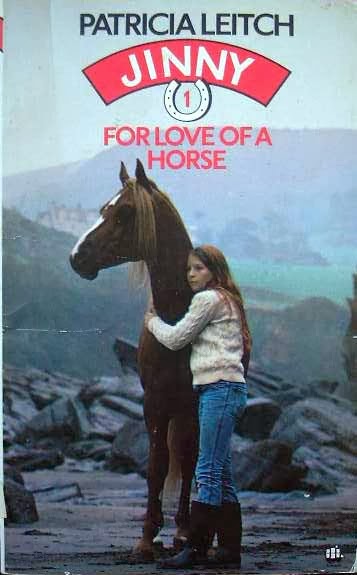
It felt as though I was shovelling soil out from a shallow grave of dreams. A ghostly choir sang the Black Beauty theme tune. The familiar cover of each deeply-loved book sparked flames inside me. These weren’t just books – they were the places I’d lived in my childhood – the golden fields of the Pullein-Thompson’s Home Counties, the moors of Vian Smith, Ruby Ferguson’s Chatton, the wild praries of the Silver Brumby, the streets of Siena before the Palio. The Highlands of Scotland, with Jinny Manders and her Arab mare, Shantih.


In some ways my fears were realised. It was an interesting experience to read a range of books that I’d loved as a child, and to realise that some of them were pretty mundane (anyone remember the Jackie series? Or the ones by Pat Smythe in which she is one of the characters?), some were well-written and completely horsy (Pullein-Thompsons, Ruby Ferguson etc.) and some were so absolutely brilliant that I almost wished they weren’t about ponies, because they deserve to reach a much wider audience.


When I opened up the first ‘Jinny’ book, For Love of a Horse by Patricia Leitch, I couldn’t believe that these books had sat in the attic, unread for years. They aren’t just fuel for the pony dreams of teenage girls, although there are elements of that in the boundless moors and the classic partnership of headstrong girl and wild horse. They are beautifully written – much more engaging to me than the classic Alan Garner stories which I read recently – I struggled to picture Alderley Edge, but after a single re-read of a Jinny book, Finmory and the purple heather of the dark moors lay clear in my mind’s eye. 


The Wikipedia entry for Patricia Leitch compares the Jinny books to the Dark is Rising sequence by Susan Cooper, and I’d say this is a fair comparison – they do have fantasy elements, occasionally. In the fourth book, Night of the Red Horse, Jinny encounters archaeologists searching for an ancient figurine, but the mural of a red horse in her bedroom has other plans for it. But they are also grounded in reality. Jinny frequently does terrible things as a result of her obsession with Shantih – (spoilers alert) in the early books, she overjumps the horse and lames her, and she betrays the presence of an osprey nest to an egg-collector, because she wants help from them to train Shantih. Other characters are by no means easy to place as heroes or villains – Brenda who wilfully neglects the horses in her riding school, but who used to be as full of dreams as Jinny, Miss Tuke who runs the trekking centre and who is unromantic and insensitive, but nevertheless sensible and practical. 


I read them and marvelled – so often in these books, nothing is simple and the reader is encouraged to form their own view about what’s going on. Relationships between humans and animals are described in romantic and unromantic, partial and impartial ways. Jinny is entranced by the wildness that the horse represents, but in the way of most humans, her love becomes an obsessive desire to capture, possess and essentially subdue that wildness. It’s not a rosy picture, and it’s an uneasy truth that children’s books, particularly pony books, rarely confront: when people form relationships with animals, the animals are usually subservient, no matter how deeply they are loved and understood.

These are clever books. They’re pony books. I wish they weren’t, because the mere fact of them having a horse as one of the central characters might, in a genre-bound book world, serve to turn some readers away from them. Even if horses really aren’t your thing, the Jinny series might well be. Beautiful writing, wild fantasy, sodden reality and a cast of opinionated, strong-willed characters all trying to carve out the lives they wish to have. What more could anyone want from a book?

I’m about half way through the box of pony books now, and I haven’t even begun on the Black Stallion series by Walter Farley, or the Silver Brumby books by Elyne Mitchell, both of which I remember absolutely adoring a couple of decades ago. And in among the pony books I found a whole chunk of Joyce Stranger’s animal stories. I’m going to carry on with this quest (probably interspersing every other book with a quick fix of Pullein-Thompson Pony Clubbing) – it’s getting to be an exhilarating ride!