Monday, 30 January 2023

The Village Project: Sue Purkiss

 Some of you may remember that I've talked here before about my very lovely writing class/group, which has been running here in Cheddar for well over ten years now. We meet every week - we even carried on through the pandemic, only on Zoom. The usual pattern is that I set a topic one week, they go away and write about it, and then the following week they read their work and we discuss it. (We also, it has to be admitted, discuss other things: you know - life, the universe, and everything...) If there's time, we do a writing exercise too.

There have been various offshoots. We've produced three anthologies, the first with Lulu and the other two with Amazon. These were intended very much for family and friends; we unfortunately don't have a marketing genius within our ranks, so we haven't troubled the best-seller charts so far with any of these. One member wrote a memoir of her mother's - very difficult - working class life, which I helped her to publish, again on Amazon: that did make a splash locally, as Heather is a well-known character: lots of people bought it, and she was interviewed on BBC Radio Somerset. So that was quite exciting.


Another member wrote a novel called Keeper's, about a contemporary marriage under strain. She was 82 at the time, and decided she didn't want to wait around for publishers, so she published it with Silverwood. She's almost finished the sequel. And another has written a fascinating memoir about his time with VSO in Papua New Guinea: it includes legends told him at the time by the villagers whom he got to know so well. Amazing stuff.

We're currently starting on a new project. I have no idea how it will work out, but we're having fun with it so far.

The idea for it took root last year, when I'd given the group some pictures of different houses and asked them to write a piece about the people who might live in one of them. One of the group suggested that we should do a project about a street, with each of us taking a house. At the time, we didn't go ahead with it, but a few weeks ago, I was thinking about what to do next and the idea resurfaced.

I suggested writing about a village. We decided it should be contemporary; we don't want it to be too 'cosy'. At first, I asked everybody to start working on creating the characters comprising a particular household. The tendency was to get straight into storylines, but I felt we really needed to know the characters inside out - all of them, not just our own, because each chapter/story will include some of the other villagers, not just 'ours'. So we've been working on that. Already, we're seeing ways in which the characters might interact. I've asked them to paint a picture - not literally - of the house in which their characters live; so we needed to think about the kind of village it is, what amenities it has, where it is, and what it's called.

Quite quickly, it became obvious that we would need extra characters, so some people volunteered to work on these as well as their core family.

We're still mulling over how to structure the plot - whether to centre it round one event/issue, or whether to have a series of separate, but linked, stories. The majority favour the first approach. I think this is going to be the most difficult part, but everyone's very keen, and there are lots of ideas floating around. We also have to think about the tone: two people almost always have a murder in their stories, so we'll have to see about that: we don't want to go full-on Midsomer, but I think a sinister element may well find its way in. We'll see.

A couple of members of the group have already sketched out a rough map of the village, and my job this week is to build on this, including all the places we've decided we need. So I'd better crack on - but in the meantime, here is Sally's first attempt.


Sunday, 29 January 2023

A Comforting Thought

I volunteer at a little local cinema, and one night as I was helping set everything up for the evening’s film, my co-volunteer told me that her 10-year-old daughter had discovered my story, A Horse for 5 Jennifers, in the local bookshop. Horse-mad, she bought it, read it and loved it so much that she made sure her two cousins – also horse-mad – received copies for Christmas. They loved it as much as she did. “Fantastic!” one said.

So far, the book is only available in Dutch, where its title is De Zusjes Jennifer (The Sisters Jennifer). And while it’s sold modestly but decently, there have been no other offers from any other publishers. More than a little disheartening.

But the news that these three girls – the same age as the sisters in the book – loved this horse adventure I’d dreamed up really made my day. My month, actually. And it made me remind myself that one day, when I’m no longer around, the book is still going to be out there. Making, I hope, other readers as happy as these three young girls.

It’s a comforting thought.

Friday, 27 January 2023

Plotting with Pixar

 Having spent Christmas in bed with covid, binge-watching Disney Plus, I am now an expert on Pixar movies.

After something like my sixth movie, I noticed they fell into two broad shapes. To keep it neat, I've made a table.


There's more to it than that, of course. There'll be villains and sidekicks and lessons learned. But to prove it works (at least some of the time) here's a recent movie versus an old classic.


Some of my favourite Pixar films run both plot outlines side by side with different characters. I really am in a table mood today:


I find these kinds of outlines useful at the planning stage. What kind of a person is your main character? Are they striving towards a goal or trying to maintain the status quo? Will their goal change during the course of their adventure? What is the thing that matters most to them (whether they know it yet or not?)


Claire Fayers

www.clairefayers.com


Tuesday, 24 January 2023

We Don't Need No Edukashun, by Saviour Pirotta

Sorry to dump this on you guys, but I'm hopping mad!

The last time I saw my father in a coherent state at his care home, he let on that there was a secret compartment under the bottom drawer in the tallboy. He and my mum used to keep their money in it before they had a bank account. What a thrill! All those years I'd been playing only inches away from hidden treasure.

I looked in the secret compartment and the only thing left there was a bulging envelope marked SALVINU (my Maltese name until I entered the education system where it was anglicized to Saviour. My parents called me Salvinu till the day they passed away.)

The only thing I found was a stash of school reports from my first years at St. Aloysius College. I didn't even know they existed. And I'm not surprised my dad hid them from mein the secret. He didn't want me to see them! Because the vast majority of the reports were damning. There wasn't a single subject I seemed to excel in. There was no hope for me. The teachers were all bitterly disappointed, especially as I was a SCHOLARSHIP boy.


This scholarship business kept rearing its fetid head at me the entire five years I was at that stupid college. My parents weren't paying for my education, so the Jesuits expected me to be grateful, to work harder than the sons of mp's, magistrates, and rich lawyers whose parents were forever sponsoring new school equipment and sports trophies. I only had to step out of line for a fraction of a second and I'd be reminded I was a scholarship student. 

The reports for the subjects I didn't do well had long notes that I'm sure would have made my dad's blood boil. Saviour doesn't pay attention in class. Saviour doesn't try hard enough with his homework. Saviour's test results weren't as good as expected.  The reports for the couple of subjects in which I did manage to get a score of fifty out of hundred, which meant I'd passed, had no hand written notes, just a blue tick. No words of encouragement to make up for my supposed failures, no 'well done'. Just a bloody blue tick.

And guess what my worst subjects were? English and history! I only went on to become an award winning author of historical fiction published in some thirty countries.

What really gets me is that these were meant to be religious people. Their duty was to guide and encourage, to nurture. As it was I came away from college with a lack of self worth so strong, it took years of therapy to overcome.  And I wonder how many other kids they managed to crush.

I wish I could say things have changed since my education in the late 1970s but I suspect they haven't changed that much, but more about that some other time. 

Meanwhile, I'm glad I do what I do for a living. It gives me the opportunity to to encourage kids to do the best they can. As is the duty of everyone involved in education in one way or another.

PS I wanted to upload a couple pics of my reports into the post but I'm writing this in a hotel room in France, where I'm doing research for my next book.

Saviour's latest book, The Crocodile Curse has just been published by Maverick. The Jackal's Graveyard, the next in the series of The Nile Adventures is out in October. 

Follow Saviour on twitter @spirotta

Website saviourpirotta.com


Sunday, 22 January 2023

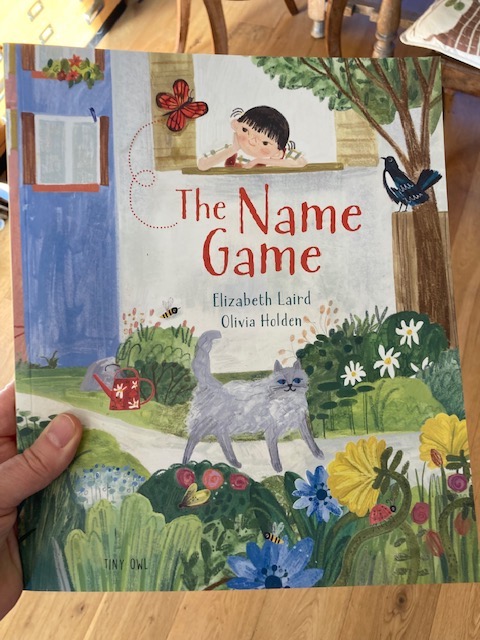
The Name Game, written by Elizabeth Laird, illustrated by Olivia Holden, reviewed by Pippa Goodhart


This is a simple story that sets a fun game going, leaving us to carry that game on with what we see in the illustrations, and then into our own lives.

A child is bored, so starts naming things - a magpie, a tree, a butterfly, a cat -, giving grand and fun names such as Diamond Dodger and Sapphire Princess.

'Everything, everyone, needs its own name!

A wonderful name!

A Beautiful name!

A perfectly gorgeous,

Surprise-me-please name!'

But the girl herself is given no name in the book. So I hereby name her Nancy the Fancy Namer.

A lovely book to share and expand into children's own worlds and imaginations. 

Saturday, 21 January 2023

Motivation, by Anne Booth

I had my first book published in 2014, and now it is 2023, and between 2014 and now I have written a LOT. Instead of being proud, however, recently  I have just been aware of tiredness and worry and a sense that all this work is so hard and isolated, and  I have felt dragged down by money insecurity and the awareness that the marketplace is VERY crowded, and wondered how long I could carry on. I couldn't commit to Folly Farm because I just didn't have the money at this time, and it all felt like such a relentless slog.

HOWEVER - 

Yesterday I had coffee with and talked to two academics about writing for children, and in explaining to them about how important children's books were, and talking about my AND other people's books, and about children and their need for stories, I remembered again how much I passionately love children's books, whether I am writing them or not. I had put lots of books, by myself and others, into a shopping trolley, and I took them out and piled them on the table where we were having coffee, and showed them to the academics, and read out bits, and pointed out gorgeous illustrations, and generally had a wonderful time.  The marketplace may be crowded, but at least that includes crowds of gorgeous books.  And I am glad to say that my passion was communicated and they agreed more people needed to understand about how important writing for children is, and I have now been asked to come and talk at their University one day in the summer. So I would like to remind the Children's Writers here - we are doing a VERY IMPORTANT job. It can be so discouraging when we see so little coverage of our books in the media, and we face insecurity and rejection so much,  but honestly,  our work really does change lives, and children really really matter and deserve stories, and it is brilliant we are writing them and getting any published AT ALL.

Today I was asked to come to talk to my local village WI group about being a writer. This time I piled my own books into a shopping trolley and trundled along to the village hall and put all the books out on a table. And one of the ladies said 'Gosh - have you written all of those?' and I suddenly realised (I know that sounds funny, but I hope that you understand!)  that I had, and how lucky I was!  She didn't ask me about advances, or prizes, or reviews, or even sales,  she just reminded me by her question that, even if a couple I love have gone out of print, and none of them have sold huge amounts in the way books by celebrity authors sell, the fact that they exist at all counts for something. So again - don't forget to be proud of any achievements. I am really going to try and not give myself negative reviews this year, and to remember what I have done.

In my talk to the WI I explained about why I wrote each book or series, and where I got my ideas from, and I remembered again why I wanted to write them, and how interesting it was to research them, and how hard they could be to write, but how satisfying it was to have an end product. I also told them about what children had said to me about them too - and in doing that, I also realised why I keep writing them. I didn't know how many were sold of each title, all I remembered were the reactions of individual children to different stories, and I realised that that was beyond price. I would still like to have more financial security,  and of course I would love more success, but really, if I have told a story which comforted one child, or made one look at the world in a new way, or entertained them and distracted them from stressful things, gosh, that IS success, and without bragging, I do know that more than one child has read my books! And I also talked about the illustrators and publishers I have worked with, and realised how lucky I have been to work with such talented people, and how interesting it has been, and how much I have learnt these last years. 

So I know that each of us in The Scattered Authors Society  will have written something that was appreciated by a child, and more than just  one child - even, greatest honour of all, loved, by more than one child. We have moved them, entertained them, interested them, made them laugh, made them cry, maybe sent them off to sleep, (hopefully not bored them to sleep!)  and really, even if we stopped tomorrow, we should still raise a cup of tea or milk or hot chocolate, or  a glass of something bubbly, and just take a moment away from worrying, and even whilst we can legitimately hope and campaign for more financial security and for more reviews and coverage of Children's books in the media, we can still let ourselves, right now,  be proud of ourselves and of each other, and believe in the ultimate value of our work.


Friday, 20 January 2023

Rejection - Not If But When by Joan Lennon


When (not if) rejection comes, we all deal with it in different ways. Personally, I'm of the wallow-in-despair camp. It's not useful, but hey, it's what I do. More useful are the words of Karl Whitney below. (You can find his full piece on the RFL Vox site here.)

Rejection is familiar to every writer. It was already familiar to me when I first sent out my book proposal, as it is to so many other freelance journalists who pitch ideas to editors. Sometimes you can learn something from rejection, sometimes you can’t – often it’s nothing to do with you, or the quality of your writing. It just doesn’t fit a certain editor at a certain publisher on a certain day. Others will be interested, even if it takes some time to find them.

That said, unremitting rejection can be an overwhelmingly bleak experience. How does one cope with that? Perhaps it’s useful to have a variety of projects underway and at different stages. Switching to something else – beginning a new proposal, writing some reviews, penning a light opera – could be a way of putting a rejected idea aside for a while before you go back into battle.

I ask myself what I’ve learned from rejection. It might seem an obvious point, but there’s a need to persist, and by persistence I mean continuing to pursue your own ideas, and, ultimately to value your work highly, regardless of the response. Because, no matter who you are, and how long you’ve been writing, there’ll be other rejections to come. The ideal state would be to pay scant notice to rejection and acceptance alike, to be above all that, to take everything in your stride. But we’re only human.

Don’t over-anticipate rejection, but don’t be too surprised by it either. If it comes – or rather, when it comes, as it undoubtedly will – accept it, shrug, and move on.


Where do you fit? Are you a wallow or a shrug? Or another camp altogether?


Joan Lennon website
Joan Lennon Instagram

Wednesday, 18 January 2023

How to decide what to do next - by Lu Hersey

Feb 1st is Imbolc, the Celtic fire festival that celebrates the first stirrings of new growth, the sparks of life preparing for the coming spring. Traditionally it's the feast of the goddess Brigid, or in more recent times, St Bridget - whatever you believe, it's the perfect time to set goals for the coming year. Inject some creative energy into a project simmering on the back burner, or fire up something completely new. 

Here's a simple ritual that might help you focus, decide what you want to do next, and get going.

To start, make a list of things you might want to work on and develop this year, however tentative or currently unformed your ideas might be. 

Next, choose an object to represent each of these ideas. I currently have five different writing projects percolating, so my list goes something like this:

1. The cosy crime for adults I gave up on last year because even though I liked the characters, the plot was all over the place. 30K words in and I realised there still wasn't a body, which probably should have happened back in chapter one. I'm choosing a penknife to represent this one, to help me remember to kill someone a lot earlier. 

2. Writing a screenplay for unpublished novel number 3. This book would definitely work as a film, even if it stands very little chance of being made. Possibly a big waste of time, but I really enjoy writing screenplays... I'm choosing a small bottle of Sahara sand someone gave me for this idea, because at one point, the characters nearly die trying to get out of a desert.

3. Revitalising the time-slip story I got really gloomy about when I realised how many time-slip stories are out there already. Choosing a carved dragon head for this one, because there's a very elusive dragon at the heart of it.

4. A completely new book idea I've had, set in the mesolithic. I wrote the first chapter a while ago, but haven't written a single word since. Choosing a toadstool for this, because there were probably a lot of forests back then (and I happen to have a felt toadstool).

5. A spooky detective story I gave up on because it was giving me nightmares, but I really loved the parrot at the centre of the plot. I've selected a macaw feather I picked up in an aviary for this. 


Anyway, you get the idea. Once you've chosen the objects you want to represent your projects, put them on a plate (or maybe a tray if you have too many ideas or your objects are too big) and find a candle. It doesn't matter what colour the candle is, but white and green are the colours for Imbolc and most of us probably have a tealight somewhere. 

Put your candle where it won't set fire to anything, next to something that represents Imbolc - a vase of snowdrops, a twig of hazel catkins, a birch twig, a Brigid's cross - even an egg will do. This is all about setting intentions, so choose something to symbolise new beginnings. 

Cover your plate/tray and turn it round a few times until you lose track of where each object is. Now light your candle and stare at the flame as you try to empty your mind. Stop thinking about your plot ideas. If you simply find yourself wondering what you're going to have for lunch instead, it really doesn't matter. 


Now close your eyes, and reach out to touch the plate with your index finger. What's the first object your finger touches? Lift up the cover to find out. This will be the project to focus on. 

OK, maybe you hate the object you've picked, wish you hadn't put it on the tray, and want to choose again? Fine. At the very least, you've made your final decision easier by narrowing down your choices. Remove that object, mull it over, and try again. Of course there's nothing to say you can't work on two or three different projects at the same time if you want to. 

The point of the exercise is simply to set your goals for the coming months. Hocus pocus? Possibly. But if it helps to motivate you, who cares? 

In case you're interested, the object I picked was this:


So looks like it's murder ahead for me...


Happy New Year!


Lu Hersey

Tuesday, 17 January 2023

What do authors do on a retreat? Folly Farm 2023 by Tracy Darnton

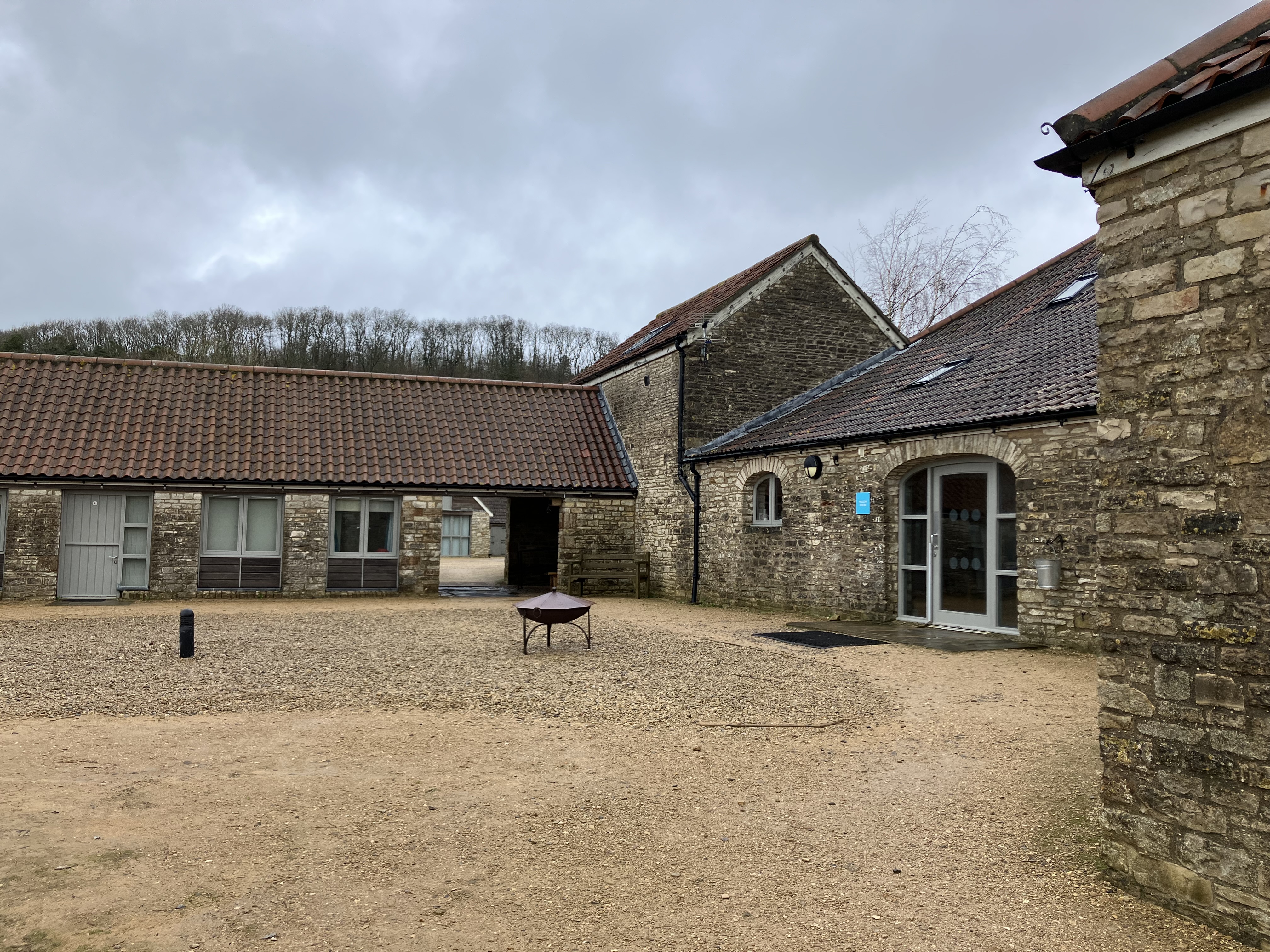
 A hardy bunch of Scattered Authors met for a windswept, rainy weekend at Folly Farm in the countryside near Bristol. Our first full retreat after last year’s slimmed down, Covid-conscious one, it was fabulous to spend time together away from all the distractions of home – and to have someone else doing all the cooking.


So what do we actually do on retreat?

Muddy walks

Chat

Morning stretches

Clay creatures


Improv drama games

Kids lit quiz

Eat cake

Play Codewords

Workshop our writing

Offload

Tell ghost stories round the fire


Eat flapjacks

Swap knowhow

Play the kazoo

Admire each other's stationery


Chat

Life coaching for authors

Share successes and failures

Reflect on the childhood books that shaped us

Writing exercises

Stay in bed

Exchange school visit good practice

Chat

Eat cake

Read

Brainstorm plot problems and titles

Share our work over wine

Enjoy the view 


Talk about using myths and legends in our work

Cement old friendships and forge new ones

Eat shortbread

Chat

Laugh


What else? Three delicious breakfasts, lunches and suppers.

Some of us even wrote a line or two.


If you’re a Scattered Author who'd like to come along and stay for the three-night residential 12th-15th January 2024 or to pop along as a day visitor, keep an eye out for details later in the year.

Find out more about joining the Society of Scattered Authors at the website


Tracy Darnton is a writer for children and young people. Her latest YA thriller is Ready or Not. She's already looking forward to next year's Folly Farm retreat. 

Sunday, 15 January 2023

The Secret of the Happy Storyteller - by Rowena House


Writing’s a tough gig, January a tough month, and 2023 isn’t looking like it’s going to be a bed of roses, so I decided to write this month about a skill writers have that psychologists suggest can make us happier people.

It’s the idea that if we see ourselves as the flawed hero of our own stories, the sense of agency we get from narrating our lives becomes a source of well-being.

The prompt was an article in New Scientist called Be Your Own Hero by David Robson in the 7 January 2023 issue. In it he says, ‘The principles of a good story offer much more than entertainment. Recent research shows that the narratives we tell ourselves about our lives can powerfully shape our resilience to stress.’

And don’t we all need as much resilience as we can get? 


I heard loud echoes of this concept in Prince Harry’s interviews promoting his book Spare. He told ITV interviewer Tom Bradbury that at 38 he was sick of others telling his story. He wanted to tell it himself.

Later, it occurred to me that the narrated Self also related to the types of fictional protagonists which John Truby discussed in The Anatomy of Story and which I touched on last July. 

Truby’s analysis is based on different concepts of ‘Self’ – basically, the perception we have of ourselves – which overlaps with the idea of identity. Here’s the link:

https://awfullybigblogadventure.blogspot.com/2022/07/character-notes-on-self-1-by-rowena.html

According to Truby, in some stories, the fictional Self mirrors our multiple and often conflicting needs and desires, with the tale exploring how internal conflicts can be overcome.

Another type of Self in fiction is the protagonist forced to play a series of roles demanded by society, whether they like it or not.

Finally, the mythic Self – the familiar hero of much commercial fiction and Western cinema – is a single personality in search of their destiny, discovering and enacting their deepest capabilities.

A narrated Self can combine all three.

As we weave together memories of significant events in our lives, and what they meant in terms of our values, beliefs, goals, duties, achievements, and failures, these events either become stepping stones on a meaningful journey or acts of Fate tossing us about in time, depending on the gloss we put on them.

‘The primary function of [this type of] narrative is that it brings order to disorder,’ Michael Murry writes in his 2015 article on narrative psychology which I found via Wikipedia and Research Gate. 

Our autobiographical narratives begin in our teens and some of us are better at it than others. As always, our adult Self is strongly influenced by childhood experiences and the life stories we tell as a result fall under three broad headings: regressive, progressive, or stable.

Regressive tales are tragedies about Fate being in charge and us at their mercy. These are pessimistic  stories and can be markers of anxiety, even depression.

Progressive stories are the optimistic versions of ourselves, where, despite obstacles, we are mostly in charge of our own lives and things are heading in roughly the right direction. We rationalise what we learned from adversity, how it made us stronger, how we were redeemed.

Stable stories include those that contemplate the absurdities of life, so I guess these can be a bummer, too, but I didn’t get that far in my research as the dog needs her walk and I should be deep in paid editing. Anyhow...

According to narrative psychologists, thererfore, a sense of agency is central to a healthy, self-healing Self: the more you think you’ve got it, the happier you’ll be.

[Frankly, I couldn’t reconcile this agency aspect of narrative identity to a case study showing how a deeply religious woman found recovering from breast cancer a positive experience because in her version of events it proved God’s goodness, but I did read that bit of research on my phone, so maybe I missed the point.]

The opposite of agency in our lives is oppression, as pointed out by philosopher Paul Ricoeur among others, which brings my voyage of (self) discovery back to the work-in-progress.

My A-plot protagonist, a court clerk, is ‘assimilated into the oppressor’, in his case the early Stuart English legal system. During his story, he is forced to confront its evils and leave his place of safety within it. Ultimately, because I want to sell the book, he finds redemption.

The B-plot female protagonist, Beth, has a more complex journey. In her fight with the patriarchy, she goes too far. So, perhaps the life story she tells herself is a self-comforting lie and she is more deeply flawed than she (or I) will admit. 

Which seems plausible. 

In New Scientist, David Robson quotes Kate McLean of Western Washington University, USA, warning of the dangers of always putting a redemptive spin on negative life lessons. 

For starters, that can pressure people who’ve suffered trauma to find a silver lining in their hellish experiences or feel like a failure, which, as she notes, ‘can be really problematic’. For eternal optimists (aka self-deluded so-and-sos), being too keen to bounce back from life’s lessons can falsely boost self-esteem when really what they/we need to do is admit our faults and do something about them.

Beth, are you listening? Probably not. Happy storytelling!

@HouseRowena on Twitter

Rowena House Author on Facebook

Lots about The Goose Road at rowenahouse.wordpress.com


Saturday, 14 January 2023

My "To Do" list by Lynne Benton

MY “TO DO” LIST

I often wonder how people get on if they don't make lists!  Shopping lists, birthday lists, and most especially To Do lists - I am never without one, and I keep adding to it all the time.  (Confession: sometimes I add a job I've already done, so I can start by crossing something off!)


 So, since the first thing on my list today is "Write Blog!" I wrote a poem about my today's "TO DO" list, and here it is:

My head is fit to burst
With all the things I haven’t done,
It’s time to make a list of jobs,
And tick them one by one.

Must ring Aunt Jane and thank her
For my lovely Christmas gift.
She’ll talk for hours, I know, but then
It gives her such a lift.

Then I must email Jennifer
I need to ask her how
Her operation went – I do so hope
She’s feeling better now.

And then I’ll text my brother,
Who is stuck in Cameroon,
I hope he’s caught a plane by now
To bring him home quite soon.

I’ve also got to strip the beds
And put the sheets to wash,
Then make them up for grandsons three –
By Thursday, what a squash!

Then I must make a shopping list
Of food I need to seek,
But first I ought to work out
What we’re eating all this week.

And in between these other jobs
I ought to clean and dust
And put the hoover round the house,
And tidy up, I must!

 I know I need to do these things,
To make the house look bright,
But one thing I’ve not mentioned yet –
I’ve got a book to write!

 So maybe I’ll forget the rest
And turn my laptop on,
I’ll write my thousand words, and then
The morning will be gone!

So what about my list, you ask?
I shake my head in sorrow.
I know those jobs will still be there -
I’ll do them all tomorrow. 

And that's the way it often goes, I'm afraid.  I'm sure many writers are the same - it's a question of priorities, and somehow dusting is never going to take precedence over getting on with my writing!

The other thing I promised to do today was to give you a list of my answers to last month's Christmas Song Quiz.  So here they are:

1) I'm Dreaming of a White Christmas, Just like the ones I used to know.  2) Make my wish come true, All I want for Christmas is you.  3) I saw mummy kissing Santa Claus underneath the mistletoe last night.  4) Dashing through the snow in a one-horse open sleigh.  5) So here it is, merry Christmas, everybody's having fun.  6) Have yourself a merry little Christmas, let your heart be light.  7) Chestnuts roasting on an open fire, Jack Frost nipping at your nose.  8) Rocking around the Christmas tree, have a happy holiday.  9) It's beginning to look a lot like Christmas, everywhere you go.  10) Oh I wish it could be Christmas every day, let the bells ring out for Christmas!

I hope you had fun with them.  (And one of my followers produced her own set of ten further questions, but I'll let her give the answers to hers in the Comments.  Many thanks for those - they provided my family with even more entertainment - and it was nice for me to have to work some out too!)

website: www.lynnebenton.com

Latest book:

Billy and the Queen (available via Amazon)


Friday, 13 January 2023

Will it be Kansas? -- or somewhere else? A new writing adventure by Sheena Wilkinson

I am transforming. Metamorphosing. Changing.  

No, I haven’t been translated into a donkey, as far as I know.


But very shortly my new publisher, HarperCollins Ireland, will announce my new novel, and in one very significant way it’s a huge departure for me, while in another way it’s very much in the tradition of my earlier books, especially my recent historical trilogy. 


The big difference is that it’s for adults, while my other books, though enjoyed by adults (possibly, if I’m honest, more than by younger readers) have all been written for teens.


I’m excited. This is the book I have been wanting to write for ages. I have always loved writing for young people and am passionate about the importance of giving them the very best writing and stories possible – after all, if I hadn’t had access to such quality when I was a child, I wouldn’t have become a reader, let alone a writer.


But just as I love reading all sorts of books, I also want the freedom to write all sorts of books. As I’ve mentioned before on this blog, I’ve loved experimenting with memoir, but my big project over the last few years has been this novel. It feels like, for the first time in a long time, what I write and what I love to read are the same. 


a little teaser from the cover 


By next month I’ll be able to talk freely about the novel, and show you the gorgeous cover, but for now I can say that it’s a bittersweet romantic comedy set against the turbulence of the 1930s, with a strong, endearing Irish heroine called April. The action takes place in a marriage bureau, but not all the happy endings are the ones you might expect. It's what I call feminist feelgood. I started it in lockdown, when I yearned to read books that were uplifting but substantial, and found myself going back to the novels of Dorothy L Sayers and discovering the author who has since become one of my favourites, Dorothy Whipple.


I do read authors who aren’t called Dorothy, but in the spirit of one last Dorothy, as I embark on the world of adult publishing, with different readers, different festivals and different – let’s hope more – reviewing opportunities, I wonder if I’ll feel I’m still in Kansas, or will the world look very different?


I can’t wait to find out. 


Thursday, 12 January 2023

Removing the scaffolding

There’s a lot of clanging and smashing and banging going on in my laptop right now. Metaphorically speaking. I’m in the throes of removing my scaffolding. Peeling away the bridges and links and downright waffle I layer in to help me grow my story.

I can’t remember which well-known author coined the idea of the scaffolding phase of editing, but it’s stuck with me. The process of revising a first draft – for me – is just that, akin to taking the scaffolding down after a big build job, ready to unveil the result.

And it’s got me thinking, what constitutes scaffolding and why is it useful? 

What is it? Well, for me it might often include…

  • the tell not show; the intent of a character or dramatic action to get you to the next point of the story
  • the overtelling – more information about motivation or emotion than the reader needs to know, but you need to remember
  • ‘the other’ – the other path or reaction your character could have taken, but didn’t
  • a character who is no longer necessary – a conduit for the narrative whose purpose is now defunct (sorry, Conor)
  • too many words – a focus on driving through with story rather than being mindful of language

And why is it useful? Why not trim as I go, take each page and paint and polish it before moving on? For me, I find creation is a process I have to lean into or else it might not happen. It never appears from the first page, but slowly emerges. So while it might be a strategy to work more precisely and carefully and edit as I go (a simple ladder rather than full on poles and planks), I do fear the idea might not then fully form. My focus might get distracted by presentation and prose and curtail the process of story making. 

So I heave up the scaffolding from the first chapter, obscuring the true look and feel of the story beneath its clumsy façade. But heck, it makes me love the moment when it comes off – when I can start to see the final work, the big reveal when the props are taken away.

As to the scaffolding, I keep every bit. My mantra in life, it might come back in fashion, is also applied to my writing; I dread throwing anything away. So I keep a 'scaffolding' document that often, quite alarmingly, ends up being as long as the manuscript itself. Small parts of it can come in useful, once in a blue moon (similarly, the fashion comeback; ahem, flares are back).

The scary thing, of course, is you often have no idea what the end result will look like until all the scaffolding is off. Until you can stand back and read the story in full again. It is a risk. Especially if your deadline is in three weeks’ time. But fingers crossed for something like... (😉)


Alex Cotter’s middle-grade novels THE HOUSE ON THE EDGE and THE MERMAID CALL are published with Nosy Crow. She has also previously published YA novels as Alex Campbell. Find her at www.alexcotter.co.uk or on Twitter: @AlexFCotter