Showing posts with label thrillers. Show all posts

Monday, 17 July 2023

Dark academia - libraries and cloisters by Tracy Darnton


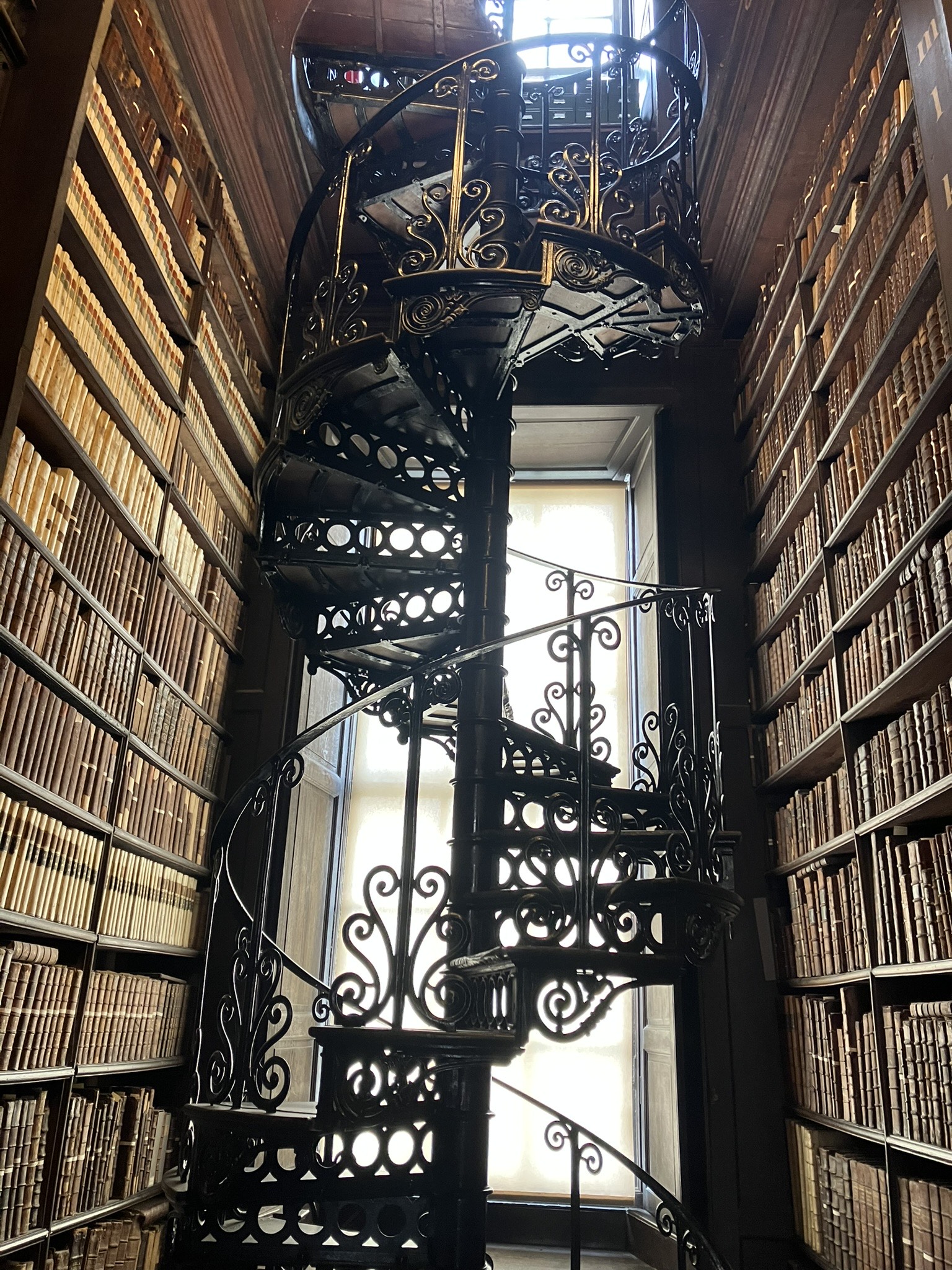
I'm writing a dark academia thriller so I thought I'd share some of the images I've been collecting to help me, and my recent reads (adult/upper YA) in this area. For me, dark academia means dark goings on in an elite academic setting amongst an intense, close knit group. 

Mostly I use it as an excuse to hang out in musty old libraries and lurk in cloisters ...


So now you've got the vibe, here's some dark academia reading:

The Secret History By Donna Tartt is over thirty years old but still the one to read for murder in a group of classics students in New England.


The lovely folk at indie bookshop Max Minerva's in Bristol shipped their recommendations to me: The Cloisters (just finished, really enjoyed, useful review here) set in the rarefied world of a museum in New York and the rivalries of the academics researching Tarot cards, and The Maidens by Alex Michaelides set in Cambridge University - a secret society of elite students - so ticking the dark academia boxes. 


Currently reading another American one set in an elite conservatory amongst the Shakespearean drama students which was recommended by the YA bookseller at Waterstones Cambridge - and if any store should have the finger on the pulse of dark academia, it must be that one. 


Finally if you'd like some more on dark academia, listen to this Radio 4 Open Book episode with Katy Hays who wrote The Cloisters, RF Kuang who wrote Babel which is still on my TBR pile as it's huge (I have read and very much enjoyed RF Kuang's Yellowface set in the world of publishing) and Kate Weinberg who wrote The Truants which I'm reading on my very long train journey this week.  


Anyone got any other must-read recommendations? 


Tracy Darnton is the author of YA thrillers and picture books known for their twisty endings. She can often be found in a library, the older and mustier the better. You can follow Tracy on Twitter or Instagram @TracyDarnton


Wednesday, 17 August 2022

Criminal activities by Tracy Darnton

 As last month's blog (read here) was about the return of YALC, this month is a look at my first trip to Harrogate for the Theakston Old Peculier Crime Writing Festival. 


Yes, I have travelled to the dark side with the grown ups. And it was good. 


I loved:

The festival feel. The event tents and bar are set up in the grounds of the Old Swan Hotel, famous as the place Agatha Christie checked into when the whole country was worried about her disappearance. I'm a sucker for outdoor fairy lights and the whole place looked great. 


Relaxation zone

Who doesn't want to lounge in a deckchair reading a book?


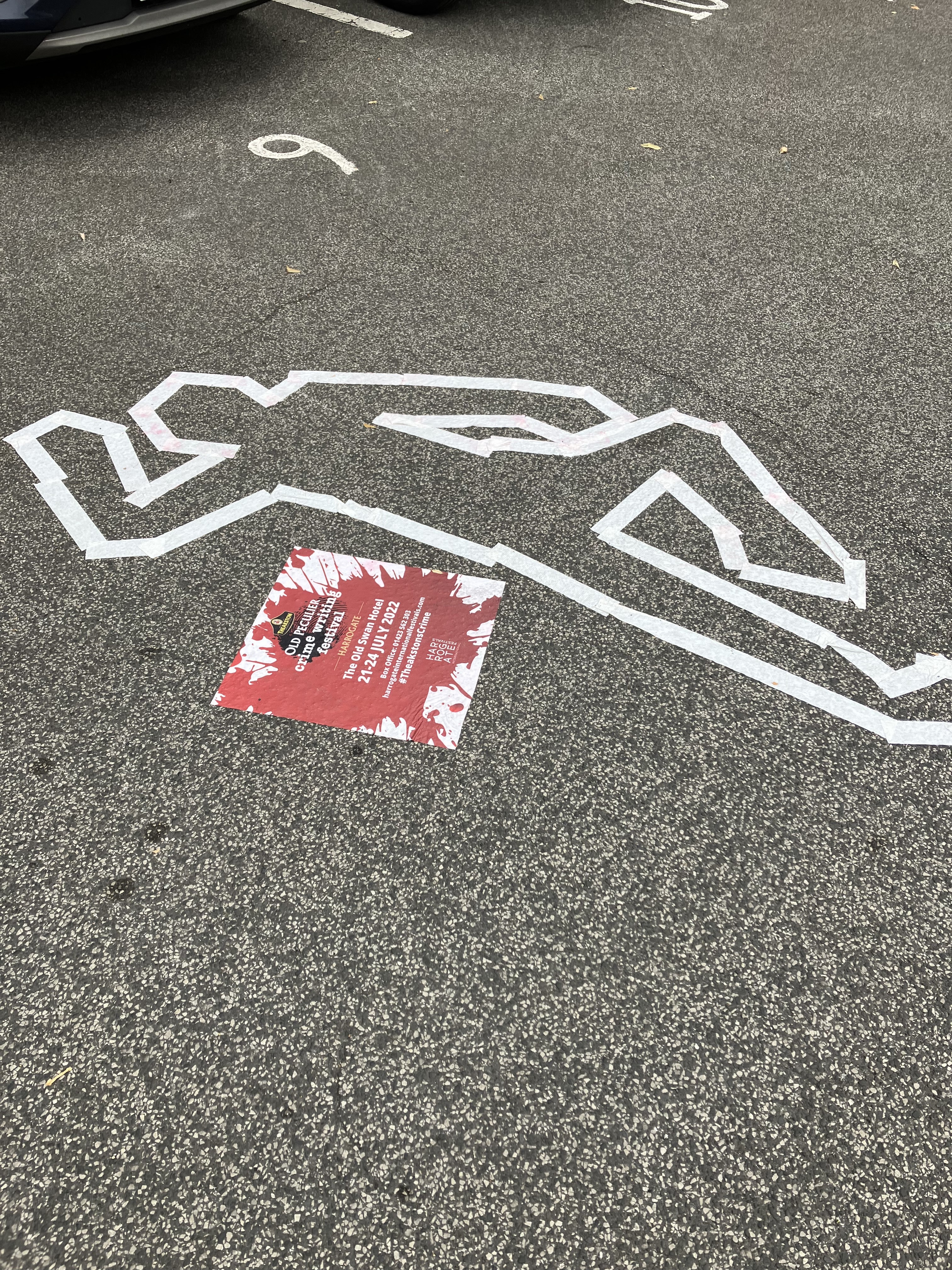
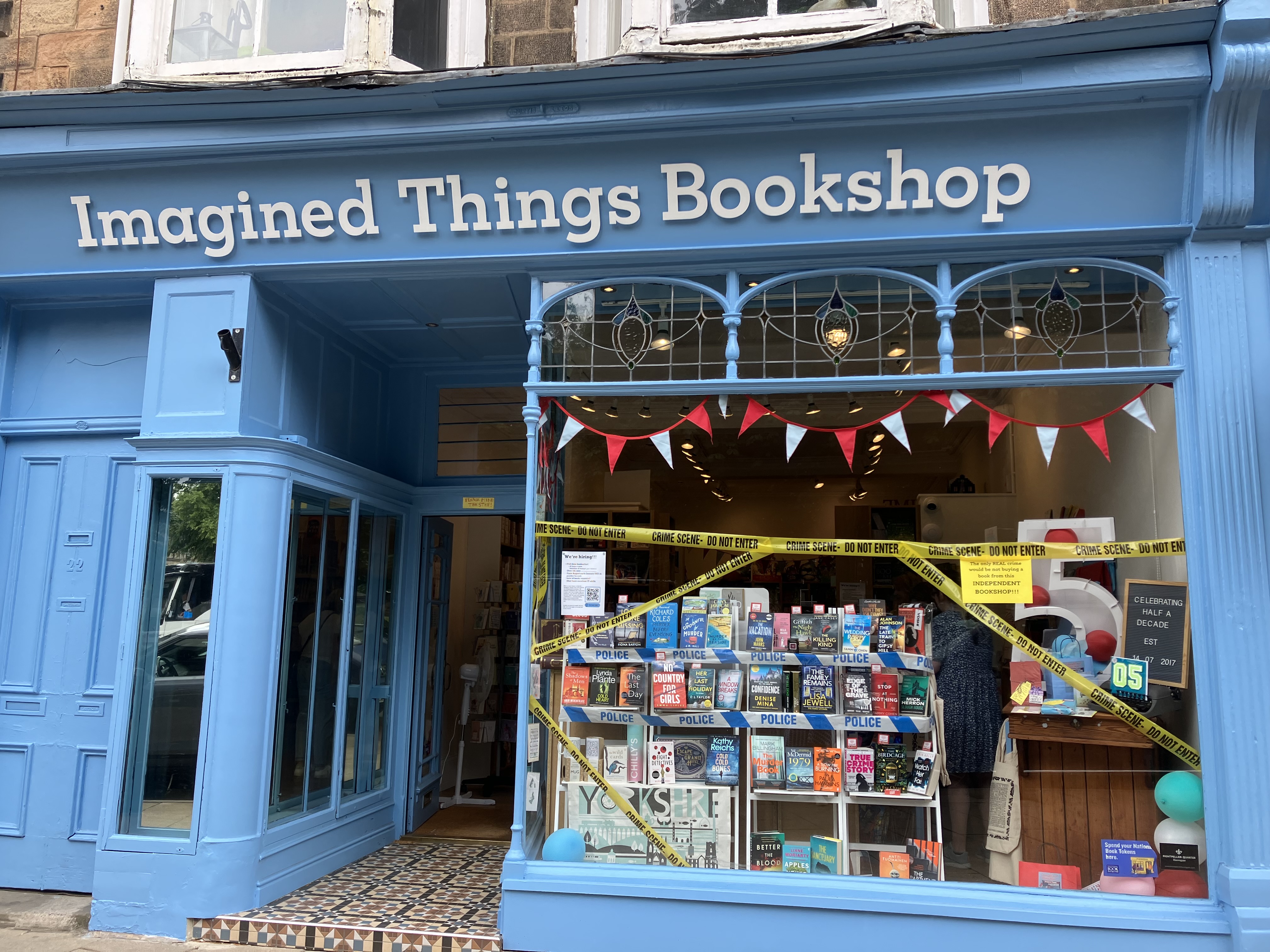
The whole town enters into the spirit of it.


including fabulous local Imagined Things Bookshop 


and Oxfam


Waterstones at the festival sells all the guest author books and hosts signings. 

The vibe set by the festival chair Denise Mina and the sponsor director Simon Theakston was warm and friendly. The panels were stacked with interesting people and there were in-depth interviews with mega stars like Tess Gerritsen.  I see why crime fans go back year after year. 


I'd been worried that the late night quiz would be cliquey and way too difficult but it was entertainingly hosted by Val McDermid and Mark Billingham and our little team did pretty well. (Still kicking myself that I couldn't remember what type of dog Snowy is (Tintin's sidekick). 

Aside from the pride of seeing my talented friend Emma Styles on the New Blood panel chaired by Val McDermid, the stand out session for me was Lynda La Plante interviewed by Denise Mina. If ever you get the chance to see her, grab it. 

We had an accommodation package 


and everything was included in the Rover Ticket without the hassle of booking individual events. 


The freebies! Got to love a tote bag stacked with books for starters. By the end I had too many to drag home on the train. 


Engaging promotions. Publishers with money to spend on their promotional activities (Yes!!!)

eg Escape Room experience, book themed cocktails with Charlie Higson, afternoon tea with Katy Watson and Rosemary Shrager, red rose which was the key to a book giveaway, proofs and samplers galore. 

Escape room corner in the The Crime Vault


BUT

It was pricey! 

The hotels had seen better days.

The food at the Murder Mystery Evening was dire. 

Coming so soon after YALC, I definitely missed the diverse/younger audience and authors. 

Too much queuing in the drizzle to get into the events tent.

Finally, in my humble opinion, it needs a YA thriller panel.


So cliffhanger moment... Will I go back? 

I'm dying to. 


Tracy Darnton is the author of YA thrillers The Truth About Lies, The Rules and most recently Ready or Not. She's still ploughing through the pile of thrillers she picked up in Harrogate. 


Monday, 17 May 2021

Why can't I be more like Jeffrey and Dan? An author in search of a writing routine - by Tracy Darnton.

Confession time: I don't have a proper writing routine. I lurch from one set of demands on my time to another and the writing is the thing that tends to get pushed down the list. I have a big To Do list and 'Getting a writing routine' has been on it for a few years. 

But I've been wondering lately if I'm ever going to find the routine that works for me, which brings me to my new writing friends: Jeffrey and Dan. 


I had afternoon tea with Jeffrey (Jeffrey Archer to you) as one of the Society of Author @ Home events. Me, and a couple of hundred other members on zoom, but it feels strangely intimate and I'm sure we are now on first name terms. Turns out Jeffrey is thoroughly engaging and generous with sharing tips with other writers. Time flies on a Thursday afternoon. First thing to say is Jeffrey has written a lot of books. He has sold millions of copies. 275 million copies. Hats off. If anyone deserved to take their foot off the pedal a little, it is he. 

The usual question was asked whether he had a writing routine.  "Yes," says my new friend Jeffrey, and he described working two hours first thing in the morning.

Ooh, well done, Jeffrey, I thought. Two whole hours of writing is really good. I should do that.

But that was only the beginning for Jeffrey - that was just his pre-breakfast appetiser. His day was broken up into many blocks of two hours writing with time off for meals and a three mile walk. Jeffrey is 81. He slogs his guts out for fifty days handwriting each book - each, very long book. He retires to bed at 930. 

I wanted to ask him about the washing - like, does he just ignore the washing machine beeping that it's finished? And what about the dishwasher. Or those presents you have to buy and wrap and take to the post office. Or book the man to sort out the dangerous tree. What about the guttering, Jeffrey? is what I wanted to type into the chat box, but didn't.

Because I can't get those things out of my head, even if I lock myself in a room, my head always comes with me. 

And so to my next author: Dan Brown. Dan has also sold a lot of books. You may have heard of him.  Dan and his thriller writing masterclass has been accompanying me while ironing or on the spin bike.  Although the tempo is not as good as Everybody (Backstreet Boys) for the spin bike, I've enjoyed the lectures and advice. I would like to have Dan to supper - he seems genuinely lovely and eager to share his writing knowhow. 

Sometimes I've been distracted by the oak panelling (or is it walnut?) and fancy light fittings in the background. Dan has a very nice home. Or if it's not his actual, real life home, it should be. It glows, in a millionaire American way that I'm sure I could get used to. 

Dan likes to write when he's fresh with no email distractions. Good idea, Dan. I should do that too. 

Dan likes to start at 4.

Excuse me? At 4. In the morning? 

Surely just on a tight deadline?

Nope. 365 days of the year. Writing is the most important thing he's going to do that day.

I'm sensing that Dan would not have time to come to ours for supper. 

Both Jeffrey and Dan work incredibly hard on their story, on research, on getting everything correct and writing page-turning books. These people are driven. They're not doing it for the money or fame anymore. They are writing machines

Am I just lazy? Possibly, but see above - spinbike!

One thing's for sure, Dan's not dusting that massive harp I see in the background himself. And I bet he wasn't trying to get the limescale off the taps before he started writing in the middle of the night!

But can I keep using that as an excuse? Am I just a procrastinator?

Dan has a timer which he sets. I have a timer. I have a timer too, Dan. A pretty glass one. We are writing soulmates. I set mine to make me sit at my desk for 15 mins solid. What do you do with yours, Dan? I ask over the hiss of the iron. These pillowcases won't iron themselves.


What? Oh. We are not writing soulmates after all. 

Dan sets his timer to makes sure he gets up from his desk and does push ups and sit ups every hour.

Good grief, Dan. I can't do one flipping push up. But it is on my To Do list. If I had a panelled study and could do a push up on the hour, everything would be alright. And a harp - I need a harp.

I'm beginning to think it is a miracle I have written any books at all. Maybe I'm a maverick, a free spirit, a faffer *, maybe I...Sorry, I have to go - the washing machine is beeping. 

* one who faffs.


Tracy Darnton is the author of YA thrillers The Rules and The Truth About Lies. Amazingly she has found time to write another one, out next year. 


Saturday, 17 August 2019

Tom Ripley, Campari and how technology can ruin a good plot by Tracy Darnton


Tom Ripley and I got reacquainted on a sun lounger in Italy this summer. Patricia Highsmith’s book written and set in the 1950s describes a time when an affluent American could decamp to beautiful villas in Italy for the price of a waffle and soda back in the U.S. and swan around collecting antiques and bohemian artist friends. And, *major spoiler alert*, Tom Ripley can pass himself off as the American he murders on the basis of a slight resemblance to a grainy passport photo.

I got to thinking over a Campari and a bowl of olives about how this could be made to work in the present day. Answer – it couldn’t. A five second look at Facebook and Instagram would have shown the Italian police exactly what Dickie Greenleaf looked like. His bank card would reveal what he’d spent and where. And mobile telephones would ruin the way Tom evades Greenleaf’s friends and family.

I should add that one of my sons kindly provided some impromptu research on how Ripley could exist in modern Italy by managing to break his phone, not remember our mobile numbers, have his wallet and bank card pickpocketed in Rome and still blag his way to the North of Italy with seven Euros and a half-remembered B&B name for our rendezvous. But somehow it didn’t seem very realistic. Too far-fetched to put in a book.

I’m currently editing my next novel – a contemporary psychological YA thriller – and, like my last one, I have to grapple with the omnipresence of tech and social media in the world in which my young characters live.

Thriller writers are already battling the annoying realities of forensics and police investigations. As a YA writer, I want my 17-year-old main character to have agency so must also side-line any pesky adults in positions of authority. The list of things to tackle and exclude is long and growing.

Short of setting everything back in the day of a temperamental telephone with a cord that could be cut, or in the middle of the ocean, I’m forced to tread a fine line between reality and plot to make the latter believable and current. All this needs to be achieved in a subtle and original way as we’ve all read books where we can too easily spot the moment that the author gets rid of the mobile phone to keep the plot going. 
As I gazed out of many train windows in Northern Italy visiting places like Trento and Bolzano half-hoping for a glimpse of Tom Ripley, I pondered another classic: Murder on the Orient Express. Poirot would be able to use the train Wi-Fi to check up on his carriage full of suspects and spot the link between them all. Since batteries have a longer life or a portable power bank to keep them running even longer, a mobile phone out of charge now seems hopelessly unrealistic, especially as even the train has charging points.


It’s not just the curse of the smart phone, all those plots involving actual letters would have to go as no one writes letters anymore. Like Tess of the D’Urbervilles where Tess’s letter to Angel gets caught under the doormat with disastrous consequences.  


Or the use of traffic cameras in The Great Gatsby would have shown exactly who was driving the car that killed Myrtle.


Books where characters get lost would be ruined by Google Maps,  and ditto for plots where people go missing and could be easily found by a track my phone App.  


Any dodgy hotels would be ruled out by a quick flick through TripAdvisor. Marion would never stay at the Bates Motel in Psycho. No one would move to 112 Ocean Avenue after a brief look at Zoopla’s neighbourhood guide and thus avoid The Amityville Horror.


But, surrounded by kids on trains watching cartoons or adults taking endless selfies of themselves, I was struck more than previous years about the need for all of us to unplug from our phones for a while. And when I read a book – the ultimate unplugging experience – I want to get away from all that. I don’t want Google or Facebook or Apps intruding on the story. I need a plot given time to evolve and breathe. 
I still hope for random meetings of strangers, letters written in ink, puzzles to work out for myself – and teenage kids to find their parents come what may. 

And I want characters like Tom Ripley to be reading newspapers and sipping cocktails in the sunshine, unplugged.


Tracy Darnton is the author of The Truth About Lies, shortlisted for the Waterstones Children’s Book Prize 2019. She has an MA in Writing for Young People.

You can follow Tracy on Twitter @TracyDarnton and on Instagram tracydarnton


Saturday, 17 November 2018

Octopuses, mules and problem-solving by Tracy Darnton

I saw Markus Zusak speak recently at a Mr B’s event in Bath as part of his book tour with Bridge of Clay. What have I got in common with a hugely successful, award-winning Australian male novelist, you may ask? I assumed absolutely nothing BUT as he chatted on about the way he wrote and rewrote and crafted his new book, changing narrator, adding and removing characters, I began to feel better about my own methods. 

Markus Zusak said that he did not have a great imagination, just a lot of problems. He wanted a mule in the book, so therefore he needed a race track. 

My ears pricked up. Aha – I too have a lot of problems. What can happen to X on the raft to hospitalise him? Why’s the axe on the terrace? How can Y get out of that locked laboratory?
That week, I had felt like writing my next YA thriller was turning into an impossible task akin to trying to squash an octopus into a string bag. I had lists and lists of questions and problems that far from ticking off I was adding to every time I wrote some more. As soon as I squashed one octopus arm back into the bag, another popped out somewhere else.
But the other little trip I had that week was to an Escape Room. (For the uninitiated, you and your nearest and dearest are locked in a room for an hour and have to solve a number of puzzles and problems to get yourselves out of there). And here’s the thing that dawned on me as I thoroughly enjoyed my fourth Escape Room in as many months - I actually like solving problems.

I like coming up with clever little fixes. I love planting a tiny seed in one chapter to develop and use later on. Hide something insignificant in plain sight in chapter 23 which becomes crucial in chapter 32 and I’m really having fun. I get a buzz from writing a whole new scene to fix the problem in a way I’ve only just thought of.
When I wrote The Truth About Lies, I spent hours fiddling about with the epigraphs at the beginning of chapters, blending clues with memory exercises and apposite quotations. I found it very satisfying that Jess borrowing a scarf can make sense of a confrontation between two other characters in a pub car park chapters later. Sad I know, but I relished adding in little references that possibly (definitely) only I appreciate - the madeleine cake Jess dunks on page 71, for instance. These are the things that kept me at my desk, enjoying the process.
I’m new to this author way of life, and have a major dose of imposter syndrome, but I’d been feeling rather that my approach to putting a novel together couldn’t possibly be the proper way. This jigsaw-solving, tying-things-together method of writing a story must be inferior to the method of other authors whom I imagine sitting calmly at their tidy desks as the whole, perfect narrative pours out, agonising only over the occasional choice of adjective.
But now I feel reassured. We can only write in the way that works for us. Every time we solve a problem with our story, we have the potential to take it in a new direction, add a layer or an exciting setting, or explore a new theme. And yes, the potential to throw up even more problems in a complex web. But all with the hope that, at some stage, those answers and solutions will come together in a satisfying novel. Maybe one day, as I get more experienced, the story will just appear from the beginning to the end, with no problems to solve. But where would be the fun in that?


Maybe there was a clue on my bookshelf to the way my mind works 
In the meantime, I must get back to my work-in-progress. The octopus is escaping again. 

Tracy Darnton’s YA thriller The Truth About Lies was published in July by Stripes.  You can follow Tracy on Twitter @TracyDarnton