Showing posts with label refugees. Show all posts
Saturday, 8 June 2019
Tribute to Judith Kerr by Keren David
By a strange coincidence, the week that Judith Kerr died I'd written a feature about the photographer Gerty Simon who was a photographer in Weimar Germany, before the war. Her photographs - brought with her when she fled Germany as the Nazis took power - had been lost for decades, inherited by her son and then by his partner. He brought them to the Weiner Library in London where they are now on display - portraits of a lost world, artists, writers, dancers, actors. (You can read about them here)
And among them a solemn, beautiful small child. Judith Kerr as she was before she left Germany. Before she became a refugee, and then an artist, a mother and - gloriously - the writer and illustrator of some of the best children's books ever made.
On the day that her death was announced I sat down and wrote this piece. I wanted to pay tribute to the woman who created books that I'd read as a child - When Hitler Stole Pink Rabbit - which told me what it was like to be a refugee, and books that I'd loved reading to my children - The Tiger Who Came to Tea and the Mog books. There are more, of course - Judith Kerr never stopped writing and drawing - and her last book came out just after her death.
She was a woman whose life was turned upside down as a child, who had to build a new life in a new country, and who adapted with resilience. Her books - whether tackling Nazis, death, burglars, hungry tigers or flappy marquees - were reassuring, optimistic, and gave children and their parents the essential message that everything, however challenging, could be coped with.
She dedicated her autobiography to "the one and a half million Jewish children who didn't have my luck and all the pictures they might have painted." Her son said last week that she understood how difficult it was to be a refugee and "she was absolutely angry about the Windrush scandal. These people were like her, they had come to Britain to do everything they could to fit in and to be treated the way they were made her furious.”
I am deeply sad that I never met her. She is, and will always be, one of my heroines
Friday, 20 May 2016
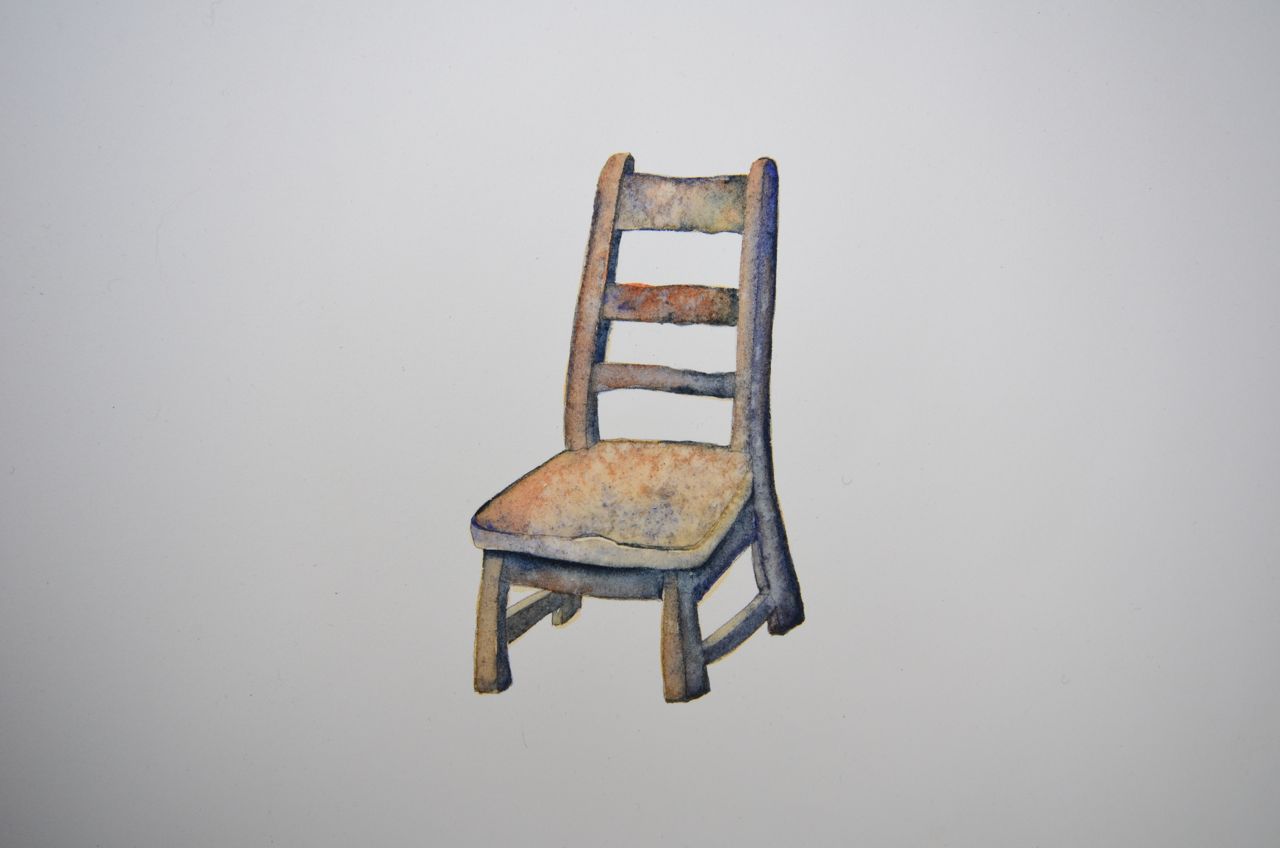
3000 Empty Chairs - Joan Lennon
The first chair by Jackie Morris
Until there are 3000 of them.
To say we disagree.
Please, consider sending an image. It's not about your artistic skill. It's about being part of an evolving symbol of support. Teachers, parents - there's still time to let your pupils and children get involved.
It's on Twitter at (hash)3000chairs and on the online Guardian page - have a look here for the details, and get drawing! (Or painting or photographing or making a chair shape out of pebbles or post-it notes or ...)
Thank you.
Also, if you've missed Tess Berry-Hart's powerful and useful posts about the refugee situation here on ABBA, just type her name into the Search this Blog box over on the right - well worth reading!
Joan Lennon's website.
Joan Lennon's blog.
Silver Skin website.
Labels:
3000 empty chairs,
Joan Lennon,
refugees
Saturday, 16 April 2016
The Only Way Out? Save 3,000 Children by Tess Berry-Hart
"Afsar held on to the axle beneath the lorry and watched the road rushing beneath him. Above him the huge lorry thundered and rattled with its thirty eight tonnes of French potatoes bound for England packed tightly into the container. For hours Afsar had been clinging underneath it, his fingers frozen and his neck stiff, perilously close to the deadly tarmac only inches away.
"Ninety minutes," the smuggler had told him. "Ninety minutes, and then you'll be in England. After the ferry, once the lorry stops, you get off, and run."
But the lorry hadn't stopped. It had gone on, and on, and on. Now it was tearing up the motorway at eighty miles per hour. A police car cruised past, its signal screaming.
Little by little, his fingers started to slip ..."
I wish I didn't have to write this story as part of my series of books about child refugees, but unfortunately I do (though in my version, Afsar has a happier ending, you'll be pleased to know).
Sadly the stories are already being written for us - they are happening in real life. A few weeks ago, a 17 year old Kurdish teenager called Muhammed Hassan (incorrectly reported as 18) was killed in Oxfordshire after hanging on to the underneath of a lorry for hours. Muhammed had been living in the camp in Dunkirk and had made one final, fatal attempt to reach the UK and relatives living in Manchester. Earlier this year, a 15 year old Afghan boy, Masud, squeezed into the back of a lorry to try and reach his sister in England, and suffocated before he crossed the Channel. A few days ago, a 7 year old Afghan boy, Ahmed, was narrowly saved from a similar fate by texting Liz Clegg, a volunteer who runs the Unofficial Women and Children's Centre in Calais. She had given him a phone for his own safety and topped it up with credit donated by volunteers. "I NEED HELP/ DRIVER NO STOP/ NO OXYGEN IN THE CAR..."
The text crossed the Atlantic to Liz Clegg who was at a conference in New York at the time. Police were alerted and Ahmed, together with a friend, were rescued. A happy ending - and yet. Despite the terrible cost to children, our government is still so terrified of increasing any potential "pull factor" for immigration that they are shamefully dragging their feet on addressing the humanitarian policy disaster that exists in the camps in Northern France - at the expense of children's lives.
Unbelievably, of the 651 children in the Calais camp, 423 are unaccompanied minors, meaning that they have travelled from their home countries without a parent or adult figure. During my visits to the camps I have met many unaccompanied children and am always astounded by how much they have experienced in such a short time. Despite half the camp being demolished in March, the North Zone still remains, and over 4,000 people are still crammed in tents there, of which 300 are unaccompanied children. Volunteers are doing their best to look after them, but according to a census carried out by on-the-ground charities L'Auberge des Migrantes and Help Refugees, 129 children have disappeared from the camp since the demolition began in the camp's South Zone.
Where have they gone? I was interviewed by a French paper on this question, and my answer was, as the French authorities have not put any child protection or safeguards into practice, nobody really knows. Some may have managed to jump the lorries or the trains, such as Karim, the 12 year old who disappeared from the camp for days, before being found safe in England after the intervention of journalists and the Children's Commissioner. Others may have fallen into the hands of traffickers, or the prostitution or drug trade. That possible fate is too sickening and dreadful for us to contemplate - but we must, if we are to help other children escape it.
Here's what we can do:
On the 25th April the "Dubs Amendment" to the Immigration Bill will go back to the Commons for a vote. Lord Dubs was one of the thousands of Jewish children brought from the Kindertransport in 1939 from Germany, and he created an amendment to the Immigration Bill to bring 3,000 unaccompanied children FROM EUROPE to England. This amendment was passed in the Lords by a majority of over 100 peers, but now it's going back to the Commons to be voted on by MP's. Winning the vote will involve persuading Conservative MPs to vote with their consciences, rather than their party, or at the very least, to sit on their hands and allow the Dubs amendment to pass.
Despite Tory arguments of "pull factor", these children are ALREADY in Europe, they're already in danger, living in dirty camps or disappearing into the hands of traffickers. 50% of those polled by Save The Children have an STD. (Yes). Europol reports that 10,000 unaccompanied children are suddenly unaccounted for since their arrival in Europe. This is an important moment in history, where we have the power to save 3,000 children's lives. Let's make sure we are standing on the right side of it.
HOW YOU CAN HELP
If you live in a Conservative constituency, please email your MP encouraging them NOT to vote against the Dubs amendment. You can tell them that Europe is NOT a "safe country" - children are at risk of exploitation and trafficking, as evidenced by the high numbers of STD's documented by Save The Children and the disappearances from unofficial camps such as Calais.
You can tell Conservative MPs that the existing systems to try to claim asylum are broken: the Dublin III amendment by which children with relatives in Britain can be reunited is impossible to access without specialist legal help. Of the 150 children with potential actionable cases in the Calais camp, less than 10 have been able to exercise their rights, and then only after months of waiting in a dirty camp and the intervention of pro-bono lawyers. And of the other 200 (still remaining) - they continue to live in unimaginable circumstances, forced to choose between the traffickers and the train tracks.
You can remind Conservative MPs that asylum and immigration are not the same thing. These are children, not economic migrants.
If you live in a constituency which is Labour, Liberal, Green, SNP or otherwise, please email your MP encouraging them to TURN UP AND VOTE for the Dubs amendment.
If you care enough to donate an hour or two of your time, you can always write to or email a Conservative MP without being a constituent - although they will have no requirement to answer you - but you can tell them that this is not a constituency issue, it's a pressing humanitarian issue that needs their consideration. And the sheer volume of emails/ letters thudding into inboxes should help remind MPs that the eyes of the public are upon them. If you'd like more information on how to make your time worth while, please PM me on Facebook.
You can identify your MP here: http://www.parliament.uk/mps-lords-and-offices/mps/
Please sign the cross-party petition here: http://www.refugeetaskforce. org/
We've got less than two weeks. Let's make them count.
"Ninety minutes," the smuggler had told him. "Ninety minutes, and then you'll be in England. After the ferry, once the lorry stops, you get off, and run."
But the lorry hadn't stopped. It had gone on, and on, and on. Now it was tearing up the motorway at eighty miles per hour. A police car cruised past, its signal screaming.
Little by little, his fingers started to slip ..."
![]() |
| Boys arrive in the back of a goods lorry in Dover |
Sadly the stories are already being written for us - they are happening in real life. A few weeks ago, a 17 year old Kurdish teenager called Muhammed Hassan (incorrectly reported as 18) was killed in Oxfordshire after hanging on to the underneath of a lorry for hours. Muhammed had been living in the camp in Dunkirk and had made one final, fatal attempt to reach the UK and relatives living in Manchester. Earlier this year, a 15 year old Afghan boy, Masud, squeezed into the back of a lorry to try and reach his sister in England, and suffocated before he crossed the Channel. A few days ago, a 7 year old Afghan boy, Ahmed, was narrowly saved from a similar fate by texting Liz Clegg, a volunteer who runs the Unofficial Women and Children's Centre in Calais. She had given him a phone for his own safety and topped it up with credit donated by volunteers. "I NEED HELP/ DRIVER NO STOP/ NO OXYGEN IN THE CAR..."
![]() |
| The original text sent by Ahmed to Liz Clegg |
The text crossed the Atlantic to Liz Clegg who was at a conference in New York at the time. Police were alerted and Ahmed, together with a friend, were rescued. A happy ending - and yet. Despite the terrible cost to children, our government is still so terrified of increasing any potential "pull factor" for immigration that they are shamefully dragging their feet on addressing the humanitarian policy disaster that exists in the camps in Northern France - at the expense of children's lives.
Unbelievably, of the 651 children in the Calais camp, 423 are unaccompanied minors, meaning that they have travelled from their home countries without a parent or adult figure. During my visits to the camps I have met many unaccompanied children and am always astounded by how much they have experienced in such a short time. Despite half the camp being demolished in March, the North Zone still remains, and over 4,000 people are still crammed in tents there, of which 300 are unaccompanied children. Volunteers are doing their best to look after them, but according to a census carried out by on-the-ground charities L'Auberge des Migrantes and Help Refugees, 129 children have disappeared from the camp since the demolition began in the camp's South Zone.
Where have they gone? I was interviewed by a French paper on this question, and my answer was, as the French authorities have not put any child protection or safeguards into practice, nobody really knows. Some may have managed to jump the lorries or the trains, such as Karim, the 12 year old who disappeared from the camp for days, before being found safe in England after the intervention of journalists and the Children's Commissioner. Others may have fallen into the hands of traffickers, or the prostitution or drug trade. That possible fate is too sickening and dreadful for us to contemplate - but we must, if we are to help other children escape it.
Here's what we can do:
On the 25th April the "Dubs Amendment" to the Immigration Bill will go back to the Commons for a vote. Lord Dubs was one of the thousands of Jewish children brought from the Kindertransport in 1939 from Germany, and he created an amendment to the Immigration Bill to bring 3,000 unaccompanied children FROM EUROPE to England. This amendment was passed in the Lords by a majority of over 100 peers, but now it's going back to the Commons to be voted on by MP's. Winning the vote will involve persuading Conservative MPs to vote with their consciences, rather than their party, or at the very least, to sit on their hands and allow the Dubs amendment to pass.
Despite Tory arguments of "pull factor", these children are ALREADY in Europe, they're already in danger, living in dirty camps or disappearing into the hands of traffickers. 50% of those polled by Save The Children have an STD. (Yes). Europol reports that 10,000 unaccompanied children are suddenly unaccounted for since their arrival in Europe. This is an important moment in history, where we have the power to save 3,000 children's lives. Let's make sure we are standing on the right side of it.
HOW YOU CAN HELP
If you live in a Conservative constituency, please email your MP encouraging them NOT to vote against the Dubs amendment. You can tell them that Europe is NOT a "safe country" - children are at risk of exploitation and trafficking, as evidenced by the high numbers of STD's documented by Save The Children and the disappearances from unofficial camps such as Calais.You can tell Conservative MPs that the existing systems to try to claim asylum are broken: the Dublin III amendment by which children with relatives in Britain can be reunited is impossible to access without specialist legal help. Of the 150 children with potential actionable cases in the Calais camp, less than 10 have been able to exercise their rights, and then only after months of waiting in a dirty camp and the intervention of pro-bono lawyers. And of the other 200 (still remaining) - they continue to live in unimaginable circumstances, forced to choose between the traffickers and the train tracks.
You can remind Conservative MPs that asylum and immigration are not the same thing. These are children, not economic migrants.
If you live in a constituency which is Labour, Liberal, Green, SNP or otherwise, please email your MP encouraging them to TURN UP AND VOTE for the Dubs amendment.
If you care enough to donate an hour or two of your time, you can always write to or email a Conservative MP without being a constituent - although they will have no requirement to answer you - but you can tell them that this is not a constituency issue, it's a pressing humanitarian issue that needs their consideration. And the sheer volume of emails/ letters thudding into inboxes should help remind MPs that the eyes of the public are upon them. If you'd like more information on how to make your time worth while, please PM me on Facebook.
You can identify your MP here: http://www.parliament.uk/mps-lords-and-offices/mps/
Please sign the cross-party petition here: http://www.refugeetaskforce.
We've got less than two weeks. Let's make them count.
Friday, 16 October 2015
"Jungle Books" Library in the Calais Camps by Tess Berry-Hart
“Books are universal, aren’t they?” asks Mary Jones, the
founder of Jungle Books, with a bright but tired smile. “Everybody can relate
to a book.”
We’re standing in Jungle Books, a small makeshift library in
the middle of the notorious Calais Jungle refugee camp. It’s been a bad week
for everybody here. Torrential rain for days has turned the bleak landfill site
into a flooded swamp, there’s been riots caused by police bulldozing tents which
have spilled out of the main encampment, in which people were wounded as teargas
and rubber bullets were fired. Earlier, the camp was cordoned off by police in
riot gear as we attempted to get in off the main overpass bringing boxes of
books and clothes, so now we’ve had to slip in the back way, through dripping
thickets, tents listing under saturated tarpaulins, and a slippery path of giant,
mud-filled craters.
But inside the small, wooden-framed library, built by refugees
themselves using tarps stretched over a wooden frame and insulated by spare
blankets and duvets, it’s a haven of peace and quiet. Wooden shelves line the
walls, stacked with books, papers, lined exercise pads and files. Volumes of
books – To Kill A Mocking Bird, The Mysterious Affair at Styles and an
anthology of Maupassant short stories to name but three - stand in stacks. It’s
also a hive of information. Know Your Asylum Rights! proclaims a small stack of
pamphlets on the floor. My Time in Yarl’s Wood reads the title of a pile of self-published books. By
the door, a small children’s shelf (there are now almost fifty children in the
camp, not counting the many hundreds of young teenagers between 14 and 18 which
are classed as “men”) boasts my son’s favourite, The Tiger That Came To Tea amongst
other children’s classics.
For a moment, I feel desperately sad. Earlier that day I had met a 12 year old boy who had travelled on his own from Eritrea. It's a different world here, a world in the middle of developed France which could be a war-torn nation in the Middle East or Africa.
But despite their dreadful circumstances, everyone around me is just getting on with it. A couple of Iranians browse
the shelves, flicking through books. An Eritrean asks for help with some papers
he is carrying and searches for a phrase book. Another man sits intent at a
desk, copying sentences from a school textbook from Arabic into English. I
steal a glance at the page. “The red ship is sailing on the blue sea.”
Mary gets to unpacking the boxes of books that have been
sent to her. “Oooh! Pashto dictionaries!” she exclaims excitedly. “You’ve no
idea how useful these are going to be!”
Staffed entirely by volunteers, as is most of the Calais
camp, Jungle Books has become more than a library, it’s become something of a
community centre, where people come and ask for the things they need. Many of
them come to ask for English lessons or help with papers, or most commonly warm
boots or coats – it’s freezing cold in the wind off the coast even though it’s
still only September – and seeing people slipping in the mud wearing only socks
and flip-flops is a common sight. Some of the boxes we’ve brought in contain
boots and padded jackets which Mary will give to the people who have asked for
them. She’s constantly sourcing aid for the people that come to her, – for what
good, as she says, are books when people don’t have wood to cook with or shoes
to wear?
Distribution is a constant problem in the
camp – in a situation where over three thousand people need warm clothes and
food, there’s never a perfect way to distribute aid. Distribution lines will
always run out before the last person is helped, and can often disintegrate
into jostling and a scrum, as well as forcing people to take the first thing
that is on offer, regardless of whether or not it fits properly. The “personal
shopping” system whereby volunteers take note of someone needing an item, going
away and collecting it personally for them (as with Jungle Books), is better
targeted, but labour-intensive and slower going. The “shop” system, whereby a
large tent is used to stock a variety of sizes and colours of clothes and
boots, and those in need are allowed in a few at a time to choose their
preferred size and colour, is another option, but also very labour intensive. At the same time, too much of the wrong kind
of aid (high heeled shoes, etc) is brought in by well-meaning people in
guerrilla drops, and left in piles as rubbish.
The industry in the camp – they have built a church, mosques, their own shops, restaurants, a barber’s, and the library - has to be seen to be believed. The dedication of the volunteers too is absolutely remarkable - I ask Mary where she has to get back to, imagining that she lives locally or at the very farthest, in Dover - and am stunned to hear that she lives a long way away in a completely different part of France, so a visit to the camp after work (she's a teacher) takes hundreds of miles in a round trip.
The camp has calmed down now after a tense morning with the police, and night is starting to fall. The browsing Iranians sit at a table and chat with some of the volunteers. I notice that one of them has a broken foot wrapped in a supermarket plastic bag, an injury perhaps caused by trying to jump the train to the UK, a dangerous and life-threatening pursuit, but in a system where asylum can only be claimed once you have entered our borders, a necessary one.. Another man, a Sudanese, enters, yawning. “You’ve been up on the trains all night, haven’t you!” they tease him in English. There's plenty of camaraderie here.
When I leave, they call after me, only half-joking. "Take me with you!" they call. A boy nearly follows me to the car, holding his hands out, his face full of pleading. It's so, so easy to turn the key in the ignition and drive off. It's not easy at all to forget how disgusted and sick it makes me feel, to live in a world where things like this are possible.
Fast forward three weeks since I visited, and Jungle
Books has grown apace. The arts space has now been finished and music lessons and poetry nights have taken place. When I speak with Mary by phone today for an update she is upbeat. “We’ve
got some laptops in now, with Rosetta Stone installed (language learning) and working on implementing a router for internet. Once we've got internet we can get some more computers with wifi to give people a chance to learn and get information." Since my visit, the arts centre has been re-roofed and insulated, and they have their own Facebook page (Jungle Books Library Calais) Mary is also trying to implement a crowdfunder to develop the arts centre into a safe space for the growing number of kids in the camp, to give them a normal place to be, if only for a time.
A library like any other then - in so many ways - and not like any other too. The amazing amount of work and ingenuity that has gone into making a thriving place to give people hope and dignity can only be applauded. For if Britain one day turned into a war-torn country and we had to make the difficult journey to Europe ourselves, I can only hope that we would demonstrate a shred of the courage and resourcefulness that they already have.
How you can help
If you'd like to help the Jungle Books grow and develop, please help donate to and promote their crowdfunder and follow their Facebook page.
If you'd like to volunteer your time helping out in the Calais camp (general tasks), please register your interest on the online volunteer form and email calaisaid@gmail.com
If you want to go to the camp with supplies - please don't just turn up and attempt your own distribution which can cause waste and chaos, complete the Calais Aid Warehouse form online first to make sure you have appropriate aid and the date that it will be expected.
If you can't make it to Calais, but would like to help in the UK in the Calais Action warehouse, sorting and loading aid for Calais, Hungary and other refugees further into Europe, please contact me via the Calais Action page or message me on Facebook
How you can help
If you'd like to help the Jungle Books grow and develop, please help donate to and promote their crowdfunder and follow their Facebook page.
If you'd like to volunteer your time helping out in the Calais camp (general tasks), please register your interest on the online volunteer form and email calaisaid@gmail.com
If you want to go to the camp with supplies - please don't just turn up and attempt your own distribution which can cause waste and chaos, complete the Calais Aid Warehouse form online first to make sure you have appropriate aid and the date that it will be expected.
If you can't make it to Calais, but would like to help in the UK in the Calais Action warehouse, sorting and loading aid for Calais, Hungary and other refugees further into Europe, please contact me via the Calais Action page or message me on Facebook
Labels:
#Refugees Welcome,
Calais,
Calais Action,
Jungle Books,
Mary Jones,
refugees
Wednesday, 16 September 2015
The Empathy Map (Part 2) by Tess Berry-Hart
"Is a refugee someone who's had to leave their home?" asked Anna.
"Someone who seeks refuge in another country," said Papa.
"I don't think I'm quite used to being one yet," said Anna.
When I wrote the first part of The Empathy Map last month about how big business has turned empathy into a tool for selling, I'd planned a very different type of post for my Part 2.
Back then it was the middle of August, and all over Europe the biggest exodus of people from their native lands since World War II was under way. Pictures of desperate and frightened people, travelling for months and months overland in terrible conditions, were filtering through Facebook feeds. Boatloads of starving and fleeing people arrived in the beautiful Greek islands, narrowly avoiding being drowned on the way whilst Western holidaymakers reclined on the beach or complained about the view. MIGRANTS STORM CALAIS! shouted the tabloids. David Cameron talked about building a wall. Macedonia was actually building a wall. The word "refugee" was barely mentioned. Empathy was in short supply.
Along with many people, I felt so upset about the coverage and the political inertia that I got in touch with Libby Freeman, a grass-roots activist who had loaded up a van with much-needed supplies and driven over to Calais with a few friends the week before. "How can I help?" I texted her. "I'm planning to get a load of people and supplies together and go over again next month," she texted back. "Great! I'm in," I replied, before I had time to think. Libby and her friends had received so many offers of help that they were setting up a Facebook group called Calais Action and were putting out calls to collect clothes and shoes for people in the camps. I became the West London collector for Calais Action, and posted on local community Facebook groups asking for donations. I received some grateful replies and promises. Going to be a busy week, I thought.
Then I went away for the Bank Holiday in Somerset. Phone coverage was patchy, so I switched my phone off and went Facebook-free for a couple of days. When I eventually logged back on, I had nearly 100 new private messages. People were frantically messaging me from all over London - "I'm so glad to see your group! I have clothes! What do you need?" My phone was full of texts, my email rammed. There was even wild talk of rallies in London and Calais to show solidarity with migrants, an initiative unthinkable only a week ago. When I got back home, there was a huge pile of plastic bags on my doorstep, overspilling with clothes and shoes.
What? How!
Then I saw the headlines - and it clicked. In the awful photos of drowned children on a Turkish beach, Britain had found its empathy.
Migrant:A person who moves from one place to another in order to find work or better living conditions.(ODD)
Refugee: A person who has been forced to leave their country in order to escape war, persecution, or natural disaster
The words we use to describe something are important as they can skew our perception and understanding of a situation. Take the word "migrant" - in the hands of the right-wing press it became loaded and symbolic of a particular menace; a hooded, dark skinned man, probably a member of Isis or some such, camping in Calais and breaking into lorries to come into Britain and steal our jobs and benefits. Words make us see "a migrant" as “the other” – someone who threatens us, threatens our secure livelihoods, because of ... what? The realisation that the world is not as safe as we would like it to be? That if the genetic chips had been spilled any other way then our lives would not be composed of lattes and Netflix and clean roads - and that we might be in their shoes?
When Al Jazeera refused to use the word "migrant" and instead reported on "refugees" it changed the narrative. Everybody knows what refugees are - the word was picked up immediately by much of the media and it triggered reserves of empathy towards people seeking refuge in another country.
But how are we to instil empathy in our children? The second way of building empathy, as I talked about in Part 1 of the Empathy Map, is reading stories. Studies show that children who read novels are more empathetic, quicker to visualise themselves in the shoes of a storybook character. When I was younger, some of my favourite books were about refugees and immigrants. For me the ultimate refugee/ roadtrip novel has to be Watership Down by Richard Adams, one of my favourite stories for children and adults of all time. It's the story of a group of rabbits in Sandleford whose warren is destroyed to build houses. Together they journey over the South Downs to find a new home, encountering on the way many different types of warrens and the fearsome rabbits who populate them. I defy anyone to read it and not feel empathy towards people who have been expelled from their homelands. When they finally find a warren high on the downs that they can call their own, it is a dream of every refugee who has ever travelled. “It’s not really about rabbits!” shout its supporters, and they are absolutely right. You can find similar parallels of refuge and exile in The Hobbit by JRR Tolkien.
My other childhood favourites were When Hitler Stole Pink Rabbit, by Judith Kerr, about her own childhood as a refugee travelling across Europe from the Nazis. Goodnight Mister Tom, about the "vacuees" - evacuated children from London during the Second World War making a new life for themselves in the countryside. The Silver Sword by Ian Serraillier is another, about a group of children travelling from bombed-out Warsaw to Berlin to find their parents in the aftermath of Word War II. Refugee Boy by Benjamin Zephaniah is a more modern novel about a young boy who is brought to claim asylum in the UK during the 2000/2001 civil war in Eritrea. All of these stories are vastly different - some deal with events long ago, some are about events that have never happened or could happen - but they all contain within them the seeds of empathy that we so badly need.
Indeed, I was so influenced as a child by the ideas of flight and refuge, that the first young-adult novel I ever wrote, Escape From Genopolis, followed the fortunes of a group of refugees in the futuristic world of Genopolis where pain had ceased to exist. Those who still experienced pain were called Naturals and banished to a wilderness because in knowing pain, by extension they still had empathy. In the world of Genopolis, empathy was held as a dangerous gift, because to control people you have to dehumanise them - you must not "understand" them. Words that dehumanise people prevent us from empathising with and helping them; words which foster empathy can change the world.
And the world does appear to be changing from a month ago. Empathy is now front-page news. Libby and her friends have been interviewed by TV and newspapers about the new "grass-roots giving" which refuses to sit back and wait for politicians to take action. And what a powerful force grass-roots movements are. Just two weeks after I set up the West London branch of Calais Action, over four hundred and fifty generous and hard-working people from my local area have either contacted me with donations or volunteered to help collect, sort and pack the giant pile of supplies that I've received - crates upon crates of food, 200 large boxes of clothes and shoes, sleeping bags and tents - which now fill an entire house in a neighbouring square (the house has been also temporarily donated for a week!). This weekend the supplies will be shipped out, to be sent on to refugee camps in Hungary and northern France. A huge rally - "Refugees Welcome" - happened on the weekend in London; another one will happen in the Jungle camp in Calais itself this next Saturday 19th September. A co-ordinated volunteer programme is being set up in Calais by Calais Action and other NGOs and grass-roots groups to repair water pipes, build proper shelter and distribute the vast amount of supplies to the vast amount of people who need them.
Empathy is part of us and what makes us human; we just need to let it flourish.
"Someone who seeks refuge in another country," said Papa.
"I don't think I'm quite used to being one yet," said Anna.
Extract from When Hitler Stole Pink Rabbit, by Judith Kerr
When I wrote the first part of The Empathy Map last month about how big business has turned empathy into a tool for selling, I'd planned a very different type of post for my Part 2.
Back then it was the middle of August, and all over Europe the biggest exodus of people from their native lands since World War II was under way. Pictures of desperate and frightened people, travelling for months and months overland in terrible conditions, were filtering through Facebook feeds. Boatloads of starving and fleeing people arrived in the beautiful Greek islands, narrowly avoiding being drowned on the way whilst Western holidaymakers reclined on the beach or complained about the view. MIGRANTS STORM CALAIS! shouted the tabloids. David Cameron talked about building a wall. Macedonia was actually building a wall. The word "refugee" was barely mentioned. Empathy was in short supply.
Along with many people, I felt so upset about the coverage and the political inertia that I got in touch with Libby Freeman, a grass-roots activist who had loaded up a van with much-needed supplies and driven over to Calais with a few friends the week before. "How can I help?" I texted her. "I'm planning to get a load of people and supplies together and go over again next month," she texted back. "Great! I'm in," I replied, before I had time to think. Libby and her friends had received so many offers of help that they were setting up a Facebook group called Calais Action and were putting out calls to collect clothes and shoes for people in the camps. I became the West London collector for Calais Action, and posted on local community Facebook groups asking for donations. I received some grateful replies and promises. Going to be a busy week, I thought.
Then I went away for the Bank Holiday in Somerset. Phone coverage was patchy, so I switched my phone off and went Facebook-free for a couple of days. When I eventually logged back on, I had nearly 100 new private messages. People were frantically messaging me from all over London - "I'm so glad to see your group! I have clothes! What do you need?" My phone was full of texts, my email rammed. There was even wild talk of rallies in London and Calais to show solidarity with migrants, an initiative unthinkable only a week ago. When I got back home, there was a huge pile of plastic bags on my doorstep, overspilling with clothes and shoes.
What? How!
Then I saw the headlines - and it clicked. In the awful photos of drowned children on a Turkish beach, Britain had found its empathy.
Migrant:A person who moves from one place to another in order to find work or better living conditions.(ODD)
Refugee: A person who has been forced to leave their country in order to escape war, persecution, or natural disaster
When Al Jazeera refused to use the word "migrant" and instead reported on "refugees" it changed the narrative. Everybody knows what refugees are - the word was picked up immediately by much of the media and it triggered reserves of empathy towards people seeking refuge in another country.
But how are we to instil empathy in our children? The second way of building empathy, as I talked about in Part 1 of the Empathy Map, is reading stories. Studies show that children who read novels are more empathetic, quicker to visualise themselves in the shoes of a storybook character. When I was younger, some of my favourite books were about refugees and immigrants. For me the ultimate refugee/ roadtrip novel has to be Watership Down by Richard Adams, one of my favourite stories for children and adults of all time. It's the story of a group of rabbits in Sandleford whose warren is destroyed to build houses. Together they journey over the South Downs to find a new home, encountering on the way many different types of warrens and the fearsome rabbits who populate them. I defy anyone to read it and not feel empathy towards people who have been expelled from their homelands. When they finally find a warren high on the downs that they can call their own, it is a dream of every refugee who has ever travelled. “It’s not really about rabbits!” shout its supporters, and they are absolutely right. You can find similar parallels of refuge and exile in The Hobbit by JRR Tolkien.
My other childhood favourites were When Hitler Stole Pink Rabbit, by Judith Kerr, about her own childhood as a refugee travelling across Europe from the Nazis. Goodnight Mister Tom, about the "vacuees" - evacuated children from London during the Second World War making a new life for themselves in the countryside. The Silver Sword by Ian Serraillier is another, about a group of children travelling from bombed-out Warsaw to Berlin to find their parents in the aftermath of Word War II. Refugee Boy by Benjamin Zephaniah is a more modern novel about a young boy who is brought to claim asylum in the UK during the 2000/2001 civil war in Eritrea. All of these stories are vastly different - some deal with events long ago, some are about events that have never happened or could happen - but they all contain within them the seeds of empathy that we so badly need.
And the world does appear to be changing from a month ago. Empathy is now front-page news. Libby and her friends have been interviewed by TV and newspapers about the new "grass-roots giving" which refuses to sit back and wait for politicians to take action. And what a powerful force grass-roots movements are. Just two weeks after I set up the West London branch of Calais Action, over four hundred and fifty generous and hard-working people from my local area have either contacted me with donations or volunteered to help collect, sort and pack the giant pile of supplies that I've received - crates upon crates of food, 200 large boxes of clothes and shoes, sleeping bags and tents - which now fill an entire house in a neighbouring square (the house has been also temporarily donated for a week!). This weekend the supplies will be shipped out, to be sent on to refugee camps in Hungary and northern France. A huge rally - "Refugees Welcome" - happened on the weekend in London; another one will happen in the Jungle camp in Calais itself this next Saturday 19th September. A co-ordinated volunteer programme is being set up in Calais by Calais Action and other NGOs and grass-roots groups to repair water pipes, build proper shelter and distribute the vast amount of supplies to the vast amount of people who need them.
Empathy is part of us and what makes us human; we just need to let it flourish.
Labels:
#Refugees Welcome,
books which foster empathy,
empathy,
Goodnight Mister Tom,
immigration,
migrants,
Refugee Boy,
refugees,
The Silver Sword,
Watership Down,
When Hitler Stole Pink Rabbit
Tuesday, 8 September 2015
Patrick, Paddington and the rest of us.
I've felt very proud to be a writer this week, and
especially part of the children’s literature community. Patrick Ness’s bold and generous gesture - to
match £10,000 of donations to Save the Children to help Syrian refugees - has struck an entire orchestra's worth of chords. As I write this, on Monday night, the
total is rushing towards £600,000.
![]() |
| Patrick Ness |
Among those pledging £10,000 were John Green, Philip Pullman, Francesca Simon, Suzanne Collins and Cressida Cowell. Publishers have got involved too, and adult writers such as Jojo Moyes and David Nicholls. A group of YA writers in the US including Rainbow Rowell and Margaret Stohl banded together to put in their £10,000. Here, attendees at the Society of Authors’ Children’s Writers and Illustrators Group’s conference pledged £3,000, even though some had contributed already.
Most of us can’t afford anything like £10,000, of course. It’s
more than the average writer’s annual earnings. But there's no need to feel
embarrassed. Viewed as a
percentage of income, some of us may have outdone the big-hitters in generosity. Each contribution counts - if everyone who reads this blog donates the cost of a cup of coffee, it'll be matched penny for penny, which could make a good few hundred pounds.
And if you can't spare any more cash, just share the all-important link - which is HERE - again and again.
Having been involved in the Authors for the Philippines and
Authors for Japan auctions (under the incredibly hard-working leadership of
Keris Stainton), I've seen how keen writers, editors and agents are to donate,
be involved, help in any way they can. Some
cynics jeered saying it was all about
publicity. So what if it were? The cash was raised for the people who needed it.
![]() |
The best writers sow empathy in their pages, seeds that can grow and flourish in readers’ hearts and minds. So that one day those readers will read a news story about marauding migrants, and reach with their imaginations beyond the headlines, the politicians’ weasel words. They'll see scared teenagers, crying children, desperate parents, fleeing a dangerous home for an uncertain future. And they'll write letters, speak out, donate and even open their homes to people in need.
One of the icons of British children's literature is Paddington Bear. I wasn't sure about seeing last year's film, worried that a favourite character would be rendered sentimental or just wrong. Instead it was a wonderful experience, funny and charming, gently passing on a message of British tolerance and caring, an openness to strangers in need.
In the books and the film, Paddington comes to Britain in need, and finds kindness and a new home. However the truth would be very different. This blog post by an immigration lawyer spells out all the cruelties a real life Paddington would meet, seeking asylum in Britain. Lord Ashdown said yesterday that Syrian children grudgingly allowed into Britain now, could face deportation at 18. The campaign to help child refugees won't end with the appeal reaching £1 or 2 million pounds. If we truly care there is a lot to be done to change attitudes towards refugees, to stop the distrust and antipathy that has been allowed to grow. Children's authors can and do play a part in an education process about the difference between legal and illegal economic migration, legal asylum-seeking and those who pretend to be genuine refugees but are not.
But for now, thank you once again Patrick Ness, for channelling the spirit of Paddington, for doing this brilliant
thing and taking us all along with you. And congratulations on your new book, The Rest of Us Just Live Here, as well.
Labels:
charity,
empathy,
Paddington Bear,
Patrick Ness,
refugees,
Save the Children
Sunday, 16 August 2015
The Empathy Map (Part 1) by Tess Berry-Hart
“Empathy; the ability
to understand and share the feelings of another.” (ODD)
During a prolonged Google surf around the Internet for a
piece of research last month, I came across the term “Empathy Map” on a
side-bar. I was indulging in a little procrastination me-time, so I welcomed a
little foray into the unknown and clicked on it. Up came an article accompanied
by a picture that looked a little like this:
![]() |
| (my own re-creation of similar maps online) |
Think of all the
adverts for banks, cars, washing products etc – which have moved on from the crass business of pushing products and logos on our existential post-9/11 society, to focusing on our hopes, dreams
and aspirations. For instance, a car isn't just a car now, it's a machine for living - whereby you can travel the desert indulging your love of adventure, collect your beloved children from school safely (giving you that nurturing feeling), AND have hot strangers ogle your pumpin' wheels as you drive by! We can all think of these kind of adverts - the Sainsbury’s advert about the First World War football
match pushed our “giving” and "desire for world unity" buttons by giving us the sense that “at Christmas anything is
possible.” (So go buy a chocolate bar). The Proctor & Gamble advert during the Olympics showed many
mothers – in favellas, country villages and townships from Brazil to Africa - washing
the clothes of their children who then grow up to become star athletes through
their love and dedication. And more overtly, there’s the Google advert where a man documents his
new-born daughter’s development through a series of YouTube videos, pictures
and emails. Large corporations pour a lot of money into research about “personas”
and “worldviews” to better understand their potential “ideal” customer.
I have to be honest, it gave me the shivers to see “empathy”
expressed as a cold hard marketing tool in this way – because aren’t we
actually saying that “manipulate” would be a closer term? "Empathy” is the ability to understand what
it is like to be in someone’s shoes. “Manipulate” means to control or influence (a person
or situation) cleverly or unscrupulously (Oxford Dictionary definitions). And there’s a world of difference between
empathising with someone’s situation and actively influencing them to DO something –
part with their hard-earned cash, say. But “manipulation maps” don’t sound too great!
So where am I going with all this?
Well, it got me thinking – one of the most valuable gifts from reading books and novels is gaining the ability to empathise. Through entering into our characters' heads, our readers see their interior thoughts and feelings, absorb their past experiences and understand WHY they think, feel and act as they do. And we as writers WANT to trigger the emotions of our readers. We want them to feel what it’s like to be a prisoner in chains, or bullied at school, or leading a charge of whooping tribesmen across the Asian plain in 1536. We want them to not be able to put our work down, to keep reading, to cry, laugh and hold their breath. And of course, we want them to buy the next book in our series!
But, you cry, triggering our readers' desire to empathise is surely not the same as cynically manipulating a consumer to buy something. Readers read because they actively seek empathy, they want to know what it's like to be in someone else's shoes, and the sale of a book, a DVD or audio-CD is merely a by-product of that.
Well, I'd agree with that, and although there are doubtless many writers who just want to make a quick buck and don't care about the quality of their work, I'd argue that MOST of us are people who got into the business of writing because we have something we want to say. Most of us want to make connections with our fellow humans, not to simply SELL them something, but to let them hear our message and - not wanting to get too messianic here - somehow help the human condition for the better.
It's interesting how closely the two can be confused, however. A couple of years ago I wrote a play about Sam Hallam, a 17-year old who I believed had been wrongly convicted of a crime he didn't commit. One reviewer wrote: "This is moving drama but just as we are asked to draw our
own conclusions, the echoes of the ‘correct’ ones posited by Berry-Hart hang manipulatively
in the air." Well actually, I wasn't asking anyone to draw their own conclusions. I was trying to show the shaky evidence on which Sam had been convicted, to make the audience FEEL what it was like to be wrongly imprisoned, to be taken away from your friends and family and incarcerated for seven years, living in a violent and dangerous borstal when you are still only a child. But even this most basic appeal for empathy - the very act of asking someone to step into another's shoes - was seen as "manipulation".
(Six weeks later though, in May 2012, Sam Hallam was released from the doors of the Court of Appeal after three judges decided that his conviction should be quashed, so I can totally live with that!)
So in our modern world, is empathy really a commodity to be sold, or a tool to be used for commercial or other gain? Isn't empathy instead something inherent in us that makes us people, sets us apart from brute nature, and can be brought out from us by reading?
There's quite a lack of empathy in our news and written media today - people who aren't "the same as us" or who are seeking a better life are being dehumanised and seen as "the other" or "the problem." Maybe David Cameron and others in our government could do with their own version of the Empathy Map! In my next post I'm going to explore the attitudes which take away our empathy - towards migrants, those on low-incomes, or people with different religions or politics from us - and discuss some of the amazing children's books which help foster a sense of empathy and remind us what it is to be human.
Do let me know what you think, and stay tuned for Part 2 of the Empathy Map, next month!
Subscribe to:
Posts (Atom)