Showing posts with label exploring character. Show all posts

Monday, 15 November 2021

Beloved: painful, powerful inspiration - by Rowena House


'Slavery is very predictable. There it is, and there’s some stuff about how it is, and then you get out of it or you don’t. [A story] can’t be driven by slavery. It has to be the interior life of some people, a small group of people, and everything that they do is impacted on by the horror of slavery, but they are also people.’ 
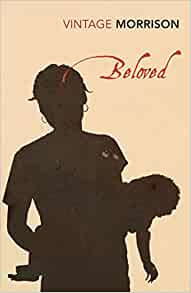


These words are Toni Morrison’s, from an interview in 1987 when her astonishing Pulitzer prize-winning novel Beloved was published.

They have reverberated about my head for years after I read them in Celia Brayfield’s reflections on historical writing in Writing Historical Fiction, A Writers’ & Artists’ Companion (on page 36 if you’d like the context). 

Published in 2014, this companion book, too, is becoming history, yet I find I return to both Celia Brayfield’s and Toni Morrison’s wisdom again and again for guidance and inspiration for my own seventeenth century work-in-progress. 

I think this particular quote reverberates because it speaks directly to the issue of writing about the historical ‘other’, not just about who has the right to speak for whom from the past, but also what sort of things can be said.

In Beloved, Sethe, an emancipated slave, is living with the excruciating inner wounds of having killed her eldest daughter as a baby to save her from the appalling anguish of a life of slavery. The baby’s ghost haunts the house where Sethe now lives with her other daughter, Denver, both of whom believe that a woman calling herself Beloved, whom they find on their doorstep one day, is the dead daughter/sister returned to them.

Before reading Beloved, I had thought the character Beloved might serve as a literary model for my ghost-witch, and teach me about the contemporary uses of magical realism in literary historical fiction

But the power of Toni Morrison’s subject – the profound psychological scars of slavery and fractured family relationships – is proving too emotionally overwhelming to be anything other than a deeply disturbing reading experience, far removed from any notion of writerly research.

If anything, writing the ‘other’ is becoming harder to think about. After all, what right have I to pretend I can put my twentieth century, middle-aged, educated self into the mind of a young, illiterate, marginalized teenager, executed for having the misfortune to beg pins off a man about to suffer a stroke? 


It has taken an emotionally-distanced study of studies about Sethe to discover my story does share certain creative bonds with Beloved, which, I hope, will eventually inform and enrich my work.

These bonds include a shared theme about the loss and recovery of ‘self’ as repressed or distorting memories of suffering are regained, re-examined and, at last, laid to rest. Denver’s character arc also offers potential lessons for my ghost as the daughter of a damaged mother, whose social relations are conditioned by her mother’s status as an outcast from her community. 

In other words it is the shared humanity of ‘the interior life of some people, a small group of people’ which links ‘us’ in the here and now to ‘them’ there and then.

In my story, the ghost is not intended to be a projection of the living’s suffering, although that is a possibility I have considered. Better, I think, that she is ‘real’ and the horror that impacts on her life is the persecution of people identified as witches. Taking Toni Morrison’s advice, her story needs to be about her responses to that persecution, the bad as well as the good, and whether she can heal her deeply damaged self.

Last week, on Armistice Day, I had the privilege of talking to students in a London secondary school about writing The Goose Road and the inspirations behind it. Re-reading blogs I wrote at the time of its publication in order to remind myself about formative influences now half-forgotten, I came across my own words explaining how much research I had to do before I felt I had the right to write about World War I.

Before I began, and repeatedly during that story’s development, I had to go to the places where my characters suffered. I needed to touch the soil of the Somme and Verdun, and feel the cold winds in their winters, and the warmth of a Limousin summer. I had to read, read and read again the words of many people, and visit every museum I could, and watch films, and listen to sound archives.

And that is where, so far, I have failed my ghost-witch. Due to circumstances of family life, I haven’t yet walked her hills or seen her prison, nor read enough about the lives of people like her, nor practiced her spells in woods or at crossroads. No wonder I can’t write her yet. 

But I will. Fingers crossed. Funny old thing, imagination. Good luck with yours.

Twitter @HouseRowena

Facebook: Rowena House Author

Website: rowenahouse.wordpress.com


Monday, 15 October 2018

Back to Basics, thank goodness - Rowena House

The morphing of Book Two continues apace. From its first iteration as a first person present 12+ adventure set in Paris, with a girl protagonist, it’s now told from a male point-of-view, third person past, a psychological romance set in central France. Still wartime. Still evolving. Zero words written since the last ABBA blog. And that’s fab.

Fab because it’s freeing. Creative. Fun. Energizing.

Going to sleep, I stand in my protagonist’s stiff army boots, midpoint across an old stone bridge, watching the girl - still Manon - throwing sticks for her dog.

The bridge leads from a forest where his unit is camped into the shaded streets of a cobbled country town, with water-stressed plane trees and a shallow, slow river skirting around it. In my story, it is forever summertime.

As yet I don’t know the name of this town nor exactly where it is. Maybe, like the village in The Goose Road, the reader won’t ever know its name. But I will. I must.

The stones on the banks of the river are white, the water is green.
 
She’s an outsider. He even more so.
 
It is his problem that intrigues me most, although I am still asking fundamental questions about him, such as how his distress motivates him into action. Is the relationship he is (subconsciously) seeking to escape more important to him than his unfulfilled desire for Manon? Is there something concrete he wants as well? How determined is he to survive the war?

Broadly, I know what forces of antagonism push back against him, but the sequences of events are still fluid and evolving. For example, I had the set up in Act 1 nicely mapped out until a couple of days ago, when a better Inciting Incident popped into being while I was stuck in traffic on the A38. This incident has delicious possibilities for the ‘quest’ at the heart of Act 2 without destroying the essence of the ending in Act 3. So now I’m boiling everything down to the bone again to see what needs fleshing out.

Once that’s done, I’ll try nailing down the opening scene (which for some reason I still have to write first, despite all the mental plotting) and then play with a few later scenes (a night in the wilderness, perhaps) to understand the chemistry between my lovers.

I sort of know the progression of the big reveals as well. Slow. Painful. Shocking reveals. Sooner or later, however, I will need to test whether all these months of dreaming are actually heading towards a workable plot.

For this I have a ready-made American exercise, one I found online years ago. It’s a template for a one-line premise, the sort of thing one needs for an elevator pitch.

To my shame, I failed to take a note of the name of its originator, so if you recognize it, do let me know whose it is. I hate to steal other people’s ideas without giving them credit.

The example they used to illustrate an effective one-sentence premise came from Jaws: “When a man-eating shark menaces a small coastal town dependent on tourism, the cautious, outsider chief of police is forced to team up with a self-obsessed skipper to take on the creature man-to-man.”

Thus the premise line describes the central, character-based conflict that is the ‘spine’ of the plot. The template looks like this:

When Event A provokes the [two adjective] protagonist into action, s/he does B with deliberate intent in order to achieve their goal, until the major force of antagonism within the story forces them to do C, leading to a life-changing choice & final confrontation.

The aim of the exercise is - as far as I remember - to make writers think in terms of a one-sentence pitch from the get-go.

During the development edit of The Goose Road I found it very useful to focus my thinking in this way. The one-line premise became the grit around which I crystalized a binary, yes/no question which I addressed in pretty much every scene.

For The Goose Road this yes/no plot question was: Will Angelique save the farm? Every story event made it more or less likely she would succeed in this (universal) quest to save her home. Character questions then flowed from this plot question, including: What one thing could make Angelique fail in her quest? What single strength will get her through?

Even though I want Book Two to go into far greater depth than my debut in terms of characterization, I think that asking simple, clear questions like these of the plot will (eventually) be a jolly good thing.


PS I’ll be talking books and writing at Waterstones, Argyle St, Glasgow, at 6.30 on Friday Nov 2nd along with fellow debuts Liz Macwhirter and Tracey Mathais, then we'll be at Edinburgh Blackwell’s on the 3rd. Just finalising whether Saturday is a 2 pm or 2.30 pm start. Details on our Twitter feeds. Mine’s @HouseRowena.

Tuesday, 12 December 2017

Writing Exercises I Have Loved: Part 1 – by Ruth Hatfield


I’ve just had a 3 month break from blogging (many thanks again to Rachel Mcintyre, Claire Fayers and Jenny Alexander who stepped in with brilliant guest posts). In those three months I did no writing AT ALL. I really missed it, and the break made me stop dwelling on the things I find hard about writing and remember the things I absolutely love. I began to think about some of the writing exercises I’ve done in workshops over the past few years, and how they’ve helped me get to the heart of the things I want to write about. I’ll share a few here over the next few posts, for anyone who’s looking for a bit of creative stimulus.


The first exercise I can remember was one on a Children’s fiction course run by Julia Green and Lucy Christopher at Ty Newydd, the Writers’ Centre for Wales. I can’t remember which one of them did this exercise (they’re both brilliant at running workshops), but it took me back to a place I purposefully don’t try to remember or write about – the age slap bang in the middle of my teens. I can’t replicate the exact original exercise here because I can’t remember all the questions that were asked, but I’ve suggested a few of my own, and you can add more as you think of them.


It starts with a pair of shoes. We were asked to imagine a pair of shoes that we’d had as a child. Then we were asked a series of question about the shoes, to get a fuller description of them. What colour were they? What were they made of? What shape were they? Open or closed? What did they feel like under your fingertips?

Once we had a full description of the shoes, we were asked to widen the view a little. What clothes did you wear with them? Were those clothes for a specific purpose? What colour were they?

After the rest of the body was clothed, the emphasis moved to placing it in space and time. How old were you when you wore the shoes? Where did you wear them? What did you do when you wore them? What did you see around you when you wore them? What did you hear? What did you smell?

And the last stage of description brought the remembered person alive: What did you feel about the shoes? What emotions did you feel when you wore them? Were you warm or cold? What did you say when you wore them?

The exercises ended with a short time to remember an instance when you wore the shoes, and write your thoughts as the person inside those shoes, at that time.

For me, this exercise was very effective at delving into a bit of memory that I’d grown used to describing from the outside but preferred not to explore – I’d be surprised if that many fourteen-year-olds are really sunny people inside, but the angry whining and railing against the unfairness of the world that came back to me as I spoke from the heart of my fourteen-year-old self was a gentle reminder that I can’t always remember as well as I think I can what it was actually like to be a child, sometimes because I’ve purposefully hidden it away. This exercise was a brilliant way to excavating some of those hidden thoughts and feelings! I’ve tried it with various characters of mine, and it seems to work well with invented characters too (and is sometimes just as surprising).

A note about this one, if you want to try it – when you’re answering the questions, in order to get into the heart of whichever person you’re trying to dig up, you need to answer quickly and not give yourself time to think too much. I usually just write them out very clearly in a list, but recording yourself reading them out would probably work better.