Showing posts with label Barrington Stoke. Show all posts

Thursday, 15 January 2026

New You For Ever, written by Steve Cole, illustrated by Chris King, reviewed by Pippa Goodhart


The title of this book makes it sound like a self-help manual, but its actually a futuristic thriller aimed at teenage readers. Published by Barrington Stoke, it's a short novel designed to be accessible to struggling readers. It's fast-paced, exciting and thought-provoking.

Anders works with his Dad on a short good news slot of television news. But this is in a future where climate change has destroyed much of our world and enabled those in power to manipulate world populations. The immediate threat is being advertised as a panacea. Swap your human body for a Pleeka one, short of 'Replica'. Those fake bodies are perfect, not needing food or exericise or to learn anything, and they'll never get ill. They're already programmed, even promising perfect dancing skills! They're sold as a solution to climate breakdown because they save on foods and medicines. But their batteries die, and only the richest can afford to replace them. And how much power is used to create them? Worse than that, the authorities can control Pleekas. In a clock-ticking life or death adventure, we battle with Anders to get the truth out to the world, and change things for the better. 

A story to make young people think about the future ahead for themselves and their world, and to question what is, and isn't, true. 

Monday, 15 September 2025

Dance of Resistance, The Josephine Baker Story, written by Catherine Johnson, reviewed by Pippa Goodhart


    This is an astonishing story, all the more powerful for being true. 

    Catherine Johnson has already published with Barrington stoke two compelling stories of the lives of two pioneering black men, Olaudah Equiano who achieved freedom from slavery and recorded his own story, and Mathew Henson the Arctic explorer. Now we have the story of the breathtakingly brilliant and surprising black woman dancer, comic, actor, singer, spy Josephine Baker, here telling her own story.

    What a story it is! Wonderfully suited to a child readership because Josephine's huge show-business ambitions began in childhood, as did significant events that made her the woman she became. She became a live in maid with responsibility for a baby at the age of seven! Ran away from a sexually predatory boss at the age of thirteen ... then got married at that same age, and married again at fifteen! But all this time she would spend any money she could on going to see shows, and discovered that dancing in the street to ragtime music coming from a bar could earn her an audience and sometimes money. 

    We sweep on through a career of boldness and originality, wit, determination, hard work, a complex private life, and travel. You can look on Youtube to see Josephine in her glorious and daring costumes dancing her heart out. 

    But underlying all that is the stark realities of racial segregation in Josephine's home country, America. Even at the height of her fame, hugely rich and famous as lead attraction at Paris' Folies Bergere, a visit to America meant being turned away from hotels, not served in restaurants, bad reviews for shows. Shocking. 

    So she stayed loyal to France which treated her so much better than the US did. During World War Two she actively used her skills to spy for the French against the occupying Nazis, transmitting signals, smuggling documents, helping Jewish people escape, winning her top military honours from her adopted home country. 

    She was then active at a distance in the American Civil Rights movement. What a woman!

    A gorgeous book cover and an engrossing read.  

Saturday, 15 March 2025

The Beck, written by Anthony McGowan, reviewed by Pippa Goodhart


        This new short novel by Carnegie Prize winning author Anthony McGowan is excellent. Funnier than his wonderful 'Lark', but equally insightful about adolescent characters, families, and the natural world. 

    Thirteen-year-old Kyle, 'only ever got left with Grandad when all the other babysitting options were used up. It was like when you look in the cupboard for some biscuits, hoping for maybe a Jaffa Cake or a Jammy Dodger, and all your find is a cracker.' Grandad's boring and embarrassing (insisting on wearing his Elvis impersonator wig). But of course Grandad actually leads Kyle into a naughty scrape, into becoming friends with a girl, making his tormentor bullies change their minds about him. 

     After showing Kyle the wildlife in and around the beck, and also showing where developers are about to concrete that life out of existance, Grandad intends to do something naughty, borderline illegal, to stop this from happening. But then he's hospitalised with a stroke, and Kyle decides to do the deed himself. So the triumphs of friendship and protecting wildlife are properly his own achievements. 

    Thought-provoking, involving, moving and funny, this makes a very satisfying read, and a quick and accessible one as you'd expect from Barrington Stoke.

    Oh, and Grandad's three-legged dog is called Rude Word. 

Sunday, 22 September 2024

Charles Dickens’ ‘Great Expectations’, retold by Tanya Landman, reviewed by Pippa Goodhart


            This is an exciting retelling of the story of naïve, ambitious Pip who is so caught-up in the promise of his ‘great expectations’ that he turns snobbishly against dear blacksmith Joe, his childhood protector. That, to me, is the relationship in the story that matters most. Yet, to Pip, it his love for steely cold Estella, warped by the disappointed life of Miss Haversham who Pip supposes is the source of his suddenly gentlemany life with no trade to follow but a great deal of debt. We readers, along with Pip, are thrown when we discover that Pip’s benefactor is actually the scary convict Magwich who Pip had helped when a boy at the story’s opening. 

            This strange story of bitterness, revenge, snobbery and control, played out with moments of huge drama and a cast of deliciously, mostly awful, characters, is cleverly streamlined by Tanya Landman. We gallop enjoyably through the action, forever led-on by promises and fears and hope. This version is written with those with a reading age of 9+ in mind, yet is a full-blooded reading experience for fluent reading people into adulthood. I thoroughly enjoyed it. 

            It’s wonderful that great stories can be filleted into relatively easy reads, accessible to so many more readers. 

Monday, 22 July 2024

He Says ... She Says ..., written by Anne Fine, Illustrated by Gareth Conway, reviewed by Pippa Goodhart


This easy to read Barrington Stoke story in short chapters and with fun illustration delivers a very good joke. That joke is pitched at just the right level for middle of primary school age children for whom nothing is funnier than adults being proven to be fallible. 

Siblings Harry and Skye dread spending time with Gran because they’ve been brought-up on Dad’s stories of how strict she’s always been. No treats to eat, no being lazy, lots of chores set, and more. But, actually, Gran proves to have similar tastes to themselves, wanting time on her computer, enjoying pizza and ice-cream. When they get home again, they play the same game as Dad, telling their parents of out the chores done for Gran etc, so their parents give them pizza and ice cream for supper as well! ‘Don’t spoil it,’ Harry tells Skye. ‘This way, they feel so sorry for us that we always get our favourite supper when we get home.’ A win for the kids! 

Wednesday, 22 May 2024

Too Nice, by Sally Nicholls, reviewed by Pippa Goodhart


                  This is a clever, accessible, little chapter book story about feelings and relationships. 

                  Teenager Abby has a problem, and it isn’t the kind of problem that gets much sympathy at first, especially from herself. 

It’s been just her and Dad for as long as Abby can remember, but now Jen has moved in, in step-mother role, and Jen is just too nice! Too full of compliments that Abby doesn’t believe, too much there all the time, giving Abby no space. Abby reacts to this by becoming rude, a liar, a ‘brat’ of a kind she doesn’t enjoy being. It needs a slight crisis to bring things to a head, and an imaginative surprise gift to Jen from Abby breaks through to real love. 

                  Beautifully handled, this is a story that evokes empathy for all three characters, Abby, Dad and Jen. Each of them is struggling, loving, trying to get it right … and finally succeeding.  Who knew that ‘adults are human being too’?! A revelation for some children, perhaps! 

Monday, 22 April 2024

Drowning in my Bedroom, by Steve Cole, illustrated by Orion Vidal, published by Barrington Stoke, reviewed by Pippa Goodhart


       Set in a fast-developing catastrophic typhoon in Manila, this short novel is told alternately by two eleven-year-old children, each of them leading difficult lives. They have noticed each other on the street, each feeling pity for the other, glad they aren’t like that other child, each of them hating being noticed and pitied by the other.  

Gayla has a form of cerebral palsy that makes movement difficult. That, along with her stubbornness and bad luck, means that she is soon alone in a residential centre for children with disabilities as flash floods trap her there, threatening to drown her. Jajun is a beggar child whose shack home is washed away, and, in desperation to find medicine for his sick sister, he goes to steal medicine from the centre. The two of them need to overcome their previous thoughts about each other and work together in order to save themselves, Gayla’s clever idea enabled by Jajun’s bravery. 

This exciting story demonstrates the power of empathy and teamwork. It also shows and explains something of how the disaster is precipitated by human action and politics, and global warming. A story to warn and to empower children. 

Illustrated with dramatic energy in graphic novel style by Oriol Vidal. 

Thursday, 22 February 2024

Lottie the Little Wonder, written by Katherine Woodbine, illustrated by Ella Okstad, reviewed by Pippa Goodhart


A fun simple read rich in colour illustrations, bringing to life little Lottie Dod from more than a hundred years ago. The youngest child in a very wealthy one parent family whose passion was sports of all kinds, this ‘little girl’ wanted to prove herself against older siblings, boys, adults, and then the world, and, my goodness, she did. At fifteen, Lottie become Wimbledon tennis champion. She went on to win at the 1908 Olympics, making the story topical in this current Olympics year. 


Adding a further layer of interest to this real story, there is a final chapter About The Real Lottie Dod. It tells how she went on to triumph in archery and golf and tobogganing down the Cresta run, and more. And it also tells where the vast wealth that allowed a mother and four children to live in a large house with its own tennis court, looked after by servants, and never in their whole lives have to work for money, enabling them to focus on their sporting passions, came from. Lottie’s father, who died when she was very young, had made a fortune importing cotton from America to Liverpool, supplying Manchester’s cotton mills. That cotton was grown and harvested by enslaved people. Food for thought for child readers at a core age for feeling a natural instinct for something being ‘not fair’. 


Altogether, a small book that offers a lot, very attractively and accessibly served in pictures and short chapters of lively action.  

Sunday, 22 October 2023

A Sudden Storm, written by Bali Rai, illustrated by David Shepherd, reviewed by Pippa Goodhart


This is an urgent short story, told in the first person by Arjan on his sixteenth birthday; the day he is murdered.

Bali Rai, a Sikh himself, takes a very relatable Sikh teenage boy of Punjabi heritage going out for a very ordinary cinema and Nando’s evening with his ordinary group of racially mixed friends. So normal … and yet the evening suddenly turns so utterly, horrifically, abnormal. 

The relevance of Arjan’s faith is that he wears an outward symbol of that faith; a turban. In the story, Arjan explains the importance of turban wearing to him and his family, what his hair is like under it, and why he is proud to wear it. And yet, to a racist thug, it is, literally a ‘red rag’ that enrages. The thug’s ignorance is reflected in his naming Arjan ‘Taliban’. What finally enrages the thug into physical, rather than just verbal, violence is when he sees Arjan, ‘chatting up a white girl, and that ain’t right.’ 

What follows is a tense chase as Arjan is hunted down, and, utterly shockingly, killed. 

All too believably depicted through teenage chat and behaviour and reactions. Young readers will respond to the honesty of this story. Its short sharp effect will stay with them for a long time. The text is complimented with graphic novel type illustrations by David Shephard, suiting the readership and characters as they bring the story to visual life. This book should be in every secondary school library.


In an Author’s Note at the end of this short book, Bali Rai explains how the story came to him, and what he hopes it will prompt readers to consider. Where does prejudice come from, and where can it lead? What is just banter, and what is dangerous? This is going to be an important book for many young people who recognise themselves, and those they know, in the characters and situations depicted. 

This book is published by Barrington Stoke, consulting young people and designing the book to be accessible to those with dyslexia. 

Tuesday, 22 August 2023

The Piano At The Station, written by Helen Rutter, illustrated by Elisa Paganelli, reviewed by Pippa Goodhart


    There are some aspects of present day life in the UK that are wonderful, and the placing of pianos in railway station concourses and shopping centres is one of them. That unexpected treat of music of different kinds, often wonderfully played, coming at is in the midst of life's business is uplifting. And the variety of very different individuals playing that music is a lesson in humanity.

    This story gives us a wonderful fictional example of an unlikely child pianist playing one of those pianos. Lacey is in Year 7 at school, but she and school do not get on well. The story opens with ...

    'LACEY LAYTON!' Mr Jenson yells. 'I am sick and tired of hearing your voice.'

    I'm about to get kicked out - again. I just need to say one more thing and I'll be free. 

Does she say just one more thing? She does ...

    'Well, I'm sick and tired of hearing your voice, sir,' I say with a smirk. It works.

Rebellious, friendless, witty Lacey's life is a chaotic mess at home, too. But, against her expectations, something subtly shifts when an empathetic, non-judgemental music teacher with a sense of humour lures her into finding she can enjoy making up her own tunes on the piano. Her life calms, and she's happier, the instinct to quarrel softened. But then that music teacher leaves. Furious Lacey vows never to play the piano again ... until she discovers that piano on the station that empties off people at night. But that piano is about to be removed. Unless Lacey can help to save it.

    Difficult, rebellious Lacey is depicted with humour and understanding, and the story twists and keeps us hooked right until the end. A very satisfying read. The illustrations show Lacey's feelings, and the feelings of those around her, brilliantly, taking us further into her experience of it all. 

    I'm just re-reading KM Peyton's trilogy of stories about rebellious 1970s youth Patrick Pennington who, against stereotype, is a brilliant pianist. This story, published by Barrington Stoke with dyslexic readers in mind, is a shorter and more accessible story that achieves the same satisfaction of the child seen by herself and others as a no-hoper proving that judgement wrong. 


Saturday, 22 July 2023

Crow, written by Nicola Skinner, illustrated by Rebecca Bagley, reviewed by Pippa Goodhart


Hattie is a child who doesn’t like change or loud noises or things done in the wrong order. Starting a new life in a new place and a new school is a particular challenge for her. She self-diagnoses as being ‘weird’, and is suspicious of the children who approach her with offers of friendship. Her solution is to try and ensure she is left alone, so she makes a den in the playground, and creates a scarecrow to guard her and her den.


Then something fantastical happens. A night-time storm brings Crow the scarecrow to life! He starts actively scaring away other children and teachers, and it all gets a bit out of hand … before a happy solution is found for everyone, including Crow.


This illustrated chapter book for children of about seven upwards is a light thriller of a story, set within a familiar setting to most readers. Served-up in Barrington Stoke style, edited and sized and printed on cream coloured paper to facilitate easy reading, but rich and lively in its first-person telling. 

Thursday, 22 June 2023

'Nightjar', written by Katy Balen and illustrated by Richard Johnson, reviewed by Pippa Goodhart


Katya Balen’s freshly, excitingly, original and insightful full length middle grade novel ‘October, October’ won the Carnegie Medal in 2022. It was a story about parent-child relationships, growing up, and the natural world. 


What Barrington Stoke does so well, is to publish books primarily designed for less fluent readers but which are actually wonderful stories for anybody to read. They demonstrate how stories with depth of character and plot can be served-up in much shorter chapter books than the standard chapter book lengths. This story text is around 8,000 words long. With excellent illustrations by Richard Johnson communicating story alongside text. 


We met Noah in Katya Balen’s previous Barrington Stoke book, ‘Birdsong’, in which musical child Annie was the main character. Now, it’s twelve year old Noah’s turn to experience comfort and new understandings thanks to a wild bird. 


Noah is on the cusp between childhood and adulthood, about to celebrate his Bar Mitzvah marking a step in life towards more independence and responsibility. But Noah’s life is still dominated by his parents; hardworking, kind and imaginative Mum, and Dad who some years back left mother and son for a new life in the States with a new woman. Noah and Dad don’t understand each other, and that doesn’t matter much whilst Dad is out of Noah’s life. Noah can study and enjoy and draw his beloved wild birds in peace. But now Dad has come to visit. 

This story beautifully and convincingly develops the father and son relationship through their disagreement about the treatment of a wounded bird. Noah rescues a poorly nightjar, taking it home to nurse. Dad sees taking a bird from its natural environment as cruel. He once found a wounded bird, and killed it as the kindest thing to do. We sympathise with both points of view, but they are utterly opposed … until Noah and Dad discover that, actually, they do have sympathy with the other’s point of view. They find a new respect, and perhaps even liking, for each other. 

What might develop from the proposed trip to the US to walk woods and discover the wild birds there, Noah and Dad together? That’s left for us to imagine and hope, as the nightjar finally shows its true beauty in the dark of night, and flies. 

Wednesday, 21 December 2022

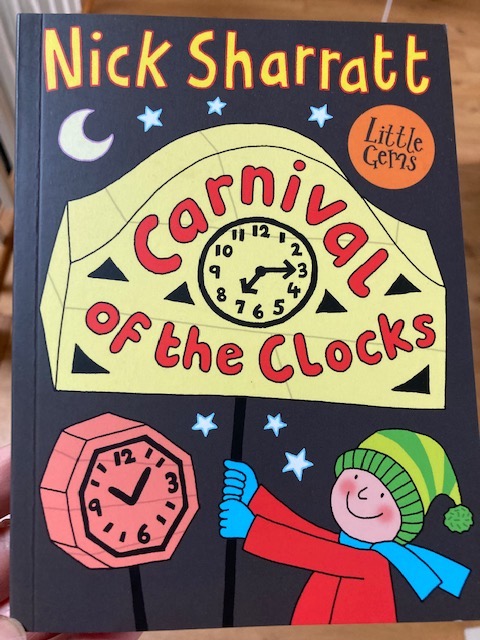
Christmas Greetings and a 'Carnival of the Clocks' by Nick Sharratt, reviewed by Pippa Goodhart

Wishing all ABBA readers and contributors a very Merry Christmas and a Happy New Year.  


Awfully Big Blog Adventure closes the holidays today, returning at the start of January.

Meanwhile, happy reading and writing, everyone, and thank you all!


Today is the winter solstice; the shortest, darkest, day of the year before we begin to head towards spring and summer once more; a moment worth celebrating. 


            In Brighton, on the evening of the 21st December, home-made paper lanterns are lit and paraded through the city before being burnt on a big bonfire.

            Nick Sharratt’s Little Gem highly illustrated ‘Carnival of the Clocks’ story lets readers share that dark-light excitement and community celebration. 

            We meet the children and make the lanterns, then ‘Mrs Thistle blows her whistle’, and off we go to join the procession. Drum beats accompany the walk past the sights of Brighton. Then we look up at all the proud parents waving to us. We pass the lanterns to go into the bonfire pile, and we countdown ‘… three, two, one!’ to see the flames leap, and fireworks explode in the sky above. 

            Truly a gem of a bright fun accessible little book. 


And Hooray for a Lovely Christmas too!

Saturday, 22 January 2022

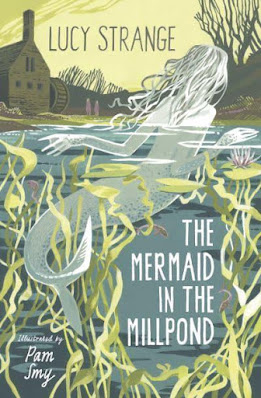
'The Mermaid in the Millpond', written by Lucy Strange, illustrated by Pam Smy, reviewed by Pippa Goodhart


As soon as I first heard about this book I wanted to get my hands on it. I’ve always loved Pam Smy’s beautiful and powerful illustration work. Isn’t that cover a beauty? Note that the mermaid looks a standard mermaid at first glance … but that left hand is clearly froggy-webbed; as strange as the author’s surname!


I had spent a happy couple of years researching and then writing my own children’s novel about a London girl sent from a workhouse to work in a northern cotton mill in Victorian times, just as Bess does in this story. But my novel (‘The Twisted Threads of Polly Freeman’) has no mermaid in it, and it was the mixing of a mythical mermaid with a historical setting that particularly caught my interest. We don’t often see fantasy and history played together in a new story.


This is a compelling story of two orphans trapped and owned by a terrifying Victorian mill system, and facing the menace of a monstrous sounding mermaid in the mill pond when they decide to run away. That mermaid is said to eat people! She is definitely wild and beastly, eating a fish live with her sharp teeth, breathing through gills. But maybe she, too, is trapped and in need of help? 


This is a brief but exciting adventure, which also explores freedom and the need we all have for friends. 


This is a Barrington Stoke novel, short and accessible to read, aimed at a reading age of eight plus, but of interest to older children (and adults) too. Many readers are going to love it.