Showing posts with label author promotion. Show all posts

Saturday, 22 December 2018

Promoting Yourself as an Author, By Dan Metcalf

Being an author nowadays is all about making yourself known, and here are six great pointers as to the most effective ways:

1. Be present - Everywhere! Get on all the social media sites so your readers can find you and interact. They want to see you and relate to you. They've already bonded with your writing, and you can help guide them towards your other books so they can love you even more!

2. Be predictable - When updating your internet presence, consider having a set time each day/week/month that you update. It can be anything  - a daily tweet, a weekly video on YouTube, a fortnightly podcast or a monthly blog post. Whatever it is, make it so your fans are waiting for it to pop into their inbox or notifications.


3. Be persistent - This doesn't mean badgering your followers with spam! Simply start something and keep at it. If you're podcasting, do it regularly (see above) and for a long time. It may take a few years to reach your peak audience figures, but it'll be worth it. You're in this author game for the long haul, and your readers are too. Continue your online presence (and offline too - conferences and shows are a must) until everyone knows who you are.


4. Be friendly - A no brainer this one. Be nice. No one is going to follow the person picking fights on twitter or commenting on the fan's poor grammar in a YouTube comment. Be approachable, friendly and open.


5. Be generous - It's not all about you, y'know! Focus on your fans. What do they want? If it's a podcast, do it. If it's merchandise, do it. And be generous with your accounts when you hit the big numbers of followers - you could help promote a friend's book or Kickstarter project, or turn your attentions to altruism and help raise money for a good cause.


6. Be yourself - This the most important. No one wants to hear from a smarmy salesman. Be you. That's who fans want to hear from; they fell in love with your voice, your sense of humour and your view of the world, so give it to 'em in spades.


Happy Chrimbo everyone. 

___
Dan Metcalf is a children's writer. His most recent book, Paw Prints in the Somme, about the cats that served in the First World War, is available via http://danmetcalf.co.uk/pawprints 

Friday, 22 June 2018

On Promotional Events, by Dan Metcalf

Ooh, it’s a quandary, isn’t it? Whether or not to ‘launch’ your book or let it slowly slide out into the world like a beached whale getting picked up by the tide once more? Whether to tour around flogging your wares or to concentrate on getting the next thing written and letting the stories do their own marketing?

For my most recent book, Dino Wars: Rise of the Raptors, I had thought long and hard about doing a book launch; a local cafe and caterer had offered their space but frankly my imposter syndrome kicked in and I felt unworthy to hold my own party and blow my own trumpet in this way. I’ve a few books under my belt now but I’m still very much a minnow in the world of kid’s lit, so I felt uneasy launching the book to a great fanfare – and who would come?

No, I felt more comfortable (for some reason) booking a small tour of events in the May half term where I would stand in front of complete strangers and tell jokes, read parts of my book and play silly balloon games with the assembled children. I set about finding places to hold them and soon found a few Dinosaur related venues – I live in Devon, which plays up its tourist destination of the Jurassic Coast well. Soon I had book events at the Dinosaur Museum inDorchester and Torquay's Dinosaur World. 
Dinosaur Wolrd Torquay, With Thanks to Lyn Jolly

This is where my experiences become a cautionary tale. Yes, my choice to go to dino-related venues was undoubtedly genius, (Okay, first suggested by my wife) but they bring their own challenges. Most are small affairs and have little space in which to hold events; an event in another fossil museum was a no-go due to lack of space. Dorchester had a cinema room which they were willing to hand over to me for my hour sessions, while Torquay had to clear part of their gift shop. Also, if you’re taking up space then it may affect their footfall numbers – we did the Dorchester event while still open during the day, but made the Torquay one a ticketed event for five o’clock when the venue was closed to the public. Another challenge was the fact that museums may not have the same relationships with wholesalers that a bookshop or library might have, so it was touch-and-go whether we would have enough copies to sell.

Both were well attended, largely due to the weather; it rained in Dorchester, driving families into the indoor tourist attractions, and the patchy weather coupled with it being the end of the day and parents being desperate for something to do meant that Torquay, while not packed out, was comfortably attended. Book sales were respectable – not going to bother the New York Times Bestsellers, but the venues were happy, and retained all the stock they had bought to keep in their gift shops. This means that Dino Wars is in two more places that they would have been normally, and places where children are hungry to spend their parent’s money. My evil plan to dominate the earth is coming together. Mwuh-ha-ha-haa!

Two other events in a well-known bookshop chain (beginning with W and rhyming with Porterstones) were weather-dependent – one had a handful of attendees and sales (showers), while the other, on a gloriously hot day when the entire population was at the park, pub or beach, was sloooooow. Again though, the silver lining is that stock remained and is now on the shelf in these High Street vendors, which they would not have been otherwise.

With Thanks to Claire Barker
Another event, organised by a specialist children’s bookshop and local library, had just one attendee. It was another hot day but we had fun nonetheless. I was even told afterwards that the child had only recently gone to live with them, as he was in foster care and it was the first quality time they had spent with them, which made the visit all the more worthwhile.

The half-term events? Tough to judge – I enjoyed doing them, but I’m not sure a spring-summer holiday is the best time to hold an indoor event. You live and learn.

The negligible results of my self-organised, self-promoted week of events was put into sharp contrast when just a fortnight later I was taken ‘on tour’ by my local bookshop, the splendid Crediton Community Bookshop. Arranged by the formidable Cathie, I was picked up at my house by their schools volunteer team and driven to ten schools over four days, speaking to over 800 children in years 2-5. The end of the week was topped off by a creative writing workshop in the bookshop after school for 17 children.

Results? Amazing. Cathie had a prediction (based on years of experience) that for every three children we saw, we would sell one book. This ratio worked perfectly: if I spoke to 180 children, we sold 60 books. If I spoke to 30 children, we sold 10. This didn’t quite work out at one book a child; a great deal on my Lottie Lipton Adventures saw many buying three books for £10, but we sold a handsome amount of Dino Wars too. There were a few challenges; miscommunication with the school meant that we weren’t able to stay after school as they wanted, meaning that some children may have been disappointed. This blow was softened by the bookshop handing out a £1 voucher to be used in the shop to every child. Some schools had promoted the visits more than others. Those that had talked the visit up in class and used some learning time to read my books to the children and research me (via my website) got a lot more out of the visit, and we sold a lot more books. Some children however entered the hall with looks of confusion on their faces and no money in hand – the staff insisted they had sent home an email or text to parents to inform them of my visit, but as Cathie put it, ‘Pupil pester power is the best promo tool’.

Lessons learned? Perhaps that I, as solo worker trying to write and promote at the same time, have not got the time to do it all. Visits are far more effective when a) organised and promoted properly and b) when the children have no choice but to turn up (I.E. Schools). The location of the event also has an amazing effect on how the children behave; in schools they are involved, better behaved and more interactive. In a public setting around parents they clam up and will barely say hello!
Now where did I leave that T-Rex?
This may not be news to a lot of you, but I thought it prudent that I note down these observations for myself even if not for anyone else. Anyway, aside from a couple of school visits that was my ‘launch’ event programme for Dino Wars: Rise of the Raptors. Now I can sit back until at least September, when Dino Wars 2: The Trials of Terror is released and the whole thing starts again!

Authors! What’s your experience of school visits / bookshop tours / alternative venues? What works best for you? Let me know in the comments and share with your peers!


Dan Metcalf is a children’s writer from south-west England. His latest book, Dino Wars: Rise of the Raptors is out now from Maverick Children’s Books. He is available for speaking at schools, libraries and literary festivals. See more at danmetcalf.co.uk

Thursday, 22 March 2018

Passive Promotion, by Dan Metcalf

I have new book in the pipeline which brings me to the age-old quandary of the independent writer – how much time to I devote to promoting and marketing the thing? Should I go all-out and promote like crazy or simply get on with the next book? Try as I might I can’t seem to reconcile in my head that these two very different disciplines – writing and promoting – are part of the same job. I’m a writer and therefore I must do both, but they feel so polar opposite that they may as well be separate; one involves locking myself in a room with a laptop and the other has me out in front of whole schools, acting like a buffoon. Jekyll and Hyde had it easy.

So I have a few things set up that might help market my book while I slave away over a hot laptop (seriously, it gets mega-hot. I think the fan’s broken). First is a twitter account which I have set up to autotweet with promo messages. The book is called Dino Wars and so I have collated 100 or so of my favourite dinosaur jokes ('Why did the dinosaur cross the road? Because the chicken hadn't evolved yet!") and set up a set-it-and-forget-it spreadsheet which will tweet out at whatever frequency I desire (currently every 6 hours – don’t want to over-do the auto tweets or peeps start to unfollow). I follow them up with a hashtag #dinowars and a link to a landing page – a page on my website that has the blurb of the book, an amazon pre-sale link and a place to subscribe to my newsletter.

I have also pre-scheduled my facebook page to post an image twice a week. Mostly these are images I made on the free tool Canva using review quotes from lovely people who allowed my publishers to send them proof copies. (Some I made on free graphic program Inkscape) 
It also helps to have nice, eloquent friends and reviewers to send them to.

I’m friends with a fantastic local animation company, Yellow Mouse Studios, which have created an amazing poster: at first glance it is just the cover of the book, but scan it with an augmented reality app and the graphics come alive!


This can be put up in bookshops or sent (even by email) to schools to print out for their own libraries and book corners.

I made a book trailer that hopefully does a lot of the talking for me; this was made by grabbing the images by the brilliantly talented Aaron Blecha from the proof PDF, importing them into Windows Movie Maker and layering over a piece of music from the free music archive. The end result can then be uploaded to YouTube, Twitter, Facebook and Linked In, as well as featured on my own website as an embedded video.

I’ll also be making a small video soon where I read the first chapter of the book, something I do with my phone (a dodgy Samsung android jobby – no iPhones here). I’ve heard that live video is the way to go for marketing – just hit ‘go live’ or whatever on Facebook and your followers will be notified. I’m still gathering the nerves for that one.

A couple of months ago I appeared on a podcast to promo the US editions of my Lottie Lipton books and I plan to go back on there (if they, or anyone else for that matter, will have me). Podcasting is a growth area and one which writers can’t afford to ignore.

And freebies. Everyone loves freebies, right? So on my website (and promoted on twitter, FB etc) will be a free Dino Wars Trump Game, featuring all the characters from the first book and their stats for people to print out and play.
 
So why am I telling you all this? The cynical person would say that it is to show off about my books and my promo techniques, but they’d only be 40% correct. The point is, I’m doing all these things and they were 100% free. Yes, I got lucky with the augmented reality poster, but someone wishing to copy this could just as easily send their normal poster to schools. With all this available at our fingertips and for no money whatsoever, a writer would be crazy not to take advantage of the passive promotion tools at our disposal.
---
Dan Metcalf is a Children's Author from Devon. His new book is (if you hadn't guessed) Dino Wars and will be out from Maverick Books on the 28th April. Check out danmetcalf.co.uk/dinowars

Tuesday, 12 August 2014

What's the Point of Festivals?


I’ve just returned from Edinburgh on a train packed to the gills with rucksacks, sleeping bags, and the odd piece of bin-bag wrapped set. Yes, it’s festival time and the returning festival-goers include, as they have for the last twenty-two years, me.

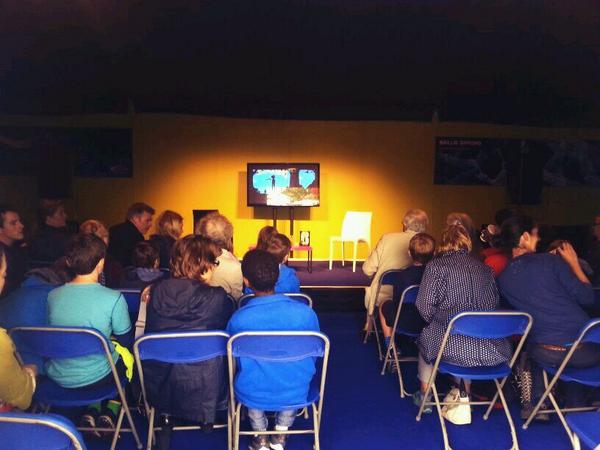
I’ve also been a participant this year – talking at the Edinburgh Book Festival, just one of seven festivals that completely take over the Scottish capital every August. At the same time as I was talking to 80 children about The Dark Wild yesterday, Alex Salmond was discussing the referendum next door, and had you struck out in almost any direction from Charlotte Square in search of alternative fare, I guarantee you could have found some event to suit your palate.
Embedded image permalink
My audience at the Edinburgh Book Festival 2014

 I wasn’t with my partner on this occasion, who was giving a talk on a forgotten Elizabethan play…at another festival, Wilderness, in Oxfordshire. Wilderness is part of a new crop of ‘boutique’ festivals offering  a midsummer’s assortment of revels from hip bands to literary events to Madhatter’s Teaparties. The lakes and Arcadian lawns of Wilderness are a far cry from the cobbles and closes of Edinburgh, although this weekend they shared the same weather.

Earlier this summer we did go to the same festival, to the brand new Curious Arts – a kind of Voewood-on-Sea, in the charming grounds of Pylewell Park, a Regency mansion with a view  from the terrace straight down to the Isle of Wight. You could dance to Ed Harcourt in the evening, listen to Lady Antonia Fraser on the Great Reform Act after breakfast, hunt a Jabberwocky in the Aboretum all afternoon, and finish the day with a gin cocktail leaning over a crumbling balustrade watching ships pass on the Solent.

Pylewell Park, the setting for the Curious Arts Festival


All very charming and civilised. But as I returned for the umpteenth time from the granddaddy of all festivals last night – I found myself meditating on the true attraction of such gatherings. What’s the point of a festival?

Let me first declare an interest in this British summer sport. I began my career programming a large theatre on the Edinburgh Fringe,the Pleasance (of which I am now a Trustee). Each year we have enough shows in enough different rooms to momentarily make us one of the largest arts venues in Europe.

I’ve sat in the sun at Hay and waded through the mud at Latitude. I’ve spoken at a tiny theatre festival that just takes over three floors of one building in Suffolk and a new book festival in Devon which was just a room in a library.  Later this year I’ll be leading a wildlife walk at Bath Festival and then dashing off to sit on a panel at Cheltenham. You can festival it up from Port Elliot  to Adelaide to Dubai, if you want to.

It would seem that we are at peak Festival, with over 700 events taking place this year classified as one,  about 300 of them literary.

 As a writer, you will be told many things about festivals, as I know theatre companies, musicians and comedians are told about theirs. You will be told they are essential for profile, that ‘festivals are the new bookshops’ and a great way for connecting with readers.

I don’t wholly dispute those things. Being in a Festival programme, especially an established one, does lift  perception of you and your titles. Sales wise I’m less sure – I had a sold out talk at Edinburgh yesterday, in a 75 seat room, and probably sold 20 odd books, which is great - but it’s not the sole reason I went.

You certainly don’t go for the money. Some Festivals, like Bath and Edinburgh offer a token fee, and some like Hay, offer a case of wine and a flower. And as someone involved with the running of a festival venue, I can report that the ever increasing rental, accommodation, promotional, regulatory and staff costs associated with mounting one of these temporary gatherings mean profits are only ever normally found behind the bar rather than the box office.

It’s not cheap for audience members either.  Individual events may carry an average ticket price of £8-10 but the travel, accommodation, taxi and food/drink bill means the minimum festival tab comes close to the £100 prices offered by the all inclusive weekend events like Curious Arts, and can be often more - if you visited Edinburgh all week, for example.

Why do we all go and what do we take away?

A dull critic of this pastime might argue that at best audience members take away an empty wallet and often a hangover, and we take away some book sales and inclusion in a programme mailing list.

Of course, all of us are in search of something much more profound.

Festivals may be promoted effectively but I would not place them under the heading of ‘Effective Promotion’ for any artist. There are numerous more sober and less fun ways to do that – just speak to your publisher’s sales and marketing department. But festivals are also fun for them to attend too.

Festivals, especially the summer ones, satisfy a much deeper urge in us to ‘gather.’ Writing, as we all know, can be a damnably lonely business, just you, your ideas and a cold screen all day long. School visits are often hectic and at best your longest conversation with an adult might be five minutes on logistics over a coffee in the staff room.

I think all of us, from writers to actors to comedians to singers to audience members, go to festivals primarily to talk, and to connect. We need our events, sure, we need a reason to gather, our cover story; but the real business of a Festival takes place in the green room, the author’s yurt, the performer’s bar and the pop-up café franchise. 

The classic image of a festival is a big tent, and that is the heart of their appeal. Where else can one talk to Archbishop Emeritus Rowan Williams, the Gruffalo and First Minister Salmond all in one room? Even if I chose not to. They are harvest festivals without the back breaking labour (unless perhaps you’re in an acrobatic troupe), weddings for all, and the very best are always tinged with midsummer madness.
Embedded image permalink
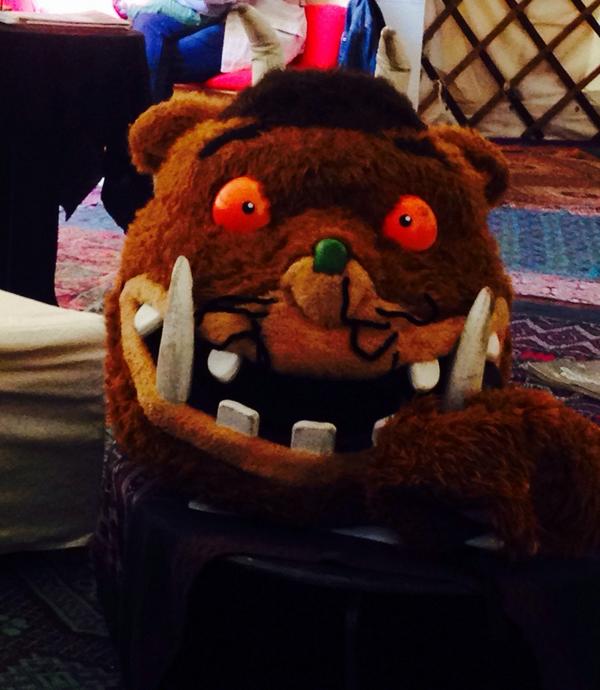
The Gruffalo loses his head at all the excitement in the Edinburgh Author's Yurt

We gather, we discover, share ideas, news, worries and gossip like crazy.  Twitter handles become three dimensional, books expand to reveal the lives behind them, and readers are no longer scary anonymous Amazon commenters.

We might sell the odd book or register with a bookseller who didn’t know us before. All of which is great and worthwhile. But next time your publisher invites you to a festival, don’t worry too much about the fee or whether the sales will be worth it, just gather in the tent  (ideally under a super moon) and enjoy the craic.

Piers Torday
@PiersTorday
www.pierstorday.co.uk

If anyone has any memorable Festival experiences, good or bad, do share them below!


Thursday, 30 January 2014

The Seven Stages Of A Book - Lari Don

A book goes through many different stages as it travels from the writer’s mind to the reader’s mind, and the writer’s relationship with the book changes at each stage.

This week, I’ve experienced one of the major shifts in my relationship with a book: when it goes from being something I have the power to change, and becomes something I can no longer change, but must now start to promote. And I think I find this shift the most terrifying of all.

But looking up at my shelves, some with only a few sheets of scribbled paper, and some creaking with heaps of notebooks and piles of manuscripts, I realise that I have a book at almost every stage here in my study.

When I’m writing, I go through seven stages of a book, which may be conveniently Shakespearean, but does seem to accurately represent my writing process. I wonder if other writers recognise these stages?

# 1 The thrilling moment when the idea for a book emerges, which may be the only moment the book is ever entirely perfect!

# 2 Thinking and scribbling and considering: ‘what is this story about?’, ‘what am I trying to find out?’, ‘who are my characters?’, ‘what are the big questions?’, ‘what happens next?’ ‘how will I ever defeat the baddie?’ This bit is incredibly exciting, filled with possibilities.
the scribbling stage

# 3 Actually sitting down and writing it. Finding the story and putting it into words. For me this usually involves lots of self-imposed deadlines, late nights and ignoring my family. I find this bit exciting too. (I realise, writing the stages down like this, that I find every stage of writing a book exciting. I suppose that’s why I’m a writer…)

# 4 Turning the story into a manuscript. My first and most personal edit - lots of reading out loud, and cutting the word count by massive slashing and burning. This stage is perhaps less heart-thumpingly exciting but it is very satisfying.

 # 5 The real editing, with an actual editor. This stage can be emotionally draining, but by this time I can also see the original idea turning into a book that other people can read. Which is, of course, quite exciting!
the proofreading stage
 
# 6 Proofreading of the layouts. I did this last week, for my next novel Mind Blind. This stage is both exciting and chillingly terrifying. Any silly little mistakes I miss here will be printed in real books to be read by real readers. Which is a great incentive to keep your eyes wide open and focussed as you proofread!

# 7 Finally, the shift I’ve experienced this week: the shift from the writer creating a story to the writer promoting a book. I’ve stopped meeting new characters, and started having meetings with marketing people. I’ve stopped writing the story and started looking for extracts of the story I can read at book festivals, I’ve stopped thinking about chapter length and started thinking about ‘content’ for websites.

Can you tell I find this final stage a little less exciting? But really, this should be the most exciting shift of all. This is the bit where I look ahead to the story being read by readers, and that is, after all, what really excited me right at the start when I had the original idea, which got me scribbling, which got me writing, then editing…

Anyway, even if I will spend the next few months promoting this teen thriller, I’ve also just had another idea. So I’m starting a new relationship, with a new story and some new questions and new characters, and perhaps that relationship will go all the way too…


Lari Don is the award-winning author of 20 books for all ages, including a teen thriller, fantasy novels for 8 – 12s, picture books, retellings of traditional tales and novellas for reluctant readers. 

Tuesday, 17 September 2013

'Book Week Coming Up' - Saviour Pirotta

It's that time of the year when teachers and and literacy co-oridinators up and down the country begin to organise their book weeks, a lot of which take place in October and early November.  For many writers, school visits provide an income stream which, along with PLR and ALCS, is becoming increasingly important in this age of heavy discounting and shrinking royalties.  I've been visiting schools for nearly thirty years now, so I thought I'd pass on some tips on how to get the most out of the experience.

We all know why the school has booked us.  They want to promote literacy and the love of books. They want the kids to get excited about reading and writing by meeting a real-life author.  But what do WE want from school visits? I find it pays to sit myself down once in a while and work out a school visit strategy for the next few months.  In fact I do this at the beginning of every term; it helps me decide which schools I accept to visit.

Do I just need the cash to keep me going till the next round of royalty payments, in which case I tend to say yes to the first schools that phone. That way I can get my p.a. diary filled and my work schedule planned as quickly as possible.  Is there a new book or series I want to promote or sell?  If the latter is the correct answer, I allocate some time to rehearsing my performance. I set about getting postcards printed, my website updated to reflect the promotion and harassing my publishers for extra free copies of the book in question. It's amazing how quickly a book starts to look tatty once it's been passed round a couple of staffrooms.


I find giving out postcards a brilliant way of promoting my website, and by extension my books.  I try to have an exciting image on the front and my website address on the back, in an easy-to-read font.  Children do not dip in out of the net like us grown up fogeys do; they inhabit it.  The first thing they do when they hear your name is 'google' you, so if you don't have a snazzy website for them to explore you're on a one-way hike to loserville as far as they're concerned.  Don't bother putting on any more info than your website address on the card.  Stick all that on the site itself, where children can check it out at their leisure.  If the site is attractive enough, visitors will keep coming back, giving you the perfect opportunity to engage with them and promote your books.  Which is a heck of a lot to get out of a little postcard!  I give mine out at the end of the day, usually sticking to one or two per class.  Resist the temptation to put details of your fb and twitter pages on the card unless you write books for KS3.  Children under 13 are not supposed to have any of these social media accounts.

Don't make the mistake of putting free stories on your site.  I did this for a while and it was alarming how many schools went from 'we bought some of your books' to 'we downloaded your stories from the net.'  Nowadays I tell the kids that if they log on to my site when they get home, they would find a free story.  But it only stays up for a day, and only appears after a visit, not before.


Some authors only visit schools if they're allowed to sell their books at the end of the day.  I don't do this, mainly because I don't drive and can only lug a few copies of my books around.  Recently, though, I signed up with Authors Aloud who organise the sale of my books with local bookshops. I do insist, however, that the children are familiar with my work before the visit.  More often than not they already have some of my books in the school library, although they are not always aware of it.  I just tell them to go have a good look round. Or I might suggest they borrow them from the local library. If you visit a lot of schools in the same area the local schools library service might even agree to buy a certain amount of your books which they send out in special 'author' boxes.

It sounds like a lot of work, and it is, but I consider author visits a vital part of our metiere and well worth the time invested in them.  And they're jolly good fun too!! It's like going back to school without the danger of being told off!    

Visit my site at www.spirotta.com
I do school visits through Authors Aloud. Visit their website here.