Showing posts with label beginning a story. Show all posts

Tuesday, 5 February 2019

Great Starts by Alex English

This week has been a busy one for me and my fellow Bath Spa graduates as it's been the release of Bookshelf, the anthology of extracts of our work produced on the MA Writing for Young People course. It's the culmination of a lot of hard graft and I feel very proud of what we've produced.
A shameless plug for the 2018 MAWYP anthology!
The anthology consists of the first two thousand words of each student's manuscript for children or young adults and, after weeks of hard work with the rest of the team, I've at last got round to reading these twenty-six brilliant little nuggets of writing. It was hugely enjoyable, but it also got me thinking – what does make a great beginning to a children's (or indeed any) novel?

This is what hooks me when I read, and it's what I look at when I'm editing work too:

1. Whose story is it?

It sounds obvious, but I want to know straight away who my protagonist is. Whose side am I on? If I like them, that's even better. And please don't overwhelm me with zillions of characters from the get-go, feed them in gradually so my feeble mind can cope.

2. Where am I?

I don't mean starting with swathes of description, a few simple details are enough, but I need to feel grounded somewhere pretty much straight away. If there's a sense of the wider world then that's great too. Whatever you choose to include, just make it specific – the tick of the grandfather clock in the eastern hall, Grandpa's drawer of mermaids' purses and scallop shells or a screeching wind rattling the orphanage shutters all help to set the scene in a few words.  

3. Is anything actually happening?

Again, this seems obvious, but something needs to be happening in the first chapter. Characters shouldn't just sit and talk, they should talk while they're doing something interesting. Let them have that argument while they're trying to break into the castle, or let them try to hide that secret from their mother while she's cutting their hair. It's a whole lot more fun to write, and more fun to read too. 

4. What's at stake?

A sense of something deeply important being at risk for a character keeps me on the edge of my seat and therefore keeps me reading. This doesn't need to be life and death (of course it could be, depending on the genre), but it needs to mean life and death to the character. 

5. Is there a sense of mystery?

This might be a personal one, and I don't think this is essential for every story, but a sense of foreboding, of something not-quite-right lurking just beneath the surface or questions to be answered draws me in every time! I am an absolute sucker for a dark family secret, a secret map, an ominous portent or the appearance of a mysterious stranger.    

What do you think makes a great first few pages? Have I missed anything off my checklist? And do please read the Bookshelf anthology, I'm hugely proud of my MA classmates and I hope you'll agree that our hard work has paid off.

Alex English is a graduate of Bath Spa University's MA Writing for Young People. Her picture books Yuck said the Yak, Pirates Don't Drive Diggers and Mine Mine Mine said the Porcupine are published by Maverick Arts Publishing and she has more forthcoming from Bloomsbury and Faber & Faber.
www.alexenglish.co.uk


Thursday, 20 February 2014

In medias res - Joan Lennon

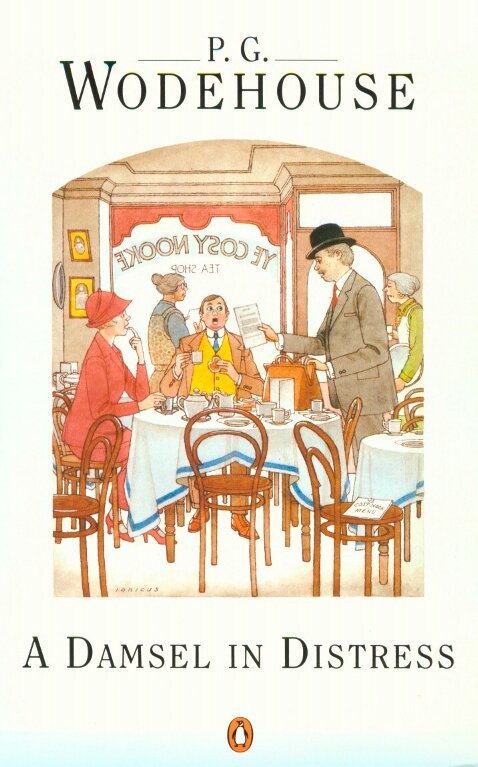
In 1919, PG Wodehouse began his novel A Damsel in Distress with these words: 

Inasmuch as the scene of this story is that historic pile, Belpher Castle, in the county of Hampshire, it would be an agreeable task to open it with a leisurely description of the place, followed by some notes on the history of the Earls of Marshmoreton, who have owned it since the fifteenth century.  Unfortunately, in these days of rush and hurry, a novelist works at a disadvantage.  He must leap into the middle of his tale with as little delay as he would employ in boarding a moving tramcar.   He must get off the mark with the smooth swiftness of a jack-rabbit surprised while lunching.  Otherwise, people throw him aside and go out to picture palaces.


It isn't exactly new, of course - long before picture palaces, Horace says of the ideal epic poet:

Nor does he begin the Trojan War from the egg,
but always he hurries to the action, and snatches the listener into the middle of things ...
(Wikipedia)  

 I sat in on one of Alan Bissett's creative writing sessions once.  He had us writing an opening to a story.  When we had finished, he suggested we delete the first seven sentences and that THAT would be where the story really began. We read out our original opening sentences, and the new opening, and very frequently, the new one was, indeed, streets better. (I tried this with a group of young writers.  The first lad I asked to read out, looked at me sadly and said, "I only wrote seven sentences.")

At one stage, I used to start my own creative writing sessions with the words, "Every good story begins with what the main character had for breakfast."  I was, of course, hoping for a chorus of "No it doesn't - that's boring - good stories start with something exciting!"  What I tended to get was a chorus of blank stares.  I stopped using that particular opener.


(image: Abe Books)


(image: The Project Gutenberg Project)


(image: Penguin Books)

But, in this time of rush and hurry, have we got stuck with in medias res as the only way?  When was the last time you wrote a book that didn't open like a rabbit surprised?  When was the last time you read one? 

Are we missing out?  Tell me what you think ...


Joan Lennon's website.
Joan Lennon's blog.

Thursday, 30 January 2014

The Seven Stages Of A Book - Lari Don

A book goes through many different stages as it travels from the writer’s mind to the reader’s mind, and the writer’s relationship with the book changes at each stage.

This week, I’ve experienced one of the major shifts in my relationship with a book: when it goes from being something I have the power to change, and becomes something I can no longer change, but must now start to promote. And I think I find this shift the most terrifying of all.

But looking up at my shelves, some with only a few sheets of scribbled paper, and some creaking with heaps of notebooks and piles of manuscripts, I realise that I have a book at almost every stage here in my study.

When I’m writing, I go through seven stages of a book, which may be conveniently Shakespearean, but does seem to accurately represent my writing process. I wonder if other writers recognise these stages?

# 1 The thrilling moment when the idea for a book emerges, which may be the only moment the book is ever entirely perfect!

# 2 Thinking and scribbling and considering: ‘what is this story about?’, ‘what am I trying to find out?’, ‘who are my characters?’, ‘what are the big questions?’, ‘what happens next?’ ‘how will I ever defeat the baddie?’ This bit is incredibly exciting, filled with possibilities.
the scribbling stage

# 3 Actually sitting down and writing it. Finding the story and putting it into words. For me this usually involves lots of self-imposed deadlines, late nights and ignoring my family. I find this bit exciting too. (I realise, writing the stages down like this, that I find every stage of writing a book exciting. I suppose that’s why I’m a writer…)

# 4 Turning the story into a manuscript. My first and most personal edit - lots of reading out loud, and cutting the word count by massive slashing and burning. This stage is perhaps less heart-thumpingly exciting but it is very satisfying.

 # 5 The real editing, with an actual editor. This stage can be emotionally draining, but by this time I can also see the original idea turning into a book that other people can read. Which is, of course, quite exciting!
the proofreading stage
 
# 6 Proofreading of the layouts. I did this last week, for my next novel Mind Blind. This stage is both exciting and chillingly terrifying. Any silly little mistakes I miss here will be printed in real books to be read by real readers. Which is a great incentive to keep your eyes wide open and focussed as you proofread!

# 7 Finally, the shift I’ve experienced this week: the shift from the writer creating a story to the writer promoting a book. I’ve stopped meeting new characters, and started having meetings with marketing people. I’ve stopped writing the story and started looking for extracts of the story I can read at book festivals, I’ve stopped thinking about chapter length and started thinking about ‘content’ for websites.

Can you tell I find this final stage a little less exciting? But really, this should be the most exciting shift of all. This is the bit where I look ahead to the story being read by readers, and that is, after all, what really excited me right at the start when I had the original idea, which got me scribbling, which got me writing, then editing…

Anyway, even if I will spend the next few months promoting this teen thriller, I’ve also just had another idea. So I’m starting a new relationship, with a new story and some new questions and new characters, and perhaps that relationship will go all the way too…


Lari Don is the award-winning author of 20 books for all ages, including a teen thriller, fantasy novels for 8 – 12s, picture books, retellings of traditional tales and novellas for reluctant readers. 

Wednesday, 3 October 2012

Looking Deeper - Lynne Garner

Each year I set myself a photography challenge. This year I decided my challenge would be to take photographs of a small strip of land (seen right).

Each day this is part of the walk to the local supermarket for many a shopper. It is the way to school for a large number of local children. I assume in their hurry to get to their destination many of them will simply see an untidy mess of weeds and nettles. I wanted to look beyond that and discover what was going on hidden in and under that mass of the green foliage.

So at least a couple of times a week when I took the dog for a walk I made sure I had my camera with me. Between ball throwing I spent time looking deeper. I soon discovered a hidden world of bugs living out their lives. What follows are just a few of the characters I discovered.


Quite a number of these


Loads of these


A number of these


Just one of these


Lots of these little chaps


And just one or two of these ... 

Now you may be wondering what this has to do with writing and books. Well the more time I spent meeting my challenge the more I realised this is how I tend to view the world. I try look beyond the chaos of life and use things that interest me in my writing. I take one idea and let my subconscious bend and shape it to create a story. So if you're stuck for an idea try to look beyond the weeds and the nettles and find the creepy crawlies hidden beneath. Hopefully you'll discover something you can use as inspiration for your next piece of writing.

Lynne Garner
Follow me on Twitter @lynnegarner

I also teach and the following writing eCourses start on the 6th October 2012

Monday, 13 August 2012

On your marks...set...write!


To begin at the beginning…
Well, that’s easier said than done, Dylan, old lad. 

Most writers starting out on the long journey of creating a new novel are daunted by how (and where) to open their story. At what point do you start the tale? Do you leap into the action in the hope of grabbing the reader by the throat, rationalising with yourself that you’ll be able to wring the backstory out of your characters as you go along, or do you go back a bit, carefully setting things up with clever hooks to tantalise the reader enough that they will have no choice but to read on.
Writer’s block (for me, at least) is what happens when you struggle too much on finding the right words rather than getting on with the process of simply creating, and this is never more so than when starting a new book.
I have come to learn that you can’t wait for the perfect beginning. I used to do just that, and I would feel a rising sense of bewilderment and frustration when I couldn’t come up with the best possible start for a story. That way madness lies. 

There is no point gazing at that blinking cursor in the top left corner of a blank page, refusing to go on until you get the opening paragraphs of your work absolutely nailed. Instead, you must learn to write on, trusting that the revision process will resolve any issues you have. It’s not easy – doubts constantly nag at you, and the overwhelming desire is to keep going back and change things, especially those pesky first few chapters. Do yourself a big favour and try to overcome this. If you are really struggling, forget the beginning altogether and write from the middle outwards. Get that first draft under your belt, and accept that it is flawed – maybe painfully so. I read somewhere that great writing comes from revision, not creation, and I truly believe this to be the case. Only with a first draft completed can you really go about making your story come to life and come up with that elusive, enthralling opening.


To begin at the beginning? Not necessarily, but begin you must.