Showing posts with label places to escape to. Show all posts

Sunday, 17 April 2016

Venice in Children's Books - Emma Barnes

I've escaped!  Actually, by the time you read this I will most likely be home again and my first trip to Venice will be receding like a dream. But meanwhile, I have a chance to muse, to relax and to refill the well of inspiration (while pigging out on ice cream).

Because of the peculiar way my mind works, when I knew I was going to Venice I started thinking about which children's books were set there, and to my surprise could hardly think of any - Cornelia Funke's The Thief Lord being the main exception.  (I also remembered Diana Wynne Jones's Magicians of Caprona - but that is surely a fantasy version of Venice's near neighbour, Verona.) So I started doing some digging, and happily I've discovered there are quite a few Venetian tales.  So if you are taking children to Venice, or simply want to bury yourself in children's books that are set there, here is a selection.  I haven't read most of them, which means that I will have plenty of books on my reading list when I get home.

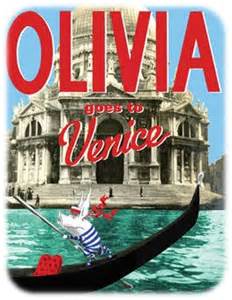
Picture Books


Younger Fiction

Rose and the Magician's Mask by Holly Webb
The Mermaid's Sister by Holly Webb
The Waterhorse by Holly Webb
The Mystery in Venice (Geronimo Stilton, No. 48)
The Merchant of Venice (children's version) by William Shakespeare
Othello (children's version) by William Shakespeare
The Phantom of Venice (Nancy Drew Book 78) by Carolyn Keene
LionBoy: The Chase by Zizou Corder
The Mozart Question by Michael Morpurgo
Heartsong by Kevin Crossley-Holland

Young Adult


The Thief Lord by Cornelia Funke
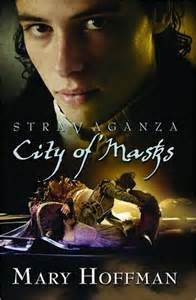
Stravaganza - City of Masks by Mary Hoffman
Daughter of Venice by Donna Jo Napoli
For the Love of Venice by Donna Jo Napoli
Shylock's Daughter by Mirjam Pressler
The Undrowned Child by Michelle Lovric
The Fate in the Box by Michelle Lovric
Talina in the Tower by Michelle Lovric
The Mourning Emporium by Michelle Lovric
The Flowing Queen (Trilogy) by Kai Meyer
Seeking Crystal by Joss Stirling


Adult

I don't want to expand too much into adult fiction.  But Brideshead Revisited is one book that I adored as a teenager, and the romantic settings, including Venice (home of Lord Marchmain and his mistress) were a big part of the appeal.

So which are your Venetian favourites?

------------------------------------------------------------------------------------------------------

Emma's Website
Emma’s Facebook Fanpage
Emma on Twitter - @EmmaBarnesWrite

Emma's Wild Thing series for 8+ about the naughtiest little sister ever. (Illustrated by Jamie Littler)
"Hilarious and heart-warming" The Scotsman

 Wolfie is a story of wolves, magic and snowy woods...
(Illustrated by Emma Chichester Clark)
"Funny, clever and satisfying..." Books for Keeps


Friday, 17 April 2015

Mixing Up Settings: Town, Country and the Books of Lorna Hill

View towards Dunstanburgh Castle
Last week I was in Northumberland. It's only a couple of hours from Leeds, where I live, but it feels like a different world.

Leeds is a big, bustling, ethnically diverse Northern city. The Northumberland coast, with its empty beaches, fishing villages and old-fashioned pubs, feels like a journey away in time as much as space. Even the tourist hot spots – like Lindisfarne – are tranquil, the cars abandoned once the causeway has been crossed, the many visitors wandering the windswept island by foot.


Daffies at Howick

There are some other wonderful aspects of going back in time -  like bookshops! How is it that while most British cities (including Leeds) struggle to support independents bookshops, the market town of Alnwick can offer the stupendous Barter Books: an enormous secondhand bookshop where you can take your dog, eat superb creamed mushrooms, and pick up a copy of Robert Fagles' translation of the Illiad, all in one happy trip. (I mean, who doesn't want to munch mushrooms while reading an Ancient Greek Epic with their dog sitting on their feet?)

A recent edition - published by Girls Gone By

Other aspects of time travel feel a little strange. So many things I take for granted don't seem to have impinged upon this corner of rural England. It made me think (because that's the peculiar way my mind works) of the only children's books I know set in rural Northumberland – those by Lorna Hill. They are undoubtedly of another age – and yet I wondered how much had really changed. (Well, some things certainly have.  Like fifteen-year-old boys waving horse whips at thirteen-year-old girls, and telling them to scrub their face free of makeup AT ONCE.)  But other things remain the same: the lakes, woods, mountains and beaches of Northumberland, in all its beauty, isolation and essential wildness. Hill, a vicar's wife in an isolated parish, knew Northumberland intimately and used it as the setting for many books.  One of her  “Marjorie” series – Stolen Holiday - is set very close to where I was staying, towards Dunstanburgh Castle.


"Mile upon mile of wonderful deeply golden sand and undulating sand-dunes, some of them so lofty that they were like miniature mountains; mile upon mile of deep blue-green sea flecked with white horses (there was a stiffish breeze blowing); and, last but not least, seeming to float in the shimmering water, lay the Farne Islands..."   Stolen Holiday

Her most popular books though, and the ones I remember growing up, were the “Wells” books – a series which combined rural adventures in Northumberland with the unlikely world of the ballet. These books have been reprinted countless times over the years.  And yet, though I never thought about it at the time, it's a very odd mix.

Veronica Weston, the heroine of the first two Wells books, spends her time shuttling between London – where she has grown up in seedy lodgings, and subsequently trains as a dancer – and Northumberland, where she is the “poor relation” to the rich Scott family, who live in a big estate in the Cheviot Hills, complete with lake, boathouse, woods, resident nanny, chauffeur, ponies and a gate lodge – wherein lives the Scotts' intriguing, infuriating, talented cousin Sebastian. The first book, A Dream of Sadler's Wells, begins with Veronica, recently orphaned, on the train north – and ends with a ride through the snow to catch the train south, and to make her audition for the prestigious ballet school Sadler's Wells, in Covent Garden. In the sequel, Veronica at the Wells, half of the book is set in London, in her digs and ballet school – where the mean-spirited Marcia Rutherford is plotting to wreck Veronica's promising dance career – and half at Christmas in Northumberland, where Veronica rides out with her cousins across the moors to visit a fellow dancer and almost gets caught in a storm.

All of the Wells books that I've read feature characters torn between the tranquil, outdoor pleasures of the country, and the stage-paint, bright lights and glitter of London. And they were by far Hill's most popular books – the strange combination of professional ballet and rural adventure chiming with young readers far more than those novels which were simply set in Northumberland.  Maybe it's not so surprising.  Ballet, even more than it is today, was a world of fame, glamour and celebrity - and many young readers must have yearned for these things, yet recognised, like Veronica, that it could have its downsides too.

Often books do need more than one element to take off – in this case, it is an unusual combination of activities (horse riding and ballet) and settings (London and rural Northumberland) that produces a certain magic that lifts these books out of the ordinary. There have been lots of books about ballet, and lots of books about ponies, but few have been as beloved as Lorna Hill's Wells books, which so oddly managed to do both.

Barter Books, Alnwick - geograph.org.uk - 777787
Barter Books - photo credit wfmillar [CC BY-SA 2.0 (http://creativecommons.org/licenses/by-sa/2.0)], via Wikimedia Commons

I went home reflecting that a bit of mix can be no bad thing for a novel – if you can get the mix right, and save it from turning into an incoherent mess. It made me wonder what diverse settings I might somehow put together in a book. All my children's books have been very firmly set in one locality - maybe that's something I could think about changing. I certainly plan to experiment.  I also felt comforted that if, despite the daffodils, the golden sands and cosy pubs, a little bit of me was craving my local Costa Coffee, a curry and a late-night convenience store (like Veronica hankering for Leicester Square), then perhaps that was OK too.

(Note: Some of Lorna Hill's books are still in print, and second hand copies are widely available - although I forgot to look for them in the excellent children's section at Barter Books.

More information on Lorna Hill here.)

Some more daffies!


 ------------------------------------------------------------------------------------------------------------
Emma's series for 8+ Wild Thing about the naughtiest little sister ever is published by Scholastic.
"Hilarious and heart-warming" The Scotsman

 Wolfie is published by Strident.  It is a story of wolves, magic and snowy woods...
"A real cracker of a book" Armadillo 
"Funny, clever and satisfying...thoroughly recommended" Books for Keeps

Emma's Website
Emma’s Facebook Fanpage
Emma on Twitter - @EmmaBarnesWrite

Saturday, 17 May 2014

Writing and Place: How Santa Barbara Sunshine Led To a Tale of Wolves and Snowy Woods – by Emma Barnes


I’ve just come back from a visit to Santa Barbara.  It was wonderful to revisit old haunts – the Daily Grind coffee shop, Chaucer Books – and to spend time watching the dolphins and pelicans from Arroyo Burro beach, smell the roses near the Mission, and most of all, bask in California sunshine after a long, cold, Yorkshire winter. 

It also made me think about the relationship between writing and place.

It was while I was in Santa Barbara I got a message saying that my book Wolfie had won a Fantastic Book Award (voted for by children across Lancashire).  This seemed fitting, as it was actually while I was staying in Santa Barbara, five years ago, that I wrote Wolfie.  And that made me think how odd it was that a book about wolves and deep winter woods (so atmospherically brought to life in Emma Chichester Clark’s illustrations) should have been created in such a completely different environment.

cover: Emma Chichester Clark
I remember the process well.  I’d walk my daughter to preschool – passing rows of jacaranda trees, an open air swimming pool and banks of creeping rosemary.  Then I’d go home and open my laptop and plunge into a world where a wolf appears in an ordinary British neighbourhood, and takes the heroine into a snow-filled world of adventure.  Maybe it was the contrast itself that got my imagination going?  I was certainly driven: tapping away intently, working against the clock until pick-up time.  

illustration: Emma Chichester Clark
 Of course many writers are inspired by their particular environment and its familiarity.  But I wonder how often writers are inspired to write about a setting precisely because it isn’t there?  Quite often, I suspect.  In some cases, this might be tinged with homesickness, or nostalgia for a place and time lost.

Certainly, one of the most evocative children’s books that I know, in terms of creating a setting, is Susan Cooper’s Dark Is Rising – part of the famous fantasy series of the same title.  This book is set in rural Berkshire near Windsor, and Will’s house, the village, the manor and the surrounding landscape are brilliantly portrayed: so real, so immediate, but also echoing with the years of history that lie behind.  When Will sets out into the woods he may meet a Smith from centuries past, or a tramp who has travelled through time, or the mythical Herne the Hunter: somehow the place can contain them all.  This capturing of landscape is also a feature of Cooper’s other books – the mountains of Wales in The Grey King, and a Cornish village in Greenwitch.

These books capture perfectly a British place and time (and I say time because I suspect the “present day” Berkshire that Cooper portrays has probably now been lost as totally as her Medieval or Dark Age versions, under the pressures of modern development).  Yet they were written when Cooper was far from her original home, living on the East Coast of the US.  In interviews, she has described how she was cross country skiing (a thoroughly un-British activity) when the idea of The Dark Is Rising came to her.

I’m certainly grateful for my time in California.  Towards the end of my stay I also went to the Santa Barbara Writer’s Conference, which was stimulating in a different way.  And I enjoyed happy hours running on the beach.  But mainly those months were a warm, calm, interlude: a bubble in which I managed to write a book.

Maybe one cold, winteryYorkshire morning I will sit down and find myself writing a tale of sunshine, sand and dolphins…
---------------------------------------------------------------------------------

Emma's new book, Wild Thing,  about the naughtiest little sister ever (and her bottom-biting ways), is out now from Scholastic. It is the first of a series for readers 8+.
"Hilarious and heart-warming" The Scotsman
"Charming modern version of My Naughty Little Sister" Armadillo Mag

 Wolfie is published by Strident.   Sometimes a Girl’s Best Friend is…a Wolf. 
Winner of 2014 Fantastic Book Award
"A real cracker of a book" Armadillo 
"Funny, clever and satisfying...thoroughly recommended" Books for Keeps
"This delightful story is an ideal mix of love and loyalty, stirred together with a little magic and fantasy" Carousel 

Emma's Website
Emma’s Facebook Fanpage
Emma on Twitter - @EmmaBarnesWrite

Monday, 2 September 2013

TOTAL ONSLAUGHT – Dianne Hofmeyr


Some writers take to their local coffee shops to write. I’ve a friend who goes to her nearby church. ‘It’s the only silent place on earth where I can hear my thoughts.’ If you live in the country you can probably ignore this entire blog but living in London, I’m experiencing a total onslaught of noise right now.

If you wander through South Kensington and see a demented woman on the other side of a caged window, offer her a banana or something to calm her down. I’m being besieged. The scaffolding that has been put up directly in front of the room I work in, has turned it into midnight. Or am I down a mineshaft where I might need a canary to know if there was oxygen. Today I have a tar-making machine, men with pulley ropes and large signs plastered in front of me which warn any passer-by that this is a building site… as if they didn’t know. Perhaps I should be writing this wearing a hardhat.

But hold on, things are looking up… tomorrow a crane arrives!

This happens to be a roof repair that is crucial. But the chaos started more than three years ago when a neighbour decided to ‘update’ his apartment. Thirty six months later he has an oak-panelled, copper bathed, hand-finished ceilinged, apartment and I have cracks in my walls, a front door boxed in to allow for his extra electricity cables and have lived with jack-hammers and a fireplace covered in plastic because bits of masonry were falling down my chimney.

Surprise… surprise! He knocked on ‘said boxed in’ door and offered me a bottle of red wine from his vineyards in California.

This might have been tolerable if the moment he stopped, the man above him didn’t decide he also needed a major refurbishment. And now added to this I have the tar-making and the pulleys and cage outside my window. Stop bleating. Work in another room. Except my only other room is my bedroom and a kitchen with a terrace which has been brilliant this summer… except for the fact that below me the resident Square gardeners’ rooms are being extended so I have bricklayers and hammering out at the back too (and an added bonus of a view over three new toilet skylights! Thankfully they’re opaque)

This might also be tolerable if the man who did the three year alteration who lives in the US, hadn’t given his keys to two piano students from the Royal College of Music. Did I mention that he has a grand piano? They practice in sessions of 3 - 4 hours each. On any given day I may have 8 hours of piano. Wonderful… I can write listening to classical music. Not so! I write listening to someone practicing scales and the same piece over and over again, the sound shuddering through the walls and floors until my brain turns to mush.

This too might have been tolerable if I didn’t have another neighbour who moved in on the other side of me. They have a piano as well, and three children who are all hoping to gain entry into some music school. And they play the violin too. So flooding down onto my terrace from their open windows the sounds join up with the hammering of the builders. Said children also have electric scooters, the kind that make whirring sounds, and when they aren’t practicing their piano and violin, they scoot back and forth along the pavement between the scaffolding outside my cage, wearing hardhats and shouting at each other. It’s a very competitive family.

Enough! I’m tired of the invasion. I can’t go to a coffee shop and listen to the inane conversation of girls next to me saying – ‘And I am like… ‘ or ‘And he was like… ‘No. It'll have to me the utter silence of a church for me as well.

Why has modern living become so beset by noise? When will we wake up to the fact that our need for having it all... smart houses, talented children, constant connectivity, denies us the stillness of quiet space. Someone recommended Quiet London by Siobhan Wall that cites more than 140 places – gardens, museums and cafes where Londoners can go to relax (and hopefully write.) Please share some of your own favourites before I become demented.

The good news is that I now have the most beautiful Japanese version of the THE MAGIC BOJABI TREE that makes me smile, and the Brazilian Bank Itaú has ordered an extra print run for a few thousand copies of the Brazilian edition to distribute in schools and libraries in Brazil.