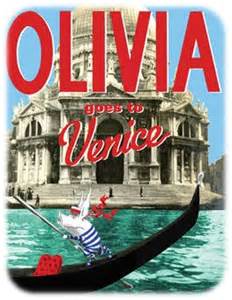
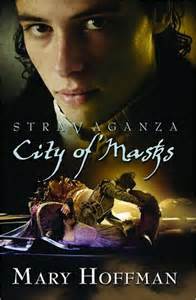
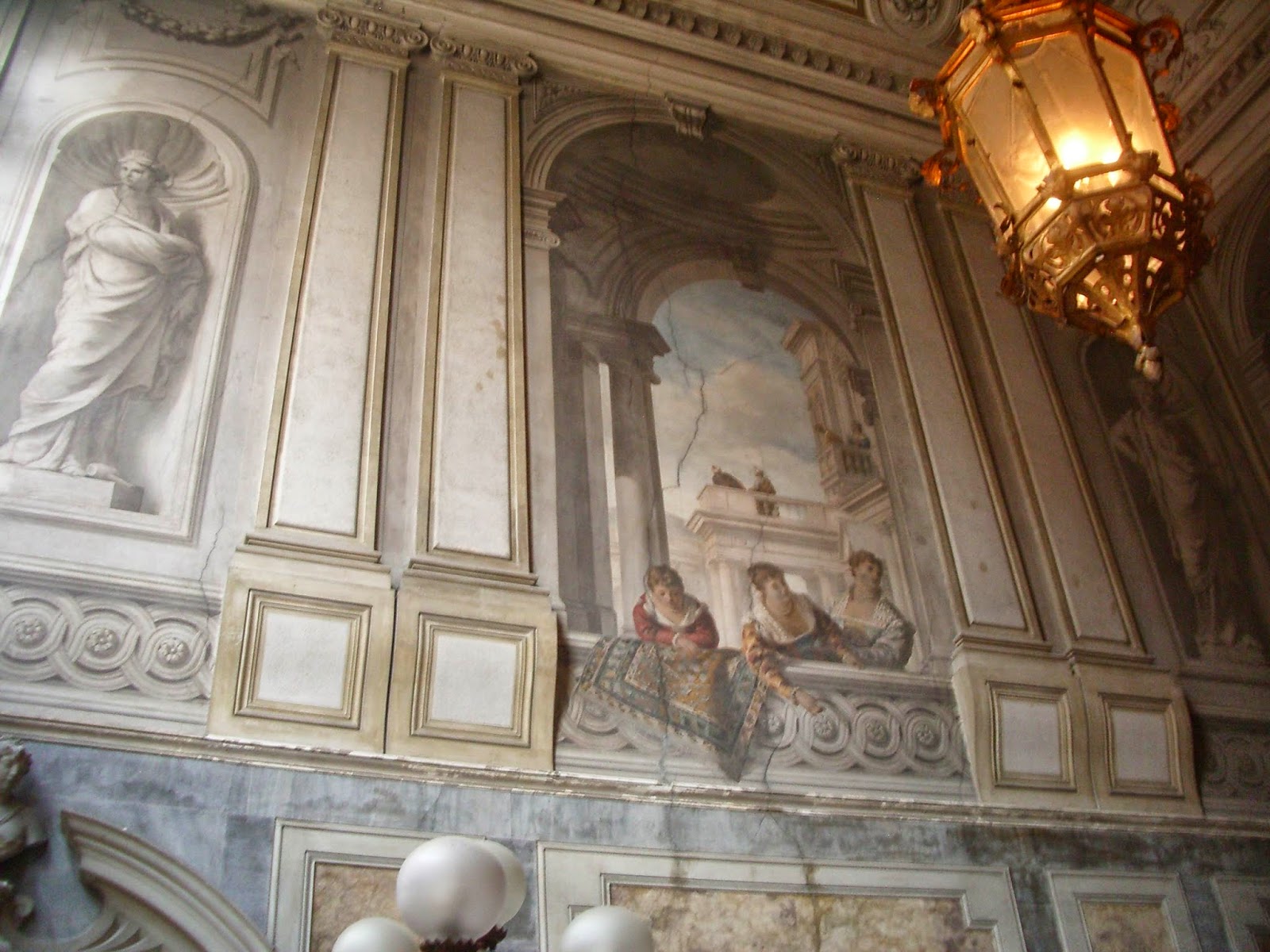
It’s so lovely to be back here on ABBA. The reason, obviously, is that I have a new children’s book out this week. It’s called The Wishing Bones, and deals with a carnivorous hotel in Venice that recycles its murdered guests as the fake relics of saints. Naturally, sorting out this iniquity is going to take five children on the cusp of not being children anymore. Two of those children are not born Venetians, which is key to the theme of this post.
I don’t think I can teach the writers at ABBA anything, so I decided instead to offer up a rich and unusual treat – a discussion with an academic specializing in children’s literature.
Lindsay Myers lectures in in Italian and Children's Studies at NUI Galway. Her research focuses on Italian children's literature, film and culture. We have conducted this interview by email and in person over a number of months and I’ve found it both stimulating and comforting. I hope you will too.
Late last year, Lindsay delivered a lecture entitled
Venezia nel fantasy contemporaneo per bambini: l’evoluzione letteraria di un’amicizia transnazionale (Venice in contemporary fantasy books for children: the literary evolution of a transnational friendship).
It’s a subject close to my own heart. In
The Wishing Bones, a strong friendship develops between a Venetian orphan named Sorrowful Lily and a tough young Irish girl called Darling Dearworthy, and another deep relationship is formed between a Venetian boy Ivo and Eliah, a slave. Both Darling and Eliah will eventually find a ‘home from home’ in Venice, based on roots they grow for themselves there. So I was fascinated to hear Lindsay’s views on how such relationships can be viewed through an academic lens.
Thank you for talking to me, Lindsay. Could I ‘nutshell’ the premise of your ‘transnationalism” theory this way – that in the 21st century, identity in children’s books may not be always related to “genetic/ethnic identity” or “birthplace identity” but rather to other factors such as a “sense of belonging and love for a city”?
Yes, that’s the crux of what it means to think of identity in a transnational way. It isn’t traditionally the way that we think about “belonging”. But it seems to me that in today’s world, the affinity that a person feels for a place is often more important in forming their identity than are other factors, such as actual place of birth and ethnic ancestry. People can move a lot more easily now than they did in the past. The places where a person chooses to live are often not randomly chosen but rather reflect, in some way, that person’s values, way of seeing the world and interests.
And some children are forced to move, to become refugees or economic migrants – or in the case of my character Eliah, are transported as slaves or otherwise exploited, finding themselves living in a foreign culture. Such children must mould themselves into a new life, starting as outsiders.
An outsider’s view is of course a useful way of world-building in a novel: a native has no need to explain the ways of their own town but an outsider can teach the reader by learning for themselves about their strange new world.
We are starting to see transplanted consciousness as a feature not just in adult novels but also in children’s books, so naturally academics are also interested in this idea? And you are particularly interested. That’s partly because you have personal experience of childhood “transnationality”, don’t you?
Yes. My parents are both English and they moved to Cork before I was born so I have English blood in me but I have always felt that I am Irish. My brother who was brought up in the same family, by contrast, has always felt English, and he, in fact, moved to England as soon as he could and now lives there with his family. He wasn’t at all interested in learning the Irish language at school or in finding out about Irish culture, a subject which always fascinated me. Cork, too, while it was the city that I was born in, has never had the same appeal for me as Galway, the city where I now live and work. It's funny, isn't it? But I knew the very first time that I visited Connemara as a child with my parents that I wanted to live in Galway. Somehow through a lucky twist of fate I ended up being offered a lectureship in Italian in the National University of Ireland in Galway many years later. Galway is where I feel most at home – but, like you I also have a great love for Italy – and for Venice in particular. That’s why I guess I enjoy reading your books – they make me feel as if I am there when I read them – and I like the idea that we deepen our sense of ‘belonging’ to places through the texts that we read about them as well as by visiting them in person.
And I was born in Australia, yet always knew that I belonged to the old world – specifically Venice. I ended up here in London, writing of children transplanted to Italian ‘heartlands’ they didn’t know they had a right to but with which they feel a warm, compelling affinity. This is a dynamic I’ve felt the need to address several times. But lately I’ve joined other children’s writers in a ferment about ‘cultural appropriation’. We are terrified of being accused of it. That fear has personally led me to close down promising storylines and write, I fear, more boringly. Or, I will write about it, nursing a secret fear of some kind of attack later. Is the academic world as accusatory as the book trade’s gatekeepers at the moment? And as frothed up about it?

No, not as frothed up. Children’s lit academics have always been interested in discussing ‘sameness and difference’ and how cultures are represented to children by both insiders and outsiders to that culture. Anyone who wants to find out more about this whole area would find much of interest in
Imagining Sameness and Difference in Children's Literature: From the Enlightenment to the Present Day, edited by Emer O Sullivan and Andrea Immel (Critical Approaches to Children's Literature, 2017).
The presence of such perspectives in children’s literature is not, of course, by any means, a new phenomenon. As
Imagining Sameness and Difference demonstrates, children’s books have always been about identity (both on a personal and a collective level), and the construction of that identity has almost always by necessity been formed through discourses of “othering”. It is only by knowing “what we are not” that we come to know “who we are”, and as O’Sullivan has astutely observed, “a nuanced understanding of the what and how and why of portraying sameness and difference is critical to an appreciation of the role of children’s books in promoting social change”. Exactly what transnational perspectives are in children’s books and how exactly these operate has, however, received relatively little attention to date.
It would be a shame if writers became too afraid to write about other cultures. To do so respectfully, the most important pre-requisite, to me, is that the author has a lived experience of that culture rather than an uninformed, tourist gaze. In order to fully understand another culture, you have to know at least some of the language (or dialect) because when you learn a language you inevitably also learn a whole lot more about the people who formed it – it’s a bit like finding a key to a locked door. That’s why I learned Irish and Italian and why I feel confident now in the sense of belonging that I have in both Ireland and Italy.
It can be daunting to write with authority about a culture that you weren’t connected to through birth but I think it is important that authors rise to this challenge rather than allow themselves to be discouraged from doing so for fear of “cultural appropriation”. I used to feel nervous writing academic papers about Italian children’s books. But then I realised that many Italians do not have the expertise that I’ve built up over many years of research and that those who do are really interested in the perspective I bring – because a person who is fully versed in more than one culture sees things differently from a person who has a more focussed perspective. The most important thing is to always see things from both sides, to listen and to observe with real attention to detail, and to refrain from making value judgements. I think that, if we can teach children to be both humble and curious in their approach to new cultures, then we are doing a really good thing.
 I know that you became interested in my earlier book, The Undrowned Child, because the eponymous heroine has been told all her life that she’s from Naples. But when she arrives in Venice, my Teodora feels suddenly at home. Of course it turns out she has indeed come home, having been rushed out of the city as a baby to avoid a scandal. With her Neapolitan accent, Teo meets arrant snobbery from a Venetian boy, Renzo. However, through her bravery and gifts, she eventually transforms his attitude into admiration and affection, strengthened by the discovery that she has a birth-right to the city the two of them work bravely to save from a supernatural enemy. There are also language issues between Teo and the mermaids who have learned to speak Italian by eavesdropping on pirates.
You work in an authentic way with both Italian and Anglophone cultures and avoid the pitfalls that so many other books that attempt to cross cultural barriers fall into. I love the way that you pay attention to language – even to the extent of explaining to the reader how the characters are able to communicate to each other in different languages (or via translators) as this is an aspect that is often ignored in children's books where characters travel to other countries.
I find it fitting that you write about these transactions in Venice, a city that lies at the crossroads between Western Classical Heritage and the Oriental Dream. Venice has been functioning as a symbolic landscape within the cultural imagination ever since the sixteenth-century so it makes sense to think of it as a transnational space in every sense of the word.
 For me, imagining the logistics of communication is very important. It is a bit like using form in poetry – sometimes working with the discipline yields up new creative ideas. In The Wishing Bones, I decided to make Darling a bit of a show-off polyglot. Though Irish through-and-through, she speaks not just Italian but Venetian. Her character in this way becomes storyline. And it is a way of emphasising that otherness is not to be treated negatively. Darling is a vulnerable orphan. Language is a shield she carries proudly. Foreigners often speak our own language more grammatically that we do. I recently read that scientists are teaching seal to sing Star Wars themes, as a way of studying vocal learning in humans.
Surely these are clues to universal truths. We have much to learn about ourselves precisely from those who come anew into our way of life. There is also much to appreciate in those who have an overview, who have another language, another lived experience, know how to be careful, how to treasure – because outsiders have to be observant and vigilant in order to survive. I think they raise the stakes on our ‘innerness’: they show us things about our own culture. I think outsiders teach us that our outrageously good luck is fragile; in the shock of that lesson, we can choose to become more empathetic towards them. I guess I always want to say something like this, ‘Let’s not close our minds. Let’s not be smug. Let’s not pull up our coat collars against them. Let’s listen.’
Populists from Hitler to Trump have found it useful to peddle the concept of malevolent otherness, singling out otherness for accusation. At worst, the populist preach dehumanisation that can eventually lead to a sense that oppression and even extermination are acceptable solutions to the self-created ‘problem’ of others. I want to do the very polar opposite to that.
And of course I write a great deal about young girls. You might say that women have been outsiders in Western society throughout thousands of years of history: excluded from politics, finance and intellectual life. We count it as one of the major steps of our civilization that women now have almost as many rights, and some of the sense of entitlements, as men. We have come a long way from the time when the Egyptian Queen Hatshepsut had to wear a wooden beard to assert her power, but we haven’t come far enough. I’ve written ten historical novels, five for children. The girls I’ve written have lived in Venice between 1725 and 1902. There has been much discussions about how girls in historical fiction have to cross-dress in order to live lives interesting enough to have a story. And I too have followed that trope for brief periods when there was credible alternative for making a story work. But I also think that there are other ways of making outsider-girls insiders in the action – by use of their intelligence, ingenuity, daring and sheer contrariness. I have also conferred traditionally female qualities on boys: for, example, the way Ivo looks after Eliah in The Wishing Bones is as much like a mother as a father. If there must be separate nations of men and women, I want to write transnational girls and boys.
Meanwhile, Lily and Darling have a choice of ways in which to communicate their way towards an unbreakable friendship. They have secrets and guilt to negotiate: far more important than being Irish or Venetian. And another far more substantial difference between the two girls than their nationalities is the fact that Darling has known both wealth and love, while Lily comes into the story from a background of deprivation and emotional cruelty. Lily initially underestimates Darling’s ability to love and forgive terrible actions performed under a bullying regime. But Darling has ‘sampled’ the behaviour of an oppressor in the form of a school bully, which has equipped her to understand Lily’s trials when she eventually finds out about them. Mutual enemies bring them closer together; then saving Venice becomes a joint aim as Darling falls more and more under the city’s spell. Each brings unique gifts, some born out of sadness, to their roles as young saviours of the city. I think this is the kind of thing that interests you as an academic?
Yes, I am interested in how friendships are formed not just between children of the same culture but also between children of different cultures.
The work of children’s literature was not always to promote intercultural friendship. The birth of this literature coincided in almost all of the countries of the world with the birth of nation states. Children’s books while they have always circulated to an extent between cultures, have often been powerfully influenced by nationalist discourses.
It was really only after the end of the Second World War, that children’s books began to be seen as vehicles for peace building between cultures, and that the discourses of “sameness” and “difference” that had characterised European children’s books for so long began to break down. 1949 saw the founding of the International Children’s Library in Munich in Germany, and IBBY (the International Board on Books for Young People), a world-wide network of children’s book “people”. Both of these organisations have done much over the years to bring together books and children.
The importance of the formation of international friendships is nowhere more evident than in Venice. This city, which was once founded on international trade, is now living through a real crisis, in the sense that her fragile structure is no longer able to sustain, without grave damage, the millions of tourists who visit every year, exhausting her infrastructure and driving native Venetians away.
It strikes me that
The Wishing Bones is allegorical in so many ways – and yet it is also a shockingly literal response to the trope of “death in Venice”.
You were very brave to tackle such things – especially because institutional abuse such as is described in this book is not normally a topic that can be dealt with so frankly in a children’s novel. Your approach works because it shocks the reader while at the same time showing immense understanding for the suffering of those involved. There was no doubt in my mind after reading the book that the physical abuse that the characters in this story endure has much in common with the abuses that were “enabled” by the Catholic Church in Ireland in the nineteenth and twentieth centuries (even though you never actually go down this line). Sexual abuse is, of course, one of the darkest of crimes, and even though the abuse that the children in
The Wishing Bones suffer is not sexual in nature - you convey really well how the child becomes “complicit” in abuses of all kinds, how he or she becomes ashamed and how this fear of being guilty/ punished for crimes that he or she has done perpetuates cycles of abuse and violence.
The adults who let the violence happen by feeding their fantasies are well written in your novel and it strikes me that the evil sisters from Sicily are a wonderfully matriarchal version of organized crime syndicates!
As always, though, the morals in this book are pure. For you show how the villains’ bids for revenge were fuelled initially by the way in which they and their people were once treated by the Venetians. The last pages of the novel really made me reflect on the anti-migrant discourses that are gaining momentum every day in Italy. Once again “saving Venice” in this book does not mean keeping it Venetian at all costs. Instead, it means keeping out greed, revenge and prejudices. and seeing what is really happening and speaking out about it.
Keep saving Venice, Michelle, you are very good at it……
Thank you! But it’s not just the buildings and canals that need saving. The Venetians need help too. What would Venice be without Venetians? A museum of sadness, I think. I think it’s really important not to reduce Venetians to clichés, passive victims of mass tourism.
Finding ways to safeguard the city’s cultural heritage while avoiding the pitfall of reiteration of national prejudices and cultural stereotypes is no easy task, of course, especially when the very act of writing about in Venice in a children’s book is, itself, potentially a threat to the city’s livelihood in that it will inevitably, if it becomes successful, entice more visitors to its already-crowded streets.
By showing the reader how the views of the protagonists change as a result of their encounters with each other, you effectively break down the “local” versus “foreigner” binary.
Perhaps the balanced view you have of the city is the result of your personal experience and your own education ? Being born in Australia but having moved to Europe, where you now live in both London and Venice? There is no doubt but that children’s literature is enriched by multiple points of view. This kind of writing is important because it helps children to become citizens of a world that takes responsibility for itself – so long as attention is paid to the way that different nationalities are presented, and old stereotypes are not reinforced inadvertently. It’s important to give a role to outsiders when it comes to protecting the one world we have.
Your books, while historical, deal extremely effectively with the current issues facing the Venetians. You don’t say so overtly, but it seems to me that
The Undrowned Child illustrates particularly well the grave consequences, that can transpire if greed is left unchecked, and democracy is impeded by lies and self-serving policies.
The creature who hides under the waters in this your first children’s book seem to me to resemble the huge cruise ships – almost monsters – that have begun in the last years to enter into the Venetian lagoon and threaten its fragile ecosystem.
Indeed, I campaign with NoGrandiNavi against those cruise ships, using the only weapon I have, which is writing. Things are dire there now, with two dreadful incidents of megaships out of control in the last month alone. This article by my friend Francesco Bandarin shows how Venice is drawing ever closer towards disaster.
And London is facing its own monster ship now too, in the shape of a party boat the size of a football pitch that private enterprise wants to squeeze into the Thames, with the apparent collusion of those who are supposed to protect the river. So here I am again, a London outsider, trying to protect the city with words … from a mega-party boat called the Ocean Diva.
Thank you so much for talking to me, Lindsay. I hope to see you again in Venice soon!
Michelle Lovric's
website
The Wishing Bones was published on July 25th.
There are some pages about it on the website
here
Apologies to anyone who was planning to attend my
Wishing Bones event at the Finchley Road O2 Waterstones on this coming Sunday August 4th. Almost appropriately, for a book set in Venice, this event has been delayed by a flood.
It will be reconvened as soon as possible.