Showing posts with label #readingforpleasure. Show all posts

Thursday, 17 November 2022

Dear Santa Booklist - by Tracy Darnton

Is it too early to mention the C word? Another year has whooshed past and here’s my annual list to Santa of my most wanted books to find in my stocking on Christmas morning. It's my time to restock my non-fiction books. 

I always like to get a ‘craft’ book to feed my writing and this year I’ve plumped for Malorie Blackman’s Just Sayin’ My Life in Words. I heard her speak at Toppings in Bath recently – and if you haven’t watched the Imagine - Malorie Blackman What If?  episode yet, I recommend it for every children’s writer to remind you of how amazing Aunty Malorie is and why we all write for young people. (Imagine is packed with kid lit royalty).


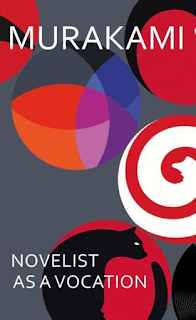
Haruki Murakami is another fascinating writer. So I’d love to read his collection of essays Novelist as a Vocation for an insight into his routines and writing.


I’ve been able to get back to more galleries and museums this year so next must-have is Katy Hessel’s The Story of Art Without Men which I bought for someone else but haven’t read myself yet. I saw her speak at an interesting panel at Cliveden Literary Festival in October and was amazed to discover the complete lack of women in The Story of Art tome by E.H. Gombrich -  and, shame on me, I hadn’t even noticed at the time of reading it.


There have been books by Andrey Kurkov in my house for a while but until the Ukraine invasion, I’d never got round to reading them myself. I loved Death and the Penguin which those lovely folks at Mr B's Emporium have been recommending for years, and we’ve been steadily increasing our collection of his novels. 


So going on the Christmas wish list is Diary of an Invasion which collects Kurkov’s insightful columns and broadcasts from this year.


In a big change of mood, for my next desired gifts, I’ve gone full Agatha Christie. Creek House in my last thriller, Ready or Not, was based on Agatha Christie’s beautiful house, Greenway on the River Dart. Lately, I’ve been writing a new YA inspired by one of her best-loved books – and I had my first trip this summer to Harrogate Crime Festival, based at the Old Swan where Agatha Christie was found during her disappearance which gripped the nation in 1926.

So what better than a game of Agatha Christie bingo after Christmas lunch? 


Followed by dipping into Lucy Worsley’s latest: Agatha Christie – A very elusive woman.


That’s my list. One reminding me of the welcome return to trips to bookshops, lit fests and museums, and the importance of good writing in making sense of our world and times.


Tracy Darnton is the author of YA stocking thrillers Ready or Not, The Rules and The Truth About Lies, and her short story is included in the YA anthology I’ll Be Home for Christmas. Please feel free to put them on your Christmas list. 


S

Friday, 17 January 2020

Buried beneath the TBR pile by Tracy Darnton


New year, new resolutions. Time to ring the changes. 


I have books to review, set texts to read for my weekly lit course, friends’ books, Christmas presents received, books by other YA authors I really want to read etc etc. All in all, I’m frankly overwhelmed by my tottering TBR (To Be Read) pile - which is weird because reading is meant to be a pleasure. I became a writer because I’m a lifelong reader with a major bookshop habit. And yet I’m thinking about scheduling reading like a kind of regular date night. How did my reading pleasure go from treat to chore? How can I change that and how do other people manage to read so much?


OK, first off I’m going to blame Brexit. Newspapers, social media, new addiction to the BBC Parliament channel and general existential political despair have definitely drained my time and mental energy in 2019.


Next, I blame writing itself. Writing takes up a huge amount of time and when I’m writing or fully immersed in editing I don’t want the distraction of someone else’s YA style.


Too many books. Maybe if I only read, say, Scandi-noir by only one author, I’d have a better shot at at reading everything BUT I have an eclectic taste in books. I read adult fiction and children’s and YA. I have classics to read for a course. And I like non-fiction; I’m interested in memory and psychology and still carry a torch for my old profession of the law. I’ve been researching prepping and survival skills – and how to rebuild the world. (That’s a lot of pages!)


And let's be honest, it can be hard in family life to find the time for an essentially ‘selfish’ activity. Other hobbies can have some tangible benefit for everyone: baking, knitting etc produce a product. But reading…


I don’t do as much waiting around for pick from kids’ sport matches or activities as I used to. That was always a prime time to catch up on reading. Inconveniently, I get horribly travel sick so I can never read in the car, seldom on a train even. Instead I stare dead ahead, crunching extra-strong peppermints.


And is it just me or is it harder to concentrate and switch off from everything else as you get older? 


So what I can do?

I asked one of the extremely well-read booksellers at my local independent bookseller Mr B’s. She reads for approx. two hours per day.  TWO HOURS! How on earth does she manage to do all the reading around working and family life? Well, her tip was not to watch TV at all – which could be a problem as we’ve just signed up for Netflix and I’m hooked on a German series callled Dark (a sort of time-travelling Stranger Things) which I justify as it’s very ‘YA’. And I do all my ironing in front of the TV.


What about targets? Some people love to use target tracking lists from Goodreads or similar. Or just keep a list in a notebook. I don’t think that would work for me – just another thing to fail at.


But I’m going to get back in the habit of reading more. Bottom line is I know I enjoy it. It gives me empathy/insight/something else to talk about. It hones my own writing craft – seeing how an author pulls off something amazing - or how they fall short. It means I can discuss books with my friends on the course I do every week. And how can I expect other family members to read if I don’t model it as a priority and a pleasure?


So …

I’m going to split my TBR pile into little piles so it’s not so overwhelming. (Simple but effective)

I’m not going to keep a list of books I read.

I’m not going to stop buying books. I love it.

I’m going to get a bigger bookshelf (or two).


I’ll report back this time next year.


(After posting this, I realised that I am not alone in trying to make more time for reading for pleasure – have a look at the very recent posts by Anne Rooney, Vanessa Harbour and Dawn Finch for some excellent advice and thoughts.)


Tracy Darnton is the author of The Truth About Lies. Her next novel, The Rules, is based on her short story in I'll Be Home for Christmas. She is slowly disappearing under the size of her TBR piles.


Sunday, 12 January 2020

Reading, reading, reading by Vanessa Harbour


This post was inspired by reading Anne Rooney’s recent blog about her journeys on the bus and how she is using the time to read all sorts of books that she WANTS to read. It made me think – a lot.

It is said you can’t be a writer unless you are a reader. This is something I tell my students frequently, particularly if they comment on how long the reading list might be. I have had some very serious discussions about whether they should be reading a hardcopy (you can make notes in the margin!), an ebook – again you can sort of make comments, or as so many of them do now, listen to the audiobook. I confess I am not convinced about this when trying to analyse a text and trying to explore it critically. But there again, maybe I am a dinosaur.

I spend a huge amount of my time reading and I am not necessarily talking books here. The very nature of the jobs outside my writing means that I need to read reams and reams of pages created by
A selection of work books
my students or the writers I work with. All of which require consideration and feedback, so they are not read to relax. Some can be thoroughly enjoyable, so it is not an issue to read them, others… well... It is not just manuscripts that I need to give feedback on that I read. I also read a lot of books that relate to my work. Not all of which I would choose to read given a choice.

I am also in the lucky position to be sent quite a few books by publishers to read just pre-publication. This is a wonderful opportunity and I love reading them. However, I am aware that I am reading them for a reason. I need to shout about them, to give the writer’s a well-earned nudge in the publicity stakes. We all know how hard it is to publicise your work when you’re an author.  All help is welcome.

What this does mean is that I rarely read just for me. Over Christmas I was thinking about this as I deliberately made the effort to read a couple of books that interested me: Damian Barr’s You Will Be Safe Here and Alice Hoffman’s The World That We Knew. Both books that I had heard a lot of good feedback on, plus I am a great fan of Damian’s Literary Salon podcast, so wanted to read some of his writings. These books relate to nothing I am working on currently. At first, it was hard because I felt guilty. Mad, I know. But I thought I ought to be reading things connected with work. I realised I needed to stop thinking like this, as Anne did for her bus journey, reading books I want to read plus maybe revisiting some old friends could be part of my own self-care.

Reading is so important. We know in children that reading can encourage empathy. Empathy is a key element of emotional intelligence, and part of helping children to appreciate others. I think this can apply to adults too. Reading a book is a chance to walk in someone else’s shoes. To view the world through their eyes. It makes you stop and think. As a writer, it is a wonderful habit to get into as it helps you realise what works for you and what doesn’t. You can then endeavour to apply that to your own writing. Books can be inspirational; they allow you to escape into another world while your brain continues with its latent processing. I often find that the solution to a plot problem will come to me while I am reading. I am sure it is because I am not thinking about it. I acknowledge that the same can happen when ironing or while in the shower or driving.

Revisiting some favourite
books
My plan this year, which was further inspired by Anne’s post, is to read more that is for me and not connected to work. I plan to try and read a couple of books a month that are my choice. Reading for pleasure. I need to remember this is allowed. These will be both adult and children’s books as I believe in the importance of reading broadly. It is vital not to read only one genre. Push the boundaries, read something outside your comfort zone, it can inform your writing. I will add a caveat, if a book does not hold my attention after a few chapters, I will not fight to the end.  Life is definitely too short to read books you don’t enjoy – I have to do enough of that already!

How about, like Anne, we all challenge ourselves to read more books for ourselves. Happy Reading!

Dr Vanessa Harbour
@VanessaHarbour

Sunday, 17 November 2019

Are you sitting comfortably? Tracy Darnton


A short blog this month about the pleasure of being read to as an adult …


On a chilly Autumnal evening, I attended a fund-raiser for local charity, Read Around Bath. Their tagline is ‘Bringing people together through reading’ and they run various groups including ones in care homes, a GP-referral group, and a night shelter. They aim to encourage a love of reading for people in challenging circumstances, and along the way relationships and communities are built. You probably have similar charities in your own area.


The evening was a selection of readings ranging from ones I know well: Roald Dahl’s Little Red Riding Hood and the Wolf, Keats’ ode To Autumn (season of mists and mellow fruitfulness – very apt), and Jane Austen’s Pride and Prejudice, to work I hadn’t heard before but was very glad to discover, such as a Vincent Van Gogh letter or Juliet Nicolson’s The Great Silence.


I loved hearing a mix of prose and poetry, fiction and non-fiction, reflective prose and laugh-out loud humour. And the event was blessed with a fantastic cast of readers and warm hosting by Bel Mooney, the charity’s patron. But, as I sat there, I pondered why we don’t have more evenings like this – where we’re able to enjoy a selection of readings, not as part of a promotional book tour (ahem!) but for the pure love of it. 


There’s pleasure to be had in an idle moment of how you’d curate such an evening. Which favourite authors? Themes? Which poems do you still remember from childhood?

Or do you have someone you like to read aloud to already? I like A Little Aloud compiled by The Reader Organisation which has extracts and poems grouped by theme or topic with some gentle reading notes – and timings. With a spare 14 minutes you could pick the Saki short story from the Ghastly Children section and follow it up with a Hilaire Belloc poem.


If I’ve whetted your appetite for a selection of readings, get yourself a cup of tea, turn off the phone and listen to the few episodes available of With Great Pleasure on Radio 4.


And let’s have more evenings of readings for all of us to feed our souls, to inspire us to get reading, or writing, and to enjoy the companionship of sharing a story.


Tracy Darnton is the author of The Truth About Lies, shortlisted for The Waterstones Children’s Book Prize 2019. She has an MA in Writing for Young People.


Friday, 15 February 2019

Barmier & barmier: our Kafkaesque approach to fiction & teens - by Rowena House

Trawling through online teaching advice for the now-defunct A-level course in creative writing (with the intention of scavenging the best bits to help design my own fiction writing lessons) is a sad and salutary experience.
England’s last A-level creative writing students will re-sit their exams this summer and then that’s it. All over. 16-to-18 year olds who want to write their own original stories now have to be satisfied with a short module in another course.

Meanwhile, 16-18 year olds who fluffed their first English language GCSE still have to write an original story as part of their re-sit regardless of how difficult they find it.

My heart goes out to both groups of young people.

During its brief years of existence, the exam board which offered the creative writing A-level, AQA, said this about it: “Creative writing is a distinct discipline in higher education. It encourages the development of skills that are essential for further study and a range of professional careers. This A-level enables aspiring writers to start on the path to professional practice and is equally useful for anyone interested in improving their creative and critical thinking and communication skills.”

Amen to that!

Thousands of teachers and students signed a petition to stop it being axed.

In the past few weeks I, too, have seen for myself how well-thought out the course was, and how different to English language and literature, despite the Department for Education insisting it overlapped both.

Back in my day, creative writing wasn’t an option at school or sixth-form. But then, nor were Netflix, YouTube, Snapchat, What’s App etc. Instead, by 16, I had devoured hundreds of books. The local public library had been my bolt-hole as a child - as for so many writers. Then, collectively, my teenage friends and I discovered Tolkien and Middle Earth became our escape, our go-to safe space when being a teen got too tough.

Today, with the Harry Potter generation grown up, I can’t find a contemporary book that is shared in that same, immerse way.

For films, there are the Marvel franchises. The Twilight series and The Hunger Games also still seem widely known among teens. But a novel? By a contemporary author? So far, whenever I’ve asked, all I’ve drawn are blanks.

Now, back at that defunct A-level, among the many excellent bits of advice I found in its study programme was a recommendation that students follow authors on Twitter, and discover through them the immense wealth of blogs about creative writing written by professional writers.

In recent weeks, any student who’d followed that advice might well have stumbled across a fascinating discussion initiated by journalist Charlotte Eyre, of The Bookseller, involving two top literary agents, Joanna Moult and the founder of the Skylark agency, Amber Caraveo, along with Waterstones, Piccadilly, and various published and pre-published writers. The subject: a 21.5% drop in Young Adult novel sales last year, and associated issues surrounding  the younger teen book market.

This exchange included one tweet from Waterstones complaining about the dearth of books for the early teen market (!?!). Amber, in reply, suggested that Waterstones could make these books more visible by having a dedicated space for teen readers, which (rather surprisingly, imho) drew a positive response from the Piccadilly branch.

This whole chicken-and-egg discussion (are there too few books written for early teens or not enough exposure to generate a viable market?) reminded me of a debate I heard years ago about motor bikes in the USA. (This is from memory so please take the details with a pinch of salt.) The USA had, apparently, banned imports of smaller Japanese bikes to protect sales of the bigger US models like their famous Harley Davidsons. The trouble was, younger riders couldn’t afford big Harleys, and without access to cheaper Japanese bikes, fewer people became bikers so demand for Harleys fell over time.

Something similar is, presumably, happening with young people’s fiction.

Parents and grandparents still buy middle-grade books for children, while primary schools also actively promote reading for pleasure to these age groups. But then keen readers, who want to make their own choices at 11-to-12 years old, can’t find books to suit them. By that age, too, secondary school is demanding more and more of their time, and the manifold digital lures of our age are increasingly tempting as well.

Little wonder, then, if many of them stop reading for pleasure entirely. Like the USA bikers who never bought a Harley, even when they were old and rich enough to afford one, so these once keen readers are lost to the world of fiction. They aren’t around to discover YA, except if it’s linked to a Hollywood film, profits for which seem to have peaked with Twilight and The Hunger Games, hence we haven’t seen a really big YA novel for years.

I know this isn’t a new or an original argument, not by a long way. But given the well-documented drop-off in reading among teens, plus recent evidence of weak YA sales, it does seem to me that trends in the publishing world have ramifications for young people’s education, and therefore their job prospects.

If, for example, decisions about the content of English language exams rest on outdated assumptions about teens’ reading habits, then GCSEs are in fact far harder than they might appear to adults who come from a reading-for-pleasure generation.

As adults, we might bemoan this lost art of reading; we might even be right to do so. But to demand that young people write 500-word stories under exam conditions (and condemn them to try again and again if they can’t) when we couldn’t dream of flying a drone via our smart phones, let alone how to make a YouTube video out of our drone footage, then rig our phones to relay that film to a PS4 while simultaneously playing music, smacks to me of a highly blinkered mind set.

Wednesday, 30 January 2019

Book Pen Pals (Part 2) by Sophia Bennett


They've been at it again.

Year 8. Writing. Two schools of them now. Lots more questions to answer.

I’m an Author Pen Pal. If you want to see how it all started, check out my December post here.

These are some of the questions Year 8s ask writers if they get half a chance. And some of my answers.


      How long have you been writing for? 

There are lots of answers to that question. I’ve been writing since I was six or seven, when I wrote my first book, ‘Harry the Horse’. But a lot of that was school writing and business writing. I’ve been writing books for about twenty years, but half of that time I wasn’t published. I’ve been writing books and getting paid for it for ten years, almost exactly.

      Did you like English in your childhood? 

You’d think so, wouldn’t you? I loved English if it involved reading or creative writing, but didn’t enjoy it at all if we were required to criticise a book. I was never very good at it. It took many years for me to realise there’s no perfect ‘answer’ to what a book is about. You just have to learn a particular style of criticism and apply it. My favourite way to criticise books is just to read them and chat about them with friends. I still think it’s the best way to do it, but you can’t be examined very easily that way. 


When it comes to creative writing, I like it when you’re given an idea and you can just do whatever you feel like. However, I learned a lot from all the grammar and punctuation and style lessons I had. They taught me how to appreciate good writing – why it was good. I'm still grateful for that.


      What are you reading at the moment?

A book by a writer who recently died called William Goldman. It’s called ‘Adventures in the Screen Trade’ and it’s all about his life as a screenwriter and how, in Hollywood ‘nobody knows anything’. It’s full of anecdotes about famous actors and films and I’m really enjoying it.

     What is it that made you become a writer? Was it a certain book/author? 

I think what made me want to be a writer was moving to Hong Kong (on the other side of the world) when I was seven, and leaving all my schoolfriends behind. I was very lonely for a while and read a lot of books to keep myself occupied. I loved those books – by writers like E Nesbit, Frances Hodgson Burnett, Joan Aiken and Noel Streatfeild – very much and wanted to do it too. 


But I didn’t have the courage to try until another book came out many many years later. That book was ‘Harry Potter’, and once I’d read it I gave up my job and started writing seriously. I didn’t get published for another 10 years, but that’s when I properly started.

     How did you get into writing? 

By doing it. Literally just that. I didn’t know anyone who was an author, or worked in publishing. I didn’t know how you were supposed to start, or what was supposed to be in a story. But I read a lot and I had all these ideas and I just practised and practised until I came up with something I thought was good. And it got rejected. And so did the next one. And so did the next one. And so did the next one. But the one after that got published and so did the next nine. (Malorie Blackman, who wrote ‘Noughts and Crosses’ among many other great books, got rejected over 80 times!)

     How did you know you wanted to be a writer? 

All those story ideas. I had to get them out somehow.


           Would you ever change your job? 

Quite possibly, if it stops paying the bills. Even writers need to eat.

          If you did change it, what would it be? 

In a perfect world, dancer.


In the real world, I’m not sure. Maybe someone who runs a B&B. I love the idea of all those people coming to stay and all the stories you’d find out about them. But that would just make me a writer again … 


1       Did you ever wish you weren’t a writer?

No. It really is the best job in the world. Not the best paid, but the best.

           If you could tell your younger writer self something, what would it be?

Practise copying other writers. Seriously. If you publish something that’s copied it’s called plagiarism. But if you just do it as a writing exercise you learn how good writers put stories, jokes and characters together. Then you can develop your own style. I didn’t really do that as I was growing up, but I think it would have been very useful if I had. 


      Also - it will happen. Incredible as it may seem, if you keep trying hard enough, you'll be a published author. 

          How can someone become a good writer? 

Read. A lot. Copy, a bit. And write as much as you can. By writing a lot of rubbish you learn to write something good one day. Also, find other people who love books and talk about stories with them.

1       Do you have any tips for English?

Short sentences are very useful.
See if you can learn a new word every day.
Read your work out loud before you submit it. It’s the best way of checking for mistakes.