Showing posts with label Malorie Blackman. Show all posts

Thursday, 17 November 2022

Dear Santa Booklist - by Tracy Darnton

Is it too early to mention the C word? Another year has whooshed past and here’s my annual list to Santa of my most wanted books to find in my stocking on Christmas morning. It's my time to restock my non-fiction books. 

I always like to get a ‘craft’ book to feed my writing and this year I’ve plumped for Malorie Blackman’s Just Sayin’ My Life in Words. I heard her speak at Toppings in Bath recently – and if you haven’t watched the Imagine - Malorie Blackman What If?  episode yet, I recommend it for every children’s writer to remind you of how amazing Aunty Malorie is and why we all write for young people. (Imagine is packed with kid lit royalty).


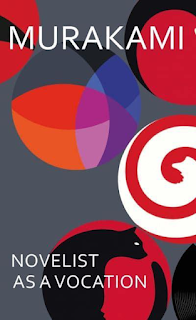
Haruki Murakami is another fascinating writer. So I’d love to read his collection of essays Novelist as a Vocation for an insight into his routines and writing.


I’ve been able to get back to more galleries and museums this year so next must-have is Katy Hessel’s The Story of Art Without Men which I bought for someone else but haven’t read myself yet. I saw her speak at an interesting panel at Cliveden Literary Festival in October and was amazed to discover the complete lack of women in The Story of Art tome by E.H. Gombrich -  and, shame on me, I hadn’t even noticed at the time of reading it.


There have been books by Andrey Kurkov in my house for a while but until the Ukraine invasion, I’d never got round to reading them myself. I loved Death and the Penguin which those lovely folks at Mr B's Emporium have been recommending for years, and we’ve been steadily increasing our collection of his novels. 


So going on the Christmas wish list is Diary of an Invasion which collects Kurkov’s insightful columns and broadcasts from this year.


In a big change of mood, for my next desired gifts, I’ve gone full Agatha Christie. Creek House in my last thriller, Ready or Not, was based on Agatha Christie’s beautiful house, Greenway on the River Dart. Lately, I’ve been writing a new YA inspired by one of her best-loved books – and I had my first trip this summer to Harrogate Crime Festival, based at the Old Swan where Agatha Christie was found during her disappearance which gripped the nation in 1926.

So what better than a game of Agatha Christie bingo after Christmas lunch? 


Followed by dipping into Lucy Worsley’s latest: Agatha Christie – A very elusive woman.


That’s my list. One reminding me of the welcome return to trips to bookshops, lit fests and museums, and the importance of good writing in making sense of our world and times.


Tracy Darnton is the author of YA stocking thrillers Ready or Not, The Rules and The Truth About Lies, and her short story is included in the YA anthology I’ll Be Home for Christmas. Please feel free to put them on your Christmas list. 


S

Thursday, 12 March 2020

The importance of YAF by Vanessa Harbour

My PhD
I know we keep hearing how difficult the young adult fiction market is in publishing, which I understand, but we need to keep remembering how important these books are. I love young adult books and I know many teenagers who do the same. Back in 2011, I finished my PhD which explored the representation of sex, drugs and alcohol in British young adult fiction. In it I argued the importance of representing these issues realistically as books are a safe place for teenagers to explore these themes and to ask questions of themselves and the world around them.

Roll forward 9 years and Holly Bourne, who writes fabulous young adult fiction, gave a brilliant lecture saying something similar and which inspired this post. Young adult fiction is so vital. Publishers need to continue to let us, as writers, to push the boundaries when creating them. British writers of young adult fiction are outstanding. They can explore such disparate and challenging themes. It has been pointed out by some that there does seem a predominance of US young adult books on our shelves at the moment. Great stories still, but publishers don’t forget our amazing British writers both established and up and coming, please. 

French Writer and philosopher, Maurice Blanchot talks about the idea that the writer leaves questions on the page for the reader to pick up and consider. Young adult fiction is perfect for this. It is all done within the safety of the page. The young adult reader can consider what they will do if they were faced with situations portrayed in the young adult fiction through empathising with the characters and living through the experience vicariously. Reading is all about helping us making sense of our world.

Books such as those by Lisa Williamson and Simon Green, to name just a few authors, help those in the LGBTQ+ community, for example, again asking questions of themselves safely and those around them. Young adults are seeking identities and part of that is asking those questions of themselves and those around them. Reading young adult fiction allows the reader to identify with characters and situations safely. It is all about creating empathy and understanding. A chance to walk a mile in someone else’s shoes.


 I’d like to encourage publishers to take risks and publish books that deal with contentious issues rather than staying within safe boundaries. There is nothing more likely to encourage a teenager to read a book than to have a parental advisory sticker on it! I know they have to face the gatekeepers but… Obviously, the contentious issue should be relevant to and part of the story and not there for shock value. That just highlights poor writing.

The difference between a book and a film or TV programme is that someone can see what they are watching, but they can’t see what page they are looking at when reading. This means that a reader can go back and reread a scene in a book over and over again. Exploring what it means to them, considering how they’d react in many different ways. Safely and without fear of discovery.

How many of you can remember books like that? Ones that you’d go back to whenever you felt overwhelmed. Your ‘go-to’ book. Your safety valve book.

Very blurred teenage me
However, as writers don’t make the mistake of assuming the young adult now has exactly the same issues and concerns that you had when you were a young adult. Do you fully understand the LGBTQ+ and potential relationships? Then there is, of course, social media and the pressures of the internet that they face.  What about gangs and knife crime? Young adults care about the planet and people’s rights. They want to make a difference. Drink and drugs…maybe not so much and certainly different from your teenage years. The world moves very fast these days and it is hugely complex. As a writer, you need to do your research. 


Also, don’t get me wrong, I am not suggesting people write a didactic novel driven by a message. I am sure I’ve shown you this before, but I’m going to remind you because it is important. Philip Pullman said in his Carnegie Medal-winning speech ‘Thou shalt not is easily forgotten, once upon a time is remembered for a lifetime.’ Write wonderful stories with engaging, well rounded young adult characters and let it all evolve. Watch the new adaptation of Malorie Blackman’s Noughts and Crosses (also reread the books) such powerful books that deals with so many issues on many layers but also, it’s still a love story. Read as much young adult fiction as you can if you want to write it.  Attend things like YALC


Get out there are and write the best young adult stories that can make a difference.

Vanessa Harbour

@VanessaHarbour


Saturday, 5 December 2015

Publishing and #diversedecember by Savita Kalhan

#diversedecember was launched on Twitter on the 1st of December to celebrate BAME, Black, Asian and Minority Ethnic, authors, and to highlight the continuing lack of diversity in publishing.

I have blogged about the lack of diversity in children's literature here and blogged about how the States was tackling the very same problem - #weneeddiversebooksUK

I also blogged about Malorie Blackman and Bali Rai's call for more diversity in children's literature, and how the lack of diversity affected me when I was growing up - Black and White and Everything in Between

Rosie Canning and Lindsey Bamfield highlighted the lack of diversity and held a Diverse Author Day in September, which I blogged about - #diverseauthorday

Now, Nikesh Shukla has joined Jon McGregor in an attack slamming the elitism of an industry which “work[s] to perpetuate an environment in which their own sort feel at home."

You can read the Guardian article here -
Where are the Brown People?: authors slam lack of diversity in UK publishing

On Twitter people have been sharing what they want to read this month and recommending books. It's easier to do this with contemporary fiction because there seem to be far fewer published books by BAME teen writers.

So, in that spirit, I'll be reading these two great new books published this year by BAME teen/YA authors:


The Curious Tale of the Lady Caraboo by Catherine Johnson
13 Hours by Narinder Dhami

Please add any book recommendations in the comments below.


I'll also be reading these adult fiction books:
A Brief History of Seven Killings by Marlon James
The Private Life of Mrs Sharma by Ratika Kapur
A Restless Wind by Sharukh Husain


Nosy Crow has announced that they would like to support #diversedecember. So if there are any BAME authors out there, now is your chance to submit. Check out the submission guidelines first here - Nosy Crow

Tom from Nosy Crow said, "Today we’re announcing an open call for children’s fiction submissions from debut BAME writers. I think that it’s incredibly important that our industry represents a wide range of voices, not only so that children from every background can recognise their own lives and experiences in the books that they read, but also simply to enrich the body of children’s literature that we publish, by moving out of a monoculture and embracing a wider world of ideas."

Nikesh Shukla is also compiling an anthology of essays by BAME authors, The Good Immigrant, fifteen writers who will be exploring what it means to be Black, Asian or Minority Ethnic in the UK today. He is looking for funding - here's the link if you'd like to pledge - UNBOUND
J K Rowling has just pledged £5K.

You can follow #diversedecember on Twitter for more book recommendations and news.


You can follow me on Twitter here @savitakalhan
My website - savitakalhan.com
My Facebook page - Savita Kalhan Author


Monday, 8 June 2015

Thank you, Malorie! by Keren David

Today is the last day of Malorie Blackman’s reign as Children’s Laureate, and what a glorious two years it has been.

She’s brought fantastic energy, humour and a massive load of good sense to the job, standing up for diversity in children’s fiction, promoting young adult fiction and  urging adults to respect children and teenagers' taste in reading.  
She set up the hugely popular Young Adult Lit Convention, spoke up for libraries, and initiated Project Remix, a chance for young writers to be inspired by classic fiction to create their own work.
She’s been to countless schools, and my son’s was one of them. He came home brimming over with enthusiasm for ‘this brilliant woman who was so interesting and had some great stories.’   I heard Malorie speak at STREAM, a great event held at Streatham and Clapham School, where she drew a big audience. Her story of being discouraged by a narrow-minded teacher, but succeeding anyway was completely inspiring  - all around me I could see teenagers given hope and determination to make the most of their futures.

During her two year term as Laureate  some people seemed determined to misunderstand her, seeing controversy in her common sense, and she attracted some wrong-headed and unpleasant criticism.  But every insult was balanced by a massive amount of air-punching and head-nodding by authors, librarians and many more, whenever she gave an interview or made a speech.

My favourite Malorie moments included the interview when she stood up for popular teenage fiction, like Twilight, saying: ‘My strategy is to say to a child 'if you love vampire stories then have you thought about Frankenstein?'

"You don't say that the only good books were written 50 years ago.

"It's like saying a book should be worthy - 'I deem this worthy and this is not worthy.'

"You mustn't be prescriptive because it closes down a lot of reading.’

And I cheered every time she pointed out the need for more diversity in children’s literature, including the interview with Sky News  when she called for more black characters in children’s books, saying: ‘ I think there is a very significant message that goes out when you cannot see yourself at all in the books you are reading.I think it is saying 'well, you may be here, but do you really belong?' 
I know that Malorie’s wisdom bolstered my confidence as I worked on my book, This is Not a Love Story  and I am sure I am not the only one. 
One thing I’ve noticed during Malorie’s laureateship is that authors have grown in confidence about doing things for themselves, and not waiting for the book festivals and reviewers to notice them. Emma Pass and Kerry Drewery’s UKYAX events, and Alexia Casale’s up-coming UKYAShot have taken on Malorie’s mission to spread the word about YA fiction at bookshops and libraries. Malorie may not be Laureate any more, but the seeds sown will flourish. 
 So, I’d like to say a huge thank you to Malorie and I’m sure I speak for most of the British children’s book world. And the best of luck to your successor - they've got a hard act to follow! 
PS. Completely unrelated, but as part of the Crouch End Festival, Karen McCombie and I will be chatting at Pickled Pepper Books, Middle Lane, London N8 tomorrow, June 9 at 7pm. Admission is free, it would be lovely to see you there. 

Wednesday, 10 September 2014

A First Book For My Grandson, by Paul May

(This is a very topical guest post from Paul May - many thanks to him for producing it with a turn of speed that Mo Farah would envy!)

I have seen various reports recently about the lack of diversity in children’s literature: from SavitaKalhan on this blog, and elsewhere from Malorie Blackman and Bali Rai.  This is about what happened to me.

My grandson is seven months old and the other day my daughter, Emily, asked me if I’d like to buy him his first book.  ‘Yes!’ I thought, ‘That will be fun.  Maybe I’ll get a board book copy of THE BABY’S CATALOGUE.’ It was my son’s first book too.  He’s a few years younger than Emily and it hadn’t been published when she was born.  In fact, Emily more or less grew up with the Ahlbergs. EACH PEACH PEAR PLUM was published the year she was born. I even have her original copy of FUNNYBONES, in which, long before there were any sequels, she had penciled her own ideas for future books.  For example: GETTING MARRIED AND KISSING and BIIING A HOUSE. You see how children engage with picture books? 

Emily’s ideas for FUNNYBONES sequels

So,I took myself off to my local children’s bookshop.  I should say at this point that while I am a white, grey-haired man, and my daughter is white with blue eyes and masses of curly blond hair, my son-in-law is black.  Fallou, my grandson is a perfect, mid-brown mixture.  

On the way to the bookshop I wondered whether maybe THE BABY’S CATALOGUE would be a little old-fashioned.  Then I started to remember that it was full of those wonderful pictures of all kinds of babies and all kinds of mums and dads.  And I remembered all the fun we used to have looking at it, and how Tommy eventually destroyed it; used it up entirely, what with eating it and dragging it around.

Sadly, when I went into the shop they didn’t have a copy, which was a shame.  On the other hand I would enjoy looking through all those picture books for the first time in years, wouldn’t I?  I was sure to find something good.  I must have looked through twenty or thirty board books before it dawned on me - I hadn’t seen a single picture of a child who wasn’t white.

At first I thought this must have been bad luck, so I kept looking.  It wasn’t bad luck.  The board books in this (very well-stocked) bookshop were almost all about white children or animals. I moved on from board books to picture books.  It was the same thing.  Sure, there were some books with black, brown, yellow children, but the others vastly outnumbered them.  I found to my astonishment that I was starting to feel upset.  I guess I’d assumed that in the fifteen years or so since I last looked seriously through the picture book shelves of a bookshop there would have been many more books like THE BABY’S CATALOGUE that depict children of every shape and colour routinely.  I’d seen what Malorie Blackman had said, but there is no substitute for personal experience.  I also know that for many of you reading this it’s already personal, and has been for far too long. And I feel embarrassed that it’s had to become personal for me to feel angry about it.

It can be done – spreads from CLAP HANDS and TICKLE TICKLE by Helen Oxenbury.)


I asked a member of staff about the situation.  She very helpfully found me some books, among them THIS IS OUR HOUSE by Michael Rosen and Bob Graham and the CLAP HANDS series of board books by Helen Oxenbury, but the Michael Rosen was published in 2007 and the Helen Oxenbury in 1987.  Other books I was shown included SO MUCH by Trish Cooke (1994) and books by Ezra Jack Keats, who died in 1983.  They’re all terrific books, but we should be able to go to this year’s crop of picture books and find images in them that ALL our children and grandchildren can recognize and identify with.  There are some, sure, but nowhere near enough.

The world that is represented in a lot of picture booksdoesn’t seem to have changed much since the world of Judith Kerr’s THE TIGER WHO CAME TO TEA, whose café and Dad and street scenes come straight out of the 1950s England I grew up in.  It looks absolutely nothing like Wood Green, where I live, or like Peckham, where my daughter lives, or Birmingham, Leeds, Newcastle or Liverpool.  It doesn’t even look like provincial market towns and villages in the countryside.  Not any more.

I’m not sure where it is, this picture book world, but I can tell you that in most primary schools and nurseries in this country there are children who won’t find anyone who looks like them in most of the books that they are given.


Friday, 5 September 2014

#WeNeedDiverseBooksUK by Savita Kalhan

Recently I wrote a blog here about diversity in children’s literature Black and White and Everything in Between. I'm returning to the discussion again today.

Malorie Blackman has talked and written and discussed the lack of diversity in children’s literature. Recently she was interviewed about the issue and egregiously misquoted, which led to a lot of racist comments on her Twitter feed. On the Edge Writers blog, Paula Rawsthorne discussed this and the issue of diversity. You can read it here..

Bali Rai has talked about the lack of diversity in children’s literature, as have many other writers, librarians, readers and reviewers.

In the States a huge campaign was launched after it was revealed that all the ‘luminaries from the world of children’s, teen and YA writers invited to the panel discussions at the BookExpo America were all white and all male’. After the campaign, a much more diverse group of children’s authors were invited to sit on a panel to discuss the issue.

The American Association for Library Service to children also initiated a programme to address the lack of diversity in children’s literature available in libraries.
I blogged about the whole US #WeNeedDiverseBooks campaign on the Edge Writers blog, which you can read here.

When I talked about the issue on Twitter I was told by an editor at a very big publishing house that it wholeheartedly promoted diverse writers, and already had two on their lists, (the inference drawn was that obviously that was quite sufficient). But, she said, the problem really was that British writers from ethnically diverse backgrounds were not submitting manuscripts to publishers, and she could not understand why...

I know the truth to be a little different.

I also know she did not grasp this concept at all: that if children from ethnically diverse backgrounds rarely see any version of themselves, other than occasionally as stereotypes or as bit parts, then they are in danger of believing that books are the preserve of the white middle classes, and also that the children’s publishing industry might not be a place for them when they grow up. Perhaps I’m painting it too black and white, but I’m sure you know what I’m saying.

Children’s fiction, teen fiction and YA fiction is a tougher market than it ever was before, it’s also become far narrower than ever before, both in terms of the books commissioned and published, and the apparent ‘market trends’ as dictated by the publicity and marketing departments. This is reinforced by the lack of diversity in terms of ethnicity, age, background, and sex of most of the editors at most of the publishing houses in the UK. You only have to go to a book publishing event or conference to see that for yourselves. There are few people of colour.

Everything has been squeezed. The market-driven publishing houses are all on the look-out for the Next Big Thing, mid-range writers are often fighting a losing battle, teen/YA shelves are now full of very, very similar books on very, very similar themes, and you’ll be very lucky if you find much diversity in theme never mind anything else.

Something has to change surely. So I wholeheartedly support Malorie Blackman in her endeavour to promote diversity in children’s literature. I know lots of children’s writers who feel the same way and are blogging to raise awareness.

Here’s a hashtag we can all use to help promote diversity in children’s literature, and I use the term diversity in its widest possible sense - #WeNeedDiverseBooksUK
And I very much hope that the publishing industry pays more than lip service too.

Savita's website

Wednesday, 16 April 2014

Why do we believe these things? - John Dougherty

Image © LostMedia
Ever since the beginning of my involvement with the publishing industry, I’ve had the suspicion that its thinking is full of ‘accepted truths’ that are, in fact, not true. My suspicions are growing.

One of these so-called accepted truths - shall we call them SCATs for short? - is the idea that “boys won’t read books with a girl as the central character”. I was involved in a conversation recently where this was asserted as fact.

- Hmmm, I said; but is that true? After all, boys read Mr Gum, and the hero of those books is a girl.
- Yes, came the reply, but it’s sold on Mr Gum himself.
- The Lion, The Witch and the Wardrobe? It’s Lucy’s story, really. If there’s a central character, it’s her.
- Yes, but there’s Peter and Edmund and Susan, too, so it’s a gender-balanced story.
- Northern Lights?
- Yes, but Pullman’s exceptional, isn’t he?
- The Hunger Games?
- Well, sometimes a book comes along that just breaks all the rules.

…and so on. 

Interestingly, the person who most strongly made such statements also quite blithely said that their company does no marketplace research; they just trust in instinct & experience.

This is not to denigrate anyone involved in the conversation; they’re all good people who have achieved much in the world of publishing, and it was a privilege to talk to them. But it did get me wondering - is there in fact any real evidence to support the idea that boys won’t read books about girls? Or is it simply an unfounded myth that has gained traction and now won’t let go?

On the same day, I responded to a tweet from the inestimable Let Toys Be Toys campaign about their Let Books Be Books initiative. They’re building a gallery - which is here and growing; do take a look - to challenge this idea. Examples there, and others I’ve spotted or thought of since, include:

  • Alice in Wonderland 
  • The Silver Chair
  • Matilda
  • the Sophie stories
  • Pippi Longstocking
  • A Face Like Glass
  • Peter Pan & Wendy (interesting, isn’t it, that since Disney the title has been shortened to Peter Pan, when really it’s Wendy’s story?)
  • The BFG
  • Mr Stink
  • the Tiffany Aching books
  • The Story of Tracy Beaker
  • Sabriel
  • Fever Crumb

And there are more. Does anyone honestly think boys won’t read Geraldine McCaughrean’s wonderful The White Darkness or Not The End of the World? Is Tony Ross’s Little Princess really rejected by half the toddler population? Does the possession of external genitalia truly impede enjoyment of The Secret Garden?

Then I started thinking about my own childhood reading. I was a very insecure boy, bullied by my classmates, and gender-shaming was one of their weapons. I learned early on that anything that marked me out as insufficiently masculine was to be avoided. So did that mean I didn’t read “girls’ books?” Nope. I just read them in secret. I rather enjoyed Blyton’s The Naughtiest Girl and St Clare’s series, for instance, and Pollyanna; and truth to tell if gender wasn’t signified on the cover in some way then it didn’t even occur to me to ask if the central character was a boy. The two things that sometimes stopped me from reading books about girls - or being seen to read them - were:

  1. the fear of being shamed
  2. being given the message in some way that these books were not for me

In other words, there was nothing about either me or the book that made us a poor match. It was external pressure that got between me and those stories. And despite what my classmates would have had you believe, I don’t think I was a weirdo.

This isn’t the only SCAT that restricts young readers and the adults who write for them. Malorie Blackman recently challenged the idea that white children won’t read books starring characters from minority backgrounds. And where did we get the idea that children won’t read about adult characters? Have we forgotten how successful Professor Branestawn was in his day - or that children are happy to read about King Arthur’s knights, or Heracles, or Superman? 

Do we really believe that children are so closed-minded as to only want to read about characters like themselves? Do we honestly think so little of them? And if we think it true that children need characters to be like them even in age, colour and gender before they can identify with them, why are we happy to give them stories about rabbits and hedgehogs and guinea-pigs, about water-rats and moles and toads and badgers? Is there any sense at all in the assertion that a boy will identify with a different species more readily than with the opposite sex? That a white child will happily imagine himself to be a dog or a pig, but balk at imagining himself as black? 

We need to challenge these SCATs. They’re bad for books; they’re bad for readers; they’re bad for our society. So thank goodness for Let Books Be Books. Thank goodness for Malorie Blackman. Thank goodness for those people who are prepared to say, “Is there any actual evidence for that?” - and let’s agree to be those people ourselves.

And if we ever feel unsure of our ground, and wonder if maybe the SCATs are right, let’s remember a film industry SCAT recently reported by Lauren Child. Let’s remember that she was told a Ruby Redfort film was out of the question, because a female lead in a kids’ film is box-office poison.


And let’s remember that the highest-grossing animation of all time is now Disney’s female-led Frozen.


_____________________________________________________________

John's latest book is Stinkbomb & Ketchup-Face and the Badness of Badgers (OUP)

Saturday, 5 April 2014

Black and White and Everything In Between by Savita Kalhan

According to a study by the Cooperative Children’s Book Center at the University of Wisconsin, of the 3,200 children’s books published in 2013 in the US, just 93 were about black people. The UK fares little better by all accounts.

Leila Rasheed has blogged about the importance of non-issue based children’s books featuring children from ethnic backgrounds, and why she finds it hard to write about non-white characters.  http://leilarasheeddotcom.wordpress.com/2014/03/20/permission-to-write-my-experience-of-being-a-british-asian-reader-and-writer-of-childrens-books/

Tanya Byrne has written about this on the Guardian books blog where she calls for more books featuring children of colour. https://href.li/?http://www.theguardian.com/childrens-books-site/2014/mar/20/tanya-byrne-top-10-black-characters-in-childrens-books?CMP=twt_gu

The dearth of non-white characters was raised by Dean Myers, in his article: Where are the People of Colour in Children’s Books. http://www.nytimes.com/2014/03/16/opinion/sunday/where-are-the-people-of-color-in-childrens-books.html?_r=1

And then again by his son Christopher Myers in The Apartheid of Children. https://href.li/?http://www.nytimes.com/2014/03/16/opinion/sunday/the-apartheid-of-childrens-literature.html

There is now an increasing debate and demand for more diversity in children’s literature to reflect our increasingly multi-ethnic and multi cultural society.

Almost thirty years ago Verna Wilkins set up Tamarind Press in an attempt to redress the lack of books with children from non-white backgrounds being published in the children’s market. But ‘mainstream’ publishers have yet to catch up, and there is clearly still a huge lack of such books.

As a British Asian, who is 100% Indian in terms of heritage, but who is essentially more British than Indian, and as a big reader during my childhood, it was always a surprise when I found a book about a child who shared my skin colour. A nice surprise. Yes, often those kids were beset by problems such as racial abuse and stereotyping, but that wasn’t a problem for me because growing up in the UK at the time did in fact necessarily involve having to face those issues to a greater or lesser degree.

What bothers me now is the fact that, as all of the above authors have pointed out, there are still very few books that feature children of colour, whether or not they are issue-based or are 'normal' non-issue based stories .

Children are growing up in a society which is far more culturally mixed and diverse. But, for today's children, not much has changed from when I grew up, in terms of seeing and reading about a diverse range of children like themselves and their friends in literature.

That’s a problem.

I completely agree with Malorie when she talks about diversity of multi-cultural voices in children’s literature being of paramount importance, not least because it would promote awareness and understanding, and tolerance.

On a personal level, as a writer, I have written books featuring all white characters. People have often said that The Long Weekend could have been written by a white Anglo-Saxon. That’s fine. I find it quite amusing. It’s my fully Indian name on the spine. In another novel, Amnesia, the main character is an English boy, but his best friend is Indian and his girlfriend is half Italian. The book I have just completed is about an Asian girl and features predominately Asian characters of different backgrounds. I don’t feel that because I’m Asian I have to write about Asian characters all the time, or that I should feel obliged to.

What’s important in children’s literature is that a diversity of characters in terms of ethnicity and culture is depicted, and that their voices are heard, and that a child is no longer surprised when they find more than one book featuring someone of their ethnicity, culture or colour. Sadly, that’s not happening yet.


Monday, 24 February 2014

What You Learn on a Writing Weekend with the SAS - Liz Kessler


I am writing this blog from a train, having spent the weekend locked away in a hotel with forty wonderful children’s authors (all members of the Scattered Authors' Society, otherwise known as the 'other' SAS). And I have to say, it was a very lovely hotel to be locked away in, surrounded by trees and lakes and snowdrops.


OK, we weren’t actually locked away. We were all there by choice. And while I'm clearing up inaccuracies, I'm not in fact simply 'getting the train home'. I'm getting a...
  • Taxi to the station;
  • Train to London;
  • Tube across London;
  • Train to the airport;
  • Flight to Newquay (not because I’m a posh jet setter who normally gets around via aeroplane, but because train lines in and out of Cornwall are currently out of action due to the recent storms);
  • Lift home in a car.

I’m not saying all this in an attempt to impress anyone with my mammoth journey, but to show how much trouble I am willing to go to in order to spend a weekend with not only some of the finest children’s authors in the country, but some of the loveliest people to boot. (I don’t think I’ve ever used the expression ‘to boot’ before. I like it.)

In other words, it was a wonderful weekend.

As writers generally work at home on their own, you can perhaps imagine how we feel about getting together like this. It’s a bit like a group of work colleagues who have LOADS to talk about, but only get to hang out around the water cooler three times a year.

It’s not just a whole load of fun; you also learn things. So, here are ten things I learned this time.

1. Writers’ fortunes go up and down so much that we really shouldn’t worry too much when times are tough – or get complacent when they’re good. It’s probably all gonna look different when you come back and see everyone again next year.

2. The Scattered Authors’ Society will always support you in the former of those times and cheer for you in the latter.

3. Most children’s authors seem to have black swimming costumes.

4. Tim Collins is extremely good at coping with being surrounded by forty women (and is also very clever and very funny).

5. Anne Rooney is totally amazing at putting together huge amounts of interesting information and producing a fascinating PowerPoint presentation in the time it takes other people to sleep, have breakfast and brush their teeth.

6. Sally Nicholls will always be the winner if you get into a game of ‘How many people have you killed off in a single novel?’ (Unless you know anyone who has killed more than 45% of Europe.)

7. Malorie Blackman is, basically, wonderful.


8. If you get ten SAS members sitting in a bar at an event like this, you are quite likely to discover that you have 156 years' experience of the publishing industry around the table.

9. My A Level in Maths wasn’t all for nothing, as I managed to correctly work out the above without the use of a calculator.

10. When you’re running late with your blog post and haven’t got any ideas of your own, someone else will usually have a good one you can nick/share. Thanks Abie! 


(Please head over to Abie Longstaff’s sister blog today!)

MASSIVE thanks to the wonderful duo, Mary Hoffman and Anne Rooney, for working so hard to put together such a fab weekend. Hope to see lots of you around the water cooler again soon.

Follow Liz on Twitter
Join Liz's Facebook page
Check out Liz's Website

Tuesday, 5 November 2013

Something new...About Time!

Everyone’s saying what an amazing time it is to be a teen/YA writer. YA lit is being taken more seriously. Over the last ten years, the teen/YA market boomed, expanding dramatically with books about the paranormal, myriad dystopias (always in a long series) and dark supernatural romances. These books became the next big thing, and then the big thing, as they were adapted and appeared in a cinema near you. Book shops were awash with one or two narrow genres, filling shelves until they were overflowing. But there was barely any space left for any diversity, and dare I say it, bar a few exceptions, anything original.

Agents, at least in the States, are saying they’ve had enough. The market has had enough. It’s all reached saturation point. Now agents are looking for something else. The problem is, they’re not entirely sure what that is.

The genres they now say they’re interested in are crime, psychological thrillers, gritty realism and contemporary dramas. The one-off, stand alone book looks to be making a comeback. If that’s true then hooray!

It is too often I hear people saying that boys are reluctant readers, and asking what we can do about it? Well, given the choice they’ve faced over the last decade, I’m not entirely surprised. I was in a bookshop the other week and a teen, a boy, was asking for recommendations. The shop assistant had very little to offer him – he’d read the small number of general action/adventure series that were on display there, and he wasn’t interested in paranormal or dystopian. Well maybe, finally, the kind of books boys like him might like to read will get a look in now. Of course many other factors will play a part, but this is a beginning, a small kernel, which needs to be nurtured and developed.

To read the full report from the Publishers Weekly about the changing focus of agents and publishers in the US follow this link:
Here’s another link to an interesting US blog post with literary agents there about what they’d like to see landing on their desks:
Of course the most important thing in teen/YA writing, and actually in any writing, is the voice and the story, no matter what the genre. But it is good to hear that, at least across the Pond, agents and publishers are showing an interest in manuscripts across many different genres, which means that the contemporary stand-alone novel has more of a chance to get its voice heard and to find some shelf space in a bookshop or library.

Children’s Laureate Malorie Blackman’s work has been diverse, covering different genres, themes and age groups. She has initiated a YA convention to be held in London next year where she will be promoting Young Adult literature. It’s going to be held at the London Film and Comic Con at Earls Court in June 2014. The convention will include publishers and writers, workshops, signings, and talks. It sounds exciting and I’m looking forward to it. I hope it makes a difference.

So what are publishers and agents saying here in the UK where UKYA is on the up and up? I think it’s time to find out...

www.savitakalhan.com

@savitakalhan