Wednesday, 31 January 2024

ASKING THE BOOK PICKER by Penny Dolan

February greetings! With a February fib to confess as well.

Reading a variety of texts is good for writers, isn't it?  And I certainly do have lots of books to choose from home here. 

However, when my local library emailed, inviting me to sign up to ‘choose books in a different way’ I could not resist. Despite all the To Be Read books home here, I slightly fibbed and signed up to ASKforaBook.

The introduction on the website promised ‘We’ll show you book covers instead of subjects. We’ll show you intriguing themes,’ so I was driven by a mix of writerly curiosity, suspicion of algorithms and pure personal nosiness. I was also informed that 'Real library people will use their expertise to email you recommendations that match your preferences’.

My next instruction was to click on the three book-covers from a panel of twelve that I’d be most likely to read, as a way of indicating my most-favoured genres. Then came the response: ‘Thank you for using Ask for a Book. We have received your request and your Book Picker will be in touch with the books they've chosen for you within 2 working days.’ Real books from county book stock and real people from the library! 

I was even more pleased when ‘my Book Picker’ turned out to be a librarian whose name I knew: within two days, my ASK titles were ready for collection.

While at the library, I asked how the titles were chosen. How did the 'suggestion' system work? Once a ‘genre’ page has been selected,  another dozen book-cover images op up on the screen, with information about each title. The 'library person', using those, and maybe other knowledge, chooses the best match, repeating the process for each genre. 

I was concerned about the extra work that a flourishing ASK system could put on library staff and book stock in the future, as well as the range of books needed for each genre in particular, which could shape future library purchasing patterns. All unknown, as yet, so the experiment might prove interesting.

ASK was partly inspired by how libraries operated during the Covid era. Then, borrowers would email or phone, asking for their next loans, leaving the librarians (and volunteers?) to choose their actual titles. After three days, the borrowers (masked) collected their labelled books from the loan tables, returning other titles to be quarantined before re-issue.  Working like that, in an almost empty building, must have been a very lonely task. ASK, now, with its personal contact, can only be a more satisfying experience.

There must be options and routes I have not met yet, and nor do I know how non-fiction fits within the scheme. Of course, any choice will depend on what is meant by that particular genre; for example, the ‘Adventure’ genre I  glimpsed seemed to offer what I'd call ‘contemporary personal travel journeys’ rather than wider geographical exploration I'd expected. No doubt, the library people will be able to refine or widen any search and customer feedback should certainly shape the system as it grows.

So what titles did the system choose for me? One read already, one pleasing and one completely unknown.

                The Name of the Rose by Umberto Eco

The ‘crime/mystery’ category came up with THE NAME OF THE ROSE by UMBERTO ECO. A good choice, although one I’d already read. A trail of mediaeval murders in an oppressively scary monastery solved by a charismatic ex-crusader brother.

 Mum & Dad By Joanna Trollope (Paperback) | Jarrold, Norwich

The ‘family & relationships’ category brought JOANNA TROLLOPE’S ‘MUM & DAD’. Probably a good ‘insomniac’ read to enjoy, with family problems I can understand without actually knowing much about a large house, Spanish vineyard or wide artistic life myself. 


             Amazon.com: To Calais, In Ordinary Time eBook : Meek, James: Kindle Store

The ‘historical’ novel choice was definitely the most intriguing: TO CALAIS IN ORDINARY TIME’ by JAMES MEEK, set in 1348, at the time of the Black Death. Three characters, from three classes of society, are travelling to the port of Calais

We are used to historical novels, such as Hilary Mantel’s Cromwell trilogy, creating an ‘everyday, everybody’ style where the characters feel almost like us. Meek, however, through voice and vocabulary, creates characters who live unfamiliar lives in an era very much not our own. The young gentlewoman escaping marriage echoes Norman-French speech; the proctor on his way to a monastery in Avignon thinks and speak with Ecclesiastical Latin phrasing and vocabulary, and the words of the rough ploughman trying to join a company of archers reflect the Anglo-Saxon of his position as barely above serfdom.'To Calais, In Ordinary Time deserved its ‘widening reading’ label and at the moment, I am enjoying the challenge. 

Will I love it? Will I finish it? I don’t know, but the novel certainly fits ASK’s promise of ‘intriguing.’

These ASK titles could widen my reading and, as a library project, would certainly tick the box labelled Reader Development. Looking at the website, now the scheme has begun, the customer responses so far sound genuinely positive, and a little surprised; rather how I feel. ASK for a Book could be a Good Thing!

Hmm. I wonder if ASK reaches into junior or Young Adult fiction? Must investigate

Penny Dolan.


Monday, 29 January 2024

Inspiration?

When I’m writing a first draft, I know that I’ll be returning to it later and that I’ll – very probably - throw most of it away and come up with a whole new set of words. That’s okay. I know that putting those words down on paper is just the first stage, and that often it’s a way of ordering my thoughts and finding out where I really want to go.

At least I’ve made a start.

What puzzles me are the times when I know what I want to say, sit down at my desk and write with little or no hesitation. Out come the words, the way I want them to, and when I finish I’m more than happy, knowing that I’ve done some good work.


Except that I haven’t.

When I look at them again, usually the next day as I’m warming up for a new session, they often turn out to be – not always but often - rubbish. Long-winded, vague and repetitive. Not what I wanted to say at all. So I rewrite them, and they get better, and that’s fine and on I go… but just always a little puzzled at the gap between perception and reality.

I suspect I’m not alone in this.


Saturday, 27 January 2024

AI and Daydreaming by Claire Fayers

We had many interesting workshops on the Folly Farm winter retreat this year. The last one was a discussion/demonstration on how we can use AI, led by Alex English who knows far more about the subject than me.

I'd only previously had a look at ChatGPT out of curiosity, so I struck by how much is possible. From suggestions for characters, to draft emails and entire presentations. The possibilities are exciting. And, of course, a little worrying.

Studies such as this one have already show how reliance on GPS affects people's brains. There are no studies yet of the effect of reliance on AI on imagination.

When writing The Accidental Pirates, I bought the Dummies Guide to Astronomy and scoured the pages for possible character names. Results: Cassie O'Pia, Marfak West, Aldebran Boswell, the great library of Barnard's Reach, the legendary explorer, Orion, and the misspelled pirate ship Onion.

What would happen if I took a shortcut and asked ChatGPT for suggestions.


Some of them aren't bad, but they all feel a bit generic. I have two questions. First, where do those suggestions come from? We already know the problems with copyright breaches. And secondly, what happens to my imagination if, instead of dreaming up names, characters and places, I simply type a request into my computer and pick a suggestion?

AI is a powerful tool and there's probably a balance to be struck. Having seen what's possible, I'm planning to use it for some of my admin tasks and for image generation. I've used Bing to create images with mixed results (all my characters are now quite unrealistically attractive.) But I think I'll find other ways to generate ideas for my books.

Friday, 26 January 2024

Creative Writing - Sue Purkiss


 As you may know from previous posts of mine, I teach creative writing, and have been doing for twelve years plus. I don't teach in a university, but in the community; our group meets weekly, and we've published several collections of our work, mostly via KDP.

I really got started with my own writing - many years ago - on first of all an Arvon course, and then on a part-time course with the continuing education department of Bristol University.And the trigger that really worked for me was just being given a prompt, then being told to get on with it, for twenty minutes, or for the next session, whatever it might be. Having havered about for years trying to get going by myself, I was astonished at how easily the words now began to flow.

I've used pretty much the same method in the class I teach. I set a task, and they - we - write. Sometimes I will address a specific issue, but basically, that's the process, and it seems to work.

So I was interested to see this article by Tim Pears, published on The Royal Literary Fund Collected website, in which he explores the practice of teaching creative writing. See what you think - it's here.

By the way - during Covid, the class moved online, and I set up a blog to post each weekly task. I've recently taken to doing this again - it is predominantly aimed at my class, but the tasks are listed quite clearly, I think. Feel free to browse and use! Let's Write is here.

Monday, 22 January 2024

A Horse Called Now, written by Ruth Doyle, illustrated by Alexandra Finkeldey, reviewed by Pippa Goodhart


A gentle, beautiful, comfort of a picture book story, ‘A Horse Called Now’ encourages over-wrought animals to calm down and focus on the present. 


A simple but powerful story about the panic induced by ‘what if’ thoughts, how a change of focus can help, but, perhaps even more, how coming together with others in troubling times helps us all through. 


Alexandra Finkeldey’s limited colour palette pictures have a feel of artwork from the early 1960s, that spare treatment beautifully suiting the simplicity of Ruth Doyle’s story. 


A very lovely book, sure to be asked for again and again.


Sunday, 21 January 2024

The fundamentally necessary job of hoping. by Anne Booth

I feel v aware at the moment that life is a struggle for many people. Personally, nationally and internationally there is a shocking amount of trauma and suffering about, and for many of us, very little we can do to stop it. It can feel a bit twee to look for positives, but I am not sure what choice we have - if we don't actively look for good things, we can spiral down into despair. The great thing about being a Children's writer is that looking for good things and believing in the importance of Hope, is built into the job - we have to make sure, for our audience,  that the things we write, even if we are writing about dark things,  (and especially if we are writing about  dark things,) have some light in them. It's our job, our discipline, whatever we feel, to do this, and it's a very very important one, and a great honour and a privilege. I wish I could stop all the wars and prejudice and hatred and poverty that are blighting our world, or solve climate change, but I know I can't. What I can do, however, and what all of us can do, is small good things, and if we are lucky enough to write, maybe one of the small good things we can do is to write stories which somehow represent hope for the future.  If we are fortunate  enough to write a book which gives comfort and hope to even one child reader, that's actually, when we think about how irreplaceable and precious each child is,  not a small thing at all. Obviously, we would all love to sell millions of books, but sometimes it's important to get things in proportion and forget the numbers. Even if so many things are terrible, and BECAUSE so many things are terrible, we must not give up hope in our vocation to write Children's books, and not be ashamed to light that candle of hope in our narratives, for ourselves as well as our readers, present and future, whether there are few or many - they all count - and Hope is real, and is fundamentally necessary for any positive change.  

Saturday, 20 January 2024

The Little Mouse Who Spoke Indonesian - Joan Lennon


These days I'm spending most of my time with a bilingual toddler - well, trilingual, if you include 2-year-old gibberish. I've been speaking English for a VERY long time and my gibberish is surprisingly fluent, but my Indonesian is definitely not. So I was pleased to come across this book The Fabulous Lost and Found and the Mouse Who Spoke Indonesian written by Mark Pallis and illustrated by Peter Baynton.

A kindly frog couple runs the Lost and Found which is stacked to the ceiling with all of the things that have somehow got parted from their owners. When a little mouse who only speaks Indonesian comes looking for something she's lost, they do their best to guess what it is. (Spoiler: It's her hat.)

Are you living or working with bilingual kids, but Indonesian is not the language you're looking for? The Fabulous Lost and Found has mice that speak French, Korean, German, Welsh and more - and all of them have lost their hats.


There are other books in the series that I'll be looking out for. Have you come across children's bilingual books that you like? Terima kasih sudah berbagi - thank you for sharing!


Joan Lennon's website

Joan Lennon's Instagram

Sunday, 14 January 2024

Carol Quiz Answers by Lynne Benton

Sorry for a very brief blog today - we have had two unexpected bereavements in the last week, and I completely forgot about my blog!

However, I knew I must give you the answers to last month's Christmas Carol Quiz, so here they are:


1 O Come all ye faithful -                           q Joyful and triumphant

2 Away in a manger –                                 o No crib for a bed

3 While shepherds watched their flocks by night -  m All seated on the ground

4 The first nowell the angel did say -      p was to certain poor shepherds in fields where they lay

5 Little donkey, little donkey, -                n On the dusty road

6 I saw three ships come sailing in -        r On Christmas day, on Christmas day

7 The holly and the ivy -                            d when they are both full grown

8 Ding dong merrily on high -                  s in Heaven the bells are ringing

9 It came upon the midnight clear          -          k that glorious song of old

10 Silent night, holy night -                      c All is calm, all is bright

11 O little town of Bethlehem -                h how still we see thee lie

12 Once in royal David’s city -                   g stood a lowly cattle shed

13 Infant holy, infant lowly -                     e for his bed a cattle stall

14 Long time ago in Bethlehem -                         t So the holy bible say

15 Good King Wenceslas looked out -     a on the feast of Stephen

16 We three kings of Orient are -                         i bearing gifts we traverse afar

17 Little Jesus, sweetly sleep, do not stir -  j we will lend a coat of fur

18 In the bleak midwinter -                      l frosty wind made moan

19 Hark the herald angels sing -               f glory to the new-born king

20 On the first day of Christmas my true love sent to me -  b a partridge in a pear tree


Hope some of you enjoyed it!

Proper blog next time, I promise!

Website: 

lynnebenton.com

Saturday, 13 January 2024

January Jottings by Sheena Wilkinson

Last month I wrote about St Lucy’s Day, and the importance of finding light in the darkness. Since then we have had the winter solstice, Christmas, that weird liminal  week of Sundays, and then, with a little sigh of relief or regret, the turn of the year.

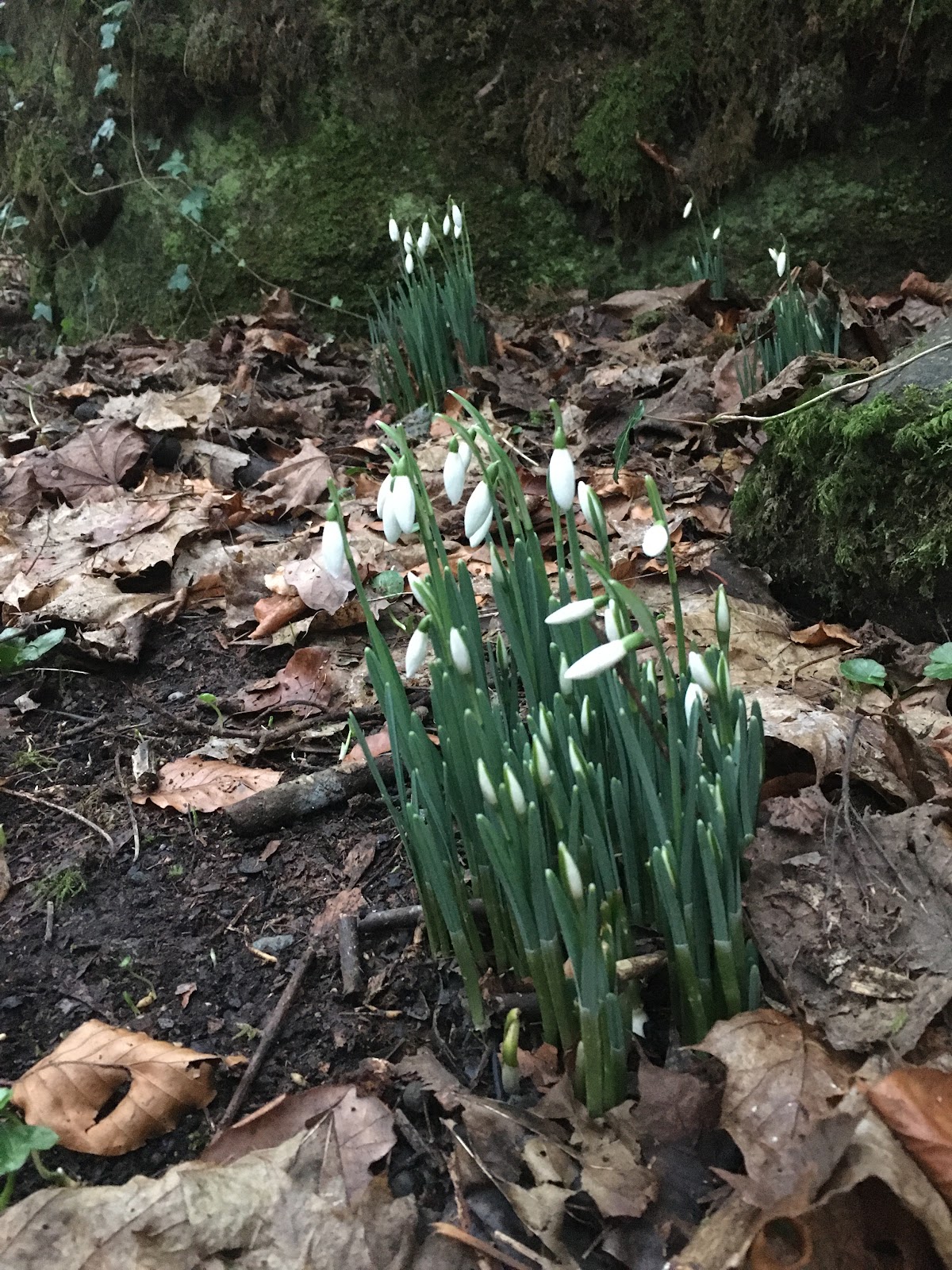
last year's leaves protecting this year's snowdrops 

And now it is January, that dark everlasting month. A month of regrets about Christmas over-eating and over-spending; of having to do all the things you put off at the back end of last year because you were too busy being Christmassy; of resolutions made and broken; perhaps, eventually, of acceptance that winter (with a house full of wine and Quality Street and giant Toblerones) mightn’t be the best time to cut out booze/sugar/carbs. Maybe March – for centuries the first month in the calendar – would be kinder?  


that lovely January light 


You know, in January, that however bad the weather has been in December (in this case, ceaseless rain and flooding), it is only going to get worse. After all, ‘as the day lengthens, the cold strengthens.’ And when we turn our horrified eyes to world events, it would be disingenuous not to be concerned that, bad and all as 2023 was, 2024 isn’t showing any signs of improvement. 


Lissan Water in full flood 


In spite of all that, I rather like January. I like the snowdrops. I like knowing that even if (when) I break my resolutions (mostly regarding eating less), there are still eleven months ahead in which to start again. And I like wondering what new opportunities there might be professionally. At the moment I’m finishing the first draft of the sequel to last year’s Mrs Hart’s Marriage Bureau; waiting for the edits on my new children’s historical novel, which will be published this autumn, and looking forward to the UK paperback release (in a shiny new design) of Mrs Hart at the end of March. I’ll enter some short story and memoir competitions too, and work on some new book ideas. In January, everything feels possible. And in my diary I have two conferences booked – ‘Twentieth-Century Schoolgirls and their Books’ and the Romantic Novelists’ Association conference, both in August.  So it’s a time of hope, even though August feels ages away – ‘unimaginable/zero summer’ as Eliot puts it. 


spring colours for the new paperback of Mrs Hart

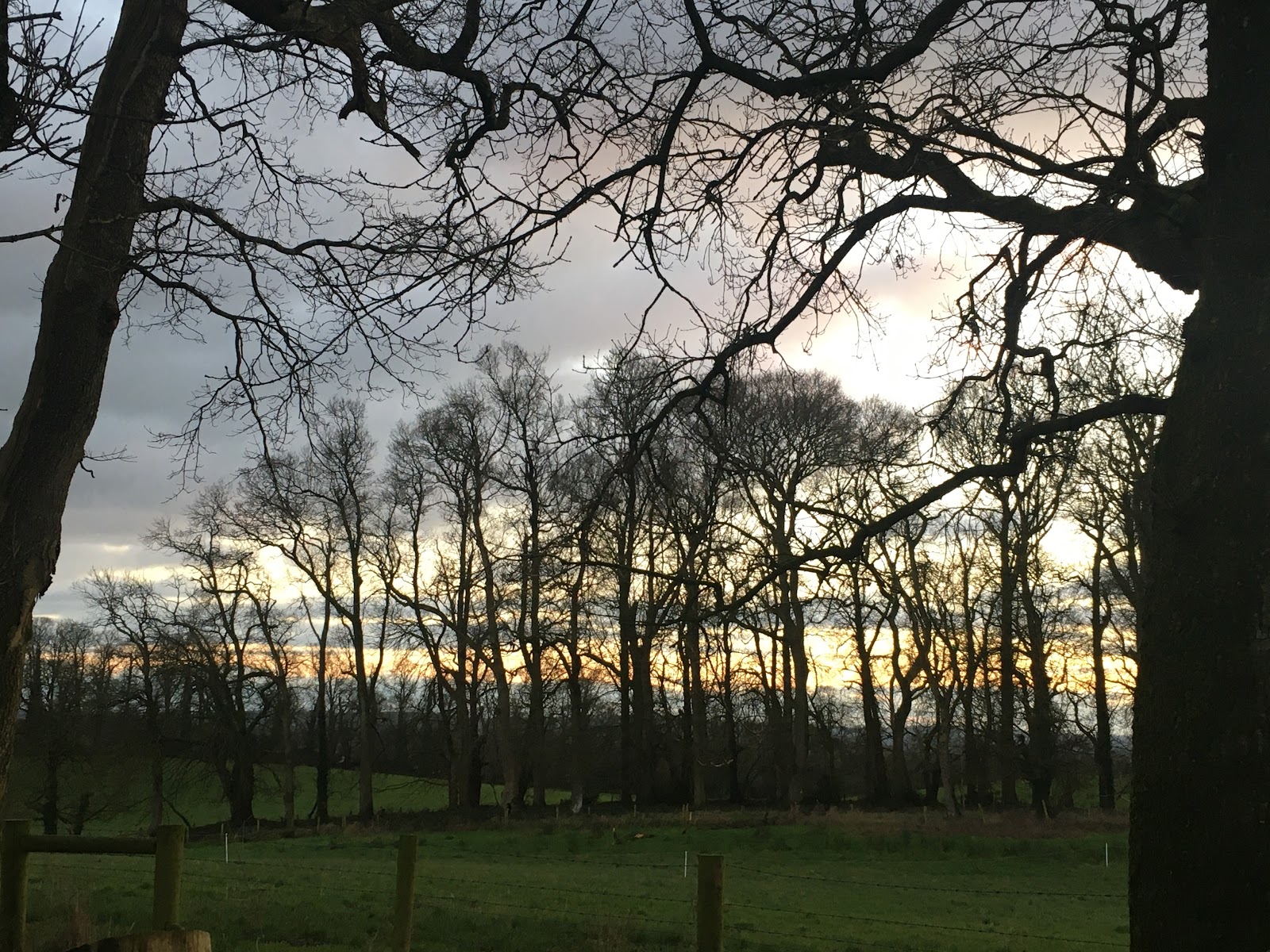
On my daily walks I’m noticing signs – not of spring, exactly, but perhaps of Eliot’s ‘midwinter spring’. I tend to walk ‘towards sundown’, when my day’s writing work is done, and I enjoy being able to stay out a little later each day, to say to the occasional person I meet, ‘Isn’t there a grand wee stretch in the evenings?’ The light in January always seems to have a particular quality, a promise of better days ahead. 


more of that lovely light 
 

It’s rather belated to wish readers a Happy New Year on the 13th day of the month perhaps, but given that January does seem to last for about seven weeks, that not all cultures celebrate New Year at this time, and that March was the official first month for hundreds of years, maybe I can get away with it. 


You can get away with anything in January. 


Monday, 8 January 2024

New Year Resolutions - Keren David


 You'd think -  wouldn't you - that I'd know better. At my age. The very idea that you can decide to change your life and just change it.
After all, we all know that gyms make a fortune from people who join in January, go a few times and then never go again. Changing one's habits is notoriously hard, especially when it's dark and cold as it tends to be in January in the UK. Bleurgh,  Pass the chocolates. 
And yet. 
In 2008 I had a half-formed resolution -  to try and write a book. I signed up for a course in Children's Writing, had an idea, set myself a target of writing 1000 words a day. By January 2009 I had written a book and found an agent. 
And so I continue to believe that  new year resolutions can happen. Especially (crucially) if they are fun to do. 
This year I got my kids to tell me their resolutions and  then mixed them with mine and made this,


'Deals' was my son's word -  he works in recruitment, where it's all about making deals. My words are mostly about getting more balance into my life, relaxing, celebrating, making art.
But I looked at the word 'deals', and thought  -  book deals? Who knows.... 

Saturday, 6 January 2024

One Eye on the Grown-up by Paul May

What interested me most, when I started reading the Carnegie Medal winning books from the beginning, was the prospect of discovering books and authors I'd never heard of, or who I'd heard of but had never read. I spent a lot of time, early on, exploring the backgrounds and connections of some of those authors, and I'm glad I did, especially in the case of Walter de la Mare whose novels, Memoirs of a Midget and The Three Royal Monkeys are truly extraordinary books which I doubt are much read today. Reading those early winners was a kind of literary archaeology, but now that I've entered the new millennium I'm not having quite as much fun, and I'm wondering why?


I am a confirmed re-reader of books I love. I don't know if this is a bad thing or not, but after reading a dozen or so new books I usually find myself going to the bookshelves and taking down a John le Carré, for example, or a thriller that I remember enjoying but read long enough ago to have forgotten the plot. I have other literary habits that appal my friends. If a book is tense I look at the end to make sure the protagonist makes it through. I'll do the same thing with movies sometimes, and if a series doesn't really grab me, or I don't think it's worth the investment of time, I'll watch the last episode just to see what happens. And then recently I wondered which of the Carnegie winners I've read so far I fancied re-reading. I almost hate to confess—that book is Pigeon Post by Arthur Ransome, the very first winner published 88 years ago (and still in print!) 

So I read it again last week (for perhaps the fifth time). Despite the fact that an adult (and especially one who has read it before) can see what's going to happen, I can still get completely immersed in the story and especially in the place. It feels to me as if Arthur Ransome's Lake District is a place which I have real memories of, and that's strange because the Lake District in Ransome's books is the Lake District of his childhood and of his memory. It was already changed when he wrote about it. And in many ways, in its details, it's also an imaginary place. The geography is almost like a dream geography, familiar but somehow altered. It's the same with the geography of the Norfolk Broads where other Ransome books were set. My mother still lives in Horning and the real Horning is like a strangely altered version of the one in the books, and always was.

The other thing that really stood out on this re-reading was the brilliance of Ransome's handling of the children's imaginative play. He offers a range of perspectives on this. There's Dorothea, the budding novelist turning everything they do into a melodramatic romance. Dorothea is contrasted directly with her brother Dick, the scientist, for whom Nancy's overarching fantasy of being Wild West gold-rush prospectors, staking claims and fending off enemies, is almost irrelevant. When he wants to know more about how to test for gold he's all for consulting an adult, even the one who Nancy has cast as their mortal enemy.

Nancy is really interesting in this book. It's almost as if she's making herself carry her fantasies through, but every so often we see flashes of another, more mature person. Ransome knows that his readers aren't stupid. They know that all the stuff about pirates and prospecting for gold is make-belief, and it makes it even more real when we see that the children in the story know this too, and are able to switch at will between their fantasies and the real world. But what I really want to say is that this is most definitely a children's book.

Ransome liked to tell people that they should never write for a particular audience—that they should only write stories they themselves wanted to read. I think it's reasonable to say that Ransome was writing for the child in himself, but I'm pretty sure he knew where the money was, and when he wanted to write a story about evacuees at the beginning of the war he acceded readily to his publishers' prohibition. No war on any account.


And so, back to the 21st century. With Ruby Holler, the 2002 winner, Sharon Creech became the first writer from the USA to win the Carnegie. Despite its pacy style and humour I didn't find this one particularly memorable and one aspect of it brought to mind T H White's comment on Arthur Ransome: "He does not write with one eye on the grown-up, as I do, but seems to be a pleasantly childish man himself.'

Writing with one eye on the grown-up has been a flaw in quite a few Carnegie winners, and at times Ruby Holler seems more like a treatise on parenting than a book for children, as though the author was hoping to get through to parents who are reading the book to their kids.


Next, in 2003, we had Jennifer Donnelly's A Gathering Light, the second American winner. It's a very good read—a brilliant mix of fact and fiction (it concerns an historical murder case and includes original letters). I liked it very much but it does seem bizarre to me that this book sits in the same list of winners as Pigeon Post and The Borrowers. It was marketed as 'Young Adult' fiction and much read by adults. It's not surprising that it found a wider audience among grown-ups because it's a book which is very sure-footed in its handling of sex, and I always feel that that it's the uncertain handling of this tricky area which is one of the main distinguishing features of books categorised as YA.


Then in 2004 we have a genuine children's book, Millions by Frank Cottrell Boyce. It's funny, witty, moving and a Danny Boyle movie, and I was hooked from the start because I collect school mission statements. They are often hilarious, as Frank Cottrell Boyce has noticed:

'It was our first day at Great Ditton Primary. The sign outside says, "Great Ditton Primary—Creating Excellence for a new Community".

'See that?' said Dad as he left us at the gates. 'Good isn't good enough here. Excellence, that's what they're after. My instruction for the day is, "Be excellent."'

In Millions, two boys find a bag containing squillions of pounds in banknotes earmarked for destruction as the UK switches to the Euro. They are also grieving as their mother has recently died. I love this book—who would have thought you could write something so funny about grief? And if you've tried spending cash in London lately you'll have some extra sympathy for the boys trying to get rid of the money. It's also worth noting that this book contains the first mention of the Internet among Carnegie winners. Damien gets his info about saints from www.totallysaints.com and I have a feeling the publishers put up a spoof website for that address once, but now it just takes you to an error message on the Pan Macmillan website.  The boys also use the Internet to find out about the robbery of the money.

Damien's older brother Anthony is a great character. When a bully tries to steal their Pringles at lunchtime he tells the boy their mother is dead. 'On the way to the playground, Anthony said, "Works every time. Tell them your mum's dead and they give you stuff."'


And now a fourth book, because I really want to finish these Carnegie winners in 2024.  This is Mal Peet's Tamar, the 2005 winner. Mal Peet was a wonderful writer and there's no doubt that Tamar is a terrific book, but I've always felt uneasy about it. It feels to me as if there is an excellent adult novel set in WW2 at the heart of it, which isn't improved by the addition of a modern day plot featuring a teenage girl named Tamar trying to unravel her grandfather's past. There will be spoilers in this next bit. 

The main story is set in the aftermath of the Battle of Arnhem, previously used as a setting for Aidan Chambers' 1999 winner, Postcards From No Man's Land. Two young Dutch men are parachuted into the occupied Netherlands to organise the Resistance in preparation for the next Allied advance. What follows is a tale of amphetamine-fuelled jealousy,  betrayal and murder which takes place against a brilliantly realised background of the increasingly desperate and brutal German occupation.

In the present day, Tamar's grandfather kills himself (she imagines herself to be named after the river). He leaves behind a set of clues to lead her both back to her missing father, and to the truth of what happened during the war. Because it's essential to this plot that the reader doesn't know which of the two young Dutchmen survived the war and married the girl, they are only ever referred to by their false Dutch identities or by their Resistance codenames—Tamar and Dart. 

This is unfortunate because it adds a small irritation to the wartime sections and makes the reader constantly aware that there is something plotty going on. Without that irritation you would have a wartime resistance story as good as anything I've read published for adults, or better. Admittedly, the modern-day plot is well done, and I was glad that it provided some relief from the almost unbearable tension of the wartime story, but I still maintain it would have been a better book without it, albeit harder to market as YA (a category which, like all categories, Mal Peet hated.)

It's interesting that so many Carnegie winners have been set during WW2 and so few deal with the Cold War. The imaginations of those growing up in the 1950s and 60s were shaped at least as much by the threat of nuclear war as by the shadow of WW2. Mal Peet went on to fill that gap with his Life, An Exploded Diagram, published in 2011. That, for me, is his best book, although his funniest book is The Murdstone Trilogy, a wonderfully entertaining satire on the publishing industry published in 2014, not long before Mal Peet's untimely death in 2015. Please, please, do go and watch this interview on YouTube from 2015. It's great.


Wednesday, 3 January 2024

THE ICE CHILDREN - a review by sharon Tregenza


I thought I'd love this book by M G Leonard - and I did.

Leonard takes Hans Christian Anderson's "The Snow Queen" adds an environmental slant and a mystery to solve and sets it all in a modern winter wonderland. Perfect. 

Bianca's brother Finn, is alive but frozen. The adults are at a loss what to do but Bianca is sure that it's something to do with the strange silver book that Finn was so secretive about. When another child is also frozen Bianca knows its up to her to solve the mystery of the ice children. 

The global warming message here is delicately interwoven with the fairy-tale quality of the story and emerges slowly so never feels clunky. It's a delightful book. A magical mysterious book. And it's enhanced by the wonderful illustrations by Penny Neville-Lee.


 A great read for 8-12 and beyond. Highly recommended.
  • Publisher ‏ : ‎ Macmillan Children's Books; Main Market edition (2 Nov. 2023)
  • ISBN-10 ‏ : ‎ 1035014211
  • ISBN-13 ‏ : ‎ 978-1035014217

Email: sharontregenza@gmail.com


Tuesday, 2 January 2024

Resolutions by Steve Way


Resolutions I can do and will definitely stick to for 2024.

1.


~~~~~~~~

Ah well... They do say honesty is the best policy.

Happy New Year everyone!!!