Showing posts with label translation. Show all posts

Wednesday, 9 August 2023

All writers are translators - Anne Rooney


Daniel Hahn's book with
random dinosaur

I've just finished reading Daniel Hahn's Catching Fire: A Translation Diary, and I think you should, too. It's a blow by blow account of his work as a literary translator, translating the slippery and enigmatic Never Did the Fire by Chilean writer Diamela Eltit. It unpicks the work of a translator with forensic detail in writing the same book as the original, but using entirely different words. If you are writer, particularly, but also if you are a reader, you will find this dissection of the craft fascinating and perhaps familiar.

All writers, whatever they write, set out with an idea of the perfect book they want to write. You can think of this as the Platonic "form" of the book. (If you've not come across Platonic forms and Plato's allegory of the cave, there's a quick explanation at the bottom of the post.) It is never possible to create that perfect book. Any actual book you write will be flawed. You won't find the perfect structure, the perfect words. Some of your ideas will be lost in transmission. Your hopes will be disappointed. But you will keep rewriting bits of your book in the attempt to edge closer to its elusive perfect form until either the delivery deadline is upon you or you get bored and give up. (No one ever tells aspiring writers this, by the way. They think they have to keep revising until the book is as they imgained it would be. The key to a successful writing career — as opposed to successful writing — is knowing when to give up.)

In this sense, then, all writers are translators. We are trying to translate that nebulous idea of the book, which is always perfect, into actual words. The words have to capture the essence of the book, not just details like story, character, setting, and so on. We don't choose one metaphor or analogy over another just because it's more precise but also because of the extra bits and pieces it carries with it. If I say something is "as black as nothing" you have a different impression from if I say something is "coal-black" — and not only because the second is a tired cliché. If I were Danny Hahn, I'd pause here to say that "coal-black" has a different meaning for me, a child who played in the coal bunker and carried in the coal we used to heat the house, from that is has for my children, who've possibly never even seen an actual piece of coal used in anger. You will have a vision of "black of nothing", or perhaps an apprehension. If you pause to think about it, you might say "nothing isn't black", which is both true and not true, or you will unpick the simile to find it says "nothing is black" which is comically ambiguous. It reminds me of the Big Knights episode which has the princess worried that the Big Knights "are afraid of nothing" means they are afraid of everything. And because I write a lot about space, "as black as nothing" reminds me of black holes, which are entirely the opposite of nothing, being crammed full of stuff, but which people think of as nothing. So you see every word and phrase we pick in writing our books helps to create their essence. Every word brings connotations, the conjunction of words brings new meaning, and even the gaps are fruitful ("that's how the light gets in", as Leonard Cohen says). 

The translator has a harder task because the Platonic form of the book exists already in another language. This means other people can see the ideal version, they can compare his book with that. For the rest of us, we are the only ones who can see how far short of the ideal our book falls. The trick is not to let on. 

Diacodexis, looking mournful,
neither running nor jumping


A fiction writer who creates something from scratch is less likely to think of themselves as a translator, but I routinely translate between adult/academic writing and language accessible to children. I take something like, "Diacodexis may have employed a combination of both cursorial and saltatorial habits" and translate to "Diacodexis could run, and if it wanted to, it could jump." Yes, I've dopped the "may have" — but it's rather taken for granted that most of what we say about long-extinct animals should come with that qualification.

In summary, I think all writers should read Danny's book as you will find a lot in it to identify with and a lot of insight into how those of us with the easier task of writing in just one language also work with words. Non-writers should read it, too, to appreciate what goes into this craft of ours. 

Monday, 20 February 2023

When is a woof not a woof? by Joan Lennon


Jan Brueghel the Elder (1568-1625) 
(wiki commons)

The answer to the question 'When is a woof not a woof?' is 'When it's a wau.' Which it is in Germany. 

Humans imitate animal sounds differently in different places. I grew up in Canada thinking that dogs said bow-wow until I moved to the UK and learned that British dogs say woof woof. And it doesn't stop there. In Bahasa Indonesian, they say guk guk; in Dutch they say blaf; and in Korean they say meong.

What about frogs? In English they say ribbut; in Italian it's cra cra; Mandarin frogs say guō-guō; Thai frogs go op op; in Hungarian they say brekeke; and in Japanese it's something like kero-kero.

Or mice. They may squeak in English, but in Dutch they go piep; in Italian it's squitt squitt; Swedish mice say pip pip; and in Germany they go i i i i.

Cats sound a lot alike in a lot of languages - versions of miaow - except in Korea where they say yaong.

But pig noises are all over the shop, from hunk hunk (Albanian) to noff noff (Swedish) to groin groin (French) to knor knor (Dutch).

So the next time you read or write a picture book rich in animal sounds, spare a thought for any translators. It's may not be just the human words they'll need to translate!

What did animals say where you grew up?


Print in the Edo-Tokyo Museum, Japan 
(wiki commons)


Joan Lennon website

Sunday, 28 April 2019

In the bubbles: Translating Comics - Clémentine Beauvais

I'm currently translating into French the hilarious comic Woman World by Aminder Dhaliwal, drawn from her popular webcomic of the same name


It's the story of a world where men have all gone extinct (RIP, v sad, :'( bye men!), and the survivoresses of the quasi-apocalypse live together quite happily, spread out in small communities; the heroines of the story live in a village called Beyonce's Thighs, and while away the days talking, kissing, asking each other existential questions, and foraging around in the ruins (where they discover, among other things, an old dildo factory, which they mistake for a failed attempt by the old civilisation to create male androids; and an old Twinkies factory, a much happier find.)

It's the first time I'm translating a comic, and it's been an extremely fun experience, though challenging for a lot of reasons. One is the visual puns, which are a real nightmare (but fun). I'll focus on another one here, though: the necessity to keep the translated text within the bubbles.

You may or may not know this, but English is a thrifty language in comparison to French, where we need many more words 'to say almost the same thing', as Umberto Eco would put it. So, in English, 'I think cats on Roombas are hilarious', but in French, 'Je trouve que des chats sur des Roombas, c'est hilarant.' (I hope I've taught you a useful sentence there (you're welcome.))

The typical rate of inflation of a text in French translated from the English is 20%. For things like novels, it doesn't matter much. But for texts that are visually or spatially constrained, such as, eminently, comics, we've got a problem. Bubbles (the technical term is phylactery) aren't easily stretchable (you can redraw things, but it's fiddly and costly). And you don't necessarily want your font to be 20% smaller; preserving your readers' eyesight is, after all, a good idea for the viability of the book industry as a whole.

Woman World uses a mixture of solid and contourless phylacteries, as shown here:


Evidently, the solid bubble places more constraints on the writer - but in fact, the next one is only disingenously contourless, because when you look closely you see that it's restricted on the left by a column, on the right by the gutter, at the bottom by another column. Both are tricky to translate. You could potentially erase more of the background if you needed space, but better not to.

The third panel 'Oh! I have one!' is obviously less problematic - there's more space, and in fact here there's plenty of perfectly suitable translations, from 'Moi! Moi!' and 'Oh! Moi!', to 'Moi! j'en ai une!', etc., which are even shorter than the English.

'This hospital project feels so serious' is complicated. The common English construction 'it feels' has no such simple verbal equivalent in French - you'd have to say 'Ce projet d'hôpital a l'air, semble, paraît tellement sérieux,' but it doesn't quite ring right, it feels like the heroine's not actually involved in it. Better to get rid of the verb altogether and land on 'Ce projet d'hôpital, c'est d'un sérieux', six words exactly, and a very natural-sounding sentence. Getting rid of verbs is a good strategy to keep French sentences short - verbs often come with a heavy escort of connectives, participles and pronouns.

But verbs aren't the whole story, because it's not just a case of the number of words, but also of their length. The ubiquitous English 'so' means, literally, 'tellement', which is almost five times as long (!). Often, it's easily replaceable by 'tant', 'trop', or 'très', only twice as long; 'trop' is particularly useful, as it's just as colloquial and parasitic in French as 'so' is in English.

Another strategy, I've found, is to change the distribution of text across bubbles, especially if you manage to squeeze more text in one:


Here for instance, I moved the cliffhanger-ish phrase 'when one day in the lab' to the top line. In English, you'd get 'Men were going about living their lives, when one day' // (next panel) 'In a lab, a smart man...'

This kind of decision, of course, needs to be taken carefully, because it modifies the pacing of the page and can throw off-balance the operation that Scott McCloud famously identifies as central to comic-reading, namely, the closing of the gap that occurs 'in the gutter', in-between two panels.

I justified this one to myself because I consider it to be a comic convention to have slightly corny sentences of the kind; either for narrative value (generally indicative of temporality), or for cliffhanger value, from one panel to the next, or one spread to the next:


You can see in this half-spread the typical Hergé-style yellow narrative box 'Le surlendemain...' (the day after next).

It's acceptable in this passage from Woman's World to be corny, because this whole first part is a pastiche of an old-fashioned comic (or indeed film) intro; the tone there is very knowing, self-reflectively humorous.

In order to mimic this convention and accentuate its corny effect, I added an ellipsis in my own 'narrative line' : 'Les hommes vivaient tranquilles, quand un beau jour...', and further used the expression 'un beau jour', rather than the more neutral 'un jour'; the expression belongs firmly to the realm of (again, quite corny) storytelling, and it works fine, I think, in this context.

You can see on the photo of the spread that I didn't use a Word document to translate the comic, but made use of the Comment function on PDF:


Although far from perfect, it allows you to gauge more or less how the size of the translated text compares to that of the source text, and makes the reading of the translation much more fluid.

I'll stop here for now.

And sorry about the long post! I didn't have time to write a short one.

Next time I'll draw a bubble around it.

-------------------------------
Clémentine Beauvais is a writer and literary translator. Her YA novels in English are Piglettes (Pushkin, 2017) and In Paris with You (trans. Sam Taylor, Faber, 2018).

Monday, 28 January 2019

10 tips for a great romance in Paris - Clémentine Beauvais

Cheating a bit today, but since my book In Paris with you, translated by Sam Taylor, is now out in the US with Wednesday Books, I thought I'd republish an article I wrote for a magazine at the time when the British version came out.


I know that at least ONE person got a great romantic Parisian weekend out of it. So there.

Warning: Might not be devoid of some sarcasm.

10 TIPS FOR A GREAT ROMANCE IN PARIS

1. Don’t actually be a Parisienne

I was a Parisienne for 18 years and frankly, there was very little I found romantic when I lived there. Intense emotion occurred only when the bus stop was cleaned, or when my favourite kebab introduced a new sauce. However, now that I’ve been a Britannique for 12 years, going back to Paris fills me with joy and longing, and a dirty Abribus is lovely to behold.

2. Be in love amidst skulls

Not enough lovers visit the Catacombs, which is weird, because the perspective is appealing : kilometers of underground passages whose walls and ceilings are almost entirely made up of the skulls and bones of people who died of plague at some point. Go there hand in hand and meditate on love and death. It’s like drifting across a Dutch vanity painting, for hours.

3. Whatever you do, don’t lock your love to a bridge

There’s a special place in hell for the sad, absurd couples who do this. That place is dull, smells of cabbage, and the couples there are condemned for the rest of eternity to bicker about which way the toilet roll should hang. Love locks are ugly, what they symbolise is ugly, and they quite literally break centuries-old architecture. In lieu of that, here’s other things to tie to things if that’s your thing : your lover’s hands, to a bedpost.

4. Don’t go up the Eiffel Tower

The Eiffel Tower is too high. It bulldozes the beautiful Parisian cityscape into a greenish-grey flatland. Instead, walk up the escargot-like chalky staircases of Notre-Dame, and kiss right next to the bells and the Gruffalesque gargoyles. Much more romantic, much better views.

5. A quirky story to tell your lover, walking down the Seine, when you’ve run out of things to say.

Because there’s nothing like a story of drowning to revive a waning conversation. In the 1880s, a woman was pulled out of the Seine’s murky waters, drowned, but extremely beautiful indeed, to the extent that she was exhibited publically for all to see. A death mask was made of her fine features, which many people then acquired to hang on their walls (normal). She became known as L’Inconnue de la Seine. Many years later, in the 1950s, her face was used to create the first CPR mannequin. So, if you’ve ever done a first aid course, chances are you applied your lips to a face very much like that of this mysterious fin de siècle French beauty.

6. Don’t give them your 06

« Hey mademoiselle, tu me files ton 06 ? » - hey miss, give me your 06 ! – is what some catcallers used to shout at you in a desperate attempt to win access to mobile phone numbers (which mostly start with 06 in France). Catcallers today might ask for your snapchat or instagram handle instead, but whatever they’re trying to do, they are the plague of Parisian streets and the antithesis of romance. Don’t give them your 06.

7. Find a late-night alcove in a hotel bar

For instance, the tiny, beautiful bar of the Hôtel des Beaux-Arts in the 6th arrondissement. There’s never anyone there, they serve good cocktails, it’s all plump cuhsions and velvety armchairs, and the plush alcoves are good at keeping secrets.

8. 8 books to read before you go to Paris

Or during, when you don’t feel like talking to your lover, like, 24/7, because we all need space from time to time, don’t we ? L’inconnue de la Seine, conveniently, is a prominent presence in one of the most splendid love stories in French literature, Louis Aragon’s Aurélien. You should also read my book, I think : In Paris with You, translated by Sam Taylor. Another six facets of Paris : Emile Zola’s The Ladies’ Paradise ; Colette’s Claudine in Paris ; Simone de Beauvoir’s The Mandarins ; Tardi’s The Extraordinary Adventures of Adèle Blanc-Sec ; Tiphaine Rivière’s Notes on a Thesis ; and Virginie Despentes’ Vernon Subutex.

9. Find those nine things and kiss in front of them

A fun game to play if you’re both getting a bit bored of each other by now. One mural of Gainsbourg and Birkin. Two Statues of Liberty. Three Space Invaders. Two windmills. One statue of a rhinoceros.

10. Ten cheeses to fix a broken heart

In case the trip to Paris didn’t turn out as romantic as expected, and s/he finally ditched you in front of that rhinoceros (damn rhinoceros). A cœur de Neufchâtel seems appropriate to begin with. Then a lovely Saint-Nectaire, runny like your nose ; a mimolette vieille, as rusty and flaky as your self-confidence ; a crottin de Chavignol (crottin means little turd : like your ex), a tiny bouton de culotte (pants’ button) to remind yourself of that crottin’s underwear ; an époisses and a maroilles, because you don’t care about what your breath smells like anymore ; some fourme d’Ambert, black and blue and mouldy like your poor heart ; and a slice of Chaussée aux Moines, because a monk-like existence is what you’re likely to have now and forever.

And finally, a nice big chunk of gorgonzola dolce, to make you want to fly off to Italy : it’s much more romantic there.

Enjoy!

-------------------------------
Clémentine Beauvais is a writer and literary translator. Her YA novels in English are Piglettes (Pushkin, 2017) and In Paris with You (trans. Sam Taylor, Faber, 2018).

Wednesday, 28 November 2018

It happens in translation – Clémentine Beauvais


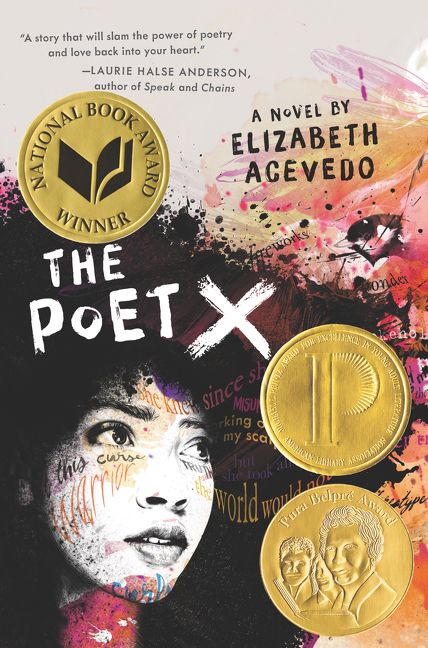
A few days ago I was doing a literary translation workshop with French teenagers in London, using as my English text a slice of Elizabeth Acevedo’s splendid, National-Book-Award-Winning The Poet X, which I’ve had the pleasure (/honour/ insane luck) of translating into French.

Image result for elizabeth acevedo the poet x


Elizabeth Acevedo, in case you haven’t heard of her, is this remarkable spoken word poet and writer:


The Poet X is the Künstlerroman of a young Dominican-American woman who discovers spoken word poetry, rebels (selectively) against her family, loves her brother, and loves, too, a sensitive young man in her Biology class. She writes in a notebook, and she writes things about her everyday life, such as church, food, masturbation, and street harassment:


(Transcr:
It happens when I'm at bodegas.
It happens when I'm at school.
It happens when I'm on the train.
It happens when I'm standing on the platform.
It happens when I'm sitting on the stoop.
It happens when I'm turning the corner.
It happens when I forget to be on guard.
It happens all the time.)

This is the poem I asked the French teenagers to translate (well, only the first stanza – we only had an hour). As you can guess, there’s plenty of fascinating challenges for a translator there, and we always begin by reading the poem out loud, testing out different stresses, different rhythms, feeling the beats and letting the sounds fill our mouths, before we start making decisions about translation. I won’t focus on all the aspects in this blog post, but I want to talk about one particularly interesting thing that came out of the exercise.

The first stanza, obviously, makes striking use of the anaphora ‘It happens’. What is ‘it’ that happens? It’s alluded to in the next stanza – touching, allusions, compliments. The usual catcalling and groping sort of business.

How do you translate that into French? Well, there’s at least one absolutely literal translation: ‘Ca arrive’ (it happens). The problem is the hiatus (a hiatus is what happens when you have to force a break between two similar-sounding vowels): Ca-arrive. That a-a sounds fairly unpleasant to the ear – this is what I think secretly, but of course I say nothing to the teenagers ; it’s my opinion. But among the six groups that day, no one opted for ‘Ca arrive’.

Two groups opted for the next most literal option, ‘Ca m’arrive’ (It happens to me), which has the advantage of getting rid of the hiatus. Interestingly, this option makes the victim explicitly central in the French text – no way of avoiding this ‘m’ which explodes from the front of the mouth and provides a nice labial echo to the ‘haPpens’ in the English version. Full disclosure, this is the one I picked for my own translation, too.


Another table chose, interestingly, not to translate ‘It happens’ at all. Instead, they started every single line directly with ‘Quand’ (when). The effect was funny: the stanza becomes a bit of a riddle, to be solved in the very last line. ‘When I’m there, when I’m there, when I’m there, when I’m there… It happens’. More suspense, but less emphasis on the relentlessness of the harassment.


Another group opted for the hugely alliterative ‘Ca se passe’ (pronounced ‘Sasspass’), which more or less means ‘It happens’. I like this solution, which sounds like hissing, and preserves the plosive ‘P’ of ‘haPPens’. It is perhaps the closest to the source text in both meaning and effect. I had considered it (and am still considering it) for my translation.


Another group, finally, had an idea I hadn’t considered at all, and which I find especially interesting. It is to begin each line with ‘Ils le font’, namely, ‘They do it’ (with the ‘ils’ explicitly male in French). Complete change of focus all of a sudden: the perpetrators are at the very beginning of the line, of each line. The impersonal ‘it happens’, which makes it sound like it’s some kind of unavoidable meteorological phenomenon, suddenly acquires a body (even several bodies: a threatening army of bodies); it acquires malevolent agency, and it acquires a gender. 


A radical solution, which arguably lacks elegance in its sounds, but strongly signals the translator’s commitment to naming and blaming the perpetrators. Before you ask, the table who came up with this solution was composed exclusively of boys.

What a world of connotations separates ‘Ca m’arrive’, which focuses Acevedo’s text onto the victim, ‘Ca se passe’, which renders the impersonal inevitability of the original, and ‘Ils le font’, which foregrounds the harassers.

All three solutions are acceptable, and all commit the translator differently. Those little decisional acts we perform on a text we translate are what makes a translation a literary practice, and a practice through which words have an effect on the world. Each of those three poems would have a different effect on the world, because they each focalise our attention differently. 

Three ways of looking at street harassment. And I was of three minds.

-------------------------------

Clémentine Beauvais is a writer and literary translator. Her YA novels in English are Piglettes (Pushkin, 2017) and In Paris with You (trans. Sam Taylor, Faber, 2018).

Tuesday, 28 August 2018

Literary Translationese - Clémentine Beauvais


Last Wednesday, my latest YA book came out in France :


It’s the culmination of 12 years of observing the British, and gradually sort-of-becoming one myself, a process of transformation not as painful as it sounds. It’s the very first time one of my French books is set in Britain, and, as its almost-500 pages testify, maybe it was long overdue. 

Here’s my pitch, elevator-ready : in post-referendum Britain, a canny entrepreneur, 21-year-old Justine Dodgson, sets up a start-up – the eponymous Brexit Romance – to match young Europhilic Brits to generous-minded French people, for the purpose of entering into arranged marriages. Five years later, in theory, the former would gain the nationality of the latter, and thus get back their European citizenship. The only condition, however, is to Not Fall In Love. In practice, this is difficult. 

Aside from Justine, the main characters include an innocent and romantic French girl, her grumpy Marxist-Leninist singing teacher, a young lord – and son of the leader of UKIP – and a beautiful British-American lawyer. As you may have guessed, it’s a rom-com of sorts, often verging on screwball comedy, and it’s also, as the title indicates, not too far from social and political satire. But it’s also, eminently, about cultural and linguistic tensions, often endearing, sometimes exasperating, between France and Britain, and French and English.

Form matching content, it’s written in a kind of Frenglish, or rather what I’d call ‘literary translationese’. 'Translationese' is generally used derogatorily, to refer to sentences that 'feel translated' - think, for instance, of Facebook translating your international friends' statuses. But I mean it here positively, creatively: literary translationese, as I use it in Brexit Romance, is a way of writing in French that deliberately uses lexical calque and syntactic mimicry of English, as if to imitate the feel of a translation. It allows for a lot of fun things, from basic wordplay to painstaking rendering, in French, of the convoluted sentence structures of British politeness – je ne suppose pas que vous soyez libre dans trois semaines ?
 
Literary translationese occurs, famously, in Asterix in Britain, where all the ‘Bretons’ in the French version preface every sentence by ‘Je dis’, answer every statement with ‘Plutôt !’ and reinforce their assertions with an ungainly ‘n’est-il pas ?’, all of which baffled and delighted my 10-year-old self.
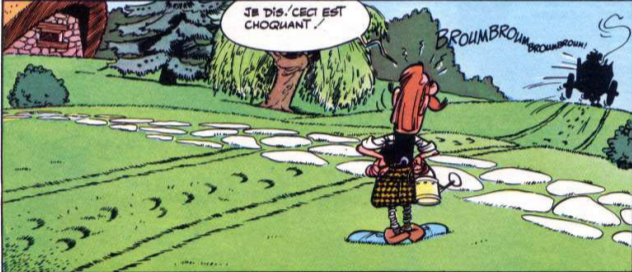
Image result for astérix chez les bretons
available in English translation by A. Bell and D. Hockridge
 More recently, francophone Swiss writer Joël Dicker wrote The Truth in the Harry Quebert Affair, which reads, in French, ‘like a bad translation’ of an American crime novel – quite in keeping with the story, which is about an American writer writing about a crime involving another American writer (available in English translation by Sam Taylor). Another favourite of mine in the literary translationese category is Marie-Aude Murail’s sprawling teenage novel Miss Charity, a fictionalised biography of a Beatrix Potter figure, which audaciously espouses, in French, the phrases and lexicon of 19th-century British novels and of their classic translations into French. 
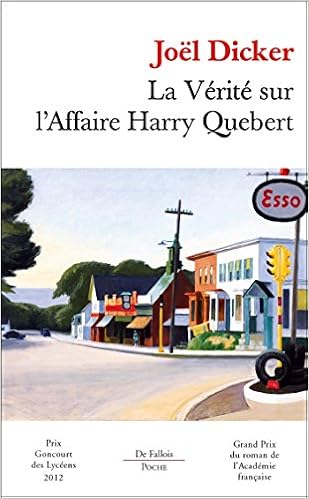
 Image result for la vérité sur l'affaire harry quebert

Literary translationese pushes to its comical and beautiful extremes the daily involuntary instances of translationese that texts all around the world occasionally slip into. It aestheticises Globish, glorifies lazy Englishisms. Few people are more guillotine-worthy, in French, than those who use the verbs ‘réaliser’ or ‘supporter’ to mean ‘become aware of’ and ‘support’ (a team) – but use them in the right literary context, and suddenly the repulsive statement ‘Il supporte l’équipe de France’ can take on a new texture, turning football devotion into some kind of existential burden.

I particularly love literary translationese when it elevates to the rank of the finest surrealistic devices two things which we learn at school to be ultimate crimes against literature : the calque, and the cliché. He stormed out of the kitchen, says the English author who’s completely run out of energy to find non-banal ways of expressing the character’s anger. But nothing cliché in the outrageous French calque il s’oragea de la cuisine, halfway between orage (very much not a verb) and s’arracher (a familiar way of saying ‘to get out of here’). That sentence is intolerable in any literary context that doesn’t firmly invite a reader to delight in its being written in literary translationese. Once it’s there, though, it speaks its own quirky, playful language.
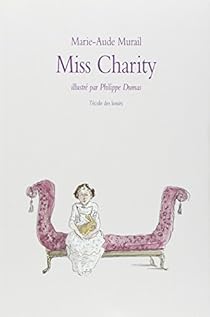
Image result for miss charity marie aude murail

Learning other languages, one dreams sometimes of multilingual adventures in literary translationese ; women who would ‘give light’ to babies, as they do in Spanish, or bold experiments in the acrobatic word orders of declension languages, in languages that aren’t graced with the same toolbox of suffixes. The point of literary translationese, however, is not to turn readers into supersleuths, working out which expressions in which language have been borrowed and exploited. It’s to create a literature that joyfully, weirdly and, sometimes, nonsensically, celebrates the impossibility of maintaining watertight boundaries between literary languages in the first place.

In doing so, it also celebrates, indirectly, translation and its literary influence. The texture of translations has profound consequences on the literature of any country ; translations and their conventions condition our reading, and they also modify our writing.  

We catch ourselves writing, in French, a million times per page, ‘Il haussa les épaules’, or ‘Elle cligna des yeux’, because English is a real spendthrift when it comes to telling us about people’s body language – even though French handles much more clumsily those innocuous He shrugged, she blinked. We are contaminated by the inbuilt English precision as to whether someone is currently standing or sitting, and we end up writing ‘elle était debout dans le couloir’, because we’ve read countless translated books where people are ‘debout dans le couloir’, instead of simply ‘dans le couloir’ – because in conventional French we can safely assume, unless otherwise stated, that a person in a corridor probably isn’t sitting, crouching or doing a headstand.

One interesting phenomenon of this ‘contamination’, as far as YA is concerned, has been the rise of the use in popular French YA of the term ‘marmoréen’ to refer to skin. ‘Marmoréen’ is an extremely literary, high-register way of saying ‘marble-like’ (‘marmoreal’ in English), and its incongruous use in contemporary popular YA otherwise written in low to mid register can probably be traced back to Luc Rigoureau’s French translation of Twilight, which used the word repeatedly to refer to Edward’s skin, translating Meyer’s more neutral ‘marble’. The word has become its own meme, and I can't imagine, as a French YA author, ever using the term ‘marmoréen’ today in any way other than humorously. But with the right crowd – one attuned to precisely those connotations of ‘marmoréen’ in French YA today – that humorous use could be very powerful indeed.
Image result for twilight luc rigoureau

From accidental translationese to literary translationese, the difference can be subtle – it’s about self-reflectiveness, artistic playfulness, and, to an extent, low-key political activism in literary form. It is indeed a political statement of sorts, especially when literary translationese is used with English as its point of reference, to calque English, and thus by definition make its influence visible, and thus makes its domination visible. It calls into question the ‘accidental translationese’ that happens all the time in countries where translations from English are ubiquitous (i.e., most countries), and suspends the transparency of that process for a moment. 

I suspect it is exactly the same for other languages that might use literary translationese with French, or other locally hegemonic languages. It’s an act of linguistic love, but also of linguistic teasing, or even linguistic nagging.

Unfortunately, I can’t think of any novels in other languages than French that use literary translationese with English. For a good reason, doubtlessly : those novels don't get translated into French, because literary translationese is horribly difficult to translate. It’s possible, of course – no such thing as untranslatability ! – but you can sort of understand why publishers are wary of it. And it’s also tricky because literary translationese is a linguistic love affair between two languages, so it would be quite difficult to get the gist of, say, a translation into French of a German novel that mimicks English turns of phrase. It’s the kind of in-joke that doesn’t travel very easily. 

Long post, sorry. Let me know in the comments of your favourite instances of literary translationese in English or other languages…


-----------------------------------
Clémentine Beauvais is a writer and literary translator. Her YA novels are Piglettes (Pushkin, 2017) and In Paris with You (trans. Sam Taylor, Faber, 2018).

Wednesday, 28 February 2018

Moose and Caribous: Translating Meg Rosoff's Moose Baby - Clémentine Beauvais


I'm currently translating Meg Rosoff's uncategorisable little gem Moose Baby into French.

Image result for moose baby rosoff

For those of you who haven't read this delightful tiny novel, it's the story of a teenage couple who give birth to a baby moose. Lucas Imogen Rudolph, or Moosie as he is affectionately known, is a charming little fur ball but also relatively maladjusted to the world around; at the age of eight months he already weighs one hundred kilos and not much of the furniture survives his toddlerish antics. It is not just funny but also clever, with biting satire of middle-class parenting, deft commentary on special education and on the world's perception of teenage parents, and also extremely moving at times. A perfect little novel, really, somewhere between Kafka and Louise Rennison (I know, not names you often see together in the same sentence). 

Anyway, this novel is tricky to translate in part because you laugh so much the whole time, but also because of a central difficulty at its core. This is a moose:

Image result for moose

In French, it's called un élan, or un orignal.

Moose is a funny word in English, which is lucky because the animal is also, well, fairly ridiculous-looking (sorry, moose fans). Unfortunately, in French, élan and orignal are not funny words. They are perfectly bland and boring. Worse, élan also means an impulse or build-up and it's most often used in that sense, so there's some potentially problematic semantic confusion there.

For Moose Baby to work in French, I had to turn Moosie into another animal:

Image result for caribou

Those of you who know their cervidae will have spotted straightaway that this is a reindeer, like Rudolph (and Olive, the other reindeer), and not a moose, which is bigger. 

Reindeer, alas, look less ridiculous than moose (sorry again, moose fans). However, what comical potential it loses in appearance it makes for in denomination, because switching species meant I could use the word Caribou, which is astronomically funnier than élan or orignal. The word Caribou is so weird that it somehow conjures up a more grotesque creature than the word élan, which sounds loftier and more serious. Caribou is clearly clunky and clownish, while élan ambles gracefully, towering above the steppes.

Of course, this wouldn't happen if this was about, say, a film adaptation. Visually, a moose would be more impressive and funnier. But in a novel, you need to pay close attention to the shape and sound of words - sometimes even more so than to what they refer to in the world. 

So in the French novel, Moosie the Moose becomes Boubou le Caribou. It will require some adjustments regarding size and weight indications, but it will, I think, be faithful to the comical power of the source text.

When we're translating, of course, we're constantly confronted to those strategies of compensation. Sometimes a pun just won't translate, so you delete it there and add another one, that didn't exist in the source text, somewhere else. 

But sometimes, like here, it's a more radical move than just microscopic compensations. It's happened to me several times to have to make such a move. Stylistically, for instance: I wrote elsewhere about translating Sarah Crossan's One, which required thinking strategically about where to locate 'the poetic' in that verse novel, which led me to opt for a much more rhyme-heavy French version. 
Image result for inséparables sarah crossan

I've also written about my own self-translation of Les petites reines into Piglettes, which required entirely changing the central pun ('boudin', black pudding, a funny word for 'ugly girl', didn't work in English) and therefore adjusting a lot of the story. 

Image result for piglettes

Moose Baby is therefore just another one of those choices, but it still makes you bite your nails in anguish. What if the baby actually needs to be, fundamentally, a moose ? What if, as a caribou, it just loses all power? 

In my case, I could just message Meg Rosoff to ask if it's OK (and in fact I have done so), but the problem is that, notwithstanding the fact that she is, of course, a pretty exceptional person, she's not better placed than anyone else to judge, just like I'm not a good person to judge whether 'black pudding' should become, in the translation of my Petites reines, sausages (as in the German version) or paté (as in the Polish version). Even after 11 years of living in Britain I had trouble figuring out how to translate it into English myself. Probing authorial intention in the case of translation is a dangerous game.

Translation choices are endlessly puzzling to writers, but I think it's important to trust that the other country does in fact, most of the time, know best. I was a bit taken aback when it was suggested that my Songe a la douceur (an untranslatable par excellence, since it's a line of poetry by Baudelaire) be translated into English as In Paris With You. 

proofs!
To a French person, even one strongly Britannicised like me, there's nothing particularly romantic about being 'in Paris with you'; I'm often 'in Paris with' random people, and it generally doesn't mean I spend my time eating croissants with them, gazing into their eyes and listening to an accordion piece while the Eiffel Tower sparkles in the background. But when I started hearing the enthusiastic reactions of my British acquaintances to this title, I understood that I had, in fact, clearly no legitimacy whatsoever to assess the power of that title. 

I had a similar conversation with Sarah Crossan regarding the title of her Weight of Water, which I also translated into French. After many weeks of painful brainstorming, my editor came up with the perfect title for our French version: Swimming Pool. Now, I can't quite explain to you why it's the perfect title, but it just is. Swimming Pool. It's mysterious, it's attractive, it's sexy, it's melancholy, it's blue-green and it's perfect. End of story. 

Sarah, however, was a little underwhelmed, because of course 'Swimming Pool' in English is a banal word that evokes not much more than rubbery swimming caps, eyes red from goggles, and the smell of chlorine. But see, that is what French people think, too, when they hear the word Piscine, while Swimming Pool is endlessly mystical. 

I'll never tire of exploring that 'can't quite explain why, but trust me, it is the best option' area of translation. It's important to talk about it, too, because every time you're reading in translation you're doing a kind of leap of faith and you need to understand that it's OK. Better than OK: wonderful. You have to trust the translator and their editor because they're the one in charge and chances are, they know better than - well, than you, for a start, and also than the author, doubtlessly - how to carry that story across to you. 

So it's caribous and swimming-pools, not élans and poids de l'eau. 

Just because. 

Trust me.

--------------------------------
Clémentine Beauvais is a children's and young adult author in French and English, as well as a literary translator. Her latest YA novel, Piglettes, is out with Pushkin Press. Her next novel, In Paris with You, will be out with Faber in June.