Showing posts with label science fiction. Show all posts

Friday, 4 September 2015

Writing for TV: The Market for SF/Fantasy is Stronger Than Ever - David Thorpe

This blog is usually addressed at writers of children's books but there are other markets for children's writers, such as comics, graphic novels, television and film which are worth considering.

This month I did a short survey of the state of the market for science fiction and fantasy television series for the producer optioning my own SF book, Hybrids for tv. I looked at series that were not necessarily just for children, but many of which may be watched by young people, that are on our screens this year or in development up to 2017. (Of course just because something is in development does not mean it will be produced or reach the screens, but even so writers may be paid to produce scripts or plots.)

I was astonished to find over 60 series in this SF&F category alone. The market has expanded hugely as television has become more international and companies like Netflix and Amazon enter the market, and I feel very encouraged by this.

Of these 60+, around half are adapted from books: 12 from the UK and 21 from the USA. Six are adapted from comics, continuing the trend of taking Marvel and DC characters to small screens. They include X-Men, Daredevil, Supergirl and Luke Cage.

Many of you might have seen Tatau, an eight-part paranormal series for a younger audience for BBC3 set in the Cook Islands and New Zealand, written by Richard Zajdiic, who got his tv break writing for EastEnders, then moved onto This Life and Attachments, an interesting series about an Internet start-up that was developed by the brilliant veteran scriptwriter Tony Garnett and was probably ahead of its time.

Richard gives his own advice for writers who want to break into the market:
"It's not just about talent. Luck is a huge factor too - being in the right place at the right time - so perseverance and tenacity are equally important. Remember, it's a marathon not a sprint. Hang on in there and hopefully you'll win one eventually.
"There are so many factors in getting a show made, let alone recommissioned, most of which are totally outside your control. I've had several development scripts praised by all parties involved, even one where the director (Peter Kosminsky, no less) was scouting locations and sending me pictures of where he was going to shoot my scenes but then, crushingly, the coveted green-light somehow failed to materalise. I also wrote on the prison drama Buried which won a BAFTA for best drama series and gained widespread critical acclaim. Channel 4 cancelled it. Go figure."
Anyone who is in this business needs perseverance. Life On Mars was rejected for years by all the channels before finally being resurrected. There are plenty of resources out there, the principal one in the UK being the London Screenwriters Workshop (which I helped to get going a long time ago) and the London Screenwriters Festival.


Tatau: Kyle (Joe Layton), Aumea Vaipiti (Shusila Takao) BBC/Touchpaper, Photographer: Kirsty Griffin

Historical fantasy is popular in the wake of Game of Thrones and the BBC’s adaptation of Susanna Clarke’s Jonathan Strange & Mr Norrell. It is being further capitalised upon big time by the BBC with three series:

  1. a historical eight-part series The Last Kingdom, from the creator of Sharpe, Bernard Cornwell; 
  2. The Living And The Dead, an original period horror set in 1888. Both of these have been developed in partnership with BBC America for the American market;
  3. and World's End, in which a group of children from diverse backgrounds are taken to a mysterious remote Scottish castle which houses a secret army research centre for an unknown purpose. This is written by Danny Spring and Diane Whitley.

ITV is not being left out with The Frankenstein Chronicles, a six-part series being made for ITV Encore following in the wake of Penny Dreadful.

Children's writer Charlie Higson (best known for the young James Bond) continues the classic horror theme with a 10 part version of Jekyll & Hyde to be set in the 1930s. Robert Jekyll is the grandson of the original doctor. It will begin screening on ITV in October.

[While we're on the subject, did you know that Anthony Horowitz was offered the chance to write that Young Bond series and turned it down? Never mind, he's since been picked to update another classic character, Sherlock Holmes and to write The House of Silk and Moriarty, and a new Bond novel Trigger Mortis, to be published later this year.]

Mary Shelley's richly resonant and prescient novel Frankenstein also inspires another series called The Frankenstein Code, that's being developed by Michael Cuesta for 20th Century Fox television and written by Rand Ravich and Howard Gordon, set to air next year. However it actually has little to do with Frankenstein apart from the fact that a corrupt sheriff is brought back to life in the body of a younger man.

The BBC has a kind of Humans for children, a gentle comedy about a family who have to share the house with the world's first fully sentient artificial person, called, with a stroke of originality, Eve. It's written by David Chikwe amd Emma Reeves.

There are quite a few comedy SF dramas. The one I'm looking forward to most is Tripped, a four-part comedy drama for E4 from the writers of BBC crime series The Missing, Harry and Jack Williams, adapted from an E4 pilot titled Alt, written by Doctor Who's Jamie Mathieson. It features a lad called Danny and his stoner friend Milo, who trip through alternate worlds, meeting different versions of themselves.

Dystopian drama tends to be crossover: both adults and older children like it. The theme is expressed by another series of Charlie Brooker's Black Mirror, Legends of Tomorrow, a kind of retro futuristic story about a ragtag group of heroes and villains trying to prevent the Apocalypse, Programmed about aliens taking over the human race, one actually called Dystopia about a virus that has rendered mankind infertile, plus several more, but apart from Black Mirror it feels like scraping the barrel.

Two dramas address the 'what if' idea of Nazi terror still being around today: Timeline Alpha and the probably much more interesting adaptation of another novel by the infinitely exploitable Philip K Dick, The Man In The High Castle.  I can't wait to see this 10 episode alternate history, having watched the pilot shown in January, that is being released on 20 November from Amazon Prime Instant Video, and is executive produced by Ridley Scott.

There are so many more, but I can't sign off without telling you about something you will no doubt have missed, so bad was it: a Christian science fiction series recently aired on the The CW Television Network that was apparently deliberately contrived to influence children. In The Messengers the devil (in the form of The Man) turns five normal people into angels with supernatural gifts that might be the only hope for preventing the impending Rapture. The storytelling was so convoluted and confusing it has, I'm very sorry to say, because it was so much fun to watch for all the wrong reasons, not been recommended for a second series.

At any rate, what's for sure is that the hunger for science fiction and fantasy is stronger than it has ever been. Good news for the prospects of Hybrids at any rate.


David Thorpe is the writer of the Sci-Fi YA novel Hybrids and the cli-fi YA novel Stormteller.

Wednesday, 20 May 2015

Not an Issue? - Joan Lennon

My first YA novel is teetering on the brink of becoming A REAL BOOK, but for me, as for all writers (I'm guessing), the story and everyone in it have been real from the very beginning.  
Silver Skin is a scifi/historical fiction inspired by the Stone Age village of Skara Brae on Orkney.  There are 3 main characters: Rab, from the far future, and Cait and Voy from the Stone Age.  When it was (wisely) suggested that Rab was coming across as too young, I didn't/couldn't write a different, older character.  I just aged Rab.  I imagined what he would have experienced in the x number of years that would pass to get him to the right age.  He's still Rab, just older.  How could he be anyone else?

Why am I telling you this?  Because, as Silver Skin's publication date approaches, I'm becoming aware of "issues" ... 

For example, I'm officially white, though in reality I'm pinky-yellow with occasional unfortunate flushes of beetroot.  Does this mean I can/should/must only write about pinky-yellow people with the occasional unfortunate beetrooty sidekick?  This is a legitimate question and we won't be finding the definitive answer to it any time soon.*  But the situation I find myself in isn't one I consciously sought.  I blame my characters.  I blame the story.  

Rab is black.  (He's also male, which I'm not, but that's another hornets' nest altogether).  He could have been any colour under the sun because he is from the far future. when "human colouring and characteristics had been jumbled together for so long that any couple could produce a child of any appearance.  Nobody stuck out because everybody looked different."  But he walked into my brain black and I saw no good reason to bleach him.  

Cait is taller and paler-haired than the people she lives with.  

Voy, the Old Woman, has arthritis-crippled hands.  

The bulk of the story is set in Neolithic Orkney, at the end of the Stone Age and the beginning of the Bronze Age, which was a time of major climate change.  Rab's future world has been shaped by climate change too.

But this is not a book about being black, or about having a tall blonde heroine, or about disability, or about climate change.  Those things are just in there, because they have to be, for this story to be this story.

Or am I being naive?  Is every book about the issues?  As writers and as readers, what do you think?  


* I've pulled up just a few of the excellent ABBA posts on the issue of issues for you to re-visit:


(publication date 16 June 2015)


Joan Lennon's website.
Joan Lennon's blog.

Monday, 4 May 2015

When Writers Try to Predict the Future - David Thorpe

I'm very excited because this month I am to achieve a long-time ambition of being on stage at a literary festival. Not just any literary festival, but Hay, and not just once but twice! I'm not at all nervous, no.

Both events are part of the festival's 'green' strand.

The first will be about my new non-fiction book The One Planet Life where I will be in conversation with Jane Davidson, director of INSPIRE and a fellow patron of the One Planet Council.

The second will be to do with children's writing and climate fiction, where I will be joined by Saci Lloyd, Jane, and climate change campaigner George Marshall. I hope other members of the Facebook group of cli-fi authors will be there, too.

Saci, plus other cli-fi authors, took part in a week of activity on the Guardian's children's books website last month about writing about ecological and environmental matters for children, culminating in a Twitter chat [#GdnEcoChat] on the evening of World Book Night with Frank Cottrell-Boyce, Kate Kelly, Sarah Holding, Tony Bradman and others.  The Guardian's record of it is here.

One of the questions that was asked was: is cli-fi just a passing fad? My answer, which was favourited a few times, was: 'NO! We've only just begun! One day all books will contain an element of cli-fi. They'll have to.'

It's now recognised by almost everybody that climate change is real and happening and caused by human beings burning fossil fuels. Any story that is set in the future which paints a picture of a world that hasn't been affected by climate change in one way or another will just look daft, especially if read in a few years' time.

It doesn't have to have disasters in it, it doesn't have to be a dystopia and it doesn't have to be science fiction. The lives of any characters, whether living 10, 50 or 200 years in the future, will have been affected in one way or another, whether it is how they get about, what the technology is like, what their home is like, or where they live.

I usually write about the near future. Stormteller and Hybrids both take current trends and extrapolate them, but the former is almost exclusively cli-fi and the latter only contains one tiny nod to it: a description of a swollen River Thames in London.

The novel I'm writing now is set in 2089-2104 and, while it is not about climate change at all, I still have to describe the ways that people get about (in their self-driving electric cars, rapid transit buses, or high-speed trains), the buildings that people live and work in (where attempts have been made, successfully or not, to retrofit them to save and/or generate electricity and to bring nature back into cities), the food they eat and where it comes from, the energy they use (all kinds of renewables), where the coastline happens to be (usually not where it is now) and what has happened to former seafronts.

This is a radical reimagining of life. It's neither dystopic nor utopian, just looking at how life and society might have to adapt in one way or another.

In this election there has been little talk of climate change, but all of the main parties (even UKIP, but with the striking exception of the DUP) recognise the huge contribution the low carbon or clean technology sector already makes to the UK economy, employing as it does close to one million people. Inevitably this contribution will continue to rise. Some parties (LibDems, Greens) attach more importance to the way that green jobs can make life better and improve the economy generally. It's a win-win-win scenario.

Yes, predicting the future is notoriously difficult, but the predictions about climate change have, ever since 1993, been consistent in saying that a certain list of impacts is likely to happen; exactly when is less certain.

We also know that human nature tends to leave everything to the last minute, only responding to disasters when they are imminent or actually happening.

Put the two together and you begin to get an idea of the way things might go; except that climate change is not one disaster but a whole succession of transformations with all sorts of ramifications that will continue for the next few centuries.

In the past, quite a few writers who have tried to predict the future have found life imitating art, such as Ray Bradbury's description of “little seashells… thimble radios” that brought an “electronic ocean of sound, of music and talk and music and talk” in Farenheit 451; John Brunner’s description of electric cars powered by fuel cells and Detroit as an abandoned wasteland in Stand on Zanzibar; tablet computers in Arthur C Clarke's 2001: A Space Oddysey; Google Glass type goggles in Willliam Gibson's Neuromancer; not to mention ubiquitous people watching (CCTV) in Orwell's 1984.

Not written for kids? Actually, almost all of these books I read as a teenager.

I will leave you with two thoughts: encouragement to contemporary writers not to ignore developments that are consistent with a world predicted by climate science, and the infographic below that I discovered, which records many predictions made by writers that have come to pass.


David Thorpe is the author of cli-fi YA fantasy Stormteller and the YA SF Hybrids.

Wednesday, 11 March 2015

Too Good for Children - Cathy Butler

It’s a regular irritant. A literary novelist writes a fantasy or science fiction novel, and the reviewers fall over themselves to assure their readers that it isn’t really fantasy or SF. No, this novel (by Margaret Atwood or J. G. Ballard or, now, Kazuo Ishiguro) is taking those formulaic genres’ tired old tropes and subverting them, or ironizing them, or finding a new context for them that changes their meaning entirely. So, Marie Arana, writing in The Washington Post about Ishiguro’s latest, suggests that:

It would be too easy to call what Ishiguro is undertaking ‘fantasy’ or ‘magical realism.’ Critics will summon such phrases to describe this book, but they would be wrong to do so. Such facile labels – suggesting that the author is relying on literary devices pulled from old bags of tricks – have no meaning here. Instead, what we are given in The Buried Giant has the clear ring of legend, original and humane as anything Ishiguro has written.

In fairness to Ishiguro, he denies any disdain for the ‘F’ word, but the attitude exemplified in Arana’s words is widespread and of long standing. There are many good reasons to object to it, but the one I wish to highlight is the circular special pleading of its argument, which effectively runs as follows:


A: All fantasy is a formulaic bag of tricks.

B: But look at this example of fantasy! It’s beautifully written, has deep characterization, is philosophically provocative, and has all the qualities you profess to admire!

A: I agree. That’s how I can be so sure it’s not fantasy. As I said, all fantasy is a formulaic bag of tricks.

Even Philip Pullman, despite writing a classic fantasy trilogy as replete with talking animals, magic and witches as anything featuring Lucy Pevensie, once famously declared that he was engaged not in fantasy but in “stark realism”, on the grounds that – well, here is his own explanation:

I have said that His Dark Materials is not fantasy but stark realism, and my reason for this is to emphasise what I think is an important aspect of the story, namely the fact that it is realistic, in psychological terms. I deal with matters that might normally be encountered in works of realism, such as adolescence, sexuality, and so on; and they are the main subject matter of the story – the fantasy (which, of course, is there: no-one but a fool would think I meant there is no fantasy in the books at all) is there to support and embody them, not for its own sake.

So, His Dark Materials is fantasy per accidens, as it were; fantasy is present not as a “bag of tricks” but as a way of talking about real, human things. By implication, the avowed fantasies of other writers – such as Ursula K. Le Guin’s Earthsea books, perhaps, or Diana Wynne Jones’s Fire and Hemlock, or Frances Hardinge's Gullstruck Island – take little account of such matters. Or if they do, then they must to that extent be stark realism rather than fantasy too. Pullman’s quotation is almost 20 years old now and perhaps it’s unfair to dust it off, but it retains its power to annoy, and besides, new dishes seasoned with its particular brand of chopped logic just keep being served up.

Of course, the very same tactic is also sometimes used against children’s books. If you look up the Wikipedia entry for ‎Antoine de Saint-ExupĂ©ry’s The Little Prince, for example, you will read: “Though ostensibly styled as a children's book, The Little Prince makes several observations about life and human nature.” Well, if it does that it can’t possibly be for children, can it?

However, the more common practice when it comes to children’s books is to declare that the best ones are simply “too good for children.” This ploy is all the more insidious because it’s always presented as a compliment, as in this Amazon list of “5 books too good for children” (a list that includes His Dark Materials, incidentally, although to do him justice Pullman has always spoken doughtily of the importance of children’s literature).

But isn’t this “too good for” line very strange? It tends not to happen with other genres, even ones that are looked down on by literary reviewers. “Chick lit” may be sneered at, but have you ever read a review of a chick lit novel that declared it “too good for women”? Nor is the same device used with other children’s products. Imagine an Amazon review of, say, a car safety seat, reading: “This car seat is well designed, is made of durable materials and meets all safety standards. In fact, it’s too good for children!” Or, take this description picked at random from a well-known children’s clothing catalogue:

A fabulous gingham shirt which doesn't need to be ironed for that ‘fresh from the washing line’ look. Pure woven cotton which has been peached for softness at the front. It’s far too good for children!

I made the last sentence up, of course. People who make and promote children’s clothing seldom feel the need to put their consumers down in that way. It’s only when children appear in their role as readers that this happens. I wonder why?

I’m not sure, but I do know it’s been going on for a long, long time. The earliest example of this practice of praising a children’s book by insulting its readers that I’ve been able to find dates from 1831, and a notice in the newly established Metropolitan magazine:


The Metropolitan’s anonymous reviewer also scores another first, however. He or she not only declares Mrs Watts’s The New Year’s Gift “too good for children”, but then immediately answers in the most sensible way possible: “and yet why should children not have the best?”

Why not, indeed?

Sunday, 23 November 2014

Verne in Vigo - Maeve Friel


I love coming across literary sculptures, whether they are the slew of Paddington Bears which recently appeared in London, a dapper James Joyce leaning on his cane on Earl Street in Dublin or Don Quijote and Sancho Panza trotting through the Plaza España in Madrid.

This curious monument of a man sitting amid the tentacles of a giant octopus is also a literary monument. It is in Vigo, in Galicia in North-Western Spain - but what is it?


It is a homage to the French novelist Jules Verne, often described as the inventor of the genre of science fiction, and to the Galician references in his much-loved adventure Twenty Thousand Leagues Under the Sea. 

First of all, the sculpture reminds us of the terrifying chapter in which Captain Nemo and the crew of the submarine Nautilus are attacked by giant squid, as in the English translation, or more correctly by giant octopus (les poulpes, in French). Galicia, renowned for spectacular seafood, is particularly in thrall to the octopus and Pulpo a feira, octopus in the style of the fair,  is its signature dish - boiled in huge cauldrons by the pulpeiras, specialist octopus cooks, the tentacles snipped up with massive scissors and sprinkled with olive oil and pimentĂłn.

But there is another chapter of Twenty Thousand Leagues Under the Sea which takes place right in the RĂ­a de Vigo, the Bay of Vigo. This was the real life location of a major naval disaster in 1702 when English ships burnt and scuttled the French and Spanish fleets which were returning from the Caribbean laden with treasure from the New World. In the novel, Captain Nemo comes to Vigo to loot the ships´treasure.

Around the Nautilus for a half-mile radius, the waters seemed saturated with electric light. The sandy bottom was clear and bright. Dressed in diving suits, crewmen were busy clearing away half-rotted barrels and disemboweled trunks in the midst of the dingy hulks of ships. Out of these trunks and kegs spilled ingots of gold and silver, cascades of jewels, pieces of eight. The sand was heaped with them. Then, laden with these valuable spoils, the men returned to the Nautilus, dropped off their burdens inside, and went to resume this inexhaustible fishing for silver and gold.
I understood. This was the setting of that battle on October 22, 1702. Here, in this very place, those galleons carrying treasure to the Spanish government had gone to the bottom. Here, whenever he needed, Captain Nemo came to withdraw these millions to ballast his Nautilus. It was for him, for him alone, that America had yielded up its precious metals. He was the direct, sole heir to these treasures wrested from the Incas and those peoples conquered by Hernando Cortez!

Don´t miss the monument to M. Verne if you are visiting this less well known corner of Spain, a place redolent with stories of shipwrecks, smugglers, fishermen´s tales and foot-weary pilgrims, the furious music of bagpipes and an all-pervading smell of octopus and sizzling sardines.  And of course, I recommend that you read the book too!

www.maevefriel.com


Monday, 6 August 2012

How I made my first e-book


Are you e-experienced? Until a week ago I wasn't. But, in the last three weeks I have made and published my first e-book.

It feels a bit like giving birth to, I don't know, some kind of strange mutant mongrel beast, some hybrid child whose destiny is unknown, who may grow up to mock me, betray me, give me glory (but only by leave of the wayward capriciousness of viral flukeiness) or, even worse, disappear completely without trace in the infinitely absorptive sponginess that is the e-thernet.

Anyway, for what it's worth, I thought I would share my experience. Some of you may be teetering on the edge of this mysterious pool of brave new publishing opportunities, debating whether to take the plunge. I expect many of you already are e-experienced swimmers with Olympian credits. If so, you can poke fun at my ineptitude.

I kindled thoughts of these waters for a long while. Some of my books had been converted into ebooks by my publishers, but they were like the offspring of alcohol-obscured one night stands; unknown and unclaimed. The publishers didn't even tell me they had been born, I only found out by accident, and I don't have a clue about sales figures.

In a tentative way, I had previously offered PDF downloads of one or two stories or chapters for sale through my websites, but they had languished as forlorn and undownloaded as an unfertilised dandelion in a meadow of opium poppies.

I own no e-reader; nothing I cannot read in a bath without fear. Every work of fact or fiction in my library looks dissimilar from every other, and I like it like that.

What persuaded me to dip my sceptical toe in these waters was partly the persistent encouragement of a local publisher, Cambria Books, whose manager, Chris Jones, is passionate about their new business model.

OK, I said. But I wasn't sure what content to offer first. Then, an old colleague and the series editor of some of my non-fiction, suggested that I republish an old novella of mine. (Thank you, Frank.) This seemed a perfect way of testing out the market, since I knew it would have an existing audience, and that there'd be a new one to which I wanted to introduce it. All I would have to do was find those readers. (The expected readership, by the way, is YA, most likely readers interested in humour, politics, science fiction, and comics/graphic novels.)

I still am sceptical, so I'm going to be watching sales with interest.

The whole process of preparing the content from start to finish took two weeks, which itself is very attractive: contrast this with the swimming-through-jelly tempo of traditional publishing - two years start to finish?

Here are the stages it went through:
One of the illustrations, by Rian Hughes
  1. Scanning in the original book using OCR (optical character recognition) software. I used ABBYY. The software is remarkably accurate but does need a bit of an eagle eye for spotting 1s that should be Is and Os that should be 0s.
  2. Scanning in the 12 illustrations, which different comics artists from Dave McKean to Simon Bisley had contributed to the original edition. This was the fun bit.
  3. Designing the cover, which included colourising in Photoshop a black-and-white illustration that had been on the inside. That was fun too.
  4. Adding a short story on the same theme to give extra value, that had been published elsewhere in another collection but not widely seen.
  5. Writing a new afterword. This involved a nostalgic and enjoyable expedition into overgrown verges along the side of my personal memory lane. I took my butterfly net for effect (a butterfly effect) to catch those extra special chaotic moments.
  6. Completing the whole thing in Word. Word, the software, is not my friend, although Word, the archetypal personification of language, is. But sometimes you have to dance with the Devil, since the e-book conversion process requires a Word file. How did Microsoft sew that one up?
  7. Making sure all the prelims were hunky-dory and accurate. That included researching and writing up short biographies of all the artists, updating them from the previous edition, and making sure I thanked everyone.
  8. Then I thought I ought to add some adverts for some of my other books at the back that readers might be interested in. Why not? 70-90 years ago, most books had adverts in the back - and the front, sometimes, just like magazines. Perhaps this is the way to go to finance this new form of publishing? Interactive ads for acne-banishing face creams in the back of YA novels, anyone?
  9. Then I got carried away and added a real ad from the 1940s for a chemistry set for boys that included real uranium! Most people don't believe that I didn't make this up.
I sent the file to the publisher, who checked it over, made more corrections, added the ISBN and converted it into the .mobi format, which Amazon likes.

I chose to go with Cambria Books, but there are many other companies offering similar deals. It may be worth shopping around, but I didn't bother. Some of them offer print-on-demand as another option. This may be worth considering as well. If you want to get reviews you should have a few print copies to send to reviewers. Also, if you don't think you will sell more than 1000 print copies, print-on-demand is generally cheaper than a conventional print run. Over this number, you should go down the conventional printing route.

The publisher then sent the e-book file back to me to check. I was horrified. I had designed it in Gill Sans font, which I love, and it came back in a frankly disgusting, evil, serifed font. All my lovely formatting was strewn about like weatherboard in a hurricane, and my unique work was reduced to the same common denominator as everything else that you see on a Kindle.

I had to resign myself to the fact that there is little you can do about this, except to control where some page breaks go. It's a bit like designing for the web, except you have even less control. That's the nature of this homogenising beast.

Then, holding a stiff drink, I muttered: “Go!" The publisher uploaded the file to Amazon and it was live - for sale - in less than 24 hours! Wow.

However, I didn't just want to sell it through Amazon and merely contribute to their increasing domination of the market. I wanted people to be able to read it on something other than a Kindle.

So the nice publisher also gave me a version in the .epub format, which works with other e-readers.

Cambria Books also made a Facebook page and a webpage on their company website for the title, to promote it alongside all of their other titles. For all of this Cambria charged £200, which includes £50 for the ISBN. The book is for sale at £1.84. So, I need to sell, bearing in mind the cut that Amazon takes, just 125 copies to get my money back.

I could also have chosen to do all of this myself, but I'm lazy, and I figured that it's worth it, especially since this was my first time.

But I wasn't finished yet.

I then chose to make the files available on my own website. I already sell books on my website through PayPal. Selling e-books is slightly different, because there isn't a physical product to ship, and you need to create a place where buyers can download the file, after PayPal has checked that they have paid for it successfully.

This place has to be completely inaccessible to search engines, otherwise people will just grab the files for nothing.

Here's what I did:
  • I made the webpages holding the downloads, one for each format, which just need to be very simple, and put them together with the files in a folder on the server. At the top of the web pages is this text: <meta name="robots" content="noindex" />.
  • Just to be safe, I also uploaded a text file to the folder named robots.txt, which simply contains the following:
    User-agent: *
    Disallow: /
  • Both of these little tricks should prevent search engines from indexing and making public the content of this folder.
  • The next thing to do is to get an account with PayPal, if you haven't already got one, and, once logged in, go to the Buy Now Button-making page (if you can't find it just type those words into the search function), which allows you to create a button for a single item purchase.
  • All you need to do here, is to put in the name of the e-book, a product code that you make up, and its price. There is, of course, no shipping cost. You probably want to check the button that says “Track profit and loss".
  • Then you come to Step 3, subtitled “customise checkout pages". This is the important bit. Answer the questions the following way:
  1. “Do you want to let your customer change order quantities?" No, because they won't order one more than one e-book.
     
  2. "Can your customer at special instructions in a message to you?" No, there's no need for that.
     
  3. "Do you need your customer's shipping address?" No, because messages will go to their PayPal e-mail address.
     
  4. Check the box saying “take customer to a specific page after checkout cancellation" and type or paste in the full website address for your shop page.
     
  5. Check the box saying “Take customer to a specific page after successful checkout". Here is the really, really important bit: type or paste in the full website address for the page they go to download your e-book. Make sure this is right! This is the complete address for the page that you made earlier and uploaded, the one at the otherwise secret place.
  • All you have to do now is click “create button" (don't worry, you can go back and change things if you made a mistake, as I did), and, when happy, copy the code and paste it on your page exactly where you want the button to be.
  • Save your page and upload it to your website.
That's it!

The things writers have to do these days.

But I still hadn't quite finished. I had to write a news item publicising the e-book for the front page of my website, in which I included a link not just to the page where people can buy my books, but to the exact part on the page where they can buy that e-book, to make it super-easy for them.

On that page, I include all the options for them to make the purchase: a link to the Amazon page, because most people will be comfortable doing that; and the two buttons for both formats that I made using PayPal.

You can see the news item on the front page of my website here.

I then wrote a post on my blog promoting the book, which you can read here.

Of course, I also had to promote it on Facebook, on both my own page and the page made for the book itself, and on my Twitter account.

And, I launched the e-book at what was billed as the UK's first festival for e-books, in Kidwelly last weekend. My publisher had a stand there.

Unfortunately, this event was poorly promoted and badly attended (having it in a more accessible place would have helped), but there were many excellent speakers, not to mention, for children, our own Anne Rooney, plus Simon Rees and Mary Hooper, Clive Pearce and Nicholas Allan.

Several speakers told their own experiences of publishing e-books. Notable for me was Polly Courtney, who confessed her lamentable experiences with HarperCollins that made her realise that self-publishing was a far better route than being with one of the big five, and Dougie Brimson, who has sold over one million self-published e-books, because he knows his audience really well.

Listening to the speakers gave me confidence that it really is okay to do it yourself and publish ebooks. It doesn't mean you have to give up working with mainstream publishers. You can do both. But given that we all nowadays have to spend at least 25% of our time marketing ourselves and our books, in practice it is not that much more work.

As one of the speakers said, most readers don't care who the publisher is, as long as the book is good.

Did I leave anything out? Is there a better way of doing this? Perhaps some of you will share your experience. After all, I'm just a beginner, but at least I'm no longer an e-book virgin.

Thursday, 21 June 2012

Y.A. at Hay - Celia Rees

I was recently at the Hay Festival, in conversation with Melvin Burgess and Daniel Hahn, talking about Young Adult fiction and our novels, This is Not Forgiveness and Kill All Enemies.

Daniel Hahn, Melvin Burgess, Celia Rees 
The discussion was interesting (I hope for the audience, too) and wide ranging. At one point, Daniel asked us if there was anything that we thought we could not write about, any taboo subjects, any darkness too impenetrable? I found myself giving the stock Y.A. writer's answer about leaving the reader with hope, etc., etc.. Melvin disagreed. This livened the discussion considerably, and his response gave me cause to pause and food for thought. He outlined a thesis which took me right back to where I began as a YA writer and also made me think about how far we have travelled since then but how little ground we had gained. 


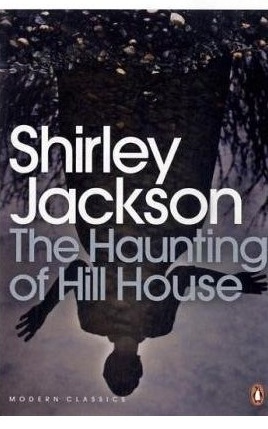
It is an accepted shibboleth ( like the one about 'hope') that ‘at one time’ there ‘wasn’t much written for teenagers’, ‘nothing available for them’.Of course, this is not true. Teenagers have always found things to read, books and authors they felt comfortable with, even if those books were not written specifically with them in mind. Books like George Orwell’s 1984 and Animal Farm, William Golding’s The Lord of the Flies, Harper Lee’s To Kill a Mocking Bird, J.D. Salinger’s The Catcher in the Rye, Shirley Jackson’s The Haunting of Hill House and The Lottery. And then there are the sic-fi/dystopian fiction writers: Ray Bradbury’s Fahrenheit 451, Philip K. Dick’s Do Androids Dream of Electric Sheep, John Wyndam’s The Day of the Triffids and The Chrysalids, J.G. Ballard’s The Drowned World and Empire of the Sun, John Christopher’s The Trouble with Grass.


Quite a considerable canon. I read a lot of these books when I was a teenager, back in a time when novels for teens were not supposed to exist. I don’t remember feeling deprived, or thinking I’d have to stop reading because there was ‘nothing for me’. I thoroughly enjoyed the books I discovered on the adult shelves of the library, finding them myself, or being directed to them by friends who liked the same books I did. Reading these books was a rite of passage. I found my mind stretched, my understanding deepened, my assumptions questioned and challenged, my imagination
 fired. They weren’t writing for me particularly, but that didn’t matter, they were connecting with me on all sorts of different levels.


Melvin’s argument was that because these writers recognised no limits, there are no limits. I found myself agreeing with him and thinking that these books and these writers should be our benchmark. Perhaps we have compromised too far. In creating a specific Teen/Y.A. Lit. (although I still think that is important) we’ve wandered away from these writers who had the power to appeal to adults and teenagers alike. We have compromised, we’ve bowdlerised. We’ve listened to outside voices: gatekeepers telling us what is acceptable and unacceptable; Focus Groups and Target Readers; Publishers who tell us what the market wants, what it will tolerate.


Compare some of the books and authors I’ve cited, especially in Gothic, Dystopian and Science Fiction, with what is on offer at the moment in these genre, and you will see exactly what I mean. Where is the depth and breadth of the vision, the resonance and relevance, the imaginative reach, the complexity of the realised worlds, the quality and power of the writing? It is a salutary lesson. Of course, teen readers can go and read these books, and they should, but that is not the point. It is not good enough to mine them, to take from them, we should be producing books that bear comparison.

Creativity is a strange thing. Those books that I read when I was a teenager challenged me to think, fired my imagination, introduced me to ideas, and opened me up to possibilities. Maybe that experience is what led me to want to write for teenagers. True, or not, I’m thinking about going back. At least I’ll be guaranteed a damn good read!

I’m taking a break from blogging for ABBA but I’ve been proud to be part of the blog and to have seen it go from strength to strength. I’ll certainly be visiting regularly in the future to read and to comment.


follow me on twitter @CeliaRees

Friday, 9 March 2012

Robots here we come! Writing for 7-9 year-old girls and boys - by Rosalie (or Sam) Warren

All signed up and ready to go!

I must say, I'm excited about my new series, recently signed up with Phoenix Yard Books, who published my Coping with Chloe last year. The series is aimed at 7-9s and it's all about robots - well, one robot in particular, who comes from Sydney, Australia and has somehow ended up in the home of Noel, a ten-year-old Coventry boy who was expecting a state-of-the-art wheelchair and instead took delivery of a robot.

The idea is to have an exciting story interspersed with plenty of robot facts - of the kind that will, I hope, appeal to the age group in question and, with luck, will pull in some reluctant boy readers. It's for this reason that I have acquired yet another name - the author of the books will be Sam Warren - the younger, geekier brother, perhaps, of Rosalie!

I'm thrilled about the series, but what's making me most excited at the moment is rediscovering AI (artificial intelligence) and robotics - subjects that have lain dormant in my brain for several years. Way back... too many years to count... I did an MSc at Edinburgh University in Artificial Intelligence and fell in love with the subject, which surprised me by focusing more on the way humans do things like learning, understanding, language processing, vision, etc, than on the machines. Or maybe that was the aspect I paid most attention to. I soon became sidelined into linguistic semantics and ended up doing a PhD on the subject of 'then'. Honestly. I knew more about 'then', for a while, than most other people on earth. I can see you're impressed (or possibly not...). I do still feel a little glow, however, every time I use the word.

But 'then' is a long way from AI and robotics, and even when I took up a lectureship at Birmingham University in the School of Computer Science, most of what I did involved linguistics (by that time I'd moved on to metaphor) and teaching various programming languages, some of which still haunt me in my dreams. (I did learn to match up the brackets, though. Helps enormously with proofreading...)

So doing the research for WIXI Robot has involved me in an exciting few weeks of catching up - reading everything I can about all that's happened in the 'field' since I slid through the gap in the fence. I'm particularly interested in the progress that robots have made in learning to speak with humans - some, but, as the guy on telly used to say, not a lot. Language understanding is, for a myriad fascinating reasons, one of the hardest tasks in AI.

I've also been thinking about some of the ethical questions concerning the possible intelligent robots of the future and this ties in, too, with the sci fi novel for adults I've just finished writing.

It's an odd feeling, when disparate parts of your life suddenly come together. Not unpleasant, necessarily, but somewhat scary. Like introducing your boyfriend to your parents for the first time. The bit of me that did AI has never met the bit of me that writes novels before. Hey Sheila, meet Rosalie. And Sam...

Did you know that Leonardo da Vinci designed robots - a robotic knight and a lion? Or that some robots run on human excrement? Or that tiny robots called nanobots can enter the bloodstream and attack cancer cells? Or... no that's enough for today. But if you have 7-9 year-old children or grandchildren (etc), or if you teach that age-group, I'd love to know what you/they think of the robot series idea. We haven't finalised all the details yet, so your ideas are welcome. And I'll tell you more about WIXI Robot soon.

Best wishes,
Ros/Sam

Rosalie Reviews (blog)
Rosalie Warren website