Showing posts with label This Is Not Forgiveness. Show all posts

Thursday, 21 June 2012

Y.A. at Hay - Celia Rees

I was recently at the Hay Festival, in conversation with Melvin Burgess and Daniel Hahn, talking about Young Adult fiction and our novels, This is Not Forgiveness and Kill All Enemies.

Daniel Hahn, Melvin Burgess, Celia Rees 
The discussion was interesting (I hope for the audience, too) and wide ranging. At one point, Daniel asked us if there was anything that we thought we could not write about, any taboo subjects, any darkness too impenetrable? I found myself giving the stock Y.A. writer's answer about leaving the reader with hope, etc., etc.. Melvin disagreed. This livened the discussion considerably, and his response gave me cause to pause and food for thought. He outlined a thesis which took me right back to where I began as a YA writer and also made me think about how far we have travelled since then but how little ground we had gained. 


It is an accepted shibboleth ( like the one about 'hope') that ‘at one time’ there ‘wasn’t much written for teenagers’, ‘nothing available for them’.Of course, this is not true. Teenagers have always found things to read, books and authors they felt comfortable with, even if those books were not written specifically with them in mind. Books like George Orwell’s 1984 and Animal Farm, William Golding’s The Lord of the Flies, Harper Lee’s To Kill a Mocking Bird, J.D. Salinger’s The Catcher in the Rye, Shirley Jackson’s The Haunting of Hill House and The Lottery. And then there are the sic-fi/dystopian fiction writers: Ray Bradbury’s Fahrenheit 451, Philip K. Dick’s Do Androids Dream of Electric Sheep, John Wyndam’s The Day of the Triffids and The Chrysalids, J.G. Ballard’s The Drowned World and Empire of the Sun, John Christopher’s The Trouble with Grass.


Quite a considerable canon. I read a lot of these books when I was a teenager, back in a time when novels for teens were not supposed to exist. I don’t remember feeling deprived, or thinking I’d have to stop reading because there was ‘nothing for me’. I thoroughly enjoyed the books I discovered on the adult shelves of the library, finding them myself, or being directed to them by friends who liked the same books I did. Reading these books was a rite of passage. I found my mind stretched, my understanding deepened, my assumptions questioned and challenged, my imagination
 fired. They weren’t writing for me particularly, but that didn’t matter, they were connecting with me on all sorts of different levels.

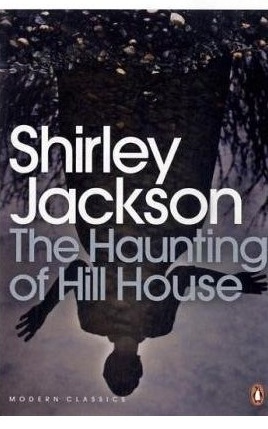
Melvin’s argument was that because these writers recognised no limits, there are no limits. I found myself agreeing with him and thinking that these books and these writers should be our benchmark. Perhaps we have compromised too far. In creating a specific Teen/Y.A. Lit. (although I still think that is important) we’ve wandered away from these writers who had the power to appeal to adults and teenagers alike. We have compromised, we’ve bowdlerised. We’ve listened to outside voices: gatekeepers telling us what is acceptable and unacceptable; Focus Groups and Target Readers; Publishers who tell us what the market wants, what it will tolerate.


Compare some of the books and authors I’ve cited, especially in Gothic, Dystopian and Science Fiction, with what is on offer at the moment in these genre, and you will see exactly what I mean. Where is the depth and breadth of the vision, the resonance and relevance, the imaginative reach, the complexity of the realised worlds, the quality and power of the writing? It is a salutary lesson. Of course, teen readers can go and read these books, and they should, but that is not the point. It is not good enough to mine them, to take from them, we should be producing books that bear comparison.

Creativity is a strange thing. Those books that I read when I was a teenager challenged me to think, fired my imagination, introduced me to ideas, and opened me up to possibilities. Maybe that experience is what led me to want to write for teenagers. True, or not, I’m thinking about going back. At least I’ll be guaranteed a damn good read!

I’m taking a break from blogging for ABBA but I’ve been proud to be part of the blog and to have seen it go from strength to strength. I’ll certainly be visiting regularly in the future to read and to comment.


follow me on twitter @CeliaRees

Tuesday, 10 April 2012

Does it matter where you live? Celia Rees


I'm suffering from location envy, I don't mind admitting to it. Yesterday, Liz Kessler wrote fulsomely about the delights of living in Cornwall, in the beautiful town of St Ives, home to generations of artists and writers, and the inspiration she gains from that living in such a place and living by the sea. Her lovely blog was littered with wonderful photographs of the sea, beaches and harbours, finishing with one of Liz surfing. Go, Liz!


Now, I live in Leamington Spa, in Warwickshire. An attractive town, but about as far away from the sea as you can get. I was about to say, not particularly inspiring, but then I realised that I have used bits of the town, the cafes, shops, the streets, the parks, river, houses, etc. etc. in my books. My latest, This Is Not Forgiveness, is set in a town very like it, not exactly the same, of course, I would find that too restricting, but not dissimilar. It's an unexceptional town, where ordinary people live, so if you are writing a book about ordinary people, I guess it helps to live and write about somewhere that is easily recognisable, ubiquitous even. That's what I tell myself, anyway.

The other reason that I'm suffering from location envy is that I've just had an e mail from a friend who has upped sticks to go and live in Italy. Yesterday, while I was shivering in spitting rain and record lows for Easter, he was wandering round Assisi.


Going to see the Giottos, sitting outside cafes drinking expresso, lunching for €15 and he could do this any time he liked. And if not Assisi, then there are plenty of other wonderful hill towns full of fabulous art. Now, I'm thinking, if I lived there, in that climate, what could I not achieve? Or would spend so much time just looking, just being, that I wouldn't have time to do any writing? I don't know, but sometimes I think it would be fun to find out.


Monday, 5 March 2012

Book Tours - Celia Rees

I've just finished a Book Tour for my new book, This Is Not Forgiveness. A week of journeying up and down the country, visiting different regions with a couple of overnight stays. Back in the day, you would go to a bookshop, do a bit of a talk to a class or two who had been invited in to meet you, do some signing, then off to the next. These days, because of the difficulty of getting pupils out of school, finding bookshops that can accommodate large numbers, etc. etc., the author generally goes into schools.


Book tours are organised by the publisher and they differ from a normal school visit. You are only there for an hour or so, not all day. You are usually required to speak to large audiences, anything from 150 - 200 students, sometimes from different schools. You don't get paid. The payment, pay back, pay off, is seen in terms of publicity and book sales. Sometimes schools don't get this, so if letters haven't gone out, no-one has any money, the whole thing, as far as the book seller and publisher are concerned, is a bit of a waste of time. Me? I just go along and do what I'm asked to do. I don't really think in terms of book sales on the day. It took me a while, in fact, to work out that this was what it's about but I can be slow like that.

Sometimes, the visit is a great experience. The bookseller is on the ball, the school is primed and eager, the staff have done some prelim. work, the kids know who you are, maybe they've looked at a couple of your books, read extracts, been to your web site. This always helps. You kind of know when it will be good like that. You are expected. There are posters up in the foyer, the receptionist knows who you are. The Librarian or the member of the English staff is on hand to welcome you. There's coffee, biscuits, maybe even pastries or muffins, and water on the table, with a glass. They have been talking the event up, pre-selling books. The hall (or wherever it is) is ready. Chairs set out. The techie stuff works (I use a Powerpoint) and if it doesn't there's someone from IT to sort it out. Grand. The students file in, fill up from the front, there are plenty of staff with them. They listen more or less attentively (staff, too), ask questions and then, at the end, they come up and buy shed loads of books, you sign them, have your photo taken, answer more questions and everyone is happy - even the bookseller and the publicist.

Sometimes it doesn't go like that. You get a feeling this time, too. Of doom. There are no posters. No sign of any publicity. The receptionist is hostile, like every visitor is a potential paedophile, there are mutterings about CRB checks, photo I.D.. You don't have either, so you submit to a mug shot and take the pamphlet about the school's policy on Child Safety. No sign of any staff to greet you, so you sit and wait until a flustered librarian comes running round the corner, telling you that they are under Special Measures/have SATs tests/the hall is no longer available. You are in the Drama Studio which has no windows so ends up being a cross between a sauna and the Black Hole of Calcutta. Everyone has to sit on the floor, so you do a quick mental check to make sure that your Public Liability Insurance is up to date, just in case you trip over and crush the front row. The IT doesn't work - no one told us/no laptops available/we thought you were bringing yours with you. The students amble in unsupervised, sit where they like (i.e. as far you from as possible). They regard you with an indifference bordering on hostility; large swathes make an ostentatious point of paying you no attention and get on with texting/chatting/fidgeting/giggling/chewing and generally behaving as if you weren't there. The few staff who are present sit well away from their charges and get on with their marking. There are almost no questions and the ones that are asked are personal/facetious, or both. Almost nobody wants to buy books and everyone is glad to get out of there (most of all you).

Now, before I'm deluged with sympathy or messages of the 'Poor you! It never happens to me...' variety, I have to say that this does not happen very often. If it does, what to do?

1. Don't try to win them. If they have made their minds up not to 'appreciate', they won't. Finish as quickly as you can. Don't be afraid to knock it on the head. You are not contractually obliged. You aren't being paid.
2. Don't blame yourself (even if every one around you is doing so) because if a talk works in one place in front of one audience and not in another, than how are you the problem?
3. This from Bernard Ashley (let's face it, if he's had problems, anyone can): focus on the ones who are listening, not on the ones who aren't. Don't be distracted by those not paying attention; seek out those who are and speak to them. They wanted to come and they wanted to hear you. They want to ask questions and to buy books, so screen out the rest of them. If need be, make some time after the others have gone to talk to them individually or as a small group.

These negatives are minor compared with meeting enthusiastic readers, die hard fans who lug along bags of your old titles for you to sign or produce books that belong to their friend/sister/mum. Readers who like the look of whatever book you are promoting and want to try it and, these days, those who've started reading your book on Kindle but want a signed paper copy. Keen readers who have banded together to form their own book club/blog/writers group to shine like a beacon in the philistine darkness. You don't have to shift masses of books. If one person appreciates you being there, if signing one book makes that reader feel special, then the whole thing is worthwhile.


And I've met some wonderful booksellers who have organised excellent visits because they know their patch, they know their books and they know their schools. Booksellers like Elaine and Sue at SilverDell Books in Kirkham, who gave me a Rolls Royce (or Range Rover) of a day in and around Lancaster and even found time to show me their wonderful bookshop and let me sample their homemade ice-cream. Me, books and ice cream? It could get messy...


Saturday, 28 January 2012

Then and Now - Celia Rees


At the risk of 'bugging the life out of people' (see Nicola Morgan's recent ABBA Post of the 24th below), I've got a new book coming out next week. February 2nd, in fact, and I'm going to mention it because having a book published is one of those things that doesn't happen all that often to me, although with so many books published it is obviously happening all the time to other people, who then bleet and tweet about it, to Nicola's annoyance. I suppose that's part of the problem. In her perceptive way has put her finger one of the profound contradictions of social networking, and publishing for that matter. To an individual author, a book being published is A Very Big Thing; to everyone else, it's another 'so what?'. Cursory glance only before we go on to our own tweet, Facebook page entry, blog or planning our Virtual Launch.


At the risk of bugging, I anticipate publication of This Is Not Forgiveness with the usual mix of feelings: pride and a sense of wonder that my name is on the cover, but also complex feelings of nostalgia and loss. When I turn the pages, it is like looking through a strange kind of diary. I remember where I was when I thought that, wrote that, added that detail. It happens over a summer and I wrote it over a summer, so the weather, the descriptions, are like snapshots of particular places at a particular time. And there is something perfect about a book that is about to be published, before it goes out into the world to be the object of scrutiny and criticism, before it has a chance to fail.


I have another reason for nostalgia. This Is Not Forgiveness is a topical thriller set in the present and this is seen as a bit of a departure for me. I'm now known mostly for writing historical fiction. If not those books, then the old Point Horror Unleashed titles - Blood Sinister and The Vanished. But my first book was a contemporary thriller for teenagers. Every Step You Take. It was published in 1993. So long ago, that when I went to get the rights back from the publisher, they claimed never to have heard of it. That, too, was a contemporary thriller, so in a way, I've come full circle, returning to my roots.


That book was published into a different world. I'm typing this blog on a laptop, it is going straight by WiFi onto the 'net. I'm uploading pictures to go with it. I typed Every Step on an electric typewriter. Laptop, WiFi, 'net, upload? Terms not coined yet. I sent it off as a paper manuscript by Special Delivery, posted at the local Post Office (now a cake shop) not by attachment as I would do now.


The Internet was in its infancy, so no e mails. Publishers sent you letters. All you had to do was open the envelope, read and file. Everyone sent you letters, so it was easy to keep track of things. No matter how hard I try to be organised, finding things in e mails is like sifting though spaghetti. As for publicity, it didn't take up any time at all because there wasn't any. My first school visit came randomly from a librarian who had somehow stumbled upon the book by accident. When I phoned the publisher to ask how much I should ask for a fee, I was told by a posh sounding girl in Marketing that 'We simply have no ideah'. The book was ignored. Not quite the 'right thing' for the reviewers. Dismissed, I suspect, as a mere genre novel, although it was full of (I thought) relevant issues - a continuum of male violence from date abuse and rape to murder. It had strong male and female characters, friendship and betrayal, bullying and social exclusion, but because the characters were ordinary comprehensive school kids and it was written like a thriller, issues not to the fore, these aspects of the book weren't even noticed. So, no publicity, nothing to do but go and admire the single spine out copy in the odd bookshop that stocked it and get on with the next one.


I agree with Nicola (do read her excellent post if you haven't already) all this publicity work we have to do can be a time sucking nuisance and it is hard to keep a balance. We need to get on with our real work, which is writing books, but there is always the fear that if we don't do anything, then our new book will sink like the proverbial stone and when we next go to our publisher they will say what they have always said, backed up now with stats from EPoS, the last one didn't sell, so low advance or no contract. Yes, doing our own publicity is a time consuming bind and we risk bugging the life out of people, but if we don't do it, who will? The Internet has given us the chance we never had before, the chance of doing it for ourselves.


To work out if it is worth our while, there's always Liz Kessler's brilliant Formula (see yesterday's post). What was it again, Liz?


S to the power of something + P? I better go back to tyour posat and check it out...


This Is Not Forgiveness is featured in New Books above.
For Linda Newbery's excellent Review of This Is Not Forgiveness, go to ABBA Reviews.