Showing posts with label animation. Show all posts

Sunday, 3 November 2024

Animation Day by Sharon Tregenza


I did a day's course on animation for writers today. Of course in such a short time we could only learn the absolute basics but I've been thinking about how it may have helped with my writing process generally. Here's what I came up with.


Visual storytelling:

It made me think about how scenes could come alive not only with dialogue but with movement too.


Marketing:

It's no secret that book trailers etc can help sell books and as a children's author, animation seems like the obvious choice to grab  attention in an interesting way.


Character Development:

It was also interesting to think about visual cues to character like body language, facial expressions and even colour.


Collaboration:

Most writers work alone so needing someone else to help with relevant software, placing and creating the end product was a useful experience.


Learning new skills:

Always a good thing to do something outside your comfort zone. I can't draw so this was a challenge but knowing that simplicity is often the key helped.


Conclusion:

It was a good experience. Stretching ideas and using a totally different format to create a micro story was thought provoking. It is a whole different way of looking at story and this was just a small taster of the potential. I may well take a online course to extend the tiny bit of knowledge I gained and, at the very least, it was fun. :)


www.sharontregenza.com

sharontregenza@gmail.com


Wednesday, 4 May 2022

The Long Haul - by Ciaran Murtagh

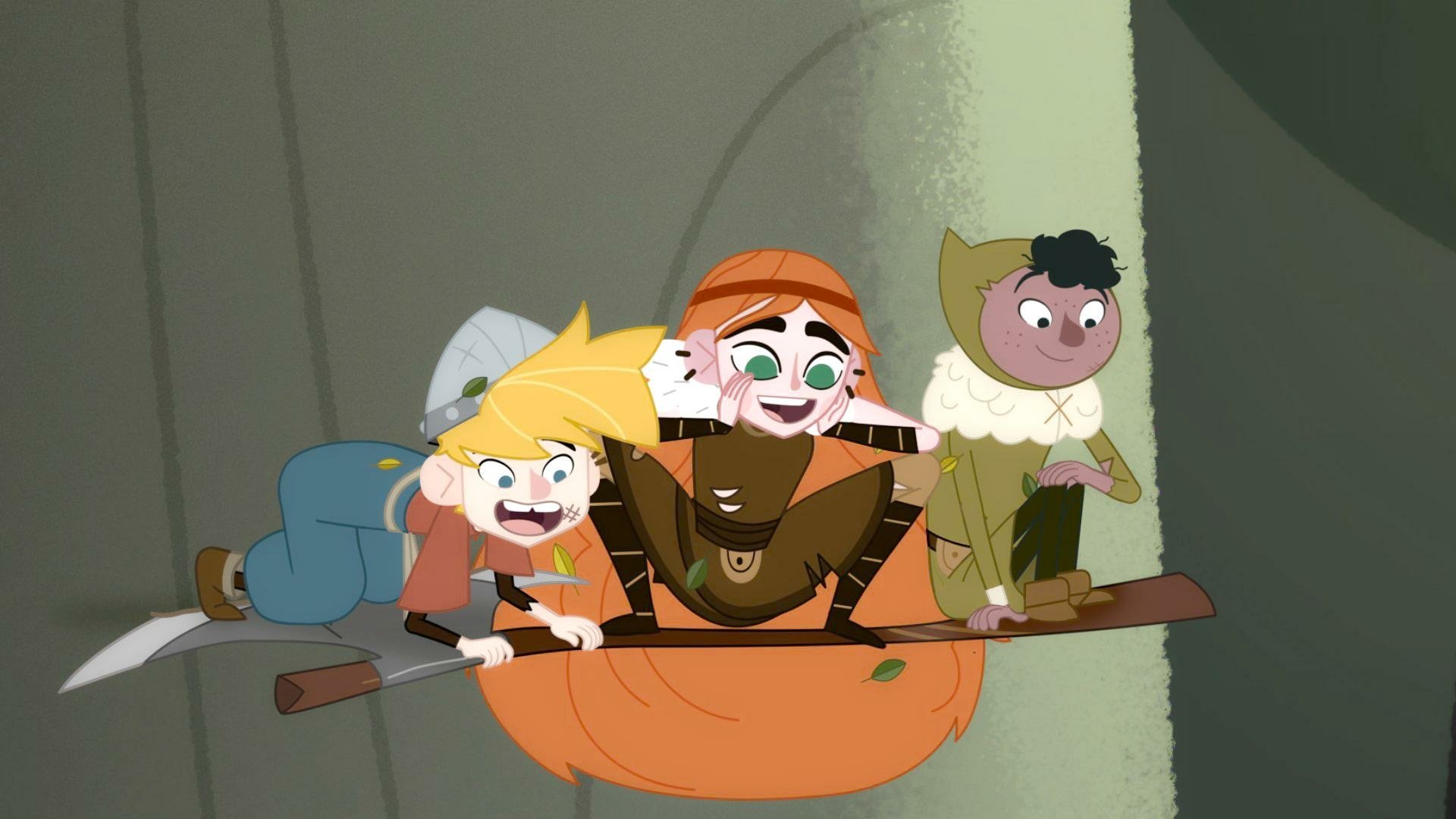
Sometimes I'm asked about the timelines of making an animated TV series. It takes a lot longer than you might think. This week a new show I head wrote with my writing partner Andrew starts airing in France - Viking Skool. 


I decided to take a look back and see when we first started working on the show. It turns out we delivered our first script in 2016. It's taken over 6 years to get to this point. To put that into context, I have a 5 year old daughter who was conceived, born and is now attending school in the time it took for this show to go from script to screen. 


To add insult to injury, neither Andrew and I have even seen the show! At least I know what my daughter looks like. We're not going to be able to see it any time soon either - it's currently only on in France. Fingers crossed it might make it onto Disney at some point and we can time travel back to 2016 to see what we were writing at the time. 


Everyone tells you that making TV shows takes a long time - they're right. While we haven't been working on this show for the entirety of those six years, we spent a good four years developing and scripting it. The other two years involve all the animation and everything else that goes into making a show. 

Think back to what you were doing in 2016, think of all the ways the world has changed, it feels a long time ago doesn't it? That's why you have to be very careful when you choose projects to work on. Not all of them take this long to get to the screen, but you have to be prepared to be in it for the long haul. Imagine spending six years on something you didn't like. 

Andrew and I think long and hard before we say yes. There's always a risk you'll be living with characters far longer than you expected and that you'll never actually see the fruits of your labour. 

If you're in France please check it out. Then email me and tell me it's all been worth it (even if it hasn't) - please! 


Friday, 4 February 2022

Stopping to Smell the Flowers - by Ciaran Murtagh

One of the things about being a freelancer is the constant pressure to provide. You're never 100% sure where the next cheque is coming from so you say yes to everything. 


For me, this started young. I had my first child while I was at school and so my entire working life I've always had to have one eye on the bank balance. 


It's all well and good choosing to live a precarious freelance existence - certainly in the creative industries -  but it's quite another to bring a baby along for the ride. It meant I said yes to just about everything, regardless of whether it was a good career move or something I necessarily wanted to do. If it paid, I did it. 


That baby is now approaching 27, but my approach to work hasn't mellowed much. 

When the pandemic struck I felt the fear just about everyone in the country felt. However, for the freelancer it was tinged with the regular worry of - what if I never work again? I threw myself into work, saying yes to just about anything, and I am only now coming out of that frantic period. 


Last year I head wrote, with my writing partner, five new series of television. That's about 200 episodes - I was responsible for delivering and writing. I also wrote on other people's shows. Totting it all up Andrew and I wrote or were responsible for about 225 episodes of TV. One a day. 


I also had three books out last month and another one out next, so I was doing that too. 

This month things have calmed down a bit, after the year or two I've had, it feels like I've gone from 90 miles an hour to a more sedate 45. I can take time to smell the flowers. 

However, it doesn't stop me feeling like I should be working harder. It's hard to adjust to a new pace like that. It feels like someone has literally pulled the handbrake. Now the logical part of me is telling me it's healthy, you can't work at that rate forever, you'll burn out.  But that nagging irrational bit of my brain is worrying again - what if the phone never rings, what if this is it, better get hustling Ciaran. 


For now I'm doing my best to ignore it, and to be honest that voice can be a useful thing, it stops me sitting on my arse for extended periods, but the truth is it'd be nice to turn it off completely every once in a while. I'd like to enjoy a guilt free holiday without wondering what I'm missing, I'd like to sit and look out the window without beating myself up over the book I'm not writing or the idea I'm not developing. 

I'm not sure that's ever going to happen, I'm the wrong sort of person in the wrong type of industry to allow that to happen, but strategies to dampen it down would be useful. 


So come on creative freelancers -  how do you deal with the guilt of not creating every moment of the day and stopping to smell the flowers?

In other news, I am taking part in Book Jive Live this month - it's a great opportunity to hear new voices and also ask me any questions you may have about any of the creative industries I participate in. Even better - all profits go to the Booktrust. Get your tickets here:

https://www.wegottickets.com/event/532457


Wednesday, 4 November 2020

Writing Animation - by Ciaran Murtagh

Over the past few weeks I've been asked to give some hints and tips on writing animation so I thought I'd put a few thoughts down here for anyone who might be interested.

As ever with these things, they're not hard and fast rules, nor a guarantee of success, but they're certainly things I wish I'd known before falling headlong into the industry. 

1) Watch lots of animation. Lots. 


Everyone knows that the way to be a good writer is to read, the same goes for animation - watch. Watch as much animation as you can, particularly for the age group you would like to write for. 

There are HUGE differences in tone, subject matter and style in animation and it's good to get a feel for what's out there before you start trying to do it yourself. 

Trawl through the BBC player, have a look at the furthest reaches of Netflix and Disney Plus, and see what's on CITV. They all broadcast cartoons, but they're all very different. Something like The Rubbish World of Dave Spud on CITV is very different from Dennis and Gnasher Unleashed on CBBC,  yet both are about British kids for predominantly British audiences. 


Channels have a house style and a house tone. They are keen to be distinct from each other and that is reflected in what they commission and how they are written. Have a look where you might fit best and work towards your natural home. Of course, over time you'll be able to bounce about, but in the first instance specialise. 

2) Age Range

Animation for kids, much like books, falls into age ranges. There are predominantly two - Preschool and Junior. So CBeebies, Disney Junior, Nick Junior, Milkshake are predominantly preschool, up to the age of about 6 give or take. Other channels such as CBBC, Nickelodeon and Cartoon Network aim older. 

Within all that there are also lots of different styles from something like Hey Duggee to Sarah and Duck to Messy Goes to Okido to Paw Patrol all falling under preschool. Tone is all important. Once you've narrowed down where you think you might fit channel wise, have a look at the age group you prefer to write for and analyse the content the channel shows. 


Are you more didactic, something like Numberblocks for example, or are you more left field - something like Hey Duggee. 

3) Know the Rules


All animation is different but most have consistent rules. Episodes are usually 11 minutes long, sometimes they might be 22 minutes long but that's not so common. For younger audiences there is more flexibility in length with some being 5 or 8 minutes long. Do your research and make sure that when you come to write you are writing a story that is exactly the length of the animation - it can't be a few seconds longer or shorter, it has to be what it is. 

Make sure your stories are stand alone, most series still broadcast self contained episodes and they want them to be broadcast in any sequence. You don't need to have seen episode 12 to understand episode 13 or vice versa. Sometimes you might get the opportunity to pitch a double episode, but they'll tell you that before you pitch. 

With the onset of streaming services this is changing somewhat, particularly with animation for older children, and series arcs are becoming more common - but again, they'll tell you if that's the case and it is still the exception rather than the rule. 

2D animation is usually cheaper to produce and there can be greater flexibility in creating new characters or locations. However, in the first instance try and reuse what you know already exists -  it will make you very popular. 


3D animation is expensive and it is often harder to make new characters and locations. Bare that in mind when pitching stories. There will never be a cast of thousands and asking for a new character to be created is a big ask unless the story really needs it. 


Know how many episodes are in a season - usually 52, but sometimes 26 or 13. Animation is usually commissioned in batches of that number. 

Know what has gone before, you will need to avoid overlapping with ideas or stories that have been  used in previous seasons. One of the keys to being a successful animation writer is looking for the gaps in a series that haven't been plugged yet. What stories haven't they told with the characters and locations in play and can you come up with something imaginative and new that they haven't yet used. 

4) Tips for Success


Listen to your head writers / producers and ask them questions if you're unsure. Even if you manage to come up with a great story that no one else has told and utilises things you know exist in the story world, there may be a reason why it hasn't been told before that you don't know about.  

Different channels have different rules and regulations and wish lists for what they can and can't do. Your producers and head writers will know that and will try and guide you towards what's possible. They want you to have strong story ideas, but they also want you to listen to guidance, you can have the best story idea in the world but if they know the BBC will never show it they have to guide you towards a version of the story that they will. 


Be prolific. When pitching ideas have six or seven topline stories that you might tell. Pitch them all and you may get one or two away. Pitch lots of shorter ideas rather than spending a long time on one or two. Producers are looking for 52 episodes, if they receive a document with six ideas, they'll usually have to dismiss a couple for not being feasible, a couple for being ideas other writers are working on and what's left over is the sweet spot! You stand more chance this way. 

The first animation I was commissioned on, I pitched over 50 stories until I got one away - be tenacious, and be persistent and learn from your mistakes. 

Keep to deadlines. 

Be nice. 

That's your lot - if there's any questions pop them in the comments and I'll do my best to answer. Good luck. 

Thursday, 4 June 2020

Finding New Ways - Ciaran Murtagh

How we all doing? It's tough isn't it. It's like that last bit of a long distance flight, we've watched all the good films, the food's been eaten, the novelty's worn off and now we just want to get off the plane. Unfortunately it turns out our Captain doesn't know where he's going, he can't fly a plane, and he's just told us we're going round again.


I've been lucky, I've had work to do and I've kept on doing it, squeezed around home schooling, supporting sick relatives and everything else. But now things have started to get a little tricky.

Working in animation you tend to work on contracts that last a year or two. The processes are set up and established, you have your teams and you know what is expected of you. For the past few months, I've been working on shows that have been in progress -  Ninja Express and Viking Skool. They've been a lot of fun, but now they're coming to an end. I'm at a point in the creative process where I'm gearing up for some new projects and figuring out how to move forward with new people and new relationships.

Ninja Express - coming to a screen near you soon. 

This is a tricky thing.  You may have worked with some of the people involved before, but not always. Some of them may be in different countries, some will speak different languages and you have to come together to find a process that works for everybody in order to get a project up and running. It's a very delicate thing, it breaks easily and it's all about relationships.

Viking Skool - also coming to a screen near you soon.

The usual way to do this is to get everyone into a big room and thrash it all out over sandwiches, biscuits and a bucket of coffee for a few days. It always works. The ice is broken, you find out you're all fairly decent, professional people who want the same thing and you commit to getting it done as painlessly as possible. Of course you are. But you have to go through that process to know that. However, right now, in these times, that's not possible and that makes all of this difficult.


An eight hour Zoom call is never fun, and when you're on a call you don't tend to chit chat - you're there to work. You can't form informal relationships over a juddering screen with twelve other people fighting the same barrier. I always knew how important the personal relationships formed at the start of these processes are, they're just as important as the professional ones when it comes to getting  you through the sticky mid series humps. It's nuanced and it's balanced and it starts right at the very beginning.


So far, I've been muddling through, getting stuff done that's been in play, stuff that's already trundling down a well established track. I can't do that any more. I'm about to embark on an 18 month project without doing any of the things I would usually do. We haven't even built the track.


In the scheme of what everyone else is going through it's small beer, but finding new ways to be creative in these difficult times is a challenge. I was hoping I could wait it out until things got back to normal and start things properly, but with the plane going round again and the Captain not having a clue, it looks like I'm going to have to try and generate some kind of spark, jet lagged and exhausted. It's not a good recipe for creativity, but right now it's all we've got.

Oh. And I need a haircut.