Showing posts with label word count. Show all posts

Monday, 17 June 2019

Struggling to navigate the halfway point - Tracy Darnton

DISCLAIMER *Any publisher or editor who [has signed/is contemplating] a publishing contract with me should completely ignore all of the following.


I’m at the halfway point.

Wading through treacle.
Self-doubt.
Imposter syndrome.
The “why did I make this book so complex?” stage.
The “why don’t I write really short books with basic plots?” stage.
The “please, will someone else write my book for me?” stage.

Shall I watch ‘The Wife’ film again?


*Spoiler Alert* I want Glenn Close to write all my books and win the Nobel Prize for Literature for me. I could go to Stockholm again and eat cinnamon rolls.

I interrupt my son’s revision to ask him what cinnamon rolls are called in Swedish. Kanelbullar. That's a nice word. Kanelbullar.


Full-on procrastination cleaning out the fridge, hoovering the cutlery drawer, watching ‘The Thick of It’ on iPlayer, dusting my desk and sharpening pencils.
I am so good at procrastinating.
I am good at something! Yay me.

I take it up a gear.
I count the days before book delivery date and do a pie chart to show how many are possible writing days. I calculate the average word count I need to meet my contractual target. I adjust my figures to allow for sickness, family obligations, a holiday… I wonder if I should have used my A’ levels in Maths and Further Maths in a more constructive way.
I like graphs. I'd forgotten how much I like charts and graphs.


Shall I forget writing and become a statistician? Yes, my life will be so much easier. Won’t it?

I complete a memory research request on voice-recognition. I am delighted that my short-term memory is excellent at discerning chiming bells and voices.  But I worry that I performed badly on today’s long-term test on voices I heard ten days ago. Old voice? New voice?

I interrupt my son’s revision to ask him if I have performed any better than a random monkey randomly answering the fifty-fifty old or new voice questions. He explains probability to me and makes me doubt my aforementioned A' levels in Maths and Further Maths.

I cannot become a statistician after all. I have to carry on being an author.
Also, bad news, I am not as proficient as a random monkey tapping at the keyboard.


I write lists of questions in my notebook to make me feel better about plot holes in my novel.
I give the questions a heading: The Unsurmountables. I like the heading. I picture an action movie with Sean Connery and The Rock.

I check if ‘unsurmountable’ is a word and the difference between ‘insurmountable’. The WikiDiff entry makes no sense whatsoever. I should rewrite it.

I worry about my cast list. Too old? How old is Sean Connery?

1930! Sean Connery was born in 1930. He is too old for my action movie. I shall recast.

I laugh at a tweet with a funny picture from author Marie Basting about two and a half hours writing and her word count has gone up by seven words. Her tweet is longer than her WIP output for the day. I have a brief warm glow that there’s a whole community of #amwriting people out there feeling like this. 

Or is just me? That’s the self-doubt again. I check my word count so far for the day. Marie has beaten me.

I interrupt my son’s revision so he can thrash me at table tennis. I feel slightly better.


I buck up, eat a biscuit, and tell myself that it will pass. 

I pick up my notebook and turn to The Unsurmountables. Jodie Comer. I shall cast her. Boom! I am current and hip. I add more insurmountable questions to the list.

I look at The Truth About Lies on the shelf and wonder how on earth I wrote it and ponder the nature of selective memory that has removed the bad times to make sure it is not my only novel.
Logic tells me this stage will pass again and become a distant, buried memory.

I write this blog.

I sneak up on my novel late at night when it’s not expecting me to put in an appearance. I start typing. I put one sentence after another and watch the word count slowly, slowly grow.


Tracy Darnton is the author of The Truth About Lies, shortlisted for The Waterstones Children’s Book Prize 2019. She has an MA in Writing for Young People.


Wednesday, 25 April 2018

How Do You Count The Words? by Jo Franklin

Authors are obsessed with word count. Firstly they obsess over how many words they should aim for when writing a book. Then they obsess over how many words they have written to reach that target.

Luckily these days word processing packages count our words for us so we can easily keep track of the length of our current document.


Word count for my current document is 8,443, thanks for asking. That feels pretty good as I have been in a fallow writing period recently. But counting how many words I have written today is a little harder. I used to keep a spreadsheet of each days word count. (Yep, this author likes spreadsheets!) but I don't bother with that any more. Any way counting the words I have written today isn't as simple as glancing down at the screen. I have to highlight the text first. What a chore!

These days I calculate my productivity a different way. When I am actively writing, I write a chapter a day. That's about 1,200 -1,500 words, or 5-6 pages double line spaced for my middle grade fiction. I've got a terrible psychological block about writing more than that in a single day. In fact if I push myself and write another chapter I tend to dry up for a week afterwards so I don't bother trying any more. Just like Stephen King, there are days when my chapter is written before 11am. I feel liberated and free to spend the rest of the day in whatever way I chose. Other days getting the words down on paper is excruciatingly hard work. Like yesterday, the words were wooden and had to be revised again and again to make them intelligible. Imagine my horror when I came to print out that chapter and there were only three pages. I can only have written about 800 words! That chapter is going to need some serious work come the second draft.

Another way I count my productivity is to assess my waste paper output. As I write long hand with a pen in a spiral bound A5 notebook, I have pages covered in my scrawl to get rid of at the end of every day. I don't edit as I write but I have many aborted attempts at completing a decent sentence and I write in a very scruffy, for-my-eyes-only handwriting so I produce a lot of waste paper.


Top tip : although authors obsess about their word count, it is probably best not to ask them about it as sometimes the answer is zero. And that is a very big number.

Sunday, 21 September 2014

Writer's Guilt…. Or Have I Done Enough? by Megan Rix / Ruth Symes

What I love most about writing, and thought I would love most even before I was published, is the freedom it gives you. Freedom to write when you want and where you want, about what you want and how you want to.

For a few years I probably averaged a 1,000 published words a year (this was when I used to spend 6 months in the UK and 6 months travelling round the world). Now my average is more like 1,000 words a day. (I try not to work weekends unless I’m really behind on a deadline or so desperate to tell a story that it just can’t wait. I’m writing this on Saturday though - so I probably write more often at weekends than not.) If I've written a 1,000 words in a day I stick a sticker on my annual wall chart. I like seeing the stickers build up only... only there never seems to be enough. Not every day’s got a sticker and I want to write more. I always think I could do more, if I was more focused more, more disciplined yaddah yaddah yaddah.

I call it writer's guilt but really an average of a 1,000 words a day is good.... isn't it? I’ve won two children’s books of the year this year (Stockton and Shrewsbury) and will have had 3 novels out this year in 10 days time.

'The Hero Pup' is written under my Megan Rix pseudonym and being published by Puffin. It follows an assistance dog puppy from his birth until his graduation as a fully-fledged Helper Dog. Anyone who knows me knows how close this book is to my heart and I'm very much looking forward to working with guide dogs, medical alert dogs and PAT dogs on the book tour.
But not only do I have ‘The Hero Pup’ coming out under my Megan Rix pseudonym on the 1st of October I also have the first in a new series of books about the Secret Animal Society coming out under my Ruth Symes name. 'Cornflake the Dragon' is being published by Piccadilly. It’s about a school lizard that turns into a dragon when it’s taken home for the holidays.

How many words do other writers write each day? I don't know. They probably all do much more or maybe they do less but every word they write is pure gold.

And what about the thinking time? You've got to have thinking time, or I have. I like to mull over the story for a month or so these days. Not forcing it to come. Just researching and thinking about characters until I know, absolutely KNOW it's the story I want to tell. I don’t get a sticker for thinking but it’s just as valuable.

Then it comes to the talks at schools and festivals – meeting your target audience. In the past year I've spoken at 16 schools and 5 festivals - an average of little over one a mouth. Is it enough? It feels like the right amount for me but I know of other writers who do lots more. Should I be doing lots more? I don’t know.

And that's what comes with having a career where you choose so much for yourself. There's so many choices that it's hard to know if you've made the right one. But better to make the mistake yourself than be living someone else’s mistake. Maybe there shouldn't be writer's guilt or writer's goals maybe we should just have the aim of improving every day.

Chris Rock (excuse the swearing) has a very funny sketch about the difference between a job or a career His main point, and I agree with him, is if it's a career there's never enough time for all you want to do to advance it but if it’s a job there is always far too much time and you can’t wait for it to be over. Writing is definitely a career and I wouldn't have it any other way :)


My website's are: www.meganrix.com and www.ruthsymes.com.

Wednesday, 13 August 2014

We’re all going on a summer holiday. Except me... by Sheena Wilkinson


It’s meant to be the summer holidays and I’ve hardly left my desk. Do you miss having the whole summer off? my teacher friends ask me. (They secretly think my whole life is a holiday now, I suspect, but they’re much too nice to say so.)


It’s now a year since I became a fulltime writer. A year since my last teaching pay cheque. So I’ve been in a bit of a stock-taking frame of mind.

When I left fulltime teaching, I did worry that I might lose something very valuable to my young adult fiction – the daily contact with young people. However, this year, rather than teach a relatively narrow socio-economic group of academically able teenagers in a Belfast grammar school (where I had been for nineteen years, mostly in the same classroom), I have worked with student teachers; children in care; young offenders and ex-offenders; primary school children; adults with learning difficulties; care leavers; young people with drug and alcohol issues; in-service teachers; gifted sixth form writers, and several hundred young people of the sort I’ve always worked with. This contact has happened in schools; prisons; youth centres; Arvon; literary festivals, all over Ireland and the U.K. So – no; not lacking in contact with young people, or indeed any kind of people.


I blogged in March about the tension between finding time for writing and saying yes to projects that would bring in actual money, so I won’t dwell on this again, except to say that I’ve since found out it’s very common with freelance workers in all professions. Recent reports about the low incomes of many writers have also reassured me that I’m not alone. And as writers for young people, we are at an advantage because we tend to be offered more work in schools than ‘adult’ authors, and that has become the main source of my income.

Which means that, in a way, I do have summer holidays, because the schools are closed.
But with my diary filling up for the autumn (phew),that means I have to use the summer wisely. I know how difficult it can be to settle to writing work when it’s constantly interrupted by travel and teaching. So summer has to be catch-up time. At the start of July I set myself the challenge of completing the first draft of my work-in-progress by the end of September. This means writing 6,500 words a week. So far, so good – I’m halfway through, which is exactly where I need to be. For the last two weeks I’ve been editing my forthcoming novel, Still Falling (its third and forever title) every morning and writing new stuff in the afternoon. I wasn’t sure I could do that, and I don’t think I could do it for long, but because it’s summer, when days are long and commitments few, it’s possible.

And after all, what did I used to spend my summers doing, when I was teaching fulltime? Writing. So, though there are days when it has been a struggle to sit myself at my desk for much of the day, working with the kind of intensity that in former lives would have meant an essay crisis or exam-marking season, I console myself that there is no looming start of term for me. In fact, when the editing and the first draft are done, I may just book myself a wee holiday. When everyone else has gone back to work.


Saturday, 12 July 2014

Making words count

I have become more than a little obsessed with word counts.

And if you think that sounds like an incredibly boring subject for a blog, you might be right. But let's see what happens.

http://www.booksandsuch.com/wp-content/uploads/2014/02/Word-count.png
When I first began writing, one of my many fears and doubts I had was that I didn't really know how long my book should be. I didn't even know how long a chapter should be. So I did some research, and discovered that the first Harry Potter was 76, 944 words long. But then again, The Golden Compass - another literary lodestone as far as my ambition was concerned - was more like 125, 000.

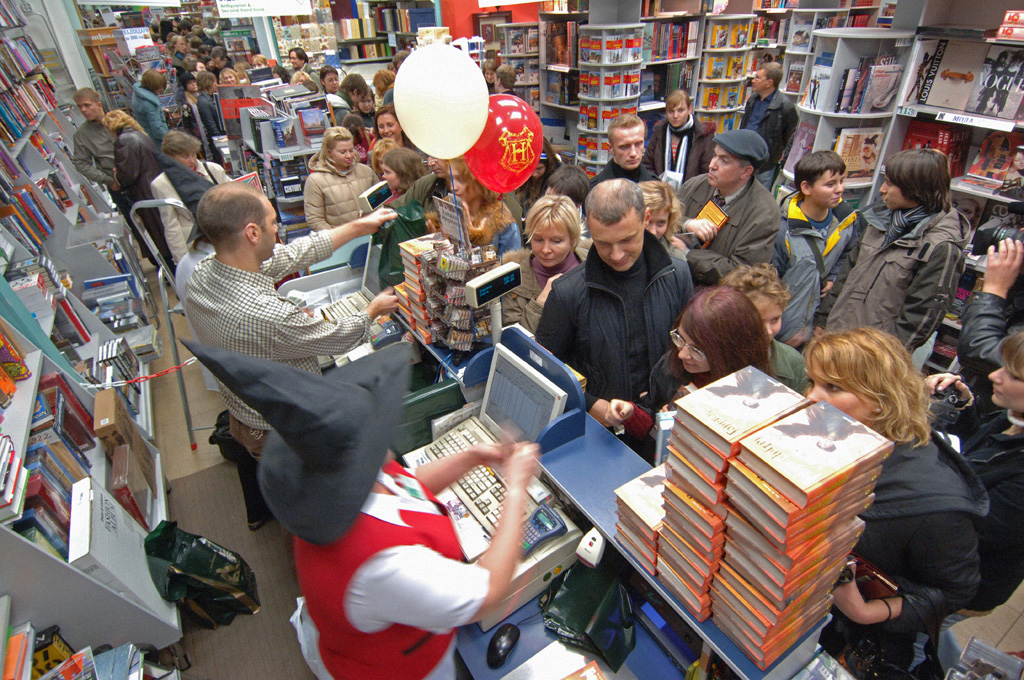
I ended up with a first draft of my first middlegrade novel which was over 100,00 words long, which as my agent rightly said was also too long for my intended readership. The Deathly Hallows, the last Harry Potter, is about 198,000 words long which just goes to show what happens when you're too successful to take notes. Sorry, I mean, which just goes to show how there is no limit to a child's reading stamina if they really love a world and the characters.

US kids in line to get their hands on 198,000 words of The Deathly Hallows

(And truly, of course there is no "right" length to a book. Some of the most perfect middlegrade books - A Monster Calls, Once, Holes - are all much shorter than any of those. I would broadly say that any book which verges on fantasy and involves substantial world creation, is going to always be on the longer side because part of the pleasure comes from luxuriating in the rich, embroidered nature of the imaginary universe conjured up. The story is the length of the story you need to tell. But it's always useful to have some kind of bench mark to work towards in your head, I reckon.)

Either way, I was no J K Rowling, and cutting 100,000 words down to the ultimate 67,000 words my first book was published as became something of a laborious task. Because word counts have real implications for storytelling. For every bit you hack out, you still need to compress or explain elsewhere, so word counts never strictly go down or up, they fluctuate, like a water table.

Which meant that when it came to my sequel, which I had less than a year to write, I was determined not to so massively overwrite the first draft, to avoid the later pain. Luckily, along the way, I discovered this marvellous software called Scrivener, which I'm sure some of you are aware of.  Some love, some are baffled, I'm certainly not here to evangelise, but there are two very useful word count features it has over MS Word.

The first is this. You divide your chapters up into your separate text files, which apart from being very easy to manage, means you can keep a constant check on your word count as you go along, like so. The word count appears automatically at the bottom of each part or chapter, and you can make a note in what Scrivener calls the 'binder' - basically a long column to the left of your writing window:


And I find this more than helpful. Patrick Ness (who has some great tips on writing and chapter length here ) said he decided each chapter of The Knife of Never Letting Go had to be pretty much 2500 words for reasons of rhythm. That gets to the heart of why I find word counts so important. There isn't always time to endlessly re-read and edit when you're drafting, and many feel that's counter productive anyhow. So word counts are an incredibly useful, visual shorthand for seeing if any part of your story is really out of balance. Like Ness, my view with these current books I'm writing is that if I can't tell the chapter's story in around 2000 words, it's too long. And generally - if it's way under 1500, I'm probably not there yet.

There's one last reason I find word counts useful, and that's for the daily routine. Graham Greene famously wrote 400 words a day, always only 400, even if that meant finishing mid-sentence. He rarely revised, wrote over 25 books and was a genius. Others I know like to binge-write - anything from 2000-5000 words a day, although that could be hard to sustain.

Which brings me to the second really handy feature of Scrivener. The daily word target. You type in your submission deadline, the target length of your book, and set various options like whether you write at weekends or not and this handy pop up window tells you - every day - what you need to write. Here's mine for Book 3 today.


It may sound horribly automated and soulless to some, but trust me, as that bottom progress bar begins at red and proceeds to green, nothing can be more motivating. The counter includes negatives, so if you delete loads of stuff, it increases accordingly. The truth, for me at least, is that in the wide empty sea writing a book can be - no end in sight, following a chart that keeps being affected by so many variables, feeling alone - just hitting my daily word target is an incredibly easy way to stay focused and motivated. Even on the dark days, when the ideas refuse to flow, if I can just get to my words, I feel I've achieved something. Even the greatest task feels manageable broken down into small chunks.

Speaking of which, I had better get on it...

*This blog is about 1000 words long, and the ideal average blog is considered to be about 500 words, so too long. I always overwrite. Which is why I'm not much good at Twitter. Sorry.

*My second book was longer than my first, and the third will be longer again. No matter how hard I try! Does anyone else have this problem?

Piers Torday
@PiersTorday
www.pierstorday.co.uk


Saturday, 26 April 2014

The Outer Limits - Andrew Strong

Long ago, before most of you were born, I used to listen to music on vinyl.  A vinyl single was usually about three minutes long, and a vinyl album, or LP, twenty minutes a side.  When I started playing in bands, and writing my own songs, I thought it was best to write three minute songs, or to think in sets of songs forty minutes long.  The technology of playing music dictated what I wrote.

When I watch a film I wonder how the screenwriter’s plotting is influenced by a movie's eventual length.  If a film is ninety minutes long, each of its three acts gets to be thirty minutes.  People will feel short changed if a movie is less than an hour, and often complain if it goes on for too long.

But what dictates the length of a book?  I’m led to believe that publishers prefer children's novels to be shorter, but why?  Is it simply because huge books don't sell? Are they too daunting or too heavy?

The original draft of a book I’ve just finished was 120,000 words.  My agent insisted I cut in half. I did so, and although the book is neater, and sharper, I think it’s lost something of its rambling essence.  (Can an essence ramble?)

So, like a DJ who creates an extended mix, or like the Directors Cut of a movie available on DVD, I wonder whether it’s possible to publish both long and shorter versions of my new book.  And while I’m at it, I wonder if I could write an even shorter short one.  Take this to its logical conclusion and my book will end up as a short story, a poem, or even a tweet.  Perhaps it can exist, like matter, in a variety of states. The book is about music, so I suppose I could include a cd, or a link to a download.

These days so many of the contexts in which artists work are  in flux.  Writing is no longer confined to print, but to a myriad of forms.  We can write blogs of infinite length (that no one will read).  We can tweet pithy wisdom. (Nobody will read these either).  At sea in the online world, we have no limit to their imaginings.  I can write and record my music at home, upload it on to Soundcloud and don't have to concern myself with the memory capacity of the means of distribution.  The LP, the CD, even the concept of music of any finite length has been challenged by software such as Koan which enables music to be ‘generative’ – that is, the composer determines certain settings (key, pitch, tempo, arrangement) and the music unfolds infinitely.

As someone who trained as a painter, then spent ten years in music before writing books, I see many art forms suddenly released from their bonds, in freefall.  Of course it is liberating: there’s a new world out there, and it goes on forever. 

Writers have always enjoyed creating their own restraints: Joyce’s Ulysses, Georges Perec, the works of Italo Calvino, the Oulipo movement, they have all sought to devise structures to give their work some limit, a reaction to, perhaps, a sense of reality as too chaotic. 

Reality is too daunting to capture in its entirety, so we all need to be selective, to choose, to  limit.  But the boundaries of our reality are dissolving in the online world.  We get vertigo, we run to find the edges, there aren’t any.

And our security, like the security we get from good parents who give clear boundaries, is threatened.  It’s a brave new world.  It's daunting and exciting in equal measure.

So, if and when my new 'work' eventually comes out, maybe it will be in several forms, the least of which will be the printed book.  And if you miss most of them, please make sure you don't miss the tweet.

Tuesday, 11 December 2012

Deadline Panic ... Ruth Symes / Megan Rix.


Picture by Marion Lindsay for Cat Magic
On Friday morning I realised that at my current rate of writing, about 1000 words a day, I wasn't going to make the 21st of January deadline for my next novel. I like having deadlines, either from a publisher or self-imposed, as they help me to focus on what I need to get done but realising I couldn't make it produced: A) Panic - the sort of trapped by headlights and get nothing done panic B) Action - I emailed my publisher to ask for a few weeks extension. C) More action - during the weekend that's just gone, from 5pm on Friday until 5pm on Sunday, I wrote l0,140 words. I'd already planned out the story and had the thumbs up from my publisher so knew where I was going (roughly) with it - all I had to do was get words on paper.
Were they the best, most considered words? Nope. Does that matter? Not a bit in a first, scribble, draft. Those 10,000 words can become polished and honed later - what I have got now is a much better knowledge of my characters (including one who had a minor part but is now a major player) and most of the crucial scenes written.


Here's how I did it:  
Friday 10 am - stared at my book writing schedule calendar and realised that writing I,000 words a day would not get my next book finished by mid-January.
10.30 am - went downstairs and told husband, Eric, my concern.
11 am – nearby Travelodge booked for the weekend.
12 pm – Eric buys food and drink that only needs a kettle (at the most) to make. I pack some clothes and my work and make sure the dogs will be OK.
            4pm – arrive at Travelodge and make ‘proper’ coffee using aeropress (more details of everything I used on my website.) Just make sure you screw the bottom on really well or you might end up with coffee everywhere like I did.
            5pm – start writing by longhand using my Echo pen that can convert handwriting to text.
            7.30pm – first 2000 words written.
            Saturday and Sunday… Write! Write! Written! 4,000 words done each day.

Tips to make your writing weekend go smoothly:
1. No TV –  I pulled the TV plug out and plugged my computer into the socket instead – the TV didn’t get turned on once (although I did watch a DVD on my computer about the subject I was writing on.)
2. Use the internet only to check emails and do absolutely necessary research. I was also in contact with my husband 3 or 4 times a day via  Face Time. The dogs were also very interested in me chatting to them via the screen at first but soon got used to it. Loved how one of them kept tilting her head from side to side as she looked at the screen. (I did worry it was cruel initially but they got used to it pretty quick and made me laugh when one went and got a toy and brought it back.)
3. Be in the mind zone to write and pumped up to get on – this is exciting! Having nothing else to concentrate on besides writing meant I could write like the wind and I did.What writing in this speedy fashion meant is that now I can dip in and out of the book, secure that I like how it’s working and growing. It's a good feeling. Prior to taking this action I usually manage to write about l,000 words a day - so 4,000 a day was a bit of a jump!

Three other new things I’ve tried recently:
1. Not listening to other people’s opinions unless I want to:

I used to get upset by the odd bad review but now find I’ve reached the stage where I can shrug them off. I even managed a smile at an email from an irate American reader recently who’d spotted a grammar mistake in my adult book, The Puppy that Came for Christmas' and wrote a back-handed compliment of:  'If a good writer like you can make a mistake like this what hope is there for the world.' Indeed.
On the reverse side I had an email from one of my editor’s this week saying she’d been so busy reading my manuscript on the bus she’d missed her stop – a very nice compliment from a person whose opinion I value highly.

2. Being Vegan:
When I said I was going to take part in November's World Vegan mouth some people reacted with horror. ‘What are you going to eat?’ ‘How will you survive?’ I was asked.
        The truth is being vegan wasn't any hardship at all and in fact it was a pleasure. I got to try lots of yummy foods and made friends with some lovely new people and blogged about it here: 

3. Re-visit from my first book:
I had my first book 'The Master of Secrets' published by Puffin in 1997 and a few years later I got a letter to say that it was going to be remaindered. It was a horrible sick feeling being told this - at first I couldn't believe it and bought up lots of copies. But the publisher did stop printing it and I went on to write other books and my first effort wasn't forgotten about (I often give a copy as a present to my
creative writing students saying I hope one day to read their first book) but I certainly didn't expect to hear much more about it. But in the past few weeks I've had first one email and then another and another from English language students in Argentina who are studying the book and it's been great. I'm so glad that there's life in the old book yet and it's being enjoyed again somewhere. One of the students even became my first newsletter subscriber.


Megan’s book 'The Great Escape' has recently been shortlisted for the East Sussex Children’s Book Award. She writes as Megan Rix and Ruth Symes and her websites are www.ruthsymes.com and www.meganrix.com