Showing posts with label mental health. Show all posts

Tuesday, 7 March 2023

Making Time, by Dawn McLachlan


I find this time of year a real struggle and to cope with it I often feel I have to turn down work and take myself off to get through. This post is in itself a shortcut - a cheat to buy myself time. I thought long and hard about what I wanted to say and it struck me that I'd already said it on this platform before. The blog post is a revision of one that first appeared in another cold month in another year. It remains important and worth repeating.

Here goes... Making Time

One of the things most of us struggle with is time. On the surface the Pandemic years had an abundance of the stuff. To all intents and purposes time was sloshing around in vast unused quantities, but I've not found that I have had extra. To be honest, I've found that there has been far less time than I've needed. It's like it's been slipping away and I was constantly hunting for more. Like keys it's been something I was continuously searching for and only finding when I'd... well.. when I'd run out of time...

You can probably tell from this word soup that filling your time with endless tasks in an effort to rebuild your writing career is actually really bad for your writing career.  Over the last few years I feel that I've been constantly playing catch-up with all the things that I set aside back in 2019 - in the Time Before. This fierce struggle to plaster over all of the gaps and cracks in my career has been damaging to both my health, and my creativity. 

After a bit of a rocky time a while back I was talking to a very wise friend and chatting about how much I was doing and she gently stopped me and said "you've told me what you say you have to do, but what is it that you want to do?"

I sort of blustered a bit and we went our separate ways, but her words stuck with me. They sat in my head because it was a kind of revelation - I hadn't actually given any thought to what I wanted to do. Not once in all my busyness (and business) had I thought about what I wanted to do, or what might make me happy. I realised that I don't have to carry on in this set path, I can choose a different one.

I can't always afford to think about that, and for a lot of my life there was no way I could afford a choice. This is something that set a pattern in my thinking and I'm still desperately trying to hang onto absolutely every opportunity in case I can't pay the bills. I've done this for about four decades, for most of my life. I know that most of us struggle to think about not doing something because finances don't allow it, but I do think that it is important to stop now and again. To take the time to think about the happiness gaps in our lives can be an important thing for our mental and physical health. Back in July 2020 I wrote about how we should all try to stop and notice the small wins, and yet I'd forgotten to do this.

I had a few significant mental and physical health issues in 2022 and this made me admit that I couldn't continue to deliver my time the way I used to. I spent most of last year stepping back from various committees, boards, panels and national steering groups. Bit by bit I withdrew from all of them until in November last year I stood back from the last one and that was that. The only commitments that remained were ones that directly support the community in my little rural home.

I'd finally made time and now (maybe) I can think about what comes next. I have accepted that I will probably never get another contract for a children's book, or work in a library again, but some of my poetry is still being published so that's something. I finally have the headspace to finish the adult novel that has been haunting my thoughts for a few years and I might just independently publish that as I'm pretty sure it's too "quiet" for a mainstream glitzy publisher.

Who knows?

I'm training myself to stop looking at all the things everyone else is achieving, and wondering why I'm not in the same place. I'm finding that painting and poetry, and having more time to just look around me and pick a few small wins is helping me get on a more even keel. I'm pretty skint but I have some other bits of work to keep me bobbling along and I know how lucky I am in that aspect. I've worked constantly since I was 17 years old so that means I have hardly taken a breath for almost the last forty years. That said, it's never too late for a fresh start.

Right now I want to write something beautiful, but I know that to achieve that I'm going to need to take a bit of time to focus on some other things and doing everything all at once isn't good. I'm going to stop and look around at some of my small wins, and maybe rid myself of some of the things that are causing me upset and sadness. We can't always deal with everything at once, but maybe by dealing with just a couple of things at a time we cope with the rest.


Dawn McLachlan is starting a new chapter

Twitter - @dawnafinch

Instagram - @dawnamclachlan

www.dawnmclachlan.com


Saturday, 7 May 2022

The (next) best things in life are free, by Dawn McLachlan

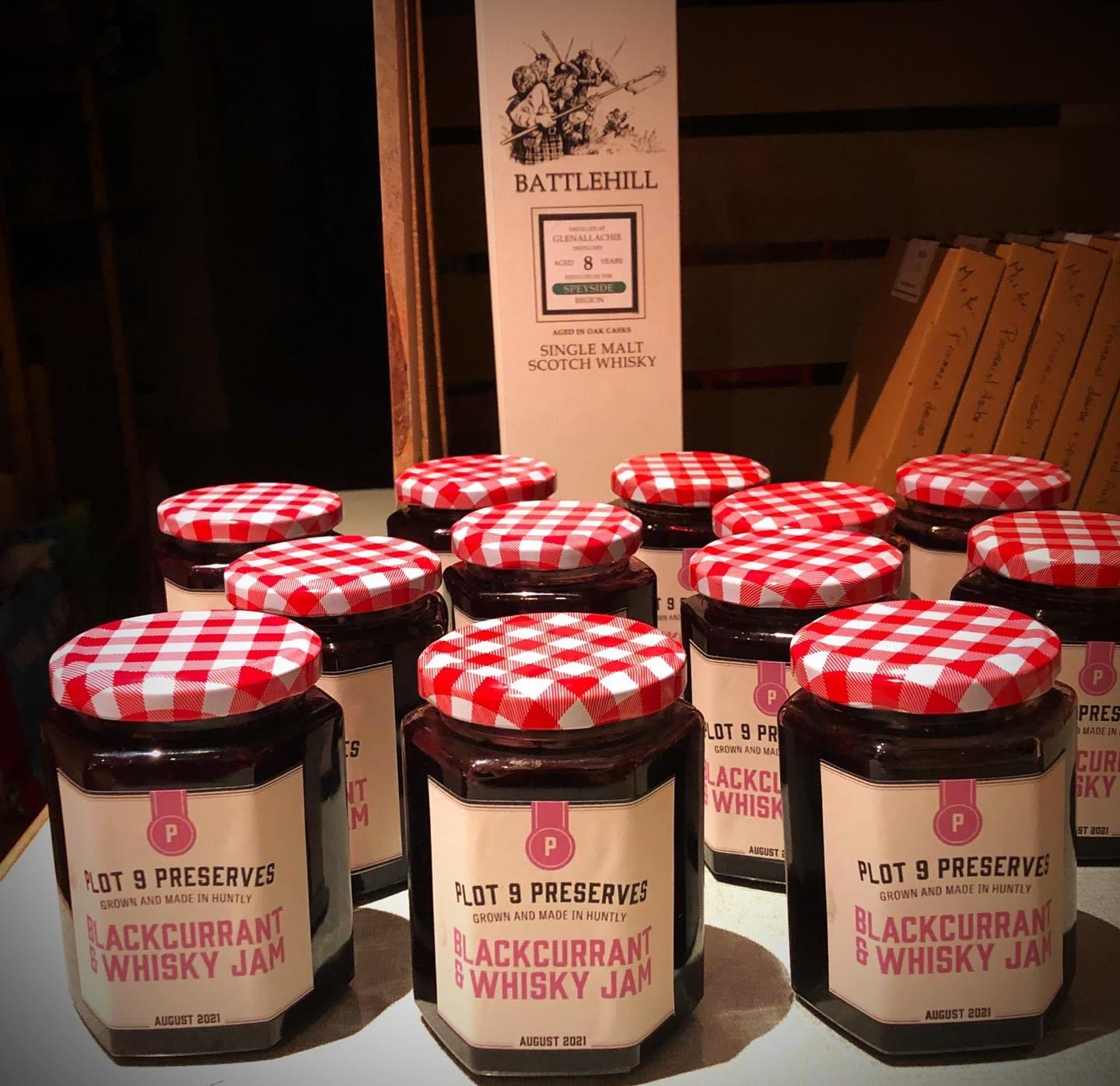
Making a living as a creator comes at a cost, and that cost is our unfortunate need to apply a price to our art. Incomes for those in the creative sector have never been lower. Over the last few years we have all faced falling incomes and most of us have had to expand our creativity in an ever widening portfolio of work. To keep our heads above water most of us are exploring new paid opportunities. Every day I see friends announce new businesses or new potential income streams. Personally, I spent the Pandemic years cooking and creating a small food business as well as taking on some ghost writing, speech writing, and anything I could to keep the wolf from the door.

Recently I realised that I had fallen into a trap of inspecting everything I do for income potential. This act of attempting to monetise everything I do had a very sad knock-on effect. I found that I was no longer enjoying those elements of my life that were previously my escape route from stress. In short, everything became my business and there were no days off. Every time I took something else on I was asking myself "can I make any money from this?"


I knew that I had to redress this and so I took a step back and a good long look at the things I used to do purely for enjoyment. I had to remove the financial value from some elements of my life and put back the less quantifiable value - the wellbeing factor. I made a decision to stop looking at the surplus from my allotment as a source of extra fruit for my little preserves business. I also decided to not look at my paintings as a potential source of income and instead just enjoy the time I spend with them - and it gives me yet another excuse to nip to the beach regularly.

I haven't suddenly come into money, in fact quite the opposite. With rising material costs for ingredients and packaging it looks like my food business will not survive much longer. The contracts I had for my non-fiction books for children have not returned after the Pandemic, and as most of those publishers are now using in-house staff to write books it looks as if that work is gone forever. I'm much worse off financially than before the Pandemic and, like everyone else, I need to pay the bills - but I also need to take care of my own mental health. I am no good to anyone if I can't take better care of my mental health - none of us are. I found that I was unable to create (or seek new contracts) because I had spread myself too thinly and was exhausted trying to hold onto everything. My creativity was actually being damaged by my attempts to cash-in on everything. My writing suffered, and dwindled.

Self-employed creatives are often neglectful of our need for time for simple pleasures. I'm taking back my painting time, and my allotment. I've already found that both of these things are instantly more enjoyable. Who cares if my paintings are messy or amateurish? Who cares if my strawberries and lettuces are wonky? Now I'm pottering around my allotment getting my onions in the ground and instead of thinking about how much each jar of relish might earn me, I'm writing a poem in my head. It is priceless having a little time back just to allow some thinking space back in.

Mind you... maybe I can save some money on presents or bartering throughout the year...?

Jam anyone?


Dawn McLachlan (aka Dawn Finch) is mostly muddy, spattered with molten fruit, and smudged with pthalocyanine blue.

She is also the current chair of the Children's Writers and Illustrators Group at the Society of Authors.

Monday, 7 March 2022

How to talk to children about Ukraine, by Dawn Finch

I have struggled to find something to write this blog about for this monthly slot. I have been back and forth over the book pile, and crossed off everything on my blogging subject list because everything seemed trite and unimportant. The news fills every corner of my mind and it's so hard to gain perspective and to not feel guilty about the pleasant and calm aspects of my life while others are in such horrific situations. If I'm feeling like this, I dread to think how children are feeling.

In these times of digital flooding it is hardly surprising that children are exposed to the news in a way that often causes distress. With the current news being so difficult to understand as an adult, it is obviously even more distressing to a child.

It is incredibly difficult to talk to children about matters like this and to help with this situation the School Library Association has gathered together a few resources that will help both families and teachers to better understand the situation and communicate with youngsters.

You can can access these resources (including a very comprehensive padlet collection) via this link.

https://www.sla.org.uk/article/wendy-cooling-mbe/ukraine-news

It is also worth taking the time to explore the Supporting Wellbeing resources from the National Literacy Trust. These resources are essentially for educators, but they are so useful that they offer an insight into the thinking of children and to ways of communicating better with them and to supporting their mental health.

You can access these resource via this link (below)

https://literacytrust.org.uk/primary/literacy-wellbeing/

I hope that these resources are helpful, and please do add more in the comments


Dawn Finch is poet and children's author. She is the current chair of the Children's Writers and Illustrators Group (CWIG) at the Society of Authors. 

Wednesday, 7 April 2021

Bean soup, by Dawn Finch

I won’t lie – it’s been a difficult year. I know that has been the same for everyone but when your career vanishes and you haven’t seen your folks since 2019 and you can’t see your child… it’s hard not to take things personally. I went into the Pandemic as a writer and library worker and am coming out the other side as a food writer and owner of a food social enterprise. When my income disappeared I had to find a way to make a new living, and had to do this. I've seen lots of people struggling over the last year and in my role as CWIG Chair there have been lots of conversations about how to adapt, and about grants and financial support. I have many times tried to answer heartbreaking emails from people who feel that nothing will ever be the same again.

I am lucky, and I know that, and at times I’ve felt very guilty for that. I’ve often felt as if I’m not entitled to moan about the other stuff - the loss, the loneliness, the separation, the cold acceptance of a a career in ruins. I had the skills a local food project needed and was given a chance to take up a new career and to start over from scratch. Not something I'd ever pictured doing again (especially not in my 50s) but needs must etc.. There have been many times when I’ve felt I shouldn’t be sharing things about my new little business because of the ongoing struggles of others. This has been a year when we’ve all looked at the lives of others and felt we should be feeling as if our problems don’t amount to a hill of beans in this crazy world.

We're all a bit Rick these days...


But our problems are a hill of beans, and that hill of beans is something that we all have to deal with in our own way. I had to take that hill of beans and make cassoulet (…literally…) but we all had to tackle our hills of beans in our own ways and it’s absolutely fine to feel as if we struggle with the climb. The ability of others to clamber over hills far bigger than ours does not diminish our struggle.

In that closing scene in Casablanca, when Rick says that to Ilsa, they both know he’s lying. They both know that this hill of beans is agony and that their suffering is very real. In this sacrifice, as he lets her go for the greater good, he isn’t diminishing their personal loss but accepting it.

I’m going to allow myself to slowly tackle the hill of beans. We have lived this moment in history and we are adapting to life with Covid. This new landscape is different, but not ruined. I’m not as bad off as some people, but that doesn’t diminish the fact that for me everything has changed. I know I'm not alone and that's important too. To move forward we need to plant those beans in this new land and see what grows.

The sun is coming over the hill, and there’s always bean soup.


Dawn Finch is a poet, food writer, allotmenteer and cook. As well as being current chair of the Society of Author's Children's Writers and Illustrators Group (CWIG), Dawn is the owner of Neep&Okra in Huntly, Aberdeenshire.

www.neepokra.co.uk


Saturday, 13 October 2018

Singed Around The Edges by Sheena Wilkinson


I’m writing this from Carrickmacross, a small and attractive town in County Monaghan. I’m in the middle of two days of school and library visits in the county. Next week it’s Kilkenny and Dublin, and then begins a month of weekly travel to England and Scotland – Manchester, Liverpool, Huddersfield, Birmingham, Aberdeen, Edinburgh… And I have a book to write by the end of March. 


Yes, I know.  I’ve done what I advise everyone else not to do – I have burnt myself out. 

I have been too busy, too over-committed, for too long. I have spent too much time queuing in airports and yawning in trains and dashing round in the car. A few weeks ago – probably not unrelated – I ended up with the kind of horrible virus I haven’t had since I was a child. Too sick to read? That’s not on! For the first time in my writing career I had to cancel events.  

I panic when I look at my diary for the next two months. I have written JUST SAY NO on the wall above my desk (on a post-it, not the actual wall; I haven’t lost the run of myself that much). I have scrawled WRITE AT HOME on all the days in my diary when I am not physically somewhere else – these are few and far between. I didn’t use to have to tell myself to do that. Especially as most of those days are weekends. 

I know other writers often feel like this. Recently, Claire Hennessy wrote a great article on the subject of writers with day jobs for The Irish Times and it was contributing to this article that made me think I needed to write about this honestly here on Awfully Big Blog Adventure. (here)

Tired and overburdened is how I felt when I had a day job. It wasn’t supposed to be like this now. I’ve had seven books published, won some awards, had some lovely gigs – RLF Writing Fellow, Arvon tutor, teaching creative writing in settings ranging from prisons to universities. I enjoy all those things, which is just as well as I need the gigs to pay the bills. I just thought I’d be living the dream a bit more. Because let me assure you – 90% of this travelling isn’t to meet readers who have bought or love my books; mostly I begin events by saying who I am. 

I’ll keep on doing these gigs, and I am grateful for every invitation. But I haven’t got the balance right. I have said yes too often, squeezed out my writing time, squeezed out time to just BE. 

I have just bought my 2019 diary and it’s started to fill up. But I’m making a before-the-new-year resolution: take more time to write. More time to think. More time to read. More time to be. 

Back to Carrickmacross. It’s lovely. I’m happy to be here and the library have put me up in a gorgeous hotel. The children I met today were delightful, engaged and polite, with some great questions. Of course, one was the inevitable Where do you get your ideas from? and as I answered I thought – though didn’t say aloud – Gosh, I might never have another idea again. I’m too tired for ideas. But then I drove to this little town and took a walk down the main street. And this post is illustrated with some of the quirky, intriguing things I saw. You might see the same on any street if you look.  Any one of these photos might spark an idea for a story.


look closely for the layers of history 


Maybe I’m not that burnt out. Just a bit singed around the edges. 


A reminder from the streets of Carrickmacross about what it's all about -- sharing stories 


Wednesday, 10 October 2012

Bipolar Characters in Children's and YA Fiction


It's World Mental Health Day today - so what better time to address the subject of mental health in children's and YA books? I'm going to focus on bipolar disorder, because it's a particular interest of mine. But much of what I say can be applied to depression and other mental health conditions.

First of all, let me announce that I'm a sufferer myself from chronic/recurrent depression. Although I've never been diagnosed as bipolar, I do have mood swings and have some idea, at least, of what the highs as well as the lows can be like (the highs in my case may possibly be the result of not getting the levels of medication right - who knows?)

I now believe that my depression started when I was in my teens, though I had no idea what to call it at the time. It was all put down to PMT, though I'm not sure that the term had been invented in the late sixties. The fact that I suffered from it at other times of the month - well, that's easily got around - there's always another period on the horizon somewhere!

Or perhaps it began even earlier, when I was five and my dad disappeared off to Singapore with the RAF and I was terrified for months afterwards that my mum would vanish too. I'm sure my parents did their best, but knowing me, a book would probably have helped, and there weren't books for kids about that sort of thing in those days.

Perhaps I became depressed when bullied at my new school at seven, when I was ostracised because of my 'posh accent'. The memory still brings tears to my eyes and the teachers didn't help.

My depressive episodes, never diagnosed or treated, recurred at intervals of a few years until eventually, in my late twenties and living in Edinburgh with two small children, I took myself off to the GP with stomachache and she had the sense to see that there was something more going on. I was prescribed anti-depressants (which I refused to take on that first occasion) and told to get a part-time job. The part-time job helped. But the depression came back after a couple of years. This time it was worse and I took the medication. I also had counselling and the combination of the two brought joy and colour into my life that I'd forgotten could exist. Just waking up in the morning feeling at peace with myself... free from the self-condemnation, guilt, shame, worry, and all those other horrible things depressed people suffer.

Since then, I've had further episodes, often but not always associated with times of difficulty and stress in my life. I still fear my depression and try to make sure I don't get too busy or stressed out - but it hits me from time to time. I'm adept these days at recognising the early warning symptoms. I have medication on hand and don't delay in visiting my GP. In fact my depression these days is like my bad back in some ways - I know that if I'm sensible I have less of a chance of setting it off - but there's always the possibility that something (or nothing) will trigger it. And I have to accept that I'll have down times when I can't do very much.

I'm very lucky in one respect, though. I have never been too depressed to read. I have several favourite books I turn to when I feel bad. William Styron's memoir Darkness Visible is one of them - where the great American author describes his own experience of depression. I'm not sure why it helps me, but it does. Perhaps it's just the putting into words of some of my own dreadful thoughts. The 'I'm not the only one' feeling. Whatever it is, I am so grateful to William Styron for writing it.


Anyway - children's books. I decided a few days ago to compile a list of characters in fiction who have bipolar disorder. Of course, it's difficult to be sure, if you go back very far, because the condition wasn't sufficiently understood. I asked for suggestions from various friends, contacts and writers' groups, as well as trying to come up with some of my own. I was partly interested in which books came to people's minds - i.e. the ones that had made a lasting impression. Thanks to all who contributed, I now have a list - and for the purposes of this blog I will restrict it to novels for children and YA.

This is my list, in no particular order (further suggestions most welcome).


The Illustrated Mum by Jacqueline Wilson
A Note of Madness by Tabitha Suzuma
A Voice in the Distance by Tabitha Suzuma
My Mum's from Planet Pluto by Gwyneth Rees.
Red Shift by Alan Garner 
Boneland by Alan Garner (though I'm told this is not strictly a children's/YA book)
***Mental by Sherry Ashworth
Girl, Aloud by Emily Gale

*** Mental is actually about schizophrenia, I realise now I've read it, but I'm leaving it on the list as it's a very good book.


Remember, these are for children/YA and I've restricted the condition to bipolar (except for Sherry Ashworth's Mental - see above). And I certainly don't claim that the list is complete. Nor have I read them all (yet). I'm currently enjoying Gwyneth Rees's My Mum's from Planet Pluto, which I'd strongly recommend. But I can't help noticing how few titles there are...

It concerns me that there aren't more. I said earlier that it would have helped me, as a child, if I'd been able to read about someone like me. I'm pleased to say that books for children featuring other kinds of conditions and disabilities are growing in number (though we still need more). We need, in my opinion, both issue-tackling books and books that treat the condition as a background thing - not the focus of the book but something one of the characters just happens to have.

It's the same with mental health. We need children's/YA books that delve deep into the condition (in a way appropriate for the target age-group, of course). But we need characters in books who just happen to have bipolar disorder (or depression or schizophrenia, etc) too. We need books that treat these conditions with gentle humour - combined, of course, with respect. I can laugh at my depression, at least some of the time. Often humour is part of the way we come to terms with things. We need books with 'heroic' endings (character overcomes all the challenges) and ones that are more true to life, while always offering hope. And in order to get this variety - we need LOTS MORE BOOKS. Sorry to shout, but we do.

So come on, children's authors... and publishers. By the time World Mental Health Day comes round next year, let's see a lot more books for children, YA (and adults) on the subject of bipolar disorder and, more generally, on mental health.

I believe there's a role for many of us in helping to remove the stigma attached to mental health conditions that, almost unbelievably, is still present in our society today.

We all have minds, after all, just as we all have backs.

Happy reading
Ros

Note: My own contribution to the bipolar list has just come out. It's for adults and it's called Alexa's Song. You can see it on Amazon UK and download it for Amazon Kindle for £2.54.

My blog, Rosalie Reviews
My Facebook Author Page
Follow me on Twitter @Ros_Warren
I'm a regular contributor to Do Authors Dream of Electric Books?


Tuesday, 27 December 2011

Taking Stock... by Rosalie Warren


Sorry about the visual pun, but it's Christmas after all and I had a lovely picture of some leftover gravy just begging to be posted...

It's now a little over five years since I gave up my university post as a result of ill-health and decided to take the opportunity to focus on my writing. This was something I'd always wanted to do but had never found much time for, in among the demands of bringing up a family, studying for a PhD and then being a researcher and lecturer.

So maybe it's time to take stock and ask myself what I've learned, where I've failed and what I've managed to achieve, as well as trying to decide my aims for the next five 5 years or so.

The failures speak for themselves. I'm not a household name, my books are not bestsellers and I'm not a millionaire... though I'm not sure whether I was aiming at those things, and I certainly wasn't expecting them. What I have achieved is three published books, several more completed ones which have not yet found homes, and an exciting new project for younger readers recently commissioned (and still under wraps). But, much more importantly, I've learned quite a bit, made some wonderful new friends and had a lot of fun.

I spent the first two years of my 'freedom' writing short stories and submitting them to competitions, as well as joining several online writers' groups and learning how to give and receive feedback. I took a creative writing class and began work on two novels, one of which I'd had in mind for several years. It turned into Charity's Child, and an independent publisher, Circaidy Gregory, with whom I'd had a short story placed in a competition, expressed interest. It was published in 2008 and I experienced all the joys (and disappointments) of being a first-time published author. The trouble was, I knew very little about how to publicise a book and my publishers, though enthusiastic, had limited resources. I had some encouraging reviews, did a couple of signings and was invited along to some bookgroups to discuss my novel. An agent read it and invited me to London to meet her. It was all very exciting, but she didn't sign me up (a story that would soon become familiar).

My second novel, Low Tide, Lunan Bay, was less serious - a sort of comedy-suspense-romance. I sent it to an appraisal agency, who recommended that my protagonist, who found new love on the internet at 46, had her age reduced by ten years. I did just that (gosh, I was compliant in those days...) A publisher, Robert Hale, liked it but said it was too long - could I cut it by 25%? I did - by removing the sub-plot and sewing up the seams. Hale accepted it and I was, of course, delighted, though I still think it would have been a better book with the heroine ten years older and the sub-plot still in place.

My next novel, Alexa's Song, failed to tick a number of boxes. Male protagonist for a female readership - black mark. Too 'dark' for a love story. Mental health issues - woopsadaisy. Several agents said it would be 'difficult to place'. It still hasn't found a home, but I may well revise it and publish it myself as an eBook one of these days. I think there's a need for more books about depression, bipolar illness and so on, and I'll be only to pleased to add to the list.

I attended the Winchester Writers' Conference in 2008 and entered one of their competitions - to write the first 500 words and synopsis of a novel for age 12+. My entry made the shortlist and became, eventually, Coping with Chloe, the story of a teenager whose life is being taken over by her twin. Several agents expressed interest, but no bites. I sent it to Cornerstones for an appraisal, then rewrote and resubmitted it. One agent, who shall be nameless, got very excited and promised (I thought) to sign me up when I'd made a few changes. I made a few changes, while she made just the one - her mind.

I was distraught, to the point where I didn't submit anything or even do much writing for several weeks. Then I picked myself up and sent Chloe to a new children's publisher, Phoenix Yard, who liked it... and signed me up. My editor there was brilliant - and thanks to her help it came out in March 2011 and has had some great feedback and lovely reviews. Though not, sadly, huge sales - or not yet, anyway...

In March 2012, Charity's Child is going to be reissued as an eBook and as a new edition in paperback, by the original publisher, Circaidy Gregory. Other possible eBooks for the future include my 42000 word novella about a woman with Alzheimer's, which is probably too short to be considered by a publisher. There's also an SF book for 12+ which hasn't yet found a home. And my current project is an SF novel for adults, which draws on my research interests - cognitive science, linguistics and AI. If it doesn't find a publisher, I'll definitely publish it myself.

One thing I've learned is that it doesn't get any easier - you just set the bar higher as you go. And there are always going to be people who are more successful than you, so why worry about it? I've also discovered that authors, and children's authors in particular, are some of the maddest, funniest and kindest people in the world.

I've learned that you have to stay true to yourself. There are always compromises to be made in terms of what agents and publishers are looking for - but if you lose your vision of what you want to write, you might as well give up.

I'm very happy still to be writing, after five crazy years. I wouldn't want to do anything else... though to earn a bit of money from time to time might be nice.

And finally finally... I've discovered that hearing a child or young person say they liked your book and found it interesting, exciting, helpful or whatever, is one of the best feelings in the world and no writer could wish for anything more.

Wishing all of you - readers, writers, whatever you may be - a very happy, healthy, prosperous and successful New Year.