Showing posts with label covid. Show all posts

Wednesday, 7 July 2021

What value creativity? by Dawn Finch


I often use my posts on this blog as inspiration for the regular members' updates that I write with my CWIG Chair hat on. This time I'm flipping that by sharing one of those updates here in case anyone missed it. There is a current trend to diminish the work of creatives, and it's time we all remembered how essential our work really is.

With midsummer already becoming a memory we are past the mid-point of 2021. We are all hoping that the pandemic is moving to where we see it as an historic event of the past, but historic events often leave deep wounds that take much time to heal.

The pandemic has undoubtedly changed all of our lives, and for some those changes have been profound. I don’t mind admitting that it has had a devastating impact on my own writing career and on the day I gave evidence to the All Party Writers Group (APWG) for a report on Covid and creatives incomes, I had just left my new job mopping a kitchen floor for minimum wage. The personal impact of the pandemic is terrible, but the wider impact on diversity, inclusion and choice is catastrophic. There is so much to be done to better protect the creative industries and yet there remains this lingering idea that it doesn’t matter as much as some other industries. How wrong that is! The UK’s creative industries contribute almost £13 million to the UK economy every hour.

Think about that a minute. £13,000,000 every hour. That’s a huge amount of money and you are all part of that. For that industry to be truly effective and reflective of all, it’s going to need people from all walks of life, from all backgrounds and life experiences. That can’t happen if the only people who can afford to work in the creative industries are people who are already independently wealthy. The APWG report Supporting Writers Through the Covid-19 Crisis lays this all out with evidence given from many sectors.

It is a sobering read but a useful document for empowering creatives to have a deeper sense of just how important the work you do is. I’m sure I’m not alone in having that lingering feeling of imposter syndrome when I think, is a poem, or my piece of fiction really important in the grand scale of things? Yes, yes it is. In fact I’d argue that creativity has never been more important. Where would we have been during lockdown if we had not had the work of creatives to lift our spirits and distract us from the awfulness of what we were all going through? How would families have coped with the long stretch of home-schooling without the extensive outpouring of material from wonderful creatives? 

There is definitely a long road ahead of us (and possibly more lockdowns to come) but we should stand together with our heads held high and acknowledge the true impact and importance of our work. 

This blog is an edited extract from an article first published in May 2021 on the Society of Authors' CWIG pages.

Dawn Finch is the current chair of CWIG and is an author, cook, floor mopper, poet and former children's librarian

Wednesday, 9 June 2021

Where even IS 'here'? - by Anne Rooney

Two days ago, Dawn Finch started a fascinating thread, picked up yesterday by Keren David, on where we (writers) go from here ('here' being pandemic-land). I'd like to turn this around and look at 'here' and 'where' from the point of view of young readers. Dawn and Keren are writing fiction for older readers. I'm writing fiction and non-fiction for much younger readers. The fiction, currently, is entirely animal-based so the pandemic is not an issue overtly. But the lack of interaction with anyone outside the immediate family translates easily into animal behaviour. It perhaps won't look at all alien (even be qute comforting, perhaps) to the current generation of pre-schoolers and early years readers.

For young readers, picture-book scenes in playgrounds and other crowded spaces, people without masks, these are quite alien. My grand-daughter, MB, is seven. She looks at a playground and judges if it's too crowded to feel safe and will ask to go home if she thinks it is. She's not the most cautious of her cohort. I saw one of her friends yesterday, a girl MB is with every day now school is open, and who I know well. She hid behind her grandmother because she's now scared of other adults. By the start of Year 3 in September, more than half of MB's schooling will have been during the pandemic. 

The regular depictions in picture books of children visiting friends' houses and playing close together, casually touching each other, look odd. They even look a bit exotic, and 'other', like all those books set in boarding schools and large houses did in my childhood. There's an obvious comparison to make with small readers from under-represented groups who don't see their lives reflected in books, but now it applies to everyone. We need to work, as an industry, to get into the minds of those children as they grow and make sure that even if our books don't feature the pandemic, they acknowledge its impact on them. They have 'lost' (a lazy word, they experienced differently) a large chunk of their young lives. It's rather like, perhaps, the impact of evacuation on my parents' generation. My father's entire adult life is in some ways defined by his experiences of being a small child in the Second World War. He was evacuated for a year and a half — about as long as (with luck) the pandemic will affect this generation of children. Perhaps some of those evacauation and war novels, like Goodnight Mr Tom, will have special resonance for today's seven-year-olds. I've already noticed more interest in The Secret Garden, though not with any explicit link to illness and isolation, but it feels a bit zeitgeisty. 


As adults we can put the pandemic behind us if we want to. I'm not sure that's healthy, but we probably will, at least until the next one. Historically, we haven't dealt with widespread devastating illness in books. You can count the great pandemic literature on the fingers of one hand: Procopius's Secret History, Boccaccio's Decameron, Defoe's Journal of the Plague Year, Mann's Death in Venice (borderline — epidemic rather than pandemic), Porter's Pale Horse, Pale Rider. (I'm excluding AIDS because most of the population didn't feel threatened or change how they lived.) The early flu epidemics don't feature in literature, smallpox is barely there except as a reference to scars or people who have died. Syphillis gets a lot of coverage in the 1700s, but as a background threat, which is quite possibly what covid-19 will become. It will be interesting to see if it disappears from public consciousness as thoroughly as 1918 flu did. And it will be interesting to see what the current generation of small children grow up to write. Because for them it's not just a year or two out of action, but a significant chunk of their formative years remodelled. MB and the friend-who-hid both tell me they want to be writers. I wonder what they will write?


Anne Rooney

Website


Salariya, 2020

Monday, 7 June 2021

Where do we go from here? By Dawn Finch

The only writing some of us have managed

I noticed a thing yesterday. I was chatting in the market and someone said, “we had a lovely time here last year”, but they didn’t mean last year. They, like many of us, had simply eradicated a year from their thoughts. It got me thinking about where we go from here. I have been working on a manuscript for adults and I started writing it in November 2019. It is set in a mobile library in the present day and it was going well right up until March 2020 when everything changed. My novel set in the present day suddenly had an unwelcome new character – Covid 19.

I know I’m not alone in wondering what we do with Covid 19 and our fiction. The Pandemic occupied almost all our thoughts and conversations for well over a year and that is going to leave an indelible mark our memories, but do we want that mark on our fiction too?

I had a chat to some bookseller and library friends and asked what they thought about the Pandemic and fiction. The consensus is that people are split between those who want to read books centering on the disastrous impact of the virus, and those (like my market friends) who want to simply skip 2020 and not think about it.

In terms of fiction, it is a difficult decision to make. Do we reference the Pandemic in our books set in the Real World, or do we not? Do we move our books either backwards to the Time Before, or forward to the Time After? How can we possibly write a book set in the time of the Pandemic that is not a Pandemic novel?

I think that it is an exceptionally fine balancing act and I’ll be interested to see how people manage to adapt. The first Pandemic novels were already on our shelves last summer and booksellers reported a huge upsurge in people seeking out books set in times of socially isolation and virus outbreaks, but will that continue? We have no way of knowing, but there is a long and solid history of disaster and disease fiction and there’s no reason that popularity won’t continue.

John Christopher's children's novel about a world where a virus kills thousands of adults but leaves children largely unaffected. Published over 40 years ago this excellent work received some well deserved extra interest in 2020

That said, if our books are specifically set in the last year or so we can’t NOT reference the virus for fear of our Real-World fiction feeling less…well… real. It isn’t possible to ignore it completely – or is it? Is it possible to write a Real-World novel that makes no reference to the Pandemic at all? I have recently read a few brand-new YA novels and I didn’t find it jarring at all to not see references to the virus, my brain simply slipped into a pre-covid mindset. In fact, I found it comforting to dwell for a while in a place where the virus hadn’t shaped every conversation and social interaction.

I wondered what the bookselling world thought and had a chat with an agent friend. She said there was a “current hunger” in the commercial industry for virus books, but she was very cautious. We agreed that we’d both seen the industry obsessively seek out specific genre or theme books before. We've all seen how the publishing world gets hooked on a thing and snaps up everything they can, floods the market, eventually drowns it and then moves on. She says that no matter what the trends and fashions are in publishing what really matters is “the strength and quality of the story and the writing”.

Okay, so maybe there is no way we can set a novel specifically in 2020 without mentioning the Pandemic, but people shouldn’t feel as if they have to reference it. Perhaps we shouldn’t rush to write THE Covid novel. The pace of publishing is so slow it’s positively glacial and if you are writing a novel now even with everything lined up (contract and deadline already in place etc), the chances are that you are not going to see it on the shelves until 2022. Who knows where we’ll be in 2022!

Write your story. Let the story unfold just as it should. If it is a Pandemic story then there is a good chance that there may be even more of an appetite for them the further down the line we get. If it is not a Pandemic novel, don’t feel as if you have to change your whole plot to incorporate virus references. Just write the thing and if you need to add references later to ground the novel in a certain period, so be it.

For writers we are in yet another period of uncertainty - but that's nothing new for authors! Frankly, I’m impressed anyone has managed to write anything in the last 18 months so you've already impressed me if you have. We have no choice but to go with the flow and I’m very optimistic about the future and looking forward to seeing what everyone comes up with.

Dawn Finch is the current chair of the Children’s Writers and Illustrators Group at the Society of Authors. She is currently hoping for enough brain-space to do some actual writing.

Tuesday, 1 June 2021

FACING UP TO IT by Penny Dolan

 Today is Tuesday the first of June and our family visitors will be leaving soon.

 Our son, wife and the two grand-teens arrived on Saturday: the first overnight, in-person visitors here since the end of July relaxation last year, and almost the only people who've been inside our home since the Covid lockdowns began.

                                Door - Wikipedia

Having them here has been a nice, almost familiar feeling. I have come across them face to face in our rooms and hallways and bathroom doorways, and that simple thing has been amazing.

Yet I must admit that after this last long year and more of an almost solitary life,  seeing so many more living bodies in the rooms felt quite unusual. Happily the same but also, at first, warily different.

However, this current visit also made me face up to things that I may have pushed aside, shelved or simply ignored as the lockdowns came and went. If society is opening up again, what does it mean for all the small habits and defences I've developed over this time.  

For example:

Alone in the World (Bouguereau) - Wikipedia


 I will have to meet all my social  friends and work friends face to face. 

Some of the zooms will go. My local book groups will be meeting in gardens this summer, umbrellas at the ready. Other friends are suggesting small get-togethers. But do I even know how to be among humans any more? What interesting thing can I say or share when I've done almost nothing and been nowhere? I might opt for the trick of mentally listing a few topics I can still talk about easily, and without any easy pity-me moaning, especially when many have had a darker, sadder time of it than I.

And I must remember that, conversationally, everyone is likely to be in the same situation. 

  People Talking | oil painting | L. S. Lowry | Art, Cat art ...

 I will need to face up to the sartorial change that will (sometimes) bring.

My year-long uniform of  baggy black jeans, t-shirts and jumpers is not for public sightings. I am in definite need of an upgrade. If I am going out into the world again, I need to examine the wider contents of my wardrobe, not just the heap on the chair, in the hope it makes me seem ready to meet the world out there.


Paris Fashion Week - Wikipedia

 I will, as I heave myself  forward into the light of the big lamp in  the sky, also have to face the fact that all the bulges and signs of my unhealthy ways will be evident. 

Too late, now, to pretend that my claims about long healthy walking meant more than a gentle amble to the shops for essentials. I have to face the fact that the scales don't lie and the extra podge shows. C'est moi, post lockdown. (Luckily, one of the visitors brought me a box of posh chocolates.)


Walking - Wikipedia 

 I will need, as an introvert, to face the perils of group dynamics all over again.

I am used to interacting with the cat and with the OH, and a couple of people who call by with deliveries. That's mostly it. And oodles on zoom.

Soon my life will be more demanding, full of small scale interactions in the library and bookshops and so on. However, in a few weeks, fingers crossed, I will be away at a residential writers retreat and facing a score of people, some unknown, for several sessions over almost a week. How will being with all those faces for so long actually be?

 I have decided to take this new task gently, to rely on my guess that others might feel slightly trepidatious too,, Yet I also need to allow myself, anxious or not, to be quietly happy that this event might be happening.  


However, there is one face I'm not ready  to face: an updated author photo. 

No, Not yet. Do I want to be involved with any more public face-to-facing? 

Not yet. I will stick with my paraphrase of  the approach modelled by that most admirable author Jan Mark. Never change. Never apologise.

Not everything needs to be in your face.


Courage, mon amis!


Penny Dolan

@pennydolan1


Driving a long way.


Thursday, 21 January 2021

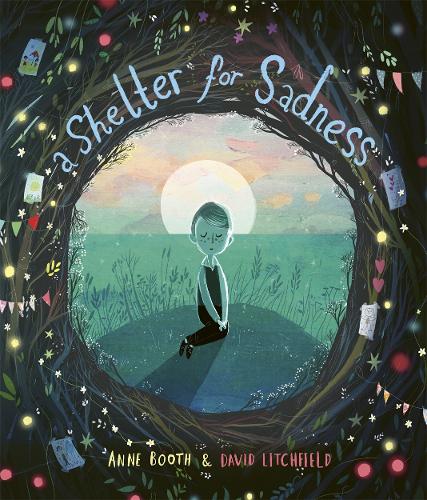
A Shelter for Sadness by Anne Booth


In October 2017 I wrote a poem about sadness, drawing on my own experiences of sadness, as a child and as an adult, but inspired by  the incredibly beautiful and wise words of Etty Hillesum, a young Dutch Jewish woman  killed in the Holocaust.


'Give your sorrow all the space and shelter in yourself that is its due, for if everyone bears grief honestly and courageously, the sorrow that now fills the world will abate. But if you do instead reserve most of the space inside you for hatred and thoughts of revenge-from which new sorrows will be born for others-then sorrow will never cease in this world. And if you have given sorrow the space it demands, then you may truly say: life is beautiful and so rich.' (Esther 'Etty' Hillesum (15 Jan 1914 - 30 Nov 1943)


 I heard them first at a talk given at my church, and, four months after my dad had died, they really spoke to me. Some sadnesses can't be fixed, but we have to honour them - we can't deny them or push them away without doing ourselves or others great damage, and this works for peoples and nations who have suffered, and for individuals.  I came home and wrote my response, sent my poem/picture book text to my agent, Anne Clark, she sent it to Templar, to Ruth Symons  and Templar asked David Litchfield if he would like to illustrate it. He said 'yes', but he had lots of work to do, so I was told it wouldn't be published until 2021! It seemed an impossibly long time to wait, but we all knew that David was worth waiting for.

And now it is here, at last, published on the 21st January 2021. And David's illustrations are so wonderful. 

A Shelter for Sadness (Hardback)

I must also acknowledge the wonderful design of the book by Genevieve Webster, and the editor was Alison Ritchie.


https://blackwells.co.uk/bookshop/product/A-Shelter-for-Sadness-by-Anne-Booth-David-Litchfield-artist/9781787417212


I had no idea back in 2017, that on top of all the other sadnesses in the world, there would now be Covid-19 and all the sadness caused by that, and lockdown and stress and unemployment and being apart from loved ones and bereavement and fear and anxiety, but I am glad now about the long wait for our book's publication, and hope that my words, and the beautiful illustrations by David Litchfield can be a help to children and adults, now and in the future. 


And I hope that we can all somehow manage to build shelters for our sadness during this time, and find consolation in small joys, and that we can emerge at the end, and, even with our sadness, be happy again.


Monday, 15 June 2020

What I've learnt from lockdown - by Rowena House


I’ve stolen today’s ABBA post title from last weekend’s Guardian, which asked a constellation of writing stars to share lessons they’ve learnt from the past few months. Here’s the link:


I particularly like this from Alan Hollinghurst: “Time itself was more precious, even if enjoyment of the passing minute was clouded by the fear of being dead within days.”

Sebastian Barry’s exquisite prose in praise of nature are pure delight (“the sonic realm of the cuckoo” and countless other gems). Do please take a look.

Mark Haddon’s piece is interesting too. He says he’s more contented now and his life, previously constrained by a fear of flying, feels less small:

“In ordinary times we are constantly being made to want more. It’s how the economy works. Advertising generates a constant, nagging absence which will be solved by spending more money. Except that it isn’t. But something has changed. Those of us who can count ourselves as lucky have more than enough. We can live with less: less eating out, less driving, less international travel, fewer shiny new things.”

Amen to that. [And who knows, humanity might even now be learning how to save our one and only planet if everyone in the developed world gets that same message, but back to writing for now…]

So what lessons have I learnt from lockdown?


King James I and Anne of Denmark: Credit: Wellcome Collection. Attribution 4.0 International (CC BY 4.0)

Perhaps the clearest one is just how important it is for my mental health to write regularly.

ABBA, by setting a monthly deadline, has been a genuine support in what has been an annus horribilis of family bereavements and new caring duties. Writing this post, for example, proves I am who I think I am: a wordsmith, with actual words to show for it.

I’ve also learnt how damn hard it is to assert my right to set aside time to write, and how difficult it is to block out the daily domestic dramas of shielding my frail and elderly dad in order to devote serious mental energy to researching my historical work-in-progress.

The guilt that I’m not doing enough for him (while also supporting my immediate family) means I can’t find the emotional detachment or clear enough headspace for genuine creativity. But I can at least (like now) examine half-formed thoughts and turn them into communicable ideas, which, if I’m lucky, I get to talk about online and on the phone with writing friends.

I’m also learning the balancing act of keeping up-to-date with the fast-evolving ‘story’ of Covid-19 without tipping into despair about the cruelty of so many unnecessary deaths in the NHS and care homes or feeling oppressed by anxieties about a second wave.

It’s okay, I think, even necessary perhaps, to feel deeply saddened about what’s happening here and abroad, and what must be happening in underreported place I’ve known such as the great slum city of Kibera in Kenya.

It’s also brilliant to have had a moment of pride in our nation when the Black Lives Matter protestors tumbled that slave trader’s statue into Bristol harbour, even if we then displayed to the world those shameful racist thugs attacking the police in central London on Saturday.

But this past weekend brought home a new lesson of lockdown: it is now effectively over, which I believe means we are inevitably facing a second wave later on in the year.

If so, next time around there won’t be the same national consensus as before that collective action to protect the vulnerable and the NHS at all cost is the right thing to do. There will be competition between the needs of the old and the medically vulnerable and the needs of the fit, younger population for whom Covid-19 is far less of a threat.

For carers like me and the vulnerable, we’ll once again be on our own, as we were before the government belatedly ordered the lockdown in March, sheltering those who need it, wearing face masks despite the smirks of other shoppers and keeping our 2m distance whatever Boris Johnson says.

This competition within society is probably inevitable. As Professor Chris Whitty, England’s chief medical officer, says, the 2m distance rule is a judgment about risk, and risk is an individual thing; the young can’t be asked to sacrifice themselves for others for ever.

Which, as a parent, I agree with. Who wants their child’s life blighted for a moment longer than necessary? Their mental and emotional health, their educational and economic life chances, must take precedence at some point.

Writing this on Sunday, June 14th, 2020, that pivot point looks to be happening about now.

If so, we are presumably heading for a twin-track new normal, with carers and the vulnerable physically outside society as the young and fit return to it. In which case, as an outsider, online support from friends is going to be more crucial than ever, and the process of writing the work-in-progress will become more deeply embedded in the survival layers of my hierarchy of needs, like food, drink and shelter, not just an act of self-actualisation.

It’s something I’ve heard said by many writers who, for various reasons, are housebound or constrained in some other way. Writing is a lifeline. Let’s hope it can keep us afloat for the duration.

@HouseRowena