Showing posts with label Patron of Reading. Show all posts

Friday, 20 November 2015

Reading for Pleasure in Schools - Joan Lennon

Many years ago a woman broke my heart.  She was sitting in a primary school class room and she was an expert and she said, "Your son will never read for pleasure."  It felt as if she'd taken my beautiful boy and thrown him out in darkness and slammed the door.

Sorry - that's a bleak sort of start to a blog about resources/groups/initiatives.  Except that it isn't bleak, really, because SHE WAS WRONG.  Totally.  I'm not going to trot out said beautiful boy's achievements and nay-sayers' confoundings or the last book recommendation he sent me (well, let's meet for coffee and I just might mention one or two).  But that woman does have a permanent residence in my brain and that memory rings a little bell whenever the phrase "reading for pleasure" is mentioned.

Which is one reason I'm so keen on anything that promotes reading for pleasure in schools, where the curriculum can overwhelm the joy. Here are two I know about - please let us know about more! 

Reading for Pleasure in Schools is a Facebook group/forum that is of interest to teachers, librarians, parents, authors - brimming with questions and answers and ideas and enthusiasm.  It's all in the title, really.  (The photos are from their page.)  


And there's the Patron of Reading initiative.  (This is their Facebook page.)  


(I'm Patron of Reading for the utterly fantastic Queensferry Primary School and I love it.)

Now, tell us more!
  

Joan Lennon's website
Joan Lennon's blog

Thursday, 8 October 2015

Patron of Reading by Keren David


The news is out. For months now, I've been plotting and planning with the brilliant librarian at my daughter's old school, and this week the news was announced. I've going to be Patron of Reading at Highgate Wood School.

Highgate Wood is a comprehensive school in Crouch End, north London, it has 1400 students aged 11 to 16, plus a sixth form. It's multi-cultural and socially mixed, and its alumni include ITV's new political editor, Robert Peston, rapper Chipmunk, DJ Judge Jules and computer hacker Gary Mckinnon who successfully fought extradition to the US after hacking into US military computers, in search of UFOs. 

Regular readers of this blog will be familiar with the Patron of Reading scheme to partner authors with schools, there are currently around 100 authors working in UK schools. Here in Haringey, the Big Green Bookshop in Wood Green has been working hard to expand the scheme locally, and we patrons have set up an email group for mutual support, information and entertainment. 

I'm very lucky that Highgate Wood has a brilliant library -  sorry LRC -  and librarian Kate, with assistant Noa are already doing a lot to encourage reading in the school. We've been planning the patron role for months now, and hope to be working with all the academic departments in the school, finding a way to infiltrate reading into all the different subjects. This term it's the drama department's turn, with pupils  drawing on my book When I was Joe as inspiration (hopefully).


I'm going to write a regular blog for the LRC, and we've announced a book award for the school, with a shortlist of seven books chosen by the LRC's reading group. They were kind enough to pick my most recent book, but I took it off the list -  got to remain neutral in my new role! 
 I'm kicking off by speaking at six assemblies this week and next, introducing myself and my new role. At the first one, pupils aged 14 to 16 were angelically well behaved, and one boy introduced himself afterwards and recommended that I read The Martian by Andy Weir. 

Kate put together a video of pupils talking about why they like to read. 'It takes you to another world,' said one pupil. 'It helps you when you've had a bad day.'  

Why do you like reading? from Highgate Wood School LRC on Vimeo.


I'm excited to take up this new challenge. I'll report back at the end of the school year to tell you how it's going. 

Monday, 14 September 2015

Rainbow Moments by Karen King


When I attended the Patron of Reading Conference in February this year the lovely Helena Pielichaty, the first ever Patron of Reading, gave a moving speech about her experience of being a Patron of Reading. She finished by saying ‘This is the thing of which I’m most proud’. Helena is a talented and profilic author who has had numerous books published including the popular Girls FC series but the thing she is most proud of is inspiring children to read through her POR work. This made me think. What made me proud? What were my rainbow moments, the things that brighten my day?

When I get a new book published I’m always pleased when I finally hold the printed copy in my hands, but proud? No. I’m too besieged with doubts; what if no one likes it? What if there are some typos (and yes, that’s happened a few times), what it if doesn’t sell? I’m fully aware that while my books pay the bills they aren’t literary masterpieces.

My rainbow moments are when a teacher at a school I’m visiting tells me that a pupil who has listened engrossed to my story has never sat still to listen to a story before, or that a pupil who has filled a page in one of my workshops has never before written more than a sentence, when a former creative writing student gets an agent or a book deal, a social media student starts their first blog or makes their first tweet. I feel proud when I’ve helped someone to achieve something.

Earlier this year a lady attended one of my writing class. She had never written anything before, never used a computer, but wanted to write a children’s story for her grandchildren. She worked hard on this story throughout the course. Then one week she told us she’d bought a second-hand computer and was taking IT lessons. On the final week she brought in a neatly typed copy of her story. She was so pleased and proud.  Helping that lady write her story is my brightest rainbow moment this year.

What are your rainbow moments?


 Karen King writes all sorts of books. Check out her website at www.karenking.net

Saturday, 13 December 2014

Being a Real Person Sheena Wilkinson


I’ve just become Ireland’s first Patron of Reading. Trinity Comprehensive School, Ballymun, is a north Dublin school in an area which was, in the past, a byword for deprivation. In recent years, Ballymun has been the subject of a huge regeneration programme, and it’s a place where I have been welcomed since I did my very first school visit there four years ago.

This was drawn by the principal, Ms Fran Neary.


where it all started 
In 2011, my first novel, Taking Flight, had just come out, and I’d only done a few local visits in Belfast schools. I was a fulltime teacher so I wasn’t nervous about talking to teenagers, but when the invitation from Trinity Comprehensive came in, it felt different. It was the first time I realised that readers outside Northern Ireland would connect with my characters. Joe Kelly, Trinity’s wonderful librarian, assured me that his pupils had liked Taking Flight ‘because it seemed so real to them.’

That was the first of many visits to the school. I’ve done lots of talks and workshops in the library which is, like all good school libraries, central to the school, promoting literacy in its widest sense. I think I kept being invited back because I’m unpretentious and realistic. Earlier this year Joe and I decided to formalise the relationship by designating me Trinity’s Patron of Reading. I’m sure readers of this blog are familiar with the PoR scheme. It’s an excellent way for schools to connect with writers, and for writers to connect with readers. When I attended a ceremony in Trinity last month to mark becoming its Patron, one of the things I promised to do was to use my December ABBA post to celebrate being Ireland’s first PoR.
me on a school visit -- unglamorous but real 

In the last week, however, my thoughts have also been exercised by the furore over ghost-writing, transparency, and celebrity culture. There’s been a lot of nonsense in the media, as well as a lot of good common sense – not least here on ABBA: thank you, Keren David.

How does this link with the PoR scheme, and with school visits in general? I think the most important thing about authors visiting schools is that they make things real for the pupils. As a child, I had little concept of my favourite writers as actual people. The books just sort of appeared in the library, as if by magic, though I gleaned every little snippet of biographical information I could from the dust flap. When I wrote to Antonia Forest and she wrote back it felt like the most exciting thing that had ever happened anyone – to have a letter written by the same hand that had written the Marlow novels. (And I should point out that I was 23 and a PhD student at the time.)


the book that drove me mad
What I always emphasise on school visits is that writing is a process, and often a fairly torturous one. I don’t pretend to write quickly and easily. I show the pupils the whole journey of a novel, from notebooks with rough planning, through printed-out and much scribbled over drafts, to the final book. I’m not precious – I tell them about the times when it’s been hard; I show them a six-page critique of an early draft of Taking Flight, and point out that there is a short paragraph of ‘Positives’ followed by five and half pages of ‘Issues to Consider’. I tell them about going to an editorial meeting to discuss Still Falling, and how my editors spent five minutes telling me what they liked about the novel and 55 minutes telling me what wasn’t working.

I’m not trying to put kids off. I always emphasise that making things up is magical, and seeing your ideas develop into actual stories that people read is the best thing in the world. But I do let them see that it involves a lot of hard work.

Nowadays I think that’s even more important. I once shared a platform with two children who had self-published. It was a ridiculous, uncomfortable event: there I was talking about hard work and rejection and editing and how hard it is to get published, and there were these two little pre-teen moppets with their shiny books. The primary school audience, who won’t have known the difference between self-publishing and commercial publishing, probably thought I was some kind of slow learner. But I least I told them the truth.

Honesty. I think we need more of it. I’m so proud to be Ireland’s first Patron of Reading, and I intend to keep on being honest about writing as a magical, but difficult craft.
Trinity Comprehensive School, Ballymun.


Monday, 6 October 2014

The wonderful magic of author visits - C.J. Busby

Whenever I'm lucky enough to be invited to schools to give talks or run creative writing workshops, I always enjoy the visits, and get a fantastic boost from them. But it can sometimes be difficult for a lone author to gauge the usefulness or value of what they do on a school visit - after all, you rarely get the chance to hear what the children really thought of you. Are they just being polite when they say it was great? Are the teachers rolling their eyes behind your back? When they tell you about the last author visit they had, and how inspired the children were, are they drawing unfavourable comparisons? Are you really doing it right? So when I got the chance to volunteer as a steward at the Appledore Festival Schools Programme, near where I live, I jumped at it. I could get to sit at the back, and watch another author do their stuff! I could learn how it looks from the other side of the room, see some examples of what works, check out what other people do.

I'm so glad I did. Because what I discovered is that author visits are magical, wonderful and amazing, and there are probably almost as many ways of being magical, wonderful and amazing as there are authors. Both the authors I shepherded around north Devon were fantastic, and they connected brilliantly with their audiences - but they both did it in almost opposite ways.


John Dougherty is an old hand - he does a lot of author visits, and he's written a lot of books. His latest series - about brother and sister Stinkbomb and Ketchup Face and their adventures foiling the dastardly plans of a group of no-good scheming badgers - is pure silliness in the best tradition of Roald Dahl and Mr Gum.


John had the children rolling on the floor (literally) with his special brand of humour, guitar playing, singing and interactive mayhem. His talks were high octane fun, but he had some very important things to say as well - things like: you are all authors, all of you, because you've all written or made up stories, and that's what being an author is. Things like: there are no right or wrong books to read - read what you like, see if you enjoy it, try something else if you don't. Don't worry about people saying it's 'too old' or 'too young' or 'for boys' or 'for girls'. As he pointed out, no one shouts at a 70 year old reading a magazine saying, 'You're too old to read that! You're seventy! It's too easy for you! You should be reading Aristotle. In the original Greek!'

Lucy Jones is much nearer the beginning of her writing career - she's published two books, and she's currently working on a new one.  She doesn't play the guitar, or sing, and she didn't have the children rolling on the floor. But she did have them equally spell-bound.


Lucy talked about her early writing - and even read out a short story she'd written when she was seven, with her original illustrations projected on a powerpoint. She talked about the books she'd loved as a young reader herself, and the trials and hurdles of becoming a published author. And she read some extracts from her books - spooky, spine-chilling extracts which had the kids open-mouthed, wanting to hear the next bit...


She talked to them about how to write, how to build up ideas and believable characters, and she gave them a challenge - to come up with their own character, based on a picture. The twist was, that the character they were inventing was dead - they had to decide how he had died, and what sort of ghost teacher he would make, in the ghost school where her new story was set.

What struck me, sitting at the back, was just how excited the children were by the presence of an actual author - someone who'd written a real book! And how intrigued they were to hear just simple things, like how books are made, how the covers are designed, how long it takes an author to write a book, where do authors get their ideas from?! It was immediately obvious, as one of the audience, how valuable it was for children to be told, by someone who really writes books - you can do this too! In fact, you do it - every day! We get our work corrected by editors just like you get your stories marked by your teacher. It's more words, it takes longer, but it's not different in kind from what you do. And although very few of those children are going to grow up to be published authors, it gives them a new sense of the value of what they can do, what they are capable of, what they could aim for if they decided to. It reinforced the value and importance of stories and creativity of all sorts, whether it's their writing or their made-up playground games or their engagement with stories in books, magazines, TV, or computer games or films.

Traipsing round with my two authors, and watching the magic being kindled again and again in their sessions, I realised that I needn't have worried about my own sessions. Children's authors write for children, so they have a pretty good idea of what engages their interest, and how to talk to them. They are creative, clever people, with inventive minds and a way with words. When they tell a child, "That's a fabulous idea!" or "You see? You're an author too!" they give that child a warm glow that you can see from fifty yards away - a gift that will stay with that child for the rest of their life.

So if you're an author, and you do school visits - take a bow, you are making a difference! However unsure you may feel abut your sessions, you are touching the children you talk to in ways you probably don't realise. And if you're a teacher or parent or librarian - beg, borrow or steal the money from the school budget (or PTA jumble sale?) for a local author to visit your children. Or even better, have a look to see if there's someone available to be your Patron of Reading. That one visit will kindle a magic that will inspire those children for the whole school year and beyond.


C.J. Busby writes fantasy for ages 7-12. Her most recent book is Dragon Amber, published by Templar. The first book in the series, Deep Amber, was published in March 2012.

"A rift-hopping romp with great charm, wit and pace" Frances Hardinge.


www.cjbusby.co.uk

@ceciliabusby

Monday, 10 March 2014

For The Love Of Books - Damian Harvey

Happy World Book Day everyone!
 
Alright, alright, so it might not be the official World Book Day today - it might not even be World Book Day for you but it is for many people. This week, and probably for the next few weeks too, authors, illustrators, poets and storytellers will be hitting the road to share their love of the written word with children in schools and libraries all over the place. It's a wonderful thing.
 
Now don't get me wrong, I think that the WBD initiative is brilliant. The idea of setting aside one day a year when everyone can share their love of books. Children in many schools get to dress up as their favourite book character - superheroes and little princesses abound thanks to the supermarket's ready made costumes but more imaginative creations come to light too. Throughout the day pupils and teachers share their favourite books and the aforementioned visit from an author, illustrator, poet or storyteller can add a much needed boost to the general book excitement. 
 
Perhaps it's just me but the idea of a single book day does make me cringe slightly. One day isn't enough to generate that love of books amongst children that have little or no interest in books in their home environment. Sadly, I meet many children in school that really don't like reading - not surprising though as the whole learning to read business can be a very difficult and taxing one.
 
Recently I've been writing a series of little stories based on the lives of real people  - Columbus, Elizabeth I, Neil Armstrong  and others. The most recent book in the series is about William Caxton - not the inventor of the printing press but the man to first print books in the English language. Researching William Caxton really brought home the importance of the written word in particular. What he, and other printers did, changed people's lives forever. News, information and ideas could be shared quickly with many people. Caxton wasn't just a printer though - he was a businessman, a publisher, the first person to open a bookshop in England. He and others at the time brought about a real revolution of the word. Books suddenly became available to a much wider audience and now it's hard to imagine a world without books in it.   
 
Books are everywhere and anyone can get their hands on them so why not share a book today and everyday. And to help spread that love of books why not get involved with the excellent Patron of Reading scheme. A book isn't just for world book day - it's for everyday. 

Tuesday, 20 August 2013

'"Big" is a Banned Word in Our Classroom...' Musings on Creative Writing and SATs - Cecilia Busby


I'm butting in here, slightly, as someone who's not normally a regular contributor to ABBA. But there are some things that have been brewing in my head for a while to do with writing in schools. The recent controversies over Michael Gove's new reforms, pushing yet more formal grammar down the throats of the nations primary school children, has caused them to boil over into a blog post. Luckily ABBA was at hand to give me an outlet!

When I was at primary school (a long time ago it seems now!) teachers regularly read stories to their class - lots and lots of stories - picture books, short stories, fairy tales, longer books over a week or more. Children learned the many ways of creative story-telling by listening to and living in these stories. And then they were encouraged to write their own, whatever and however they wanted – just stories. Glorious, creative, fun, mad, rambling stories, meant to be simply enjoyed.

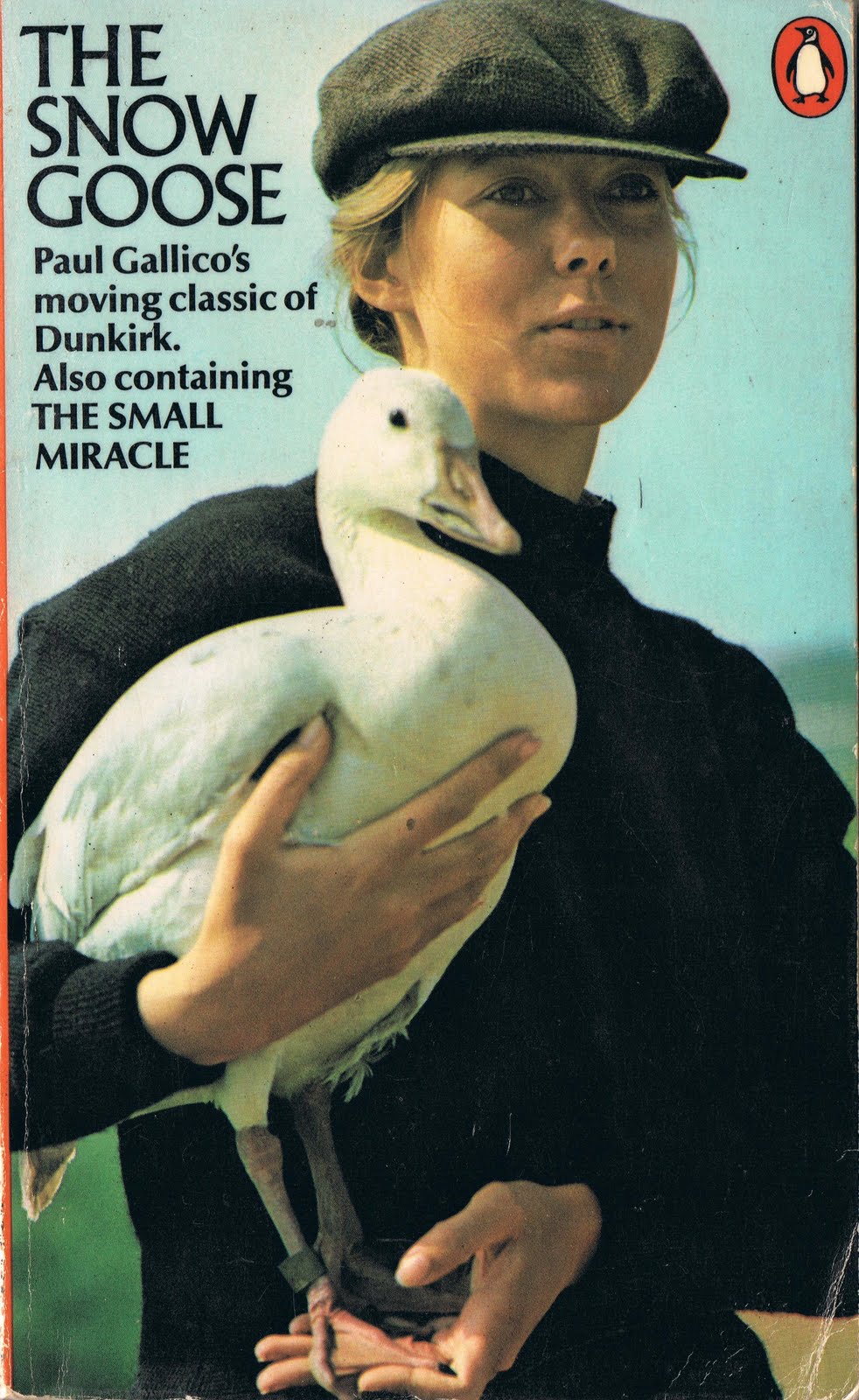
One amazing afternoon, when I was eleven, the teacher from the other, companion class to ours read us the whole of Paul Gallico’s Snow Goose, start to finish. He had a soft Scottish accent and a wonderful reading voice, and the whole class spent that afternoon in a completely magical other place, of snow and bleak landscapes and tears. Every single girl in the class instantly fell in love with him, and I bet no one there has ever forgotten it.

We were not expected to critique these stories – we were never asked to identify the genre, or discuss the foibles of the main character, or identify the metaphors being used in the passage we’d just been read. That particular ruination of stories lay in the future, at secondary school. We were just allowed to enjoy them, absorb them, be inspired by them – and slowly learn how stories worked and what they did by listening and reading.

Gradually, children, as they read more, as teachers gently pointed out the need for full stops and capital letters, and encouraged correct spelling, produced more coherent, grammatical sentences, more sophisticated descriptions, richer vocabulary. But they did this at their own pace, in relation to the kinds of books they were reading, and as their own story dictated. My best friend and I went through an intensely poetical phase in the third year of junior school in which our writing was essentially nothing but strings of adjectives, each of us out-doing the other in flights of fancy (‘the white, pale, glittering diamond snow drifts gently, mounds of sparkling coldness heaped in silvery piles’…) 

My teacher was always nice about them. She was still nice when I became obsessed with Biggles, and everyone in my stories started ‘observing wryly’ or ‘laughing carelessly’ instead of ‘saying’ anything. She let me develop a writing style at my own pace, and in relation to what I wanted to say, and just enjoyed the roller-coaster ride – and as a result what I never, ever felt was judged against any kind of externally imposed standard. We were praised for the creativity we showed, for making the teacher laugh, for the ideas in our stories. We weren't told that our story had achieved a level 4A or 3B, and what we needed to do to get the next highest level was use more 'interesting words' and include several similes. At eleven I wouldn't have recognised a simile if it had come up and hit me on the head (and that's a personification of a simile, by the way, and so a kind of metaphor, as most eleven-year-olds would now be expected to tell you...) But I'm sure I used them, all the time - not consciously, to impress examiners, but joyously, because they enabled me to describe what I had in my head in exactly the right way.

What has happened in the intervening years is a kind of madness sparked off by an increasing tendency for the bureaucratic state to value surveillance over trust. Instead of assuming that professionals could be trusted,  the state started to ask for evidence that its practitioners were providing 'value for money' and the only evidence that seemed to 'count' was numbers. In education, this meant the National Curriculum, imposed standards, testing, and league tables. I have watched my children go through the primary system, one after the other, and for a while I trained to become a primary teacher myself. I now go into schools as an author. All those experiences have left me increasingly sad and angry at the effect that these changes have had on children's relationship to literature and writing.

To take writing. In the attempt to codify and externalise the standards that children could be judged by, academics and policy-makers took the processes that happen as children develop their writing skills (development of wider vocabulary, greater use of figurative language, more accurate grammar, better spelling) and made them explicit teaching goals which were then  tested. Inevitably, with schools and children then judged by these tests/standards, teachers were forced to make explicit to their pupils the grounds on which they had succeeded or 'failed' to reach certain levels; to drill them in the 'right' techniques to do well in the tests. This is even considered by Ofsted to be good teaching practice - woe betide a teacher who doesn't put the 'learning goal' clearly on the board for each lesson, or whose pupils don't know exactly what level they are working at and how to get to the next rung of the ladder.

The example that really brought this process home to me happened when I was visiting a year 6 class in a small village primary in Devon a few months ago. Talking about the characters in my book, Frogspell, I read out a description of Sir Bertram Pendragon, 'a gruff, burly knight with a deep voice and a large moustache' who also happens to enjoy whacking his enemies with his 'big sword'. 'Can I just stop you there?' said the teacher. 'The word "big" is one of the banned words in our classroom. What do you think of that?'

I was temporarily speechless. I recovered enough to make it quite clear that I didn't think any word should be banned, and that sometimes 'big' was exactly the right word for the job you wanted it to do, but it made me think anew about the results of a testing regime that gives higher marks to the use of more complex vocabulary. The inevitable end point is that children are told not to use the word 'big' if they can possibly shoehorn in 'enormous', 'gigantic', extraordinarily excessive' or 'mountainous'.

The result is that writing, for children in primary schools - especially at the upper levels - is now a very much more conscious activity. Their heads are full of instructions: use 'interesting' words; use similes and metaphors and personification; use commas and semi-colons if you can; never, ever use the word 'big'. That they manage to find any joy at all in writing in the face of these multiple goals to aspire to and pitfalls to be avoided is a tribute to their irrepressible creativity and passion.

I recently read a lovely piece about writing by a fellow social anthropologist, Tim Ingold.
The full text is here: http://www.dur.ac.uk/writingacrossboundaries/writingonwriting/timingold/
Ingold bemoans the universal use of the computer for university students' essays, and writes about how he encourages his students to put pen to paper, and feel the flow of writing as a flow, from brain to hand. Writing is not a technical fitting together of ready made bits and pieces in a way that will gain approval from an examiner/teacher, it is a craft. It's more akin to carving a knotted piece of wood than putting together an IKEA flatpack. Ingold likens it to hunting - you don't go from A to B in a straight line: 'To hunt you have to be alert for clues and ready to follow trails wherever they may lead. Thoughtful writers need to be good hunters.'

Introduce the computer, and its associated cut-and-paste techniques, Ingold argues, and immediately 'students are introduced to the idea that academic writing is a game whose primary object is to generate novelty through the juxtaposition and recombination of materials from prescribed sources'. This is word-processing rather than writing, and, as he says, it 'is a travesty of the writer's craft.'

The National Curriculum, and SAT tests, seem to me to have done the same thing to primary children's writing. They are being taught that writing is a process of exemplifying one's mastery of certain 'techniques', juggling and fitting together approved words and phrases like a puzzle (like a pre-designed Lego set). That we are teaching youngsters at this boundlessly creative age that writing is a kind of engineering makes me want to weep.

Of course, there are still many, many great teachers out there, who inspire and encourage their pupils, and read to them, just as I was encouraged, inspired and read to. But they do it not against a background where their judgement is key, but against one where they themselves are judged and tested, and often found wanting. Gove's 'reforms' look set to exacerbate this problem, and increase the number of demoralised teachers found wanting because they haven't drilled their pupils sufficiently in the recognition of gerunds and participles, or made it sufficiently clear that 'big' is a banned word.

I'd like to end with a suggestion. There' a great scheme out there, called Patrons of Reading. The website is here:
http://www.patronofreading.co.uk/
The idea is that a local author links with a primary school and makes a relationship with them over a year, encouraging reading, encouraging writing, and generally being a kind of 'reading mascot'. I think it's a brilliant way to bring the experience of real writers into schools in a more long-term way than  just a single 'author visit'. I'm currently touting my services to my local primaries. And maybe if it takes off, there'll be a few more people out there giving children permission to use the word 'big', if the word big fits the bill.


Cecilia Busby was trained as a social anthropologist; she now writes for children as C.J. Busby.

http://www.frogspell.co.uk/ ("Great fun!" - Diana Wynne Jones; "packed with humour" - The Bookseller)

Twitter: https://twitter.com/ceciliabusby

Facebook: https://www.facebook.com/pages/CJBusby/509258069106074?ref=hl

Thanks to Joan Lennon for letting me take her ABBA slot for my musings!


Tuesday, 4 December 2012

Patronising without patronising - John Dougherty

I’m going to be a patron!

Okay, that doesn’t look very exciting written down, but I think it is. I’ve signed up for a new scheme, the brainchild of Tim Redgrave, head teacher at Ysgol Esgob Morgan in St Asaph, North Wales. The idea is that a school adopts an author as Patron of Reading, to develop a relationship with the school and its pupils and to foster and promote a culture of reading.

The idea came to Tim following a hugely successful visit by my friend Helena Pielichaty. This doesn’t surprise me at all; I’ve had to spend a ridiculous amount of time this week alone telling my daughter to put down that blimmin’ Girls FC book and get dressed/have your breakfast/brush your  teeth/get in the car.

Anyone who knows anything about my views on education knows how important I think reading for pleasure is. It’s the key; there’s so much more evidence to support its foundational role than just about anything else. So I’m delighted to be part of this scheme. I could witter on about it for pages & pages, but I think instead I’m going to direct you to Helena’s blog, where she explains the whole thing. Please take a look - you'll be inspired!

And if you’re a teacher or school librarian looking for ways to promote reading for pleasure, or an author wanting to get involved, please contact Tim via the link on this page to add your name to the list of potential patrons!

John's website is at www.visitingauthor.com.
He's on twitter as @JohnDougherty8

His most recent books include:


Finn MacCool and the Giant's Causeway - a retelling for the Oxford Reading Tree
Bansi O'Hara and the Edges of Hallowe'en
Zeus Sorts It Out - "A sizzling comedy... a blast for 7+" , and one of The Times' Children's Books of 2011, as chosen by Amanda Craig