This week’s blog peeks into Mel
Darbon’s much-anticipated second book What the World Doesn’t See published
this March by Usborne. It’s already had many fabulous reviews. For me it was a
multi-layered, beautiful story as you’d expect from Mel but also about unconditional
sibling love, being brave and letting go. You will need tissues for this one.
 |
| Stack of What the World Doesn't See Books |
Mel, tell us
about the latest book.
What the World Doesn’t See is a novel about grief, disability and first love; a story about
getting lost and finding yourself. Maudie and Jake’s family is falling to
pieces - their mum’s been struggling with her grief since they lost Dad and one
night she vanishes. When Jake is put into care, Maudie can’t take it any more.
She comes up with a wild plan to pull their family back together – by
kidnapping Jake. On the run in Cornwall, Jake and Maudie each find something
unexpected – freedom and love. But Maudie and Jake’s physical journey is also a
transformative, emotional journey together, which they start to understand when
spending time alone together. But can they find their mother and bring their
fractured family back together?
My brother was my main inspiration behind writing this
story. Characters with any sort of learning disability rarely feature in
fiction books and are the most under-represented group in adult and children’s
publishing. I didn’t see my brother, who had severe learning disabilities, in
any stories when I was growing up. This made me sad, and I wanted to do
something about it when I grew up. I decided to write my brother, and
others like him who can’t speak for themselves, a story, so
that they can be heard.
 |
| Mel's brother Guy with a bus-shaped biscuit tin |
Any representation they get now tends to focus on the negatives of a
condition, because generally people can’t see beyond a label – or don’t know
how to. It became increasingly important to me to show the positives – the
laughter and joy – that someone like my brother can bring to our lives, through
my writing.
How hard was it
to write something so personal and close to home?
It was a roller coaster of emotions because I was revisiting memories
that I hadn’t thought about for a long time. When I first started to write the
story, I was able to detach myself from it to a certain extent, because even
though Maudie is based on myself and my brother Guy is Jake, it was set in a
story that had no relation to my life, although various events within the book
are true. As the novel progressed, those memories felt like I was reliving them
and not just observing them, such as the bowling scene, Maudie and Jake doing
art together, the coach journey and the cinema scene. At times I felt very sad
at the way my brother had been treated, though equally happy at the fun times
and precious memories.
Jake is more capable than my brother Guy was, but his care needs are the
same as my brother’s. It made me realise what a lot my brother had to deal
with, but also, how my family made sure he lived the best life he possibly
could, which was good to recognise considering what happened next.
 |
| Guy and Mel celebrating a birthday |
Tragically my brother died unexpectedly while I was finishing this book.
I was devastated, so this story and representation of someone like Guy became
even more important than it already was. I’d written it to make him visible and
to give him a voice he couldn’t possibly have for himself, but now it became my
eulogy for him. The grief at the death of Maudie and Jake’s father became my
grief. I struggled to get the words down and didn’t even know if I could or
should, but I knew my brother was too special for me not to finish my story. I
wouldn’t be the person I am today without having known him. Guy wasn’t put on
this earth to teach anyone anything, but he showed me love, kindness and
empathy. The last thing he said to me before he died was, “You alright, Mel?” I
wanted everyone to know this kind, generous, gentle giant of a boy. I had to
finish the book.
How are you
tackling this for school visits and what’s the reaction been from students?
My first
school visits for What the World Doesn’t See were cancelled due to the
teacher’s strike and haven’t been re-scheduled yet, so I can’t tell you any
student reactions yet, but it will be interesting to see. My policy on these
visits is to be open and honest, which I found with my first book, Rosie Loves
Jack, was the best way to be with young people. They respond brilliantly and
are always super-interested to know more about my work with people with
learning disabilities and their lives. It’s amazing how much they open up
themselves and talk about their thoughts and feelings on this subject – and
their own lives.
Your first book Rosie
Loves Jack came out in 2018. What have you learnt to use this time around
in 2023?
Patience!
Primarily, self-belief and to fight for what you believe in and never give up.
 |
| Rosie Loves Jack books |
What’s left
on your author bucket list that you’d like to tick off with What the
World Doesn’t See?
To
reinforce that learning disability can be tough but is not tragic; you don’t
have to feel pity for someone like Jake. There is as much love, laughter and
joy in their life as anyone else.
To show
that people with learning disabilities feel things as deeply as anyone else and
to always remember that people with disabilities are human beings. Their
disability is a small part of their complex and interesting lives.
That it is
okay to talk about grief, that you are not alone and although you will grieve
for the rest of your life, you will learn to live with it; and your loved one
will live on in you forever.
That you
don’t have to be perfect. It’s enough being just you, as Maudie comes to
understand by the end of the novel.
Finally, to
reinforce again that we must never make assumptions about people and that by
putting on someone else’s shoes we learn to have empathy and from there
navigate the world with love, and not hate or fear.
Do you have
some recommended titles if we’d like to read more books with disability
inclusion?
Anthony
McGowan: The Truth of Things
The story
of two brothers, Nicky and Kenny, who has learning disabilities, and their
struggles to cope with the tough life they lead once their mother has vanished.
People can be cruel to Kenny and Dad drinks his troubles away, but the brothers
stick together sharing adventures and managing to find humour in the most
difficult of circumstances.
Katya Balen: October October
Katya Balen has a very distinctive voice. She digs
deep down into the emotions of the children she writes about. Her writing is
beautiful: lyrical, poetic and infused with the sight, sound and smells of the
natural world. You will always come away having learned so much about the
people she writes about without being told it directly.
Elle McNicholl A Kind of Spark
As a neurodivergent writer Elle is passionate about
disability rights and representation. This book is a wonderful story about
friendship, courage and self-belief. Eleven-year-old Addie challenges how the
people of the town see her and her autism.
Thank you, Mel.
I’m ending
this blog with a picture of a bus I like because I know Mel’s brother Guy
absolutely loved them.
 |
| BUS |
He did! I
think I’ve spent more time on the top deck of a double decker bus than anyone
else I know. Guy always carried a M & S felt bag around with him and inside
it was his bus magazine, which he went to get every Saturday at W H Smiths. It
never left his side and was buried with him, where it belonged.
 |
| Young Guy wearing bus T shirt |
You can follow Mel on Twitter @DarbonMel
and @meldarbon on Instagram.
Tracy Darnton is the author of YA
thrillers Ready or Not, The Rules and The Truth About Lies.
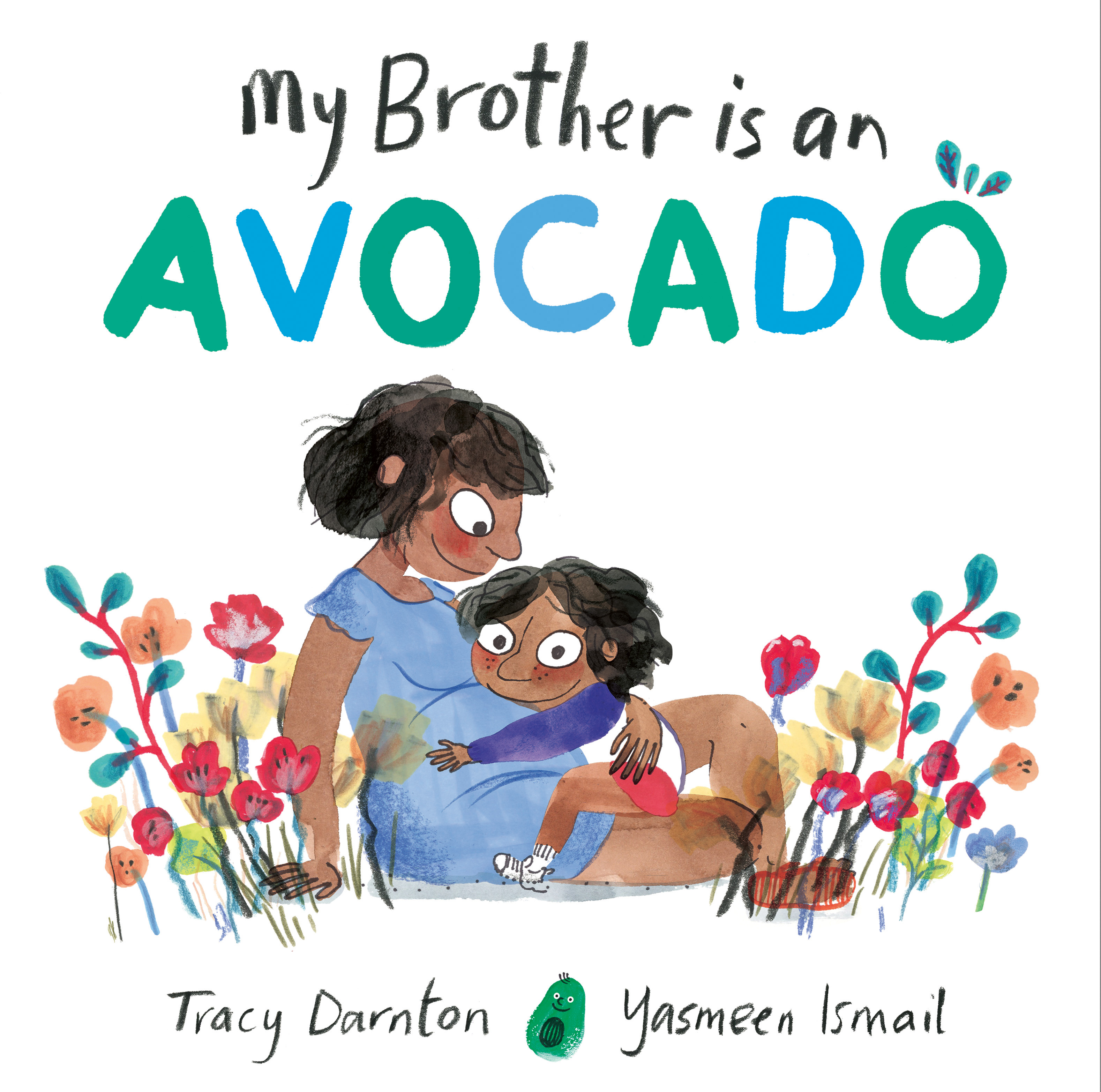
Her first picture book My Brother is an Avocado is out with Simon &
Schuster in May. She is very honoured to be filed on the bookshelf next to Mel
Darbon. You can follow her on Twitter or Instagram @TracyDarnton


 I'm currently struggling with a (very) literary bestseller for adults, one so densely written - in language I've never heard anybody outside a novel use - that I'm having to set myself a fixed number of pages per day to get through it. (It's for my book club and I do always read the books we choose.) The topics it deals with are definitely contemporary - motherhood, marriage, school shootings - and definitely worth talking about. But it's the language that's defeating me, and making me almost resent the subjects it's considering.










.jpg)