Tuesday, 30 June 2020

Dream writing spaces by Tamsin Cooke

Writers are very lucky. We can work anywhere. All we need is a laptop or pen and paper. 
We can work in cafes, sheds, any room in the house (although I can't imagine many people would choose to write in a bathroom!), outside where a beautiful view might inspire you. The list is endless.

I am very lucky as I have my own writing room. 


It's full of things I love to inspire me. And I have my book covers framed on a wall. 


I don't always write here though. I write in bed, in the garden and in the kitchen. Plus I have spent an awful lot of time sitting in my car writing, while my kids are doing a club such as parkour, gymnastics, dance, scouts... I think I've written in most car parks in the town where I live!

I thought it woudl be really interesting to look at dream writing spaces if money, space and travel were no object. I found some fabulous places.

The very cool shed at the bottom of the garden


The incredible home library/ home office

Danielle Steel's amazing desk made out of her books

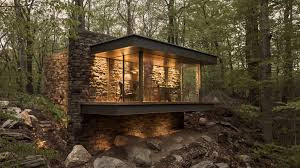
The rustic cabin in the middle of nowhere

I didn't even know what to call this - but I know I'd like to write here.

The treehouse


These are all fabulous writing spaces, but anywhere can be inspirational ... even car parks!!!


Tamsin Cooke
Author of The Scarlet Files Series and Stunt Double Series
Website: tamsincooke.co.uk
Twitter: @TamsinCooke1 


Monday, 29 June 2020

Two Reasons - Nick Garlick


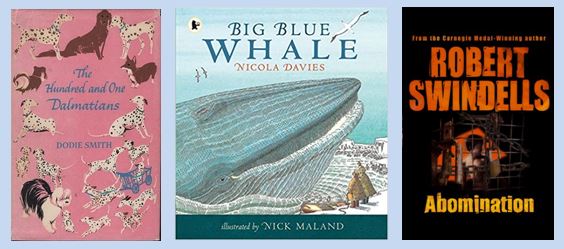
Someone recently asked me why I write children’s stories. There was an implication in the question that it somehow wasn’t quite ‘proper’ writing, which in turn made me think of that decade-old observation by Martin Amis.So while I’m sure this isn’t the first such blog on the subject, here’s my answer anyway. It’s illustrated by my favourite children’s books.


I like stories. They’re the single most important reason for my picking up a book. I want to discover something that keeps me turning the pages to find out what happens next. And if there’s one thing that writing for children demands, it’s telling a story that holds their attention. If you can’t, they’re off, looking for something more interesting.

Writing for children makes me work as hard as I can on coming up with the best possible story I can. And I find that deeply satisfying. That’s the first reason. The other is this. I grew up in a nice, comfy, white middle-class environment. I went to boarding school for ten years. My parents weren’t monsters. I wasn’t abused. I had a LOT of advantages.


The thing is though, that my growing-up world didn’t seem to have much interest in what I liked doing.* Which in turn led to a lot of confusion on my part. What was wrong with me? Well, nothing, as it turned out. I just wasn’t particularly good boarding-school material, with its emphasis on belonging, playing the game, following the well-trodden path.

But it took me a long time to work that one out and it’s the second reason I like writing what I do. I like the outsider, the person who doesn't quite fit in, who does something a little different. They're the ones I enjoy writing about. Which is why, if one child who feels as odd and awkward as I used to feel reads one of my stories and thinks, ‘I’m not so weird after all,’ then I’ll be happy. 


And if they just enjoyed the story, then that’ll be fine too.


* (No claims for uniqueness here; I’d be willing to bet most people reading this felt the same as children.)

Saturday, 27 June 2020

Publication Day in Lockdown - by Holly Race

I had been warned. So many people had told me: 'Don't be surprised if at some point on your publication day, you stop and think I'm really unhappy.'

I had been warned, and I was prepared. I spent a large portion of the week in the run up to the publication of my debut novel, utterly miserable. Get into the right frame of mind early, I told myself, then you won't be disappointed on the day. A friend invited me out on a socially distanced walk, where I moaned to her the whole time. When the Whatsapp group I'd set up months previously excitedly asked what our plans were for a Zoom launch party, I half-heartedly passed on the organisation to my husband. I fretted that my best friend had suddenly become less available to chat, now, in my time of need.

In short, I was awful.

The day arrived. I attempted normality: toddler up, milk given, ready for nursery. I was watering the garden when the doorbell rang.

'Something for Holly!' the DPD driver chirped, indicating a flat parcel on the porch. Inside: a silver box, beautifully illustrated. Inside that, an array of chocolates, each one delicately iced with flowers and letters: 'MIDNIGHT'S TWINS BY HOLLY RACE'. The card told me it was from a scriptwriter who I've never met in person. We have been working together remotely since the start of the year, and I was starting to think of her as a friend, but this - this was beyond normal six-month friendship. But she knew how much the book meant to me, and being a writer herself knew how much of one's soul you can pour into your work. I message her effusions. Her response: 'I'm just glad they didn't forget the apostrophe.'


Then my husband approaches. 'You know that parcel from Germany that arrived the other day?'

'The one I teased you about being even more camera equipment you didn't need?' I say.

'Yeah.' He hands the box to me. Inside is a heavy, enamelled pen. Engraved on the lid: today's date. 'For all the book signings you're going to do.'

I'm already welling up a bit, so I cover and show husband my thanks in the form of several badly decorated cupcakes. I'm interrupted in my baking by a socially distanced visit from my parents, who have gently supported my writing hobby since I, aged five, wrote 'The Mirror Girl', about a girl called Holly whose reflection stepped out of the mirror and caused havoc in her name. They bring that story with them now, and hand me an envelope containing a sketch of a horse - horses are an important feature of my book - by a prominent artist.

So many instances of kindness and generosity. I realise, once my parents have left, that I have only felt warm joy today, my anticipated disappointment balmed by my loved ones' excitement.

I spend my afternoon cycling to my nearest friends to give them the aforementioned questionably decorated cupcakes. When I get home we order takeaway and, in anticipation of tonight's Zoom party, I brush my hair for the first time in three days. I like to make an effort.

When the time comes to open Zoom, I am expecting to see a small but lovely gathering of familiar faces. As it happens, not everyone will fit onto our screen. Fifty friends and family members have turned up. It's more people than I've seen in one place since my sixth form leaver's do, let alone since lockdown.

That's when things start to get weird. My tech-savvy husband begins tinkering with the laptop - in itself this is not unusual, but when combined with the expectant silence of my friends, my spidey senses are tingling. Husband presses 'play' and suddenly my best friend's unavailability over the last couple of weeks is explained. He had been making this:


When the video ends, I'm directed towards the doormat. Lying there is a copy of my book, filled with messages from friends and family across the country. Alongside it: a package containing a necklace that appears in Midnight's Twins and an enormous chocolate cake, complete with a fondant copy of my book, decorated in painstaking detail.


Over the course of the next few hours, as I get gradually merrier on elderflower champagne, the logistics of how they did this are explained to me. That walk I took with my friend? Engineered so that my best friend and husband could finish the video. Socially distanced meet ups in a Cambridge park, with friends driving in from the Fens to leave a message in the book. A drive around London, carrying not only the book but hand sanitiser and masks to ensure Coronavirus safety. And so many postcards and messages sent in from further afield to be slotted into the pages. I don't let myself read all the messages in front of my friends, because I know I'll end up a blubbering mess.


Later that night, when everyone else has gone to bed, I open it up and read the messages in private. Half my friends barely read at all, most of them are not particularly interested in young adult stories. This is true friendship, of the kind I never thought I'd have and certainly don't deserve - not if my behaviour over the last week is anything to go by, at least.

Over the next few days, friends visit my garden to help me eat the chocolate cake. The chocolates sent by the writer friend dwindle; iced flowers first, then the ones bearing letters. I put the necklace away, to be worn when I see people or take book-related photos. But nothing will ever replace the gooey knowledge of how my friends and family turned what was set to be an anti-climactic lockdown publication into one of the best days of my life.


Tuesday, 23 June 2020

Rooms in Books (from Let's Write) - by Sue Purkiss

As some of you will know, at the beginning of lockdown I moved my writing group online, setting up a blog, Let's Write, where I post a weekly writing prompt. I was between writing projects, so I've done each weekly task too, and it's been really enjoyable tackling a fresh story or whatever each week. 

The current task was to do with rooms, and I have written about some of my favourite rooms from books. They are all from children's books (who would have thought it?) so I had the audacious idea of killing two birds with one stone and posting the piece here. I'm afraid it's a bit long, so apologies for that. So off we go, back into enchanted and enchanting worlds.


Rooms in Books

I’ve already written about some of the rooms that, for one reason or another I remember most clearly from my own past. I thought about going through my photographs to search out rooms I’ve visited and liked – but I know that once I dive into the thousands of pictures on my computer, I will be easily distracted by all the memories they trail, and will only emerge, blinking, after hours have passed, having forgotten what I was actually looking for.

So I thought instead that I would look to literature for some memorable rooms. And immediately I know I’ve done this before. But no matter: I will choose the first three that come to mind.
Perhaps inevitably, these rooms come from books that I first read when I was a child. They are all three enchanting – two are, in fact, enchanted: in that they are magical, fantasy rooms. I’ll begin with one of these. It comes from The Princess and the Goblin, by George MacDonald.


And immediately it occurs to me that I know nothing about George MacDonald. Back in the day, the reader’s relationship with the author was quite simple. The author wrote the book; then, either by buying it or – in my case – by getting it out of the library, the reader read it. Nowadays that isn’t so. The author comes as part of the package. She (I’ll stick to ‘she’ for simplicity’s sake) is expected to reveal amusing and interesting details about herself on social media, she’s expected to speak at book festivals, to do school visits – to do anything she can to promote her book. Readers will look at her website, read reviews and find interviews and images online – they can even contact her directly on Twitter and other social media.

But my three authors came long before any of that was even a twinkle in Tim Berners-Lee’s eye, and so I know very little about any of them. I can easily remedy that of course, but we’re supposed to be writing about rooms, aren’t we? So that’s what I’d better do.

The Princess and the Goblin was first published in 1872, and I suppose you’d call it a fairy story. But so far as I know it’s not based on an existing fairy story, so maybe it should properly be classified as an early fantasy. It begins with eight year-old Princess Irene, who lives in a large house/castle on a mountain away from her parents, the King and Queen. She is well looked after, and has the most marvellous toys, but she has no-one to play with, and one day she gets bored and so decides to explore the castle.

Of course, she gets lost. But eventually she hears the sound of spinning. She opens the door and peeps in – and there is no witch, but a beautiful lady with smooth skin but long white hair. The princess, although she could not have told you why, did think her very old indeed – quite fifty, she said to herself. The old lady, who is also called Irene, tells the princess that she is her great-great-grandmother, and actually much, much more than fifty. She is a very mysterious person. She tells Irene that no-one knows she is there, and no-one can find her unless she wants them to.

No-one knows anything about the old lady, and Irene begins to think it must all have been a dream. But then, some months later, she can’t sleep because her hand is infected and painful, and she sets off in search of the grandmother again – and this time she finds her, and the grandmother takes her into her bedroom…

What was Irene’s surprise to see the loveliest room she had ever seen in her life! It was large, and lofty, and dome-shaped. From the centre hung a lamp as round as a ball, shining as if with the brightest moonlight, which made everything visible in the room, though not so clearly that the princess could tell what many of the things were. A large oval bed stood in the middle, with a coverlid of rose colour, and velvet curtains all round it of a lovely pale blue. The walls were also blue – spangled all over with what looked like stars of silver.

Doesn’t that sound enchanting? And as the grandmother says, it is, in fact, enchanted. If the light were to go out, the room would be just a bare garret, with a pile of old straw for a bed. (Incidentally, the old lady has a flock of snow-white pigeons which come to her window, and lives on their eggs - just in case you were worrying.)


My next room is also a room where magic happens, but it's a very different one. It is in The Once and Future King, T H White’s great retelling of the legend of Arthur. The first book, The Sword In the Stone, is about Arthur’s childhood, and to my mind it’s the best one. The room belongs to Merlyn, and here, Arthur (known at this stage as the Wart), is visiting it for the first time. T H White fills it with the most extraordinary variety of things, so it takes him a long time to describe it all – here is just a flavour of it. (This is a tiny part of one of the longest sentences I’ve ever seen.)

There were… ink-bottles of every colour from red to violet, darning-needles, a gold medal for being the best scholar at Winchester, four or five recorders, a nest of field-mice all alive-o, two skulls, plenty of cut glass, Venetian glass, Bristol glass… the fourteenth edition of the Encyclopaedia Britannica (marred as it was by the sensationalism of the popular plates)… a few fossils, the stuffed head of a cameleopard, six pismires… and a complete set of cigarette cards depicting wildfowl by Sir Peter Scott.

All this, of course, is because Merlyn lives backwards through time, so has accumulated an eclectic collection of objects. Now, why wouldn’t you want to prowl round and look through them all?

My final, and favourite, room is from Heidi. It’s the room where her grandfather, the Alm Uncle lives, high on a Swiss mountain. Heidi, an orphan – of a similar age to Irene and the Wart – has been living with her cousin, Dete. But Dete’s had enough. She’s found a new job, and she can’t take Heidi with her. So she whisks her off to deposit Heidi with her only other known relative, her grandfather – who is an irascible hermit with a very sharp tongue.

But Heidi isn’t cowed. When she sees the hut that is to be her new home, she is – there’s that word again – enchanted.

By the grandfather’s bed, wooden steps went up, and when the child climbed the little ladder she found herself in the hay-loft. A bale of hay, fresh and sweet-smelling, lay on the floor, and from a little window in the roof she could see far down into the valley.
“Oh, this is where I want to sleep!” she cried joyfully. “It is lovely! Come and see how lovely it is, Grandfather!”

And then they have toasted cheese, bread, and bowls of fresh goats’ milk for supper…

And of course, this is the beginning of a beautiful friendship. I still enjoy reading this book. It’s not all sweetness and light. There’s poverty, and jealousy, and terrible homesickness. But there’s so much hope, too. And it all starts with that little room.

You can find the blog here. I made it public so that others could use the prompts if they wanted to; two people actually joined the online group, and a lot of people joined in haiku week - see their efforts here, in the comments section - but other than that, I don't know if anyone else has found it useful. But I've really enjoyed it - both setting the work, doing it, and reading the rest of the group's contributions: it's always fascinating to see what they come up with. 

Just finally - this, using pictures for inspiration, was probably my favourite task so far.


Monday, 22 June 2020

Sugar Calling - Heather Dyer

The author Alice Walker in 2015.
The author Alice Walker in 2015. Peter Earl McCollough for The New York Times

If you're anything like me, what's unfolding in the world right now feels terrifying yet hopeful and full of potential. There's a lot to process.

So, you might want to take a break, sit back, and listen to Sugar Calling, in which Cheryl Strayed calls up authors Alice Walker, Billy Collins, Judy Blume, Margaret Atwood, George Saunders, Pico Iyer and others, to chat about their writing and the world.


Cheryl Strayed is warm, wise and funny, and is the author of Wild, and Tiny Beautiful Things - a compilation of the sanest, most heart-wrenching agony aunt advice ever, sourced from her Dear Sugar column.


Heather Dyer teaches Writing for Children for the Open College of the Arts, and provides writing and publishing advice through The Literary Consultancy, The Writers' Advice Centre for Children's Books, and privately. If you’re ready for feedback on your work-in-progress contact Heather at heatherdyerbooks@gmail.com. 

For further information, see Heather's blog at Writing for Children: Creative Inspiration for Children's Authors.

Sunday, 21 June 2020

Focus on the cushion by Anne Booth


My husband told me that, in the 1970s, a footballer called Malcolm MacDonald, a striker for Newcastle United, talked about making your strengths so strong that your weaknesses don't matter. It didn't matter if he wasn't known for his genius at dribbling, passing or tackling - he was extremely  good at being near the goal, receiving passes and kicking or heading the ball into the net, and, playing to his strengths,  he scored a lot of goals for his team.  My husband told me that the fans did not want Malcolm MacDonald to be running back 70 yards to defend. They wanted other people in the team to play to their strengths, but his job was to play to his. Defence was just as important a job as scoring goals, but that wasn't his job.

I was feeling very sad about all the problems in the world at the moment and how I couldn't fix them. My husband, who is very kind and wise, and someone I admire very much for all the things he has done and does that I cannot do,  told me to stop focusing on my weaknesses and be more like Malcolm MacDonald and to play to my strengths, and that as a writer, my strength was using words. So as a writer I am trying to do my bit to make the world better by using words. My recent children's book 'Bloom' with Tiny Owl is my attempt to use my best words to show how kindness makes us all bloom. And my words have been paired with Robyn Wilson Owen's illustrations and they say things my words do not say.


 But there are still so many issues, and each one of us in The Scattered Authors Society is only one writer and we can only use a certain number of words and we cannot have informed opinions about, or write books on, everything!  I have also been doing a part-time Theology course, and this weekend I have to write an essay on Contemplative Prayer, and that is very interesting, because I have been reading about being still and silent and how inadequate our words can be, and the importance of going beyond words. It might seem a rather challenging thing for writers to read, but all of us know it at some level. We know we are writers, and we know how important words are, but we also know that our  words can never capture exactly what we are trying to express.


As Carol Ann Duffy says in her beautiful poem 'Words, Wide Night,'  https://gladdestthing.com/poems/words-wide-night

                                                                      ....this
is what it is like or this is what it is like in words.'


Our words alone are not enough. That's just a fact.  It isn't just that they benefit from illustrations, like 'Bloom' does with Robyn Wilson Owen's illustrations. Whatever we do on our own will never exactly do what we want, or change what needs to change.  We have to play to our strengths, whilst recognising our limitations, as writers and as humans. But together, in a diverse community, expressing  different voices, and listening to each other, and amplifying the voices of those who have not been allowed to speak, we can make a difference.


And this gives me an excuse to end by sharing my new cushion.

I have a comfortable but very shabby chair which we got second hand. I don't know how to upholster it. I wanted to buy a new one, but I cannot afford to replace it. So I have bought a cushion for it.

It is still shabby and worn, and there are still teeth marks in the chair legs from when our dog was a puppy. But I LOVE looking at it. It isn't a perfect chair, any more than I am a perfect person or writer, but it has two big things going for it - it is very comfortable and, if I focus on the cushion, it is now beautiful to look at.  I think this cushion is now one of this chair's strengths. I bought this cushion specifically for this chair. They work perfectly together.

I am going to finish before this metaphor runs out, as it does have some rather glaring limitations.  Just to say - if you feel inadequate, remember that as a writer you do have your words to offer. And if you are better at writing in some ways  than others, focus on them. I know that this doesn't quite work.  I know that my chair still needs reupholstering, and it isn't good to have teeth marks in the chair legs (which are not in the picture!). I also don't want, by comparing my writing to a chair, to  say that my writing is shabby and worn out!  I am doing my very best to make my words as lovely as they can be!  And I do know that it is best to work on all aspects of your writing and we need to stretch ourselves. I just mean that I know I will never be good at everything and that as a writer that includes types of writing eg writing Horror or Thrillers, and so I am going to focus on getting better at what I CAN do, as life is too short to get depressed about what we cannot do and there is so much to do that we can do, if you know what I mean.

As I overheard Gandalf  say to Frodo this morning, whilst my daughters were watching 'The Lord of the Rings: The Fellowship of The Ring',

'All that you have to do, is decide what to do with the time that is given to you.'

And I also want an excuse to share my cushion.


Saturday, 20 June 2020

'Build Back Better' - Joan Lennon


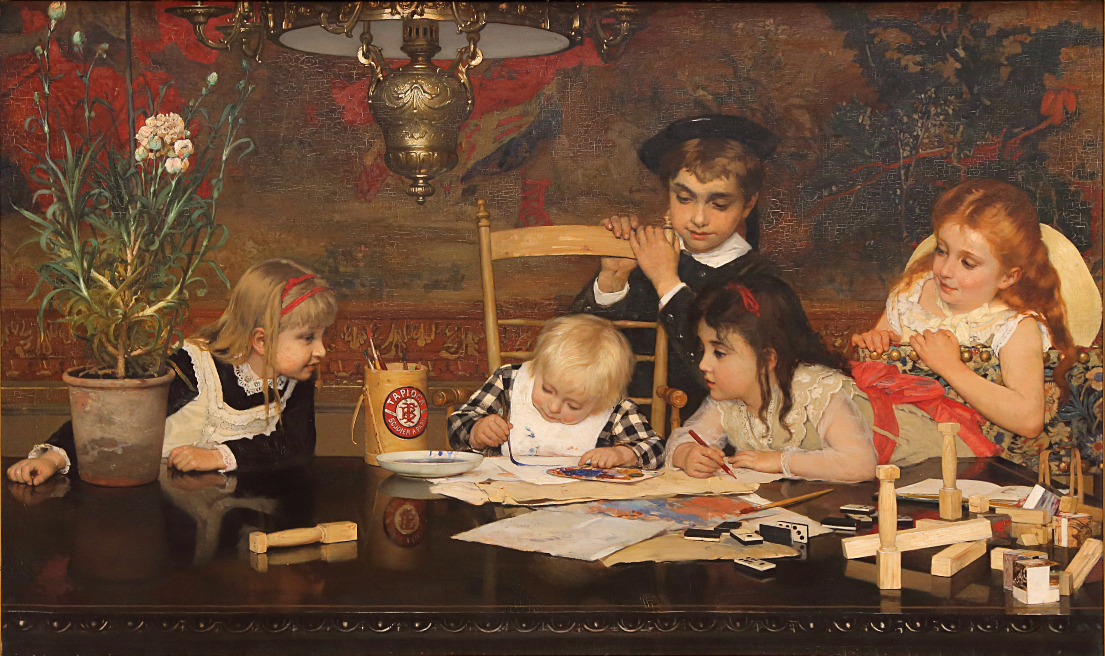
Jan Verhas The Master Painter 1877

In this neither-one-thing-nor-another time, of different phases in different places, when the only sure thing is uncertainty, we need to find hope where we can.  So I wanted to share this initiative, aimed at children aged 5-15, run by the National Museums of Scotland, which has been running through lockdown.  It has, among other things, asked children to vote on 5 Ways of Building Back Better*- some of the things they'd like to see continued and encouraged as society moves forward. 

1. Fresh air for all
2. Making things last
3. Mindset for change
4. Stronger communities
5. Making the most of technology

These aren't lawyers or business men and women or, thank goodness, politicians.  They're kids.  Just have a listen to what they have to say.  It's their world too.


* You can look at the other sections on this project and how the museums are cooperating in teaching ideas of a Circular Economy here, here, and here.


Joan Lennon's blog.
Joan Lennon's Instagram.


Thursday, 18 June 2020

When idols topple - by Lu Hersey

It's been a month of toppling idols. Some, most of us were delighted to see go - like Edward Colston, slave trader, whose statue in Bristol Centre was brought down in a peaceful demonstration and dumped in the very harbour his slaver boats sailed from. There's justice in that (though actually he's since been pulled out again to go in the museum, complete with his new graffiti). It was a symbolic moment, part of a far greater movement following the murder of George Floyd in America, to get white people to fully understand what lay behind the whole Black Lives Matter campaign. Teaching all white people (even those who don't consider themselves racist) to shut up and listen to people of colour who've been treated as second class citizens for generations. To understand what treating one group of people as though they're inferior simply because of their skin colour feels like to those who've had to endure it.
An historic moment. Photo by Dr Shawn Sobers (@shawnsobers)
It's led to a rise in sales of own voice books as people realise things need to change, that everyone needs to have a voice and be represented fairly in literature and publishing. It's also led to a kind of battle over statues, coming to a head when rival groups of demonstrators clash. Both Gandhi and Winston Churchill were given police protection in recent London demonstrations - and strangely, a far right group felt the statue of George Eliot needed guarding at an event in Nuneaton. You'd think George Eliot an unlikely target for anyone...
(Stolen from a tweet by Helen Macdonald)

...but maybe not. Idols come in many forms, and these days most aren't made of bronze. Who could have predicted there would be a day when JK Rowling fell out of favour? Her views on trans women caused anger and grief far beyond the vulnerable trans community, upsetting much of her fanbase too. For my youngest daughter, to have her childhood idol coming out with what she considers TERF thinking, really broke her heart. All her life, at times of stress, her go-to safe place has been re-reading Harry Potter. For her, and many of the Hogwarts generation, JK's stance has effectively destroyed that safety net.

Probably the most important lesson to take from this is to be very careful what you say on social media, especially if you're famous (unless you're like Trump or Katie Hopkins and enjoy that kind of attention). Fame brings power, and shouldn't be abused.

Despite all the conflict, hopefully some positive things will come out of this time. We're all talking a lot more about very important issues, and thinking about the way we perceive others. Many of us are reading more widely to understand different viewpoints because we want to hear from those that haven't been given a proper voice. In an ideal world, after all the ranting and mud slinging is done, it might lead us to find more empathy, kindness and compassion as fellow human beings.

Meanwhile, hopefully I'm not famous enough to be trolled for writing this...

by Lu Hersey
Twitter: @LuWrites
Web: Lu Hersey

Wednesday, 17 June 2020

Putting Lockdown in a box - Tracy Darnton

This blog has crept up on me in the strange time warp of lockdown. What week is it? I've no idea. This is blog number four (four!!!) since this started. As I'm measuring my life now by Bin Day and Bin Day Eve, rather than by actual dates or months, I'm afraid this one is rather last minute. 

So I thought I'd share my Lockdown Box. In this weird twilight world of Lockdown/Not Lockdown, I've been thinking that even though we as a family are still largely marooned at home, something has shifted and we should assess Lockdown and better still, put it in a box. I want to do something practical in the same way I do after a bereavement or a momentous family occasion. I curate it, tame it, make it something I can put a lid on and file on a shelf. Something we can revisit in the future. What did you do in the Lockdown, Great Granny? Well, I shall say. Hold my cocoa and pass me that dusty box.


What's in it?
I half wish I could include that letter from the Government but it was ceremoniously ripped into tiny pieces. Or the giant catering can of tinned tomatoes that my local greengrocers improvised and kindly delivered to us. Or one of the lids of ice cream cartons from Deliver Moo keeping us supplied from our local Marshfield Ice Cream. Or the terrible 21st birthday cake I made from any old rubbish in the cupboard. 


I do have celebration cards for my kids stuck with their parents instead of celebrating rites of passage end of A levels and uni finals. And mementoes from the Hay festival they recreated in the garden for my birthday. 


And we've added the art we painted after watching Grayson Perry and a picture of our Lockdown Reading Pile. And the map of footpaths we discovered on our doorstep for all those walks which kept us going. And the menu from my Come Dine With Me Sicilian evening that I hoped would start off the rest of the family to do the same - but sadly didn't. 


And the book I worked so hard on but am bringing out with no book launch party - just a supreme sense of irony as it's about the effects on a family of preparing for disasters like pandemics. Yes, dear Reader, I foresaw the toilet roll shortages. 


Lastly, I'm a list maker - To Do, Shopping, Birthday gifts to buy, TBR - so we're starting another list. A family list poem. 

        The Lockdown A to Z. 

The poem's too personal, too angry in places, too mundane in others to share on this blog. And, anyway, you can guess what my Z stands for. I recommend it as a way, whatever your age, to remember and to make sense of what we've experienced so far. 

It's not finished yet - because Lockdown/Not Lockdown isn't finished. But when it is, it's going in the box. 


Tracy Darnton writes YA thrillers. Her latest novel The Rules is published on July 9th. It will be launched in a socially distanced way on Twitter @TracyDarnton but she's looking forward to a future party. 


Tuesday, 16 June 2020

Landscape - and a couple of beers! My interview with John Dickinson by Steve Gladwin


When I first came up with the idea of doing these monthly blogs interviews with writer friends, I looked forward to the banter, to the back and forth not just of ideas about landscape and everything else, but a chance to get with the authors into the spirit of their own worlds and - where possible - humour. I imagined that my friend John Dickinson would provide us with a great example of all these factors, but here in a wide range of responses to my questions, John has given us the full range of his personality, sense of humour, worries about koalas and of course his inspirations in both written and visual form as a writer. I hope you enjoy the interview and images as much as I do.

John, thanks for agreeing to be our subject for June. Can I ask is landscape in general something which means a lot to you? Maybe you can offer specific examples?

When you go on holiday, what do you look for? Sun? Beaches? Art galleries?
My wife and I look for scenery. An ideal holiday for me would be spent following snaking paths over scented hillsides, past ruined castles, finishing each day with supper on a terrace looking over a grand view, sunset, chilled wine, fresh bread and olives.


Of course your loves fuel your writing. A long weekend spent in a peel tower on the coast of Galloway, surrounded by mists and low, twisted thorns, gave me the setting for one of my first full-length stories. The mountain scenery I describe in ‘The Cup of The World,’ around Ulfin’s house in the hills, was taken from three days in the Bolivian Jungers, on the foothills of the Andes. The steep, wooded valleys of the March of Tarceny,with their hidden rushing streams – I know I’ve seen them in this world, but I can’t remember where…. No, I can’t remember where.


So, where was home and if you can, describe for us what you would see from your window or on a walk in the local area?

My childhood was split between London, near Holland Park, and Hampshire, and I suppose both contributed to the material in my mental attic. Hampshire is chalk country, with gentle, rolling hills and valleys, broad rides and elfin paths that score through the bare earth at your feet and beg you to come exploring. My brother and I carved out imaginary empires wherever there was a scrap of common land that someone hadn’t fenced off. We made castles from trees, javelins from dead cow-parsley and weapons from anything we could lay our hands on.

We also visited Gloucestershire, where I now live. My uncle owned a large, ruined garden with little eighteenth-century follies peeping through the forests of brambles. I can still remember the moment I discovered this Gothic alcove while adventuring in the woodlands. It was a magical thing, like the moment in Prince Caspian when the children stumble on the ruins of Cair Paravel. These days the garden is restored. You can come to see it. But the wilderness is gone, and the childhood adventure-land has been overlaid with other things. 

I have to say, John, that's one of favourite moments in fantasy fiction, especially following on as it does from the scene between young Prince Caspian and Doctor Cornelius at the top of the tower, and you put that idea so well here.


In a varied career, before you even became a writer, you must have seen some varied landscapes. How important a part of a writer’s armoury, or a reader’s expectation do you think landscape is?

It depends on what you are writing. It’s possible, I guess, to write a good novel with very little attention to any kind of setting. Tinker Tailor, for example, is little more than a series of interviews.

However, if your story is set in an alternative reality, then your world itself should be as important as what happens in your story.  In some of the most memorable fantasies, the landscape (or city-scape) is a character in its own right. It’s impossible to imagine Gormenghast without the castle. It’s impossible to imagine Lord of the Rings without Middle-Earth. Peter Jackson and his film studio people laboured long to create that world as Tolkien had described it. They had to.

Take Narnia. I’d say the first character you meet in Narnia is not Mr Tumnus. It’s the lamp-post, standing mysteriously in the middle of a snowy wood. Lewis describes it in a sentence. Yet as you imagine that lamp glowing on the snow amid dark trees, you know at once that you have entered a strange and magical place. You know that even before a faun comes trotting out of the trees and drops all his parcels at the sight of you.

I asked Kath Langrish, my go-to Narnia person, about the lamp-post. She suggests that Lewis borrowed it from a dream story of Kipling’s, where each adventure starts on a road running up to a street-light. If so, it’s a landscape-image that shouts across generations).

Landscape offers ways of commenting on the action, like an old-fashioned chorus in a Greek tragedy. True, a mountain’s a mountain, and once you’ve plonked a mountain in your landscape there’s a limit to what you can do with it. It doesn’t change independently of the light or the weather. It’s not as versatile as music would be, if we introduced music into the background of our stories – as you are doing with your own book, The Enchanting of Vaughan Williams. 

Yes, music is certainly versatile, John and speaking as someone who's written to a background of Vaughan Williams musical landscapes, for nearly half my life, I'd be lost without it. Other writers, whoever, react with horror at the very thought of allowing music to interfere with an existing inspiration. One thing's for certain. As this series of blogs have proved, landscape can enhance and even be the dominant idea, particularly in fantasy fiction. 

Yes, indeed. Or just help it along. Green, open fields give you one mood; dark-brown, brooding moors another. If your characters are plotting deviously, maybe you could walk them down some twisted paths through tangled woods as they plot.  If you want to mark a significant break with the previous action, just change the scenery. 

The thing about writing is that you’re probably doing this anyway, without thinking about it. I based Phaedra’s home on the Welsh and Scottish borders I knew: solid, chunky places with massive towers.  And I gave it a solid-sounding-name, ‘Trant.’


Then she makes a runaway marriage and I took her to her new husband’s castle.

“She had ridden out of the forest and found herself on the lip of a broad, level valley in the hills, with the castle rearing from its steep and lonely spur opposite. The floor of the valley was covered in olive groves and had looked, from above, much like a huge garden. The afternoon light had played on the walls, and on the masses and masses of white flowers that grew in the tangled briars of the castle spur. As the cavalcade had poured down towards the trees the hills had rung with horn music.”

(This vision is directly inspired by Britten’s setting of Tennyson’s The Splendour Falls, incidentally.)

I gave this castle a name that was both like and unlike to Trant: more airy, with a little sibilant. I called it ‘Tarceny.’ I contrasted its slender towers with Trant’s solid fortifications. This much was deliberate.


White Castle in Monmouthshire - one of the inspirations for the Castle of  Tarceny in 'The Cup of the World'


What was not deliberate was that I based Trant on a real castle, but Tarceny on a fantasy. Trant, in the end, stands for duty and for honesty. It’s a touchstone place. Tarceny is  where Phaedra’s dream becomes a nightmare. The reality of one, and the fantasy of the other, will have had its effect on me as I wrote of these places. Something of that effect will have translated to the reader, even though neither of us will have been fully aware of what I was doing.

*I was so glad when I picked up ‘The Cup of the Worldand began reading it. Not only was I quickly caught up in your main character Phaedra and the impossible situation she finds herself in, but there is a wealth of landscape, beginning with a wonderful map of the kingdoms. Do you love maps in children’s books as much as I do?


I love maps, except when they are mine.
A map is a half-told story. It isn't the whole thing, but it allows you a tantalising guess at what the whole thing might be like. Because maps are detailed, they imply that the story or the land that they illustrate will be rich in detail too. What they say is, “You could go here. You could go and have a look at all these places.”

I remember after I'd read The Lord of the Rings, when I was about thirteen and I had the urge it draw the whole map - which I did, painstakingly and to a fairly decent standard I could go nowhere near attaining nowadays. I have no idea what led me to do it - just, I suppose, some deep-seated desire to enter Tolkien's world more completely.

Maps are Very Exciting!
Except, as I say, when it comes to my own.  I remember receiving the draft map for The Fatal Child (number Three in the Cup series.) At first I was delighted. It was clear, and  beautifully illustrated with castles and heraldry and knights galloping romantically about.

Then an awful thought dawned. It was sent to me for proofreading. All the places in the story had to be put in exactly the right spot. And yes, most were more or less right. But when you got down to it with the text in one hand and the map in the other... Hey, surely that town has to be north of this one? And the other one, here, can't have an outlet to the sea. And it's all got to be consistent with the maps in numbers One and Two, hasn't it? Why did we do that on the last map anyway?

In theory none of this is difficult, but it's got to be right. And that's what really gets me about my own maps. They aren't tantalising hints any more. They're complicated engineering diagrams, like blueprints of the International Space Station. You can't just put stuff in fuzzily and leave the rest to the imagination, which is the way I like to work. You’re supposed to know every blade of grass in this land. And fix it in its place.

This is where you have to give it to the reader and say ''Look - this is how it is.” And if you get it wrong, there will be readers telling you so. 
Deep breath. Pencil. Rubber. Coffee…
More coffee...

Possibly something stronger, even?


The landscape and tone of your trilogy series has been described as medieval. Is that a description you agree with, or were consciously trying to produce?

It’s a society loosely based on western Christendom in the fifteenth-century. I read The Pastons and their England for background, and I gave it a Mediterranean climate. So when I started building the world I had an idea, for example, how many manors a lord might own, how many people lived there and what they might grow to support themselves. I didn’t have to parade that detail in front of my readers, but when I brought my outlaw knight Aun to Trant for the first time I knew what would interest him about the place.  That gave me a solid, credible world, so that when I started to introduce the magic and the nightmare the contrast would work.

For inspiration:  I consciously steered away from Tolkien. Middle-Earth has such a dominating effect on the genre that you need to pull away hard if you want to escape it. I owed a lot to TH White’s The Once and Future King, and to the knightly characters in Kipling’s Puck Of Pook’s Hill short stories.  You may also recognise the infuence of MR James’s Ghost Stories of an Antiquary. James has a gift for keeping his ghosts and beastlies largely hidden as his stories unfold, so that it’s only at the climax that you confront the nightmare. 

Your later science fiction novel WE presents a very specific landscape problem, in that in a sense there isn’t one. It’s a claustrophobic world and very chilling for me, always bringing me back to that idea of a lonely death in space. Having recently read a Ray Bradbury short story on that very theme, I wonder if there were conscious sci-fi tropes or ideas you wanted to work with?

Yes, this was a deliberate attempt to get back to classic SF, where the science is still a recognisable development of current technology and the worlds are those of this solar system, rather than alternative fantasies. It uses the Adam and Eve story, which is standard SF material. It also owes much to classic dystopian fiction such as 1984, which is about the balance between the individual and the collective will.  


But there is a landscape in science fiction. It’s there all the time, even though mostly you can’t see it. It’s deathly and barren and utterly cold. One of the challenges of writing that book was to make the reader sense how cold it must be out there – so cold that a human body, falling to the ground in that light gravity, will shatter like glass. You’ll never escape it. There’s no return to Earth from here. All you can do is live there in your little bubble and project on your walls images of the blue skies and green fields where you will never walk again. The real landscape is out there, all around you, as dark as twilight and as cold as death.

Now it’s fair to say that quite a lot of your career pre writing was spent around the landscape of politics and politicians. Do you feel that that might have enriched that aspect of your work in things like coup and counter coup, say?

Actually, it was working in a big government department that gave me the first clue about how the WE would operate. When you’ve realised that nobody, really, is in charge of things, not even the people at the top, and that it’s the process that’s making the decisions – that starts you thinking.

But you are right that Whitehall and my history degree between them have allowed me to write with confidence about things like politics, intrigue and the way that power-brokers speak and think.  If that confidence comes through to the reader (as it should) then it will be easier for the reader to believe my power-struggles as they unfold. 


I try not to explain too much to the reader. I deploy the characters’ words and actions pretty much as I think they would have said them, and I leave the reader to catch on, as if they were ambassadors from a foreign country earwigging in the background. It’s their job to understand this culture, and to work out what’s been left unsaid from what they have heard. It makes it more real, I think.

So, taking you back to your childhood with your father, Peter Dickinson, a double Carnegie winner. Was there an urge to do what he did, or perhaps to do the opposite?

No, but yes. I wasn’t going to be a writer. I was going to be a Big Hero. And when I found out that there wasn’t much chance of becoming a hero (I was lacking too much of the basic material) then I was going to be a power-broker myself, and the corridors of Whitehall would tremble when I spoke.
(Ah, me…)

But as I was really just a socially inept and over-educated male, what I did in my lonely early adult evenings was sit down and write.  Not because I wanted to be like Dad, but because he had shown me that it was possible.  So I did. 
It was a lot harder than he had made it look.

I’ve been dying to ask you about your work writing on The Phoenix, the rather wonderful comic which David Fickling Books produce. How did that come about and do you have any special memories or favourite stories?
Ah. Well,writing for the Phoenix Comic came about because I was already on the payroll as the accounts department, which was my day-job at the time. If you are going to let an author of fantasy fiction take charge of your finances, you might as well put him to good use while you are all waiting to see if the numbers turn out the way he says they will.

So as well as sitting on my high stool adding up columns of figures with my quill pen I was also allowed to write a few jolly short stories, and also a script for a costume comic-strip adventure called Red Jack that I’m currently trying to turn into a novel.

Favorite memories? I think what most people don’t realise is that working in an accounts section is always a barrel of laughs. No, really it is, and that’s not just in a start-up in an industry like publishing where your business model is teetering on the far edge of plausibility. It’s like that all the time. Especially when the expense claims come in, and you start having those interesting little conversations with colleagues each month. ‘Ah, Mr Gladwin. This receipt for an evening at a lap-dancing club… Shall we say that was for, er, “Client Entertainment”?’ 
It’s very important to keep a straight face when you do this.

Thanks for letting the cat out of the bag, John. I was trying to  keep that one quiet!

But joking apart, this work in turn made you much more aware of what, I suppose, we should call the ‘Koala Affair, which begs the simple question. How much involvement do you believe the koalas have in the current crisis? Could there be a hidden global conspiracy? Do you think people may have to wake up and treat the koala crisis seriously?

I think that at times like this we have to discard our prejudices and look at the facts. The plain facts are:

·        whatever it was, the koalas did it;
and:
·        koalas never do anything without a reason.

Koalas would not blink at mass suffering, if it extended their domination. (There’s very little they do blink at, but that’s because they’re pretending to be asleep for twenty hours a day.) But their methods are devious.  We need to look at what’s moving under the surface. Then we’ll see where the furry little beasts have laid their fore claw. If the Directors of Zoom and the makers of sweatpants are receiving secret instructions written on gum-tree leaves, we need to know.

NB And for those of us reading this who think we’ve both lost it, I can only refer you to this link of John’s below, which will lead you to his story ‘King Crime Koala’. But I’ll warn you – your world will never be the same if you do.

https://www.john-dickinson.net/2018/01/king-crime-koala/

Sshhh! Steve, for goodness’ sake! They have ears everywhere!They’ll hear you!!

Gosh, sorry, John. I forgot! I hope there aren't any consequences for you as a whistle-blower. I'd better let you go.

I think its best if I leave as unobtrusively as possible, Steve.


Thanks John.

Sssh!

Sorry!