Showing posts with label the writing process. Show all posts

Wednesday, 3 September 2025

11 Cached Days to do Nothing In - Joan Lennon

This post will appear on the 3rd of September 2025.* It will be a day where, I'm sure, many interesting things will happen and, I hope, I will get a fair old whack of writing done. But if I don't, for whatever reasons, it's quite possible that, even as a lost day, I will be moving the story forward in the dimly lit and largely overlooked bits of my brain. By not writing, I WILL BE ABLE to write another day. 

Empirically, we know that this is true, but it is mostly really hard to believe it. So I am offering you a gift of not one, but ELEVEN extra days where you don't have to achieve ANYTHING. Where do they come from? On the 3rd of September 1752, Britain changed from the Julian to the Gregorian calendar. Instead of the 3rd of September being the 3rd of September, it instantly became the 14th of September. Eleven whole days were passed over. Lost? Or just cached (in the sense of hidden away for later use). Those 11 theoretical days are available to everybody, of course, not just writers, but I feel as if we maybe need them more than many. Take a deep breath and embrace some extra time!

Epictetus not writing (wiki commons)

(He's nothing to do with calendars but I do like his pose - I'm ready! I'm ready! I'm ... blast, nothing coming.)

What could you do with your allocation of incorporeal days? Nothing is definitely an option. And, while you're revelling in that extra time, you ARE moving your writing on. Right?

* And it turns out Penny Dolan's post on the 1st strolls through the same ball park!

Joan Lennon website

Joan Lennon Instagram

Friday, 15 November 2024

Progress in four lessons. What a surprise! - by Rowena House


Today marks the end of a new words push, started in wonderful Chez Castillon in late September, and aided by a month-long not-NaNoWriMo organised online by Scattered Authors Society luminary, Nicola Morgan. To her and everyone else who joined in, many thanks.

My results? Six weeks of stuttering but significant progress. Hurrah! Yes, I fell short of the 12.5k new word target (8.5k) but when comparing where the story now stands with this time last year, the plot, the characters, and the themes have all come on by leaps and bounds.

This progress only became clear, however, after I compared where-I-am-now in terms of process with the benchmark of where-I-was-then, most especially which lessons learnt from last year’s not-NaNoWriMo, discussed here last December, had stood the test of time.

Lesson One, for me, therefore is this: understanding progress is a subset of understanding process and how it evolves. New words are great but if story is what it’s all about, quality trumps quantity. 

It's not "get it writ, then get it right" it's "get something writ to get it right".

Lesson Two: don't expect to learn something, remember it, and apply it. 

This may seem silly to people whose memory is great, but I’d forgotten where I was back in Nov/Dec 2023 to the extent that I’ve been describing current scenes as Draft Zero as a way to lessen the anxieties around a blank page, when, in reality, the story is very much WIP 2.0.

For example, looking back to last year's ABBA post, I was genuinely shocked how radical the changes have been since then. The dual narrative is gone. The young woman whose real-life execution for witchcraft inspired the story in the first place is now a minor character.

Both losses were hard won, which leads on to Lesson Three: writing something out of a story might be as necessary as writing something else in. 

Let me explain.

Sorrow and anger at the execution of a young woman four hundred years ago made me feel, like many feminist historical fiction writers do, that giving back a voice to women silenced in the past is a moral imperative, something a story ought to do. Now, though, for good or ill, this 'character' has her moment on the page and will only appear once more as a vision. How and when did this happen?

It happened after 2023’s Not-NaNoWriMo, during which I wrote her trial and that of the other accused with as much skill and dedication as I could muster, chapters which were subsequently critiqued (gently but clearly) as over-long and departing from the main story.

It was very hard to hear this at the time, but also good advice. How do I know? Because the WIP made better progress after I edited these chapters to include more story and less history.

Last December, I ruminated on these trial chapters thus: “Despite my conscious efforts to follow The Plan [to focus the story on my hero], what came out was an undirected recreation of the past, liberated from my conscious control by the diktat of a daily word count. In it I honoured the witches’ memories, creating agency for them in mini histories of each trial.”

Yet, in truth, these ‘witches’ were victims. It does them a disservice to pretend otherwise. What voice they have in my telling of their tales is fiction. An attempted erasure, even, of historical shame. No one knows how the accused defended themselves. They were written out of their own histories. “The record” is what a male pamphleteer reported of the male prosecutor’s evidence and what the male judge and jury did with it. That is the history I’m writing about.

I now think I had to over-write the witch trials, and over-imagine what the accused could have said, to overcome sorrow, anger and guilt about the past. A past which, in making the pamphleteer my protagonist, I perpetuate. Yet that is the creative choice I made. Logic and story form dictate I stick with it, even if the inner writer had to acknowledge past suffering to the best of my ability before I could move on.

Maybe those spiked chapters were like wishes and prayers written on pieces of paper which are then hung on sacred trees to let wind and time take them. Or, as we did once at a wonderful oral storytelling festival, written hopes and dreams burnt like offerings.

Writing as ritual, then. Or, perhaps, like neurotic demons, we must acknowledge an obstacle fully before we can get past it.

Back in the practical realm of word counts and progress...

I discovered (and then validated) Lessons Two and Three while drafting this post yesterday. It led to Eureka! moment when I realised that I had gone through exactly the same process with the dual narrative point-of-view characters, Beth, as I had with the witches.

I have spent years researching Beth’s life, writing synopses for her, drafting and editing her early chapters. Then, back in July, I spiked the lot following (yet again) negative feedback from my PhD supervisors.

This feedback hurt like hell at the time - worse than their trial chapters critique - but again it was entirely justified. How do I know? Again, because the story made so much progress since then. [Like I said, just because I discover something once about my process, that self-knowledge isn’t a handy tool lying around for when you need it next. It has to be learnt over and over.]

Which leads to Lesson Four: the inner critic doesn’t necessarily break through the barrier between conscious and subconscious intentions when the subconscious is defending something important, in this case having at least one strong female voice in the story. It seems I have to write it down, then release it to the elements. Maybe a story tree or a bonfire would be fun.

PS Sorry no pictures. Uploaded several to the computer but Google frozen on something about cookies and I've got to dash.

I’m still on the nastier social media, though Blue Sky and Substack nudging at my knee.

@HouseRowena on Musk’s disinformation machine

Rowena House Author on Zukerberg’s nosey money-maker

Friday, 15 March 2024

Writing process health warning: Here Be Metaphors – by Rowena House


Metaphors. They’re great, right? Our first port of call when grappling with complexity.

Soz, but seriously...

How can we describe something as multifaceted as our writing processes without resorting to metaphor? My favourite: writing techniques are tools in a toolbox (Stephen King) which we select at need; as we develop as writers, we build up our available toolkit.

Brilliant. However...

This past month I’ve been looking back at my own process/es and found King’s confident, positive toolbox metaphor more of a comfort blanket than a guiding light [soz, again] since the idea we can confidently grasp the right tool at the right moment demands a) total recall and b) an extraordinary level of objectivity about our own creative practice.

For example, the lens that focussed my debut novel more than any other was defining a binary question to create a spine for the story and keep it on track. (No more apologies, okay, I’m just gonna let the mixing rip.) For The Good Road, that question was: ‘Will Angelique save the family farm for her brother, yes/no?’ At the end of every scene, ‘saving the farm’ was more or less likely. The yes/no question = a perfect guiding light, maintaining coherence and linearity throughout 80K words.

[Apologies to whichever writing guru came up with this binary question storytelling technique. Your name is lost in time to me, but the idea is very much appreciated.]

With the seventeenth-century witch trial work-in-progress, however, I wasted months trying to define such a question and years worrying that I couldn’t – did I have an actual story or nothing more than a dreaded situation? The horror! – then, this week, HUZZAH, a get out of gaol card was delivered by George Saunders straight into my inbox.

As it’s free advice from his public ‘Office Hours’ emails, I’ll quote it freely, too. FYI, I think it will be well worth subscribing to his full Substack and plan to do so when cash is less strapped. [How is cash strapped?] Link below.

Anyway, here he is. How to get out of the self-imposed prison of one's own writing process:

‘Sometimes my ideas about my writing don’t work for me either and have to be scrapped or re-understood. And I really mean that. No matter how confidently I talk about some writing-related concept, they’re all just metaphors.

‘Likewise, when someone offers up a writing metaphor, even if it’s a good one, and rings a bell for us – it’s not the thing itself. It’s not the state one is actually in, when revising well... Reality is reality and concepts are concepts: inadequate word-wrappings, generated out of need, always insufficient.’

If the current method isn’t working, move on, he says. Writing techniques must serve the work; if you’re stuck, if the work isn’t working, then maybe you’ve become a slave to your own – or someone else’s – technique.

‘Part of our job as artists is to always be asking: “Is the metaphor (method) I’m currently using still actually helping me?”

‘How do we know?

‘Well, I try to ask myself, now and then (openly, honestly): “Am I making progress? (Is the work, roughly speaking, longer and better than it was three months ago? Or, even: is it, though shorter than it was three months ago, is it better?)”

What fabulous, practical advice. Thank you, Mr Saunders. 

As I’m pushed for time [?] again, I’ll stop now, but here’s the link to subscribe to George Saunders’ Story Club. It’s £40 pa or £5 a month for full access, with a free option for his regular public posts.

https://georgesaunders.substack.com/subscribe?utm_source=email&utm_campaign=email-subscribe&r=j482m&next=https%3A%2F%2Fgeorgesaunders.substack.com%2Fp%2Foffice-hours-a9c&utm_medium=email


@HouseRowena X/Twitter

Rowena House Author on FB

Lots about The Goose Road on rowenahouse.wordpress.com


Saturday, 17 June 2023

The thrill of finishing another thriller by Tracy Darnton

I've just finished my latest YA thriller first draft which is currently being read by my trusted Beta readers. Hurray! It's the time in adult life closest to the end of exam season euphoria. 


My observations: 

I've ruminated here before about my lack of a writing routine and why can't I be more like Dan and Jeffrey. That was two years ago and I still haven't got one so I guess it's not going to happen. 

Writing books doesn't get any quicker for me. There are more calls on my time around events and promotion for the existing books. There is no magical time when you'll have an uninterrupted period of time to write because life/family/paid work gets in the way so you just have to get on with it when you can and not beat yourself up.

Writing books doesn't get easier - but I now trust the process and know I'll get there in the end.

I write standalones and put massive pressure on myself for each of my books to have a strong voice, page-turning plot and killer ending. Why do I do that?

I work best for the last 15,000 words when words flow and I have the whole arc of the book in my head. I need a clear head and 'a run' at the end. 

I'm very motivated by a small card where I tick off the word count. It has to be a pale blue index card. 

I found an accountability partner very helpful for getting it over the line. 

I still follow David Almond's advice to make it look like a book from an early stage. I build in new page chapter headings and white space to grow the page count until I'm into my stride. 

I manage the draft with Headings created in Word and the frequent use of square brackets for anything I need to check or add to later. 

I'm a 'tight' writer. Finished length of this one is 63,000 words and I expect about 5k to be added on edits. I don't overwrite and cut back. 

I've been reading Murakami's Novelist as a Vocation. And although I'm in no way comparing myself to such a writer, I take heart from these thoughts from him:

"It's not difficult to write a single novel. Even a very good novel, depending on who you are. It isn't easy to pull off, but it's not impossible. What's really hard is to keep on writing novels year after year. That's not something just anyone can do." (p.15)


And now I'm itching to crack on with the next one...


Tracy Darnton is the author of YA thrillers and picture books known for their twisty endings. She is having a celebratory cup of tea before cracking on with the next thriller. You can follow Tracy on Twitter or Instagram @TracyDarnton


Thursday, 15 June 2023

Diary entry June 2023: art for art sake, or nothing of the sort - by Rowena House


“Having struggled for a year to get new words onto the page, I’m hoping that by this time next year – the creative gods willing – a full first draft of the story will be sitting in one of three bulging Scrivener folders.”

Ha, ha, ha, ha, ha!

Those words were written for the June 2022 ABBA post about my seventeenth century witch trial work-in-progress, plus two ancillary projects. And guess what? Bulging Scrivener folders my backside!

All my creating writing text in Scrivener is now back in MS Word for reasons explained below, none of which have anything to do with software. 

First, though, I’d like to ask a question: can art be created in stolen moments?

Here’s a quick explainer about my choice of the word art.

Since starting to write fiction seriously back in 2007, I’ve mostly approached it as a craft, one that can be analysed, understood, and improved through practice. Once, I also believed that if I worked hard enough at getting better at it, fiction writing could become a business. Naïve or what?

Now, having been published, I’ve come to terms with the financial consequences of devoting years of one’s life to writing a novel without any serious prospect of gain. (Whoever calls this ‘business’ a hobby misuses both words, imho.) 

To justify working for free to myself, I have recently adopted magical thinking, turning myself into my own Patron of the Arts, and calling the WIP an expression of artistic desire rather than a craft product. I can’t sing, paint, sculpt, or play a musical instrument, therefore it’s words or nothing. And nothing sucks. Art for art sake it is, then. Whoopee.

[To people unable to subsidize their writing in this way, I am truly sad for you. The creative industries are cruel to working content providers these days, as the discussion generated by Moira Butterfield's excellent Picture Book Den blog on Monday, June 12, once again proved.]

For me, it’s been a relief to turn aside from thoughts about money, and the bitterness that generates, even if (as I suspect) reframing the WIP as art is merely a trick of expectation management: if the story as an expression of agency, not ambition, it won’t matter if no one buys it, right?

Anyhow, art or not…

Having outlined the plot in detail last year, this year I’m finding epiphanies about the psychological and emotional drivers behind the actions of my two protagonists, Tom and Beth, are flowing more naturally during the writing process than they had before. Previously, I had been imposing possible patterns of behaviour on them; now, they seem to have energies of their own.

Recent enforced breaks from the story seem to be feeding these emergent energies, presumably by giving my subconscious time to work through their potential without the pressure to capture them in some nascent form.

For example, midway through writing the witch trials which occupy most of Act 1, up popped a far better explanation for the necessary action which ends the fact-based opening chapters and breaks the story into its purely fictional Act 2.

For plot purposes, in Act 2, Tom must go off on his own to investigate the evidence which led to the executions of eleven convicted witches. In the latest iteration of his motivation for this action, he doesn’t understand his own behaviour. It is his subconscious which manipulates his desire to defend his ‘tribe’ from accusations of corruption and rationalises his atypical action – going off alone.

In fact (well, fiction), he is satisfying a deeper, selfish, repressed desire to know the Witch as Other. It is the psychological and practical repercussions of satisfying this desire which gets him into hot water and propels him towards the denouement in Act 3.

Why this plot twist hadn’t occurred to me before, I don’t know; it seems obvious now.

Beth’s unconscious is also undergoing a transformation at the moment, inspired by recent personal experience. I wrote out the plot consequences of this change fully for the first time for this blog but then cut it out for reasons a psychotherapist could presumably explain. It will just have to stay hidden away in Beth’s Scrivener character file until it’s fully fictionalised.

Which gets us back to the subject of writing software.

As I blogged here last June, I took the plunge into Scrivener last summer as a way of rationalizing and re-ordering two years’ worth of PhD historical research, academic texts, creative character profiles, plot synopses, and archived and current scenes for the WIP.

Having studied Scrivener’s workings before purchase, I spent several months learning how to use it for real, transferring files into folders, building them up as I went along, and writing new material.

Then, Blam! A non-fiction contract offered to pay more than I expect to earn from fiction: not something to turn down in a cost-of-living crisis. Then, Blam! Part 2. A miserable Christmas and New Year organising parental care homes, getting transitional care into the backwoods of Devon midwinter, and two tax returns on top of the contract.

All of which stress meant I forgot how to use Scrivener.

When I needed to escape into the seventeenth century again for the sake of my own wellbeing, the only way I could do so was to paste the story back into MS Word, where it will sit until the magical day when there’s time to go through all those Scrivener video tutorials again.

Hence the question, can art be created in stolen moments? Doesn’t it deserve and demand concentration? Because if it does, Tom, Beth, and I are in trouble.

If on the other hand it isn't art at all, just a yarn peppered with lots of emotional and mental baggage which may or may not be anacronistic, we'll probably be okay. If I ever untangle this stuff, I’ll blog about it again. Maybe in June 2024. I might have finished Act 1 by then. 


Twitter: @HouseRowena

Facebook: Rowena House Author

Website: rowenahouse.wordpress.com


Tuesday, 27 September 2022

Writing Habits by Claire Fayers

 Hi all,


What do you do when you're between books?

I'm back from a very restful kiting holiday. For the first time since I don't know when, I left my laptop at home and just took a notebook in case I wanted to write anything. I didn't open it once. 

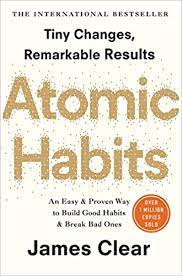
I did, as always, do a lot of reading. I found this book particularly good.

I don't usually get on well with books that promise to change you life but this one is very practical. It starts with the premise that instead of setting arbitrary goals, it's better to focus on our daily processes. He has a point. Goals are fixed term things. I set a goal to write a book, I finish the book, and then it's very easy to drift and do nothing.

I'm determined not to let that happen this time.

The first exercise in Atomic Habits is to make a list of your current habits. I jumped into this enthusiastically when I got back from holiday and I soon found a problem: I didn't have any sort of routine. Unless you call jumping randomly from task to task a routine. 

The 'no routine' routine works when I'm deep in writing or editing. Then I focus on the writing to the exclusion of everything else. But between books, when I don't have any story demanding to be written, I find myself pulled between various demands on my time, and writing all but disappears.

That was when I discovered The Writers' Hour.  A zoom writing sprint from 8am-9am in different time zones. 

There are many zoom writing sprints, but this one seems to suit me. On the first day I woke with a migraine but logged in anyway and managed 500 words before I went back to bed. Day two, the headache was gone and I rewrote half a chapter. By day three, I was looking forward to getting out of bed to write.

Following the Atomic Habits advice, I decided on some specific new habits. Before I go to bed, I will set my laptop up in the spare bedroom and put my reading glasses on the desk ready. In the morning, I will make a pot of tea then go upstairs where my laptop is waiting. 

The hour of focussed writing sets my mind into writing mode so when I come back downstairs to my main desk, it's easy to carry on.

It's working so far. A new draft is tentatively underway. I'll let you know how it goes.


Claire Fayers latest book: Welsh Fairy Tales, Myths and Legends is out now. www.clairefayers.com


Friday, 1 November 2019

A FEW THANKFUL THOUGHTS by Penny Dolan

https://upload.wikimedia.org/wikipedia/commons/e/e4/The_Corryvreckan_Whirlpool_-_geograph-2404815-by-Walter-Baxter.jpg

This last while, through an odd set of circumstance, I have been working on some early readers. These are not huge books, as you can imagine, but at times my head has gone into a whirl.  

Some of the whirl came about because the whole process was affected by the usual summer holiday pause (editors and consultants) and then by my own time away,/ While  there were long peaceful periods when nothing happened, there were others when suddenly a lot was happening.

Managing the various projects (while a few other Life things were going) was quite a frantic experience.

I had to make Lists and Charts and use coloured Sticky Notes because there seemed to be so different stages (or, in reality, the usual number of stages) to get through.

Sticky Paper Free Stock Photo - Public Domain Pictures
Therefore. now things are calmer - and yes, because I have an ABBA post to do* -  I thought I'd write a list of what was involved.

First of all there had been

My own research as to how the series itself was developing. 
General mulling and moaning until I got an idea into my head. 
Plus some background research to make sure my idea worked, was valid.

None of these steps counted as "external" activity.


But then, in real life, came the following steps:

1. Submit synopsis + art work suggestions ( and wait for response).
2. Create draft text and adaptations of my own artwork suggestions (and wait for. . .)
3. Revise text (etc) after consultants suggestions (and wait for . .)
4. Revised, revised text  (etc) with editorial/consultant comments. . . .
5. Illustrator choice arrives for polite approval ( though the choice has always been ideal)
6. Cover roughs arrive for comments and (tactful) suggestions..
7. Artwork and text roughs arrive for checking and (tactful) comments.
8. Cover proofs arrive for comments
9. Colour proofs arrive for approval and as a courtesy
10. Contracts, since these aren't being handled by an agent, anytime within this process
11. Invoices, ditto.
12. And, presented as Item 12, various emails connected with all of these.
And all of this times the number of titles that I'm working on.

I haven't noted down all these familiar steps for pity or for a sniffy "so what?" 

I noted them down because, while I was struggling to keep on top of my rather small overlapping batch here, I began imagining how it might feel for all those at the other end of this busy book process.


By which I mean that I started thinking of all the editors who - usually women, often part-time, often on variable contracts - do the work of managing all these aspects of the Book Process.

And they do this not for one person but for all the different titles and authors and illustrators they are dealing with at the same time too. (Not to mention the non-glamorous in-house meetings and admin and similar things they have to manage and of which I am blessedly unaware.)

File:Thonet chair balance.jpg - Wikimedia Commons

Sometimes things do go wrong for writers. Sometimes editors aren't all we hope - which no doubt works the other way round too. Sometimes, now, as writers we can complete all the process for ourselves.

However, at a time like today , sometimes one just pauses and send some quiet thoughts towards editors and all those other people who help a long the way.

Thanks. Couldn't do it without you.

File:Flickr - ronsaunders47 - A bunch of flowers on the ...


Penny Dolan

@pennydolan1

*I have been watching this date coming towards me and wondering what words i could even bear to use to write about it. And I don't mean Halloween.

Wednesday, 17 July 2019

Prompting stories - Tracy Darnton


I’ve been posting writing prompts based on settings on Instagram recently. This view of Kynance Cove at dusk felt like looking down on another planet: 

When I ran a workshop on memory at the Charney retreat this month, I mentioned the very human need to see faces and make sense of random shapes. Maybe you’ve seen the face of someone you know floating in a cloud formation, or spotted Elvis in the patterns on your toast this morning? So too, a storyteller’s brain is itching to tell stories, to see the kernels of tales all around us. 

The view from my own desk has become all too familiar. But, inspired by a wealth of new settings from my recent holiday in Devon and Cornwall, I’m all fired up with new story ideas. Most of these will have to wait for me to finish my current work-in-progress, but it feels good to have them already in my head somewhere, bubbling away.
Once upon a time...
Even on holiday when I’m trying to give these story muscles a well-earned rest, I’m inspired by the unfamiliar, by the strange and atmospheric, to see stories in nature, through unopened doors or in an overheard snatch of conversation: “So I told him, there was no way I was wearing the clown outfit…”.

Who lives in a house like this?
But here’s one of the weird and amazing things about being a writer. It’s vital to feed the imagination – to read widely; to plough through boxsets; to sit in a busy café listening to conversations; to watch a play; to take a walk along a cliff path; to stare up at a block of flats, wondering at all the life and drama happening within. For me, the more that goes into my brain, the more that comes out
What's through the arch?
I’m a magpie gathering ideas all the time, stirring them around in a brain soup (of mixed metaphors) and popping out new ideas that have been through the filter of me, touched by all I’ve seen and done and read. And those same setting prompts produce completely different stories and ideas from other people and their imaginations.


As I’m getting older and wiser (Ha!), I also see the importance of stepping off the treadmill of modern life, and giving my poor old brain some downtime, some latent processing time, some staring time. And it is those moments when solutions to plot problems evolve, new chapters form and urgent new story ideas force their way to the front of the mind. The mix of leisure and work certainly feed each other, and each is poorer for the lack of the other. Quiet and wonder seem to be vital ingredients for all of us. William Henry Davies nailed this sentiment over a hundred years ago in his poem Leisure, which begins:

“What is this life if, full of care,
We have no time to stand and stare.”

Zombie apocalypse anyone?


So, I thoroughly recommend a touch of standing and staring this summer and wish you luck with the stories that are prompted by doing so.  


What's about to happen in this garden? Maybe a creature emerges from the pond? Or there's a romantic proposal? A drowning? What would your story be?


Tracy Darnton is the author of The Truth About Lies, shortlisted for the Waterstones Children’s Book Prize 2019. She has an MA in Writing for Young People.

You can follow Tracy on Twitter @TracyDarnton and on Instagram tracydarnton

Monday, 25 February 2019

Hunting for Treasure - by Liz Kessler

I’ve always believed that writing a book is a very special journey of trust and exploration. It’s like a dance, maybe, or a relationship, or a treasure hunt. In fact, it’s all of those things and more. 

I am actually in awe of the way a book tiptoes into existence. How does it do that? I mean, yes, I put in the hours – lots and lots of them – but I am convinced that there is something more to it than that. Something beyond me, and beyond my understanding. I don’t know exactly what it is, but I do know I am grateful for it.

When I was a child, I used to read Whizzer and Chips and The Beano. One of my favourite things in these comics (other than The Numbskulls; I ADORED The Numbskulls) was a feature on the puzzle page. The Hidden Objects puzzle.

They looked a bit like this:


If you imagine that this picture is the world, and the hidden objects are the pieces of your story, this is what writing a book is like.

The pieces of the book could be hidden anywhere – in a castle or a shop or on a path; in an object on the beach; in the bushy grey hair of someone’s beard; in an unusually shaped cloud; in a conversation. They could be anywhere. I firmly believe that my job as a writer isn’t about making up stories – it is about finding the pieces and putting them together until they form the story they were always meant to be.

I have written over twenty books, and out of them all, this journey of bringing together pieces of treasure to form the story has happened particularly intensely on two occasions. Once was with my Young Adult book, Haunt Me, where every scene came to life in my head as I walked along the coast path listening to a playlist I made especially for this book.

The other time was with my latest book, Emily Windsnap and the Pirate Prince.


I can’t help thinking it’s quite appropriate that a book involving pirates and treasure has brought me closer to this treasure hunt than ever before.

Unusually for my books, I knew the title before I knew anything else. A chance remark from my amazing US publicist Tracy Miracle (yes that’s her real name, and yes she does live up to it) meant that the Pirate Prince was mooching around in the back of my mind for a year or so before it was time to write his story.

That chance remark was the first piece of treasure.

When the time came to start writing the book, I had to decide where to go on a research trip. (I love my research trips and always have at least one per book. They have taken me to all sorts of places from the beaches of Bermuda to a Devon village completely destroyed by a storm.) This one was an easy decision: I had to go on a tall ship.

And here’s where piece of treasure two came in. After a day of scouring the internet for suitable trips, I came across a last-minute opportunity to be part of a tall ship crew. It was sailing out of Tenerife for a week around the Canary islands, and was leaving in five days.


Five days later I was on that ship.

As research trips go, this one was about as special as it gets. Sailing on the ocean on the beautiful Morgenster, feeling the breeze in my hair, tasting the salty spray, hearing the tinkling of the masts at night, witnessing a sky packed full of stars as the ship sliced through dark waves: I lost count of how many pieces of story-treasure I found that week.

The phosphorescence as the waves glinted at us like stars at night; the dolphin that swam through these lights; the inspiring personalities of the ship’s crew, many of whose names I used in the book; the locker that I sat on with my notebook out on the deck, which became known as ‘Liz’s office’; the sunrise across the water; the shop where I bought a crystal on a chain without knowing why, other than a kind of inner knowledge that it would appear in the book – and it did. The old pirate stories one of my crewmates told me each day. And above all, the beauty of the tall ship, Morgenster, that I fell a little bit more in love with each day. Treasure upon treasure, the building blocks of my story were found, gathered, stored for later.

But a little while after arriving home, I had a sense that there were more pieces waiting for me somewhere else.

Several years earlier, I had witnessed an amazing sight at Mont St Michel in France. It was a spring tide and we happened to be there at the exact moment the tide charged in so fast it was like a river. I had never seen a tide come in like this and I was hungry to witness it again. I felt sure that it would have something to do with my book.

So, my partner and I headed off on a road trip to France. I timed the trip for a day when the tide would be at its strongest and highest, and I booked us a room on the outskirts of the castle on the island of Mont St Michel. And here’s where the strange thing happened.


The tide didn’t move me, as I had thought it would. It didn’t race up the beach, carrying inspired thoughts about my plot along with it. We watched, and yes, it was a fast moving tide, but I didn’t feel anything, and my book didn’t call out to it.

For a moment, I wondered if we had wasted the trip. And then the next day, we walked around the castle, and explored the narrow, winding, cobbled streets around it – and something began to stir.

Yes, the tide had brought me back here. But it dawned on me that the tide wasn’t the hidden object in the picture after all. Instead, it was the bustling, bartering atmosphere of the small village that would find its place in my book.

And I remembered that in the old picture puzzles, sometimes you found the objects in places you would not expect to find them. Sometimes you had to work a little bit harder to find the hidden treasures.

Once more, I came home with a head full of ideas and a notebook full of scribbles. And I finally had enough pieces of the puzzle to start working on threading it all together.

And here we are, nearly two years on from my wonderful trip on the Morgenster, and the book is out next month. This is why I love being a writer. Not for sales or awards. (Just as well as I’m not really an award-winning type of author!) Not even for the emails and letters from happy readers, although they are right up there with the best things about the job. 

I love being a writer for the journey. For those moments of connection. For the joy of creativity, in and of itself, seeking nothing but wonder. And above all, for the privilege of following a path that I know for sure is paved with a sprinkling of magic.


Check out Liz's Website 
Join Liz's Facebook page
Follow Liz on Twitter

Wednesday, 17 May 2017

The fifteenth 1st draft by Chitra Soundar

 I’m currently writing the fifteenth 1st draft of my first longer fiction for over 8s. How can it be the fifteenth 1st draft, my non-writing friends ask. Isn’t it just the fifteenth draft?

Well, I started to create a character in 2012 when I was on a Faber course taught by the mad and wacky Andy Stanton. My character was borne out of my reading – she was white, her family was white but they were quirky, even weird at times. This was a time when I was trying to figure my place in British publishing and having read 100s of series fiction titles, mostly white characters (I hadn’t discovered Atinuke’s Anna Hibiscus then), I attempted to write one.

I got fair amount of praise for the voice and the hook – but I also got rejected uncountable number of times. As I was learning to write longer fiction, I had to rewrite everything, but primarily plot, innumerable times.

Two years in, I still hadn’t got it working either to my satisfaction or to catch the attention of an agent or a publisher. I was speaking to a friend when she suddenly asked me, “Why is your character not Indian?”

Indeed, why not? I had to go away and think about it. I churned through her question through multiple filters. First indignant – why can’t I write non-Indian characters? Why should be my characters only Indian? Am I culturally appropriating if I write anything else? And more importantly I worried about whether I was scavenging my culture to earn a place in publishing.

This last question was the most worrying for me – while the girl lives out of India (since 1999), India still lives inside the girl. But I was one of those early rebels who refused to do “respectable” degrees, “safe jobs” and get married. While I was Indian, I was also constantly challenging the notions of being an Indian. Perhaps sometimes proudly so. So what right did I have to tell stories of my culture if I was constantly struggling against them?

I was published in the UK with Walker Books at this time – a book of Indian stories. I had acceptance for three books in India, two of which came out around this time – again all Indian stories. So it’s not that I’ve not written about India – it was more about writing “Only Indian” content.
Around this time, in a completely different context, someone said, “Own your uniqueness. Yes, you’re an Indian author who lives in Britain. Flaunt your Indian-ness. You don’t have to tone it down.”

Now this message along with “Write Indian” and of course the familiar adage, “Write What you Know” started mixing in my head. Perhaps it was better for me to write Indian stories. I put away my chapter book with non-Indian characters for a while. I was focusing on the Farmer Falgu series of picture books which were doing well across the world.

And I wrote and discarded three books for 8+ one set in India, one set here but in an Indian family and one where the protagonist was Indian but she had friends from all backgrounds.
Fast Forward to 2015. I joined the MA at Bath Spa University. I showed them extracts from my discarded novels and got accepted. And on the course, my character from the series fiction started haunting me again. This girl from the first book I wrote – she was Aurora, now as Aswini Tara kept asking me to write her story. I wrote short pieces, I wrote exploratory scenes, I started and stopped a few times.

Each time, I wrote a different plot for her. I tried to nail down what is it that she wanted from this universe? Why was she asking me to tell her story?

She transformed from an English girl (mad with inventing) to a spunky girl from India who has recently moved to the UK. Then she wanted to fights different causes and then now she’s finally found her destiny. She is a Maths whiz and a Bollywood babe. It has taken literally fifteen first drafts – each draft carving her differently. If I were a sculptor, I would have dug up earth the size of India by now. Because I'm a Hindu, I believe she has been reincarnated many times.
Each time I started a draft, the plot changed, some of her friends changed, the villains changed. Now I’m literally writing the first draft of this fifteenth variation and I am hoping this is her final transformation.

But is this because I’m writing my first long novel and therefore I’m learning to write by building and demolishing each time? To answer this, I started looking at my process for picture books.
I reviewed a few picture books that I absolutely loved writing but have not sold to any publisher or have been rejected by agents. A quick scan of my cloud folders show me that my picture books go through the same type of revisions. Keeping the spine the same, my stories have completely changed, rewritten, constructed and deconstructed umpteen times. I have some that span over years and in each year, they have been dramatically rewritten.
http://www.chitrasoundar.com/picture-books/anansis-new-web/
Anansi's New Web that I wrote years ago, was published recently 7 years after it was written. Read about the journey here.

I realized I have perhaps wasted years writing this way. I’ve gone on many courses; read so many craft books, why does it take me so long to arrive at the right plot? This threw me into a state of “I'm a hack, I can’t write! How could it take me so many first drafts to reach the right one? Is this the right one?”

I knew the process varies for all writers. There is no one way about it. Writers like David Almond (who I adore) prefers the creative way of doodling, mind-mapping and then writing their way through voice, atmosphere and setting. Others elaborately plot, validate their plot against principles of storytelling. I felt as if I was over-thinking the story by planning it. I wondered if it would kill my inspiration if I dissected it under the microscope of these craft books. No one actually wanted to prescribe one over the other until I read the following. It was like the spirit of Gabriel García Márquez talking directly to me.

This question has been extracted from a 1981 interview García Márquez gave to The Paris Review. 

INTERVIEWER
Do your novels ever take unexpected twists?
GARCÍA MÁRQUEZ
That used to happen to me in the beginning. In the first stories I wrote I had a general idea of the mood, but I would let myself be taken by chance. The best advice I was given early on was that it was all right to work that way when I was young because I had a torrent of inspiration. But I was told that if I didn’t learn technique, I would be in trouble later on when the inspiration had gone and the technique was needed to compensate. If I hadn’t learned that in time, I would not now be able to outline a structure in advance. Structure is a purely technical problem and if you don’t learn it early on you’ll never learn it.

How I wished I had read this early on in my career. Perhaps some advice hits you in the head only when you’re ready for it. For the novel I was working on, I had been outlining, planning, tinkering without writing a word. I didn’t feel guilty about it anymore. If García Marquez  says learn to outline, then that's what I'd do. Without an outline, I couldn't imagine how he would have written 100 Years of Solitude.

Back to my own story, there came a point where I didn’t want to tinker and solder and move the jigsaw around. I felt I knew enough about the plot and then I plunged into the writing.
The writing does of course inform the plot as well. As I wrote, my character spoke to me and guided my hand. I revisited my plot and rewrote it – as my character was whispering to me – but validating that the outline was still holding its own.

With some help from my fiction critique group, some MA support from my tutors and importantly wisdom from Garcia Marquez and old fashioned slogging, I think I’ve reached the fifteenth first draft and subsequent drafts would be revisions of this rather than brand new ones.

Will I go through the same process for the next book? Will I ever learn to outline and structure before I write? Will I blend the two methods? Maybe García Márquez is right, I can never learn it anymore. Or maybe I can prove him wrong. I’ll return here when this book is finished and the next one gets going and tell you all about it.

Do you write umpteen drafts? Do you feel your way through a story or outline it? Have you ever written non-fiction without outlining? Tell me here in the comments.


===================================================================


Chitra Soundar is a closet clown, consummate liar, writer and storyteller. She juggles her Masters degree at Bath Spa University with writing new stories and promoting her current books, while holding down a day-job that pays for her roof, floor and walls, food and cake and of course books and stationery. Find out more at www.chitrasoundar.com and follow her on Twitter via @csoundar.

Wednesday, 10 May 2017

The Rhododendrons Bloomed on a Friday by Jess Butterworth


My Grandma as a child outside the Taj Mahal 

My writing has always been inspired by my Grandma; as a child she would take my hand and tell me stories about her life as we walked through the foothills of the Himalayas, winding between the rhododendron trees.  As soon as I was old enough, I went off in search of my own adventures. Later, when I was pursuing my dream of being published, the rejections allowed my self-doubt to flourish but she was never fazed by them. Just keep going, she would say. So I did. 

I’m grateful to hold some strong women as role models. And Grandma is one of them. As a young woman she escaped an arranged engagement to a man much older than her, and fell in love and married my Grandpa in India. He had been a prisoner of war in a Japanese camp during WWII when he was just eighteen years old, which Grandma said gave him a seize the day attitude.
When people scorned at Grandma for being an opera singer in her early twenties, declaring it would give her a reputation as a loose woman, she ignored them all and did it anyway.  And in 1950, when the community she was in turned against her good friend Alfred because he was gay, she refused to be part of that community anymore. 

My second book is very much inspired by my Grandma’s life and her love of animals. She travelled with my Grandpa, their four children, a border collie, a Pekinese and a joey kangaroo from Australia to India by boat and land, before ending up on the Himalayan foothill I grew up on. They lived there with Alfred. He was a painter and my Grandpa was a photographer. 

My Grandma died on Friday, the same day the rhododendrons bloomed. They were her favourite flowers. Every time I walk past them my heart breaks, I miss her terribly. Each time, I take a deep breath and remember that she’s here in other ways: in my heart and memories; through her stories; the people that knew her and the kick-ass grandchildren she leaves behind. 


 By Jess Butterworth 

@j_t_butterworth (twitter) 
@jessbutterworthauthor (facebook)