Showing posts with label Michael Gove. Show all posts

Thursday, 12 June 2014

4 Tricks to Get Kids Reading They Won't Get Taught At School

It's very easy to get depressed these days, as a children's author, simply by reading the news. Library cuts. Michael Gove. Screen time on the rise. Michael Gove. Book sales in decline. Michael Gove. Literacy rates in the UK worse than anywhere else. An unholy obsession with one book by John Steinbeck gripping the nation. Michael Gove.

Every day a new controversy seems to rage across the Twittersphere, with all the nuance, sophistication and depth a conversation conducted in messages arbitrarily composed of 140 characters can have.

So, here is my totally non-controversial guide on how to make reading for pleasure, and reading widely for pleasure, habits as instinctive for the next generation as texting and tweeting now are for us. (I have submitted this to the DofE for their comments but am yet to hear back.)


1) Do not let your child read. This is an early mistake which many parents and educators make. By giving your child books as presents, reading to them or encouraging them to read, you label reading as an adult activity, something that has the same appeal and lure of pension planning or talking about babies.

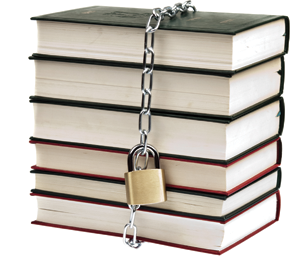
If you must read, make sure you do it after your children have gone to bed. Lock your books up in a large glass case under lock and key and tell your children that "under no circumstances" are they to try and investigate the contents.

http://cascade.uoregon.edu/fall2012/files/books1.png


If you ever catch your child reading, explain that you have a 3 strike policy before they are grounded or have pocket money, mobile phone etc withheld.


2) Aggressively promote social media Explain to your child that if they want to have any chance of a future and developing empathic emotional maturity, they must spend as much of their childhood as possible - like you and your parents before you - on social media, Instagramming selfies and sending gossipy tweets to their friends. If they fail to do this on an hourly basis, you will be very disappointed in them and they will learn nothing.

http://mcluhanismyhomeboy.files.wordpress.com/2011/11/social-media-and-kids.jpg

3) Appoint a "designated reader" in your family. You must not be seen to read, your partner mustn't read, and ideally not your friends BUT Uncle Sean or Aunt Liz - "the black sheep of the family " must read till books come out of their ears. Ideally they should own a second hand bookshop which you never visit because you don't approve and on your child's 18th birthday, this ostracized relative can illicitly take your progeny out to a bookish lunch at the British Library Cafe - about which you express deep and constant reservations for months afterwards.


4) Make reading in public illegal The more reading is confined to bus shelters late at night, the back row of the bus, or nightclub toilets, the more it is likely to catch on. Celebrities could be photographed on zoom lenses reading paperbacks on the loo, and stock buying in countries where reading is still legal.


Or, alternatively and what feels actually more controversial in our current upside down discourse: at home, at school and in the library, begin by giving every child the time, space and liberty to independently discover the joy of being lost in a book by themselves.

Piers Torday
@Piers Torday
www.pierstorday.co.uk


Sunday, 8 June 2014

Where Angels Fear to Tread by Keren David

I took O Level English Literature at a girls' grammar school in 1979. We studied three texts: Flora Thompson's Lark Rise to Candleford; E M Forster's Where Angels Fear to Tread and A Midsummer's
Night's Dream.  A play by the ultimate English writer, and two texts connected only by their utter Englishness.
I found the detailed social history contained in Flora Thompson's memoir of life in rural England completely tedious. Forster's examination of Edwardian snobbery and xenophobia in Forster's novel was somewhat baffling, sixteen-year-old girls not being best placed to appreciate a story about a middle-aged* woman's lust for a younger man (Eeeuw, yuck, disgusting). Re-reading it, 35 years later I was surprised to find it laugh-out-loud funny.
 I didn't enjoy English Literature O level, but I was good at it, and that was why I continued on to A level, which I found much more rewarding, with its wider (but still 100% English...not even British) texts.
Around the same time my husband received a reading list from his school. It included 22 plays, including contemporary works (Arnold Wesker's Roots, Shelagh Delaney's A Taste of Honey), four plays by George Bernard Shaw, Oscar Wilde's The Importance of Being Earnest, and Sophocles' Antigone.  For W Shakespeare the list read 'Any Play'.
The list for prose was longer -  44 books. They included plenty of nineteenth century novels: Jane Austen, Brontes C and E, two novels by Dickens and one by Hardy.
There were many twentieth century texts, British, American and translated : Anne Frank's Diary; Of Mice and Men (and another Steinbeck), To Kill a Mocking Bird. George Orwell's Animal Farm and 1984; Nevil Shute's A Town Like Alice and The Pied Piper, Graham Greene's Brighton Rock, D H Lawrence Sons and Lovers.
The list covered many genres -  science fiction (Day of the Triffids); romance (Pride and Prejudice); historical fiction (Rosemay Sutcliff's Warrior Scarlet); memoir( Gerald Durrell's My Family and Other Animals), dystopian fiction (Fahrenheit 451); mystery (Josephine Tey's The Franchise Affair) a western (Shane by Jack Shaefer) and a thriller (Alistair McLean's The Guns of Navarone).  There were several true-life stories from the Second World War, one by a Polish writer, one by an Italian and Alan Burgess's novel A Small Woman about a British missionary in China.
This list was clearly designed to be as broad as possible, introducing pupils to classic works of literature and inviting them to find out what sort of book they enjoy. It was challenging, interesting, reflecting different social classes and nationalities, as well as ethnic minority groups.
Should schools find this extensive list too short, there was a note: 'Candidates from Schools whose extended lists have been approved by the Board may, of course, refer in addition to texts on these lists.'  My husband remembers that pupils were told to read at least five or six of the 66 texts on the list, but he read at least 20, some in class, some from the local library. The final examination at the end of the course asked generic questions such as: 'Write about strong characters in some of the books you have read.'
This list  fostered a love of  reading in my husband which eventually led him to read English Literature at Oxford University.
The really interesting thing is that he was taking CSE English at a Secondary Modern school, a school to which he had been condemned by failing the 11 plus. CSEs were widely seen as useless qualifications for thickies, but I would contend that anyone who was given that list and had a crack at reading six books on it, would find something  enjoyable and challenging to read which might inspire them to read more in the future.

Our daughter took GCSE English recently, studying anthologies of poetry and short stories, a few scenes from Macbeth and Of Mice and Men; a syllabus which seemed to be designed for kids with short concentration spans. Of Mice and Men was the only text she read that ran to any length at all - all 107 pages of it. I have nothing against Steinbeck's classic, and certainly nothing against Macbeth, I am sure that the anthologies contained good material, but I have to admit to a great deal of parental frustration as I watched my daughter thoroughly turned off by this thin fare, and irritated by being asked to compare World War One poetry with Macbeth, an exam question that she found pointless and off-putting. .
I am writing this, of course, because of the recent kerfuffle over GCSE English, a row in which facts got lost to prejudice (for and against Michael Gove, for and against American literature, for and against Dickens and other nineteenth century authors).
Depending on who you read, Gove had personally interfered to ban books, or had bravely intervened to widen the curriculum, or Gove had nothing to do with any of it. As the saying goes, fools rush in, where angels fear to tread: it seemed as though the way the changes to GCSE English were reported and discussed was designed to make everyone look foolish (a Machiavellian plot by Gove himself, perhaps?)
I watched the row develop with increasing frustration, as it had so little to do with the actual crisis facing British children's literacy. Libraries are closing! Schools are being designed without libraries! Reading is being re-defined as deciphering phonics! School library services are closing! Children are spending more and more time glued to screens and less and less time reading for pleasure! These are the real crises, not whether Of Mice and Men remains on the school syllabus.
 When I read that Bailey's Prize winner Eimear McBride wants to spend some of her £30,000 prize money buying copies of Of Mice and Men and To Kill a Mockingbird to give free to teenagers, I want to scream. These books haven't been banned, Eimear! Schools have so many copies that they will, no doubt, find a way of using them, perhaps by teaching them to Y9 pupils.  Instead, please give your money to the Siobhan Dowd Trust which has the simple and essential aim of promoting the love of reading among disadvantaged children and young adults.
Yesterday the review section of The Guardian newspaper asked a select group of authors and academics to pick GCSE texts (no librarians, English teachers or children's writers among them). The choice that make me giggle the most was put forward by Linda Grant: Portnoy's Complaint by Philip Roth. And the one with which I agreed  whole-heartedly was Hilary Mantel:
Should we play the Gove game, by setting up opposing lists? Or should we ask, which Gradgrind thought up the idea of set texts in the first place? Why should students be condemned to thrash to death a novel or a corpus of poetry, week after week, month after month? No novel was ever penned to puzzle and punish the young. Plays are meant to be played at. Poetry is not written for Paxmanites. Literature is a creative discipline, not just for writer but for reader. Is the exam hall its correct context? We educate our children not as if we love them but as if we need to control and coerce them, bullying them over obstacles and drilling them like squaddies; and even the most inspired and loving teachers have to serve the system. We have laws against physical abuse. We can try to legislate against emotional abuse. So why do we think it's fine to abuse the imagination, and on an industrial scale? What would serve children is a love of reading, and the habit of it. I wonder if the present system creates either.


*As a 16 year old I definitely saw Lilia as middle-aged and her love for a 21-year-old made me queasy. On re-reading I discovered she was only 33.


Saturday, 16 November 2013

We warned you this would happen - John Dougherty

I make no apologies for being angry.

If you haven’t already read or watched the excellent second annual lecture to the Reading Agency, delivered last month by the equally excellent Neil Gaiman, please do. You’ll find much to think about and much to agree with, and perhaps you’ll learn something new, too.


I learned something new. I learned this:

According to a recent study by the Organisation for Economic Cooperation and Development, England is the "only country where the oldest age group has higher proficiency in both literacy and numeracy than the youngest group, after other factors, such as gender, socio-economic backgrounds and type of occupations are taken into account".

The youngest age-group in question is 16-24, and I’m fairly sure I know why they’ve done so badly. You see, it was 16 years ago - when the youngest in that group were babies, and the eldest were only 8 - that the government began to micro-manage our children’s literacy learning.

Oh, there’d been political interference before then, and increasingly so; but it was with David Blunkett’s appointment as Education Secretary that Her Majesty’s Government became so arrogant as to think that some bloke in Whitehall whose sole experience of education was having gone to school was better placed to decide exactly how children should be taught than were trained, qualified, experienced teachers who actually had those children in front of them.

Blunkett introduced something called the Literacy Hour. Teachers protested: it would inhibit creativity; it would bore children; it would dampen enthusiasm for reading. Tough, said Blunkett, you’re doing it. It’ll raise standards.

Well, Mr Blunkett, it would appear you were wrong about that.

I was a supply teacher in those days, and I remember groans from the children when I announced it was time for Literacy Hour. I remember seeing the light in children’s eyes go out as I cut them short, wanting to hear what they had to say but knowing that I had no choice but to keep to the government-imposed clock. I remember coming home to my wife and saying, “When we have children, I don’t want anybody doing to them what I had to do to those children today.”

But however much teachers complained, the response from government was always, “We know best.”

They didn’t. They really didn’t.

And they still don’t. You see, this is not a party-political complaint. Things are no better now that New Labour is but an old memory. Now we have the coalition. We have Michael Gove ordering a one-size-fits-all phonics regime. We have the top-down imposition of a phonics test that is not fit for purpose. We have teachers pressured into the sort of behaviour recently observed by Marilyn Brocklehurst of Norfolk Children’s Book Centre:


We have so much evidence to tell us that if our children are going to achieve in literacy - and in school, and in life - they need to learn to read for pleasure. To read for fun. And we have a growing body of evidence to tell us that for this to happen, politicians must not be allowed to micro-manage any aspect of their learning.

But what can we do? Nothing. The Secretary of State for Education has assumed the powers of a dictator - literally; there’s no way of holding him, and it usually is a him, to account. Experts who challenge him are dismissed as, well, whatever is the political insult du jour - at the moment, it’s Marxist - whilst their views are misrepresented way past the point of parody.

I began this piece with the wild-haired Neil Gaiman. By the end, I’ve come to the wild-haired Russell Brand (language warning).


Maybe he’s right. Maybe the whole system is no longer fit for purpose, if it ever was.

______________________________________________________________________

John's next book:  

 Stinkbomb & Ketchup-Face and the Badness of Badgers, illustrated by David Tazzyman & published by OUP in January 2014

Have your name shouted by a badger and get a signed book by bidding online in the Authors for Philippines charity auction. 
Well over 200 other items, including many from Awfully Big Blog Adventure contributors.