Thursday, 31 October 2024

NOVEMBER - and time with TOSH'S ISLAND by Linda Sargent. Review by Penny Dolan

November greetings! I hope last night’s spookiness didn’t get to you, that only celebration fireworks light up your skies, and that the many festivals of light bring you joy.

However, between 11- 15th November, comes a less cosy event - Anti-Bullying Week - so this post focuses on a recently published graphic novel whose imaginative storytelling can remind the young reader about subtler,quieter forms of bullying and the problem of being socially excluded or victimized through disability.

TOSH’S ISLAND, created by Linda Sargent and Joe Brady, has been described by Jacqueline Wilson as ‘a book to remember for years . . . truthful and moving.” Originally a serial in David Fickling’s The Phoenix comic, this unusual story is about hope and daydreams, disability and determination, and based on real life experience.

                                         Tosh's Island | Slings & Arrows

On the cover, the artist Leo Marcell shows Tosh as a young girl, happily daydreaming on a grassy hill, her mind on a magical island, a beautiful mermaid, and on a mysterious boy’s face. Marcell also shows that, despite her smile, Tosh needs the support of a stick, a wooden crutch. Like the author Linda Sargent, the main character Tosh suffers from painful childhood arthritis, known as Still’s disease.

During the early chapters, set in a recent past, Tosh and her parents lead a fairly happy life on a Kentish hop-farm, close to the sea. That countryside gives Tosh plenty of space to run, climb, and play, usually with her best friend Millie. However, one day, Tosh meets an artistic French boy on the beach at Oyster Flats. The two sit by the sea, and after making up adventures about a treasure island, mermaids and an underwater kingdom, they promise to write to each other.

But real life interrupts Tosh’s fantasy world. Having started secondary school, her constant tiredness and so-called ‘imaginary’ pains get much worse. She cannot keep up with her favourite school activities, or join in socially with a more ‘sophisticated’ friendship group. Nastily teased, isolated and in pain, Tosh turns away from everyone, even from sympathetic medical staff, knowing difficulties lie ahead. Can Tosh’s fantasies even help her now she is alone? How can she believe Millie, or trust in promises and friendship? What still matters to her now? Gradually, all the pieces come together for Tosh, and a mystery is resolved, though there is no complete answer.

Tosh’s Island would be an interesting addition to any school library, as well as being a strong addition to empathy reading bookshelves. While the speech-bubble script carries one layer of the story, Leo Marcell’s artwork tellingly shows the nuances within the scenes. We can ‘read’ the body language he gives to the various characters: the shrug, the glance, the reluctance or reaction, and feel both the words said and not said. Readers of any age are granted a chance to think not just Tosh’s life, but about other children with medical conditions who might feel excluded by the patterns and pressures of their own school’s life.

Though the story within Tosh’s Island is lightened and complicated by the heroine’s fantasy, the content feels very realistic when contrasted with older, famous novels about children and disability. Books like What Katie Did, Pollyanna and The Secret Garden seem to suggest that physical problems might be ‘corrected’ by the passing of time and even by better behaviour.

Impulsive Katy becomes thoughtful, Pollyanna tests the ‘Glad Game’ herself, and even rude, reclusive invalid Colin has to respond to the world outside. Though these titles were much loved, they now seem like rather cruel fairy stories for any young person coping with long-term illness or disability. Thank goodness there are better books, like Tosh’s Island, available now.

Linda Sargent, the author and originator of Tosh’s Island, is still someone who enjoys escaping into books and story. She studied economic history at the University of Sussex, worked in education, art and reminiscence, and gained a Masters in Creative Writing and Personal Development. She is also a publisher’s reader, disability adviser and a writer herself. 

 Linda has found inspiration in the work and attitude of another author, Rosemary Sutcliffe, who had Still’s disease, but whose strongly active historical novels for young adults, such as ‘The Eagle of The Ninth’, ‘Sword at Sunset’, ‘The Lantern Bearers’ and others were widely read in secondary schools.

One well-known children’s story, however, does echo through Tosh’s Island. The story is Hans Christian Andersen’s original tale, The Little Mermaid, which is used to emphasise the changes in Tosh’s condition and its treatment, and show how the heroine’s playful weightlessness in water becomes pain and disability  when on dry land. 

And while, in the original, the poor mermaid sadly surrenders her voice, in this unique graphic novel, aided by Josh Brady and artist Leo Marcell, the voice, story and imagination of Linda Sargent rings out very clearly indeed. 

                                                    Writers Review: Guest review by Linda Sargent: THE BURIED GIANT by ...


By Penny Dolan

@pennydolan1


Tuesday, 29 October 2024

Slump Time

Strange.

I've no desire to write fiction at the moment. I might tell myself I'm going to, but then the moment comes and all I end up doing is sitting staring at the screen. Or the pen and the paper.

But... I can sit down and bang out a mini-review of a book I've enjoyed without any problems at all. They're almost always first drafts and don't take much more than 15 minutes apiece. And I enjoy writing them.

So the writing drive hasn't vanished. It's the type of writing. I'm curious as to when the phase will pass.

I'll close by offering links to my three most recent endeavours.


https://thenickgarlickbookblog.blogspot.com/2024/10/melissa-and-rick.html


https://thenickgarlickbookblog.blogspot.com/2024/10/the-talisman.html


 https://thenickgarlickbookblog.blogspot.com/2024/10/small-mercies.html

Sunday, 27 October 2024

Happy New Year! by Claire Fayers

The old Welsh tradition of Halloween, Nos Calan Gaeaf, marks the end of the harvest and the beginning of the new season of winter, so it seems appropriate (to me at least) to be beginning new things at this time of year.

I'm heavily involved in the Abergavenny Writers' Festival and ever since the last one, people have been asking me if there's a local writers' group they can join. Then a local restaurant advertised, saying they wanted to use their upstairs space for community groups and were particularly interested in author events.

I've been in writers' groups before, but I've never run one so I was hesitant because of the commitment and the potential for a lot of extra work. But what could be the worst that would happen? I find it's too much to manage and I stop doing it and maybe a few people are disappointed.

After a few chats with the events co-ordinator  at the restaurant, I set a date and created the all-important Facebook group.

Very soon, I received an email from someone who used to run a drop-in session for writers in the town. No commitment, turn up as and when you like for some writing and chat on a writing-related topic. It sounded ideal.

We've had two meetings so far, with around 15 people at each, and the Facebook group is currently at 36 people. We have a good mix of people from beginners to published authors writing across a whole range of genres. After the first meeting, where we set some ground rules, we decided to meet fortnightly, with most people aiming to come once a month. The first hour is for writing and I was assuming we'd just get on with whatever we were working on, but it turned out people wanted prompts so I've been looking up exercises and recycling some of the Folly Farm workshops.


From my experience so far, some tips:

Make sure the venue knows you're coming. Both weeks so far, the events person forgot to tell anyone we'd booked the space and so there was a bit of a scramble to get tables together. I talked the manager yesterday and we have our space confirmed from now on (I hope!)

Arrive early. In case there are any problems with the venue (see above), and in case anyone turns up early. It's nice to order and drink and settle in before the troops arrive in any case.

Make a plan and set expectations up front. That way, people can plan their evening, and it minimises the potential for one person to take over the whole group - something I'd been warned about.

Be flexible. We have a few people who sit with headphones on and just write. Others who want to chat. I suspect we'll  end up with one end of the table being for silent writers and the other for people who wants prompts, exercises and discussion.

Keep your expectations low. Not as in 'this will be terrible', but going in without any assumptions.

Be clear what you, personally, want. I decided before the first meeting that I wanted to use the time to try out new ideas and play, writing by hand. Maybe something I write will find its way into a book, but I'm there to have fun.

If anyone has run a group, how did it go? And if anyone has any tips for writing prompts and discussion topics, please do let me know.

Nos Calan Gaeaf hapus! / Happy Halloween.


www.clairefayers.com


Saturday, 26 October 2024

Books - by Sue Purkiss

About a year ago, I started volunteering in the library at Wells Cathedral. This is no ordinary library. It dates from the fifteenth century, when, in 1424, Bishop Bubwith left money in his will for a library, to be built above the East Cloister. The library opened in 1458.

There were already books at the cathedral before this. Wells was what is called, rather oddly, a 'secular' cathedral: that is, it had no monastery or abbey attached, so there was no scriptorium where monks laboured to produce the exquisite illuminated volumes of which, I imagine, we are all aware. But there was a school, and there was a community of clerics, and they needed books to study. So the books came from elsewhere - they were not produced in the cathedral itself.


The west front of Wells Cathedral. My totally unbiased view is that it is one of the most beautiful cathedrals in the world.

These volumes were large, heavy, and valuable. They were kept safely locked away in wooden boxes - they were certainly not readily available to all. But by the fifteenth century, the collections of books - in cathedrals and in the two universities - had grown, and more space was needed both to store them and to study them. And so people saw the need for libraries.

As it was built above a cloister - a passageway on one side of a quadrangle - Bishop Bubwith's library is long and realatively narrow. About a third of it is devoted to books dating from 1800 on. The older books are looked tantalisingly away behind an iron gate: you can gaze, but you can't touch! (Though you can go on a special tour, when you can see these wonderful volumes at close hand. It's fascinating, and worth every penny.) You will see that the books on the shelves closest to you are chained to the shelves, which may remind many of you of the library at the Unseen University in Terry Pratchett's Discworld books - presided over by an orang-utan, and home to books so dangerous that they have to be chained. Libraries began to use shelves and bookcases as the numbers of books increased - which they did particularly with the invention of printing (in about 1455, by Gutenberg in Germany).

The Chained Library

These books were chained because they were precious. But paradoxically, although they were chained to the shelves, this made them actually more accessible: clerics could come to the library, take down the books and look at them on the shelf provided - which was a distinct improvement on having to persuade someone to let you into a locked chest to consult a particular volume.

The books which are in the Chained Library now are not the books which were there originally. Unfortunately, during the reign of the arch-vandal Henry VIII, his enforcer, Thomas Cromwell, was the lay Dean at Wells. If he hadn't been, the library may well have been left alone - cathedrals generally didn't suffer the same fate as monasteries and abbeys - but as he was, he was aware of the collection, and he confiscated the lot on the grounds that they were Catholic texts. They left Wells, never to return, and the collection had to be built up again from scratch. Many books were given or bequeathed to the library over the years by a variety of benefactors - and as a result, the collection is very varied - it doesn't just consist of theological works.

I'm very gradually learning more about the library and the books within it. And that strange thing is happening - whereby when you start to take notice of a particular topic, the universe helps you out, and draws to your attention all sorts of relevant things. So, for instance, the other day I began to read a book I'd had for some time, called The Bookseller's Tale, by Martin Latham. It mentions one Christine de Pizan, a contemporary of our Bishop Bubwith. She was Venetion by birth, but lived at the French court - and she worked there: she was a professional writer - with surely a strong claim to have been the first professional woman of letters in Europe. Absolutely fascinating - and lo and behold, the next day, Lucy Worsley put up a post on Facebook about her - and about an exhibition at the British Library, called Mediaeval Women, starting today and running till March - which features an actual book of Christine's.

I also read this week about another centuries-old book. This one is a bejewelled prayer book, which was featured in a portrait by Holbein of  Thomas Cromwell - that same Cromwell who pinched all our books. This prayer book - the actual same one! - has recently been unearthed in a forgotten corner of a Cambridge University library.

Holbein's portrait of Cromwell, with the recently rediscovered prayer book.

Which brings me to my final point. A few days ago, I went to a talk by Professor Adam Smyth, of Balliol College, Oxford. It was about his new book, The Bookmakers, which tells the story of printing through eighteen lives - and not necessarily the most obvious lives. It was absolutely fascinating, and I'm very much looking forward to reading the book. Someone asked him what he thought about digitally produced books. He said he didn't himself own a Kindle, but - diplomatically - that he could see circumstances in which one would be very useful. But, he pointed out: it's 600 years since Gutenberg first printed a copy of the Bible - and copies of that Bible still exist. You can touch them, smell them - read them. Will the same be said of books published on Kindle in 600 years' time?


Adam Smyth and his book.

A remarkable thing, the book.

Friday, 25 October 2024

‘The Old Cow in the kitchen – capturing memories before the Elephant forgets,’ by Lynda Waterhouse


Last week, for the first time in years I missed my slot and I didn’t post, and it was the fault of the Old Cow in the Kitchen!

I’d received some funding from my local council, Southwark, to make a short film and stage an event with the aim of capturing memories of the people who have lived their whole lives at the Elephant and Castle in South London. I have been deeply affected by the way that my ‘manor’, The Elephant and Castle, has been rapidly changing. I felt that this noisy and at times controversial re-development is in danger of drowning out the voices of the people that have made it such a rich and vibrant place. Initially, my aim was to interview local elders such as local resident, John, whose family had connections to one street going back to 1916.

Then there was Marian. I’d first encountered her in the 1990s at a local summer fete, where she was known as one of the ‘Marmalade Ladies’. She, along with her older sister Jessie, made and sold her delicious homemade jams for charity. Later on, I knew her as an outspoken and fearless campaigner against the building of a high rise hotel by an off-shore developer way too close to our homes (we lost). At the age of 97, she agreed to be interviewed. She mentioned that her father, Henry Townshend, had been a keen amateur photographer. It turned out that he was a hugely talented and chronicler of local life and I uncovered a treasure trove of images as I learned more about Marian’s life.

Marian’s mother, Kathleen, and her Aunt Rose had been orphaned but, as Kathleen was fourteen, she was deemed too old to be taken into Charlotte Sharman’s orphanage in West Square. Instead, she went to work as a scullery maid in the square where she kept a watchful eye on Rose.

After the First World War Kathleen met and married Henry and rented rooms in a boarding house in West Square.  Marian explained that her uncle also rented rooms in the same house and that there was a lodger on the top and an old cow in the kitchen.

‘What? You had a cow in the kitchen?’ I gasped

Marian smiled, ‘Grandma.’

©Townsend

Grandma lived in the kitchen and had a job finishing collapsible opera hats. I was mesmerized by the story and the photograph. Then Marian added, ’Later on I wondered if it was the mercury that was used in the finishing process that had affected her and she wasn’t just being bloody minded.’

Henry had photographed her at work.

In fond memory of Marian (August 1928 – August 2024).

 If there is any interest I’ll post the link for the film. A bid is also in progress for a companion project, ‘The Crocodile on the Bus.’

I’ll try not to miss my slot again!


Tuesday, 22 October 2024

Sleepy Little Bedtime, written by Sally Symes, illustrated by Nick Sharratt, reviewed by Pippa Goodhart


    Poke your fingers through the board book holes to provide wiggly legs for the sleepy babies, the teddy, the bath frog, and even the sponge and book within this gorgeous book. All the usual baby and toddler bedtime routine is here, celebrated in rhyme and wriggles and yawns until we end with a 'Nighty-night, sleep tight!' 

    Simple. Clever. Perfect for the intended young audience and their adult carers to enjoy together. 

Sunday, 20 October 2024

Ambition and Reality - Joan Lennon

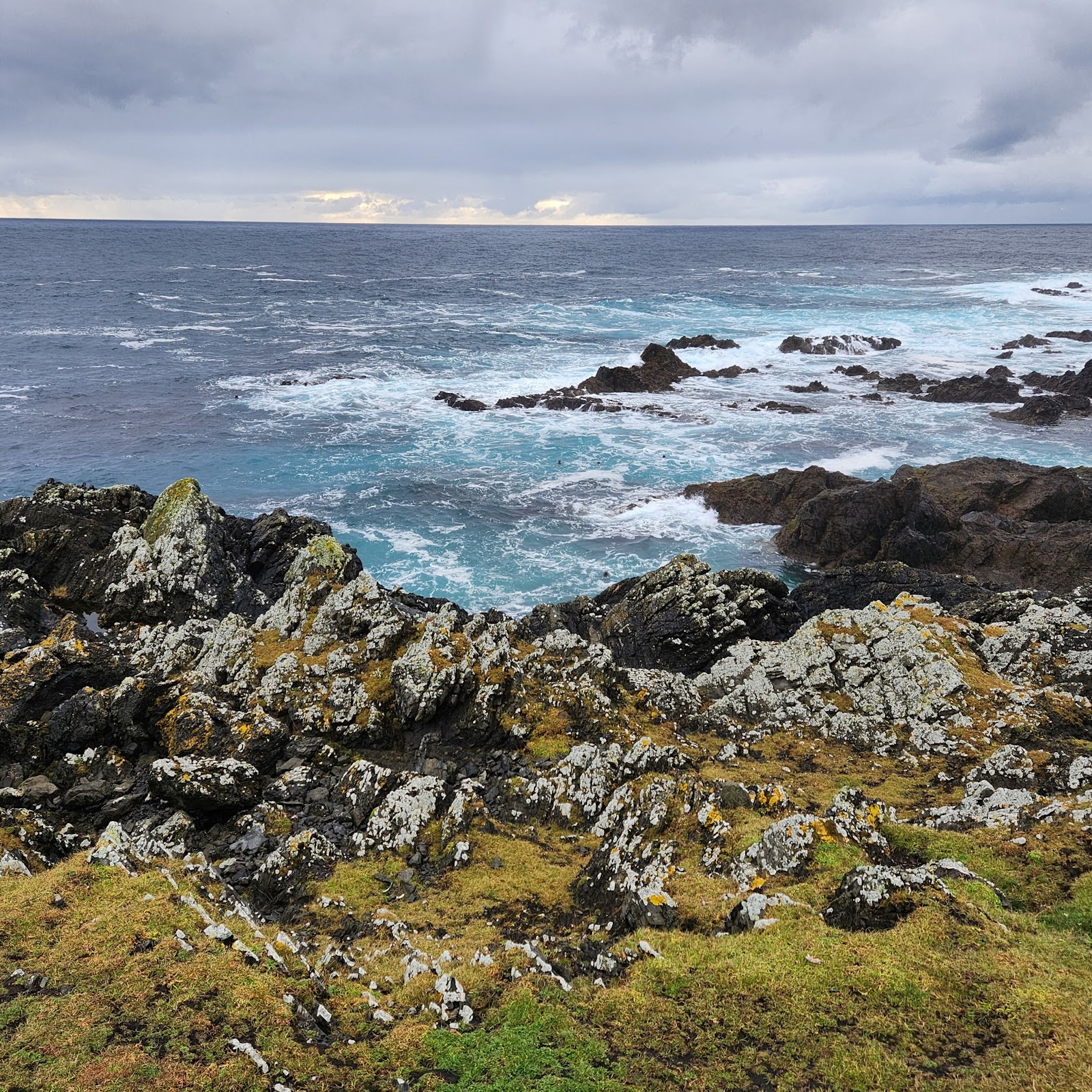
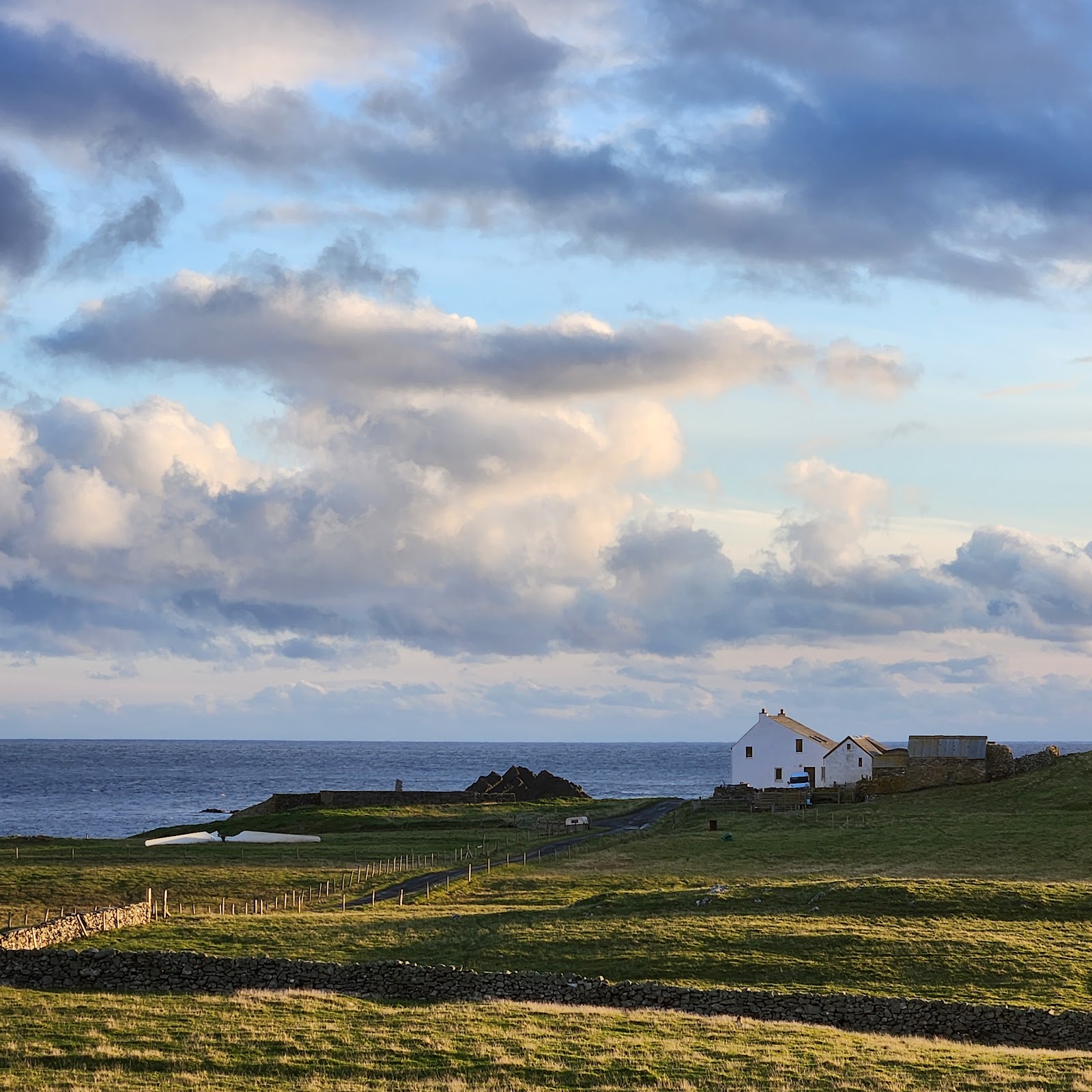
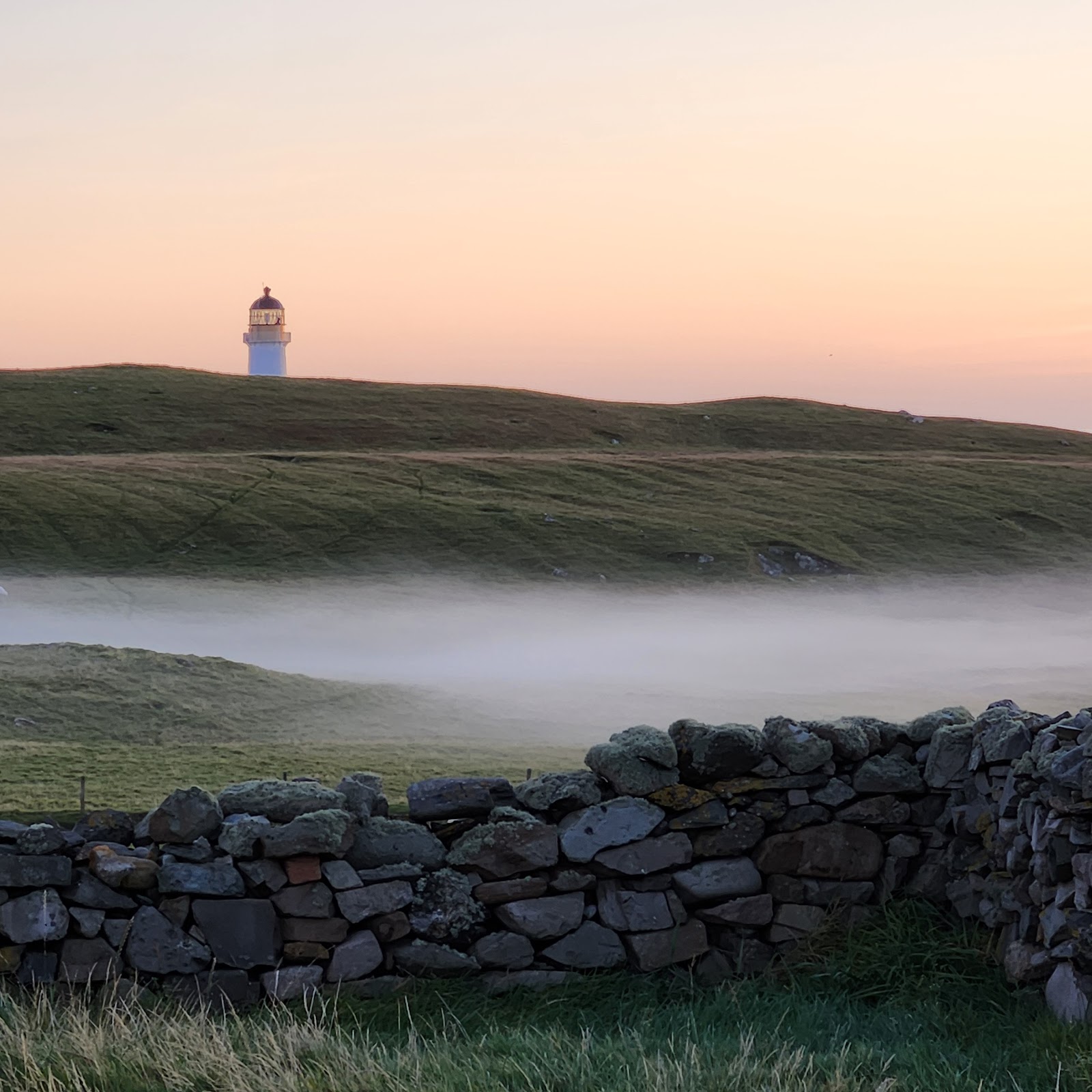
My month in Fair Isle is done. I'll be going back to city and family life stronger and with windswept hair.

I wrote about my ambitions for my time here a month ago - so how did those pan out?

When I got back into the wip, I realised just what a tangled mess it had become. I'm a pantser, and with each widely-separated time I've been able to work on this novel, I've gleefully dived in and wrote whatever was topmost in my mind. That's the way I've always done it, and yes, it means 3 or maybe 4 times as much writing as a novel that's been planned. Normally I'd also say 3 or maybe 4 times the fun, but this time...


It's the gaps that have skewed the system. This time, writing up to a problem and then turning to another bit and then going away from it all for half a year had left me with a ball of wool that the cat's had its way with. So, it turned out, this time on Fair Isle has been about untangling and problem solving. Which, for me, isn't something I've ever been able to do in snippets. My characters have grown and their growth has powered the plot and all in all I have a much healthier novel to be going on with.

And the other ambitions? Walks - yes. Photographs - yes. Poems - yes for a lot of days but not every one and not every poem worked. Other stuff - nope. General happiness and breathing out - YES.

And next? That complete first draft I was aiming for - that's now at least a possibility. So wish me luck.


Joan Lennon website

Joan Lennon Instagram

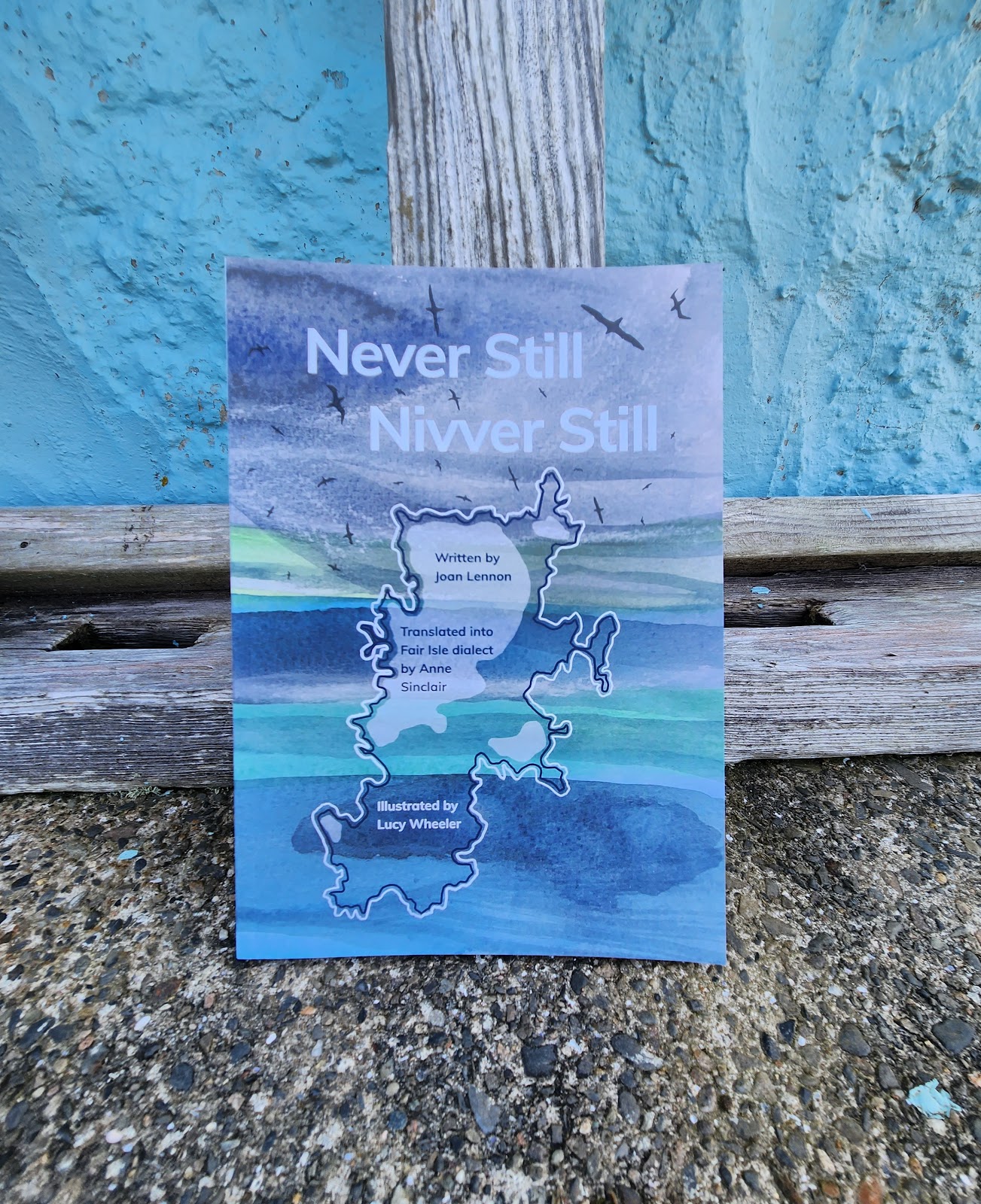
Never Still Nivver Still  Narrative poems set in Fair Isle written by Joan Lennon, translated into Fair Isle dialect by Anne Sinclair and illustrated by Lucy Wheeler. Copies are available from the publisher Hansel Press or me.


Friday, 18 October 2024

Charms and amulets - by Lu Hersey

 Everyone would like a powerful amulet, right? A magical charm to help you do whatever - stay healthy,  find love, prosper, get a publishing deal.... Or perhaps you'd rather benefit from others' gullibility and simply invent one to sell? Russell Brand claims his new amulet (retailing at £188) will protect people from 'evil energies' and WiFi signals. 


Anyway, I recently wrote a piece about amulets for Writing the Magic, (my patreon account) so I'll share something of it here - after all, people have put their faith in lucky charms and amulets since the dawn of time, and when I found an obscure book on the subject buried in my tbr pile, it was obviously my destiny to open you all up to the possibilities it offered.


Have to admit, there are books lurking on my shelves I don't even remember buying (often charity shop bargains), and The Book of Charms and Talismans by Sepharial, published in 1924, is one. (Above illustration is the frontispiece)

Sepharial was the pen name of Walter Gorn Old, 1864-1929, once a well respected astrologer and Theosophist. Presumably he was also interested in Enochian magic, as Sepharial is the name of an angel in the apocryphal Book of Enoch. He wrote numerous esoteric books in his day, and was editor of Old Moore's Almanac.

For all his credentials, Sepharial was apparently no fan of indexes or bibliographies. It took me quite a while to find the information to accompany his colour plate of charms and talismans, even using the key he provided (below), so I'll save you the effort.


As a general note, Sepharial tells us that objects 1-8 are from the Petrie Collection of ancient Egyptian artefacts, which is still based at UCL - if nothing else, he's inspired me to want to visit this little museum next time I'm in London. And if you like your amulets tried and tested, probably ancient Egypt is as good place to start as any...

1. The Necklace of Flies

Sepharial tells us the fly is an emblem of activity and swiftness, and a necklace of flies would have been worn as a talisman by travellers to ensure safe and speedy travel. 

2. The crescent

A crescent talisman, taking the form of the crescent moon, which can be worn as a protection against the evil eye. Also symbolic of the new crescent moon (points left) the talisman can help with new projects (Sepharial needed a few paragraphs to say that).

3. Counterpoise of collar (Menet)

A symbolic talisman to bring joy and health, associated with the planet Venus. According to Sepharial, this talisman can help you find true love, as well as strengthening your resilience to illness.

4. A winged Scarab

The scarab was an amulet commonly worn by ancient Egyptians, and is symbolic of the creator of the universe, the sun god Ra. A green stone scarab inlaid with gold was placed on the chest of a dead body, or sometimes embedded in the heart during the embalming process, to help the deceased avoid evil spirits on their journey through the underworld.

5. The leopard's claw

A charm for protection against attack from wild animals. Originally this came from the belief that some people had the power to transform into leopards, which enabled them to destroy their enemies, and wearing a leopard's claw as a talisman protected you from this fate.

6. Crescent 

Another form of crescent moon talisman.

7. Uzat Eye of Horus

Represents the sun, which is the eye of the day, and also the all-seeing eye of the deity. An amulet to protect against enchantment, evil and disease.

8. Frog

Worn by both the living and the dead, frog amulets helped ensure the wearer's well-being in life and the afterlife. The Egyptians probably linked frogs to fertility because of the animal's prolific reproduction, and women may have worn amulets like this one to assist in pregnancy and delivery. (Sepharial didn't bother to include this information anywhere in his book, so I researched it separately)

9. Black Cat

Black cats are considered to be powerful and protective figures in many cultures, and are often associated with good luck and prosperity. (Again, Sepharial forgot to include anything in the book about black cats..)

10. Pentacle of Rabbi Solomon

Magical talismans are Sepharial's key interest, so he provides a ton of information about their meaning and when to make them. Anyway, the Pentacle of Rabbi Solomon the King, shown in the illustration, can be made any day of the week (most talismans have to be made on certain days to be effective), and is an essential talisman for evoking spirits. Also, if you're wearing one, you are protected from all evil genii. (Sepharial goes as far as suggesting you cut the talisman out of his book to save time, and put it in a silk bag to keep it on your person)

11. Fish

A charm of good fortune to help increase wealth and fertility, often made from mother of pearl.

12. Swastika

Of course Sepharial wrote this book before the rise of the Nazis in Germany - and the swastika is an ancient symbol of good fortune, which can be traced right back to the neolithic. A pity the nazis hijacked it...

13. Horseshoe

Again, Sepharial doesn't include any explanation, but the horseshoe is generally seen as a good luck charm, and a protection against evil. 


Of course if you want to know more, there are thousands of other charms and amulets you can research - and when it comes to talismans, Sepharial included a lengthy chapter on that subject alone. 

This is simply an intro to give you some background material if you need an amulet in your next work of fiction. I also guarantee that any of those I've listed will give you protection from Russell Brand, if needed...


Lu Hersey

Patreon: Writing the Magic

Threads: luwrites

X: LuWrites


Monday, 14 October 2024

Dogs versus Cats by Lynne Benton

For some reason there seems to be a general assumption that anyone who loves dogs is a GOOD EGG, whereas anyone who prefers cats must be a bit ODD.  (This includes a certain American politician who refers sarcastically to “cat ladies”, as if they were somehow beyond the pale!)  

I totally refute this!

I have written several books for children in which dogs play an important role, (indeed, one publisher asked for input from children, many of whom said, “I love this book because it’s about dogs, and I love dogs!”)  However, that doesn’t mean I necessarily prefer them to cats.  Indeed, although when I was a child we had a cat, and then, later, a dog, now, as an adult, I do prefer cats – maybe because the one we had was my first love?  When my own children were small we had two cats, both of which were much loved, but now my children have grown up only one of them has any pets at all.  (Two of them would, I think, have a cat if their circumstances were different)  But my eldest daughter now has both a dog and a cat, though I think she is probably more attached to the dog, who can accompany her on the frequent long walks that they both love.  And her three children are equally fond of both cats and dogs.  So maybe it does depend, to a large extent, on the animal/s you were brought up with.

Anyway, it made me think about the books I’ve read that are specifically about either cats or dogs, and I’ve come up with a few favourites.

The first of these is one from my childhood, which I used to hear on Children’s Hour on the radio, as well as read from the library: Orlando the Marmalade Cat, by Kathleen Hale.  This was the story of Orlando and his family, all of whom I got to know, the more I heard or read.  Following the success of her original book, Kathleen Hale wrote many sequels, of which this is one:

However, another favourite – or series of favourites – from my childhood were Enid Blyton’s Famous Five books, in which the fifth “person” was the dog, Timmy.  I loved reading the books, though in retrospect Timmy seems to have been remarkably well-behaved, and never barked at inopportune moments (which, in my experience, most dogs do!)


Then there were books I read to various classes when I was teaching younger children: Gobbolino, the Witches Cat, by Ursula Moray Williams.  This was the story of a foundling kitten who had no idea he was really a witch’s cat, and the scrapes he got into before discovering his true identity.  It was always hugely popular.


And of course there's the wonderful One Hundred and One Dalmatians, by Dodie Smith, which was popular as a book but has now become even more popular as an animated film by Disney.  Featuring dalmatians Pongo and Mrs Pongo and their 101 dalmatian puppies, who were desired by the wicked Cruella De Ville for their skins, it's the story of how they managed to escape her clutches.


And another cat book for children which I discovered quite recently, “The Cat Whiskerer”, by Cathy Hopkins, which is a lovely story of Tom, a “Cat Whiskerer”, whose magic whiskers could always sense another cat in trouble, and the cats in the neighbourhood whom he helped.


I’m sure there are many, many more, and people will continue to argue about this question, but it’s good to know that people will always want pets, whether cats or dogs, and will insist that their own choice is better. 

Website: lynnebenton.com

Sunday, 13 October 2024

Juggling all the Hats by Sheena Wilkinson

I often use the metaphor of hats when I’m talking about writing – how I have to take off my writing hat and put on my editing hat. It’s not a startlingly original metaphor – I’m a novelist, not a poet. 

Today, as I was planning what to write for the blog, it struck me that those are only two of very many hats I have to wear as a writer, and I thought it might be fun to count up how many different ones I’ve donned in the last two weeks alone. Because it’s been one of those seasons when, in order both to promote my most recent book and to earn a living, I have, like so many writers, been doing a lot of very different things, all writing-adjacent, but few of them involving actually writing the next book. 


signing books -- one of my favourite things!

And it’s safe to say that when I started ‘writing fulltime’ I wouldn’t have had a notion how much juggling I would have to do, or how many different kinds of writing I would be helping other people with. 


some hats

Monday

Afternoon – running a writing for self-expression workshop for people with lived experience of mental illness.

Evening – launching First Term at Fernside – organising the event, baking the biscuits, wearing my best frock, schmoozing, signing books, and talking intelligently (I hope) on stage with fellow writer Shirley-Anne McMillan.

onstage with Shirley-Anne McMillan


Tuesday

Actual writing of my actual book!

Wednesday

Morning – teaching writing for children to Masters students on the Children’s Literature MPhil at Trinity College Dublin (online).

Evening – flying to London for tomorrow’s workshop.

Thursday – London

All day – teaching academic writing skills to PhD students at King's College, London, including one-to-one tutorials in the afternoon. 

the chapel at King's College London, where I popped in for much-needed respite 


Friday – London

Writing at my friend’s house; flying home. 

Saturday and Sunday – home!

Actual writing of my actual book!

But also – Sunday evening, driving to County Donegal, ready for two days of library visits.

the beach at Buncrana, in between visits 

Monday – Donegal 

Two library visits in two different towns, trying to convince children between eight and twelve that historical fiction is great fun. One child assumes my knowledge of World War One is first-hand, so this is a challenge. 

all ready to talk in Donegal 

Tuesday 

Same as Monday but also – driving home and packing for Wednesday.

Wednesday – home and Dublin

Morning – Train to Dublin (have to drive 50 miles first) to teach MPhil students in person.

Trinity College Dublin

Afternoon – bookshop visits around Dublin, signing books, having my photo taken, chatting to lovely booksellers and being look after by my publisher’s sales manager (which involves driving me around and buying me cups of tea). 


Ready for action at Dubray Books


Thursday – Dublin 

Morning – Two visits to two branches of the wonderful Dubray Books in different parts of Dublin, talking – for the first time apart from the launch – about First Term at Fernside. Signing books for young readers, talking to lovely booksellers. 

Evening – home again

Friday – home and Belfast

Morning – actual writing of my actual book

Afternoon – going to Belfast to talk about my book on The Ticket on BBC Radio Ulster

Kathy Clugston, who interviewed me about First Term at Fernside

Saturday – home 

Booking flights for Royal Literary Fund training in London next month

Writing this blog before actual writing of my actual book.

Of course, these are only the writing or writing-adjacent activities. There has also been reading, walking, running, eating, sleeping – a lot of sleeping; I tend to go to bed about nine when I’m on the road – and I was going to say housework but looking round my study right now, I would have to admit that would be a lie. And of course all the admin associated with self-employment. (Accountant, if you are reading this: my accounts really are on their way. Slowly.)

Life isn’t always so busy; I couldn’t cope if it were, and I’m happy to say that although my diary for next week says ‘BLOG TOUR’ I am not actually going on a blog tour, and I don’t have to write any blog posts. Instead, the lovely people at O’Brien Press have organised a tour for First Term at Fernside, and all I have to do is read the reviews and hope the bloggers liked the book. 


I shall be reading them from my sunbed – because I’m heading off on holiday, and not before time!

where I hope to be next week


Tuesday, 8 October 2024

Hatred in our schools by Keren David

 When I thought about what to write this month, I looked back at my post of  October 8 last year, written as I was just beginning to learn about the horrors unleashed by the Hamas attack on Israel. 
I wrote about my 2021 book What We're Scared Of, and in particular the character of Noah, a boy who has suffered violent antisemitism in France, and believes strongly that he will only be safe in Israel. 
I still don't know the answer to that one -  hard to, when the world's only Jewish state is under attack from at least four fronts, and Noah by now would probably be in the army -  as most Israeli teenagers are conscripted.
What I do know is that the other characters in my book, sisters Evie and Lottie, and Lottie's friend Hannah would almost certainly have had a dreadful year too.
Jewish schoolchildren in Britain -  especially those in non Jewish schools -  have been subject to antisemitic attacks all year.  A report in February by the Community Security Trust recorded 325 incidents in the schools sector in 2023, an increase of 232% on the year before. The vast majority of incidents, 70%, took place after 7 October 2023.
According to the Guardian: "Most involved abusive behaviour, but there were also 32 cases of assault and 10 of damage or desecration to property. Twenty-four of the incidents took place in mainstream (non-Jewish) primary schools."

This week's Jewish Chronicle carries an account by a schoolboy who said that after October 7 he felt he was 'drowning in hostility'. No one was interested in hearing his point of view, or supporting him in a traumatic time for all Jewish people. He gratefully switched to a Jewish school -  but pupils at Jewish schools are now advised to take off their blazers outside school, and try and hide their identities. 
I would like to say that teachers and librarians in the UK have responded to this tide of hate by using my book as a teaching aid, or inviting me in to speak. Perhaps a publisher would like me to write a follow up, or a non fiction guide to antisemitic tropes and the history of Jewish people? I'm joking, alas. There's been nothing but a big, fat silence from the world of children's publishing, and to be honest, I'm not sure I'd say yes if I was asked. I worry enough about my own personal safety as it is. 
The title of my book 'What We're Scared Of' was an attempt to reply to a friend (a children's writer as it happened) who felt unable to see why Jewish people found antisemitism scary. We weren't actually being herded into concentration camps after all. All the time I was writing it I worried that I would be accused of over stating the problem. Well, it is bitter indeed to discover that I was right all along. 
Children's books need a hopeful ending, and I'm trying to find one for this bleak post, I hope and pray that the voices for peace will prevail, that the hostages will be saved, that the bombing will end and that evil will be defeated. I remain stubbornly optimistic that things will get better. This is the secret of Jewish survival, and it has got us through thousands of years of violent hate. 


Sunday, 6 October 2024

October, October in October by Paul May

It might say something about Katya Balen's 2022 Carnegie winner October, October that I've spent more time thinking about the parents in the story than about October herself, the protagonist and narrator. Or, more likely, it says something about me. But it occurs to me that the way parents are depicted in the procession of Carnegie winners over more than 80 years is interesting in itself.

Great cover by Angela Harding

Before I get to that though I should say that I did enjoy October, October. The book is written in an intense and often poetic style, especially at the beginning. A kind of stream-of-conciousness pours out of October, and you have to give the author a bit of leeway here, as she's trying to convey the heightened emotional state of the young narrator in language that it's hard to believe an eleven-year-old, even a precocious one, would have at her command. 

Eleven-year-old October lives off-grid in the woods with her father. Her mother wasn't able to handle life in the woods and left when October was about four years old. Here's October talking about her:

"In my head I think I remember the day she left but the memory is like trying to hold water in my cupped hands and it trickles away before my eyes. There are wisps of a woman holding on to my hand and I feel my whole body being pulled along by the tide of another person running and my legs can't keep up. There's crying and I know that I let out a shriek so loud it pierced the sky and the birds scattered."

This is great, but the voice is not like that of any eleven-year-old I've ever met. And the thing is, you do get carried along by it. There's no time to stop and think and, somehow, even though it ought not to, it does work.

October's mother writes to her, but October refuses to read her letters and she visits on October's birthdays, but when she does October runs away and climbs a tree. October always refers to her mother as 'the woman who is my mother.' Then, on her eleventh birthday she does as she always does and climbs a tree to get away from her mother but for some reason her dad climbs after her, falls, and is badly injured.

Now October has to go and live with her mother in London and has to go to school for the first time. There is also a baby barn owl which October is looking after (against her father's better judgement) and which she is forced to take to an owl rescue centre because they won't allow it in the hospital. I particularly liked the sections about school and wasn't surprised to learn that Katya Balen had worked in special schools. Yusuf, who befriends October, is a great character. I've met a few kids like Yusuf, but none quite like October. As for what happens, well, you'll have to read the book. 

But what about the parents? In the early days of the Carnegie parents were just parents. They might be dead, as in The Circus is Coming, or away from home on active service like Captain Walker in the Swallows and Amazons series, or they might just be there, pretty much in the background. They organised the children's lives, told them what to do or not do, cooked their meals and in general kept out of the way of the story. But until 1967 they didn't get divorced, and the relationships between the siblings and parents in merged families were never part of the plots or subject matter of the books. The Owl Service was the book that changed all that, but it was just an outlier, and in 1973 we could still read, in The Ghost of Thomas Kempe:

'Has anyone seen my pipe?' said Mr Harrison.

'On the dresser,' said Mrs Harrison, without looking up from the sink.'

We were still in the world of The Tiger Who Came to Tea. Daddy might come home from work and take us to the cafe. But as we moved into the 1980s families became less happy and settled and the books became more frequently about the relationships between the adults in the stories and the children. I'm thinking here of  books like The Scarecrows, The Changeover and Whispers in the Graveyard. I wouldn't want to suggest that parents and their problems never appeared in earlier Carnegie winners. Indeed the second winner, Constance Garnett's The Family at One End Street is almost as much about the adults as it is about the children, but there was definitely a change in the 1980s, so that when I started writing books for children in the 1990s it seemed completely natural to write about situations where parents were divorcing and finding new partners. I worked in primary schools and there were many, many single parents and many complicated families. Children's fiction, especially realistic children's fiction, does reflect changes in society, even if it does so with a little bit of a time-lag, which I suspect may be to do with the ages of the children's authors.

But in October, October I think we see something different—a book which reflects changing styles of parenting. When I read the book I was at first unable to believe that any parents would allow a five-year-old to dictate their lives in quite the way that October does. Surely if she's four, or five, or six and you think she should spend time with her mother you don't let her climb a tree and scream. No, in my world you would strap her in the car and take her to your house and wait for the tantrum to be over. 

Then I remembered those parent-teacher interviews where parents would tell me they could do nothing with their five-year-old at home. The child would trash the whole house in a fury. They had to lock their most precious possessions away to save them. The parents described their children as if they were a force of nature over which they had absolutely no control. And yet, mysteriously, those same children were often perfectly well-behaved at school. I even sometimes had parents bring their children to me and ask me to tell them off, as their own tellings-off were like water off a duck's back. (I didn't do it!)

It never occurred to me that parents could be so dominated by their children until I got my first teaching job. A five-year-old in my class wasn't eating his school dinners and I asked his mum if there was a problem. 'Oh, he never eats in front of other people,' she told me. 'He takes all his meals into another room to eat them.' That was kind of extreme, but most people of my generation are horrified when parents ask their children what they'd like to eat for tea. When I was a child I ate what was put on the table in front of me or I didn't eat. We didn't have choices. I had to eat things like cod roes on toast and liver and tongue (yuk!). 

And there's another old piece of grandma-style advice: Never ask a child a question to which the answer can be 'no', as in :'Would you like to go to the park?' 'Would you like to put your coat on now?' Mind you, it's the same with dogs. Not one dog in a hundred on the streets of London is properly trained these days. They almost never walk obediently to heel. The other day I saw a miniature dachshund dragging its owner along the pavement . . . grumble . . . grumble . . .

I felt for October's somewhat ineffectual parents, and I was glad (spoiler alert) that they managed to sort things out in the end, but I'm not the only reader to have felt that they had created something of a monster in their daughter. There's a curious parallel here with my own novel, Rain (2003). It's about a girl, about 13 years old, who has spent her whole life living on the road with her mum, Max, in an old bus. Max hates schools, authority, rules etc etc. Max is an artist, a painter. She believes that she and Rain are just fine together, travelling together, meeting up with friends at fairs and festivals. But Rain has started to want a different life. She wants to go to school, and she wants to find out about her father.


I never really liked this cover.
I'd rather have seen Rain working
 on a car engine
or punching someone.

I knew people like Max and I had a lot of sympathy with them, but I'd seen how idealism can get worn away by the realities of life and I'd met what used to be called New Age Travellers who'd given in and sent their children to school. But what I was most interested in was what it was like for those children, and for Rain, when they moved from one kind of life into another, and that's exactly what October, October is concerned with. It's about October, and the changes she goes through. But then I gave my book to a friend who was a therapist and she hated Max. She thought Max was selfish and really not a great parent. But I thought that Max was Max. At least I'd made her seem real enough for my friend to dislike her, so that was good. And the story was about Rain. Without Max being Max there was no story.

And that's how I feel in the end about the parents in October, October. If they're not the way they are, there's no story, and the story is a great one. In any case, I doubt very much if children are at all bothered about whether October's parents are doing a good job or not.

You can still buy Rain on Amazon as a paperback or a Kindle edition. I'm not sure the publishers really knew how to market it, but I think it stands up pretty well. If only it had been given a cover like October, October's by Angela Harding, a cover which was able, on its own, to persuade many Amazon reviewers to buy it. And while I'm on the self-promotion I also wrote a book about a boy looking after an injured bird, a bit like October does with her owl. It's called Cat Patrol is still available here.

The publishers spent months
getting this cover right. Peter Bailey did the 
black and white illustrations but they 
didn't like his cover. Guy Parker-Rees did this one.
I have the reject covers somewhere but I can't find them!

If you like stories about fathers and daughters living off-grid in the woods I recommend Debra Granik's 2018 movie Leave No Trace. It's very different from October, October but makes an interesting comparison.

My blog/web pages